


Vital Spatial Reorganization
Contemporary Workspace Design for an International Law Firm at Potsdamer Platz

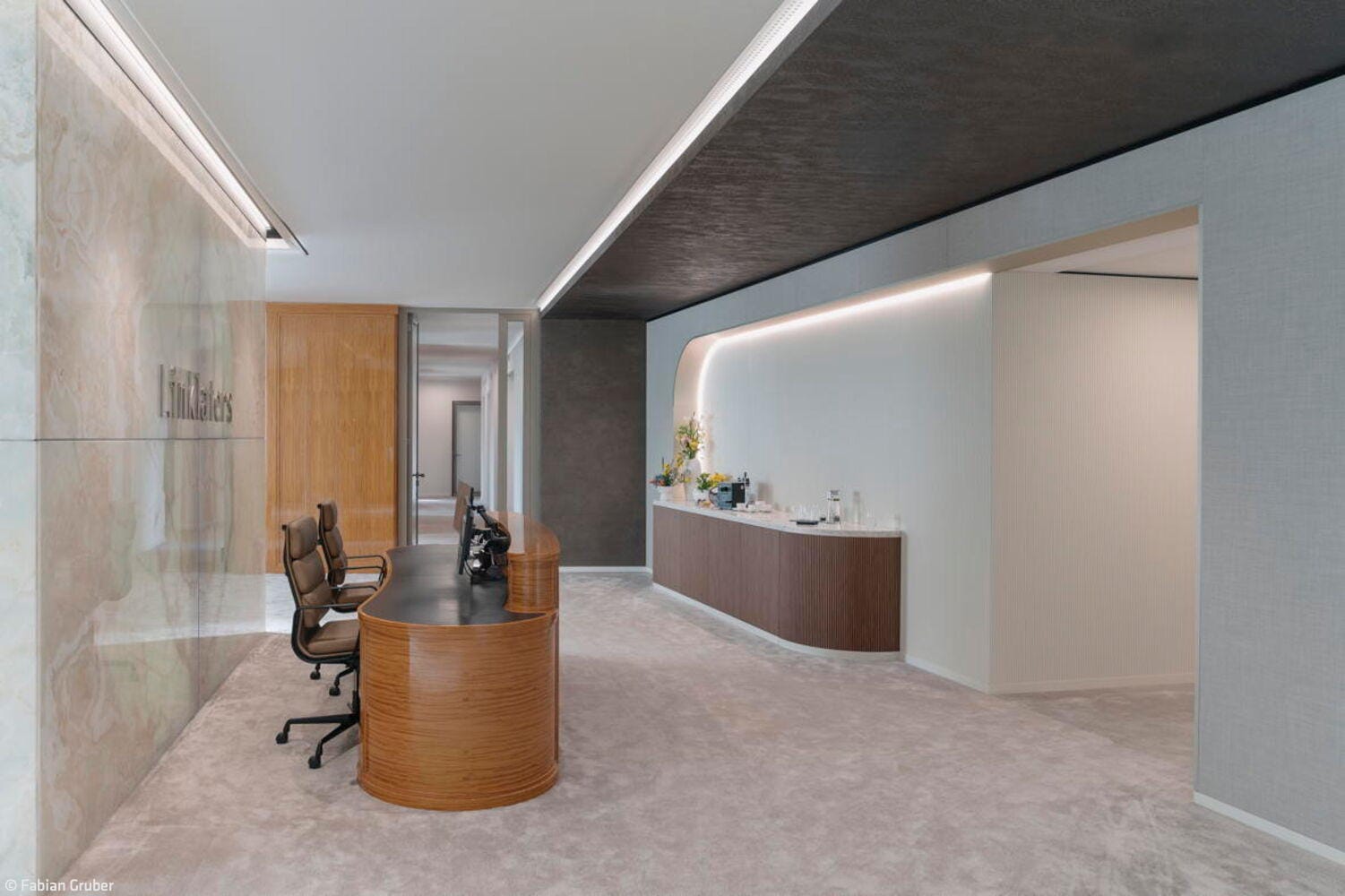
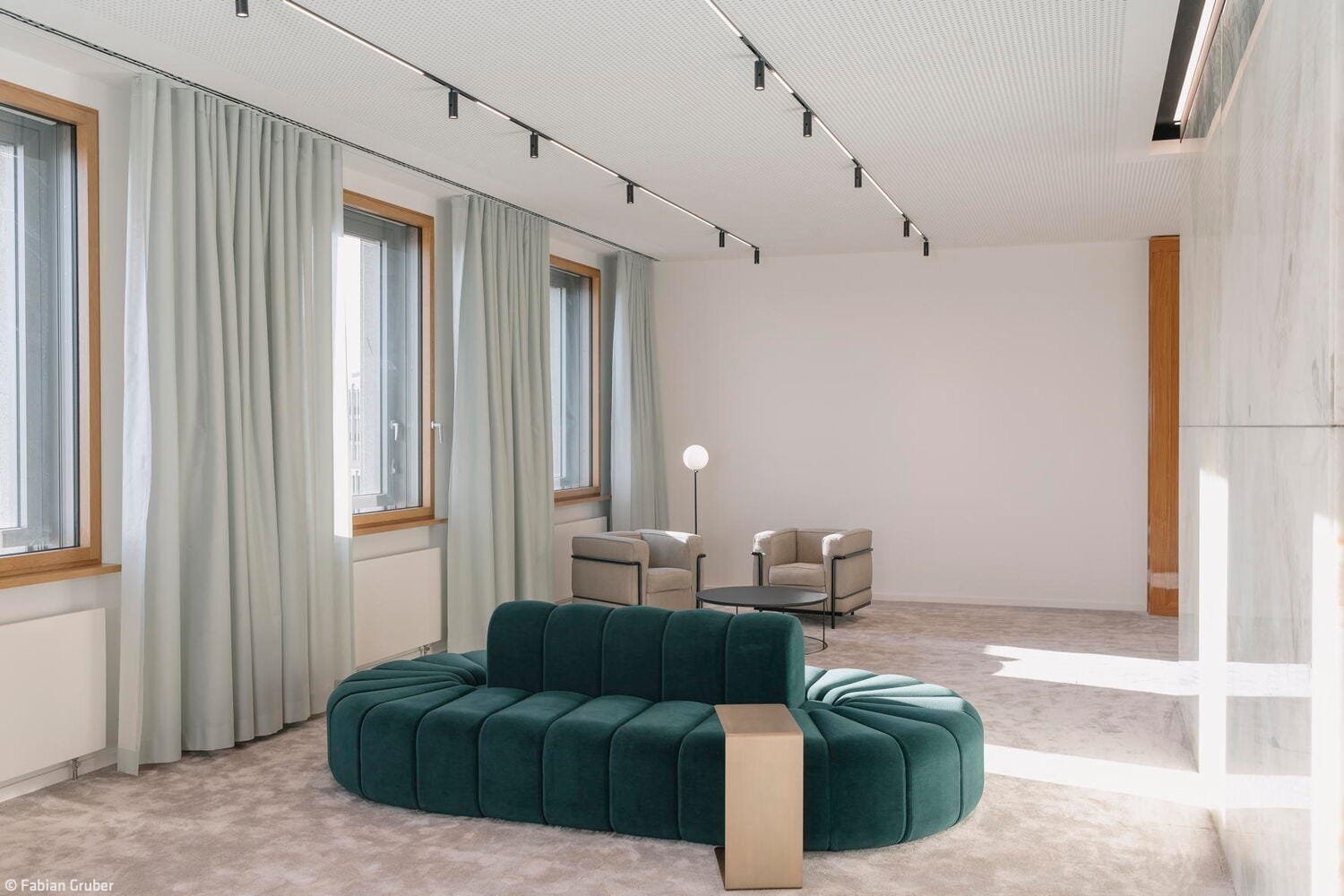
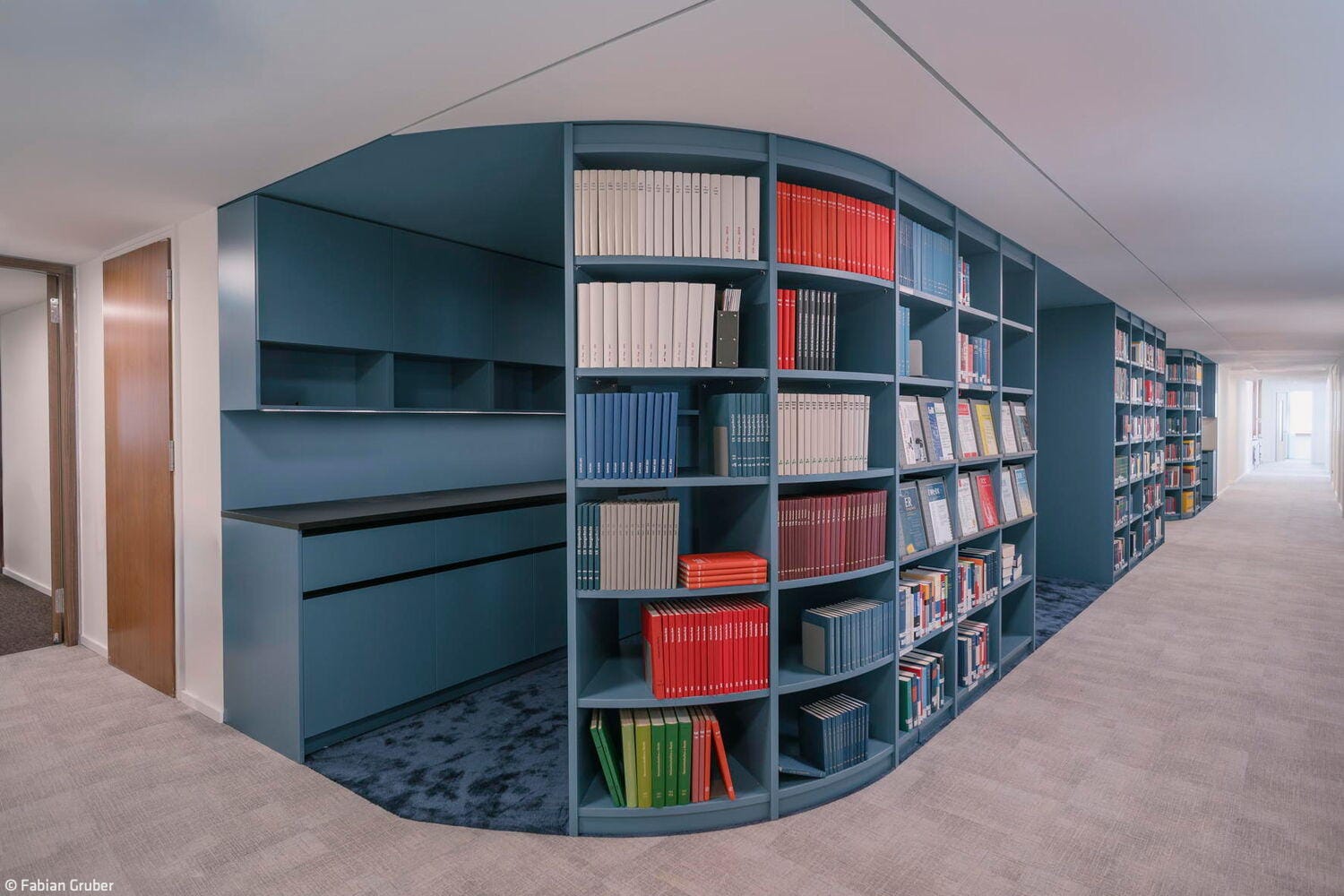
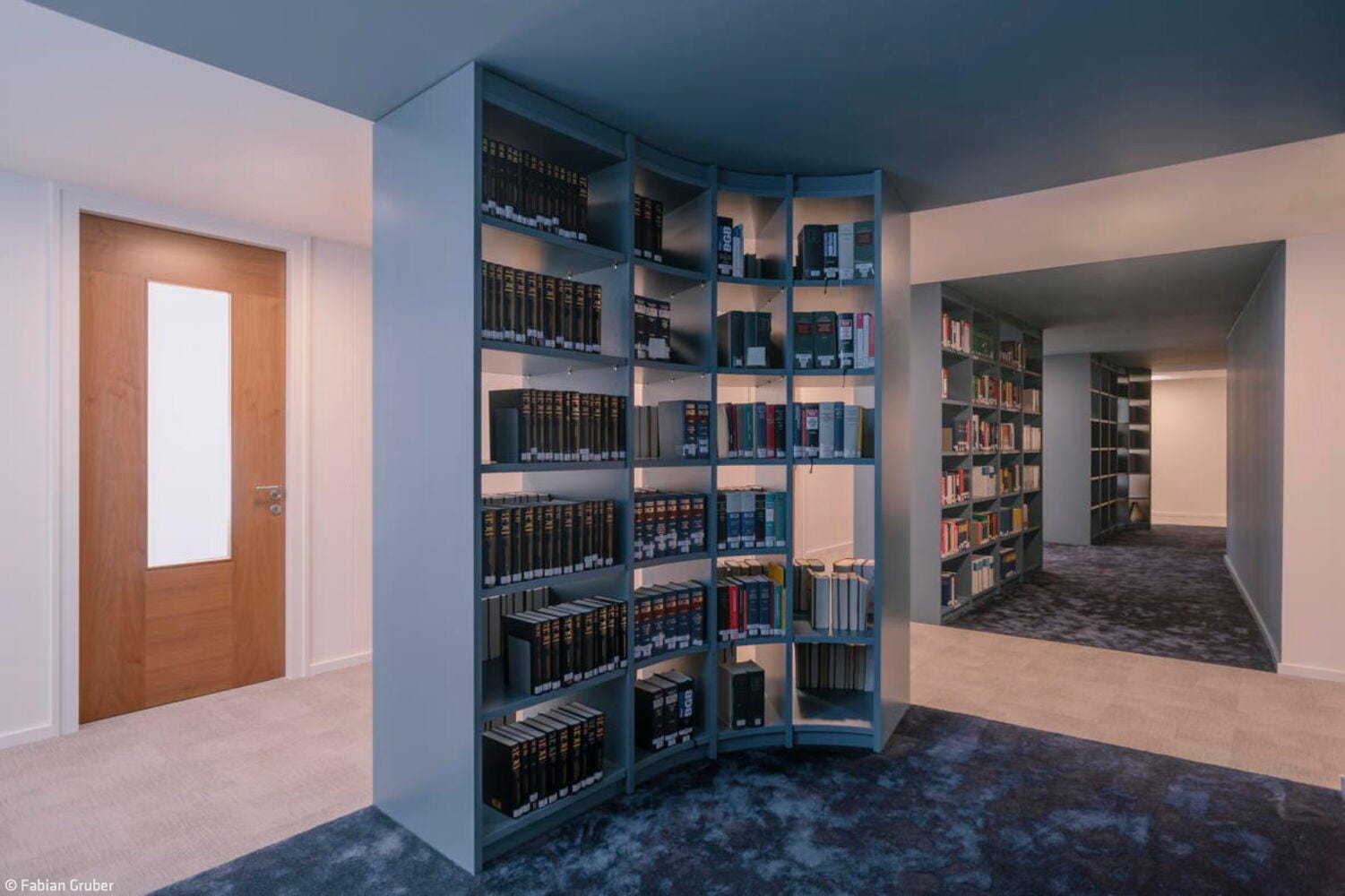
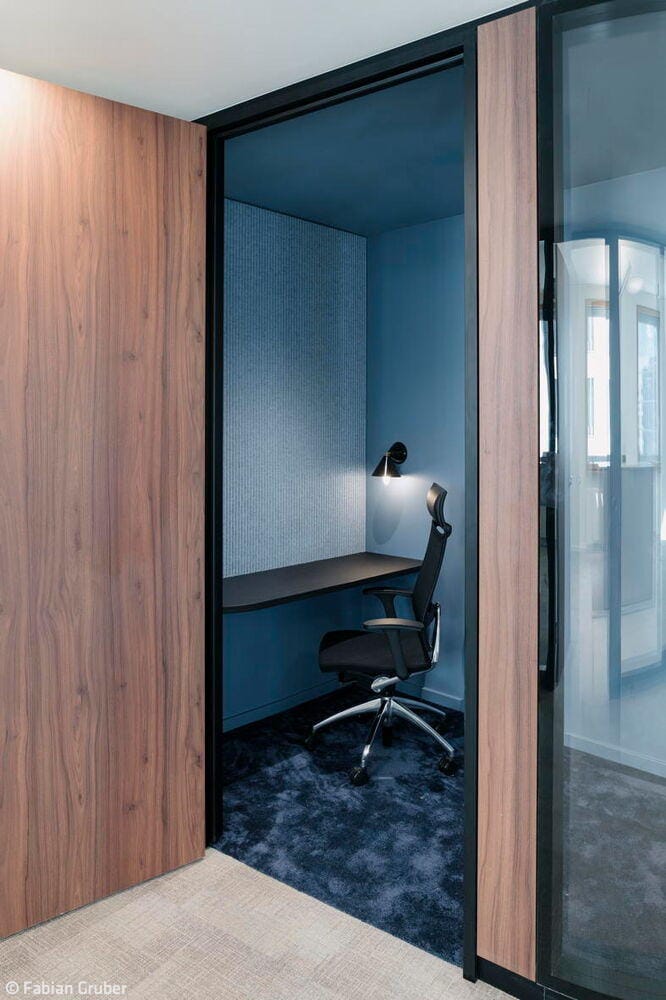
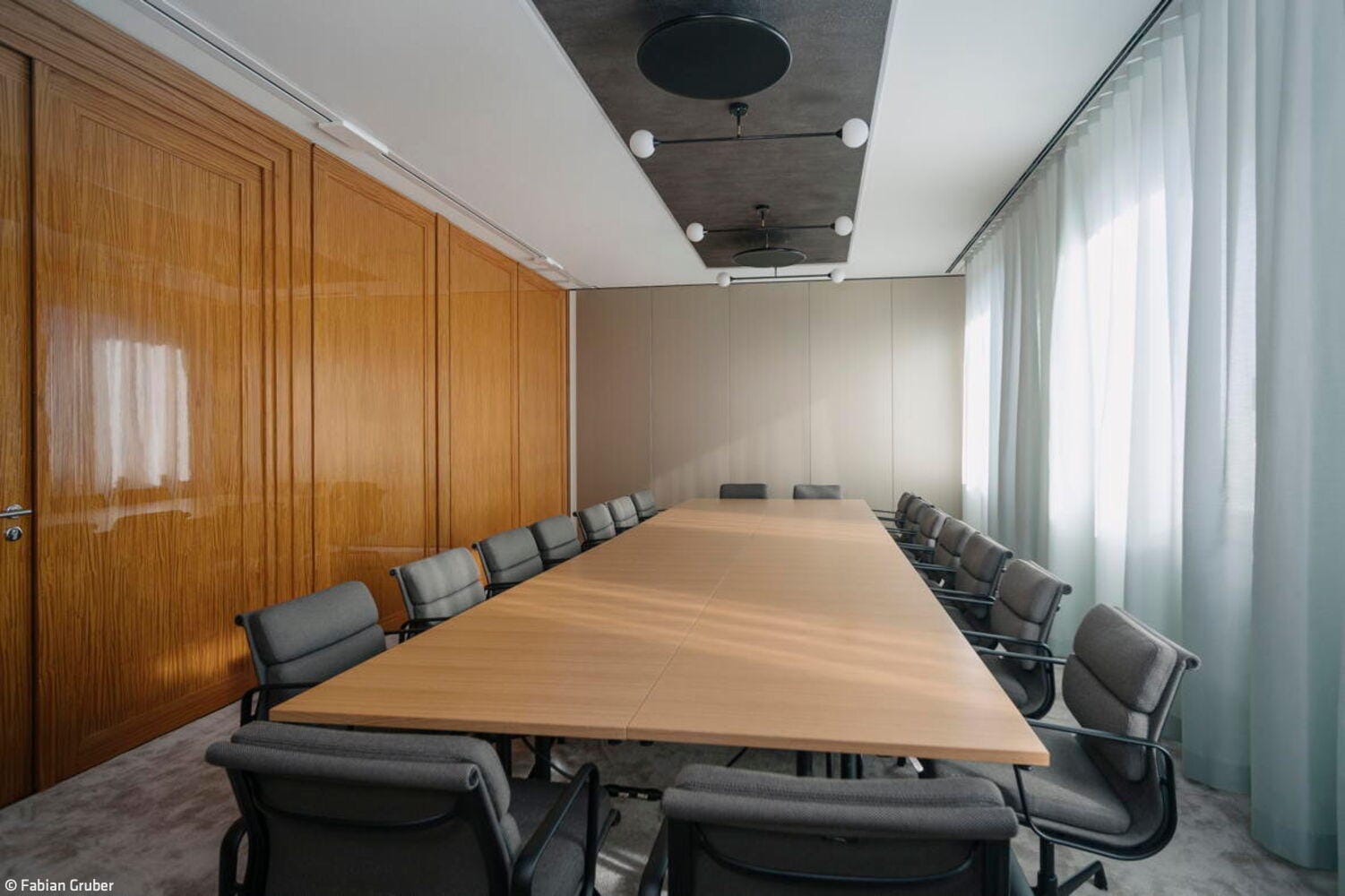
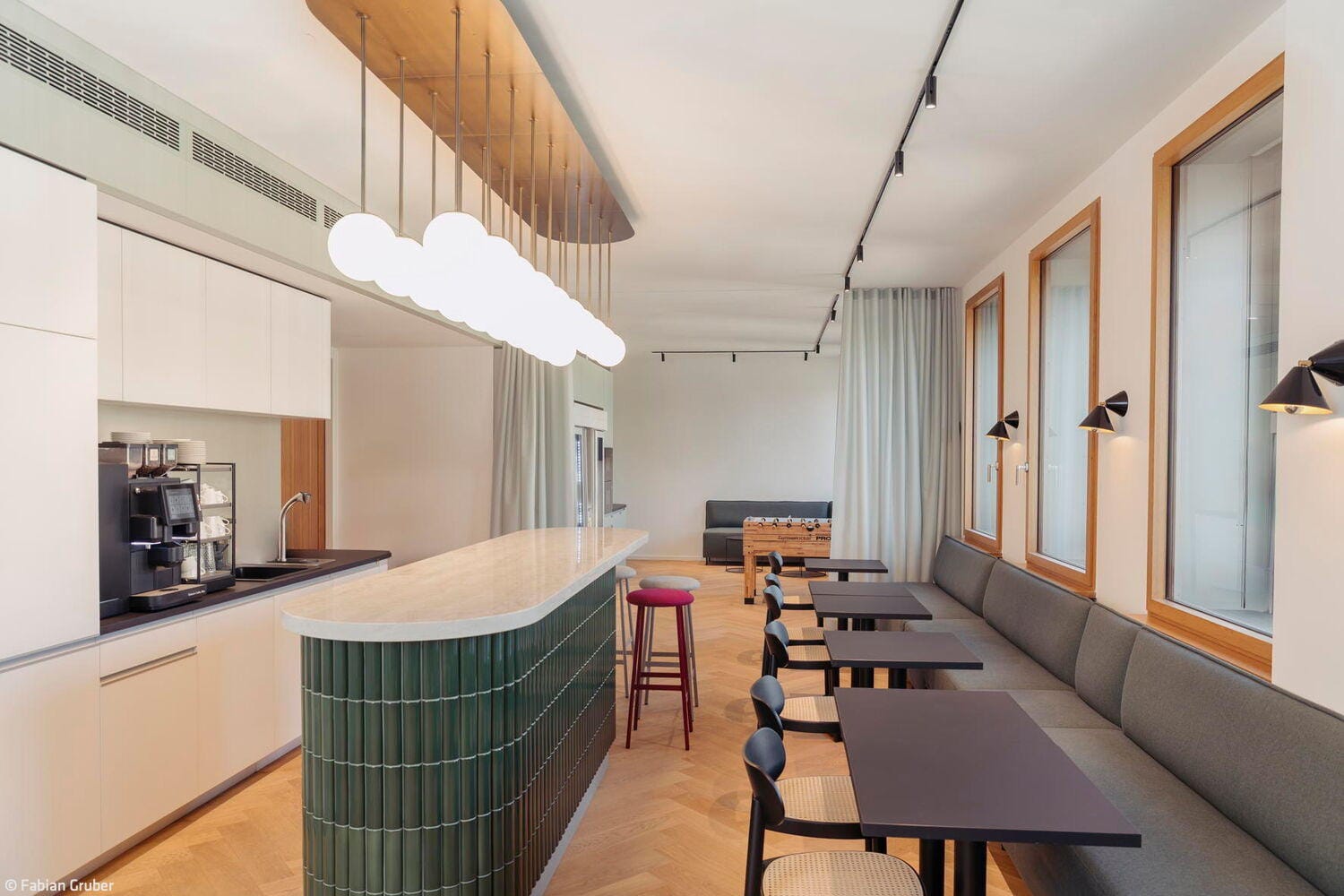
Within the Kollhoff Building at Potsdamer Platz 5, the international law firm Linklaters LLP commissioned a new office design titled "Time (R)evolution"—one that honors the historic significance of this iconic location while embracing the relevance of forward-thinking work environments.
The design concept by architecture firm CSMM makes the site's transformations tangibly experienced through space, translating the building's history into three distinct design epochs. The client areas subtly reference the 1920s aesthetic, echoing the architectural signature of Professor Hans Kollhoff—whose modernist formal language continues to define Berlin's city center. The work zones embody a "sleek present"—timeless, bright, and reduced to essentials. The communal areas represent a new identity: vibrant, open, and oriented toward interaction. Key existing elements were thoughtfully preserved and reinterpreted: original doors, Louis Poulsen corridor lights (retrofitted from halogen to LED), the reception desk, the striking onyx wall in the entrance area, and the Kollhoff-designed lemon wood panels and hardware. As a traditional law firm with predominantly enclosed workspaces, Linklaters LLP faced a central challenge: how to reconcile the need for focused, individual work with collaborative exchange and community. The solution centered on a newly created "Social Heart"—the firm's communicative hub. The formerly closed library was opened and distributed across both floors, while the previously windowless corridor now features glass partitions that introduce light and transparency. Strategically varying corridor widths establish new communal zones including kitchenettes, print stations, and library areas—creating relaxed spaces for both spontaneous encounters and knowledge sharing.
Berlin represents the architecture team's fourth office redesign for this prestigious firm, each completed with a contemporary approach. The renovation unfolded in two construction phases while the firm remained operational—a planning and organizational challenge successfully navigated through sensitive coordination and precise execution. The result is a spatial narrative that runs like a thread throughout the entire office: past, present, and future meet here not merely as concept, but as lived experience within the actual space. The aesthetic of Kollhoff's classical-modern architecture remains intact; it is enriched through an innovative spatial reorganization and subtly integrated into the client's corporate identity.
Photography:
Fabian Gruber
www.fabigruber.de
(Published in CUBE Berlin 01|26)
Play, Explore, Create & Learn
A Holistic Garden Design for Children of Every Age
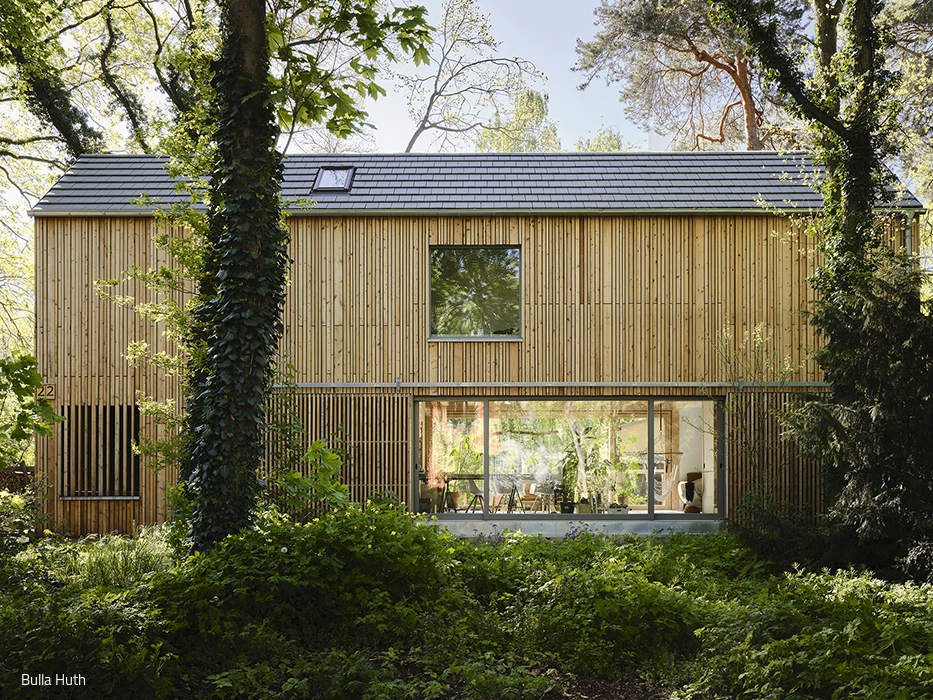
Wood of a Different Kind
Two timber homes emerge from a wooded landscape in Potsdam.
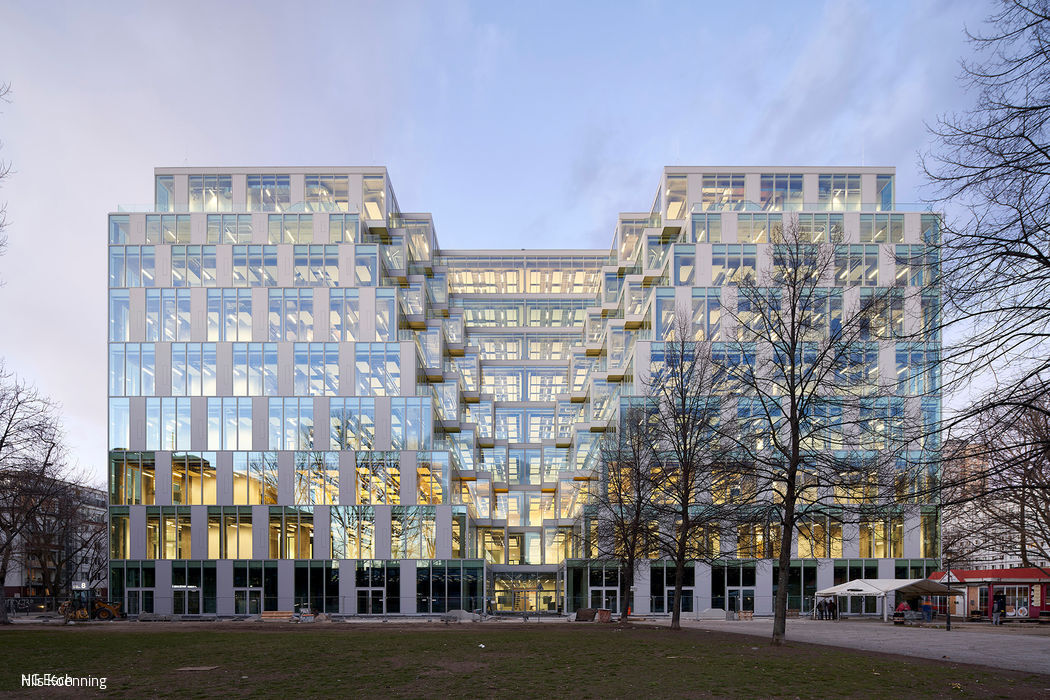
Capturing Light
From Department Store to Dynamic Workspace: Retail, Dining, and Office Space United
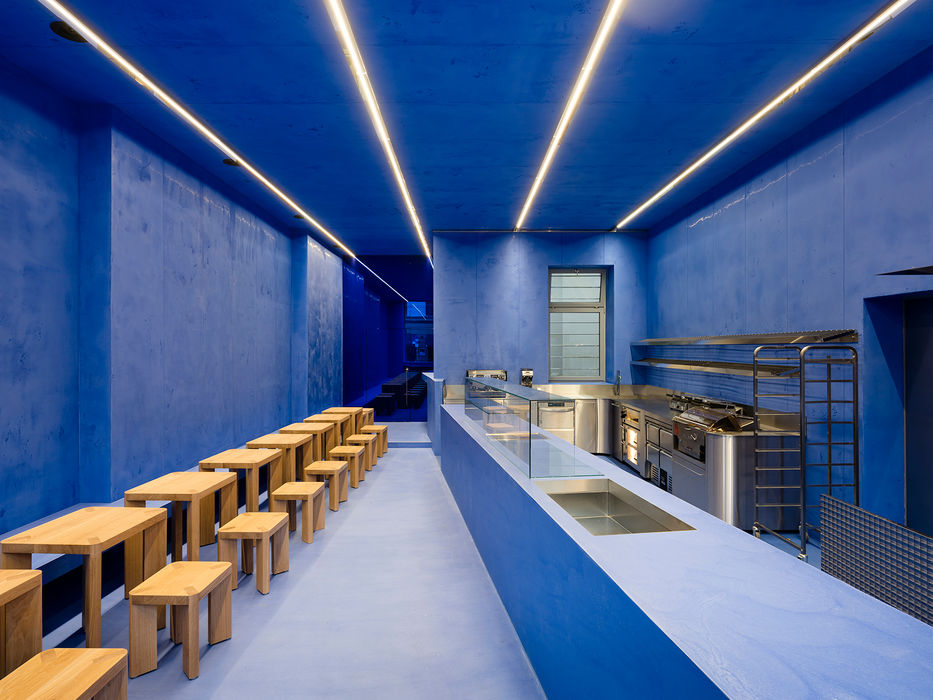
The blue miracle
A bread factory that draws customers in through the sheer power of colour.