


Trust is good, bank transfer is better
Since the introduction of Section 16a of the German Money Laundering Act (GWG), this also applies to the sale or exchange of real estate within families.
In addition to gift agreements and transfer agreements, which are not affected by this provision, there has been a significant increase in the notarisation of real estate transfers between relatives, whether fully or partially remunerated. Characterised by mutual trust, the relevant deeds often stipulated that the agreed purchase price or other consideration was not to be paid immediately, but rather in instalments or as pension provisions, sometimes mixed with payments in kind that were only due at a later date. As these contracts were often part of an overall view, it was also not unusual for payments to be made "across the board" for practical reasons. Cash payments were not uncommon. It was not uncommon for the original agreement to be modified again after notarisation.
This worked smoothly for many years, decades or even centuries. Profits from serious crimes were not concealed. Section 16a of the GWG, which came into force on 1 April 2023, put an end to this trust-based practice. Cash payments of more than €10,000 prevent the payment claim from being fulfilled.
This can result in claims for restitution under enrichment law. Although such a consequence may seem unthinkable to today's protagonists due to mutual trust, it can quickly become a problem as soon as other people sit at the table as a result of legal succession. All these cherished constructions from the past also lead to delays in settlement, long-term information obligations towards the notary and the risk of being subjected to investigations due to suspected money laundering.
Subsequent contractual changes to the consideration must be reported to the notary. The notary is also required to submit the application for transfer of ownership only after he has conclusively determined that the consideration has been received by the seller in non-cash form. When agreeing on instalment payments or annuity payments, it may be necessary to document the non-cash payments to the notary within one year of submitting the application for registration. If the notary cannot determine the conclusiveness of the evidence, he must notify the competent authority. All these uncertainties and disadvantages must be taken into account in future when considering how consideration is to be provided in family-internal real estate transactions. Unless a different arrangement appears sensible or even necessary for other reasons, it
is often advisable to simply transfer the purchase price.








Palm trees, mountains and sport
Three Coworking Spaces in Bochum—Each with Distinct Character

As Good as New
Essen's main post office façade now radiates its restored splendor.

Where Design Meets Nature
Essen's Grugapark playhouse has undergone comprehensive renovation and redesign.
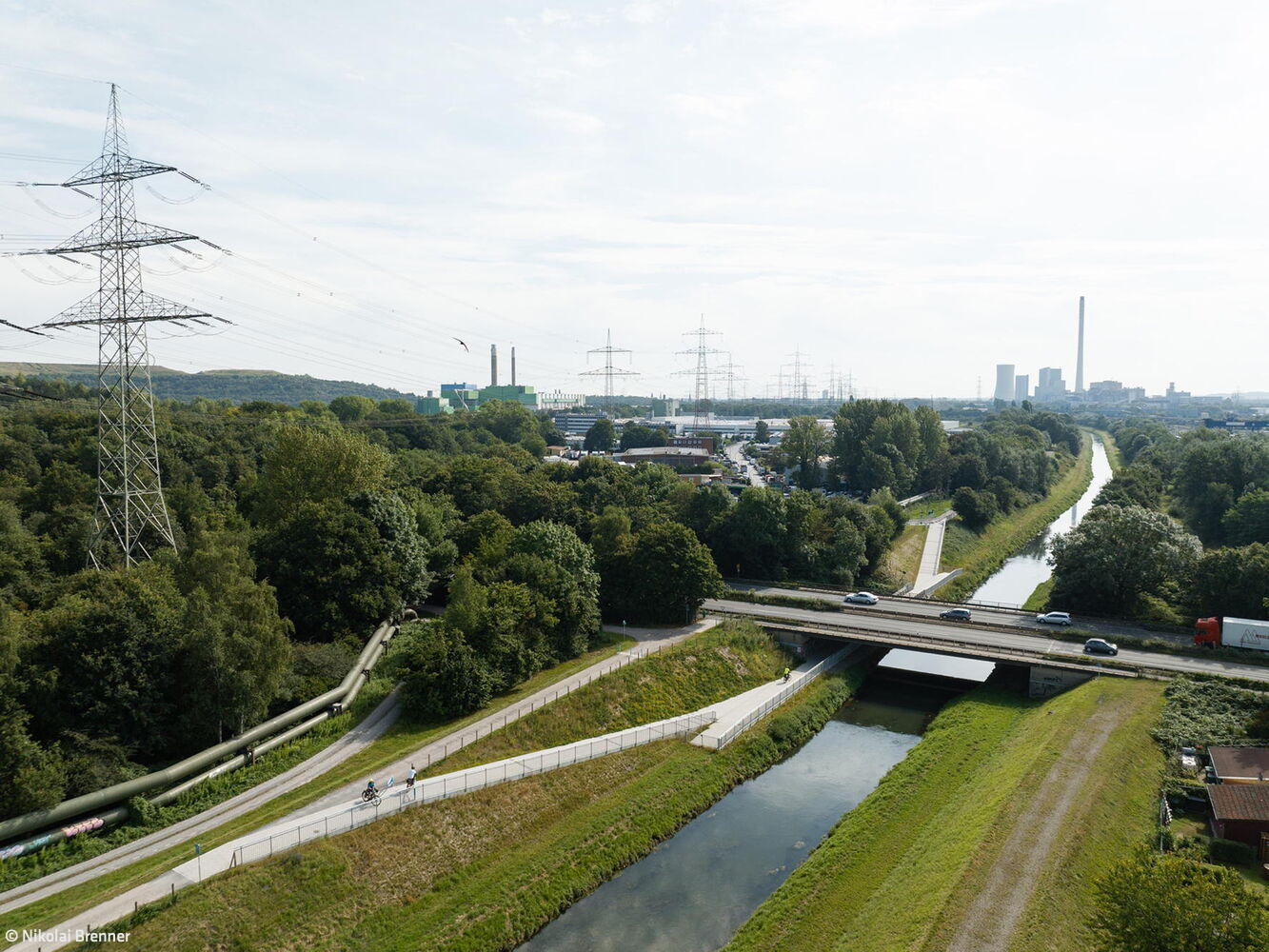
A unifying design thread
The reimagined Emscher Promenade stands as a vital cornerstone of the region's blue-green infrastructure.