


Past & Future
A model project revealing how sacred heritage buildings can be reimagined
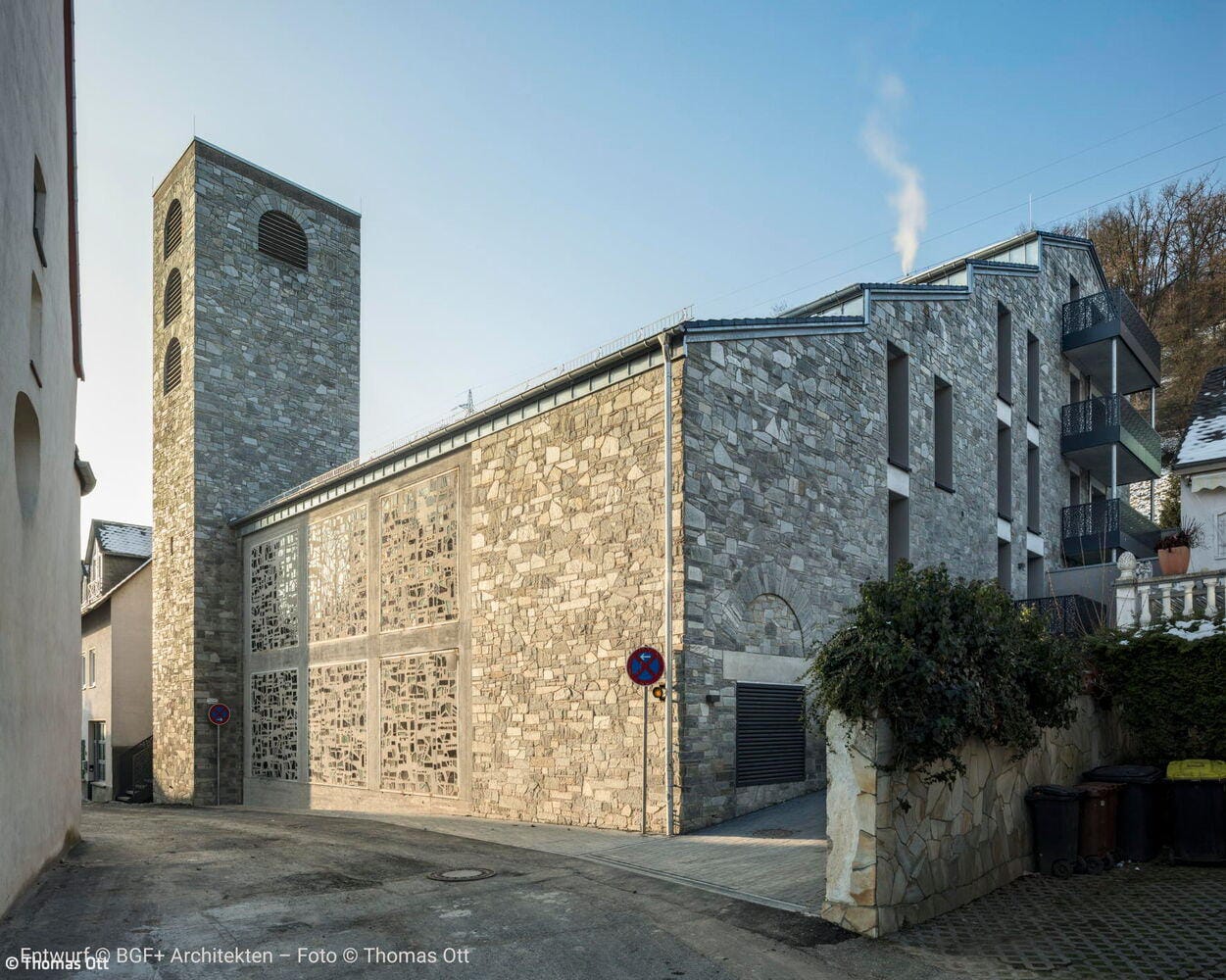
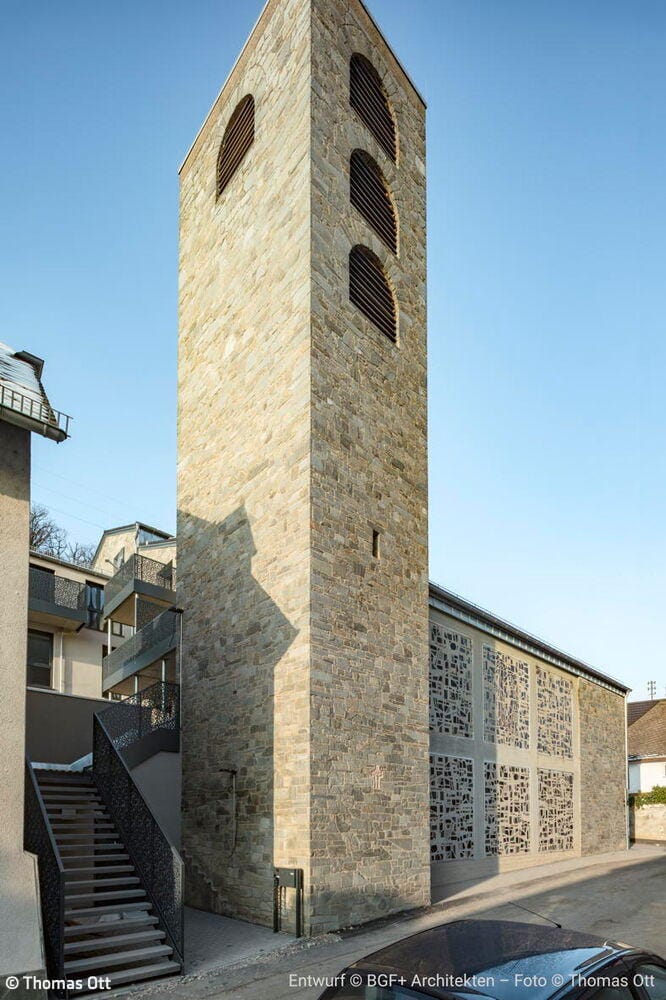
Sometimes the future begins with the courage to continue writing history. In Eltville-Martinsthal, the Leben Reben Rheingau project by BGF+ Architects shows how a church that was hardly ever used has been given a new lease of life. Not as a sacred space, but as a home. The former St. Martin's Church from the 1960s, once the centre of the village, had stood empty for a long time. Instead of demolishing it, the architects and the client, J. Molitor Immobilien, deliberately opted for a transformation: the substance and identity were to be preserved, as was the grey energy of the existing building.
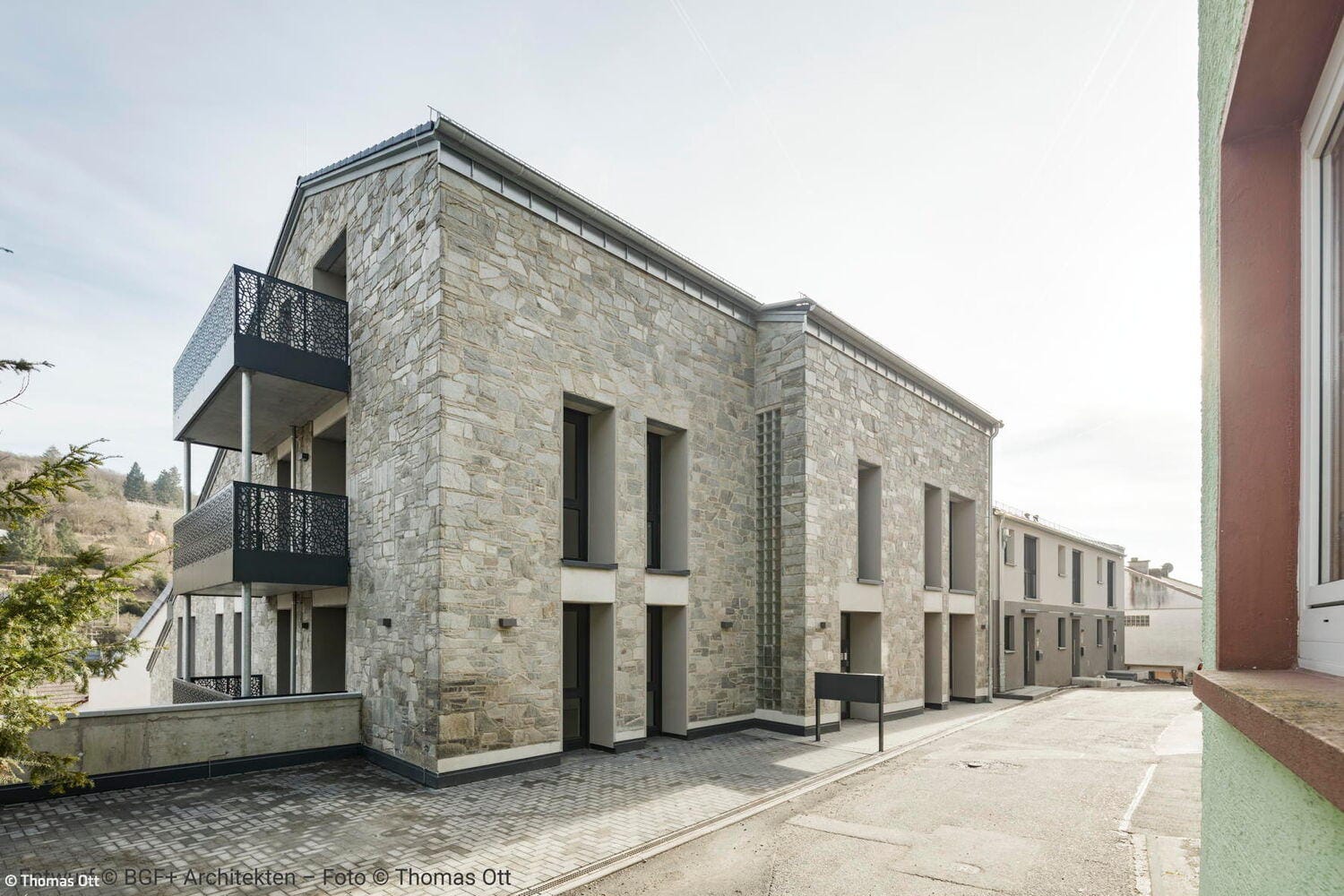
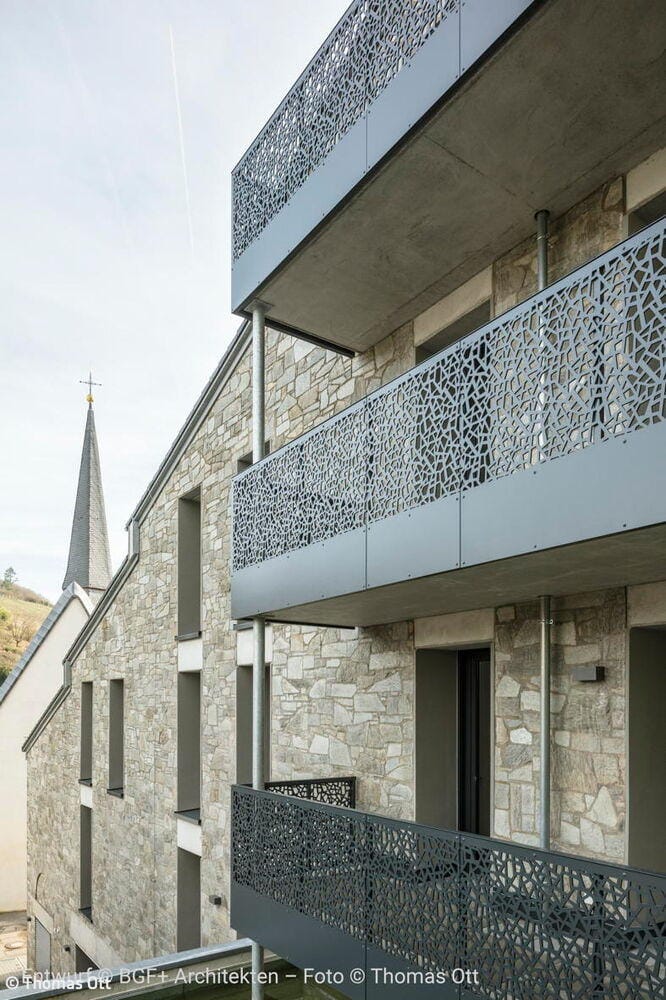
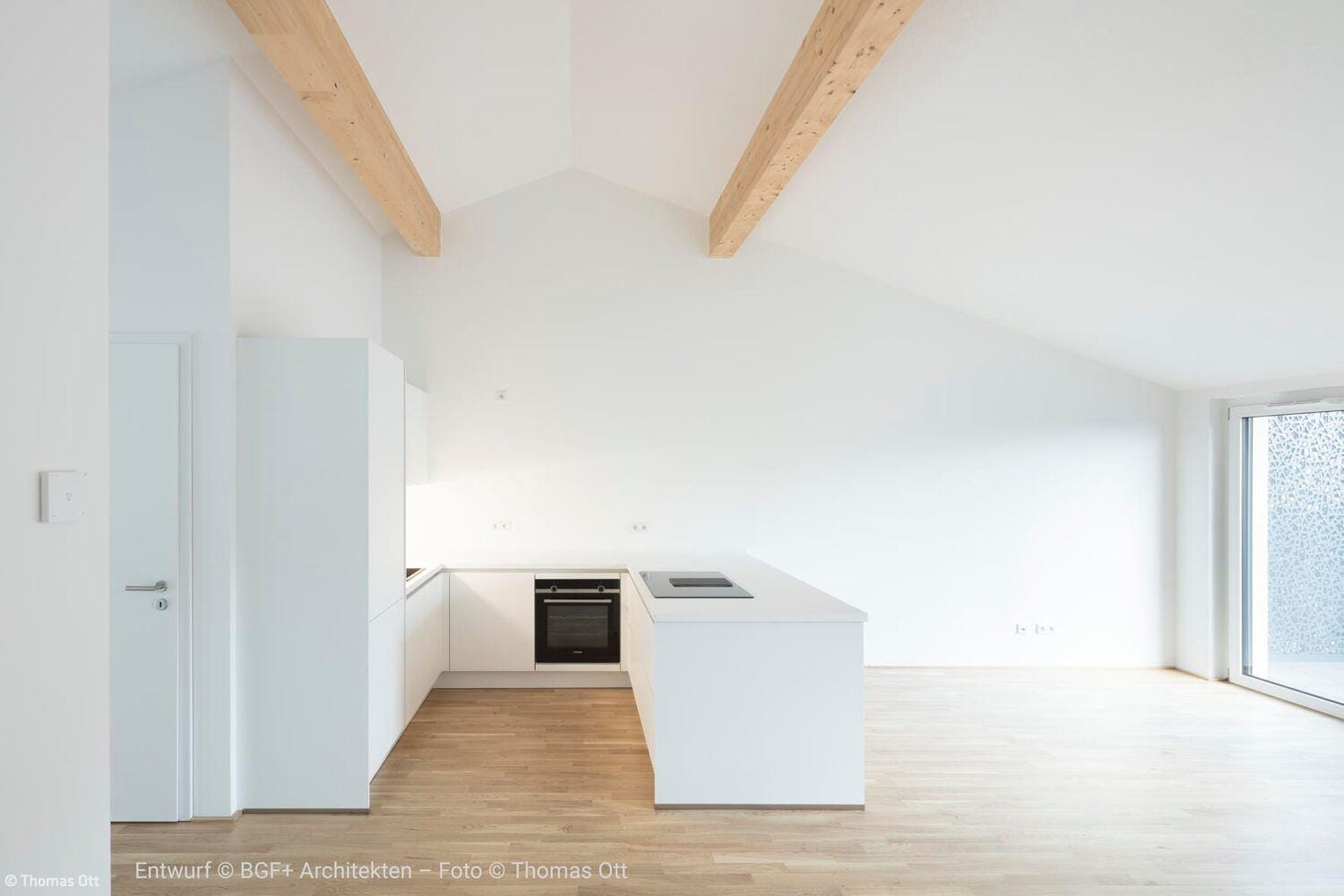
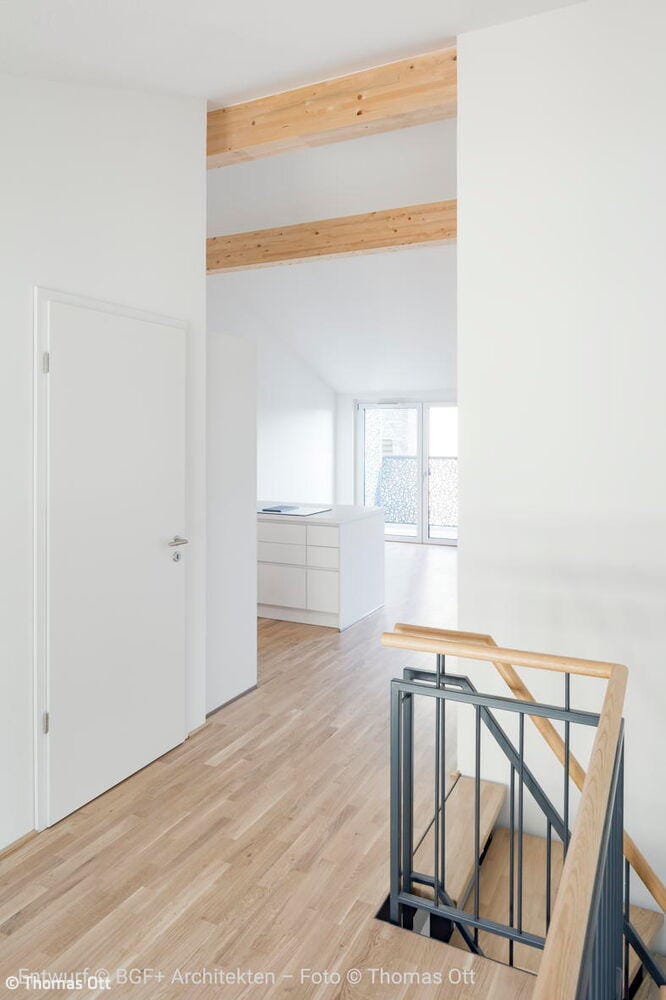
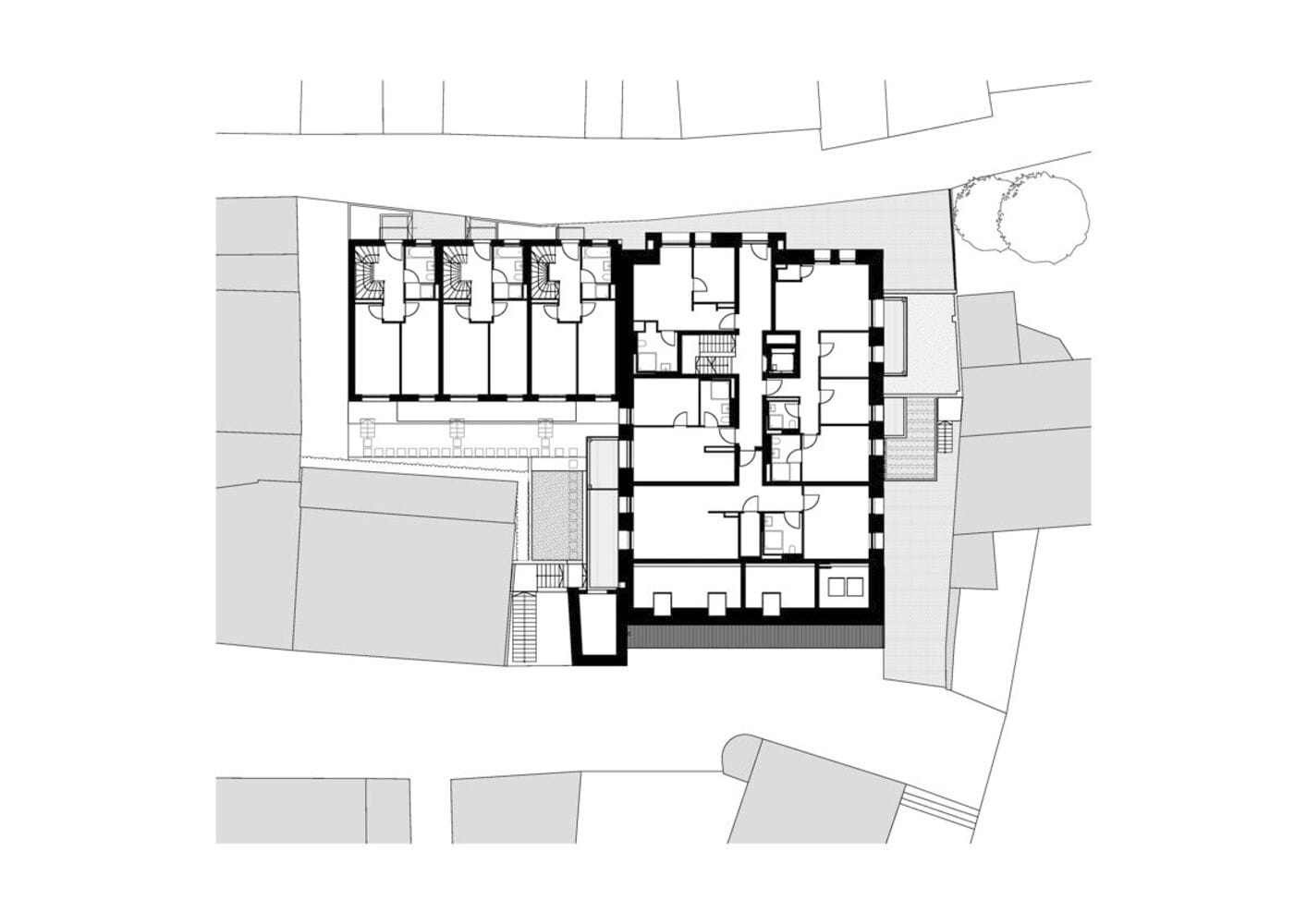
The result is a residential ensemble that honors both past and future. The distinctive natural stone facade and prominent church tower stand preserved, continuing to anchor the community's identity. New, vertically elongated windows reference the classical vocabulary of ecclesiastical architecture, infusing the facade with light and visual grace. The former church endures as it always has—a landmark with soul—now animated by a new chapter of secular life. Internally, the architects created an entirely new core. Poroton brick construction with 93-centimetre walls rises within the original stone envelope, forming an energy-conscious "house within a house" that ensures structural stability and adaptable layouts. A reinforced concrete service core distributes four floors of nine apartments ranging from two to four rooms. The upper levels capitalize on the soaring proportions of the former nave, while new balconies and expansive windows frame views across the Rauenthal vineyards. Within the tower, a modest room has been carved out—an intimate sanctuary that carries the building's history forward.
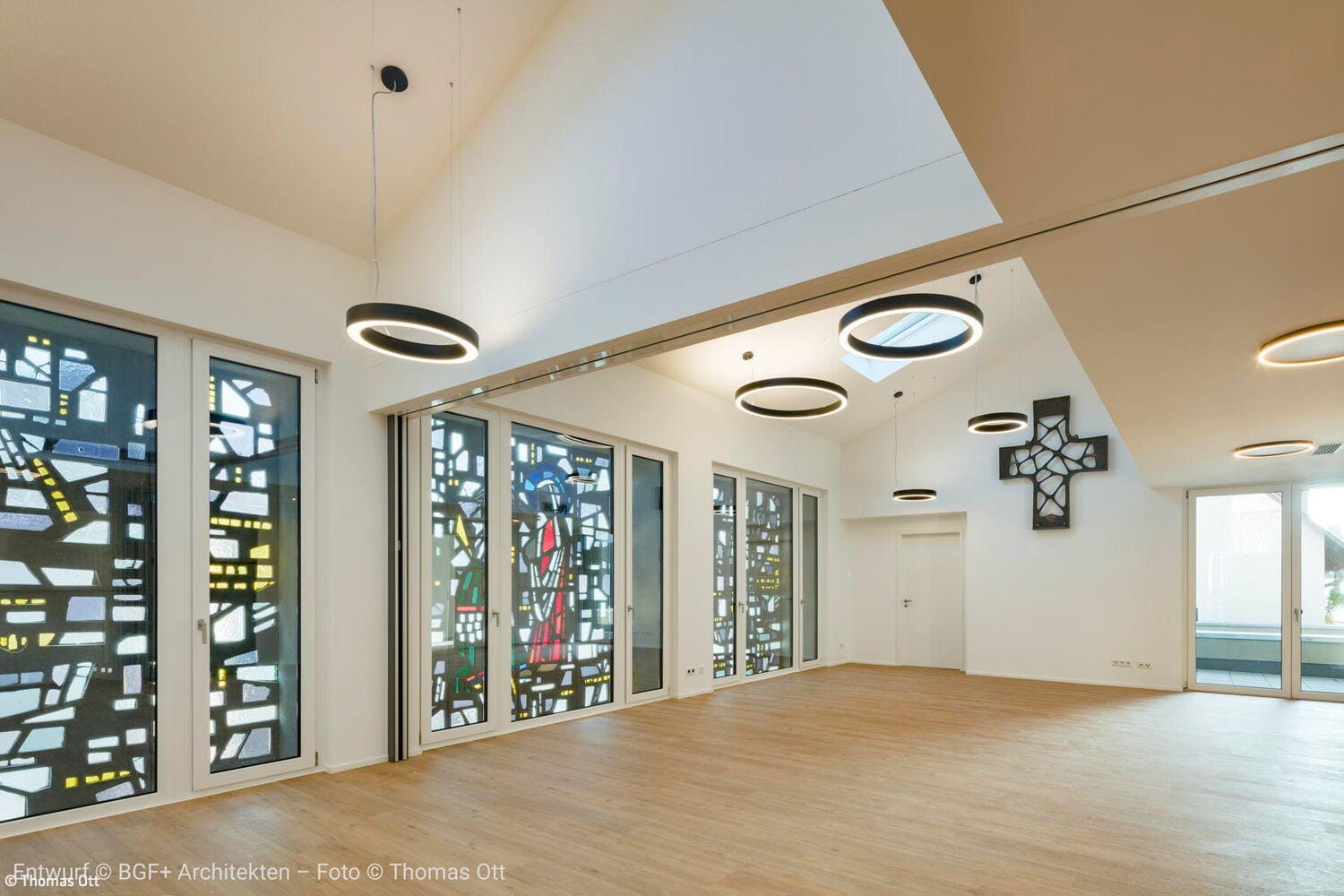
The sacred building is complemented by a new building on the site of the former vicarage, where three townhouses complete the ensemble. The houses each have five rooms on three levels, private terraces and small gardens. The hillside location posed a planning and logistical challenge: there is a height difference of around 7.5 metres between Kirchstraße and Rotheckerstraße, which the building now elegantly follows. The parish also remains present on site. Parts of the ground floor house a parish hall, a kitchen and a library, rooms that continue to facilitate encounters. The concrete glass windows by artist Johannes Beeck, which have been preserved here, bathe the room in a soft, coloured light and refer to its sacred past. The project is a prime example of how history can be preserved, resources conserved and community strengthened, creating a place where past and future come together under one roof.
Photos:
Thomas Ott
www.o2t.de
(Published in CUBE Ruhrgebiet 04|25)


Four leaves flourish as one
In Herne's Shamrock Park, an office building is being revitalized and reimagined for tomorrow.
Sophisticated Interiors
A "house within a house" emerges within a protected barn in Essen
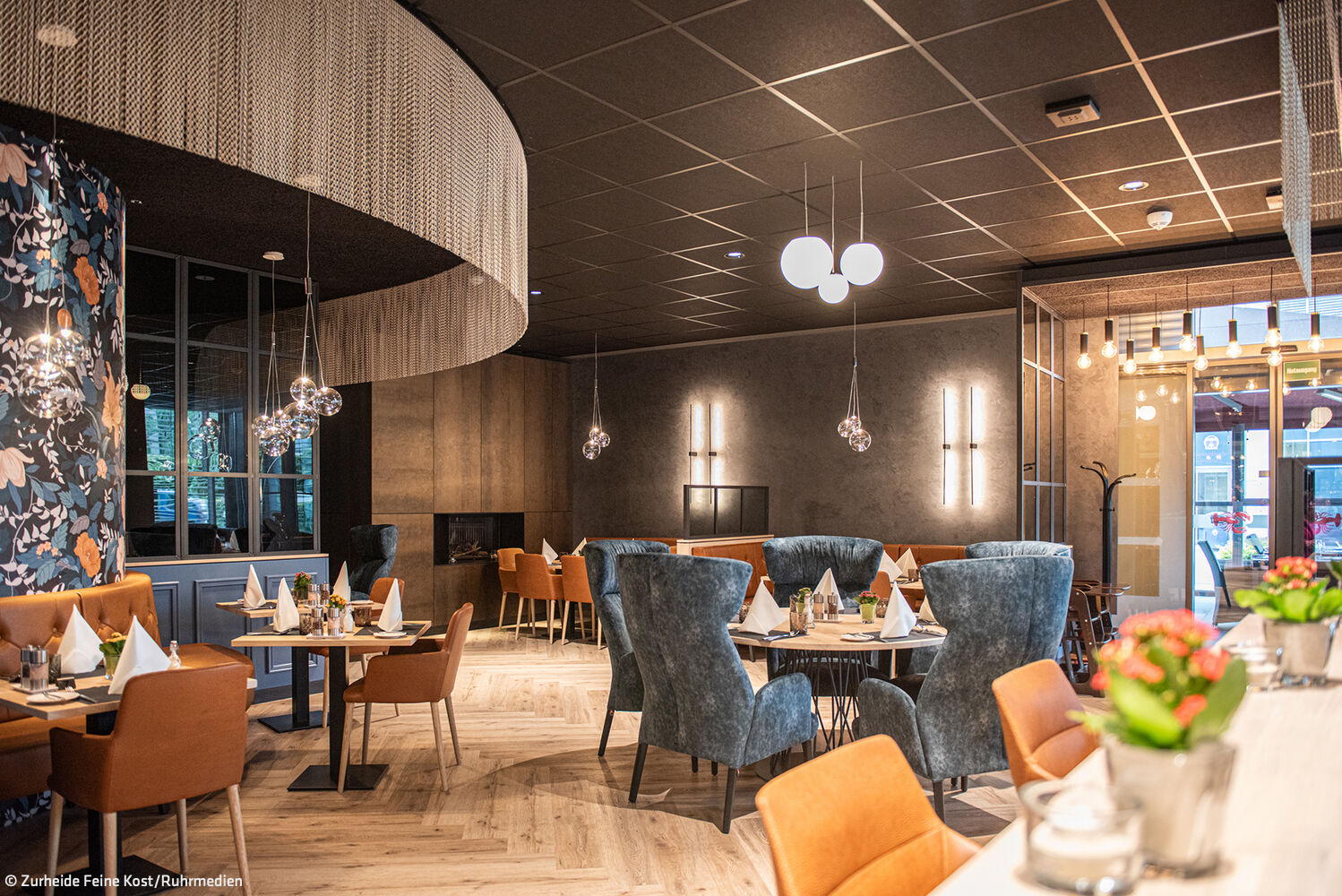
Contemporary Elegance & Taste
After a comprehensive redesign, Bottrop's gourmet restaurant emerges radiant and renewed.
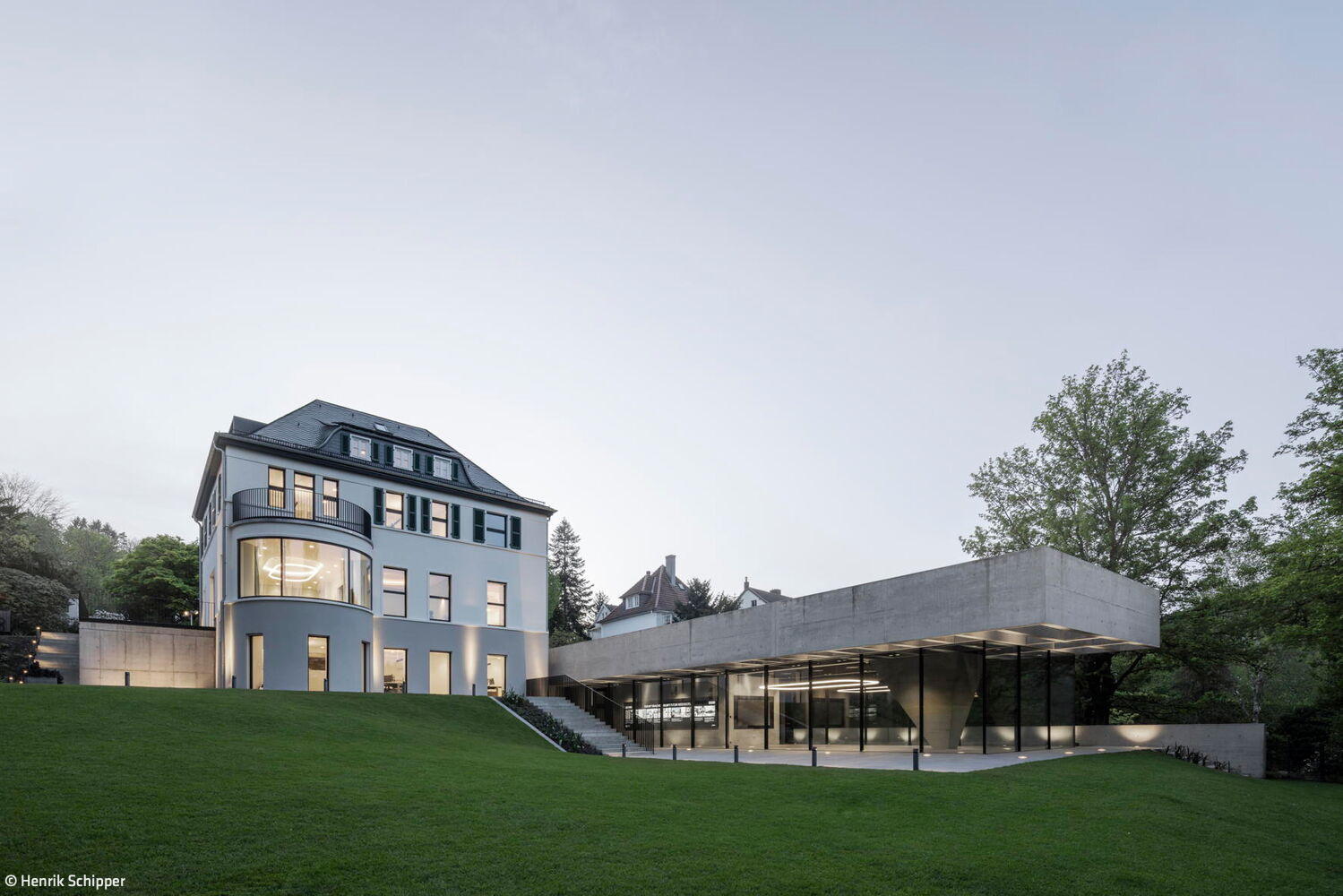
Then and now in dialogue
Transformation: Redefining Gründervilla as a Destination for Tomorrow