


Urban and sociable
The outdoor facilities at the new buildings in Margarethenhöhe meet a wide range of requirements
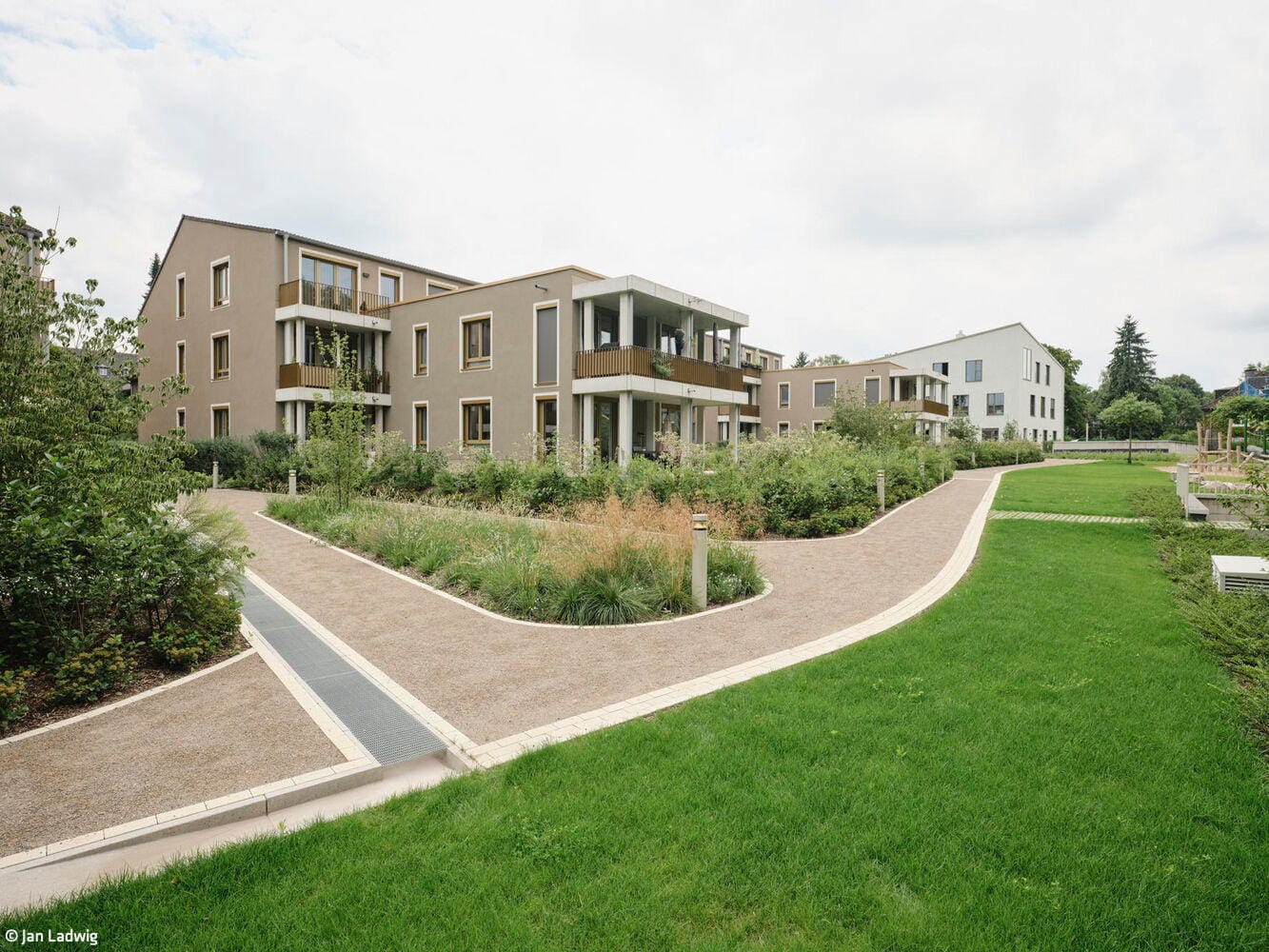
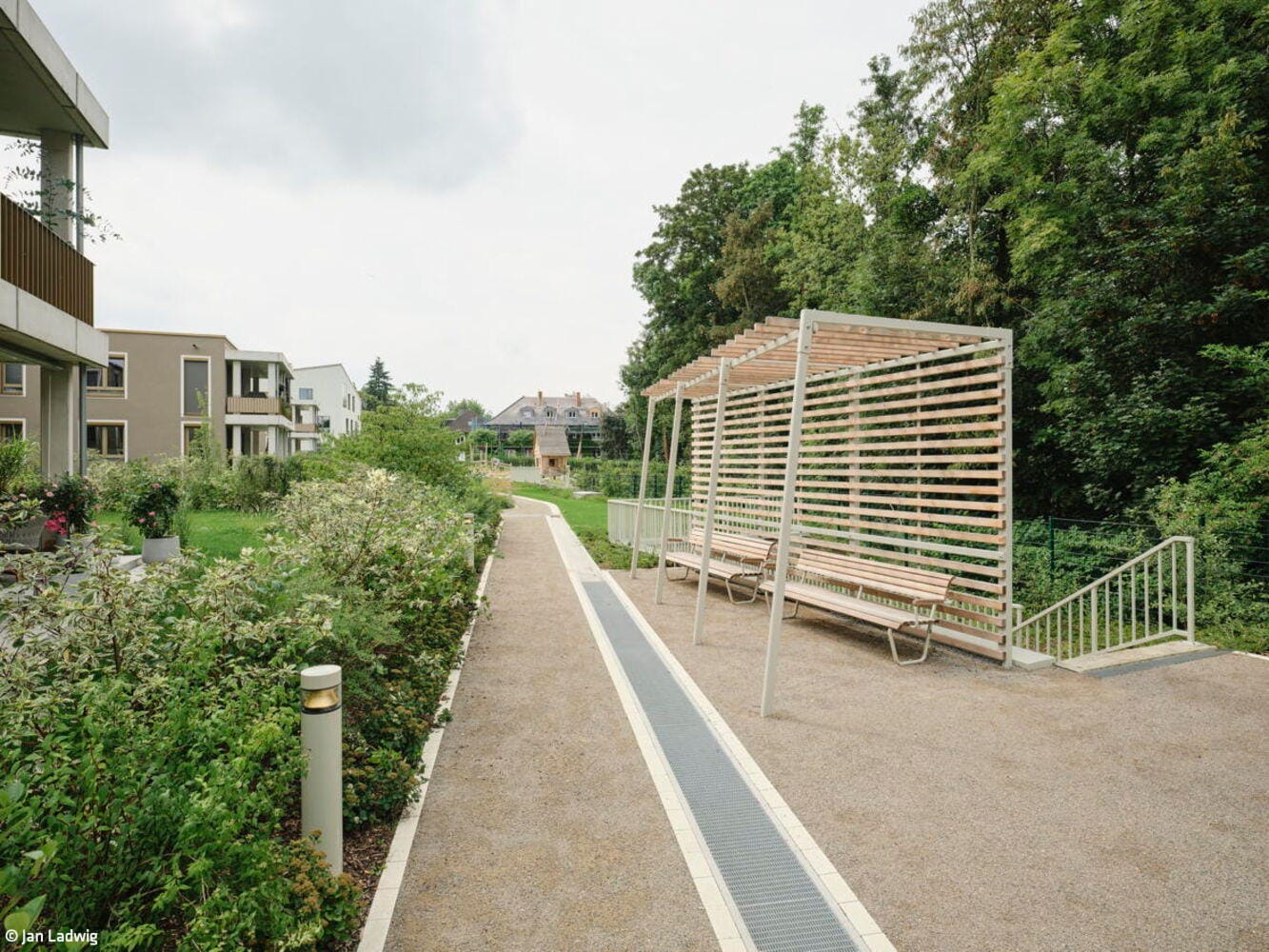
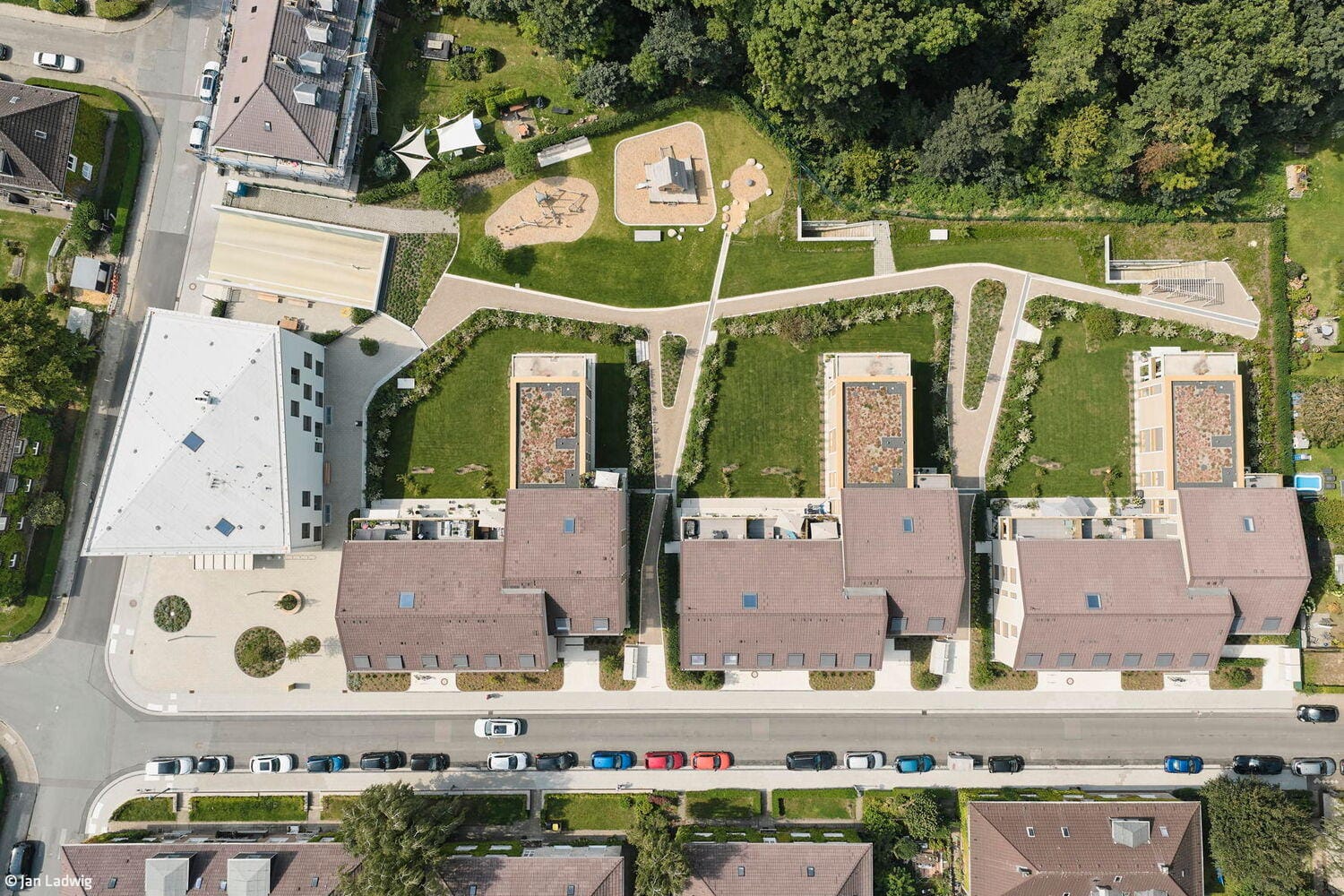
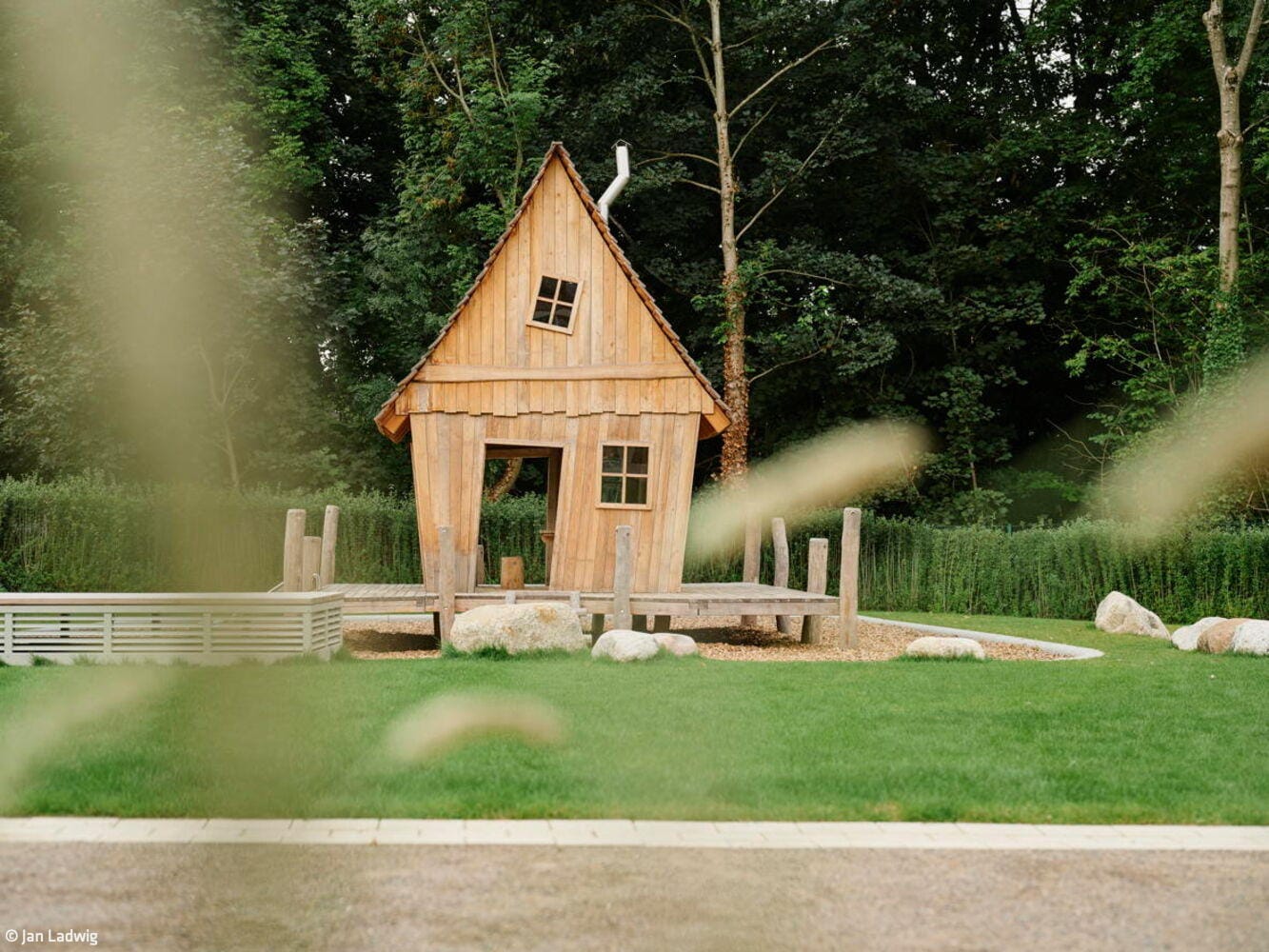
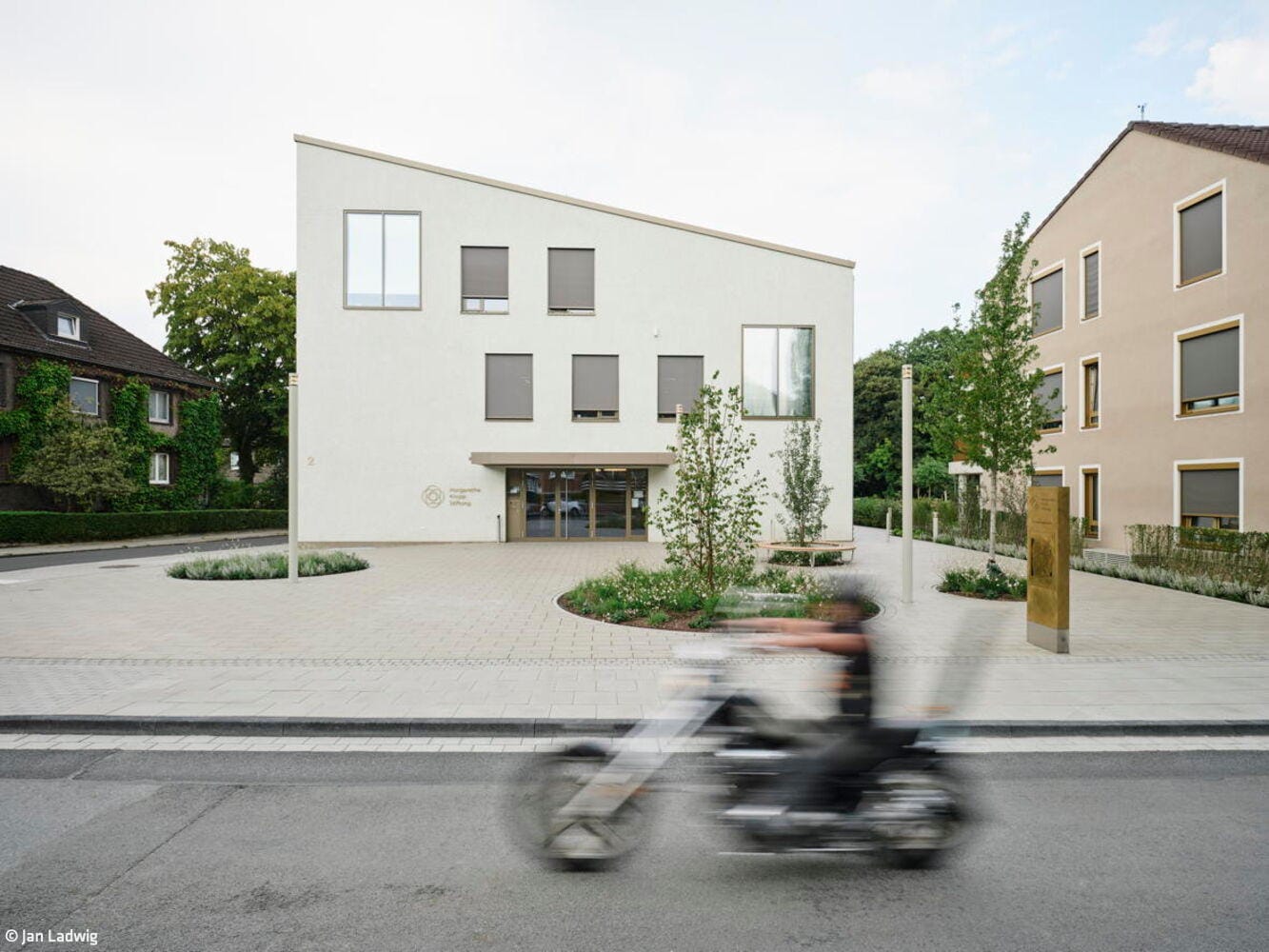
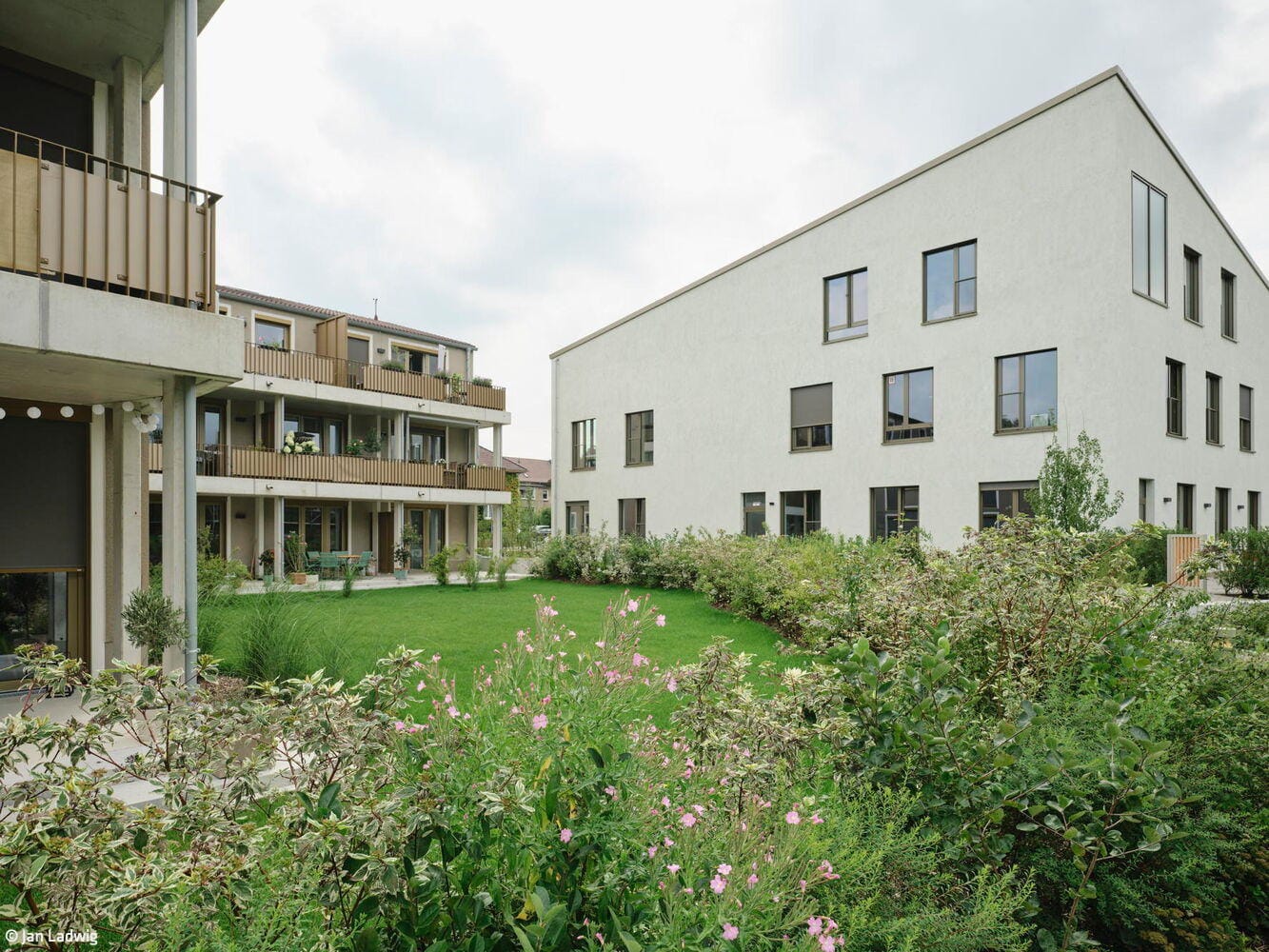
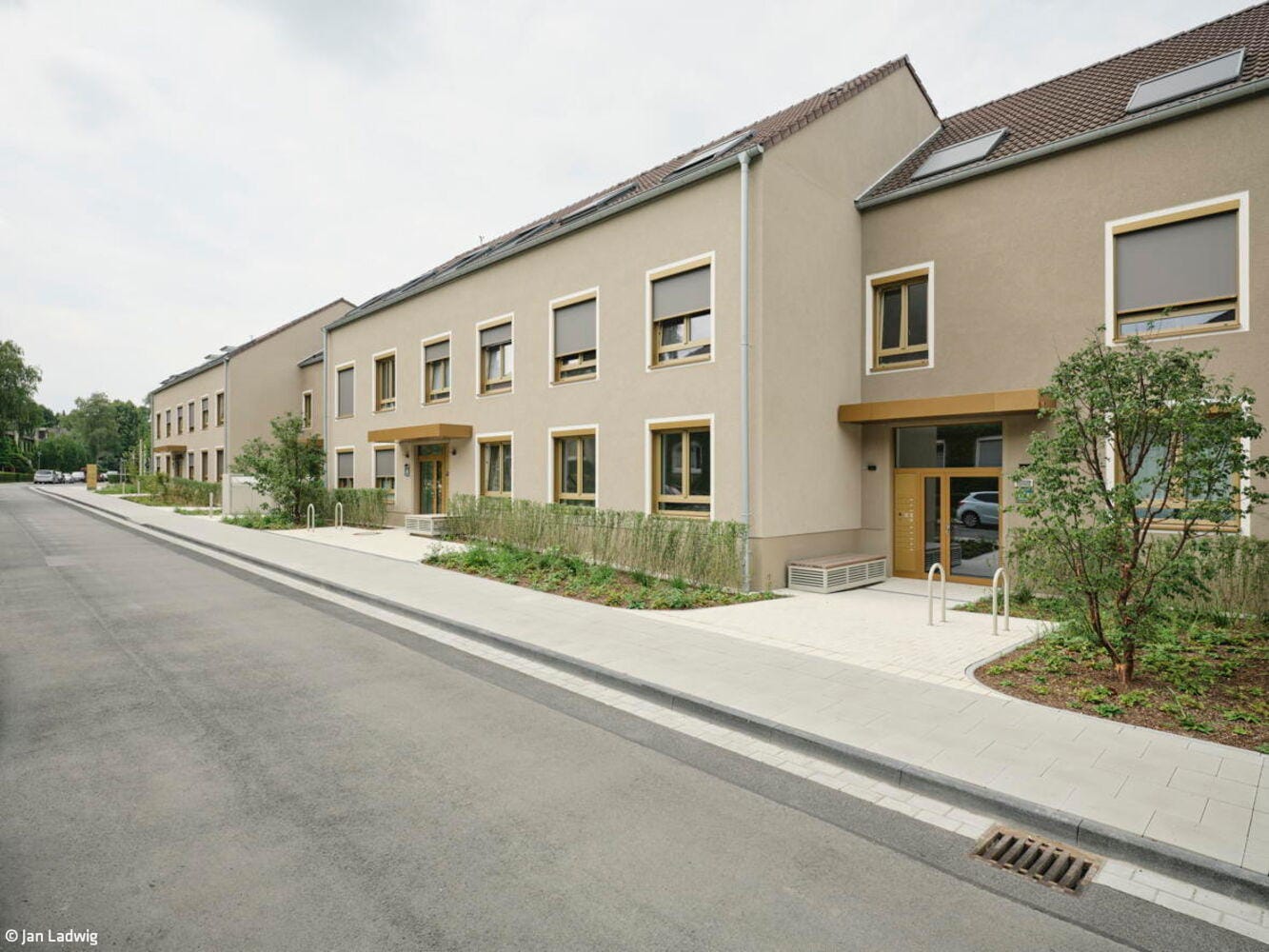
The outdoor spaces for the complex of residential and administrative buildings belonging to the Margarethe Krupp Foundation in Essen were designed by Förder Landschaftsarchitekten in close collaboration with Mijaa Raummanufaktur Architekten and Wörner Traxler Richter Planungsgesellschaft. The site, situated in the listed Margarethenhöhe district, is divided into four distinct areas: the semi-public communal open space, the neighbourhood square, the private gardens reserved exclusively for tenants, and the front gardens (see also page 34).
The communal open space is situated between the existing woodland backdrop and the private gardens. Carefully planned new plantings complement the woodland backdrop and form a gently undulating, landscaped frame around the open space. Here, a playground featuring a ‘forest hut’ and a climbing course, as well as a pergola, provide space for socialising, playing and relaxing. In contrast to this is the urban neighbourhood square in front of the Margarethe Krupp Foundation’s administrative building, which serves as a representative entrance and links the new building with its listed surroundings. The design serves to showcase the striking architecture of the administrative building through a clear and calm design language. The circular planting islands offer a high quality of amenity, enhanced by shade-providing trees. Furthermore, particular attention was paid to the quality and materials of the fittings, such as a curved bench and a high-quality information point. The private gardens of the tenant community are laid out in terraces due to the topographical conditions. The changes in level at the edge of the gardens are softened by wide strips of vegetation, which serve as a boundary. The front gardens provide barrier-free access to the residential buildings and are generously proportioned to accommodate the necessary bicycle racks and waste collection enclosures. The paths have been laid with high-quality concrete paving stones and finished with a water-bound surface. The colour scheme and texture have been coordinated to harmonise with the building and the local surroundings.
A particular challenge was posed by the underground car park beneath the site, covering an area of around 3,000 m², which ensures frost-free drainage. An open channel system was developed as a striking design feature, which is integrated into the overall scheme in a way that is both functional and visually effective. The choice of plants was specifically tailored to the particular conditions: shallow soil depth and minimal indirect watering via capillary action. Consequently, species were selected that can cope well with the urban climate and prolonged dry spells. These include, for example, French maple and Hungarian oak.
www.foerder-landschaftsarchitekten.de
Photography:
Jan Ladwig
www.janladwig.com
(Published in CUBE Ruhrgebiet 01|26)
Views of Art and Nature
A Residential Building in Dialogue with Its Landscape

Sustainable Design
Dustin Jessen designs furniture and accessories from recycled materials.
Contemporary Urban Garden
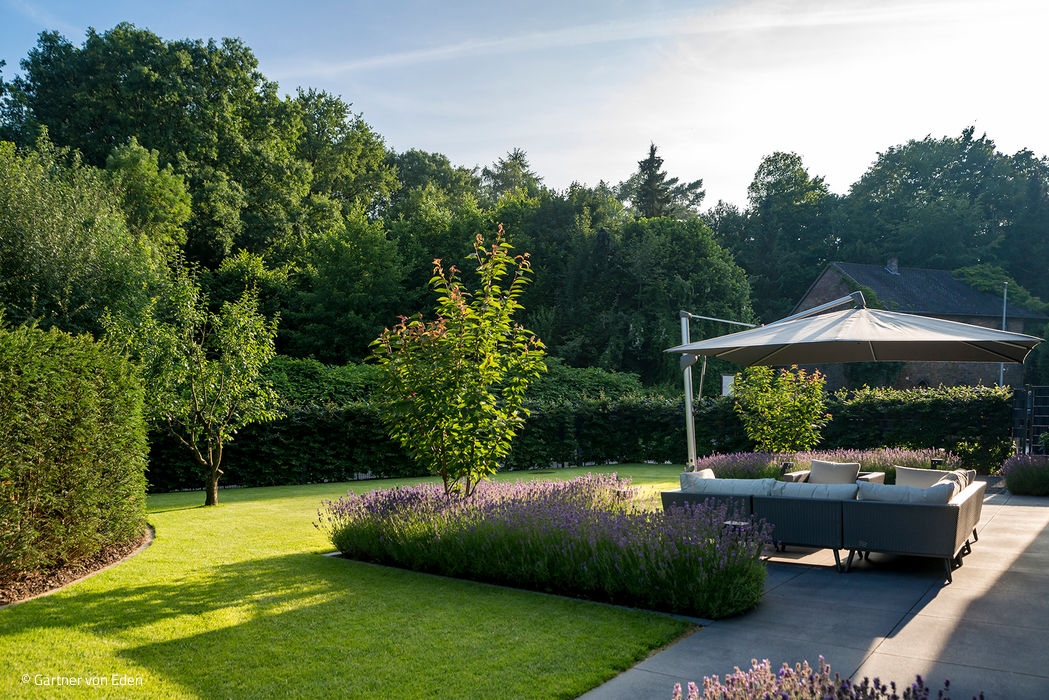
The garden's refined geometric lines are reinforced by thoughtfully composed plantings of evergreen shrubs and hedging.