


Learning Made Fun
A light-filled modular structure brings modern and flexible learning spaces to a Dortmund secondary school
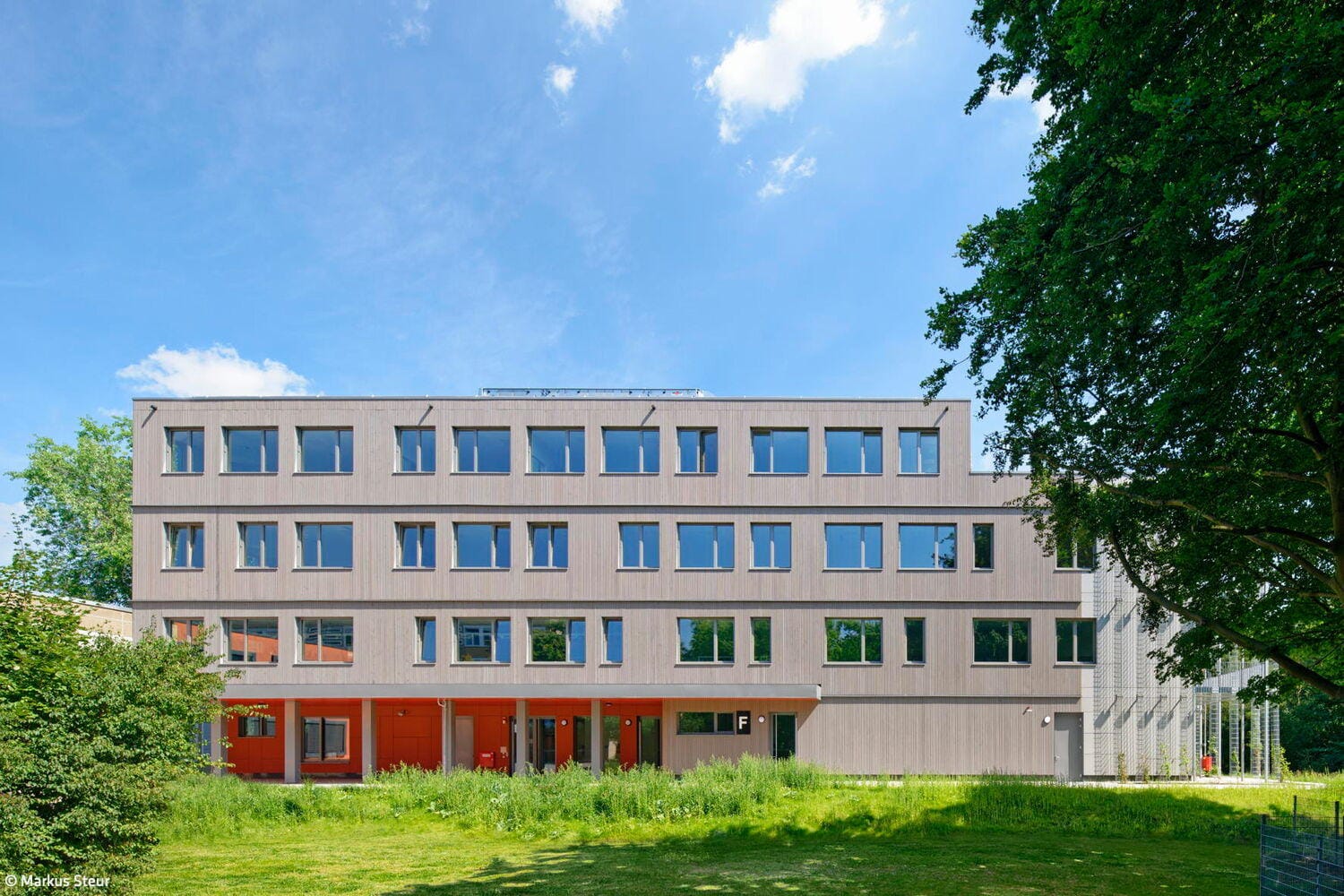
The "Dortmund approach" is delivering results: The city's commitment to swift new school construction and systematic renovation has produced projects that stand out for their adaptability and thoughtful design—always prioritizing what works best for educators and students alike. The expansion of Max Planck Gymnasium exemplifies this approach, realized by modular construction specialist Alho in collaboration with planning firm futur.drei.
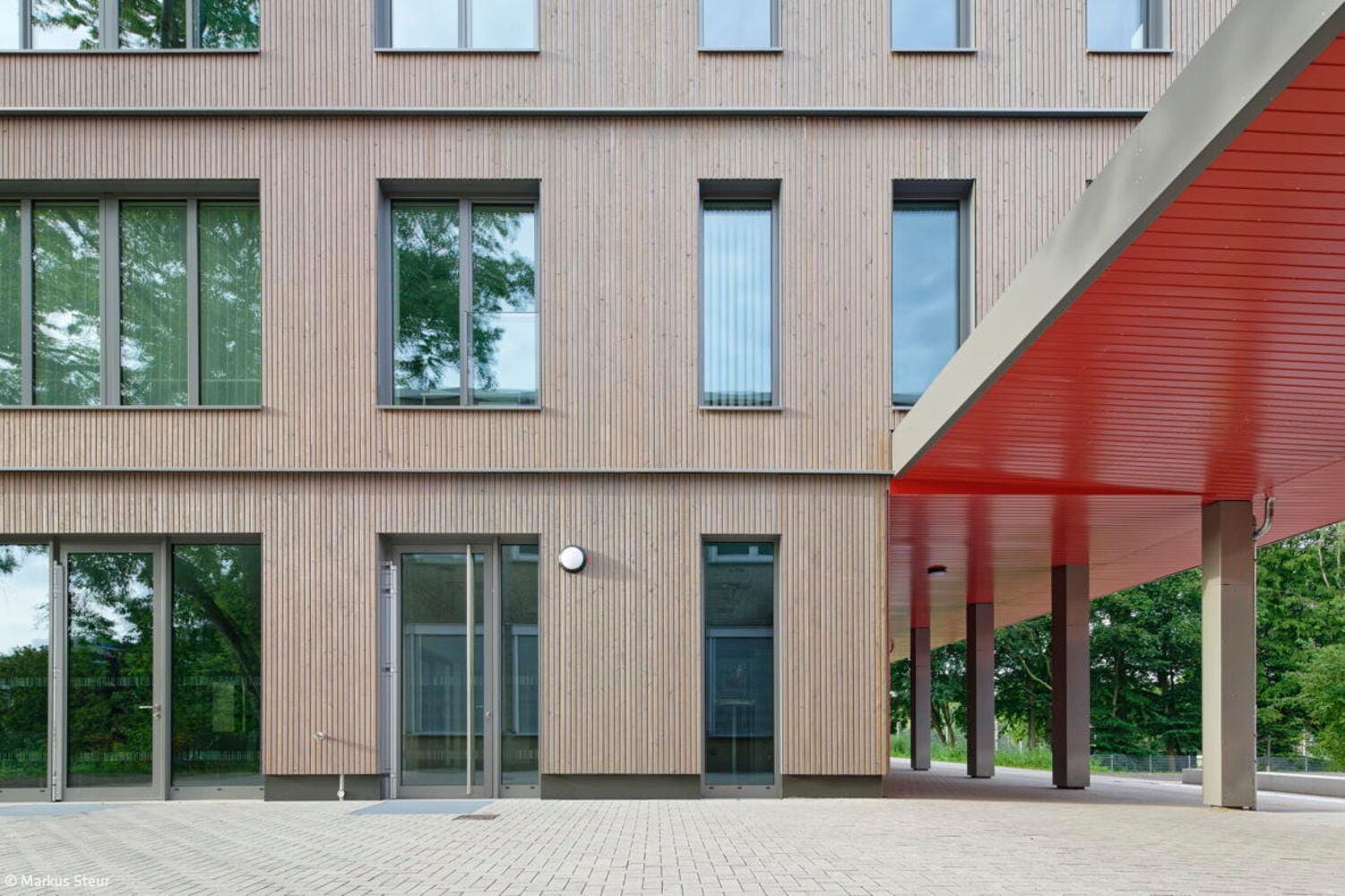
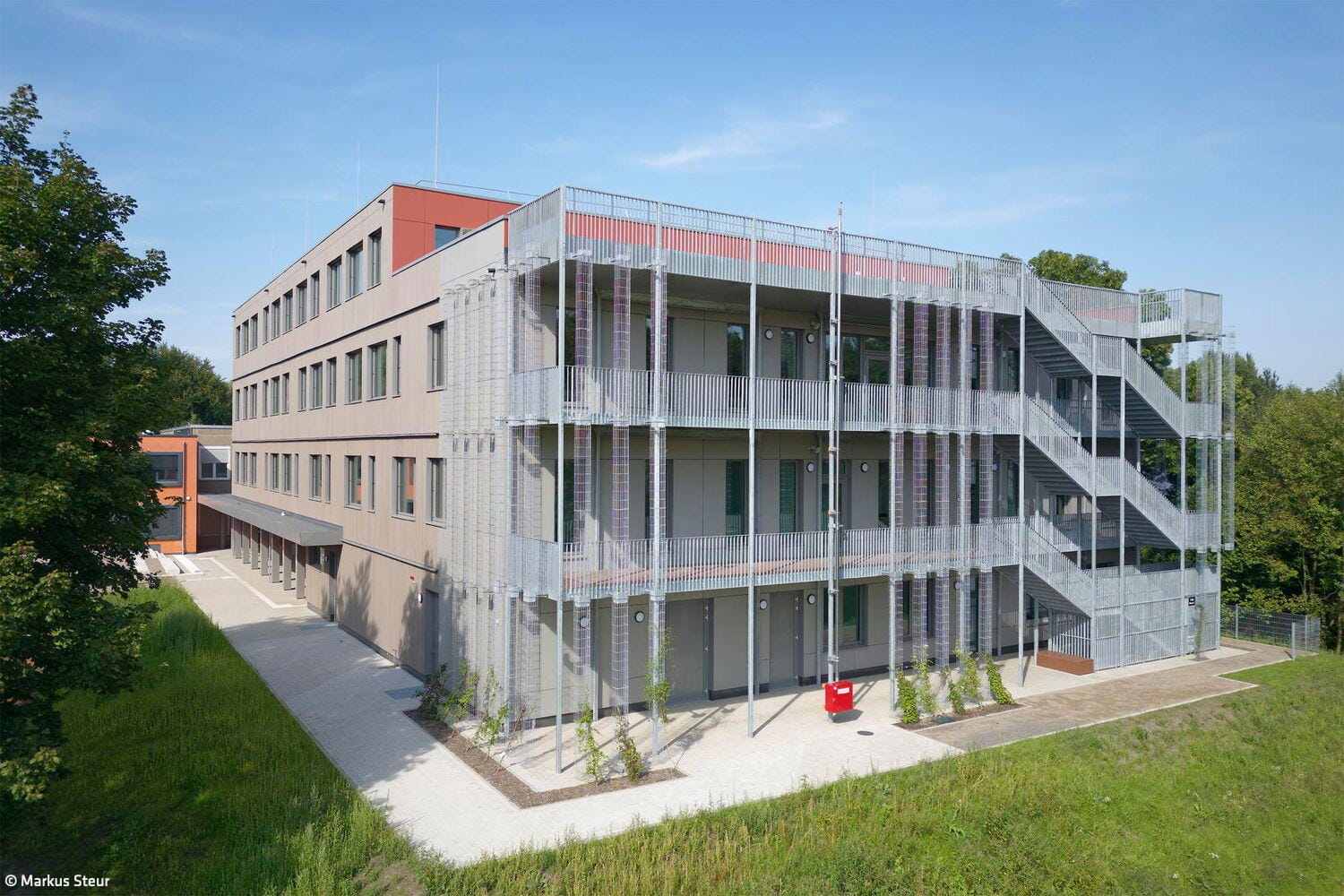
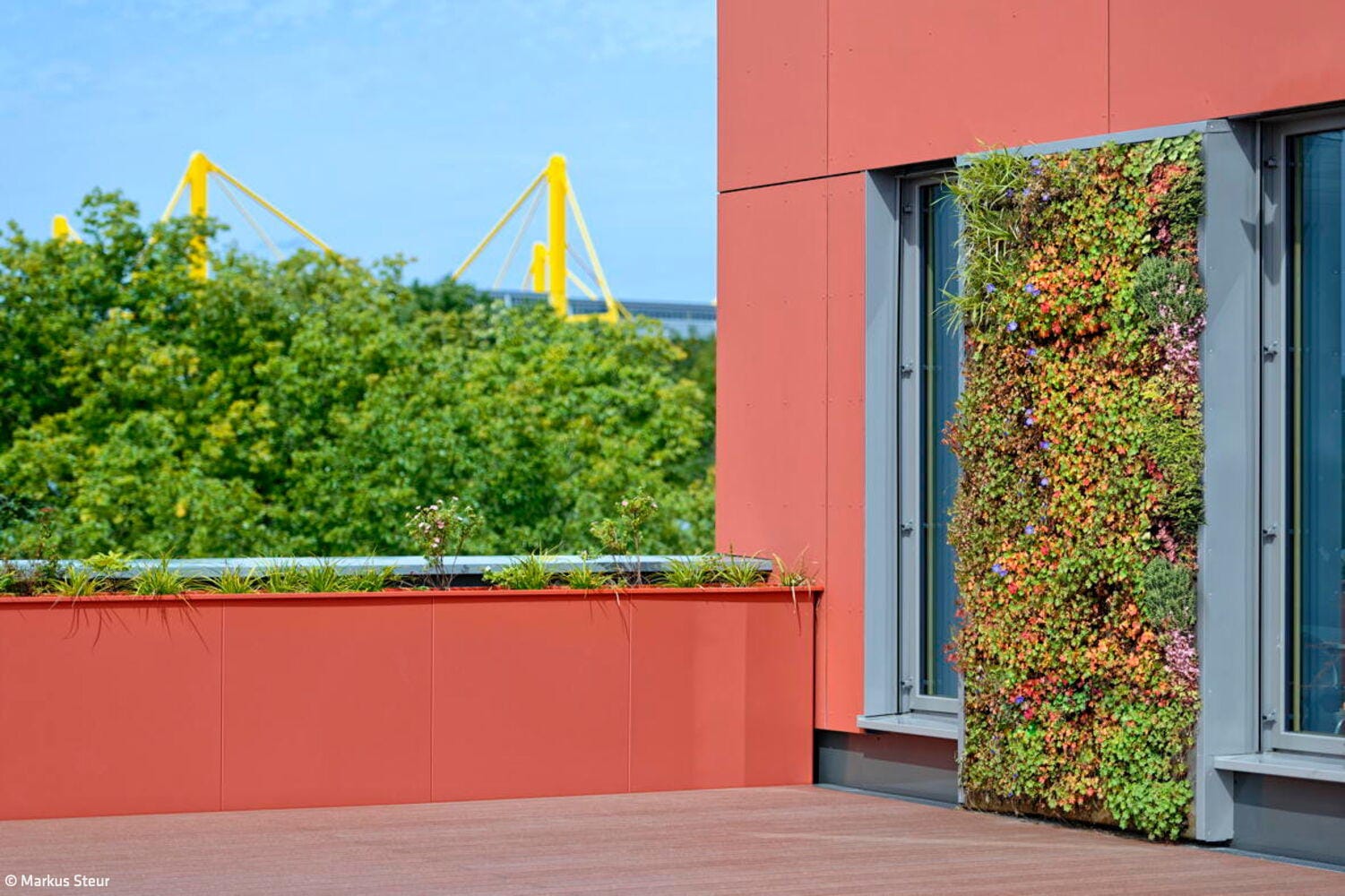
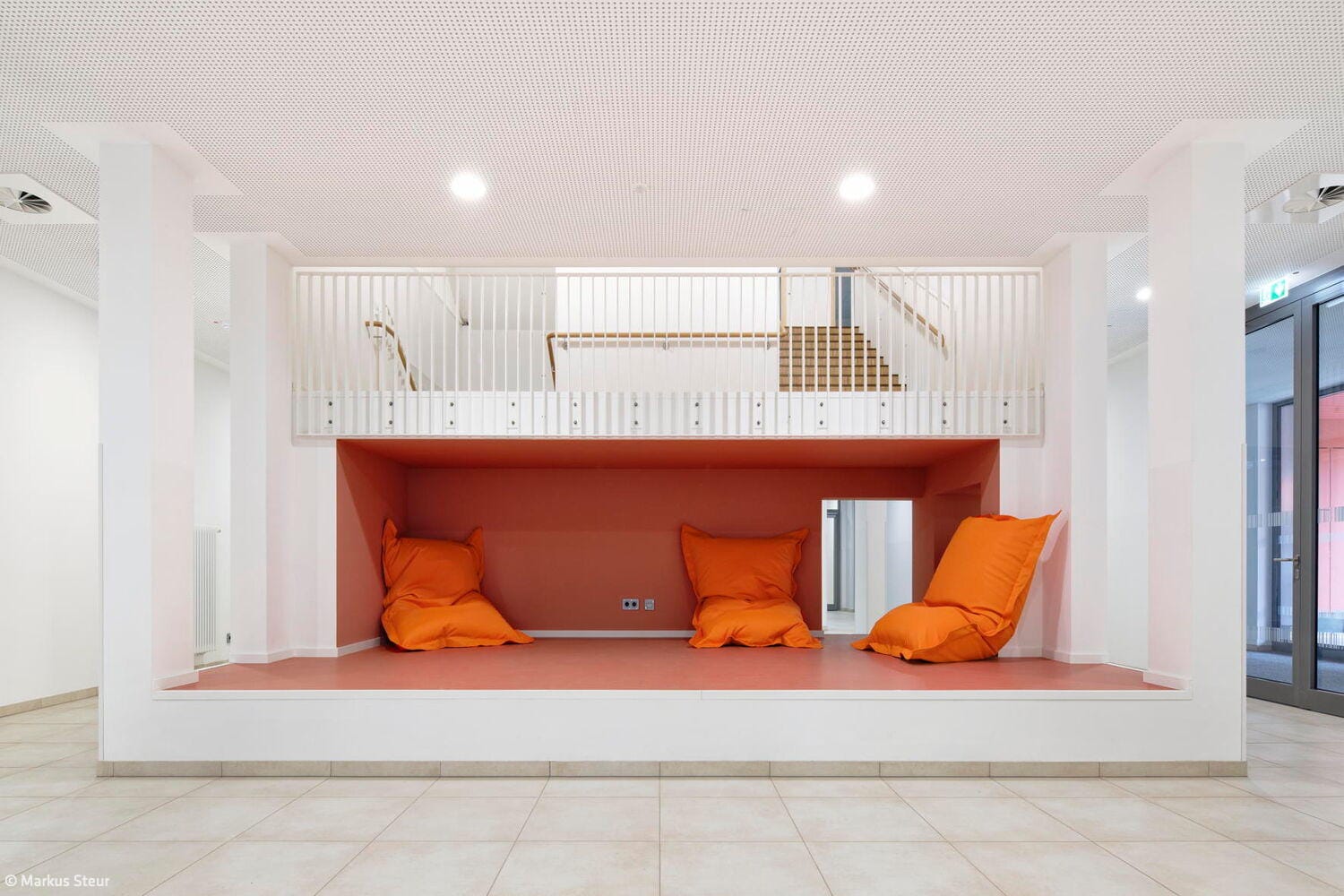
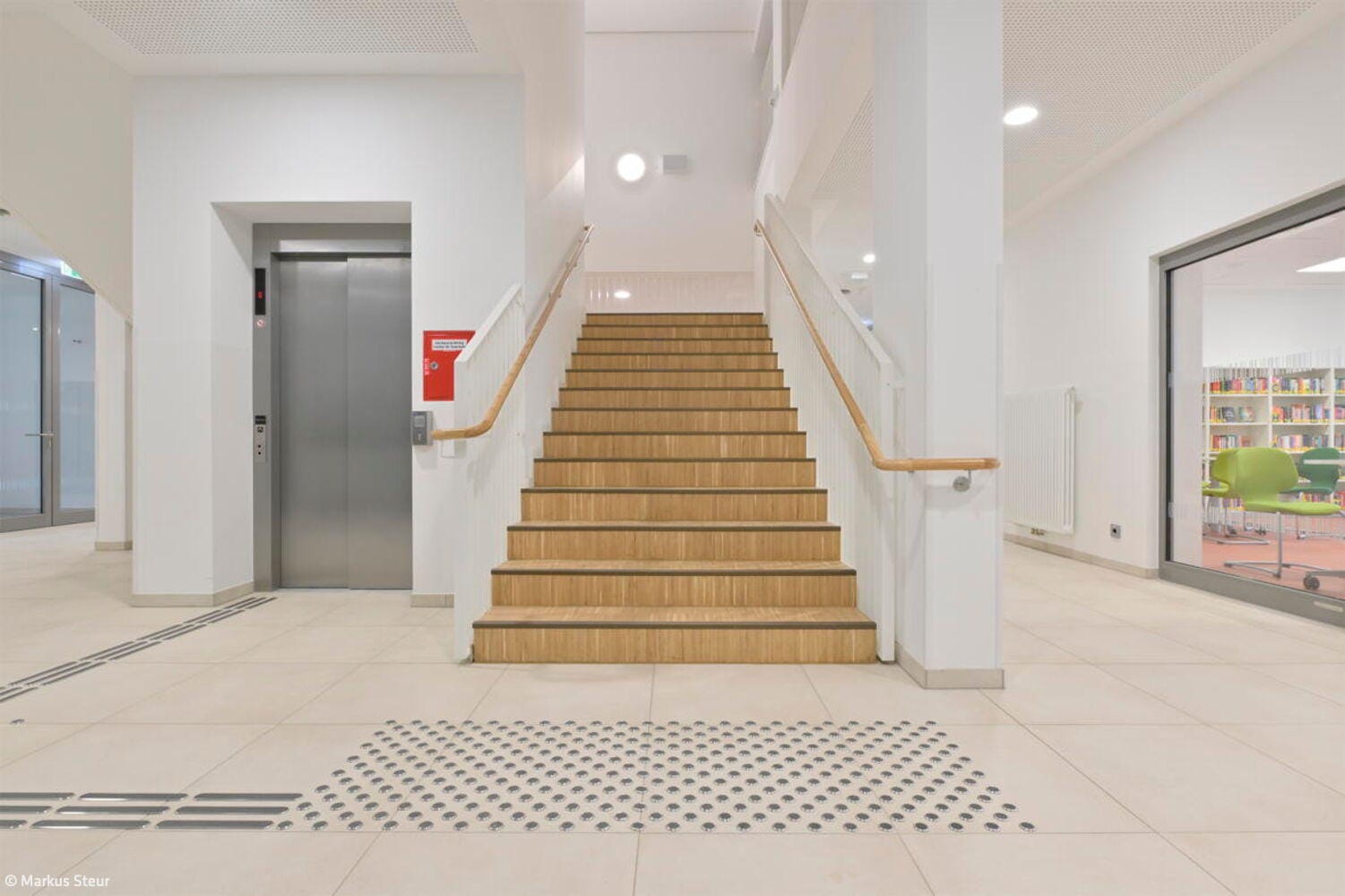
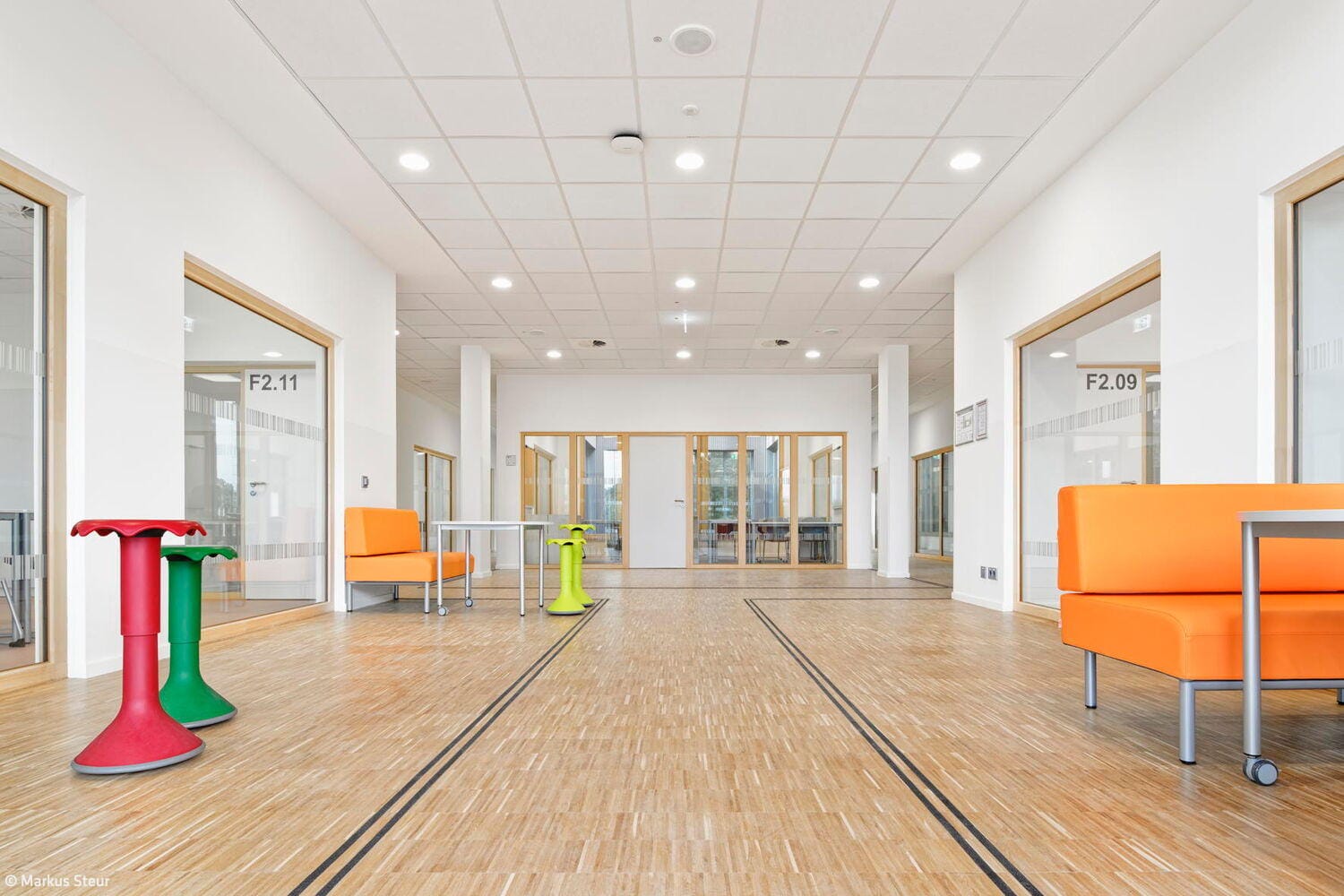
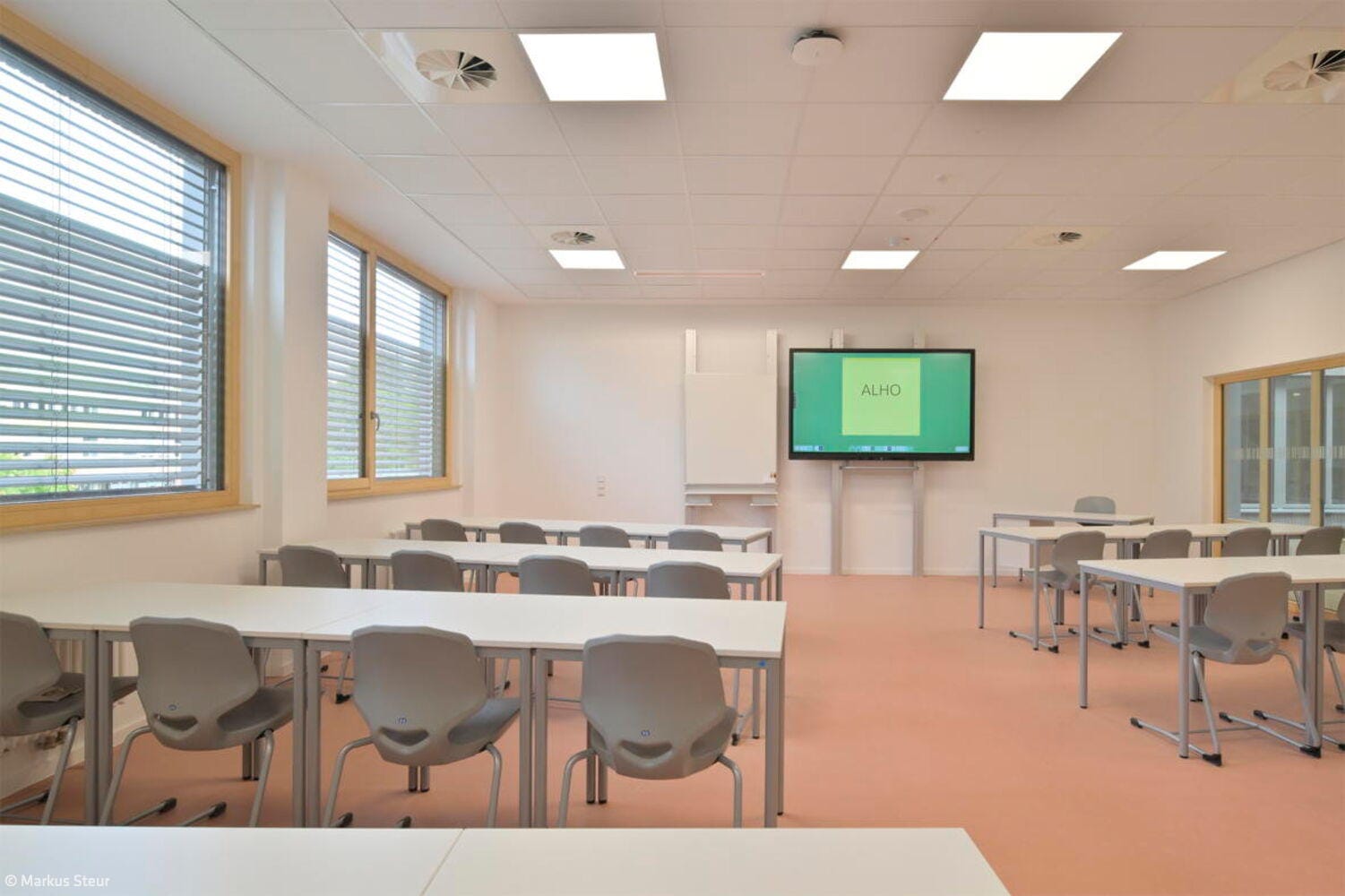
Completed in just 40 weeks, the Max Planck Gymnasium's extension was ready to welcome students. The cluster school design prioritized minimizing the building footprint to preserve precious playground space. On a compact 1,130 m² site, the architects created a new structure that bridges seamlessly to the existing building through a connecting roof, generous stairways, and fully accessible ramps. The recessed entrance, marked by a vibrant color accent, opens generously toward both the schoolyard and the existing building. Vertical wooden slats—some extending across windows and balconies—combine with a living green façade to create a natural, visually restful character. The building emanates a sense of calm and contemplation. A central atrium floods the interior with daylight, while the bright, open forum with its kiosk café serves as the welcoming threshold, connecting the entry to the main staircase. This generous space becomes the heart of learning, relaxation, and social exchange. The ground floor accommodates the media library, conflict resolution spaces, a student enterprise area, and counseling offices. Two learning clusters on the upper level house diverse classroom layouts and learning alcoves. Glass and timber elements unite the spaces while maintaining visual connections—together creating an inviting, light-filled environment where learning naturally thrives.
Soft, understated finishes are punctuated with carefully selected color—most notably in the furniture and fixtures. Restrooms feature bright blue and crisp white accents, creating welcoming, well-lit spaces. The third floor—the building's crown—contains specialized studios for art, music, and technology, each paired with display areas, plus support rooms and storage. Every element serves a clear purpose: dedicated collaboration zones and team stations encourage meaningful dialogue between faculty and students. Balconies transform into informal learning extensions, while the rooftop terrace opens possibilities for everything from gardening and drawing classes to outdoor rehearsals.
Photos:
Markus Steur
www.steur.de
(Published in CUBE Ruhrgebiet 04|25)
Heart of the Ruhr: Design from the Region
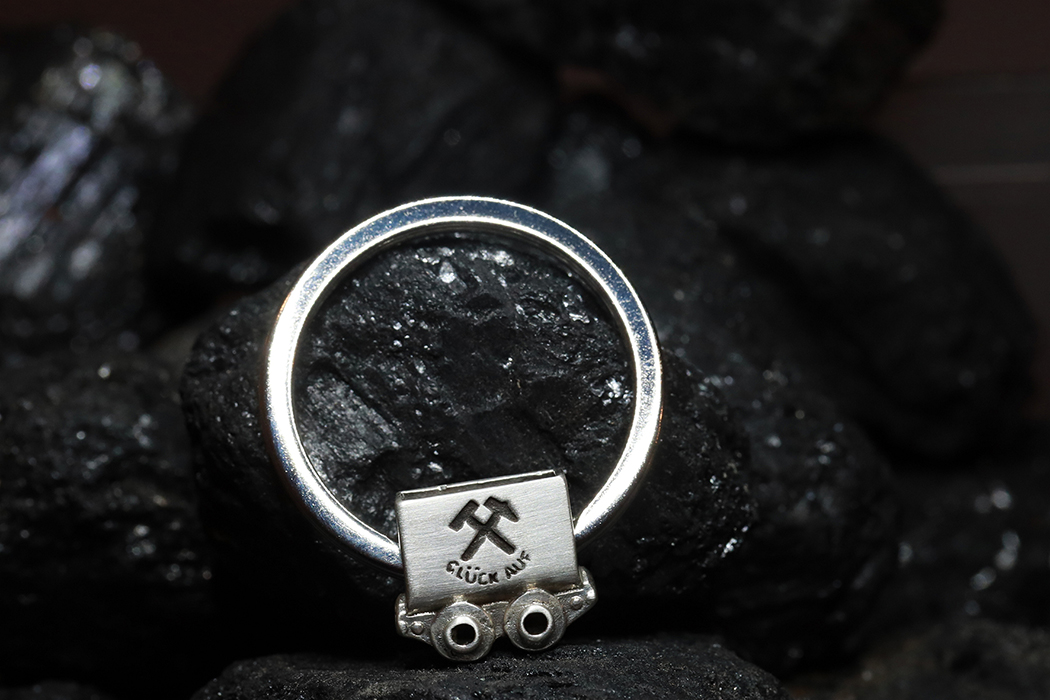
Birthe Deilmann crafts accessories rooted in her Ruhr heritage.
Workplace for Social Good
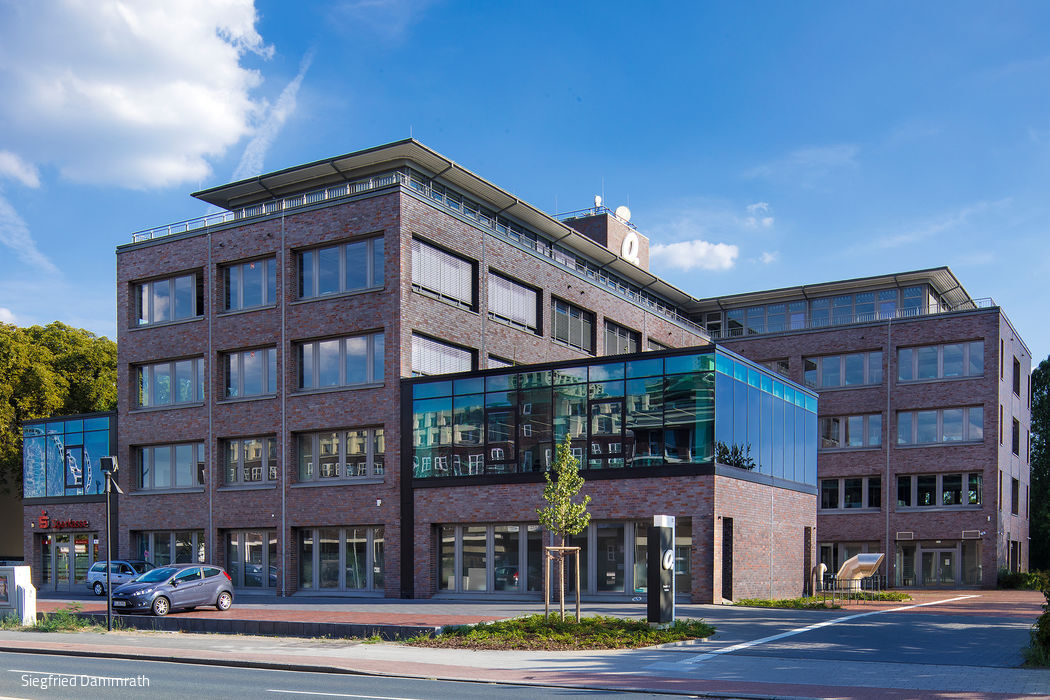
A Masterful Restoration: Sparkasse Building Reimagined in Oberhausen
Living with Freedom
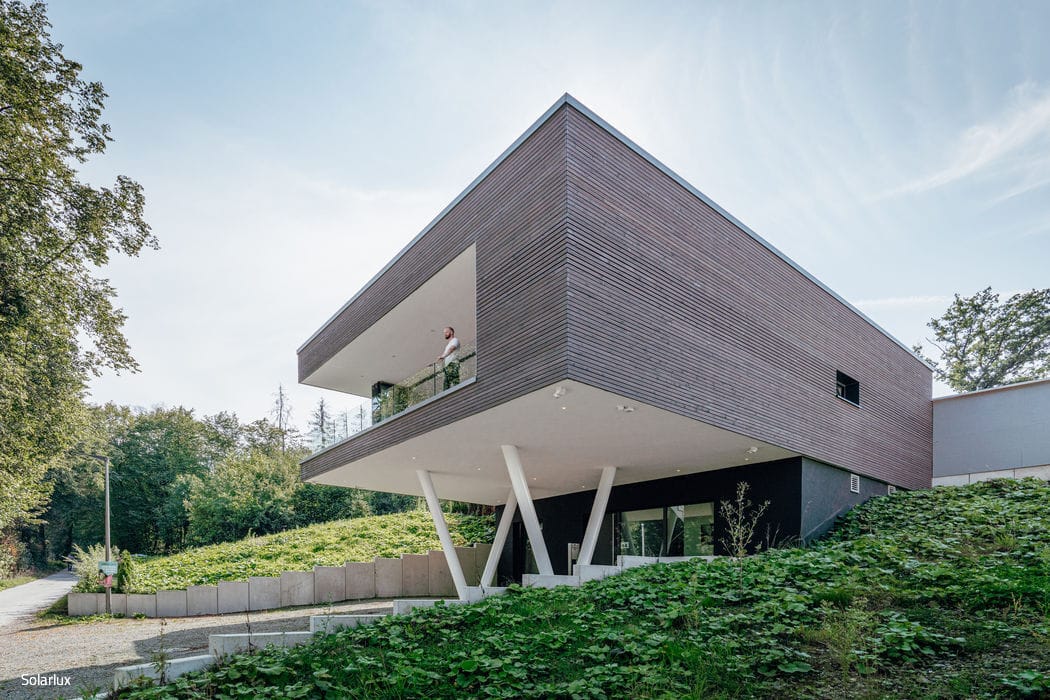
A Futuristic Home Designed for Maximum Openness