


Simply cleaner and more beautiful
The new AWB depot in Kalk presents itself as a harmonious ensemble.
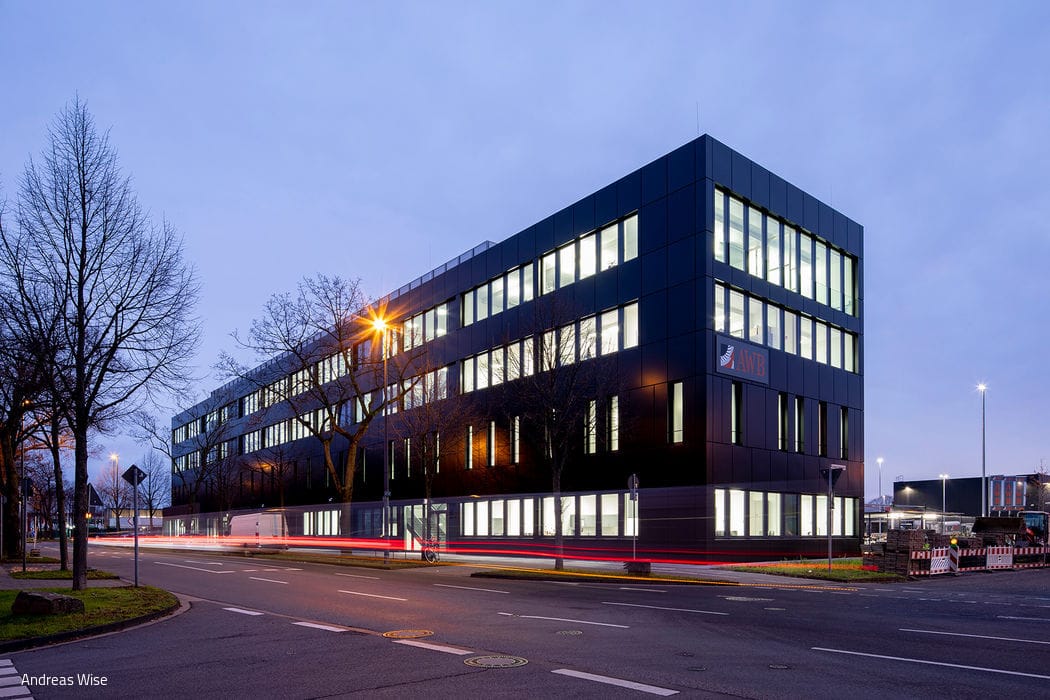

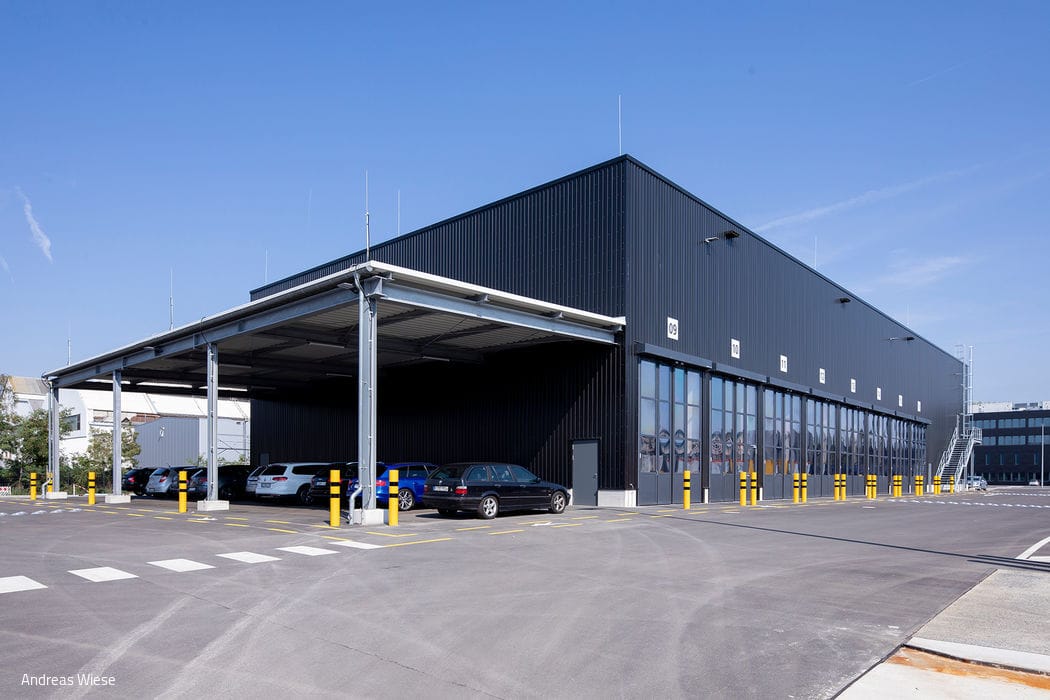
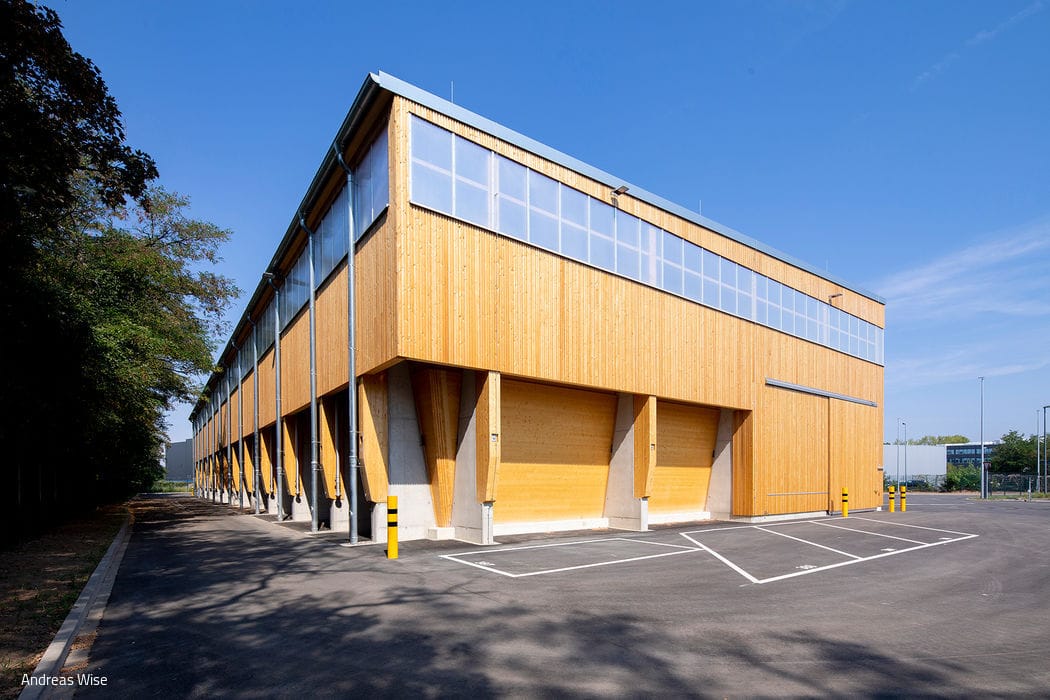


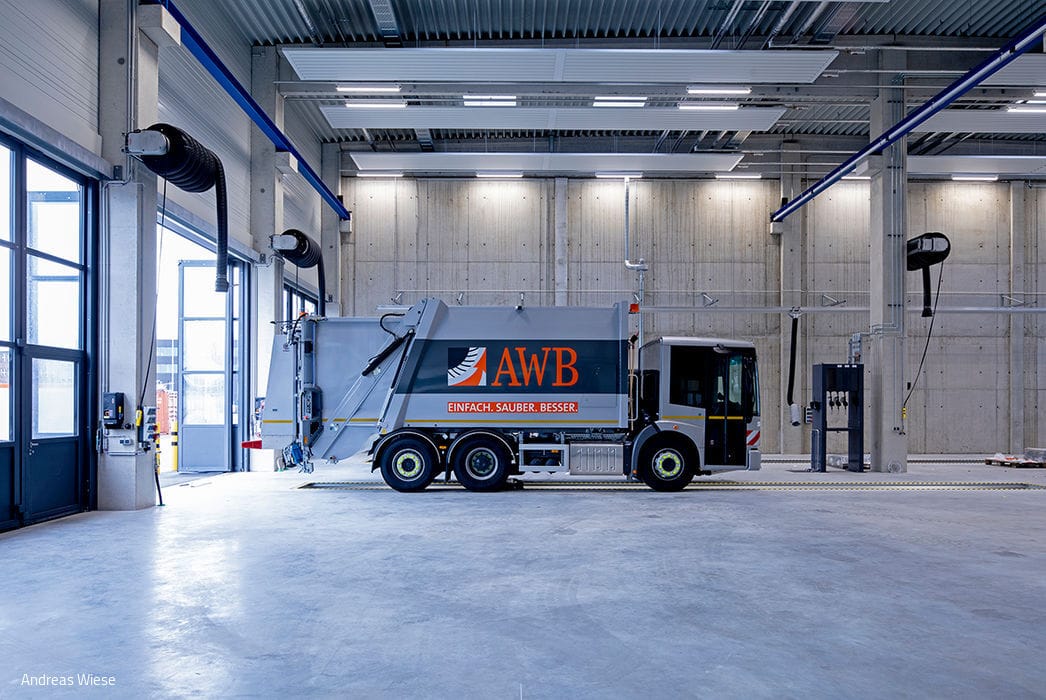
Waste disposal and street cleaning are essential prerequisites for a functioning urban community. To make their work even more efficient, Cologne's waste management company (AWB) has been given a new depot at a new location on the right bank of the Rhine. As general planners, Bonn-based sgp Hachtel Bauer architekten designed and built a central administration building, a truck workshop and a vehicle hall, as well as additional traffic, storage and transhipment areas in collaboration with Schüßler-Plan.
The AWB's aging depot on Gießener-Straße had outlived its usefulness, particularly as the city needed the site to expand the Cologne University of Applied Sciences campus. The decision was made to relocate the facility while keeping it centrally positioned on the right bank of the Rhine—critical for operational efficiency. The chosen location: a former Deutz Works property on Dillenburger Strasse. The sgp Hachtel Bauer Architekten / Schüßler-Plan team won the design competition with a concept that gave the workplace both character and purpose—achieving this while optimizing workflows and efficiency. The key was creating a unified experience across all the utilitarian structures. This commitment to consistency extended to every detail: the buildings' articulation, proportions, materials, and color palette were all carefully coordinated. The selection of simple, dark-toned forms directly echoes the company's philosophy ("Simply cleaner. Better.") while creating striking contrast against the gray asphalt, vehicles, and Cologne's often overcast skies. The administration building employs a reinforced concrete frame with a suspended aluminum curtain wall system. Given the historic industrial architecture of the Deutz Works across the way, the designers deliberately avoided a composite insulation facade—a choice that respects the site's character and heritage. The halls are constructed from precast concrete elements, their robust facades reflecting the demanding nature of the work within while projecting a distinctly industrial aesthetic. One notable exception: the salt storage and winter services building, which required an entirely wood-based construction to resist corrosion from stored materials—and received a distinctly different color treatment to mark its special function. Energy-wise, the facility connects to district heating, while the expansive hall roofs are fitted for photovoltaic generation. High surface sealing is mitigated through rainwater infiltration systems that feed into underground retention basins.
Photography Credits:
Andreas Wiese
www.fotografie-wiese.de
(Published in CUBE Cologne 03|23)



Respectful yet transformative
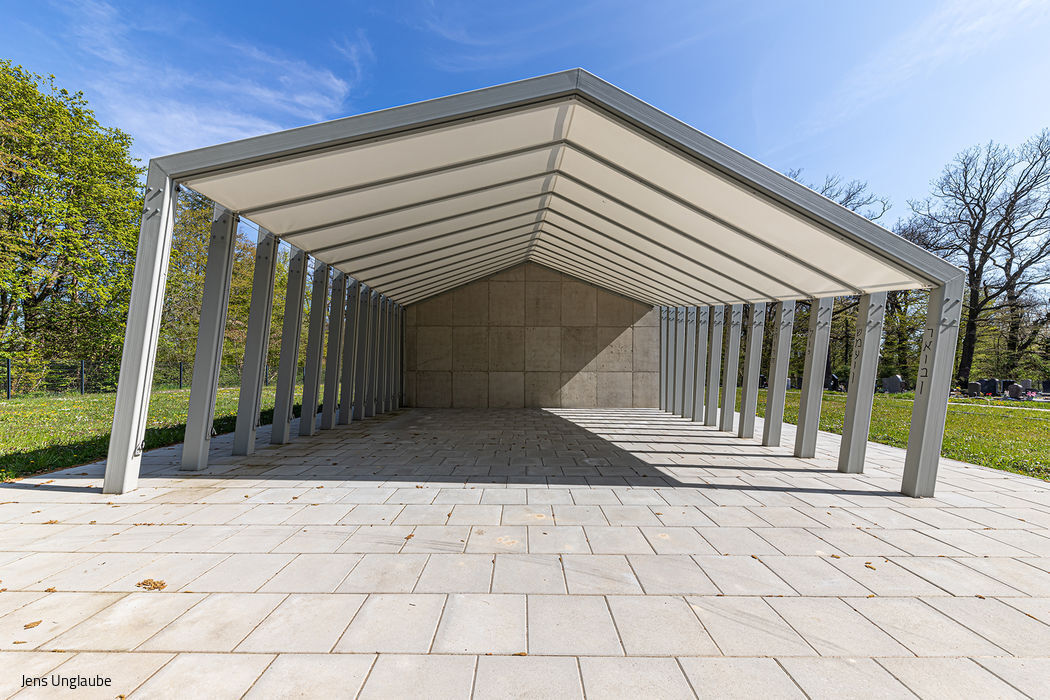
Though modest in scale at 7.70 x 7.30 metres, the hall's distinctive form tells the story of a complex and eventful past.
Agile work in motion
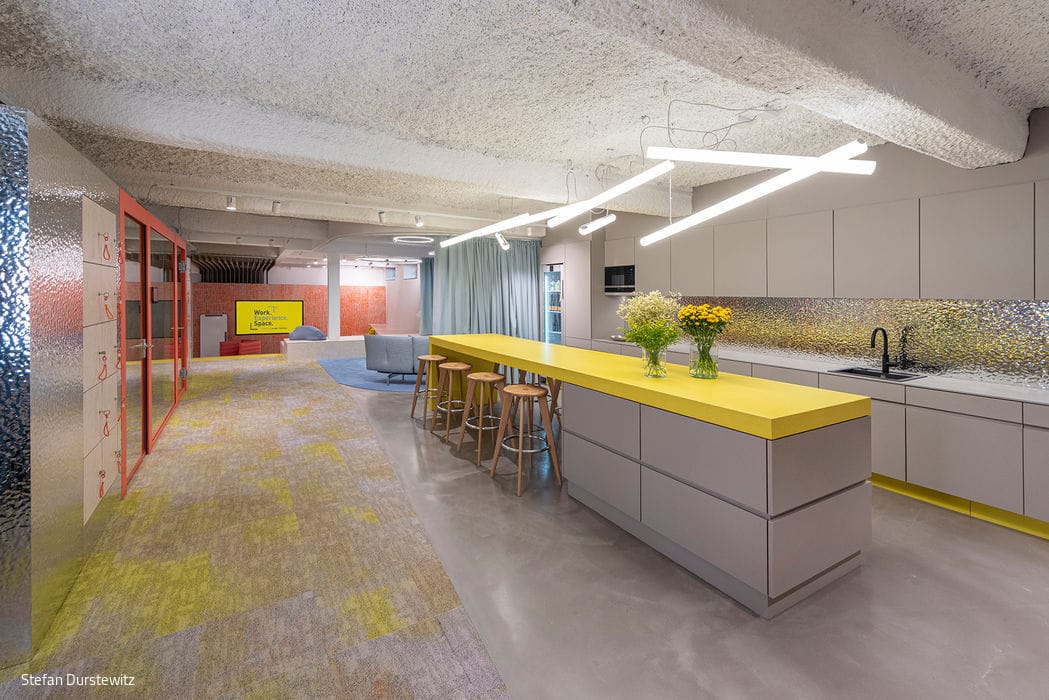
A "Work Experience Space" in the south district gives forward-thinking companies a live testing ground for tomorrow's work methods.
Preserving splendor
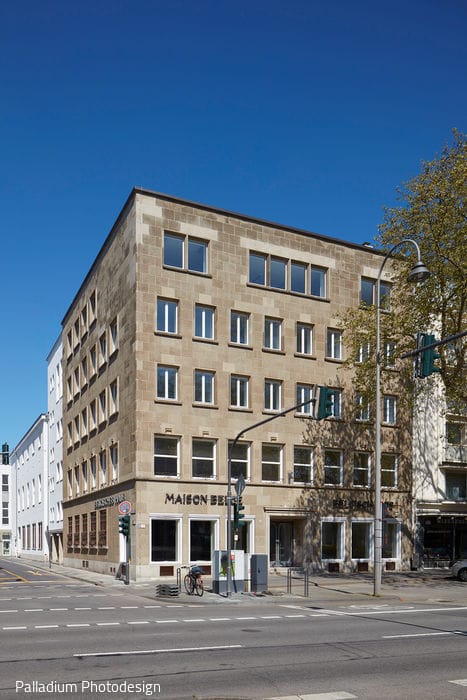
The Belgian House was renovated in accordance with conservation guidelines and converted into the Roman-Germanic Museum.
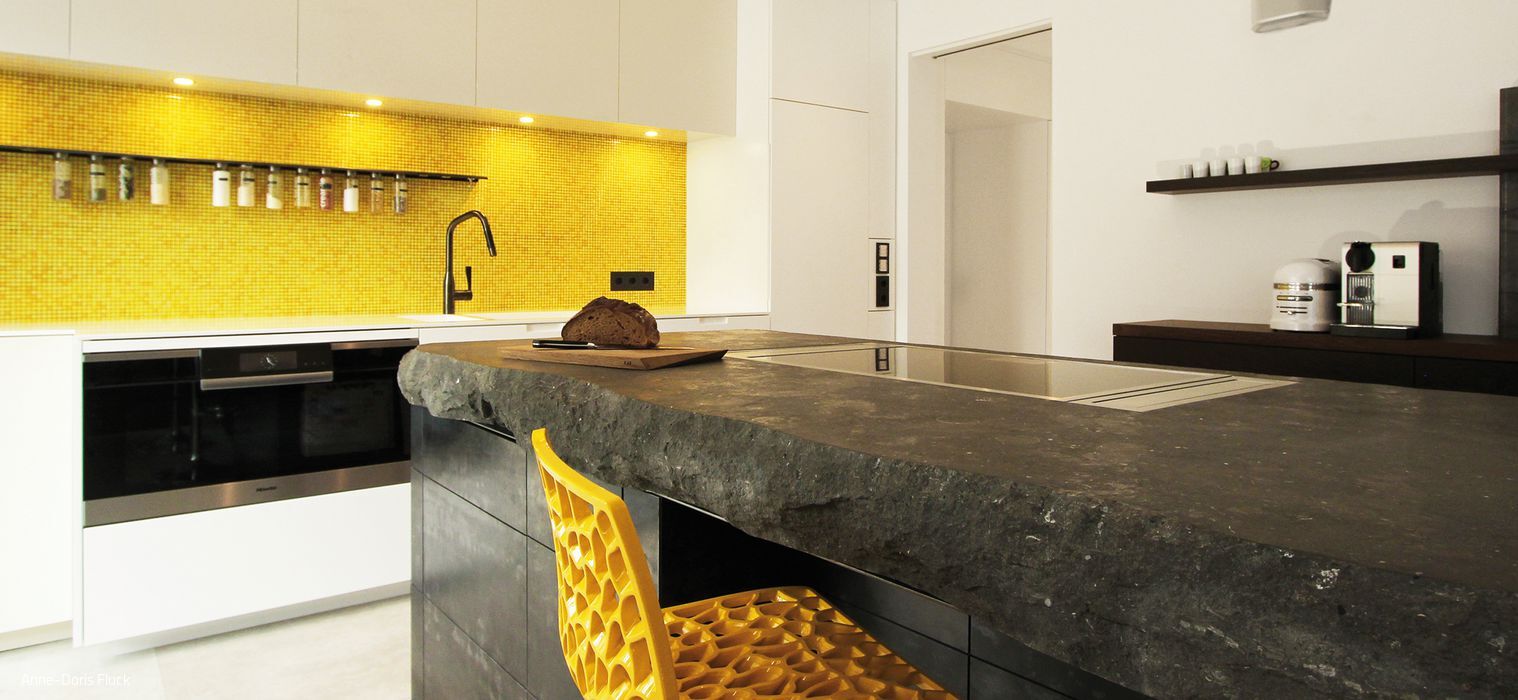
A Burst of Colour
A Bonn residence receives a vibrant transformation