


A Dutch Approach
The Roermonder Höfe blend living and working into a unified ensemble with generous open spaces
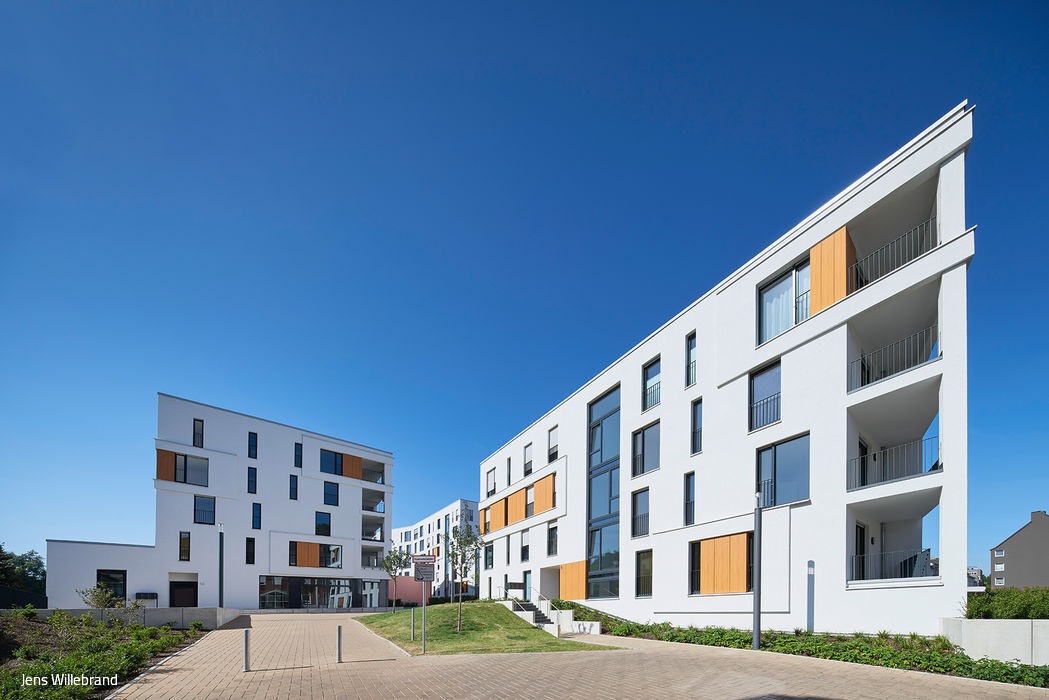


City centres hold magnetic appeal for diverse populations with varied needs. Here, living, working, and daily life unfold in densely woven urban fabric. Today's inner-city districts are being reclaimed as vital mixed-use environments—where residential and commercial functions coexist without strict urban boundaries. The new quarter at the base of Mönchengladbach's Abteiberg embodies this very philosophy. On the 15,000 m² site of the former central bath house, Dr. Schrammen Architects have orchestrated seven freestanding structures for Gondo Immobilien—each four to seven storeys with distinctive polygonal footprints—into a seamlessly integrated live-work ensemble. The boundary between these two functions becomes visually indistinguishable.
For the first time, the urban design strategy draws from neighbouring Dutch planning philosophy: rather than sequestering residential and commercial activity from public life, it pulls vitality directly into the neighbourhood fabric. Piet van Pol—the developer, now deceased—fully grasped the undertaking's complexities: "The Netherlands and Mönchengladbach may be just a stone's throw apart, yet they're worlds away. We would never have ventured this leap without the insight of our local architects. [...] You must truly know and understand a city to execute a project of the Roermonder Höfe's scale." The buildings present their primary facades toward the street. Conventional perimeter-block massing was deliberately rejected to maximize air and light for residents. The design respects the existing north-south axis leading toward the neighbouring city centre. Four buildings face three others in an interlocking gesture—like fingers of clasped hands. Between them unfolds a distinctive public realm anchored by eight generous courtyard spaces. Each building volume steps inward as a cubic sculptural form, establishing a distinctive architectural identity for the entire development.
The neighbourhood provides 130 fully accessible apartments totalling 12,000 m² of living space. Three four-storey residential buildings line Lüpertzender Straße to the north, while portions of the four Fliethstraße buildings step down to five storeys on their courtyard sides. The approximately 5,500 m² of office space and 2,000 m² of commercial units also front Fliethstraße, their colonnade-style upper storeys creating a striking seven-storey presence. Residents, workers, and visitors benefit from the integrated daycare facility and neighbourhood dining venues positioned within the courtyards. The longitudinal building block simultaneously shields the inner courtyards from traffic noise on busy Fliethstraße, establishing a peaceful retreat. The entire neighbourhood—accessed from the south via a sculptural pedestrian bridge—remains car-free, with two basement garages serving residents, offices, businesses, and guests alike. A meandering footpath traverses the central landscape, composed of trees, walks, and meadows that evoke the historic Gladbach Valley. This design thoughtfully honours the site's heritage.
Photos:
Jens Willebrand
www.willebrand.com
(Published in CUBE Düsseldorf 03|21)
More Space for Children
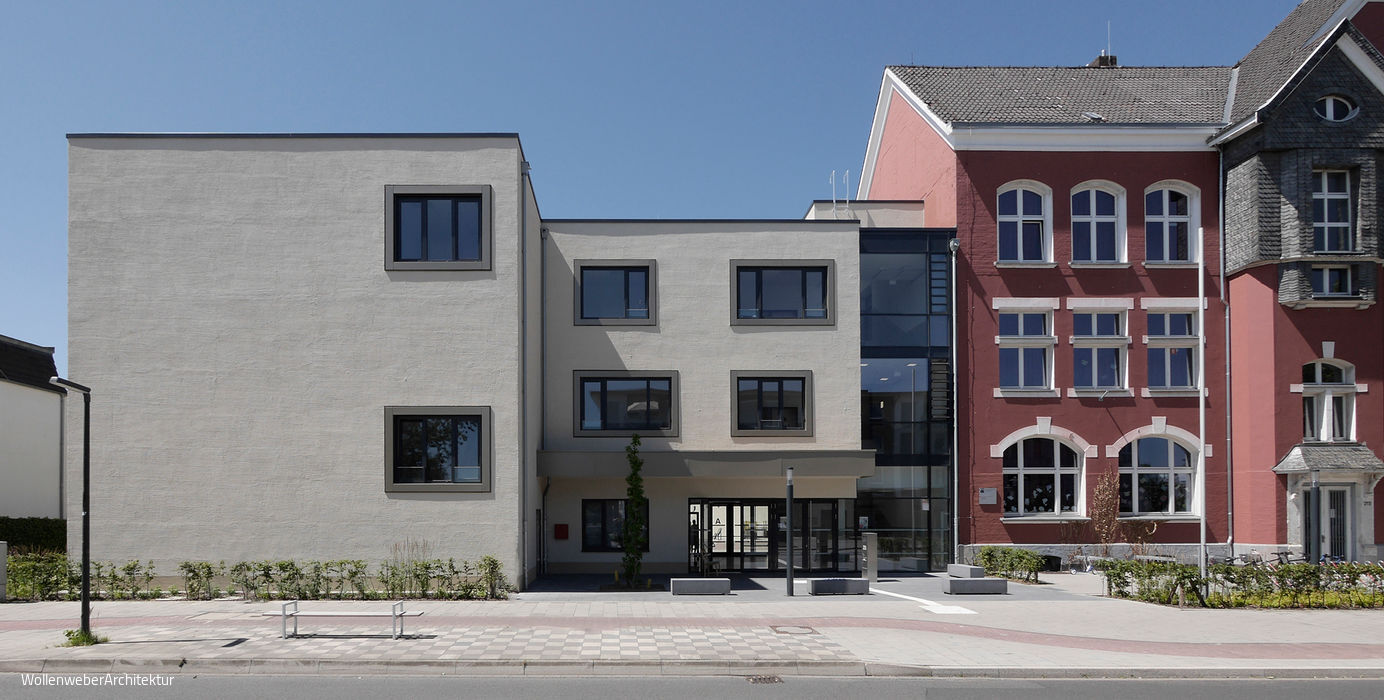
Primary school to be expanded with three-part new building including sports hall
Welcoming Office Spaces
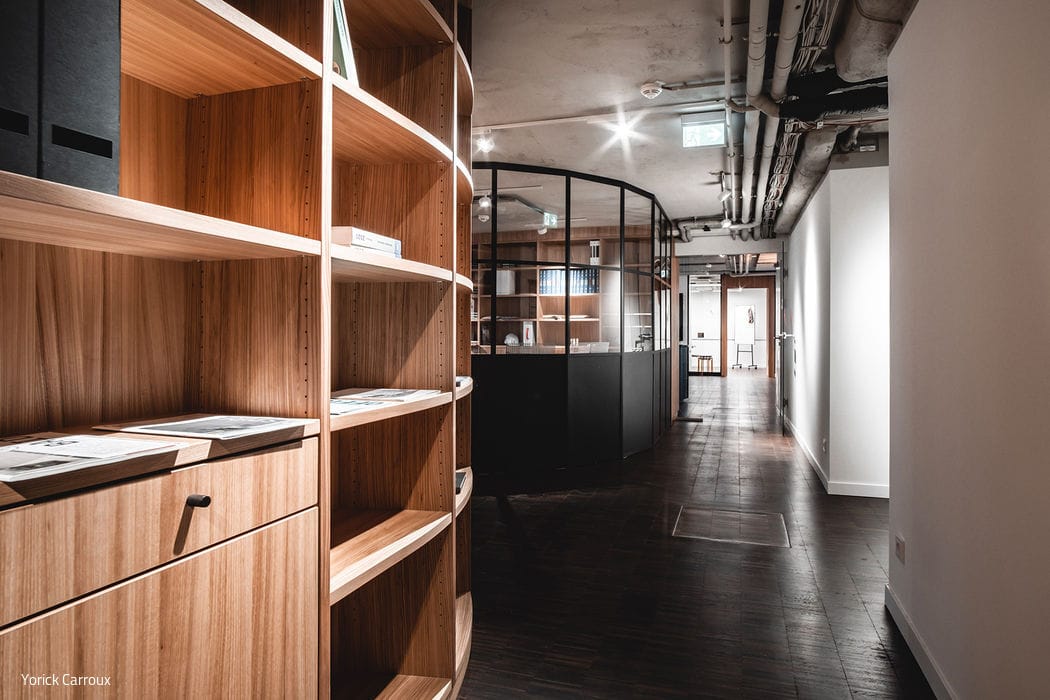
A design and planning studio reimagines the modern workplace—for itself.
Everything under one roof
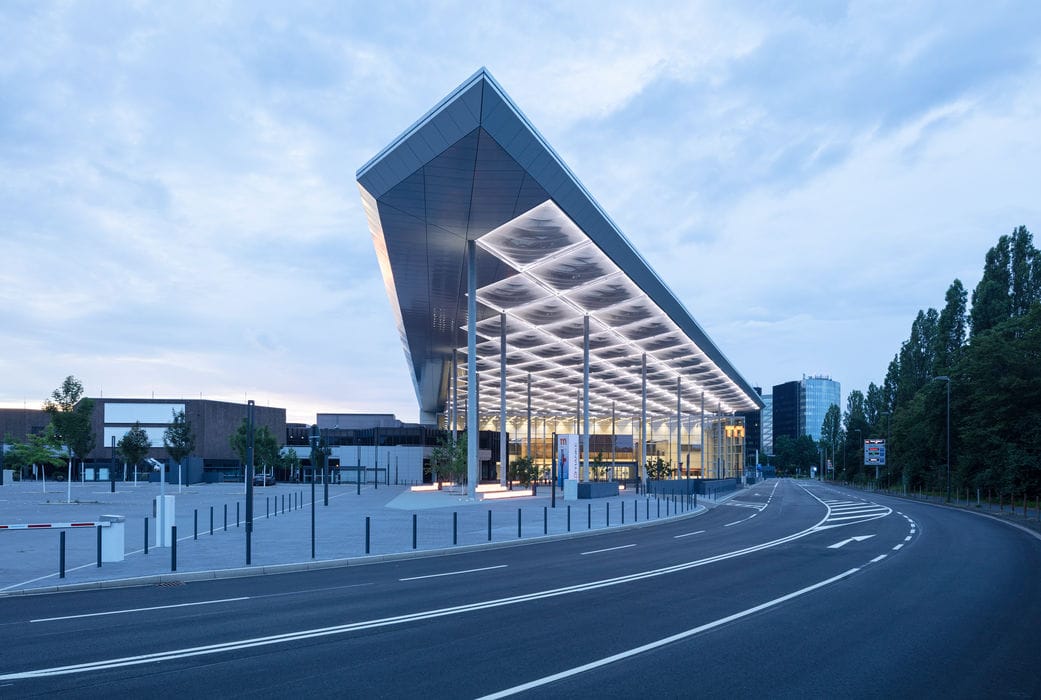
The "Neue Messe Süd" establishes a multifunctional gateway—connecting the exhibition grounds seamlessly with the city itself.
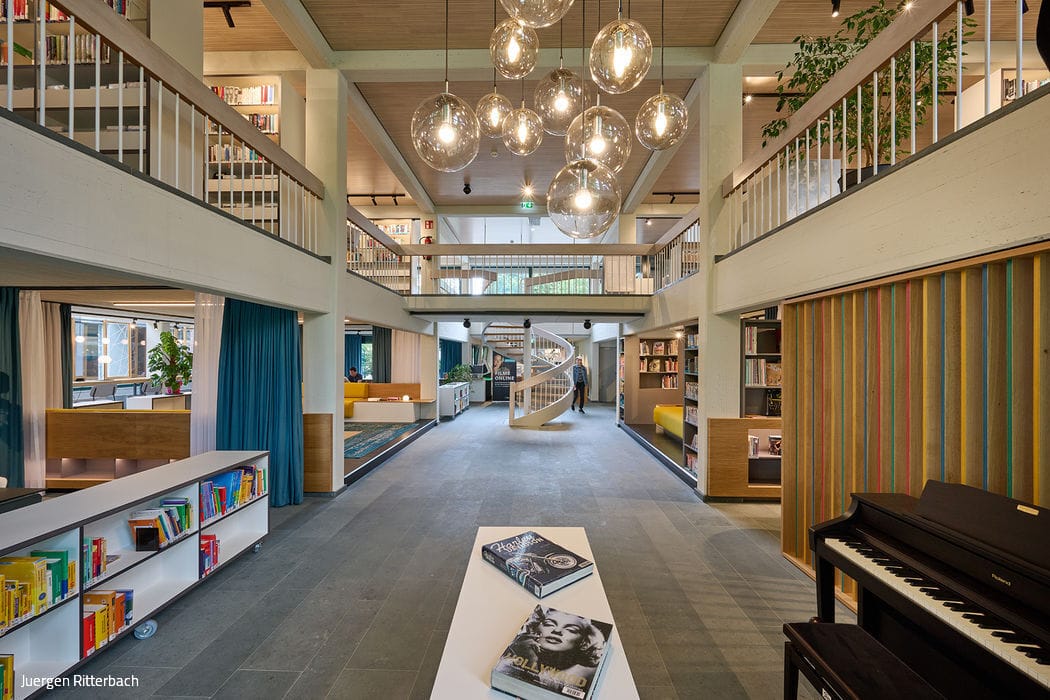
A Public Living Room
Monheim's redesigned library draws stylistic inspiration from the existing building's architecture.