


Rescue and Repurposing
Award-winning transformation of garages into a shared community space


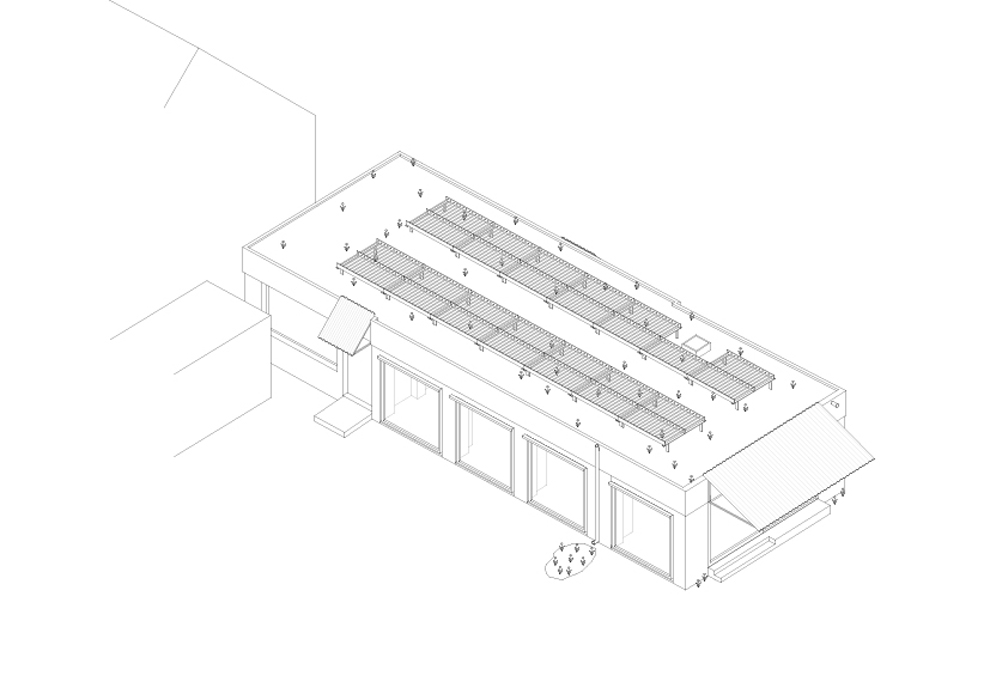




On the grounds of a former factory overlooking the Großer Zernsee in Werder an der Havel, just outside Berlin, stands "Uferwerk e.G." – a pioneering cooperative housing project designed to serve multiple generations. When the building faced certain demolition, a competition was launched. The winners – architects undjurekbrüggen and the OFEA (Office for Ecological Architecture) collective – not only saved the structure but created something remarkable enough to earn the prestigious Erich Mendelsohn Prize in Gold in 2023, awarded every three years for exceptional brick buildings.The achievement is particularly striking given the project's humble beginnings. "Luise 19E," as it's known, was originally an unremarkable extension housing a row of garages – and it was in terrible condition. The structure had deteriorated significantly: contaminated soil, cracked walls, a leaking roof, and a roofing system containing asbestos and PAHs (polycyclic aromatic hydrocarbons) – highly hazardous materials that needed careful removal.Yet the young architects saw potential. They transformed those dilapidated garages into a vibrant gathering space for residents. True to the cooperative's participatory ethos, the entire planning and construction process involved the community, with residents actively contributing their labor. The result is a thoughtful act of preservation that demonstrates how good design can breathe new life into forgotten spaces.
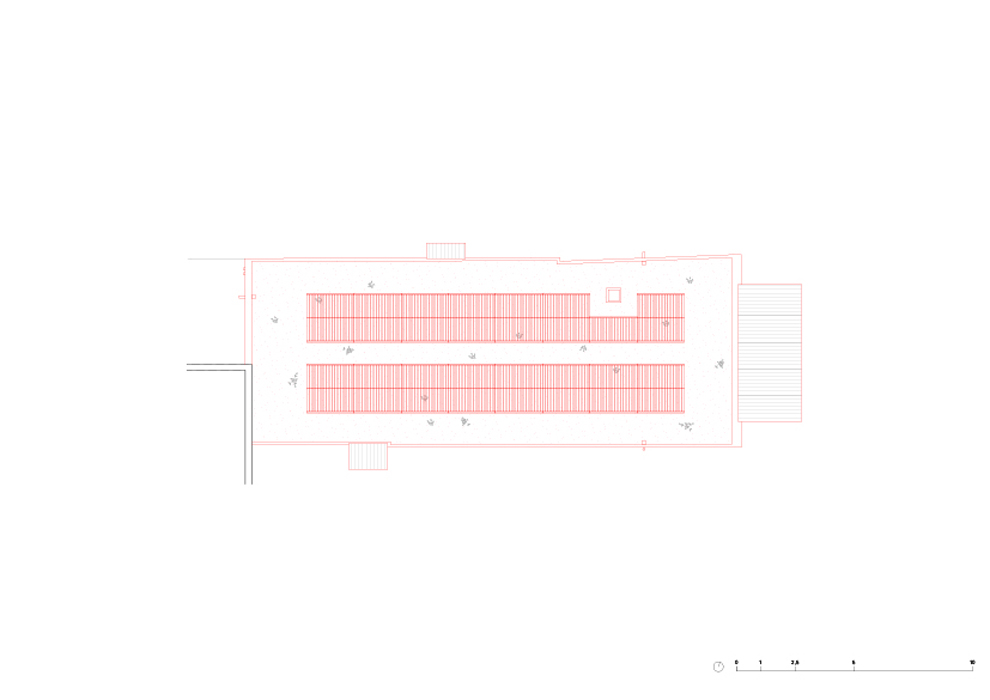
Here's how they did it: The entire roof was removed and disposed of, then rebuilt using wooden beam construction reinforced with a ring anchor. The new flat roof was planted with vegetation and fitted with an elevated photovoltaic array. The foundation required selective reinforcement – some sections were incomplete or insufficient. Rather than erasing history, the architects retained the original garage partition walls, making them visible through strategic wall treatments. Where the eastern section lacked adequate foundation, they removed it entirely, replacing the gap with a floor-to-ceiling sliding glass door that opens directly onto the terrace. The original garage doors gave way to expansive glass panels, while motorized drop-arm awnings regulate light and heat as needed.The irregular brickwork was left largely untouched – only the cracks were professionally repointed. Hemp lime insulation, chosen for its climate-positive properties, was applied to the interior. This careful approach to reuse meant substantial savings in both resources and embodied energy. Perhaps most delightfully, nesting boxes for native birds have been seamlessly integrated into the facade, welcoming wildlife into the revitalized space.
Photography:
Hannes Heitmüller
www.hannesheitmueller.de
(Published in CUBE Berlin 02|24)


Three Generations of Craftsmanship
etna creates hand-blown glassware built for daily life.
New Colors for Politics
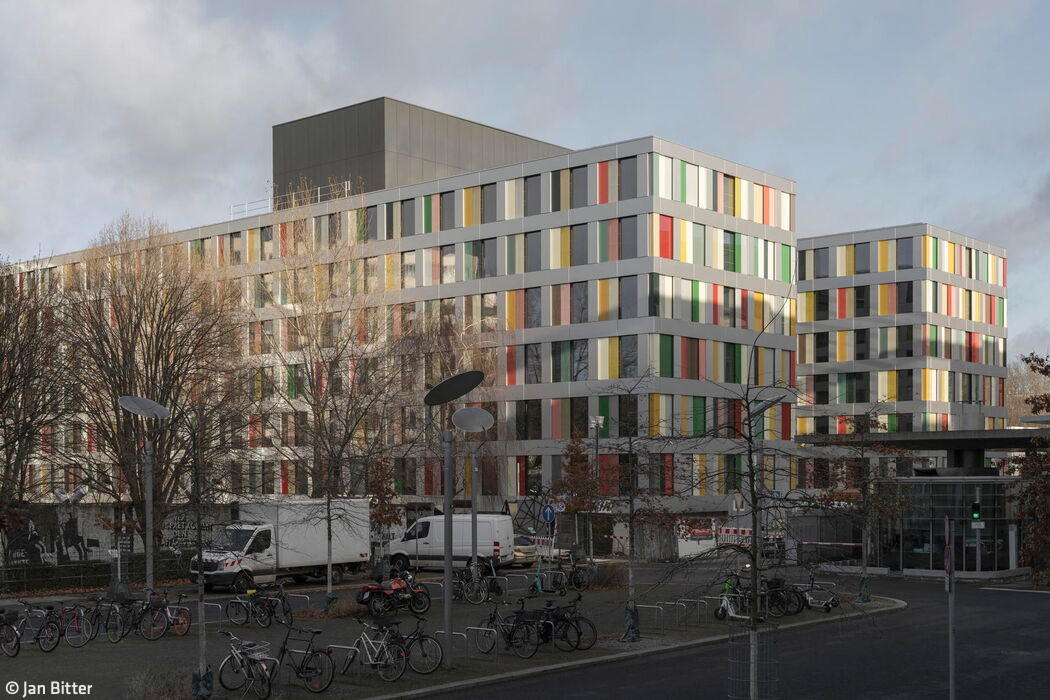
New Government Building Along the Federal Strip
Cube Pyramid
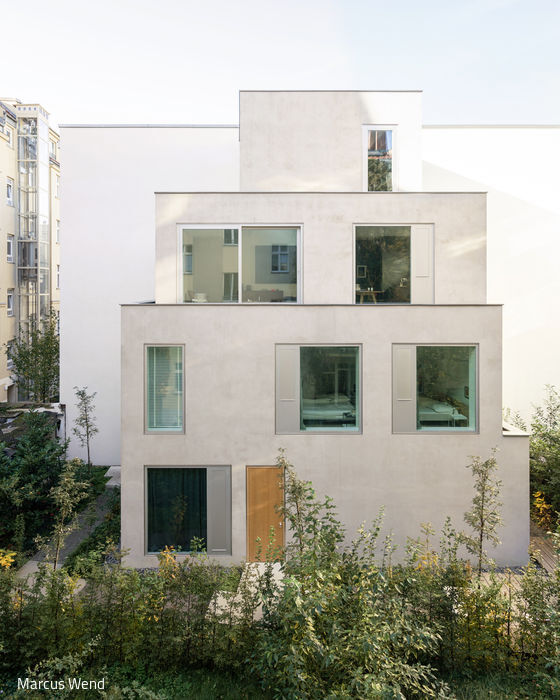
Three-facade townhouse RHE42 built against the shared party wall
Sustainable by Nature
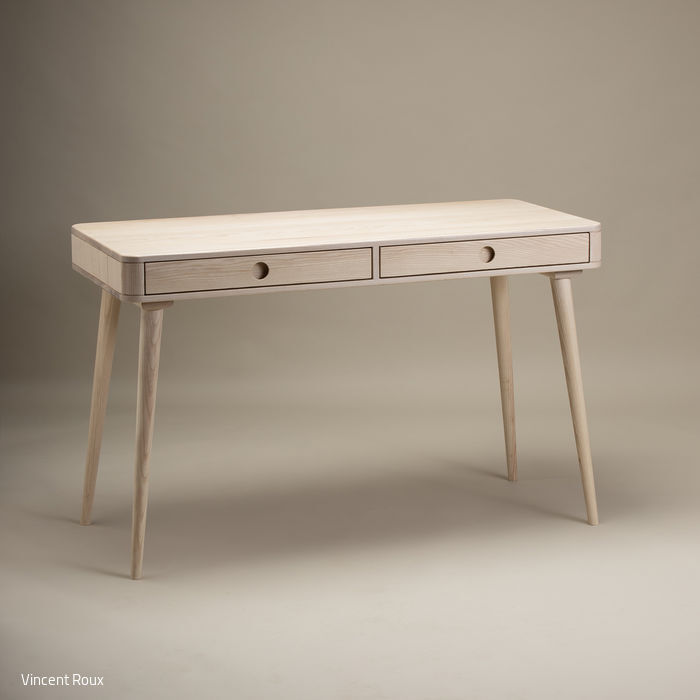
Nicholas Blears: Sustainable Furniture with Scandinavian Soul