


Seamlessly Integrated
A residential development in Nippes that bridges the gap between urban street and surrounding green space
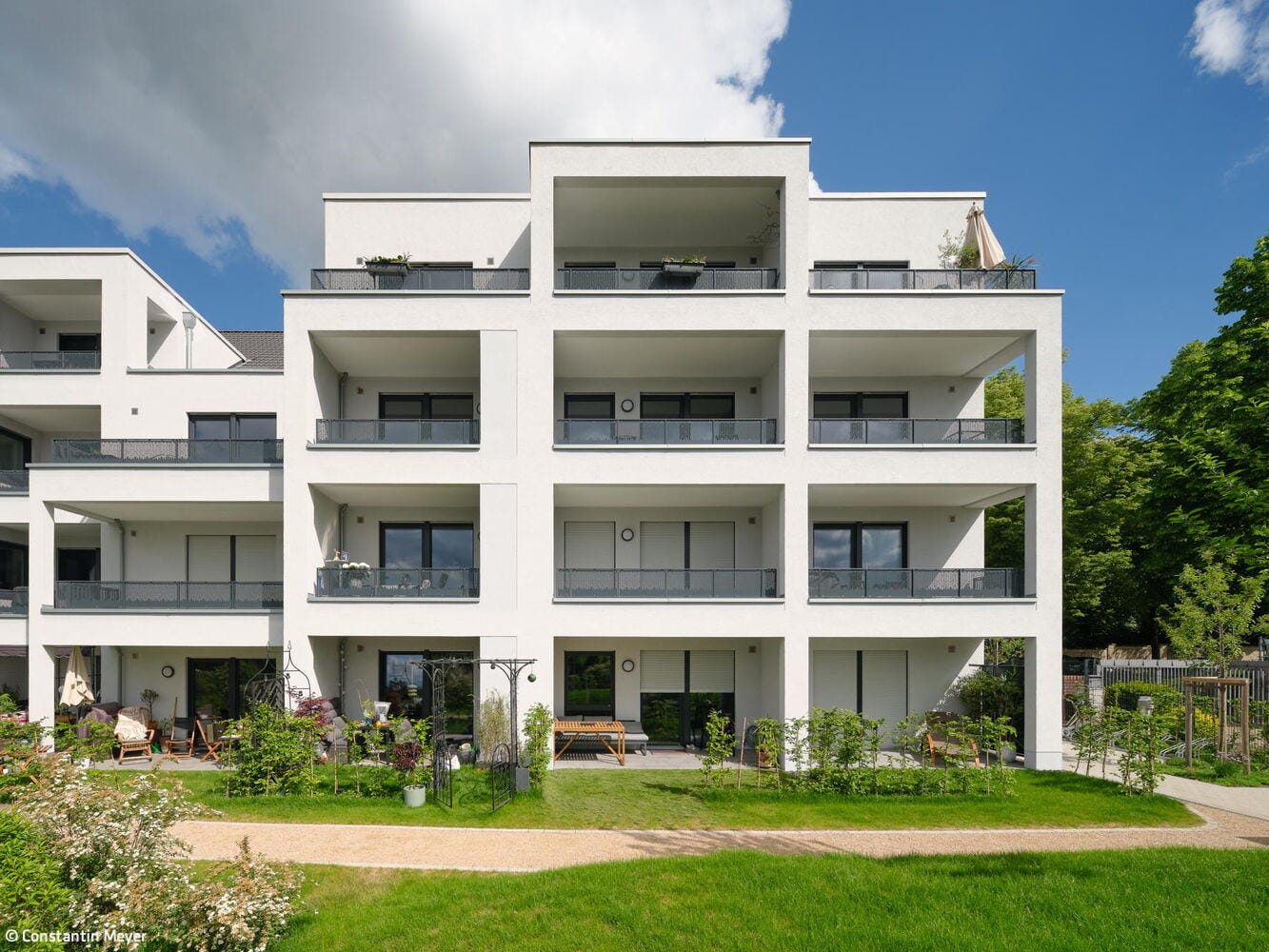
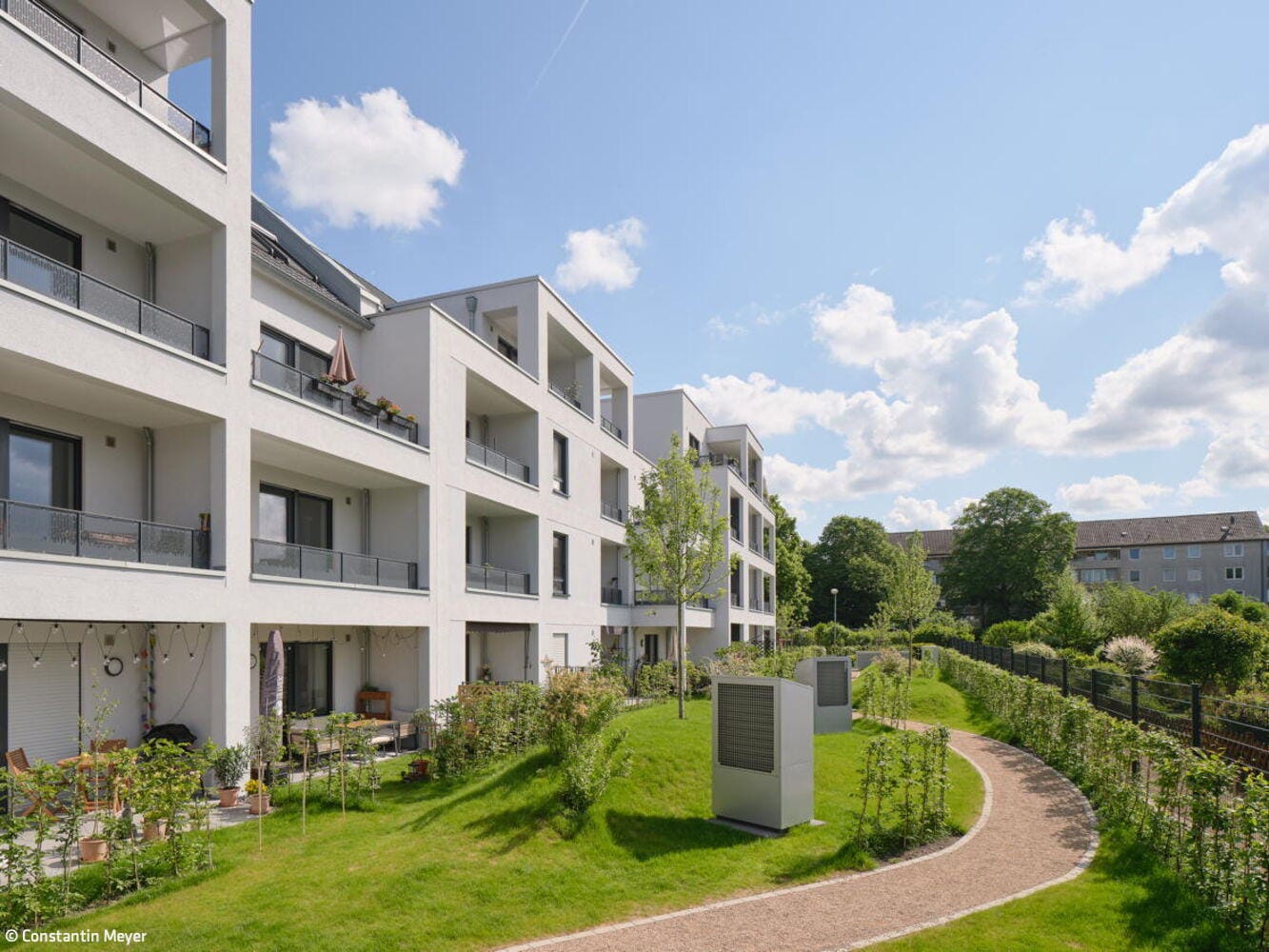
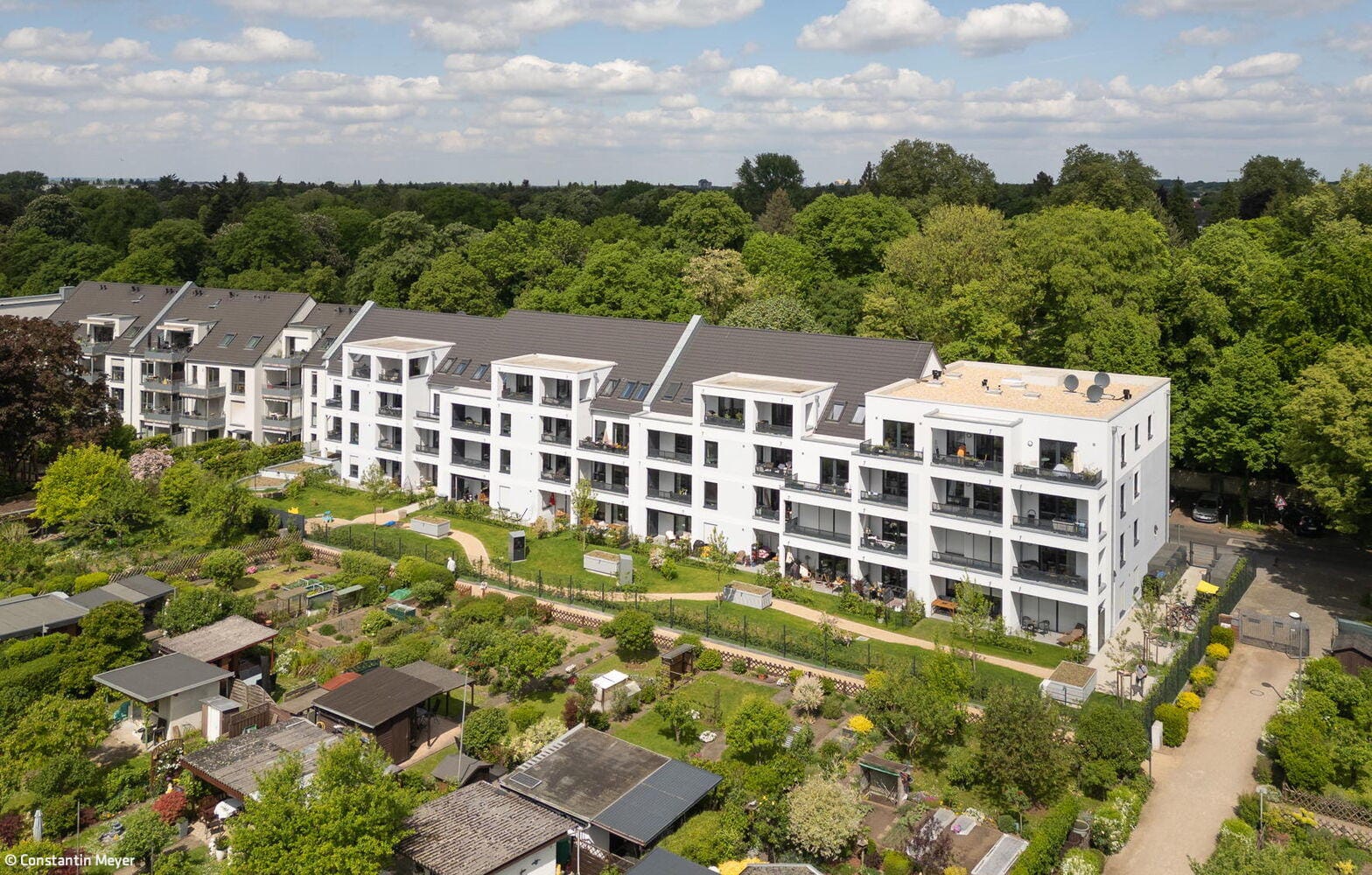
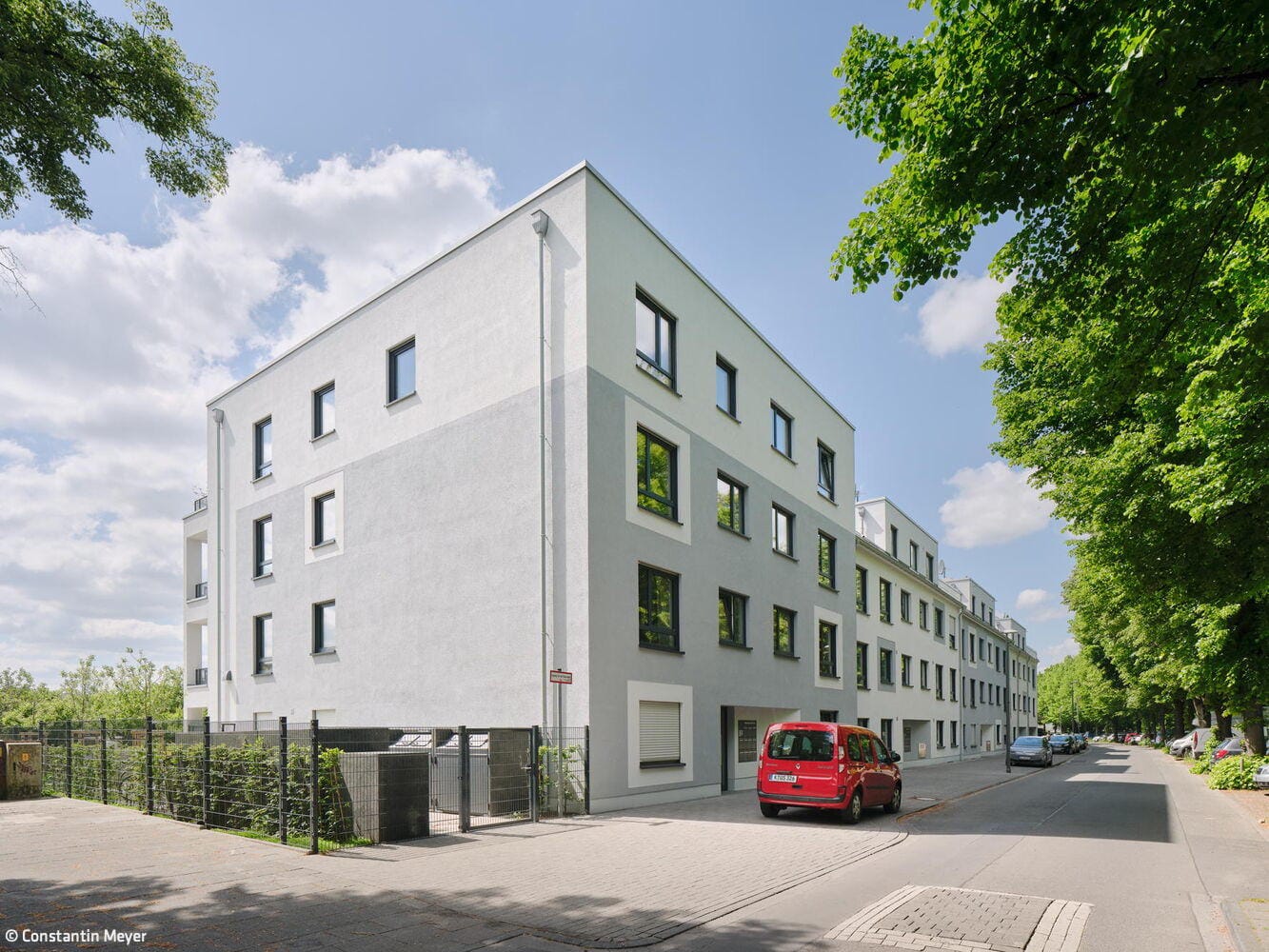
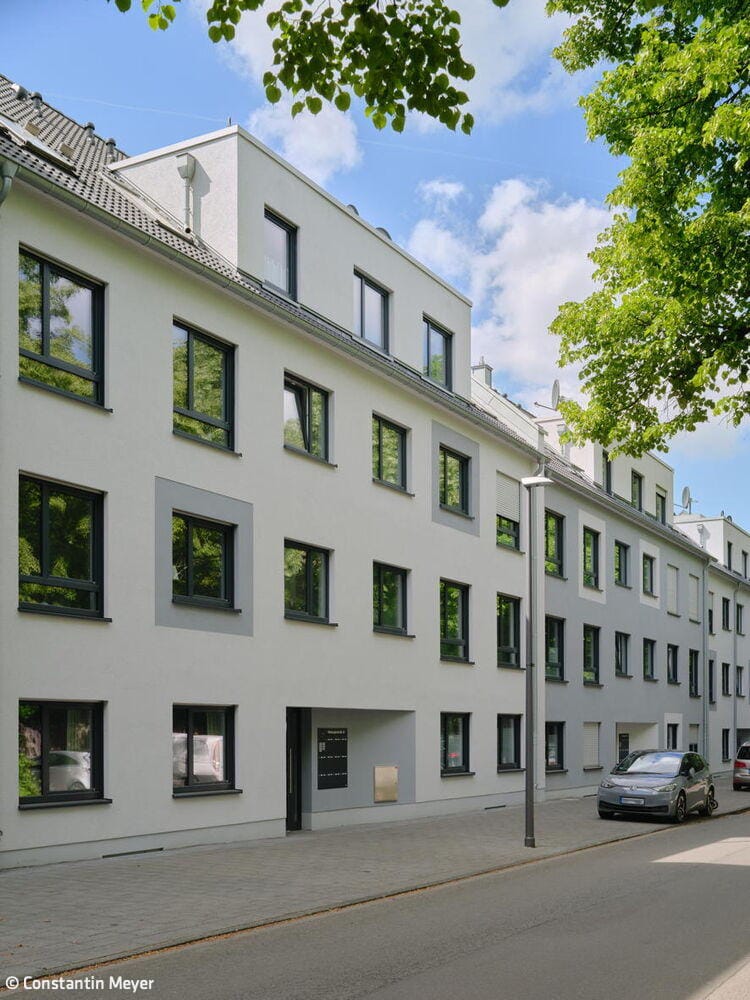
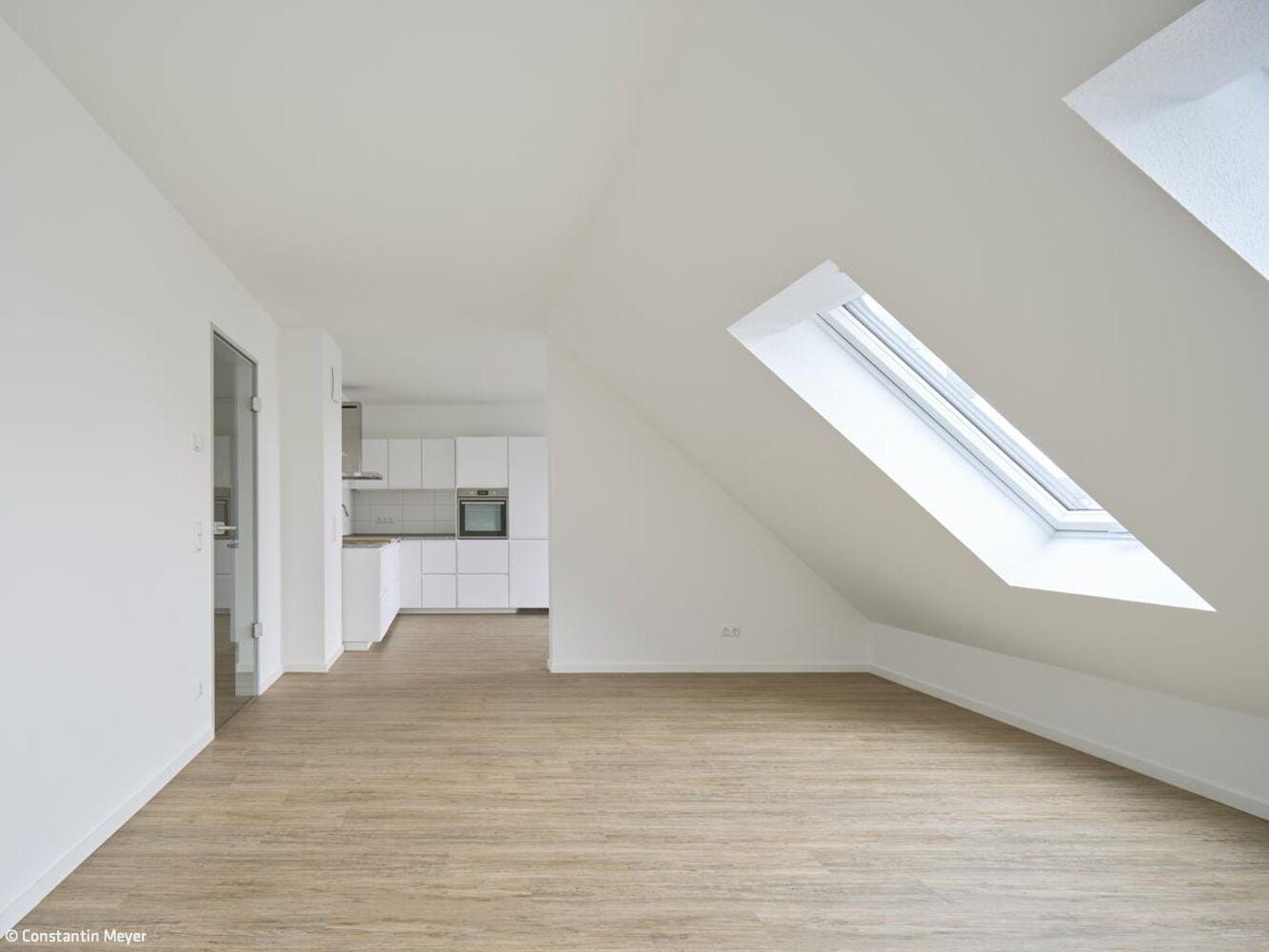
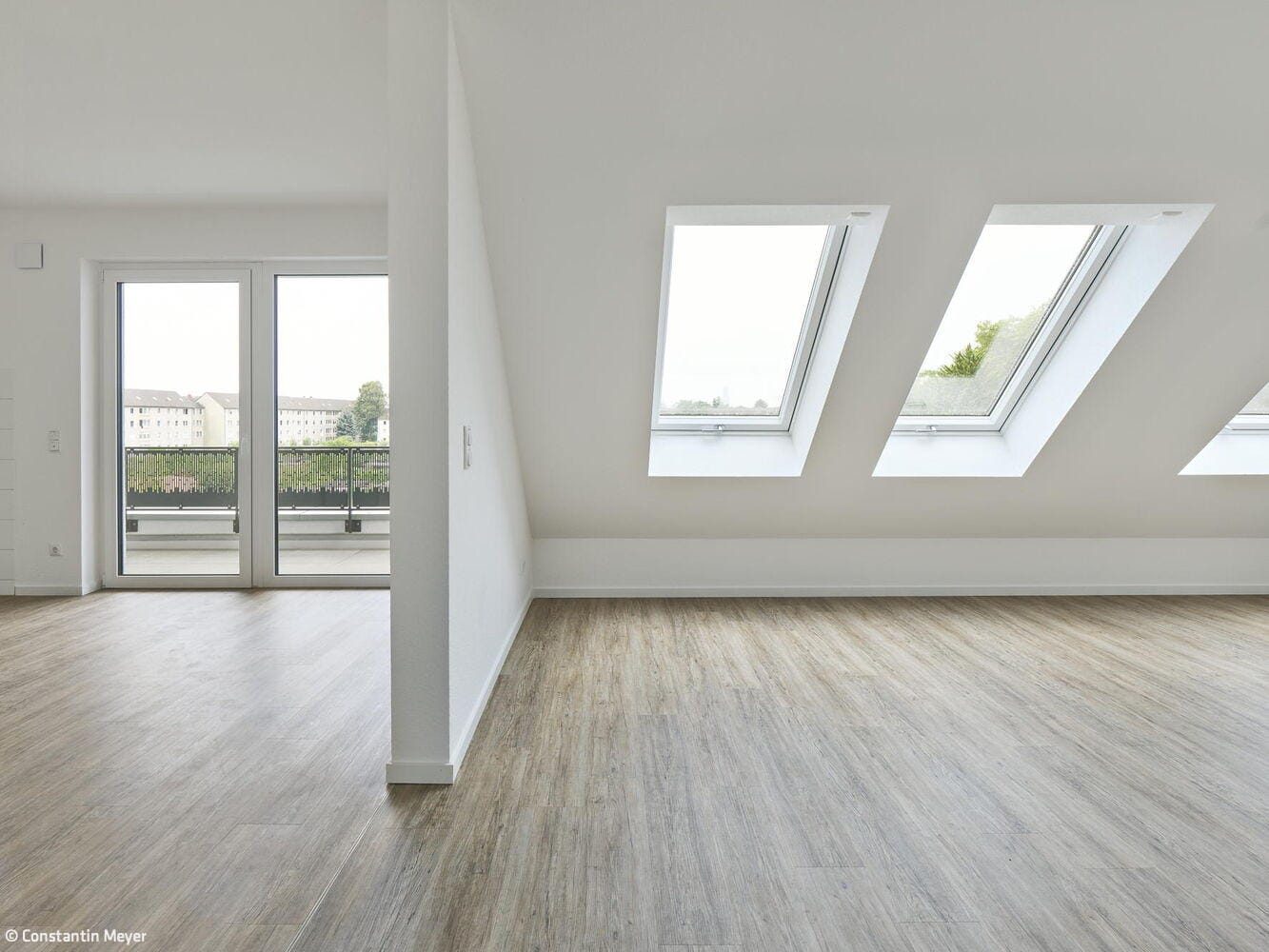
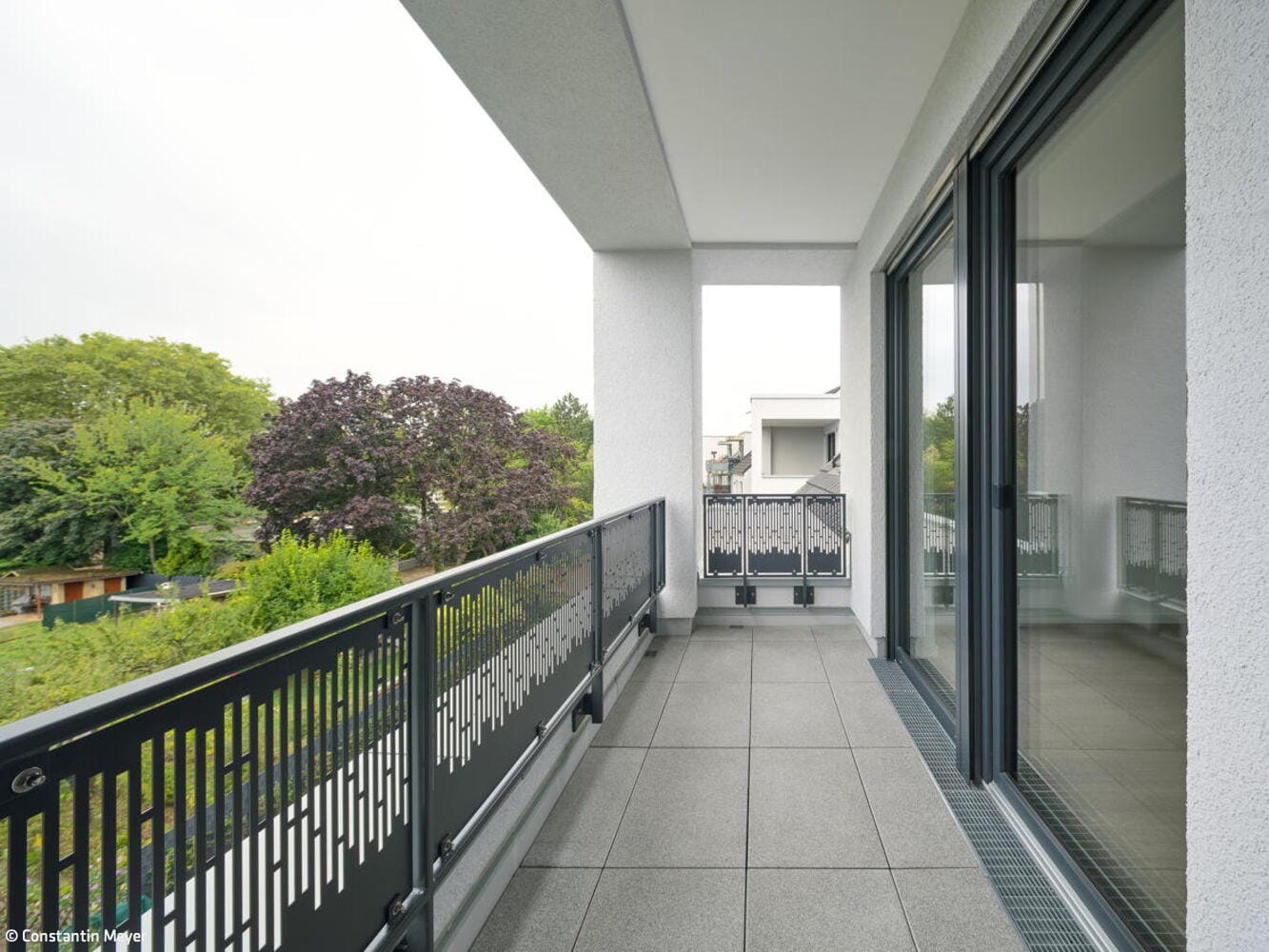
In Cologne's Mauenheim district, nestled between the Nordfriedhof cemetery and one of the Rhine metropolis' oldest allotment garden communities, a striking new residential building marks the threshold between urban fabric and green space. Working within tight spatial constraints, the Cologne-based architecture firm m2p Architekten has created a 44-unit residence that achieves a remarkable balance: compact density without sacrificing privacy, clarity of form, or quality of life.
The building's design hinges on a dual strategy: a restrained, understated north façade contrasts with an open, light-filled south elevation that frames views into the adjacent greenery. Urbansistically, this creates a defined edge along Nibelungenstraße—anchoring to existing structures to the east while establishing a graceful terminus to the west. Three staggered volumes, each topped with a gabled roof, articulate the elongated mass. Carefully calibrated shifts in height and façade detail ensure that individual addresses remain legible while the building settles naturally into the neighborhood's scale. The material language reinforces this precision: the rendered facades facing the street unfold in rhythmic white and grey tones, echoing the rhythm of the three distinct houses.
The south-facing stepped form directly engages this unique urban condition—where city meets garden. It dissolves mass, establishes visual transitions, and communicates an appropriate scale. Equally important, it ensures that every unit enjoys well-proportioned outdoor space. The balconies and covered loggias are carved with recesses, niches, and incisions that serve dual purposes: deepening privacy in outdoor zones while providing natural shading and passive summer cooling. The result is a richly articulated façade that comes alive with shadow and depth.
All 44 units are accessed via three distinct stairwells from the street level. Bedrooms and service spaces consistently face north, while generously fenestrated living and dining areas open to the south. The circulation strategy is tightly organized, minimizing wasted corridor space and shortening everyday distances. Yet despite this density, strategic sight lines connect the various zones, creating a flowing sense of movement from street to garden. Below grade, a basement garage accommodates vehicles, leaving all surface paths and green areas freely accessible to residents. The completed building exemplifies a refined approach to urban living: it demonstrates that compact density, residential quality, and genuine community can coexist in thoughtful harmony.
Photography:
Constantin Meyer
www.constantin-meyer.de
(Published in CUBE Cologne Bonn 04|25)
Interplay of Light and Shadow
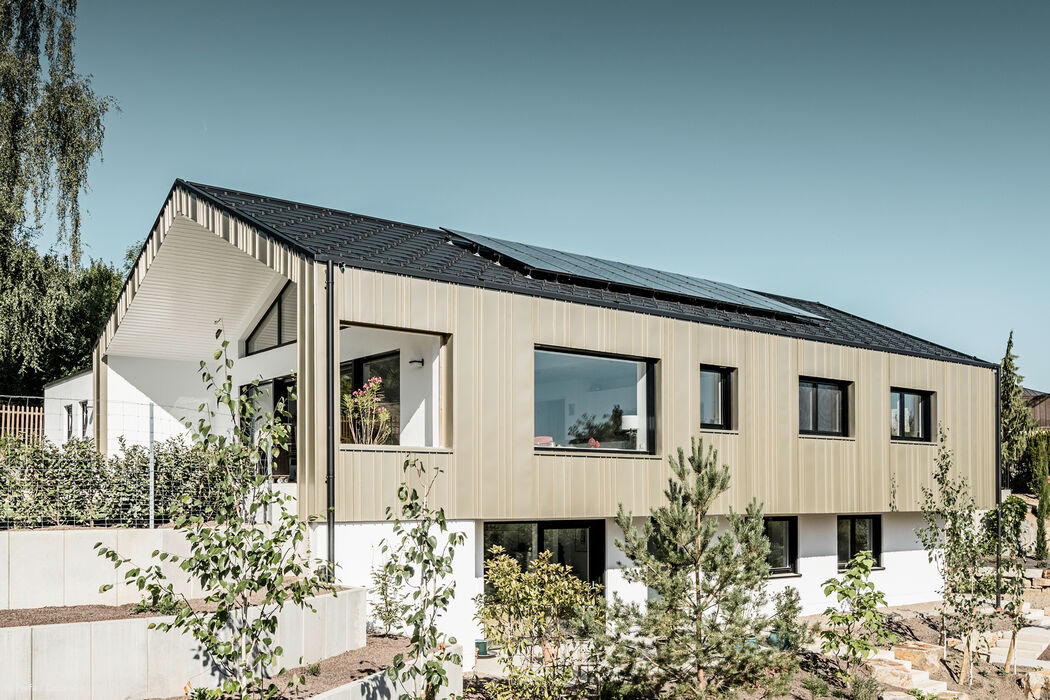
Modern Hillside Gabled Roof Home with Bronze Metal Façade
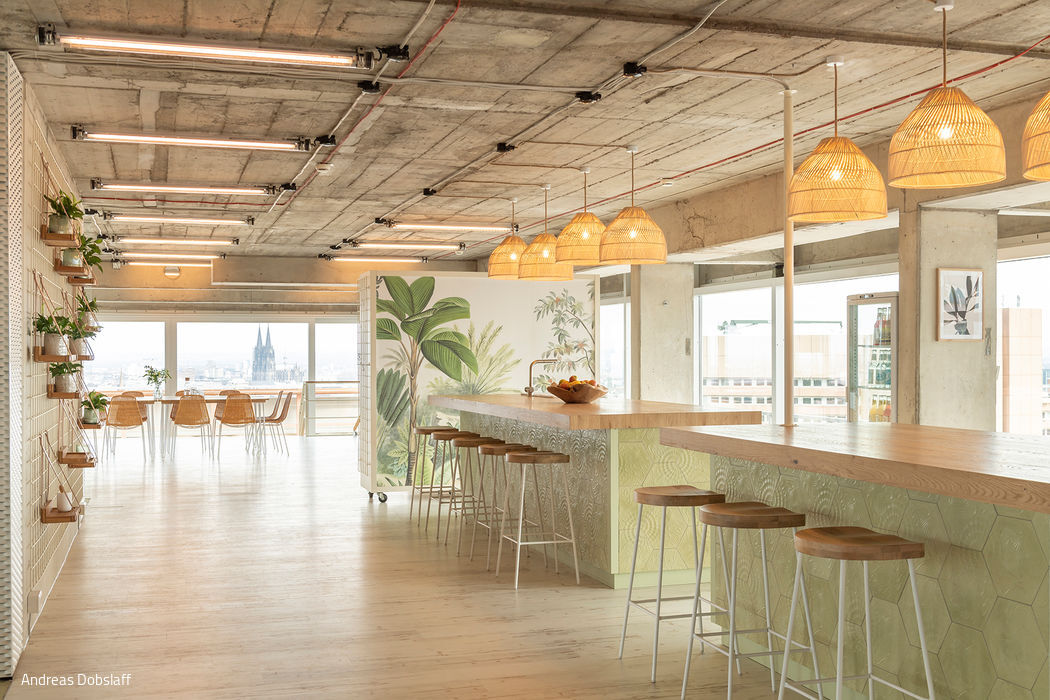
Your Personal Escape
Extraordinary events deserve an extraordinary setting – above Cologne's rooftops.
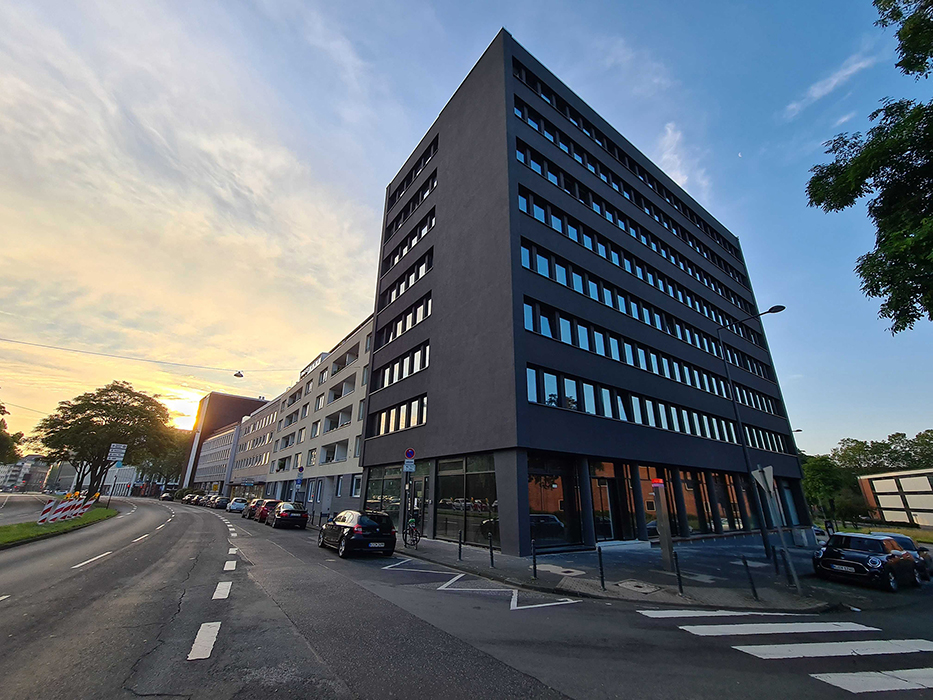
Minimalist Façade, Vibrant Interior
A former office building reimagined as a vibrant sanctuary for travelers
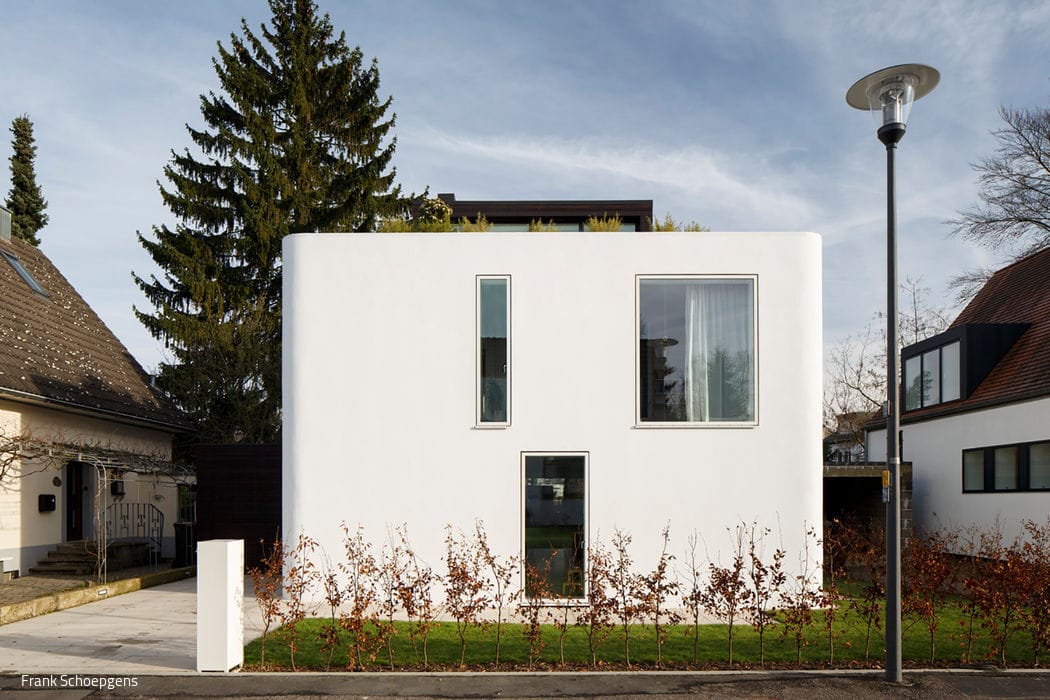
A Cinematic Vision
Where an Aging Dwelling Becomes Design Statement