


Open Monolith
A forest villa that captivates through carefully composed views into the landscape.
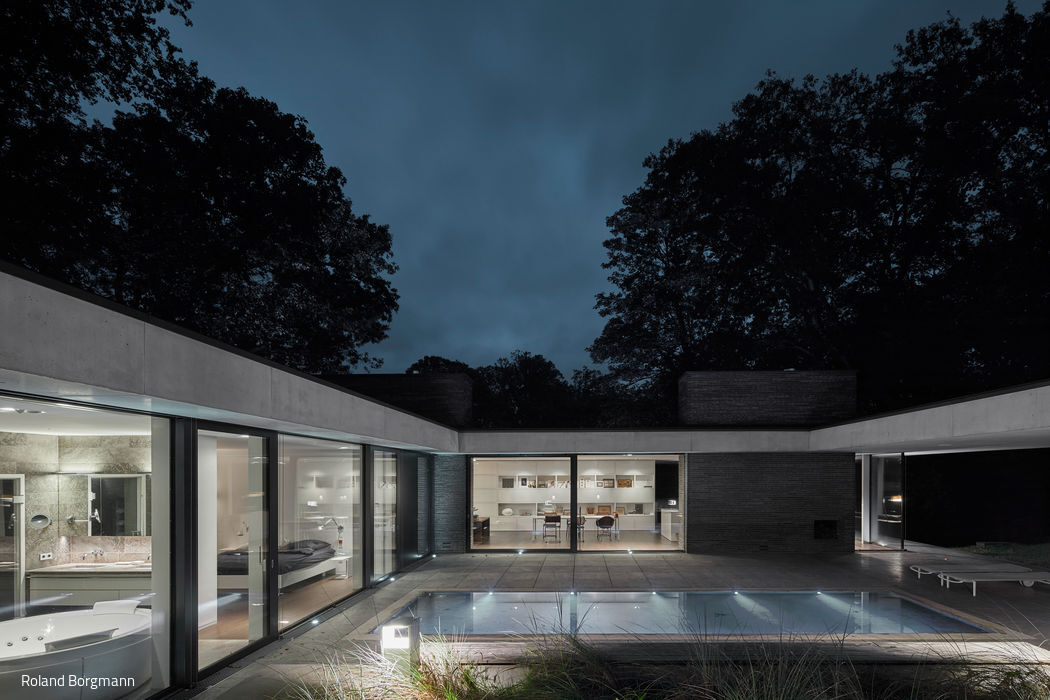
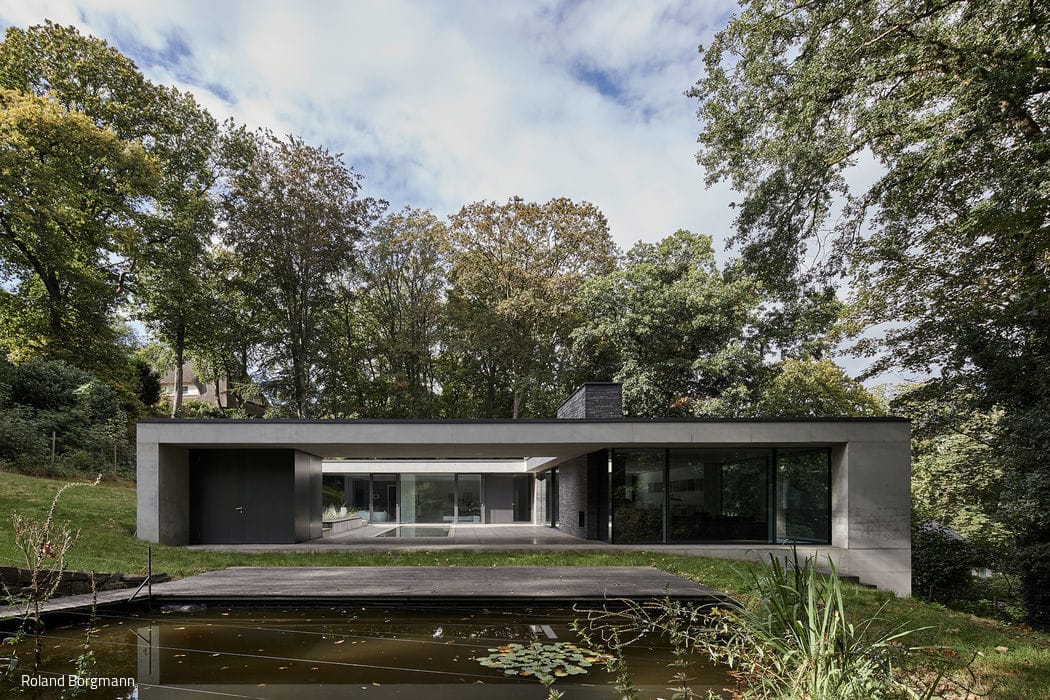
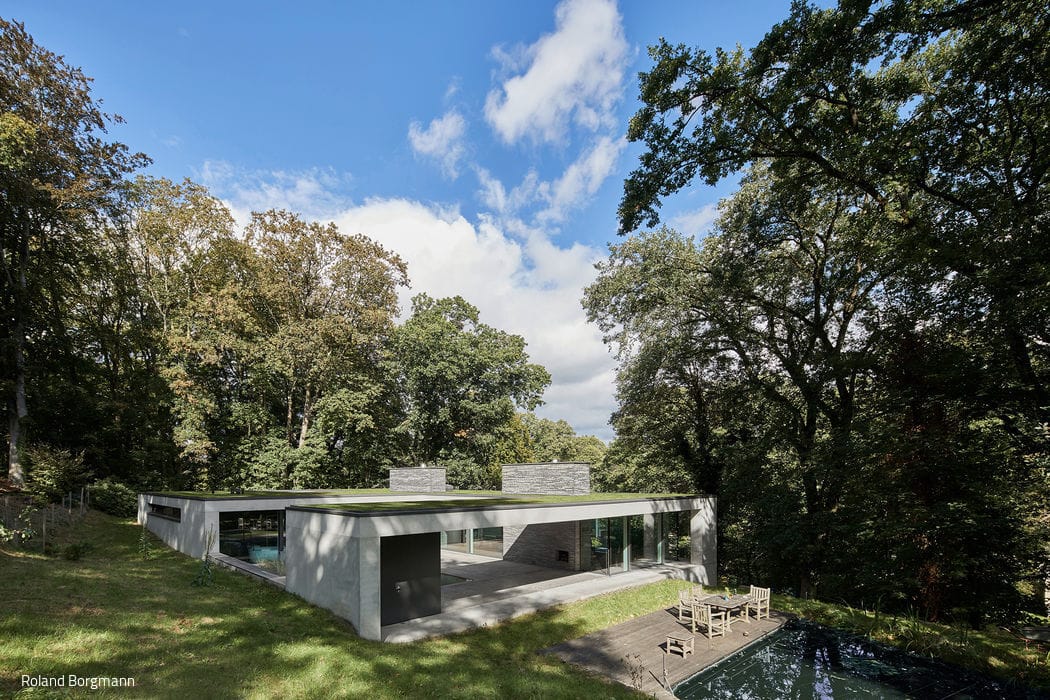
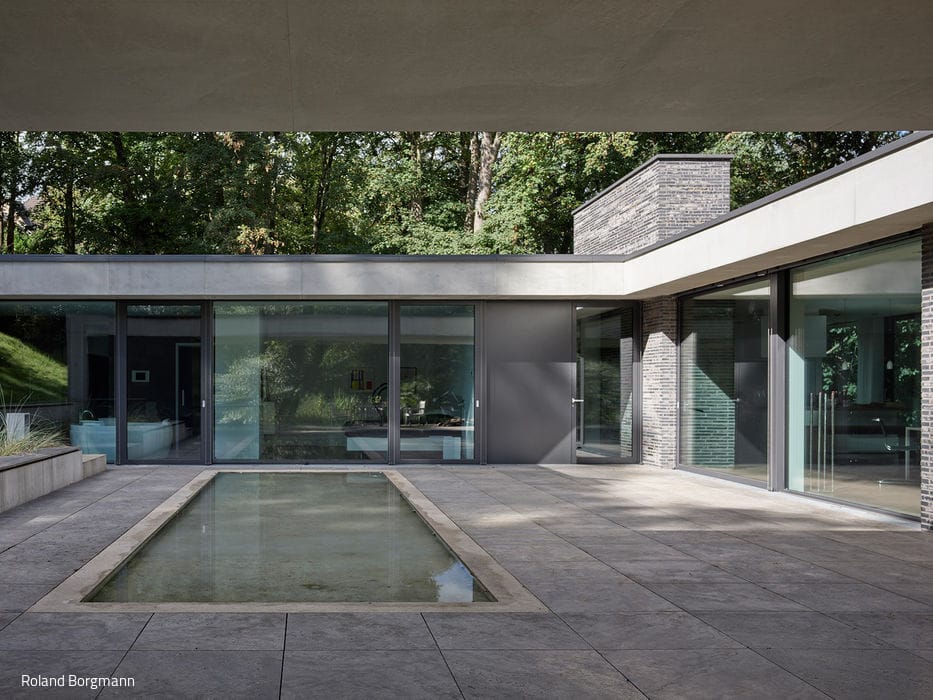
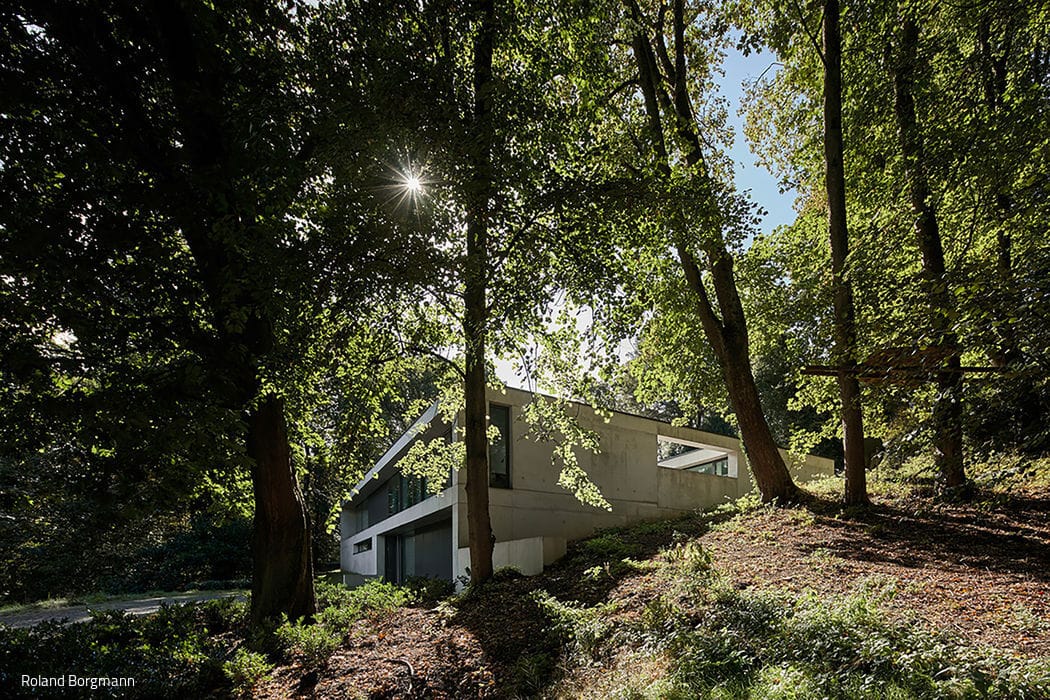
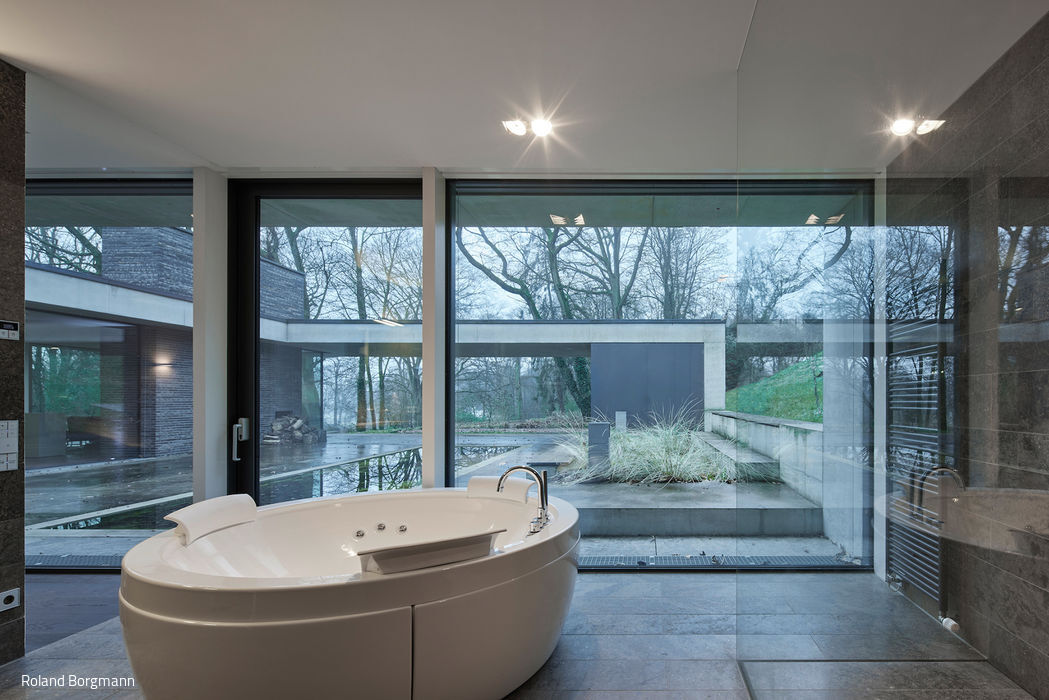
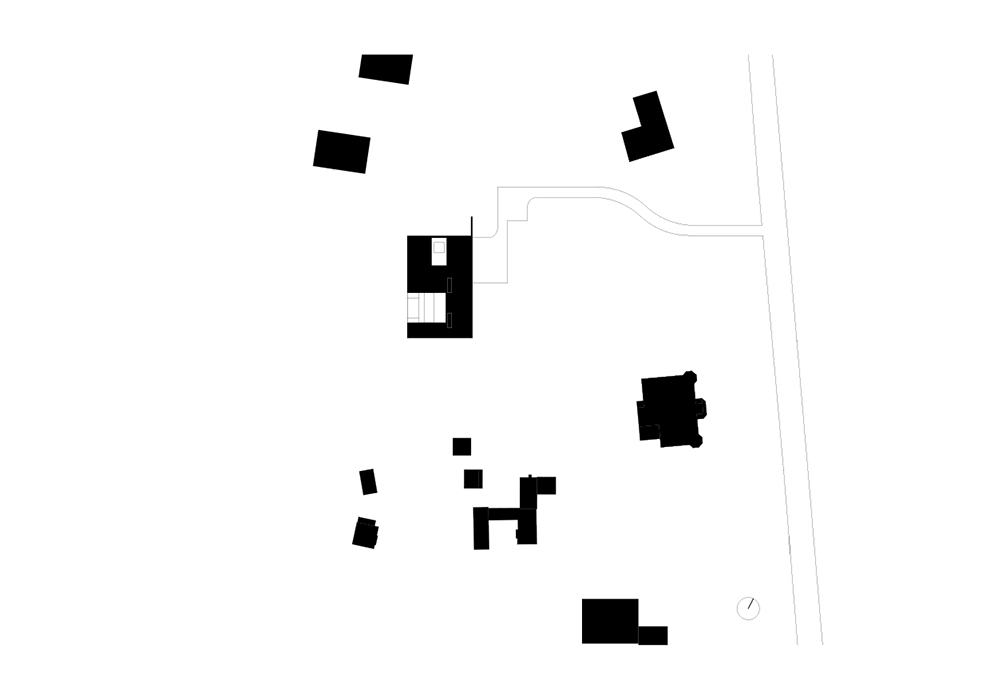
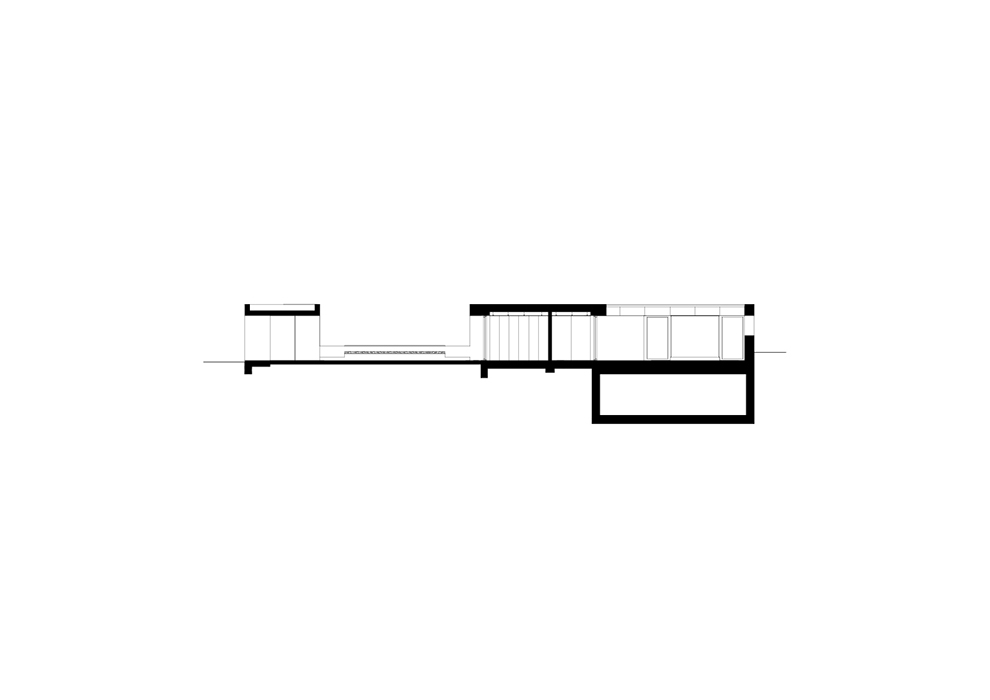
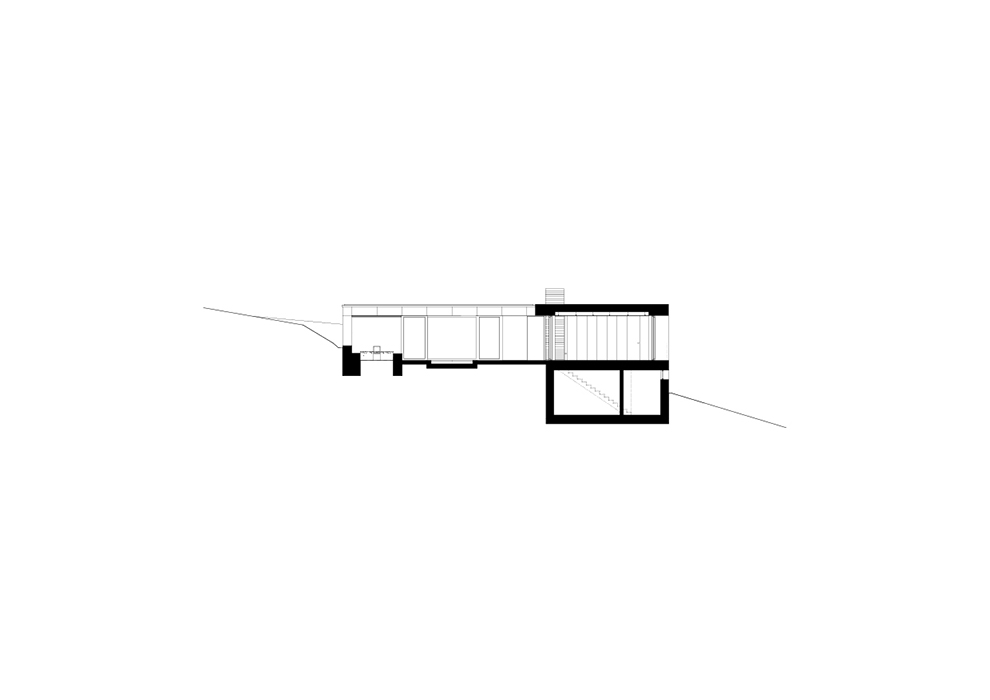
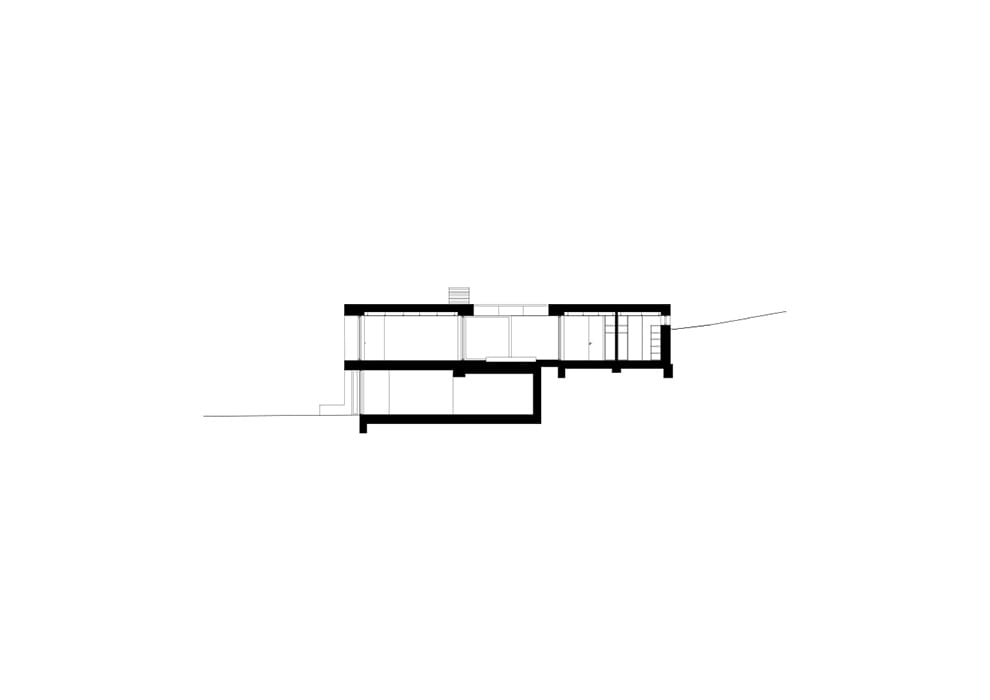
Ein Grundstück in erhöhter Lage, mitten im Naturschutzgebiet Hülser Berg, umgeben von altem Baumbestand – das waren die Ausgangskoordinaten für eine Villa, die in ihrer klaren Geometrie bewusst einen Kontrapunkt zur umliegenden Üppigkeit der Natur setzt. Durch präzise gestaltete Sichtbezüge sowie zwei offene Atrien lassen die mit Entwurf und Ausführung beauftragten Peter Bastian Architekten einen spannungsvollen Dialog zwischen Architektur und Natur entstehen – verstanden auch als Reverenz an ein benachbartes modernes Denkmal und das in Krefeld präsente Erbe von Mies van der Rohe.
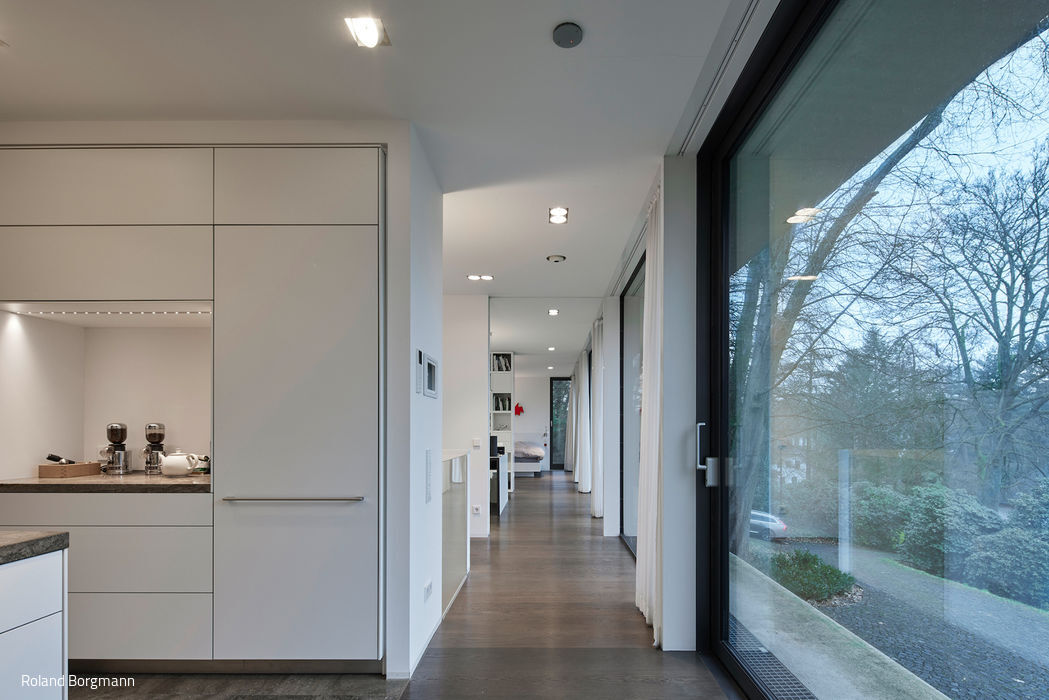
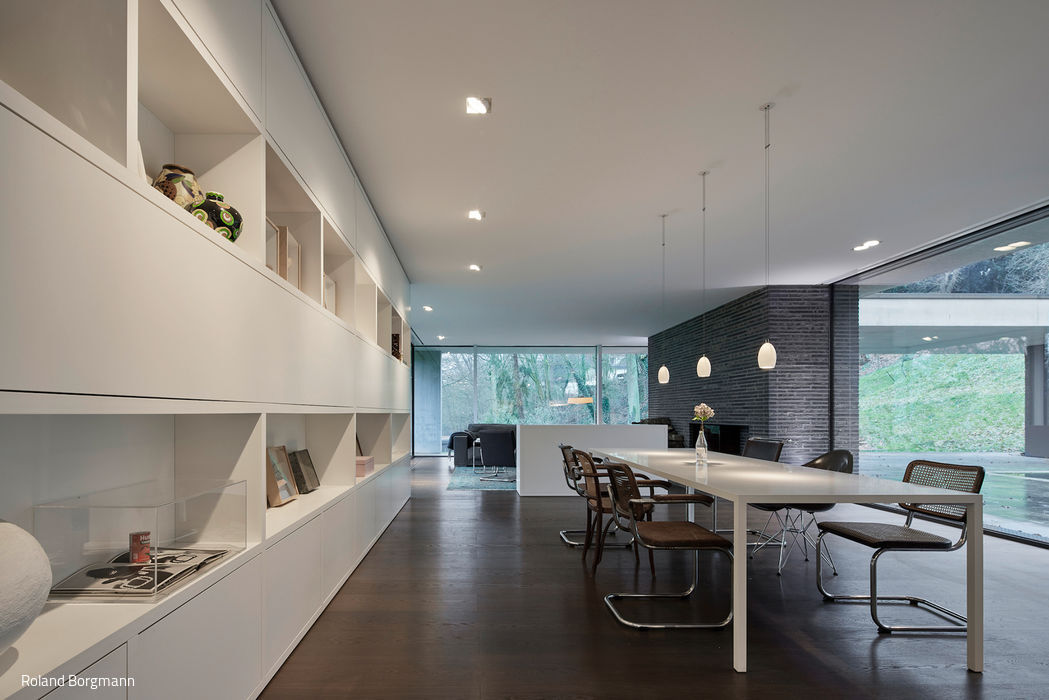
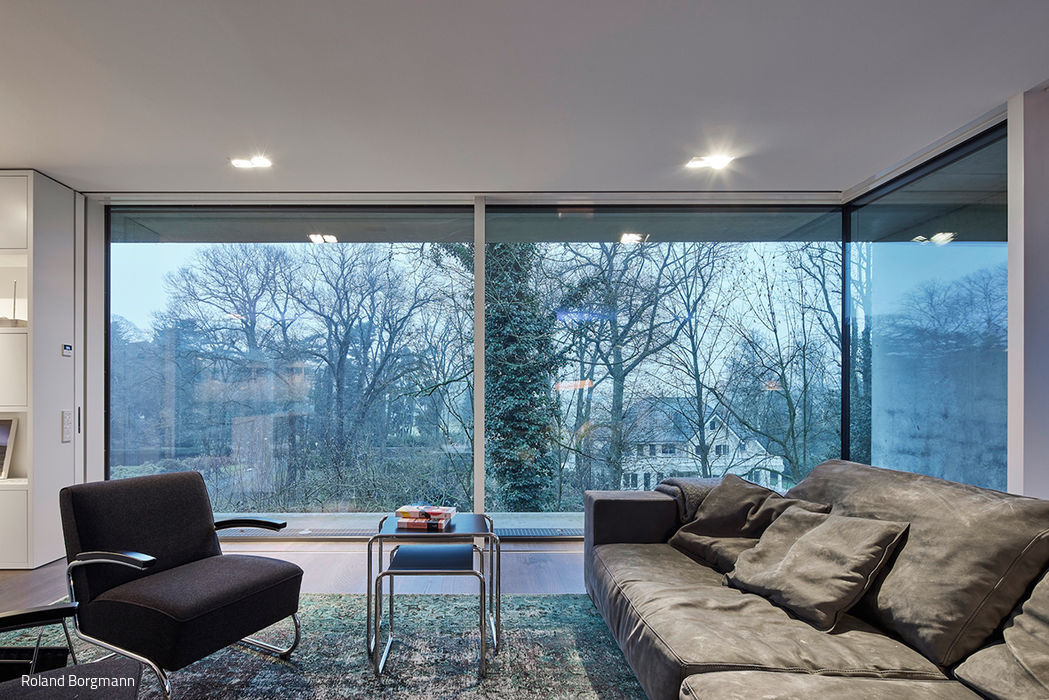
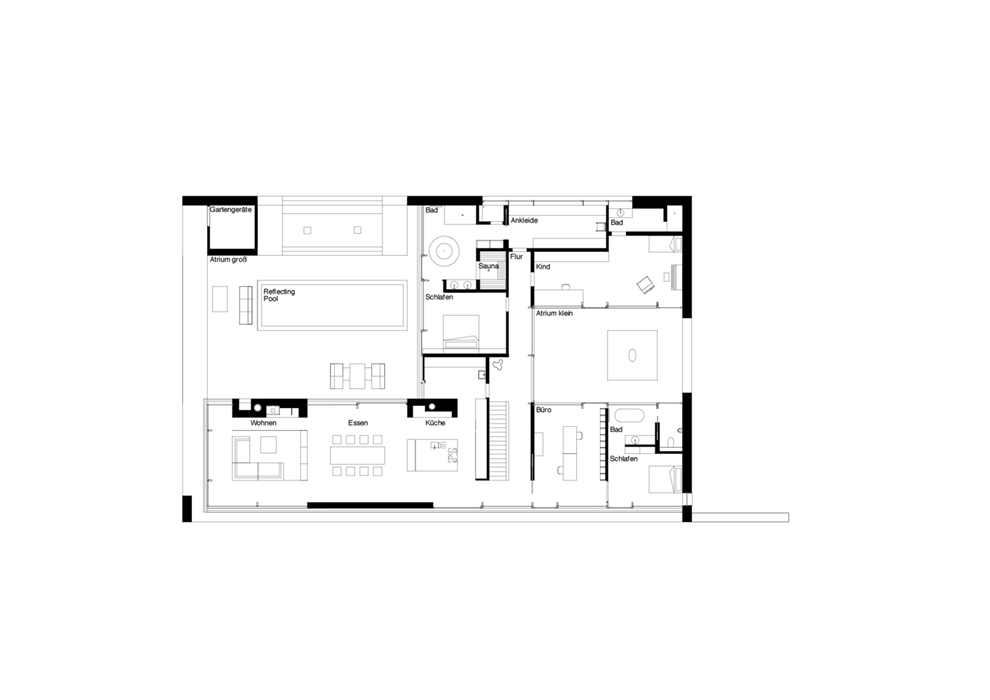
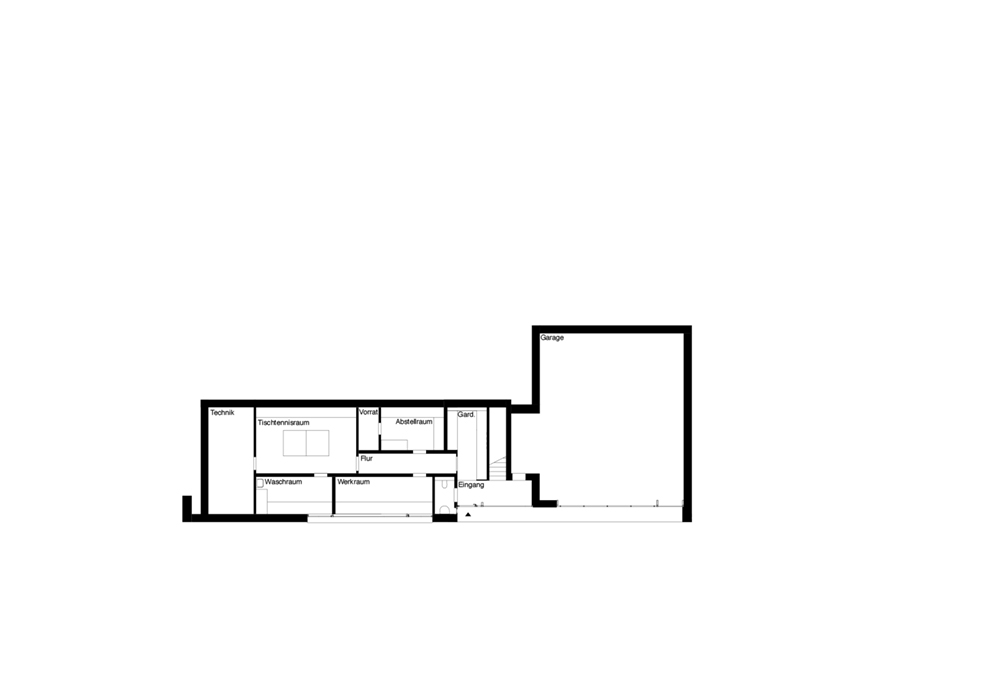
Die Wohn- und Aufenthaltsräume der Familie sind im gesamten Erdgeschoss lokalisiert, im darunterliegenden kleineren Sockelgeschoss befindet sich der Hauptzugang neben der integrierten Garage und weiteren Technik-, Lager- und Nebenräumen. Durch die Hanglage und die abgetreppte Bauweise steht die Ostfassade des Sockelgeschosses fast vollständig frei, sodass das offene Entree und die sich anschließende Treppe eine optimale Belichtung erhalten. Zwei einander gegenüberliegende Atrien prägen das Erdgeschoss. Sie öffnen sich dabei jeweils zu einer Seite zum Außenraum, zu den anderen Seiten liegen Wohnräume um sie herum gruppiert. Das große Atrium liegt nach Süden orientiert mit Ausblick über die Hangflanke. Ein zentral angeordneter Reflecting Pool, der von einem Sichtbetonband gesäumt wird, bestimmt den Lichthof. Ein mit Gräsern begrüntes Pflanzbeet mit einer Einfassung aus Sitzbänken gruppiert sich seitlich dazu und schafft einen Übergang zum Hang. Bodenplatten aus Kirchheimer Muschelkalk verbinden sich harmonisch mit den Farben von Sichtbeton und Mauerwerk. Der Bodenbelag setzt sich in Bädern und Küche stufenlos fort und unterstreicht das erwünschte Kontinuum von Innen- und Außenraum. Das kleine Atrium zeichnet sich im Gegensatz zu seinem repräsentativ situierten Poolatrium durch einen privateren Charakter aus – konträr zum Lichthof mit dem Pool ist es nur vom Gebäude aus zu betreten. Das Gebäude ist durch eine Betonkonstruktion geprägt, die von zwei Kaminzügen durchdrungen wird. Beide sind aus dunklen Langformatziegeln gemauert. Um das Monolithische des Baus konsequent umzusetzen, wurde das Gebäude mit einer Innendämmung versehen. Raumhohe Fenster und Schiebeflügel sowie Aluminiumpaneele prägen dabei die Fassade und schaffen ein dynamisches Wechselspiel von transparenten und geschlossenen Flächen. Dabei entstehen großzügige Ausblicke und punktuelle Blickachsen – sowohl in die beiden Atrien als auch in die umgebende Waldsituation und auf einen naturnah angelegten Teich. Die Verschattung erfolgt über das rundum hervorkragende Dach. Ein besonderer Clou sind die flexiblen Hebe- und Schiebewände im Innenraum, wie sie etwa vor den Glasfassaden im Wohnzimmer Richtung Osten und Süden angeordnet sind: Indem sie einen Sichtschutz herstellen, schaffen sie in dem sehr offenen und weitläufigen Wohnraum einen abgeschirmten, privaten Bereich. Der Innenausbau wurde auf wenige, perfekt aufeinander abgestimmte Materialien reduziert: Ein dunkler Parkettboden aus Räuchereiche erzeugt im Zusammenspiel mit dem maßgefertigten, farblich durchgängig weiß gehaltenen Einbaumobiliar eine elegante Leichtigkeit.
Wohnfläche: 432 m²
Grundstücksgröße: 5.000 m²
Bauzeit: 24 Monate
Energiekonzept: Sole-Wasser-Wärmepumpe
Photography Credits:
Roland Borgmann
www.rolandborgmann.com
(Published in CUBE Düsseldorf 03|21)

Rolf Benz Cara
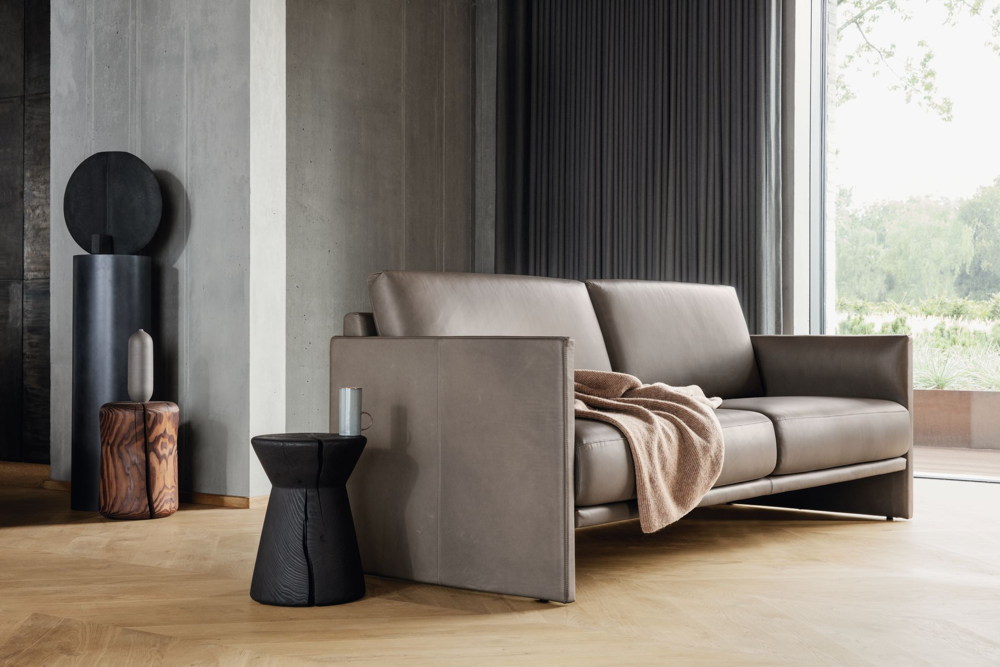
Rolf Benz Cara. Cara reveals character.
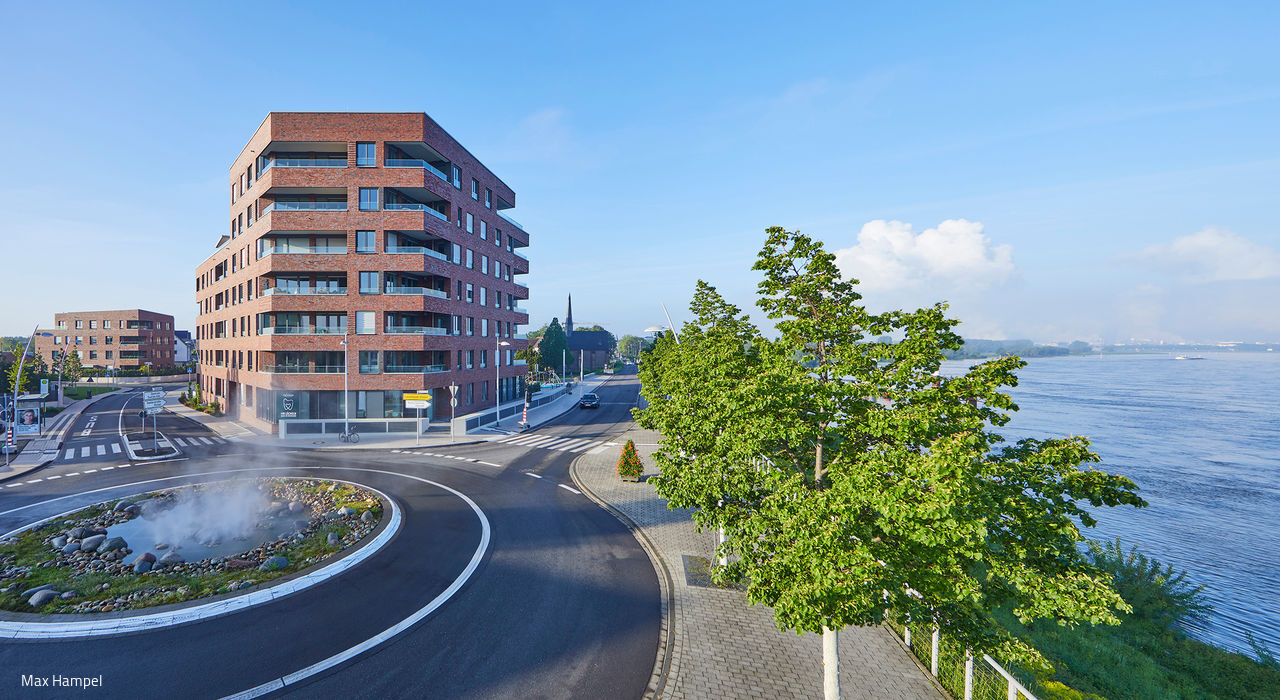
Maritime Monheim
The "Rheinkiesel" reconnect urban living with the Rhine
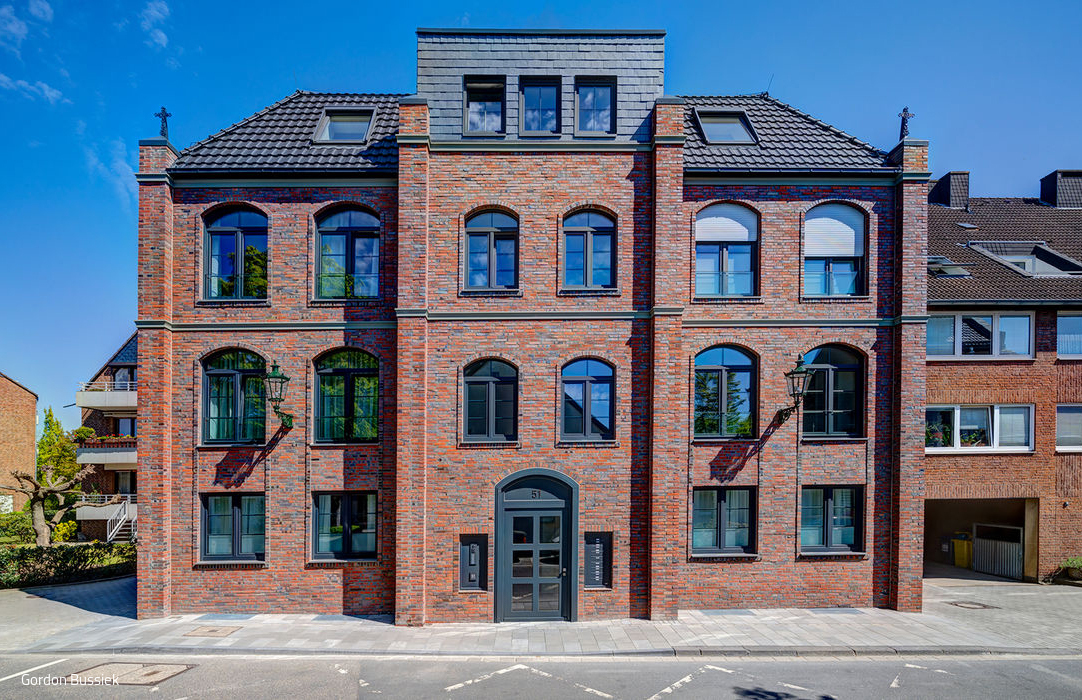
A Piece of Neighborhood History
Drawing on the district's historic brick architecture, Bahners opted to reconstruct the site as a seven-unit residential building...
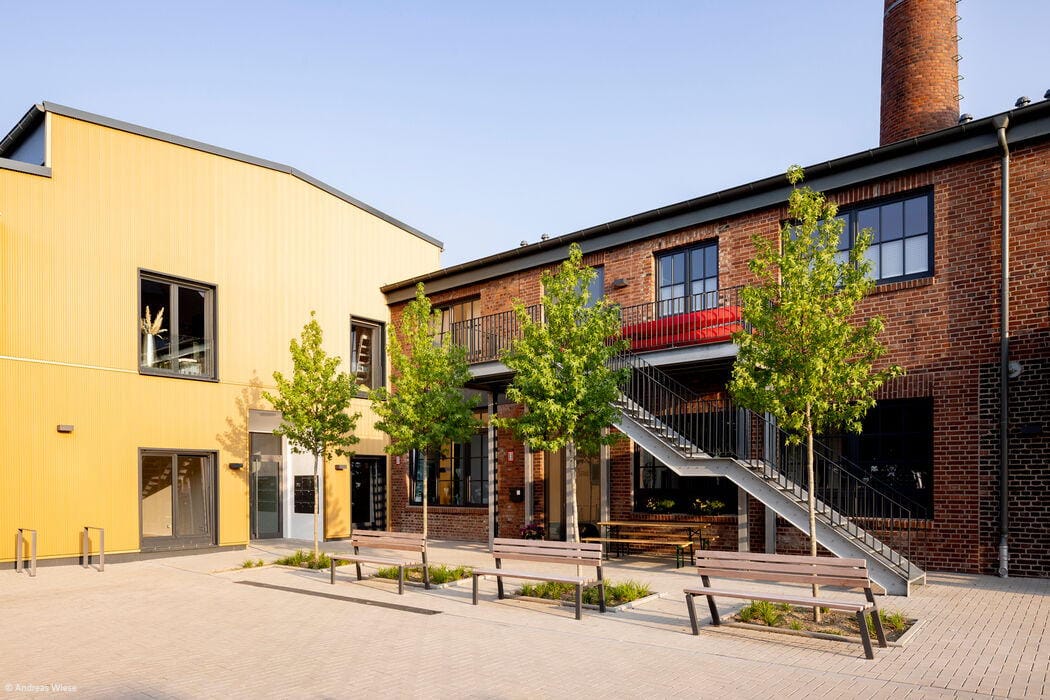
Gilded Industrial Charm
Historic industrial buildings reimagined as a characterful residential haven