


A Subtle Echo of the Past
Vertical Extension of 1960s Apartment Buildings
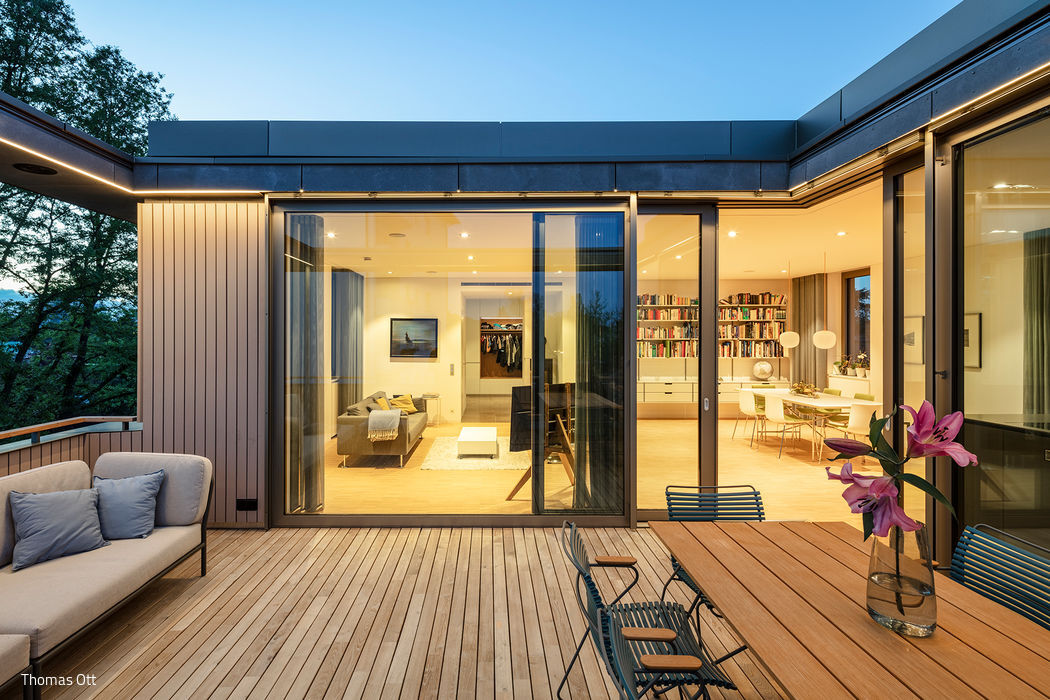


A cluster of apartment buildings from the 1960s needed a thoughtful evolution. Rooted in a student thesis from their original era, the architects aimed to extend the design with continuity and care. The owners envisioned a cohesive architectural language, unified building geometry, and vertical expansion rather than horizontal sprawl. The vision also included preserving the historical integrity, protecting the green courtyard at the heart of the complex, and subtly densifying the outer perimeter.
pauly + fichter planungsgesellschaft designed, constructed, and completed nearly identical vertical extensions for three of the five property owners. The original pitched roofs were removed and replaced with staggered penthouse floors featuring flat roofs, while the existing plastered facades were extended upward to the parapet line of the new level. A defining feature—and subtle homage to the original design—is the continuous roof overhang that wraps around the building. This deep soffit frames the roof terraces as integrated extensions of the interior living spaces. The new façade employs vertical slats of recycled composite wood made from 60 percent rice husks and over 20 percent mineral compounds. Unlike natural timber, this material satisfies strict fire safety codes without compromise. Inside, the floor plan is remarkably adaptable: the layout can accommodate either two compact apartments or, with minimal modifications, a single expansive penthouse. Upon entry, the gaze draws naturally toward the preserved mature trees anchoring the green center. A corridor opens into a generous living-dining zone with an integrated kitchen, which flows seamlessly onto the terrace through corner-mounted sliding glass walls. Private rooms at the rear also access intimate outdoor terraces. The inset façade created recessed cavities at the parapet level of the full-height windows—intelligent dead space transformed into built-in storage that reinforces the vertical rhythm of the fenestration pattern.
Photography Credits:
Thomas Ott
www.o2t.de
(Published in CUBE Frankfurt 03|23)
A Harmonious Balance
Exterior and interior design engage in dialogue at this villa
Say goodbye to grey – welcome colour
A forgotten courtyard transforms into a vibrant green sanctuary
Dwelling in the Forest Park
A new neighborhood in dialogue with Frankfurt's city forest
Reimagined
The heart of the house is an open-plan living space combining lounge, dining, and kitchen in an inviting, expansive design that offers plenty of...