


Distinction between old and new
Fragmented floor plan opens up into flowing, expansive living spaces
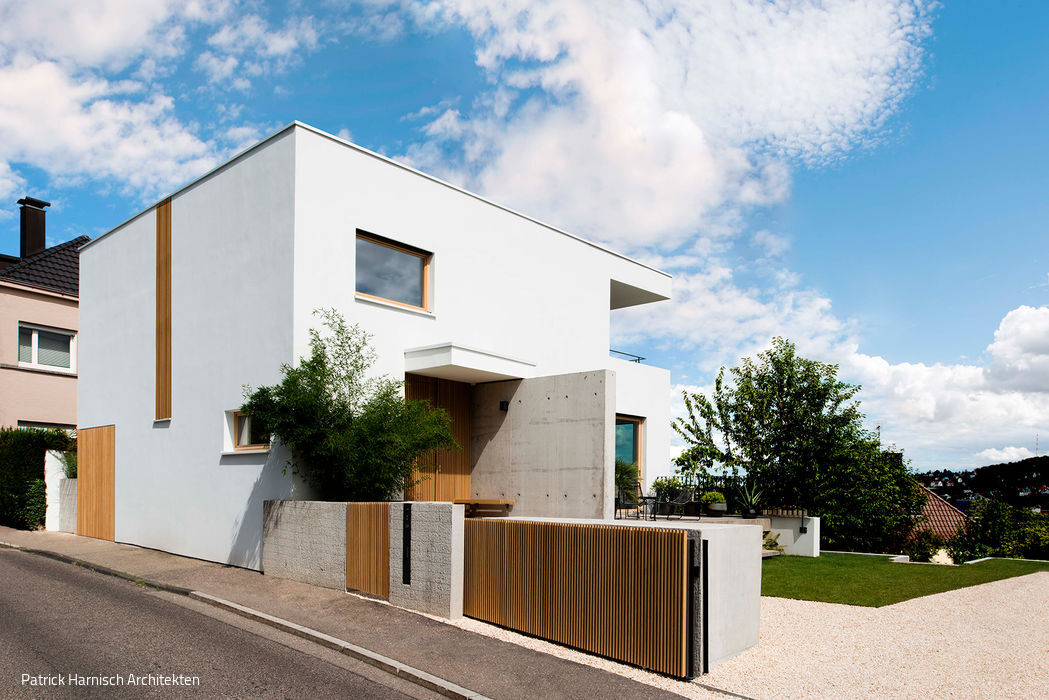
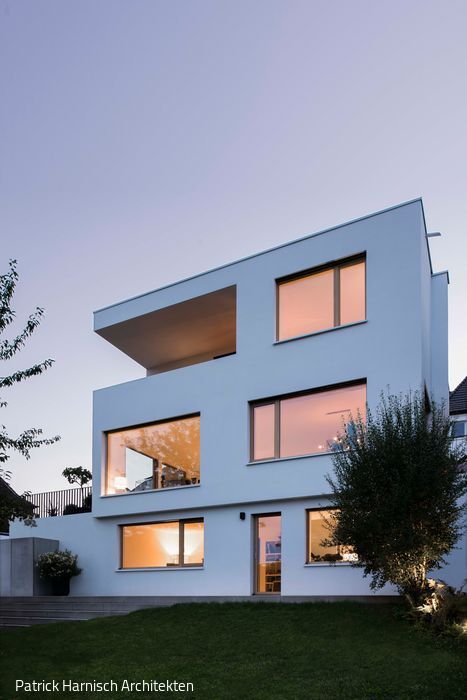
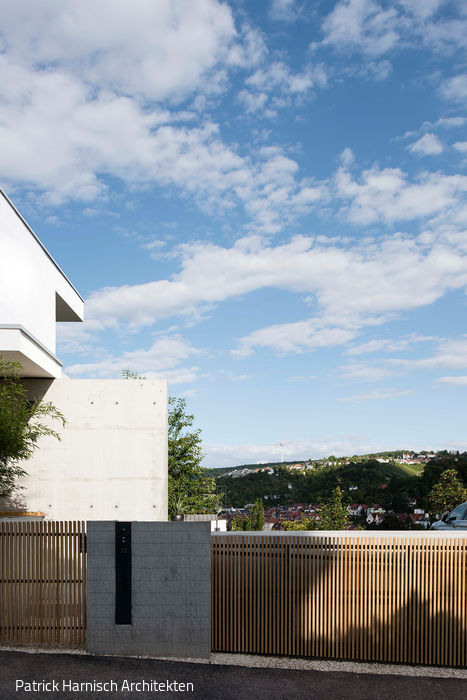
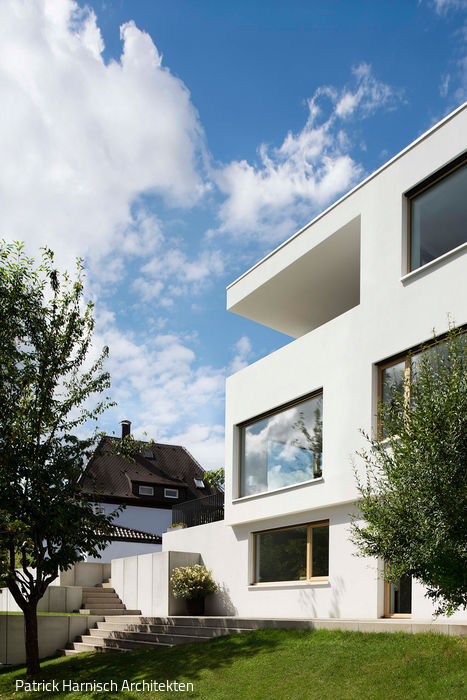
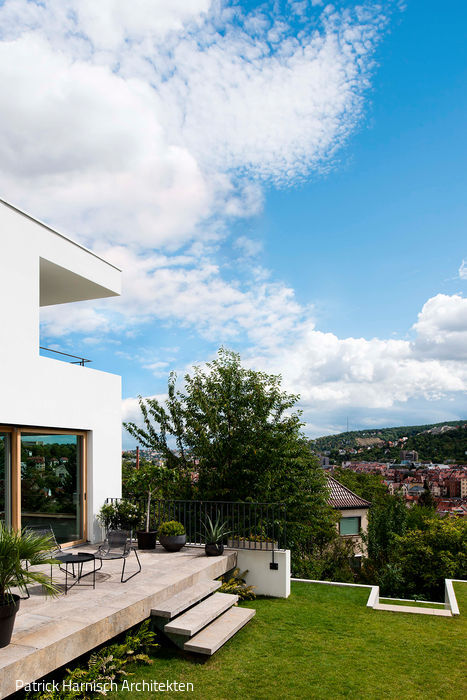
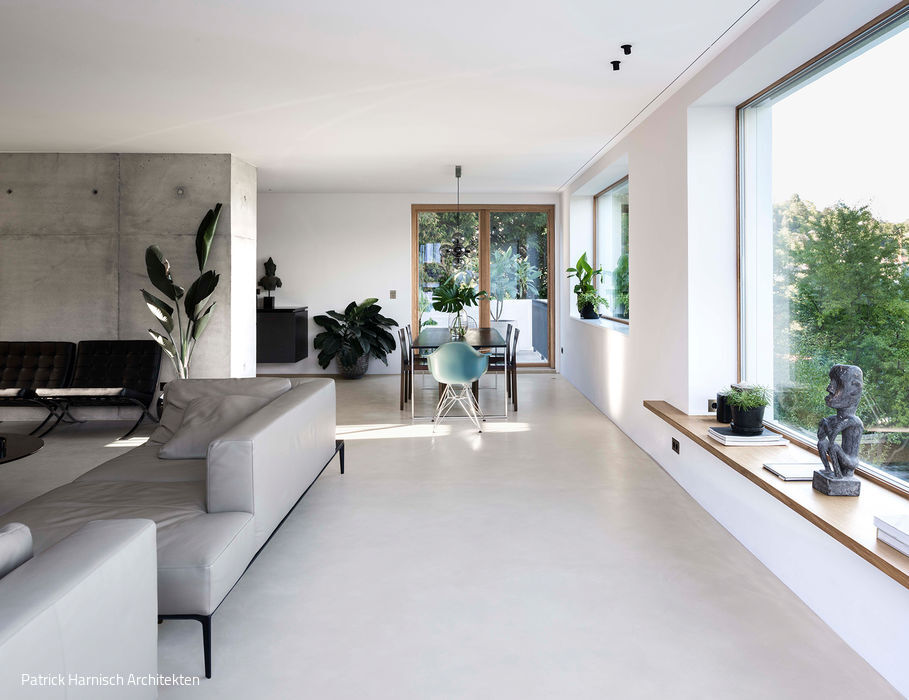
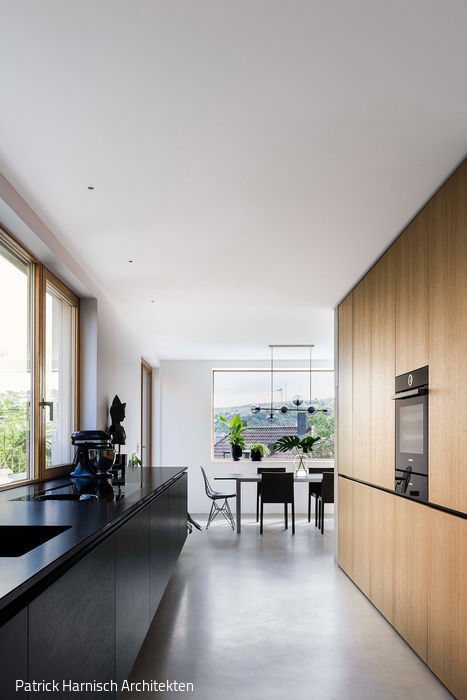
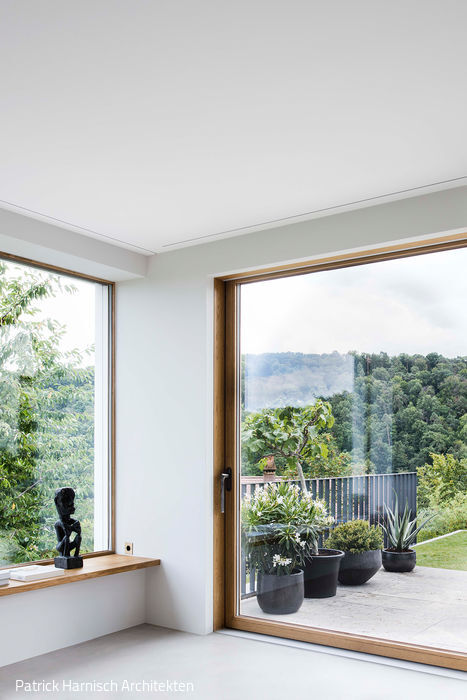
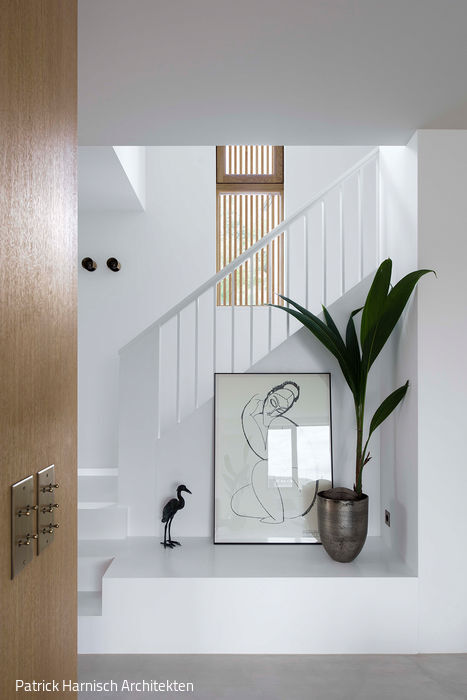
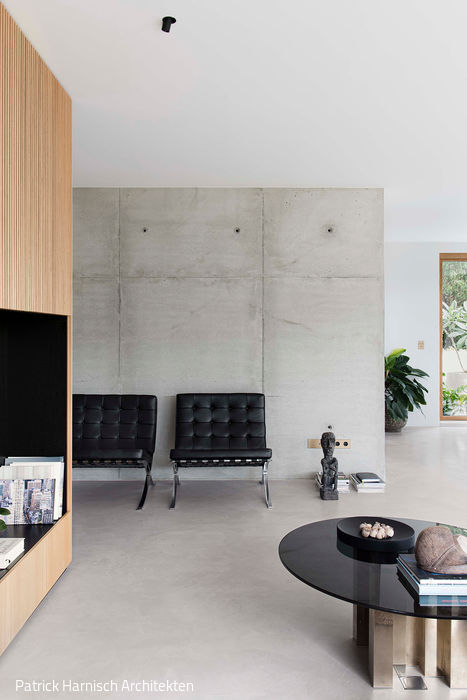
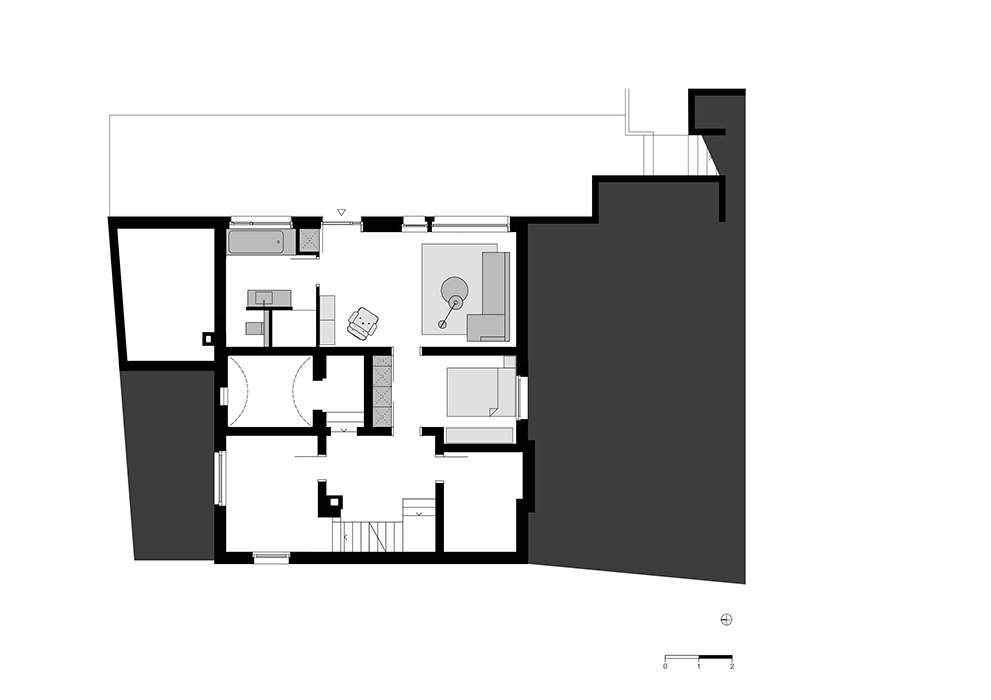
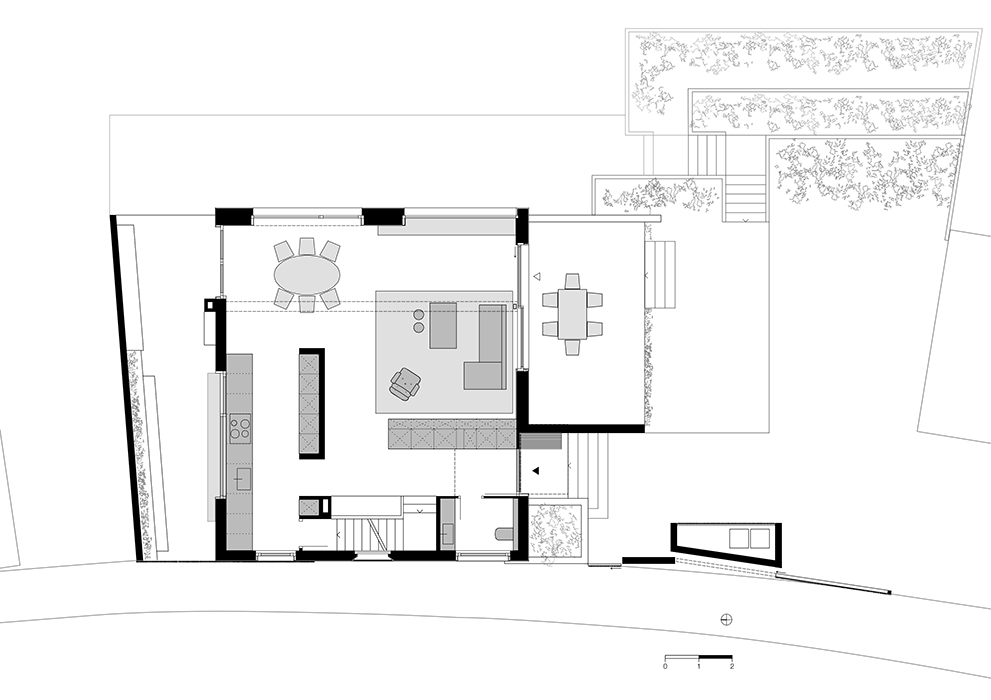
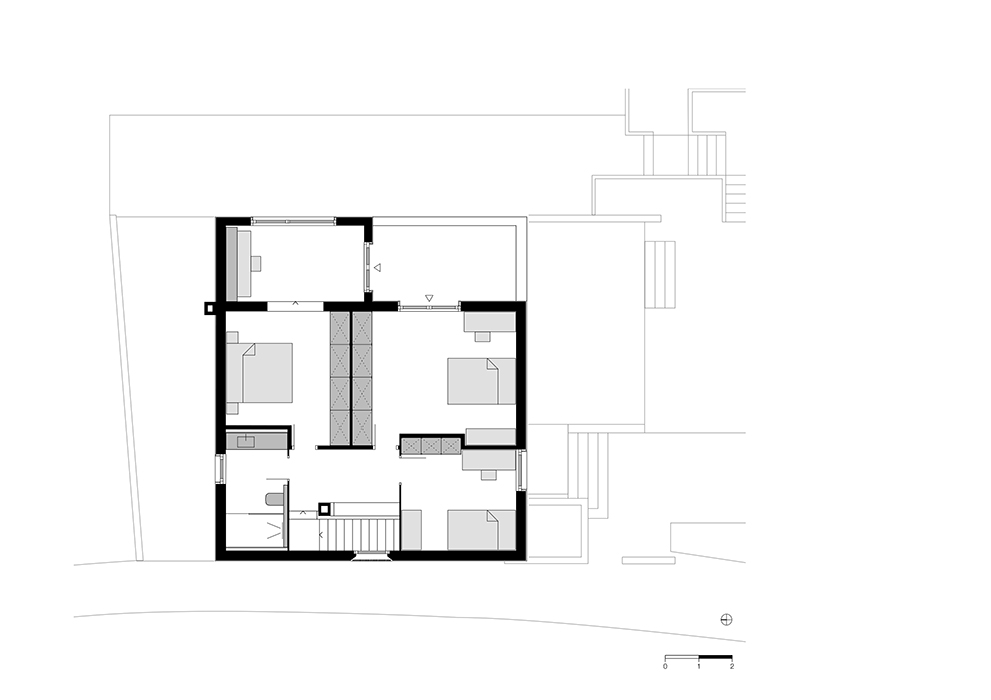
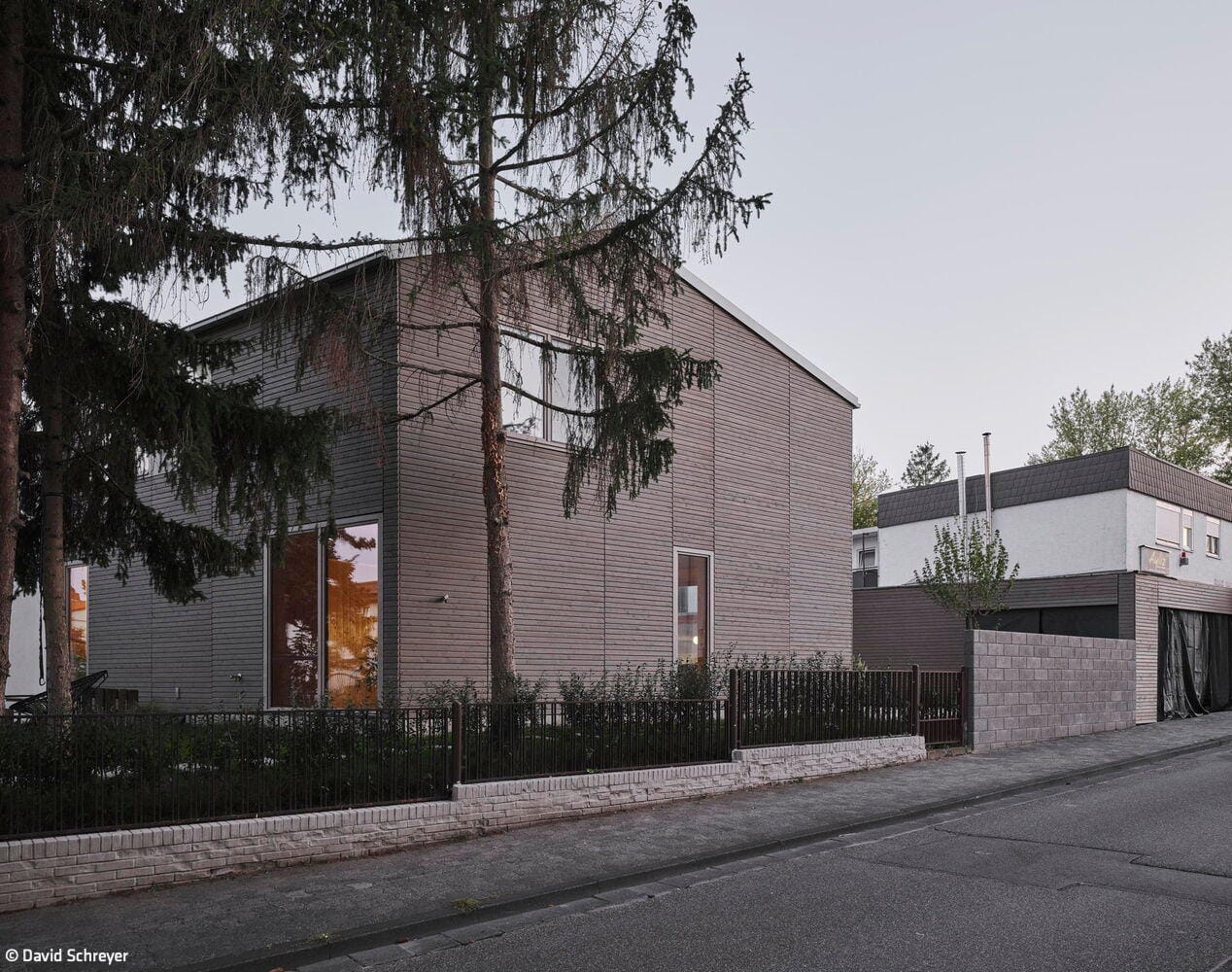
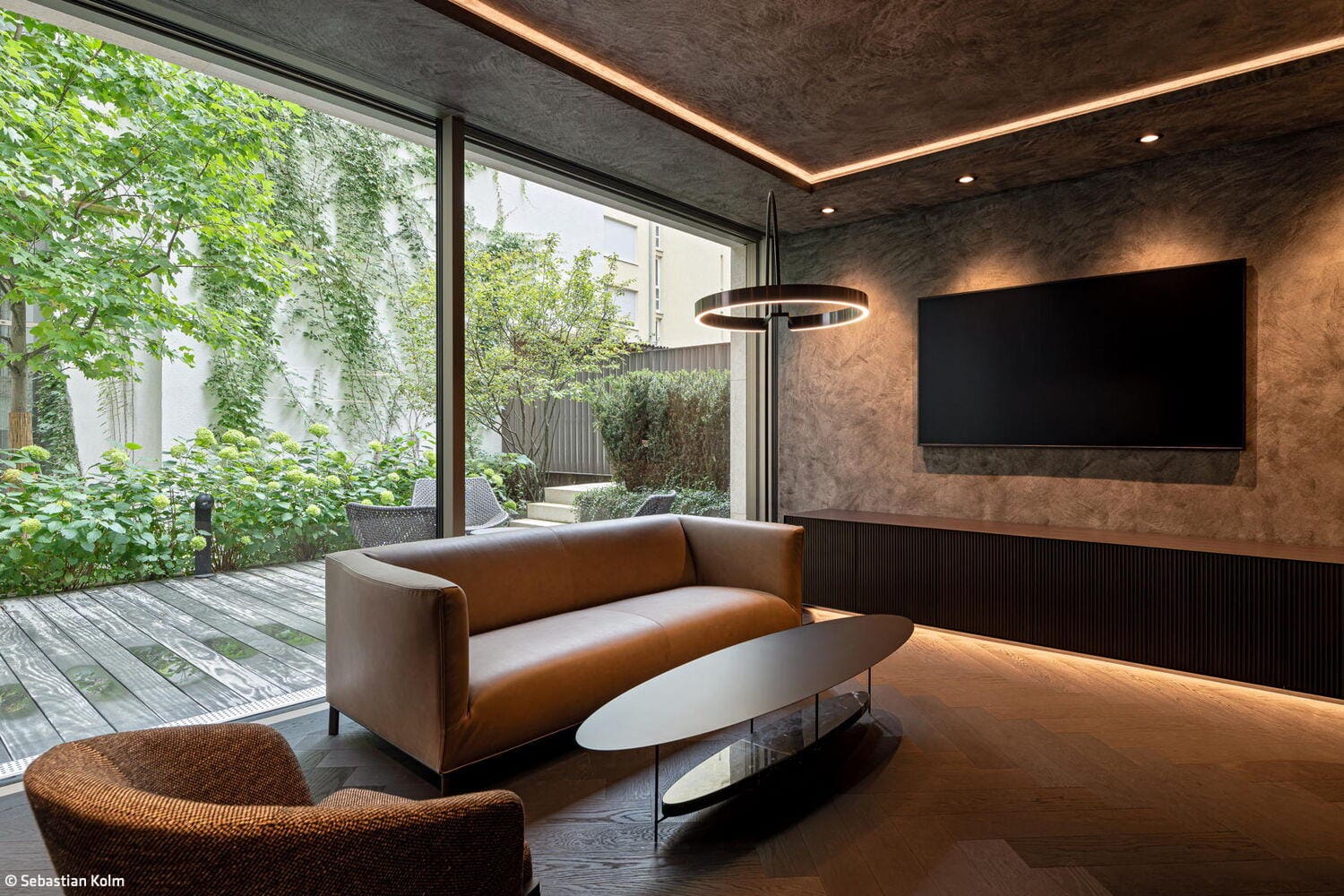
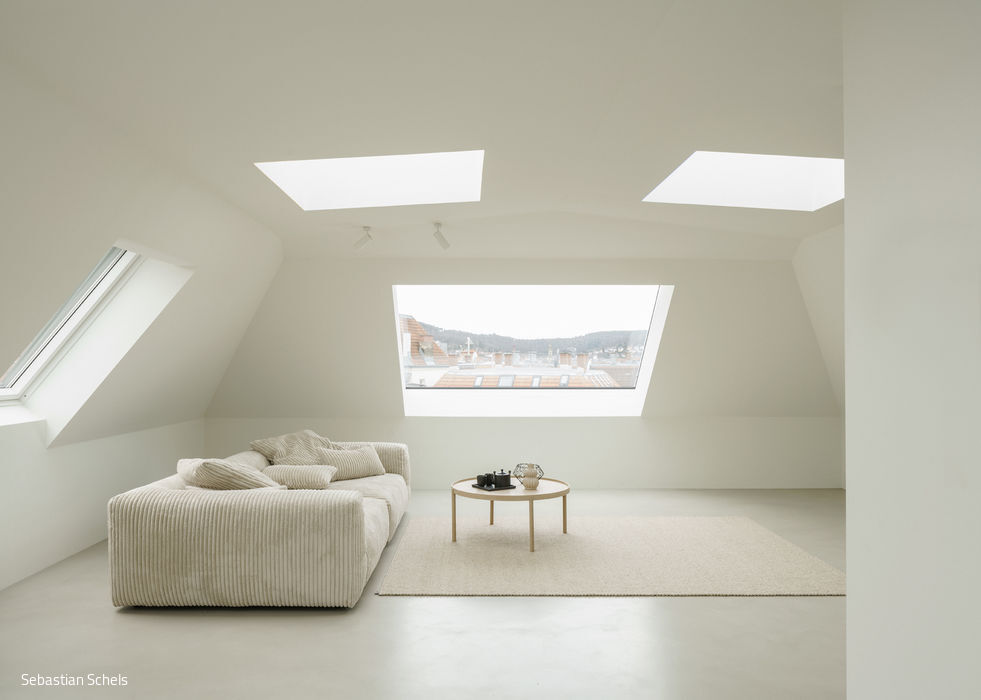
When modernizing a 1920s residence, the challenge was to reimagine both interior and exterior spaces through a restrained formal language, using materials that convey warmth and authenticity. Patrick Harnisch Architects organized the design around a central concept: dividing the building's structure into two distinct zones—a cube and a base. The cube houses the primary living areas across the upper two stories, while the base contains ancillary rooms and a separate apartment. Visually, the cube's cantilever above the base creates a clear separation between these two domains. The living level features an open, flowing floor plan defined only by custom built-in furniture and an exposed concrete wall. Beyond lies the kitchen—conceived as a continuous wall-mounted sideboard—which opens onto the patio. Creating a column-free, beam-free interior presented real challenges given the original building's fragmented layout. The solution: steel tie rods suspended from above distribute loads to the reinforced concrete roof structure, which then transfers them to the exterior walls. On the street facade, the residence sits directly adjacent to public space. Prioritizing privacy, the exterior appears largely closed, with glazing kept to essentials. Fine oak-wood louvers screen the facade from street-level views while articulating the exterior surfaces. Toward the city, however, the house opens generously—expansive window openings reveal the striking urban landscape.
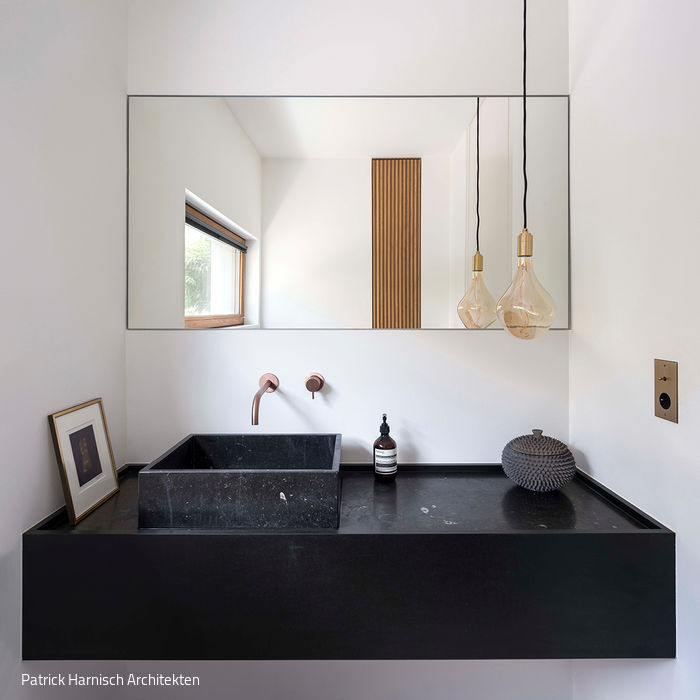
A defining design principle was the clear visual separation of old and new. Every addition—whether materials, furnishings, or spatial elements—reads as distinctly contemporary. Yet materials dialogue across interior and exterior, creating visual continuity. The wooden louvers that shield the facade from the street reappear as furniture-front panels inside; exposed concrete forms garden walls and a load-bearing entry wall, while serving as a structurally expressive room divider on the ground floor. Working with lighting specialists from PSLab, the architects developed a comprehensive lighting strategy addressing both functional performance and atmospheric quality. Wall-mounted fixtures distribute soft illumination across surfaces, while strategically placed floor-level lights project upward to accentuate spatial character and eliminate glare.
Photography Credits:
Patrick Harnisch Architects
(Published in CUBE Stuttgart 03|21)
Villa with a View
Exposed Concrete, Cast Asphalt, and Glass: Where Inside Meets Outside
At the Heart of Community
Timeless and unique new building for assisted living and care
A New Element in the Mix
Office, Meeting Spaces, and Laboratory—in Historical Dialogue
Peaceful Retreat
In this hillside villa, a striking black and gold kitchen commands center stage.