


A Sustainable Wellness Retreat
A new staff restaurant embraces natural wood and flowing curves
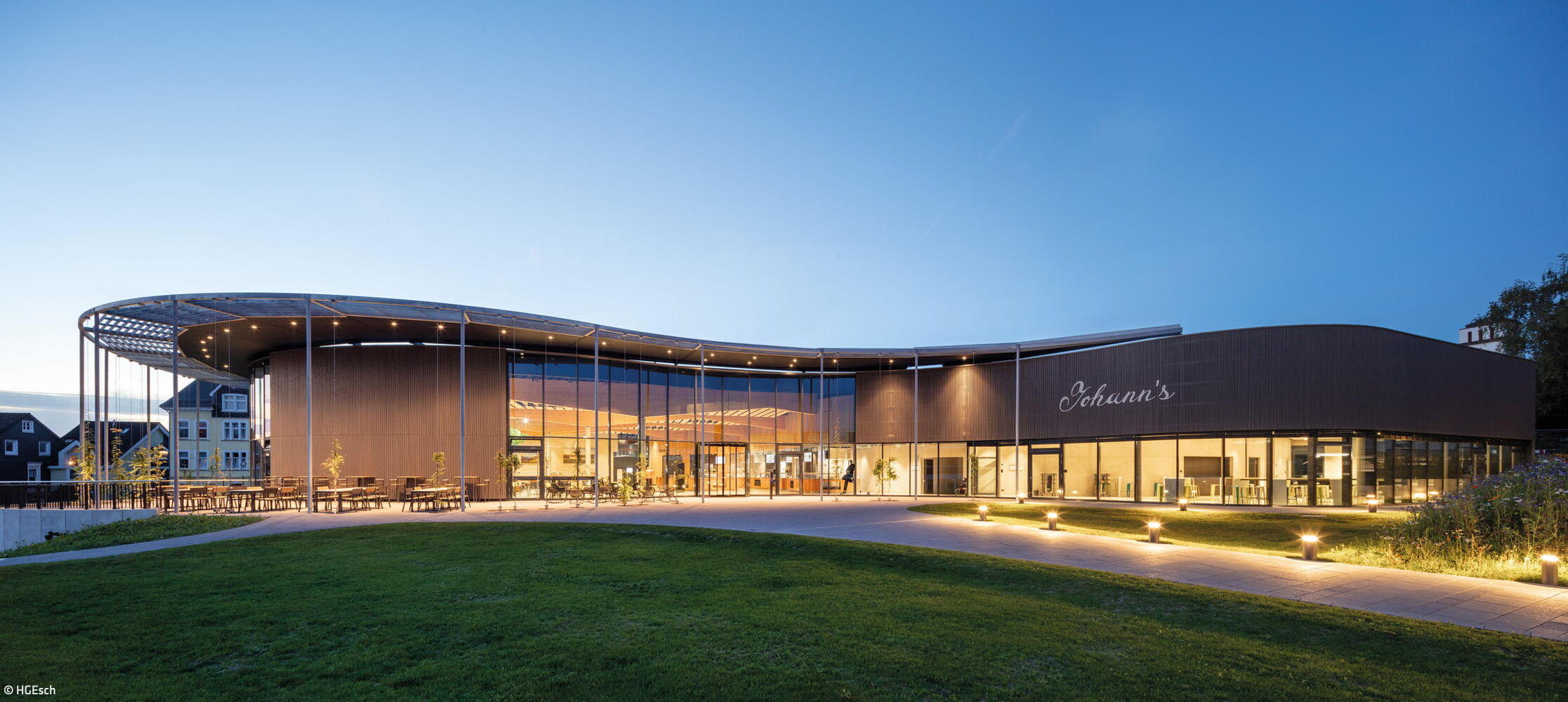
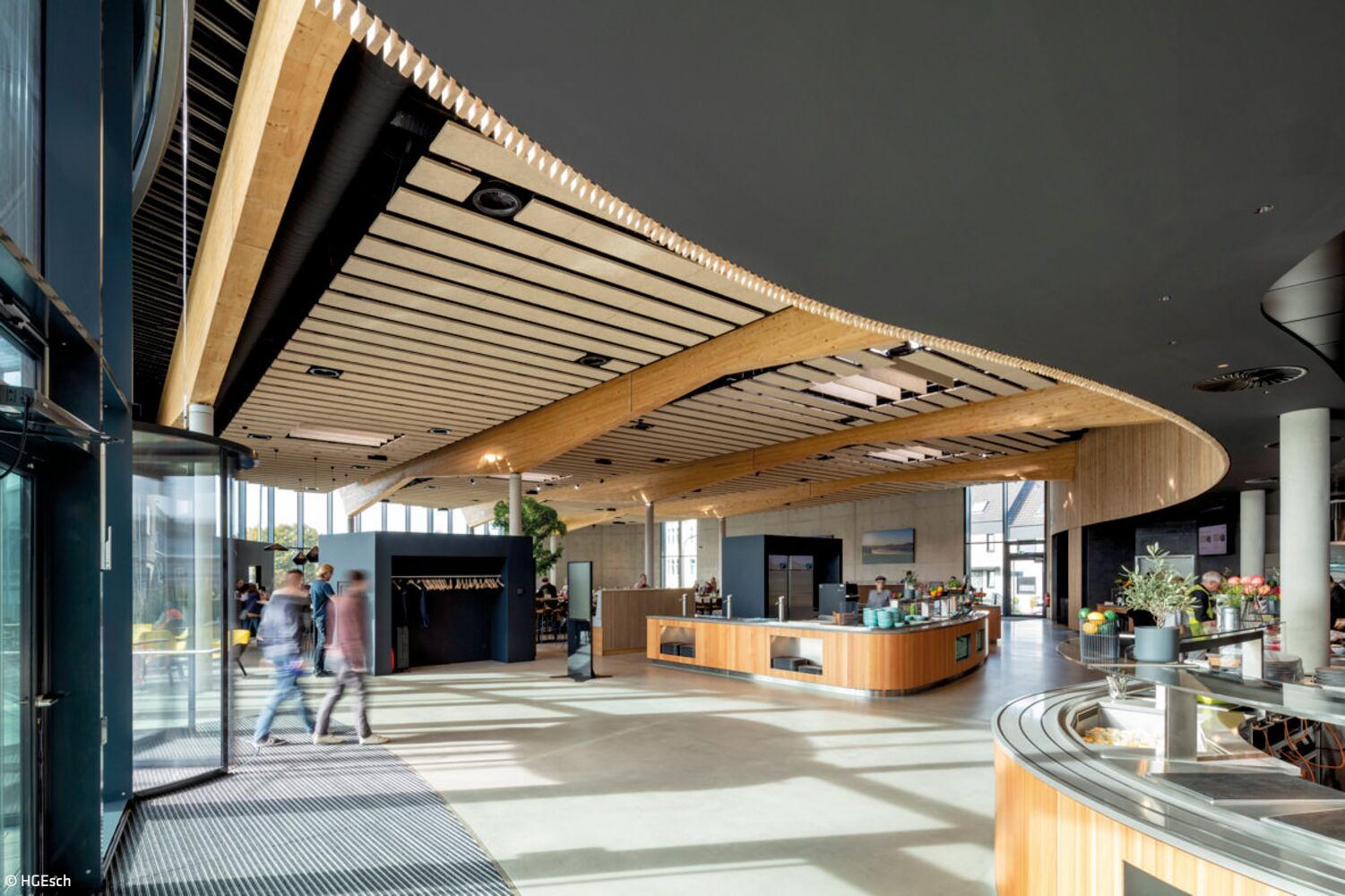
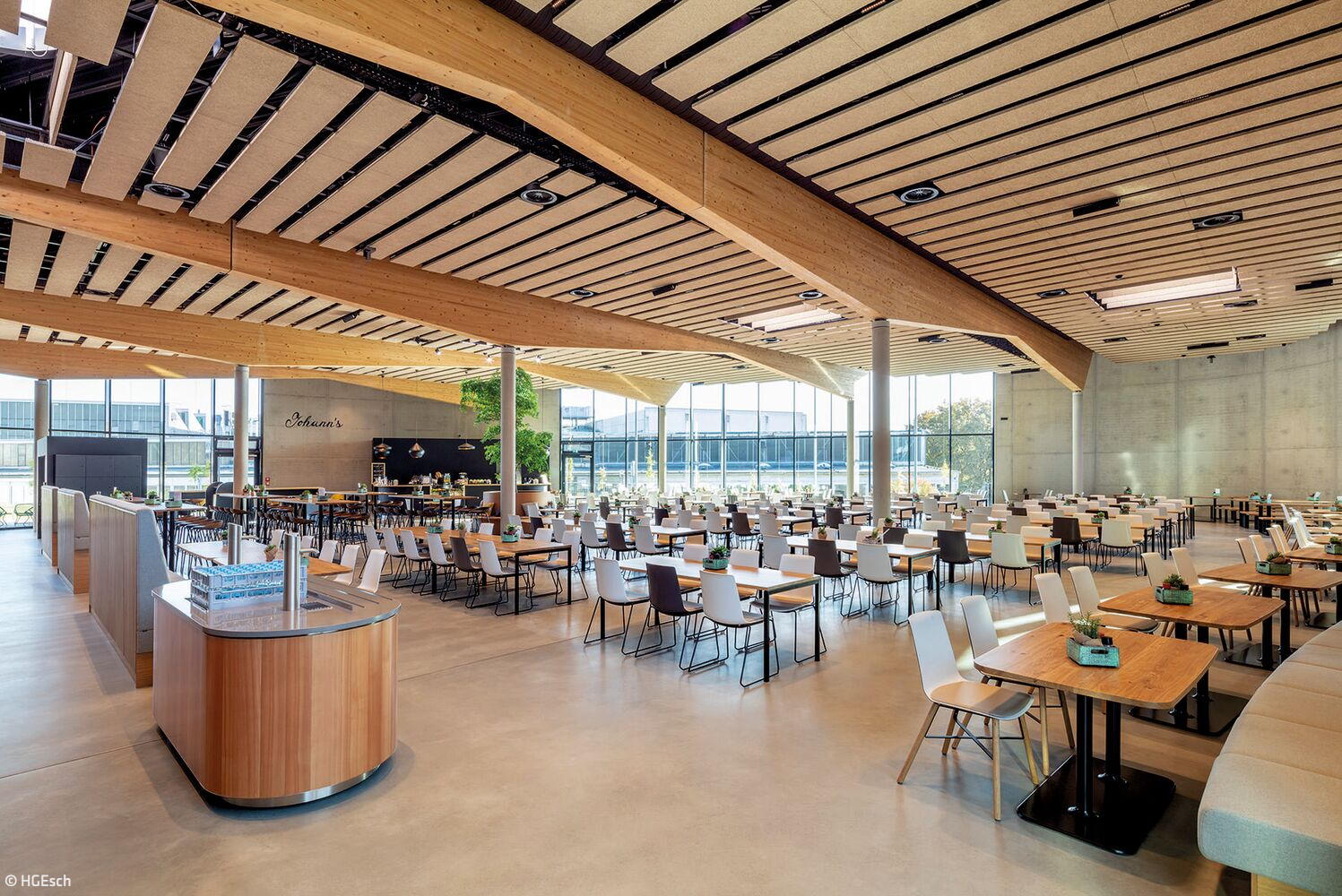
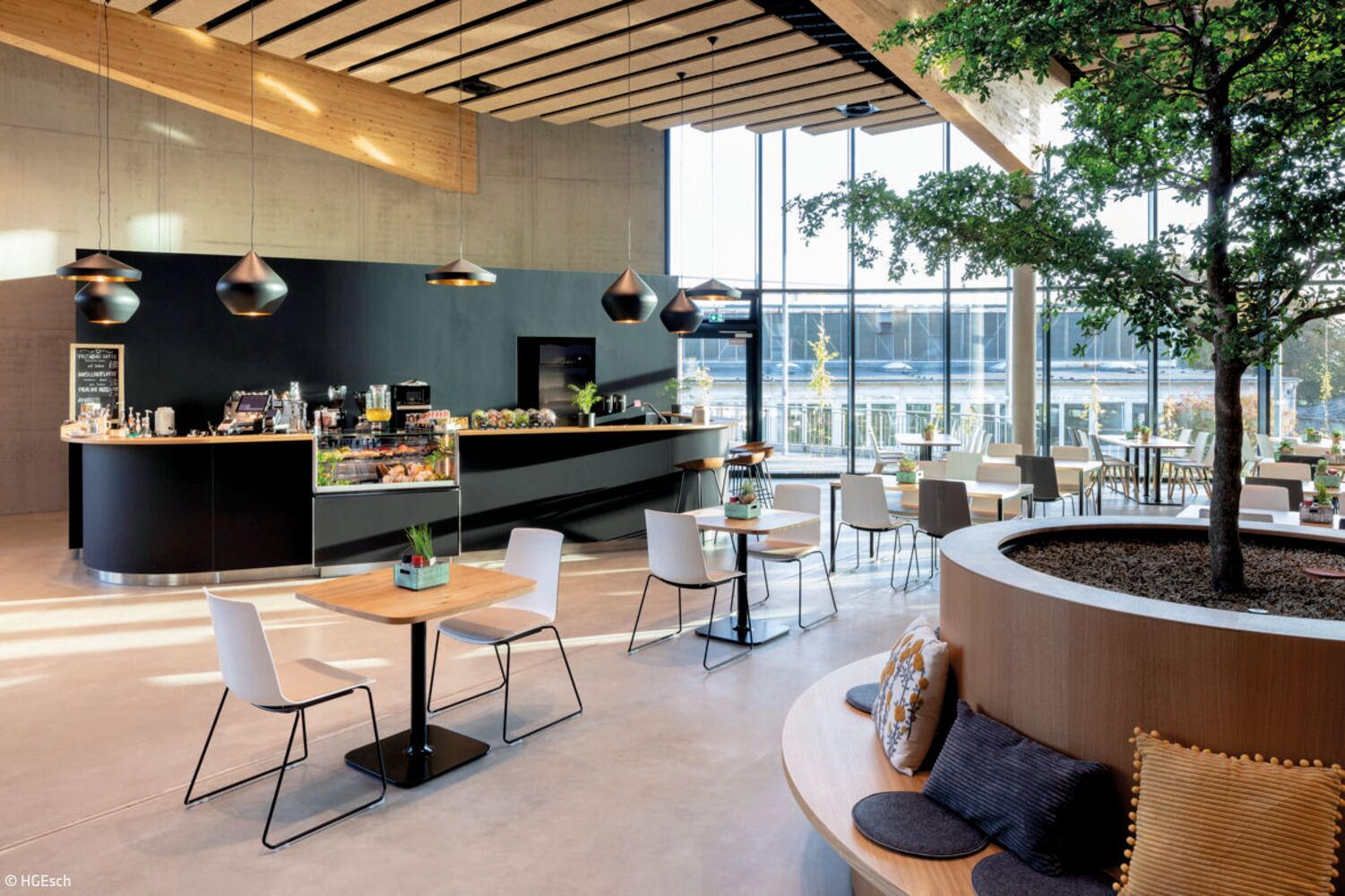
Vaillant stands as the leading provider of heat pumps, heating, ventilation and air conditioning technology, digital services, and gas heating systems. The company's headquarters, rooted in Remscheid since 1874, needed a new staff restaurant with 400 indoor seats. Essen-based Nattler Architekten was tasked with the design and implementation, and they've created a striking building on the Johann Vaillant Technology Center grounds—one that seamlessly merges functionality with an inviting atmosphere. Named after the company's founder, Johann Vaillant, it goes by the perfectly fitting name "Johann's".
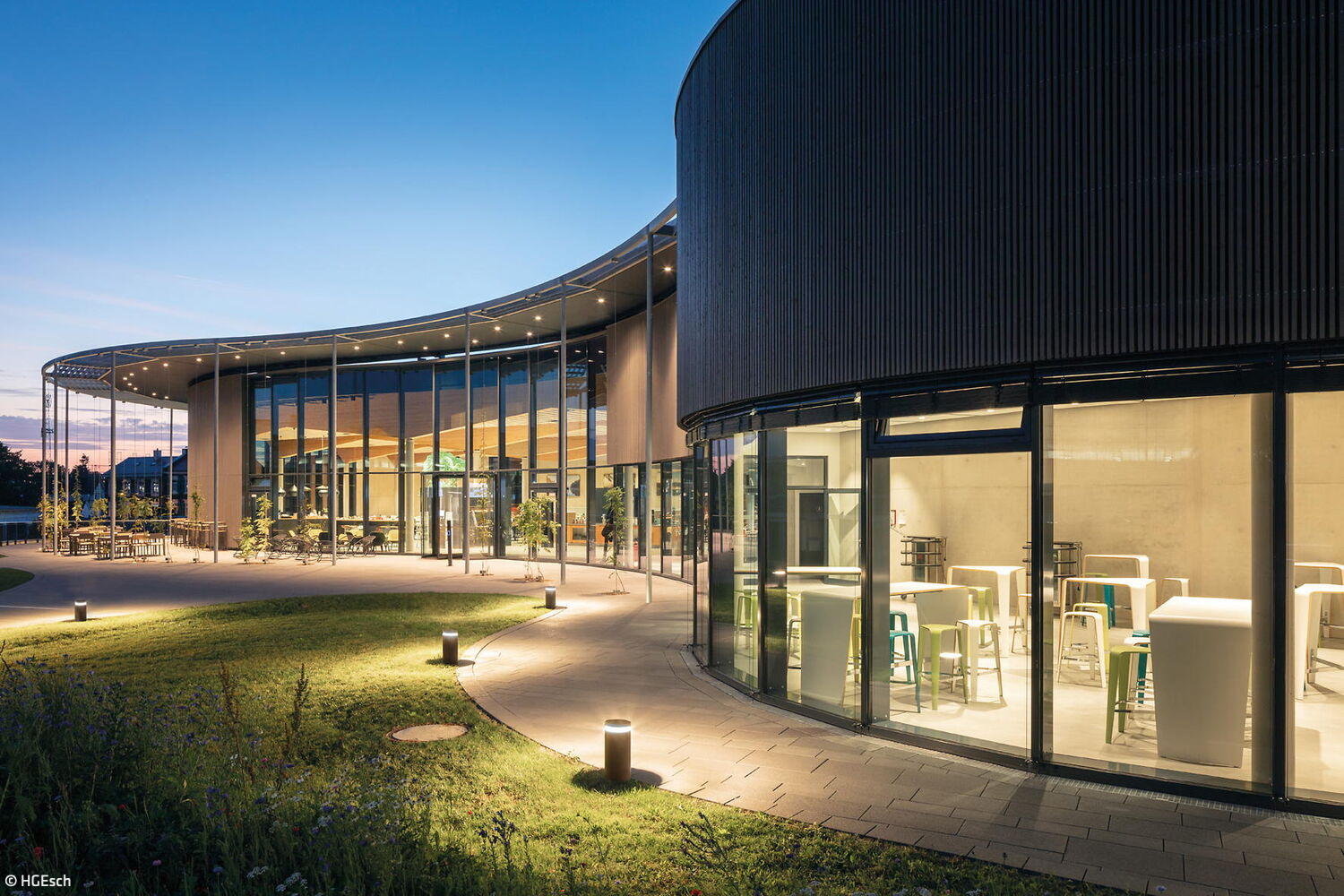
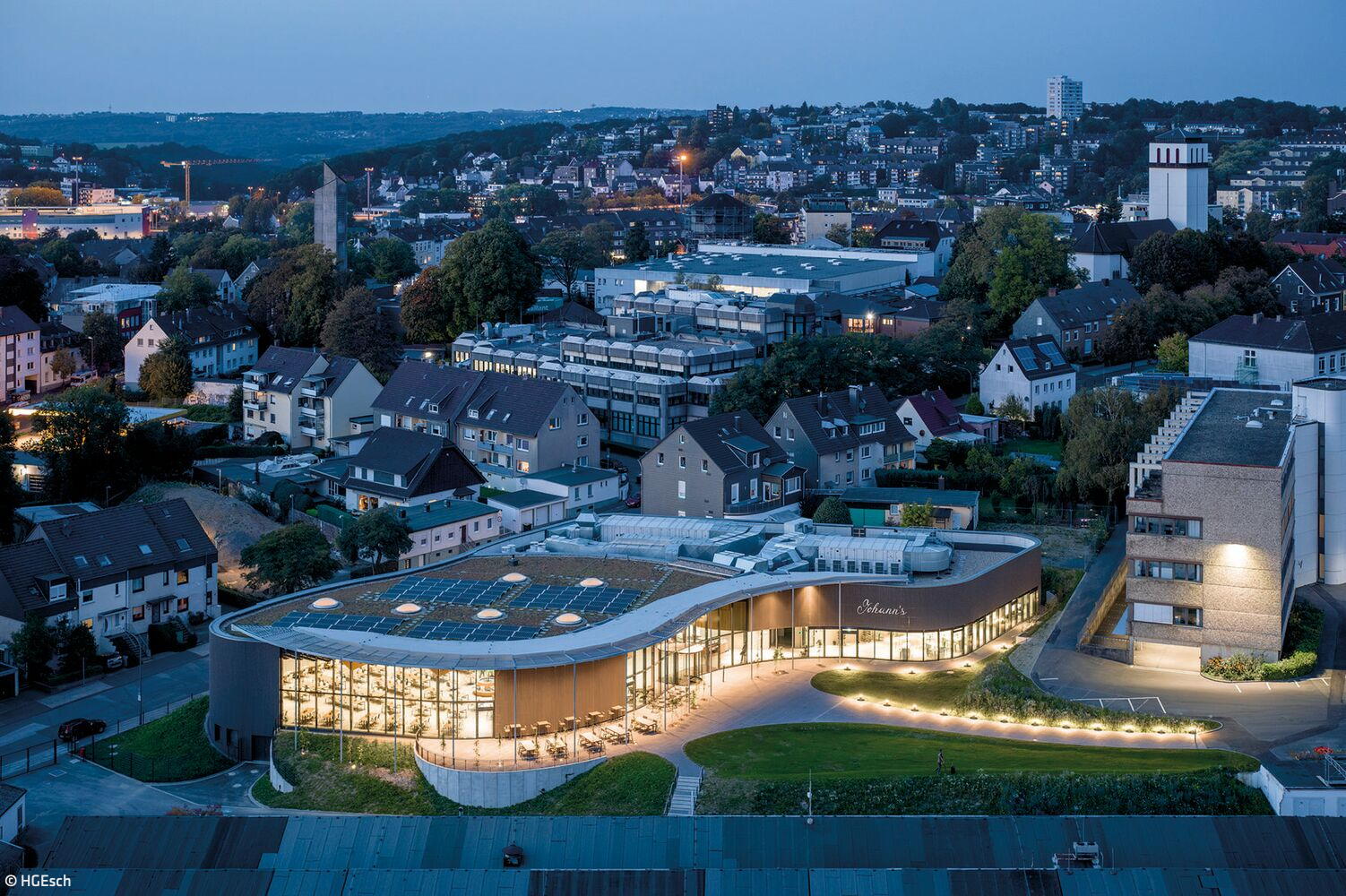
Demolishing outdated residential buildings made room for this new restaurant. The original canteen had outlived its usefulness and was converted to storage. The vision was to create an inviting retreat for all 4,500 employees—complete with an appealing entrance and easy access from the street for food deliveries. What immediately sets this new building apart is its striking architectural language: the fluid, amorphous form feels liberating and commands attention, creating a deliberate contrast to the factory's angular industrial aesthetic. While presenting a closed front to the street, the building opens generously toward the south with an expressively curved post-and-beam façade that faces the manufacturing facilities. A sustainable and cost-effective timber truss system spans the expansive dining area with remarkably few steel supports. The façade combines extensive glazing with select solid sections, with natural wooden slats beautifully accentuated by black thermal insulation backing. The main entrance guides visitors directly into the heart of the dining space and adjacent conference area, where the full scope of the restaurant unfolds before them—while service, storage, and kitchen facilities remain tactfully out of sight.
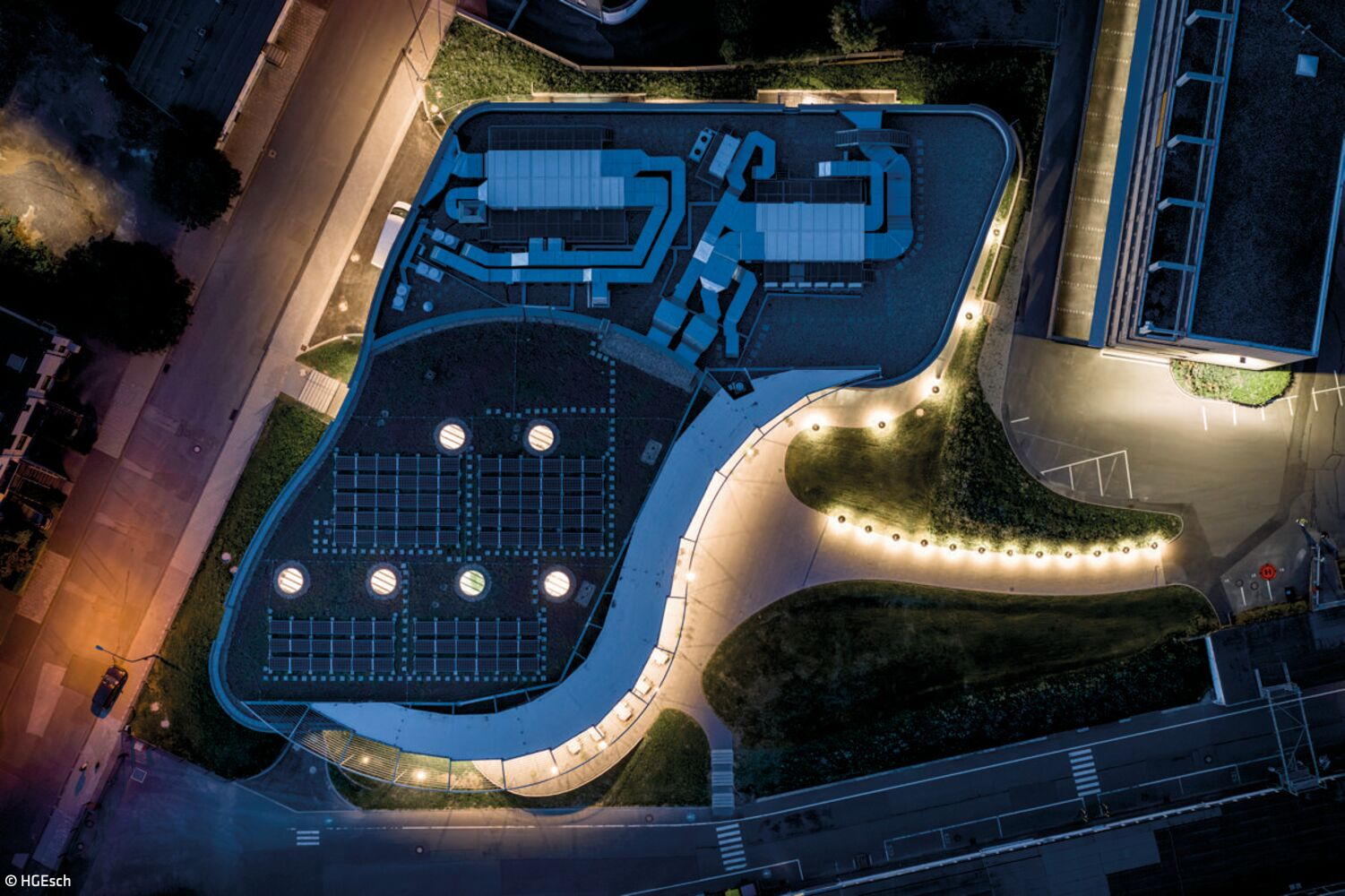
The verdant terrace facing the factory works as both aesthetic and practical feature. Combined with the green roof, it captures rainwater and allows for gradual drainage. More than that, it serves as a natural thermal buffer, keeping the building cool in summer and warm in winter. The building systems themselves reflect current energy standards: a hybrid heating solution pairs a heat pump with ventilation and a solar PV system that generates power. Every space benefits from mechanical ventilation for complete climate control. Summer heat protection layers in additional strategies—a shading canopy, high-performance glazing, and external solar blinds all work alongside the insulated façade. When temperatures climb, a central ventilation system delivers additional cooling capacity.
Photos:
HGEsch
www.hgesch.de
(Featured in CUBE Düsseldorf 02|25)
Bringing Nature Indoors
A bungalow that captivates through expansive transparency and layered garden vistas.
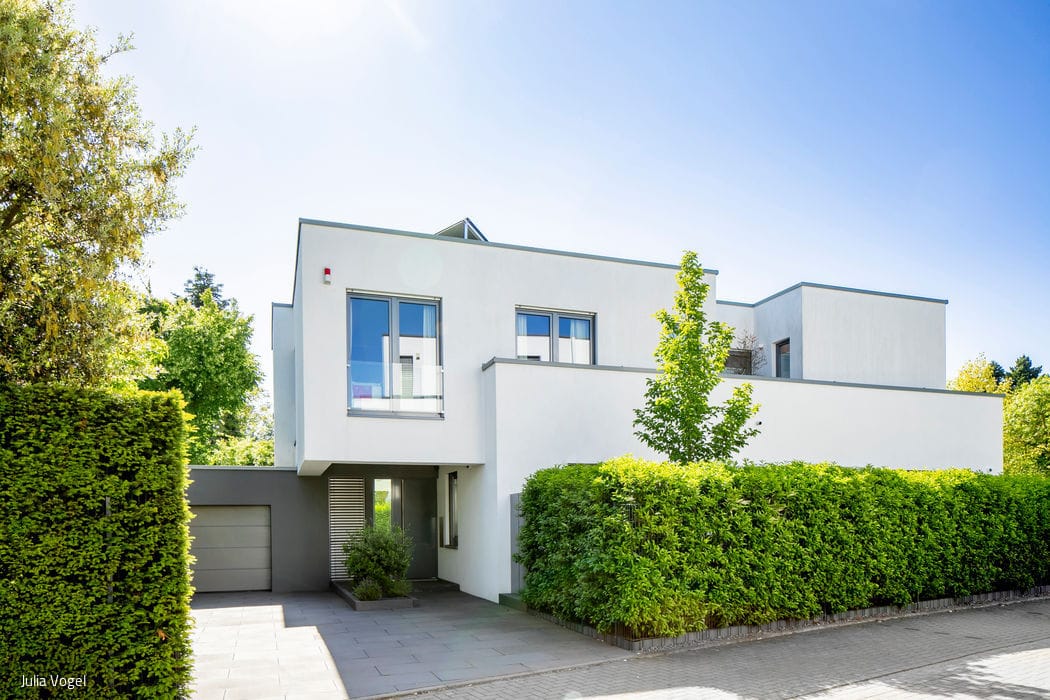
Sculptural Articulation
A family home in Kaiserswerth reveals unexpected spatial richness
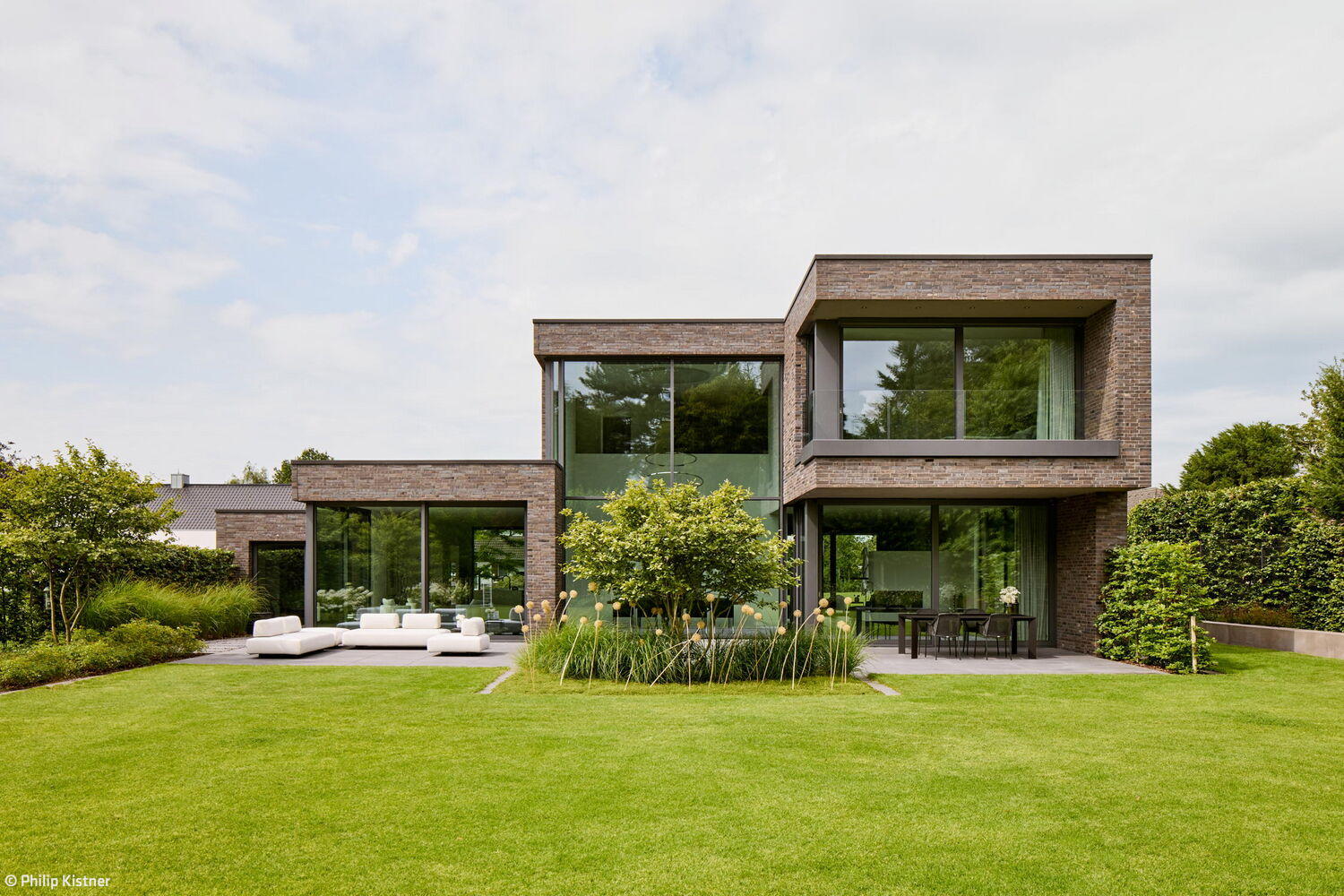
Minimalist Monolith
A Mönchengladbach residence that captivates through its uncompromising minimalist design
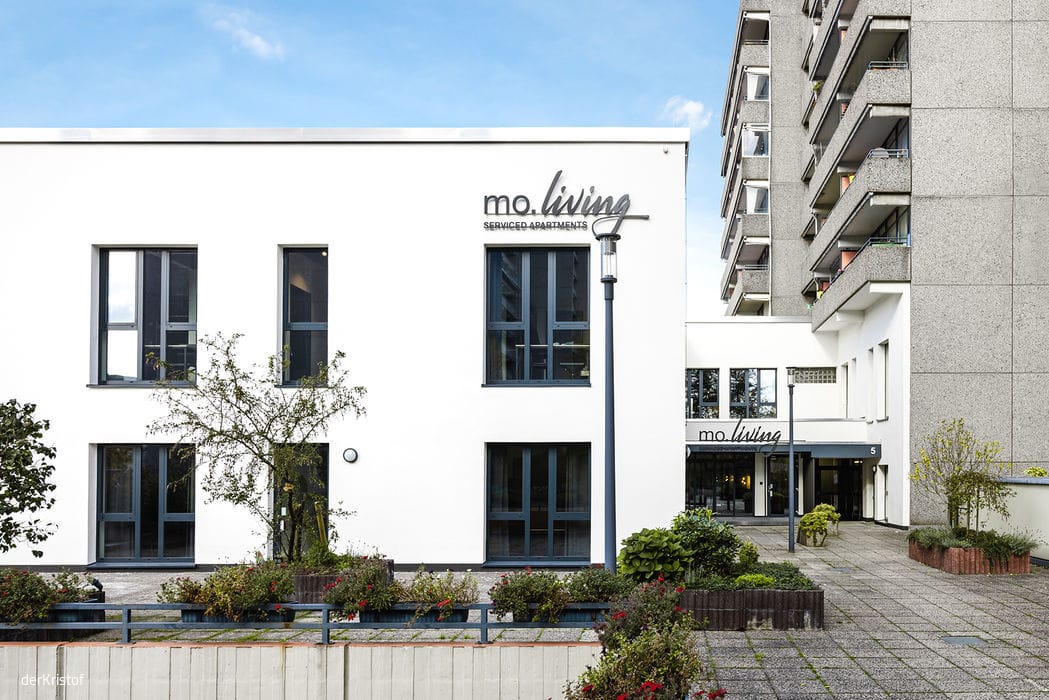
Casual and Unconventional
Stylish interiors meet community spirit at serviced apartments in Neuss