


Sustainable and Flexible
New Stockbrünnele Education Center in Böblingen brings two schools under one roof
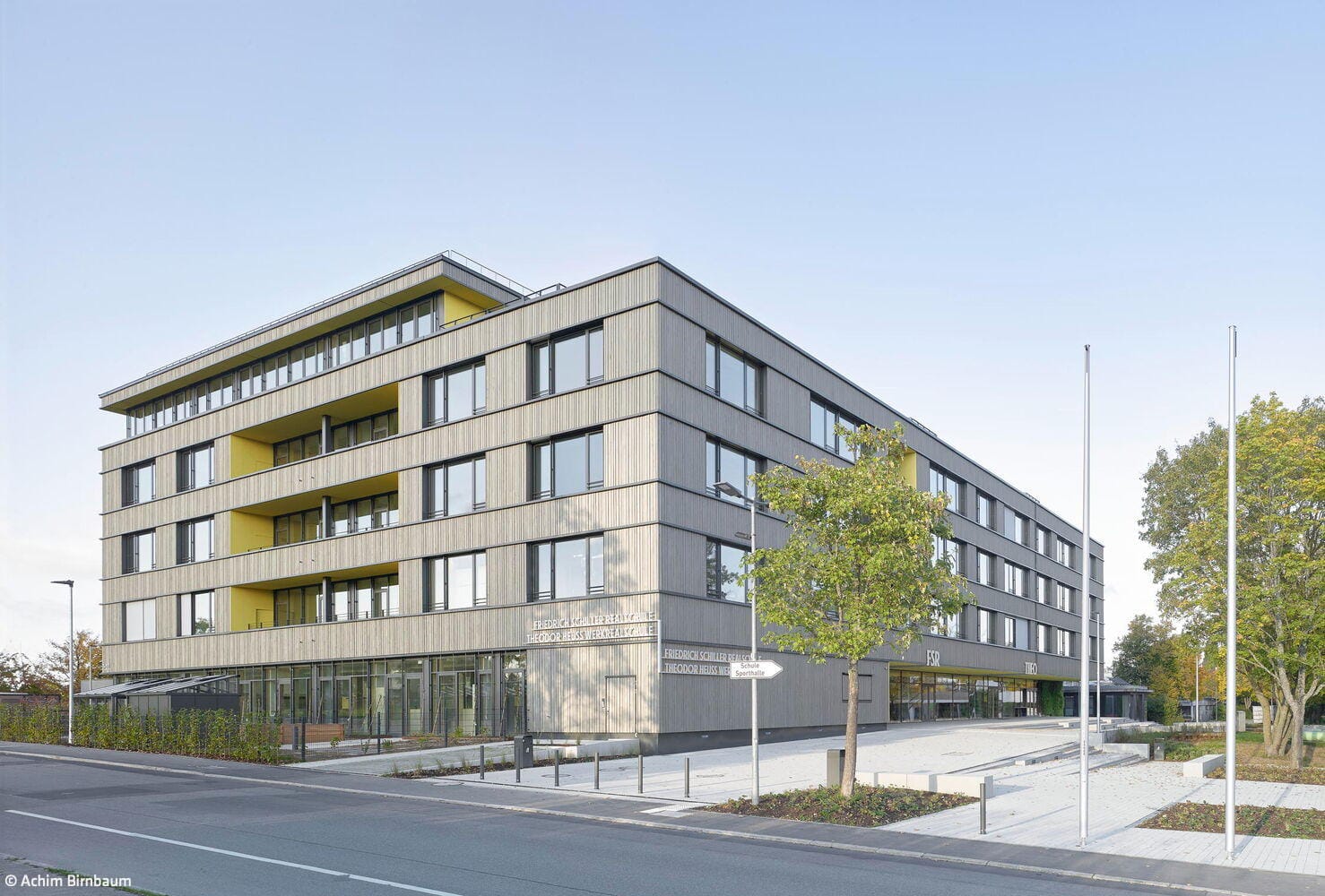
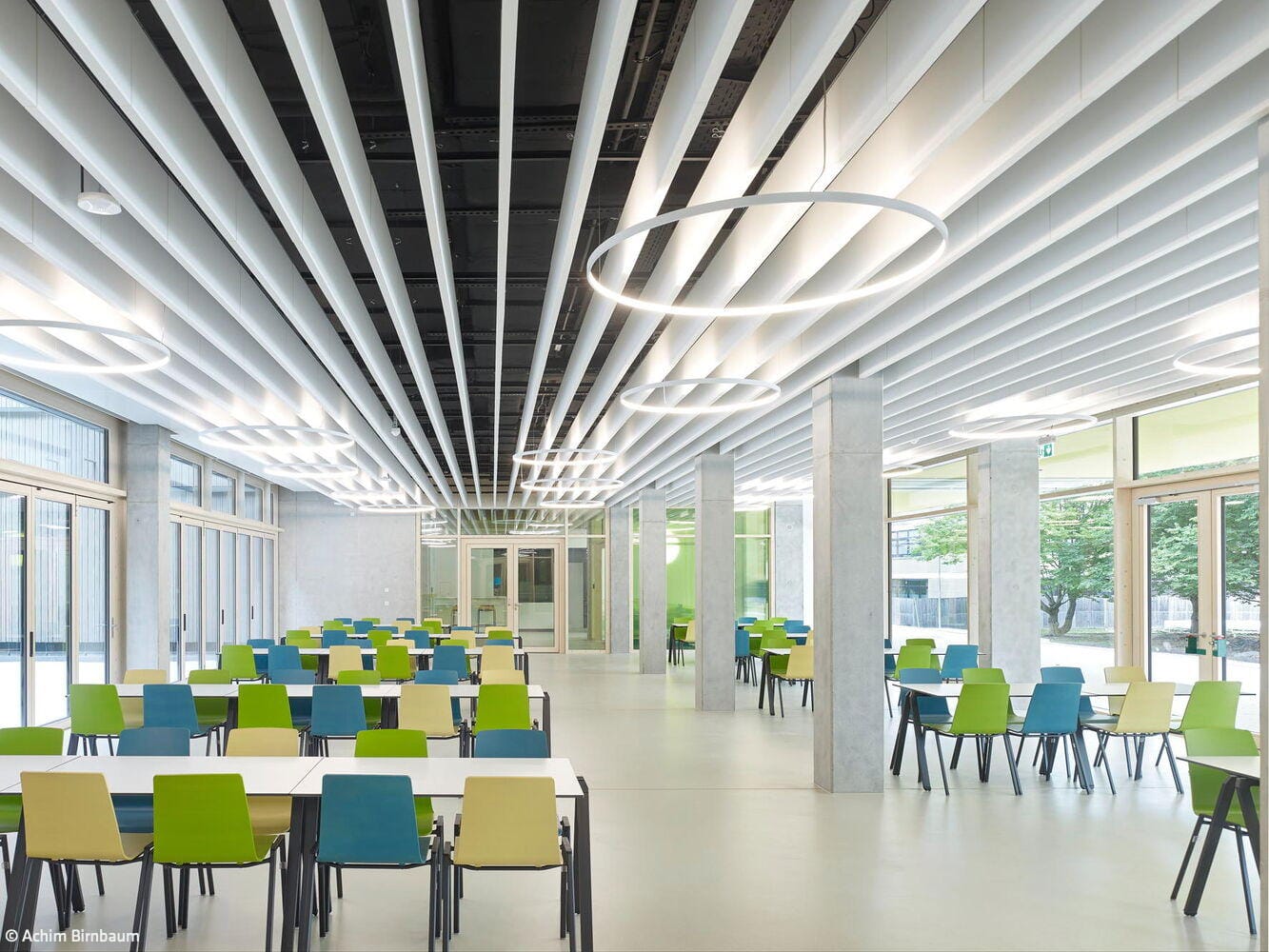
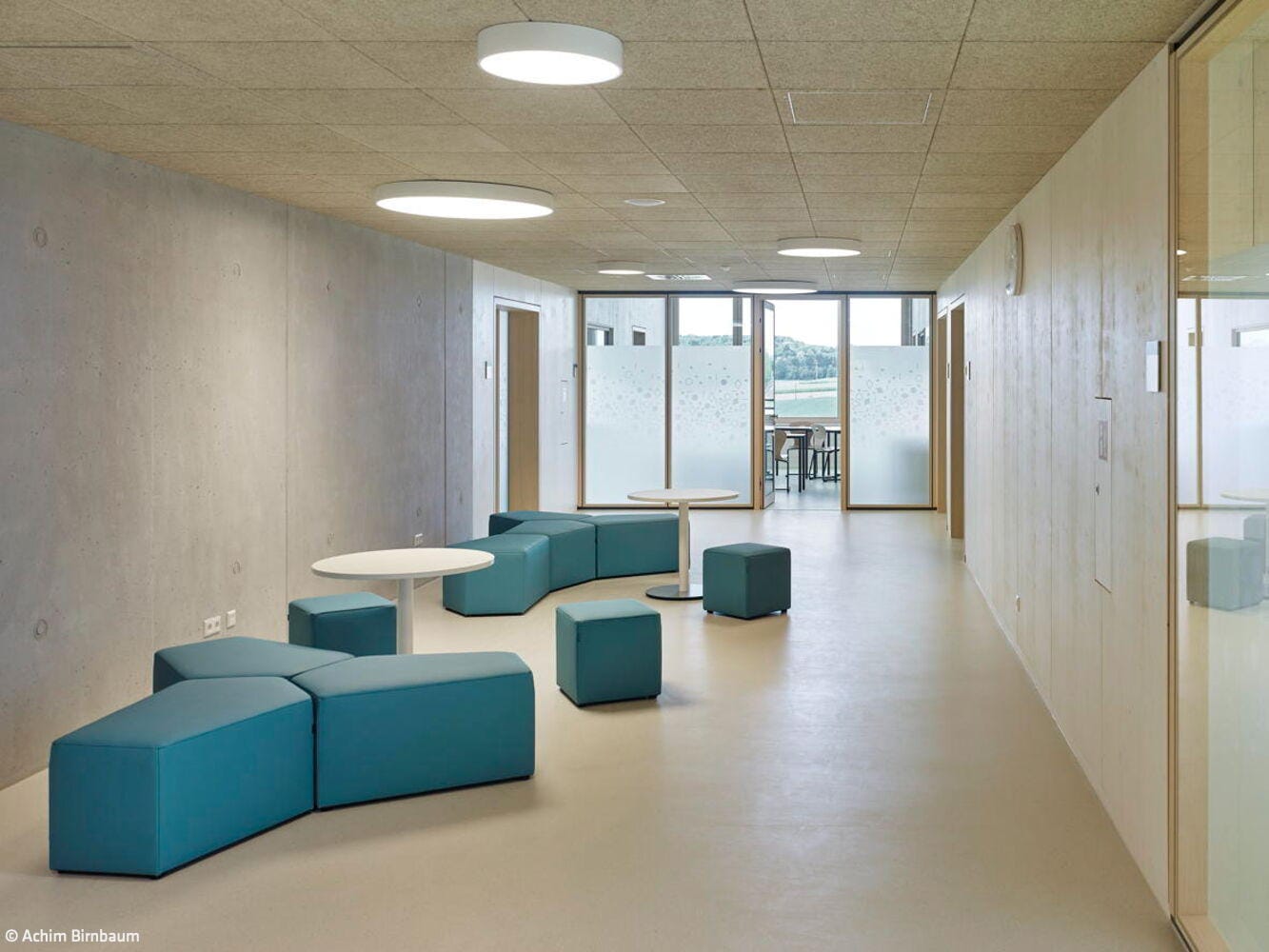
On Böblingen's western edge, a school building emerged with a remarkable sustainability concept. The cornerstone of this approach—looking at the building's entire lifecycle—is the use of largely untreated timber. This ease of deconstruction enables the structure to serve as a material bank over the long term, fostering a circular economy for building materials. The use of regionally sourced timber also makes a significant contribution to climate protection while supporting local value creation and resource efficiency.
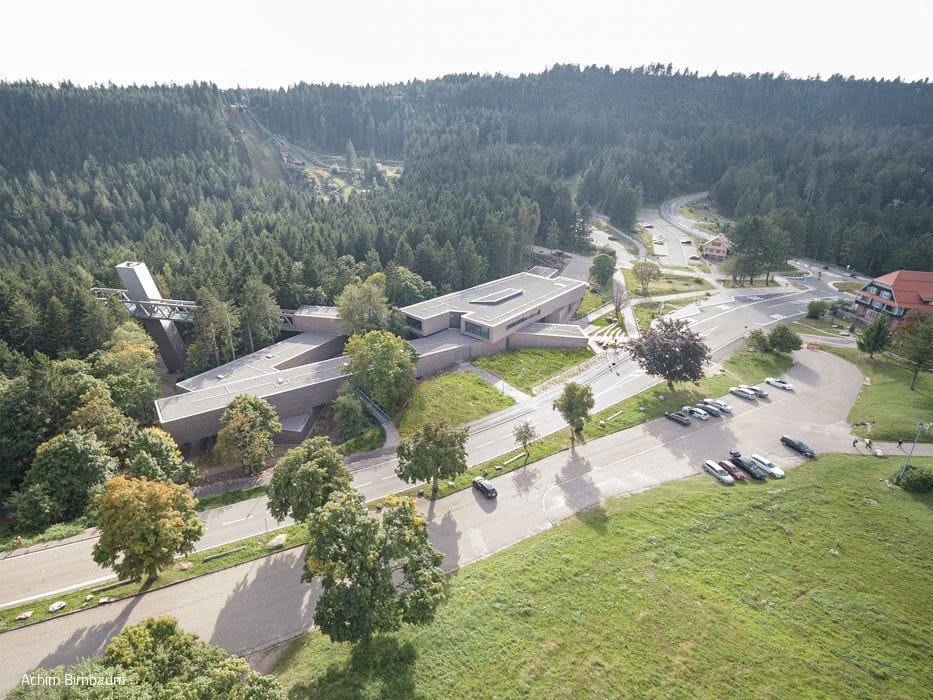
Designed by BFK architekten, the Stockbrünnele Education Center integrates with existing facilities on the school grounds (double gymnasium and youth center) and accommodates approximately 750 students. The spatial program was developed in close consultation with the client and user representatives from both the Friedrich-Schiller Realschule and Theodor-Heuss-Werkrealschule, tailored to each school's specific needs. Classrooms are arranged in an L-shaped configuration around a shared central courtyard. This courtyard, with the student cafeteria at ground level, creates a unified space where both schools converge, fostering interaction and communication among all students. Beyond 45 specialized classrooms—including music rooms, teaching kitchens, and science facilities—verdant loggias and a rooftop garden on the fourth floor provide spaces for collaboration, learning, and retreat. A school garden adjacent to the teaching kitchens and a multipurpose workshop courtyard between the new and existing buildings extend pedagogical opportunities into the outdoor environment.
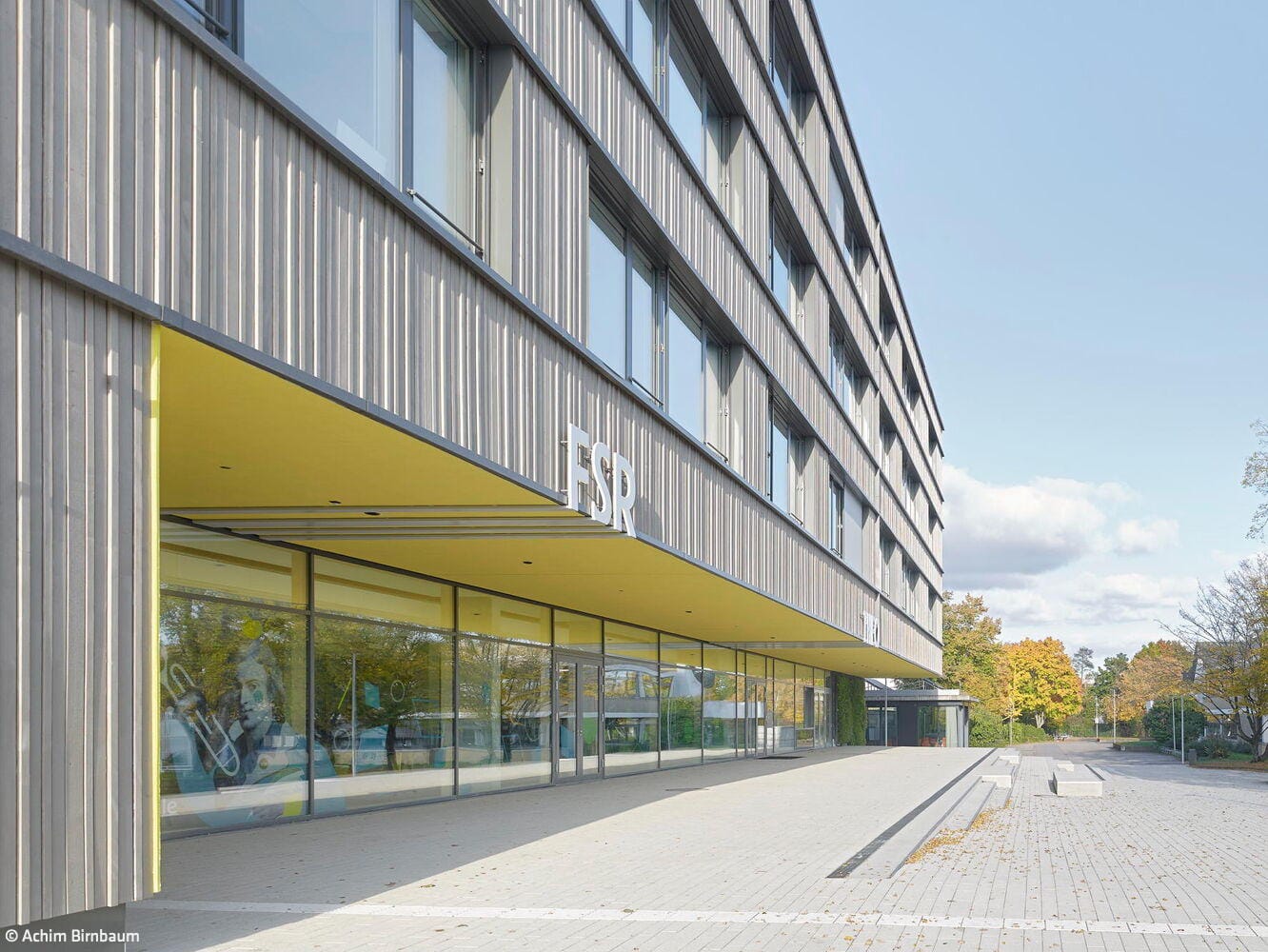
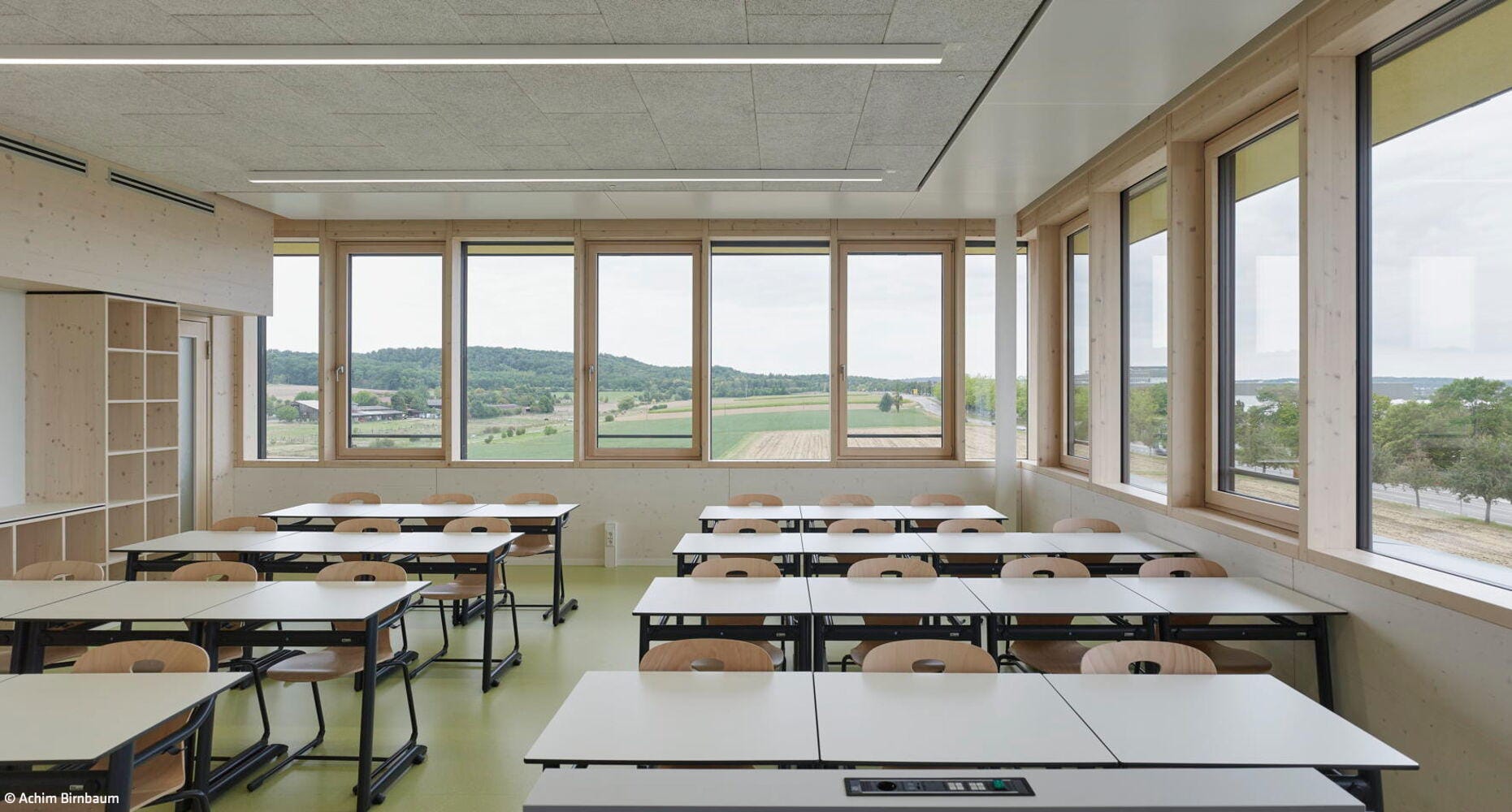
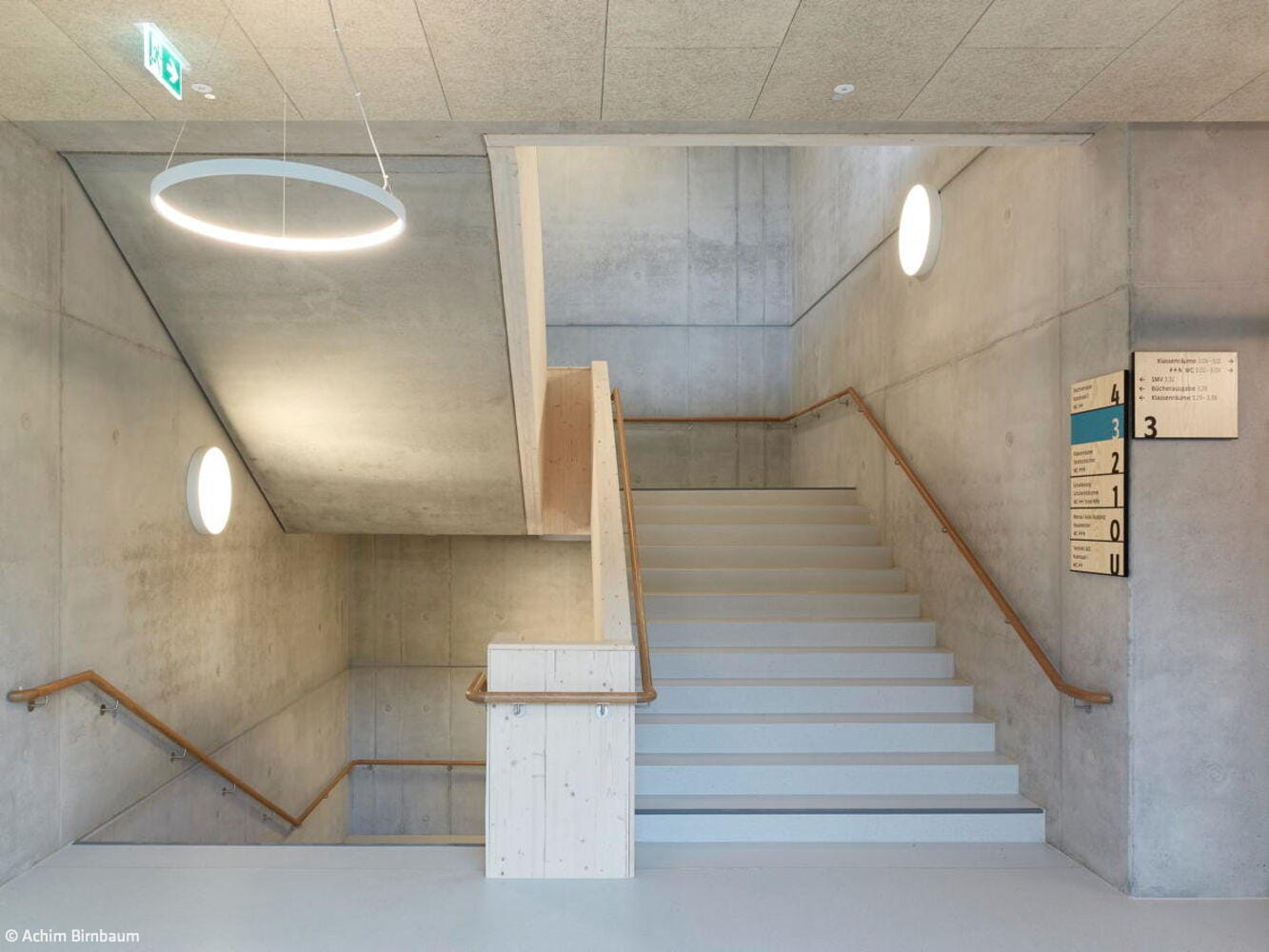
The structural system is a hybrid construction combining reinforced concrete and solid timber: the base and ground floors, along with the staircase cores, are reinforced concrete. The floors above are executed in solid timber construction. The upper stories feature a column-and-beam system in European beech with laminated timber decks. The external envelope is a ventilated timber facade in larch with vertical articulation, giving the substantial building volume a warm, natural character. Laminated timber parapets serve as fascias and bearing supports for the decks. The compact form is articulated through setbacks and recesses, particularly in the upper levels. Classrooms feature expansive wood-aluminum windows and motorized fabric sun shading systems. At ground level, floor-to-ceiling glazing floods the spaces with natural light.
Wall and deck elements were largely prefabricated in the manufacturing facility. A comprehensive assembly strategy was developed that achieved a very high degree of prefabrication across all trades, significantly shortening the overall construction schedule. The feasibility of timber construction for this Building Class 5 (school/assembly building) resulted from intensive planning processes. A dedicated "timber construction working group" was established for this project, bringing together all authorities, planners, and the client for regular coordination on fire safety—ultimately securing a project-specific building permit. Facade greening gives the new building a distinctive identity while providing additional climate benefits.
Photos:
Achim Birnbaum
www.achimbirnbaum.eu
(Published in CUBE Stuttgart 01|26)
In Dialogue with the Landscape
Thoughtful and Sustainable Expansion of an Inclusive Hotel
Studio creative underdogs
Design studio specializing in products, furniture, and spatial concepts
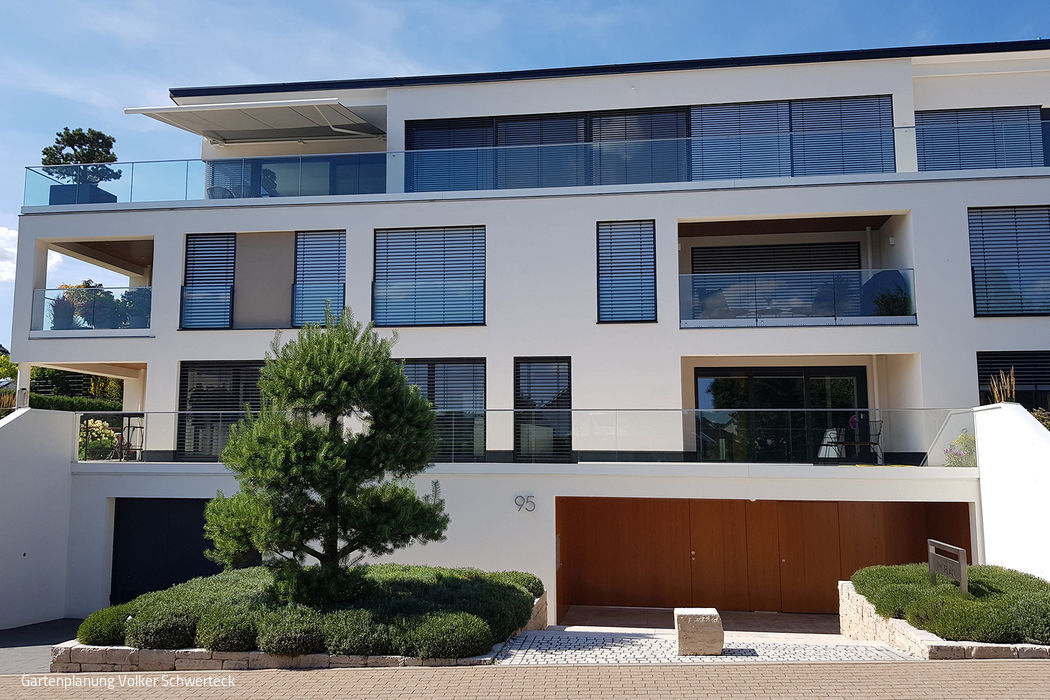
Living, Working, Being
Living garden design in dialogue with bold, decisive architecture