


Leading by Example
Solid wood construction: prefabricated, sustainable, and energy-efficient


From the start, the architects set out to prove a point with this project: designing a single-family home that embodies resource efficiency, sustainability, and environmental responsibility in every aspect. The completed Frohnau residence demonstrates that they've succeeded brilliantly.
Frohnau, in northwest Berlin, emerged in the early 20th century as part of the pioneering garden city movement. Today, the neighborhood still retains its character—intimate plots dotted with single-family homes. This project sits on precisely such a site, where Berlin-based architects Böhm Ruic brought their vision to life: a two-story residence built entirely from solid wood. Seventy-seven substantial cross-laminated timber (CLT) elements—walls, roof, and ceilings, many in large formats—were digitally engineered and delivered prefabricated to the site. These multi-layered wood components, made from cross-glued timber layers, went up in just two days, roof included, with zero construction noise, minimal disruption, and peace of mind for neighbors. Pre-fabrication extended further: each element arrived with all necessary openings for electrical systems, mechanical ventilation, and building services already milled in, which dramatically accelerated the assembly phase. This approach delivers substantial benefits: exceptional load capacity, fire resistance, superior acoustic performance, and elimination of thermal bridges. Combined with wood-fiber insulation and a timber façade sourced from certified sustainable forestry, every material tells a story of environmental stewardship. The pre-weathered larch slats, arranged diagonally, echo the silvery tones of the towering Scots pines surrounding the property—a deliberate choice, as preserving the existing tree canopy was fundamental to the design. The home's compact footprint reflects this commitment, maximizing garden space while respecting the landscape. Its straightforward gable roof references the 1920s architecture characteristic of the neighborhood, maintaining visual harmony. Strategic cutouts on the ground floor create sheltered outdoor rooms—one at the north-facing entrance, another extending toward the garden as a dining terrace.
The house includes a basement—crafted with the same efficiency in mind. Prefabricated reinforced concrete elements in a double-wall system were assembled on-site, with the cavity filled with concrete afterward, eliminating formwork waste. Throughout the living spaces, the raw wooden surfaces of the solid wood structure remain exposed, celebrating the material's natural warmth. Heating comes via a brine-water heat pump (monovalent) powered by four geothermal probes on the property, delivering both underfloor warmth and domestic hot water.
Photography:
Böhm Ruic Architects
(Published in CUBE Berlin 01|25)
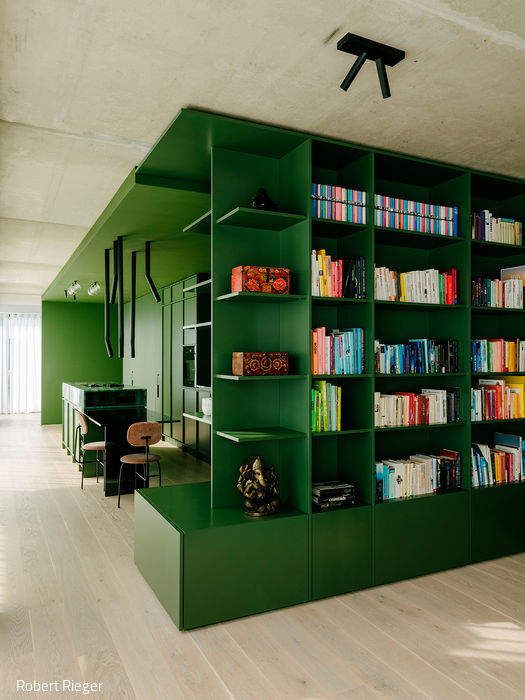
The Box Trick
A Deceptively Simple Concept for Penthouse Living

Creative Hub
An industrial heritage site reimagined for today
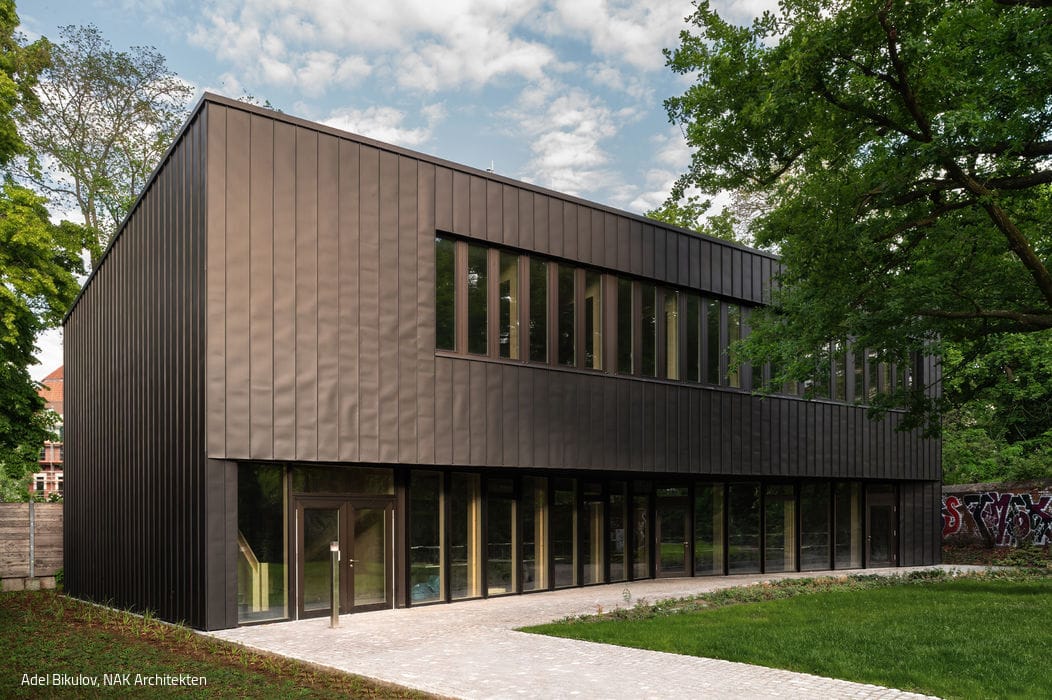
Learning Through Eyes and Senses
Extension of the Berlin Academy of Administration in Moabit
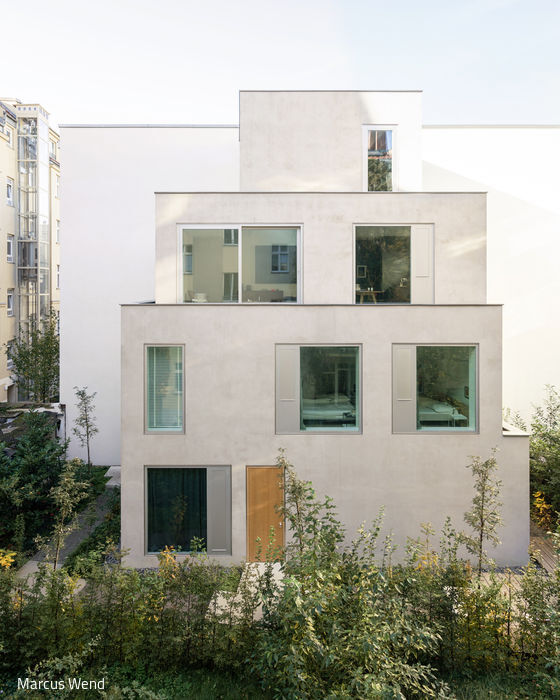
Cube Pyramid
Three-facade townhouse RHE42 built against the shared party wall