


My House by the Lake
Contemporary terraced homes rise on a previously undeveloped site
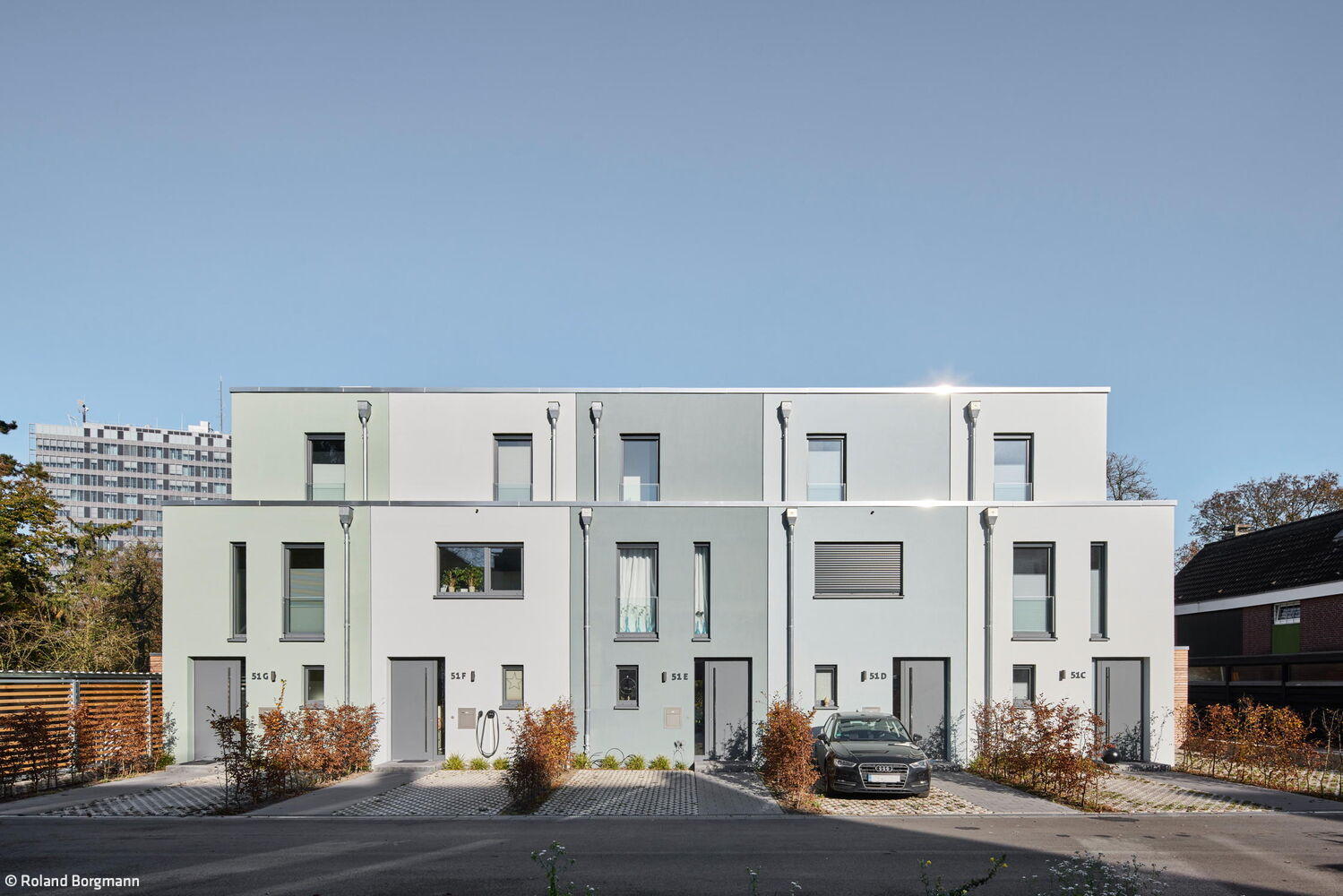
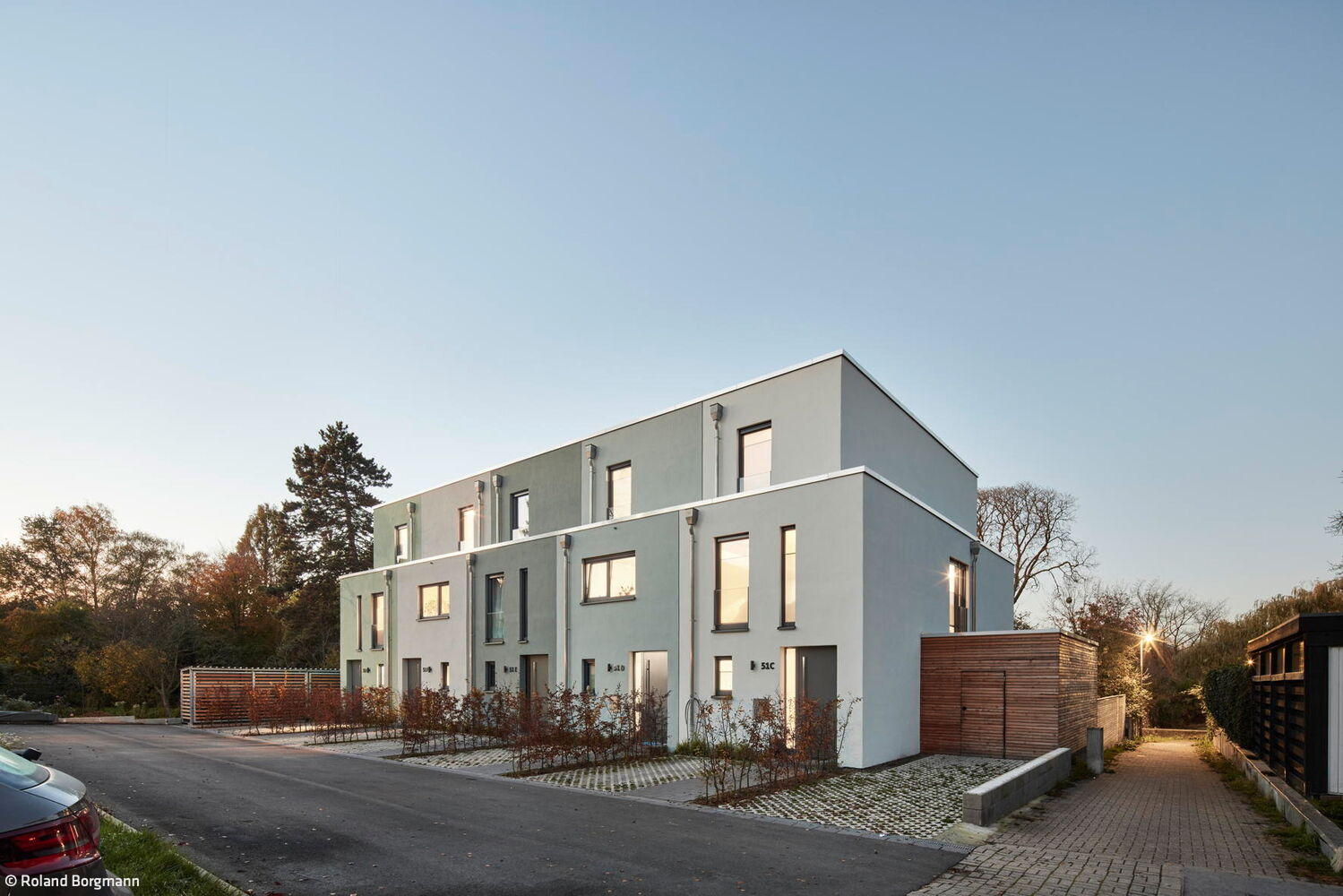
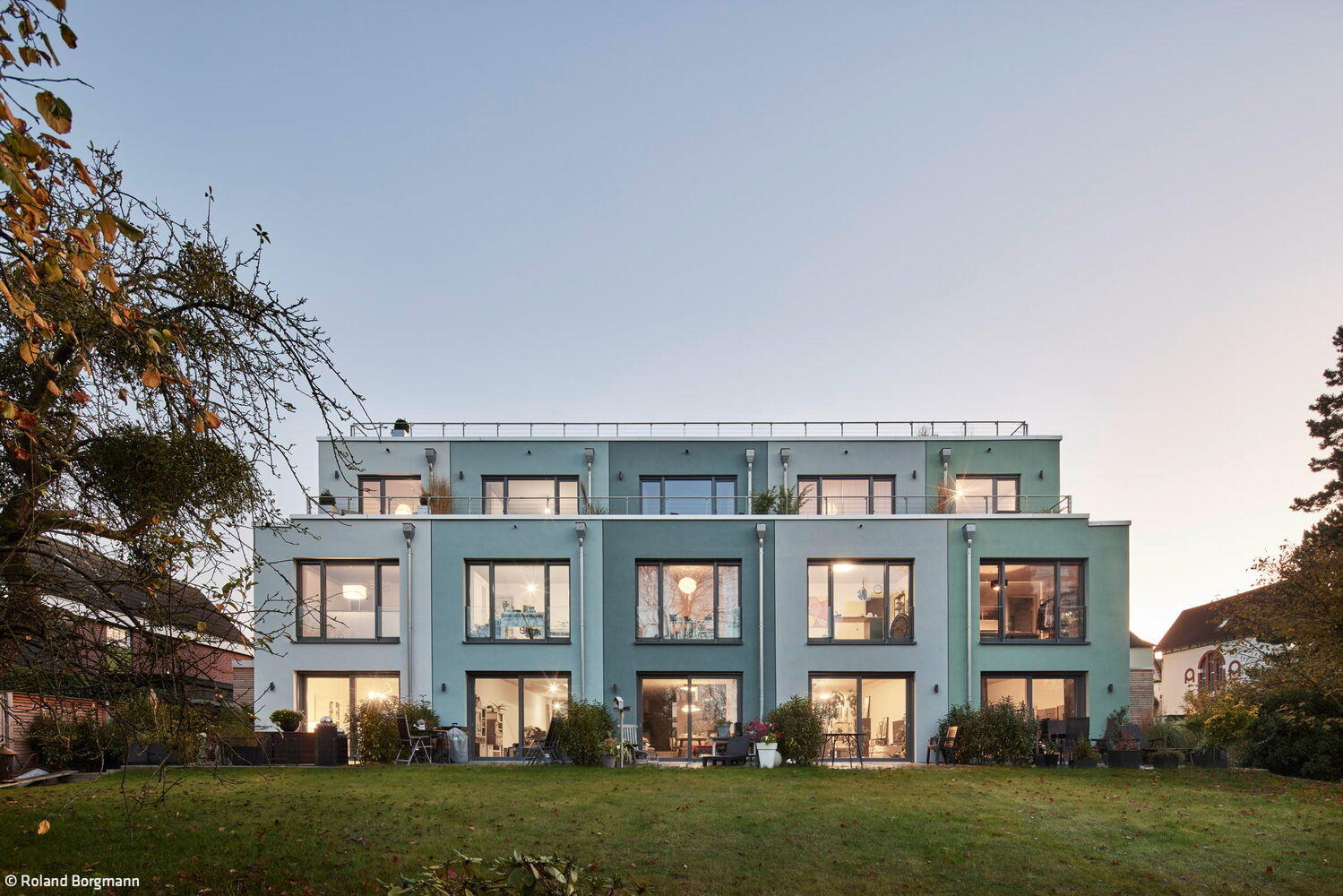
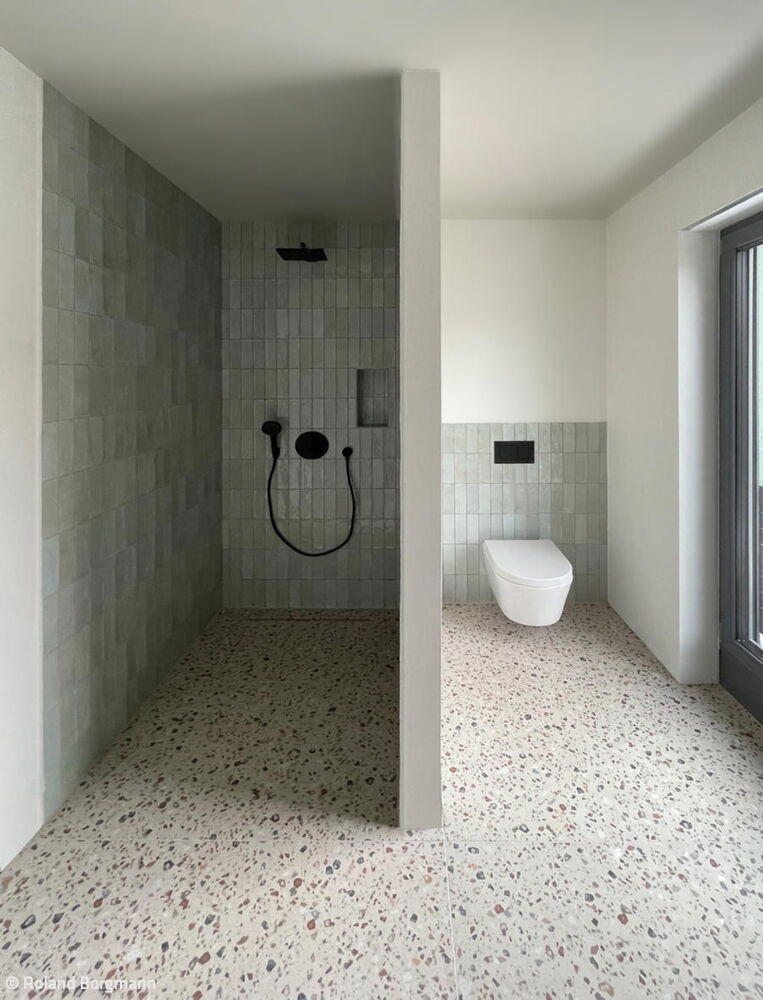
For Jens Berghaus, designing and developing his own project was a new venture. The story gained an intriguing twist from chance: the plot where five terraced houses now overlook the Ahseteich pond had languished for decades, hidden behind garages. The Hammer architectural firm was drawn to this quiet yet centrally accessible location—nestled in the second row and reached via a private drive—and developed a residential scheme that would ultimately be realized.
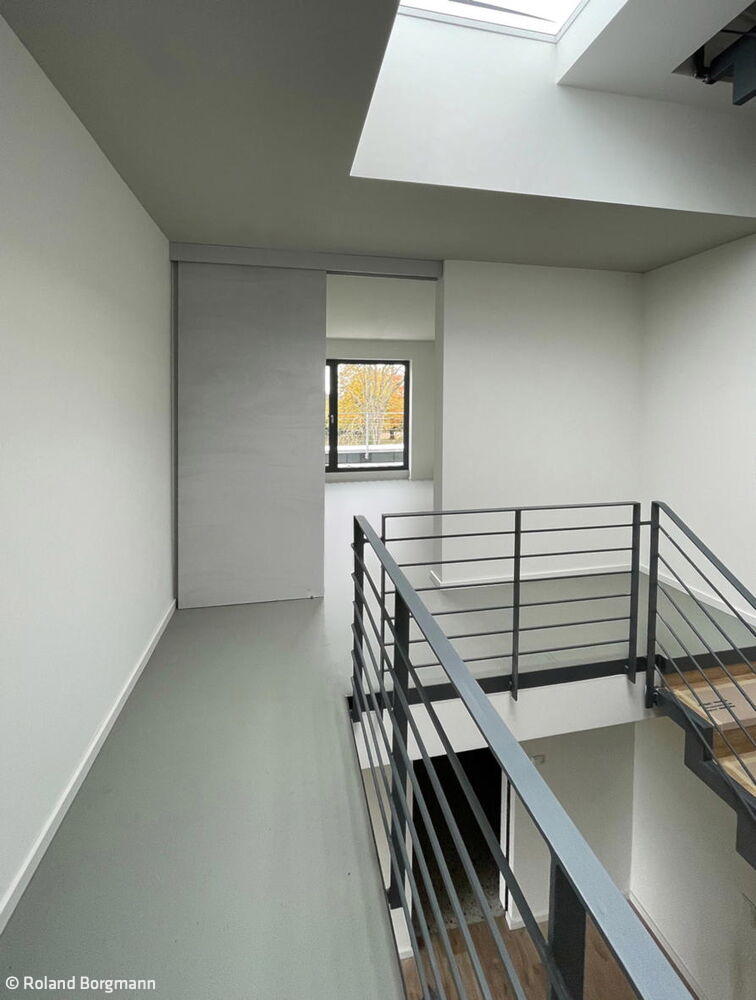
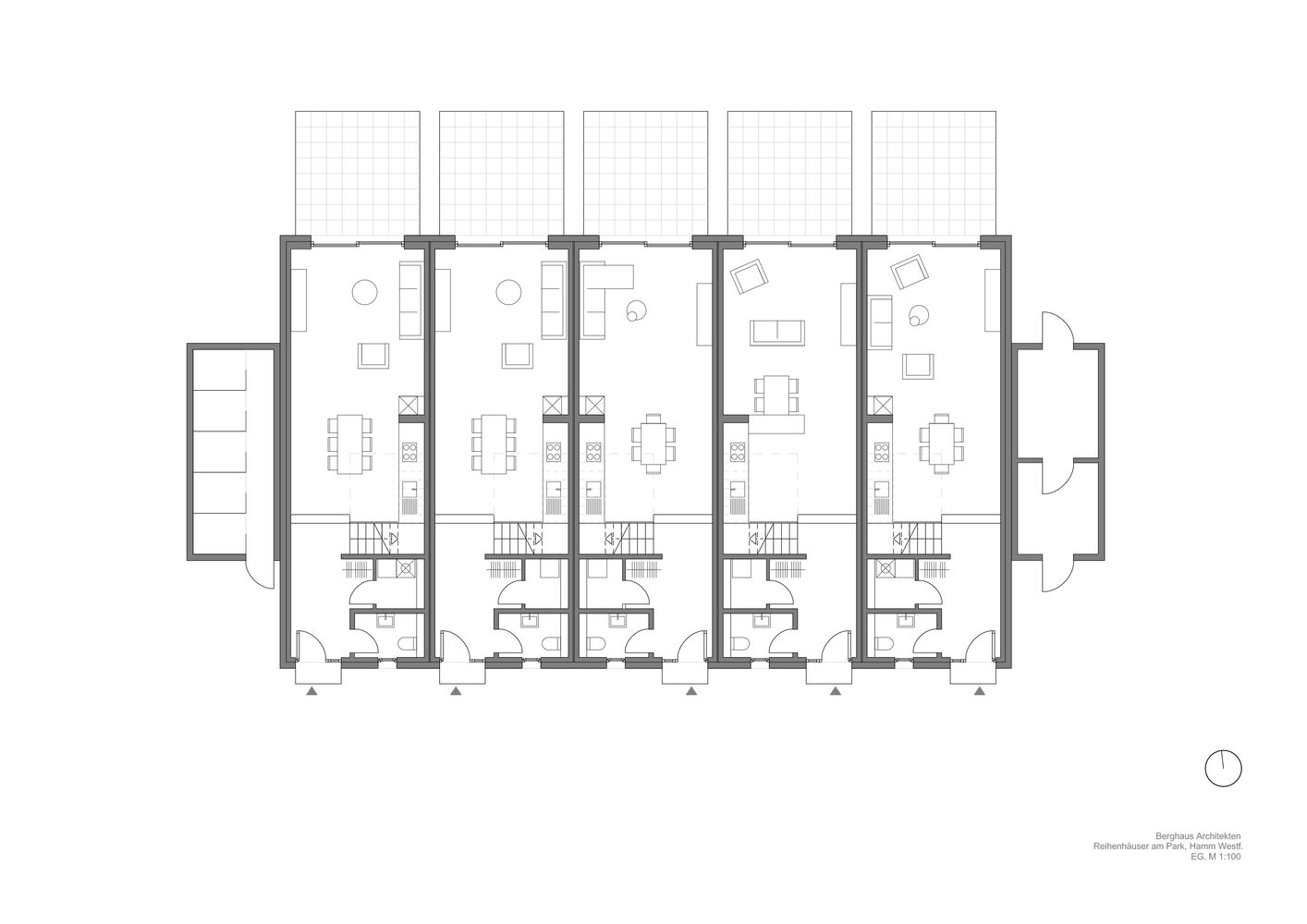
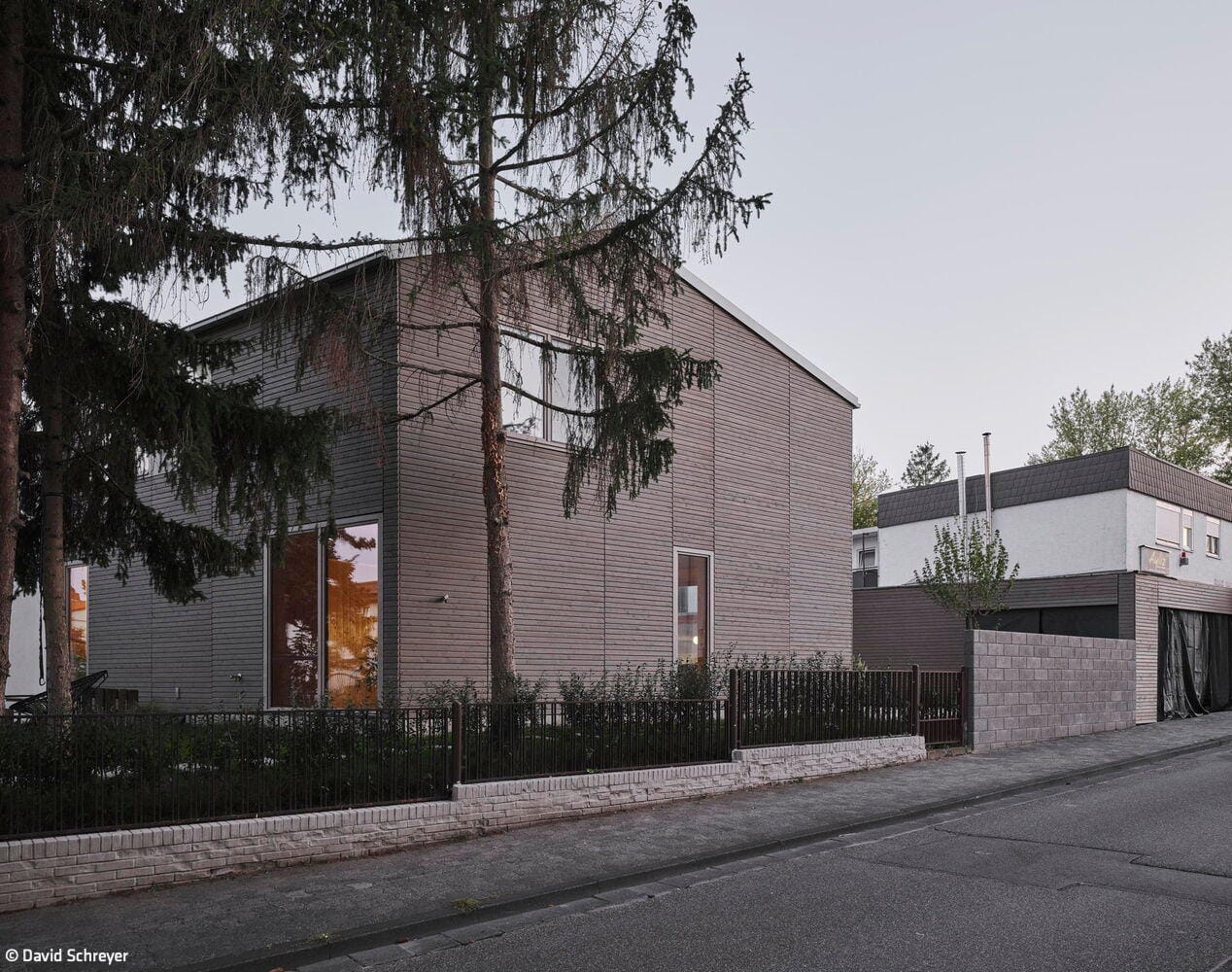
The terraced houses sit flush with the existing streetscape, reinterpreting it for today. The 1,300 m² plot borders the lake along its garden edge—a view generously captured by expansive floor-to-ceiling windows. Opting for terraced housing rather than five detached homes significantly reduces weather-exposed facade area. Each of the three- to two-and-a-half-storey units gains individual character through varied facade colours and window proportions. The building materials meet rigorous environmental standards: load-bearing walls are constructed from sand-lime brick, with concrete deliberately avoided. Mineral wool insulation paired with mineral plaster finishes complete the envelope. Roof surfaces are partially planted. The entrance foyer anchors the functional zones—cloakroom, guest WC, and storage. The ground-floor open-plan living and dining area, set slightly lower, showcases an exceptional 2.90-metre ceiling height. A threshold-free sliding door opens seamlessly onto the ground-level terrace and generous garden. The first floor accommodates two bedrooms and a bathroom, while the recessed upper storey features a second bathroom and studio-style space, also oriented toward the garden. Like the ground floor, upper storeys feature full-height garden-facing windows. In the recessed storey, these windows additionally serve as terrace access. A central stairwell anchors each unit. A generous light well topped by a skylight draws natural daylight through all levels. The roof terrace is accessed via a roof hatch. Flexible floor plans ensure homes adapt sustainably to changing lifestyles, offering multifunctional spaces with complete design versatility.
The energy and technical strategy is engineered for long-term sustainability. A shared house connection and drainage system serve the entire development. Each home features its own air-source heat pump, minimizing piping runs and allowing heating to be tailored individually for optimal comfort and efficiency. Mechanical ventilation proved unnecessary—opening the roof terrace hatch enables natural air exchange via the stack effect within minutes, embodying future-ready design through simple, low-tech solutions. The outdoor surfaces employ permeable paving and grass grid stones to support water infiltration. Each house includes a dedicated parking space.
Photography:
Roland Borgmann
www.rolandborgmann.com
(Published in CUBE Ruhrgebiet 03|25)


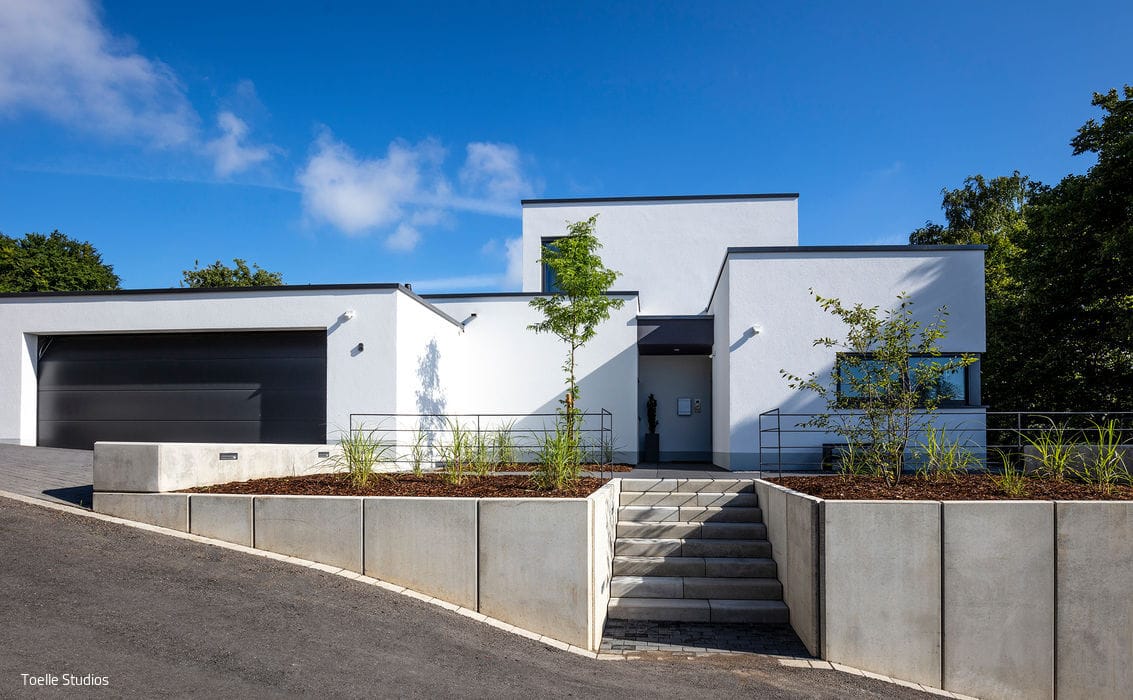
A House with Clear Vision
A Detached Home That Embraces Its Landscape
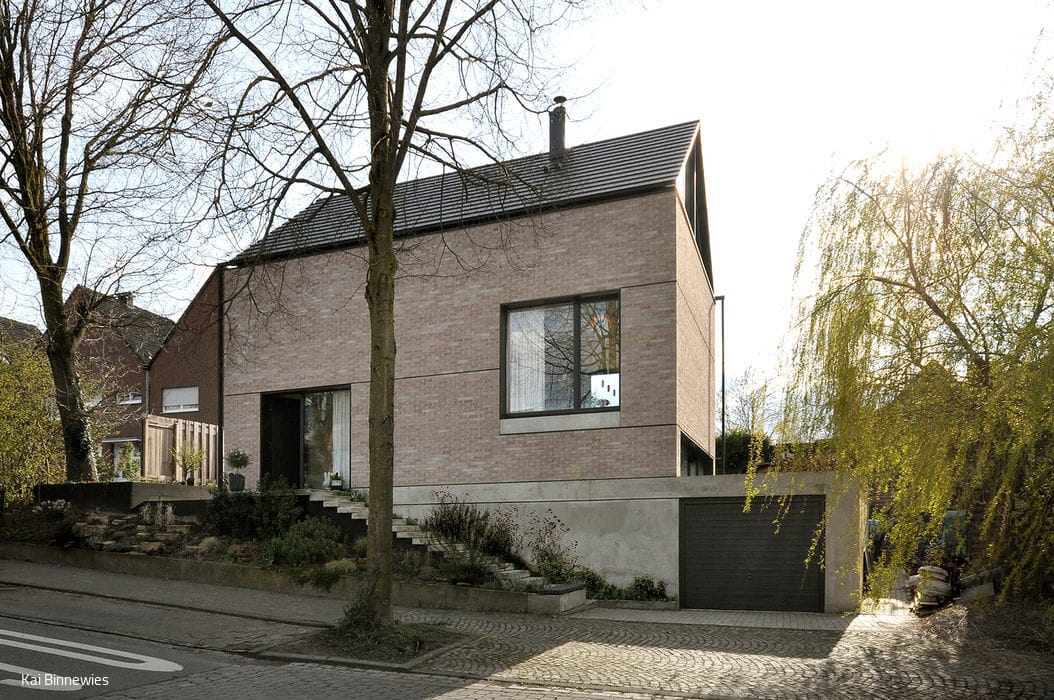
Small Footprint, Bold Vision
A Family Home Challenges Conventional Design
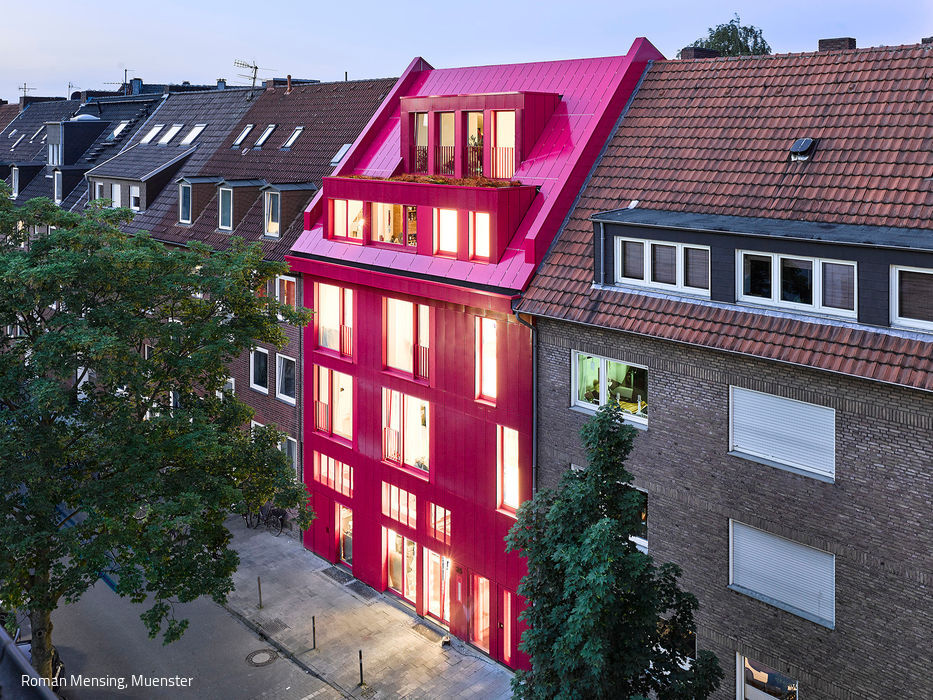
A House in Bold Red
An intelligent approach to addressing the demand for urban housing
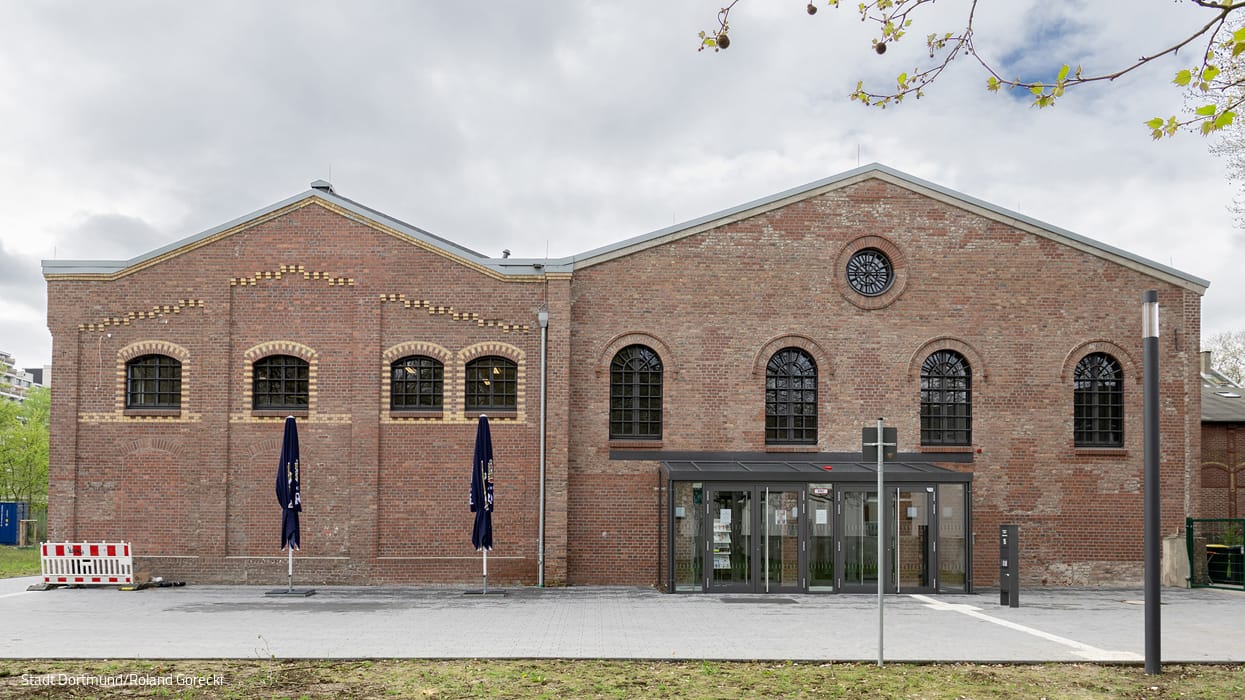
A Powerful Community Vision
Historic Pithead Buildings Reimagined as a Community Centre in Dortmund