


A Medical Milestone
State-of-the-art research building hosts Charité's new translational center
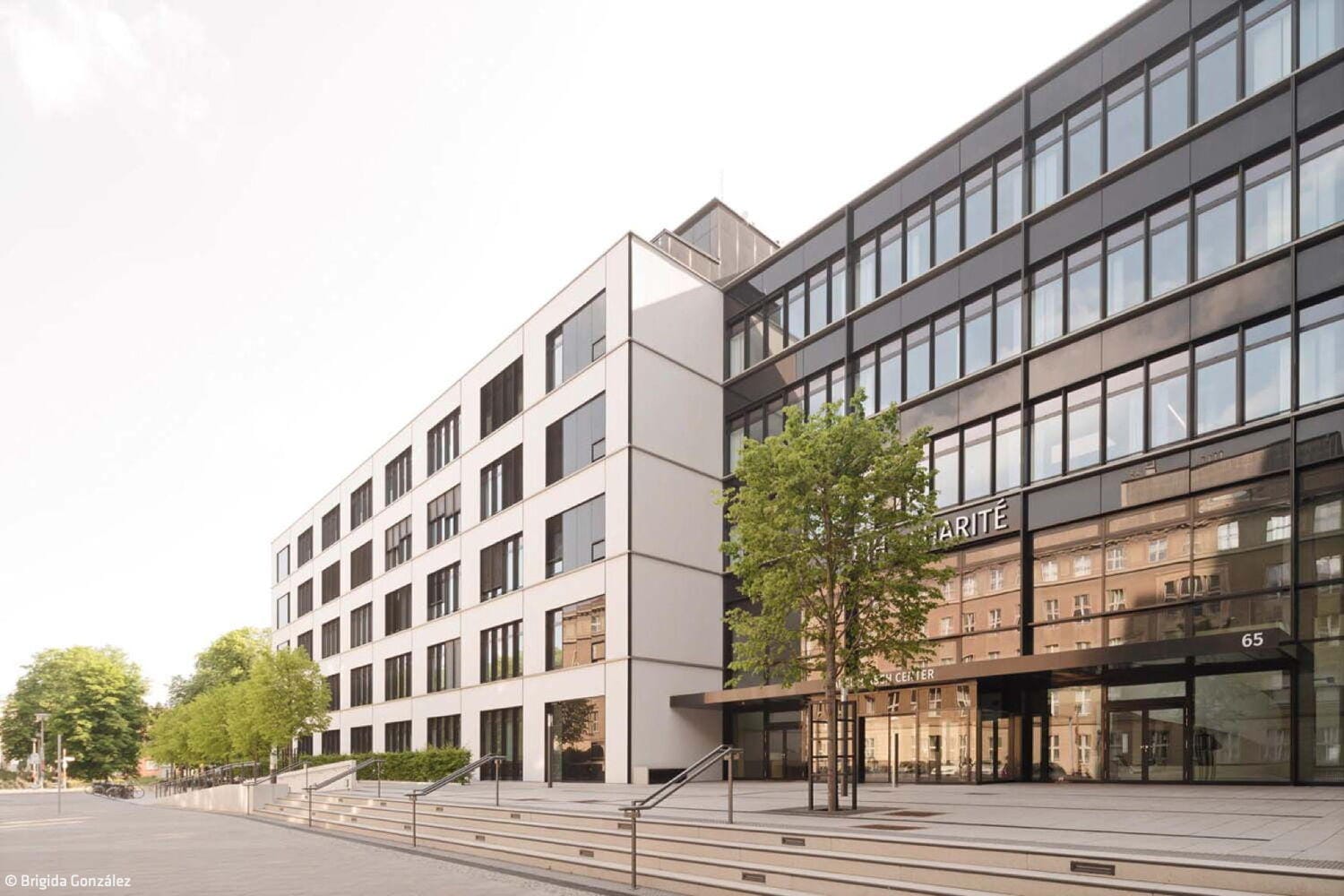
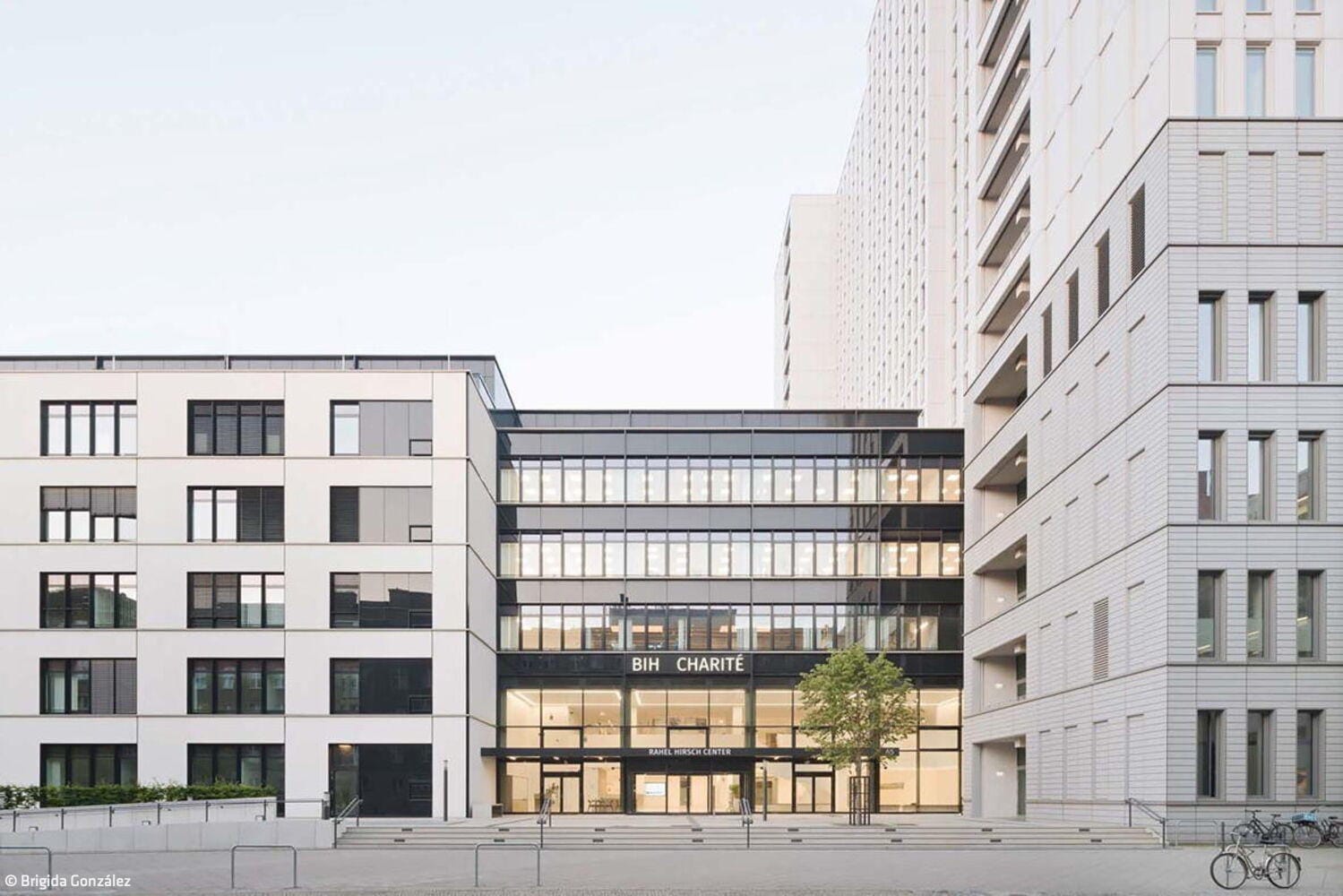
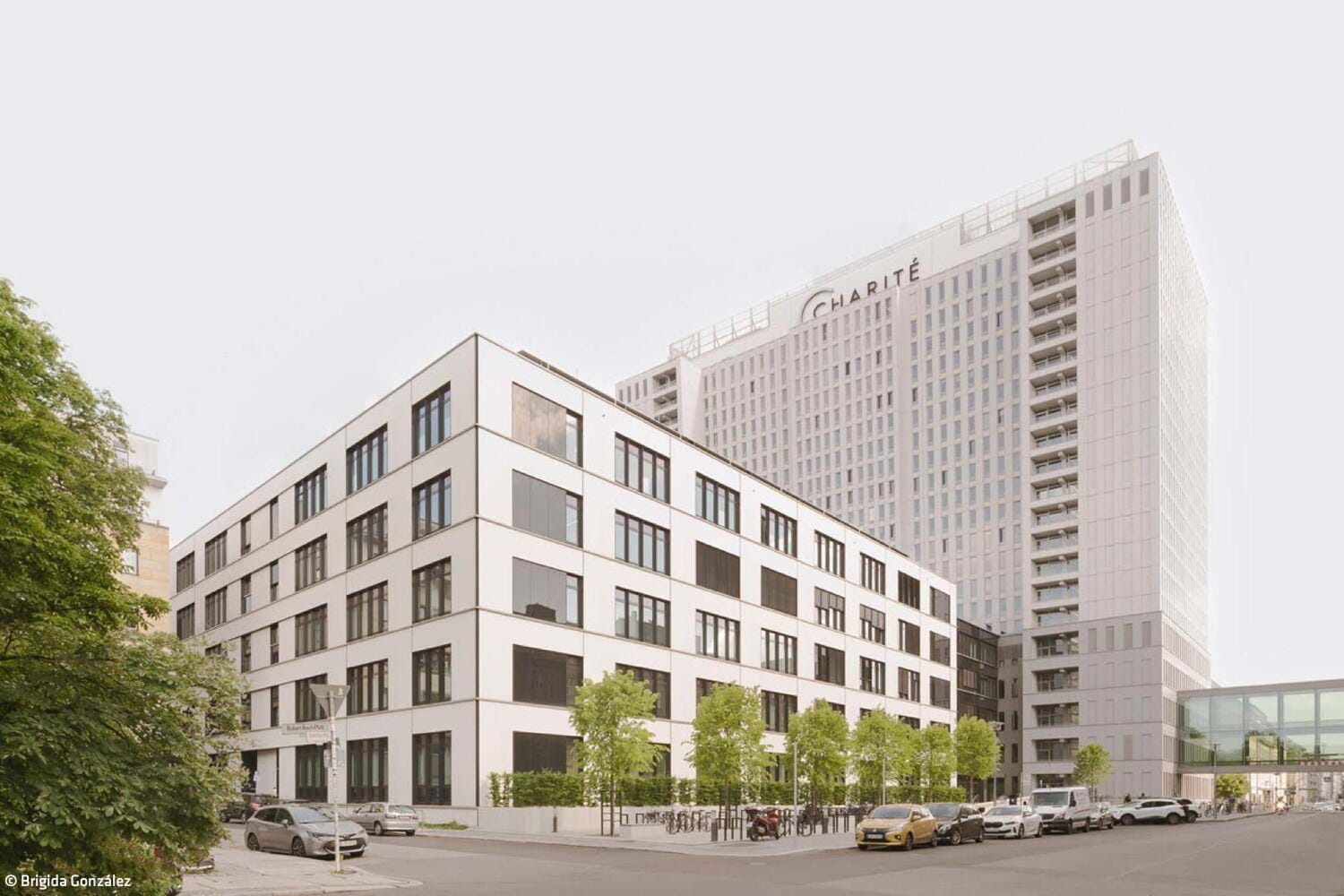
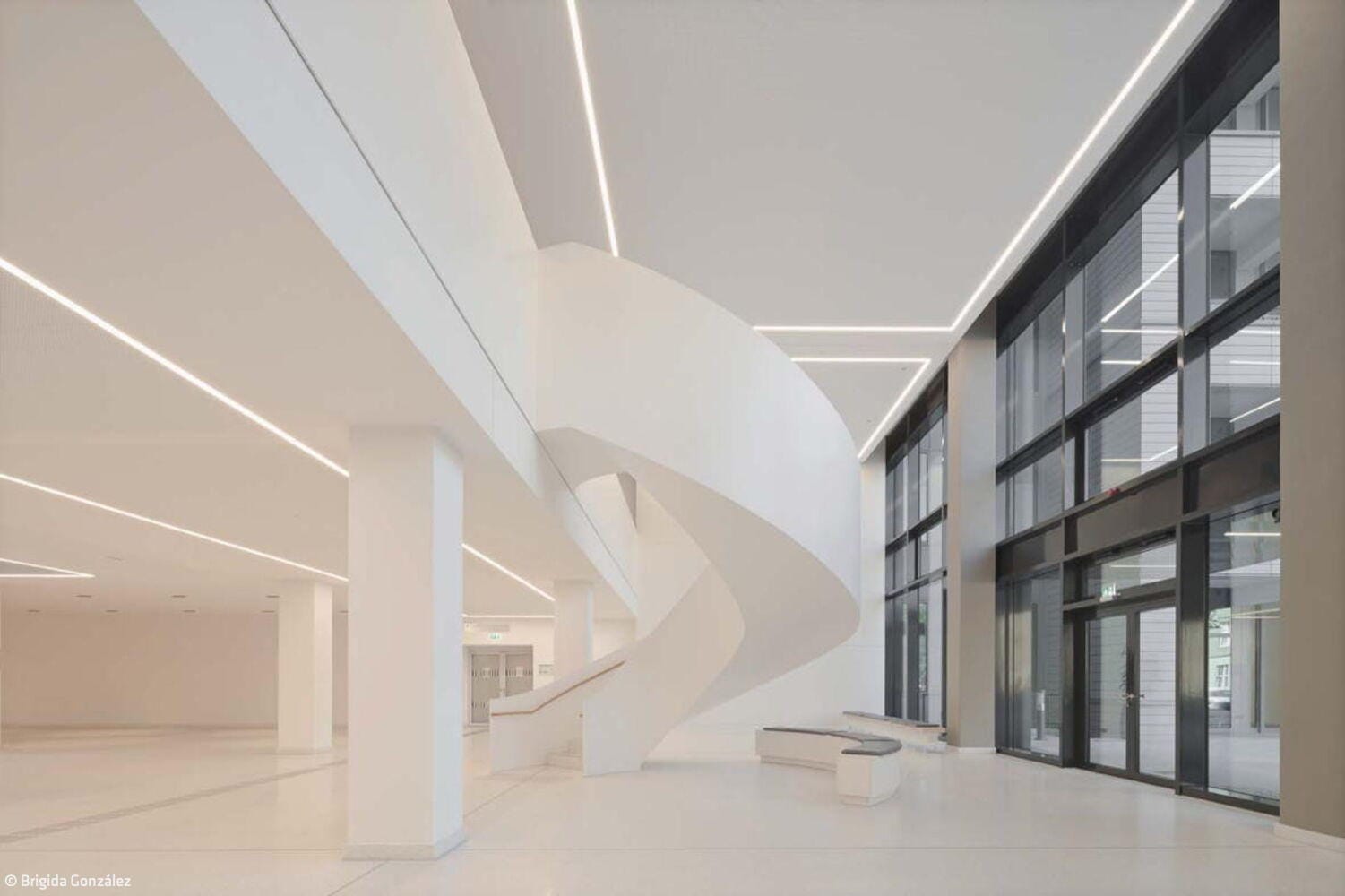
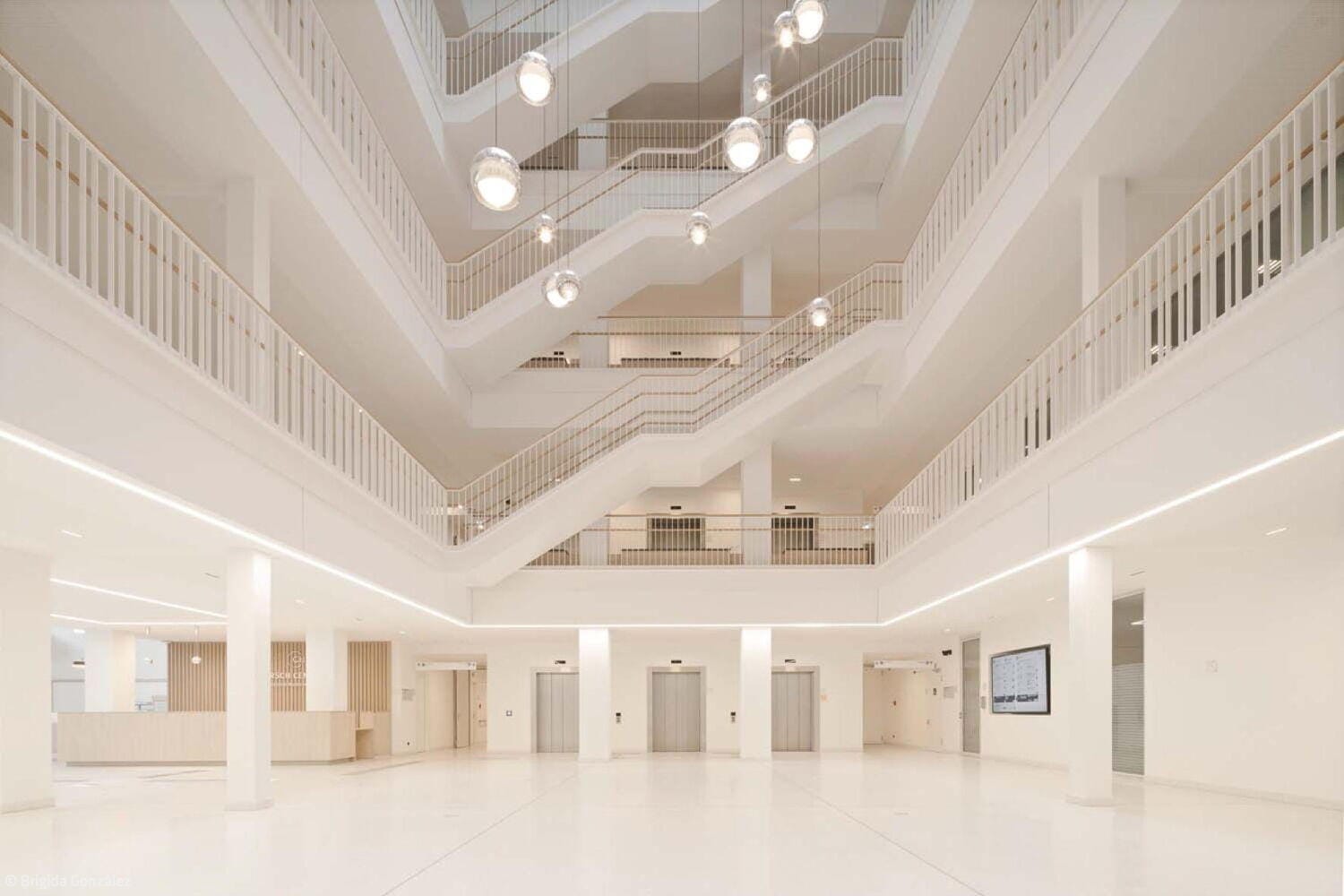
In 2023, Charité's new Translational Center was completed. This interdisciplinary facility bridges the gap between laboratory, animal, and model research with clinical applications. Named the Rahel Hirsch Centrum (RHC), it honors the Jewish physician Rahel Hirsch, who in 1913 became the first woman in Germany to be appointed professor of medicine. She worked at Charité for many years until losing her license in 1938 and emigrating to England. The RHC is located in the former operating theater and intensive care wing, positioned directly adjacent to the highly visible patient bed tower—the Charité high-rise building. This existing structure underwent complete gutting and fundamental renovation alongside the bed tower refurbishment. The design philosophy centers on making translational research tangible and rendering the close collaboration between the Berlin Institute of Health (BIH) and Charité visually manifest. Clinical and research spaces are brought together, with intentionally designed communication zones providing mutual transparency of processes. To achieve this, the original five-story building from the 1970s was stripped back to its structural core. Its deep floor plans were opened through an internal courtyard, atrium, and two-story entrance hall, with an additional setback floor added above. The architecture firm heinlewischer, based in Berlin, served as planners and executing architects for this complex undertaking. Along Luisenstraße, the building extends as a continuous structure from Robert-Koch-Platz to the bed tower. The street-facing western elevation employs differentiated facade design to suggest a two-part building: on the left, the white perforated facade of the RHC; followed by a slightly lower entrance area in brown tones; and finally, the similarly white-clad patient bed high-rise.
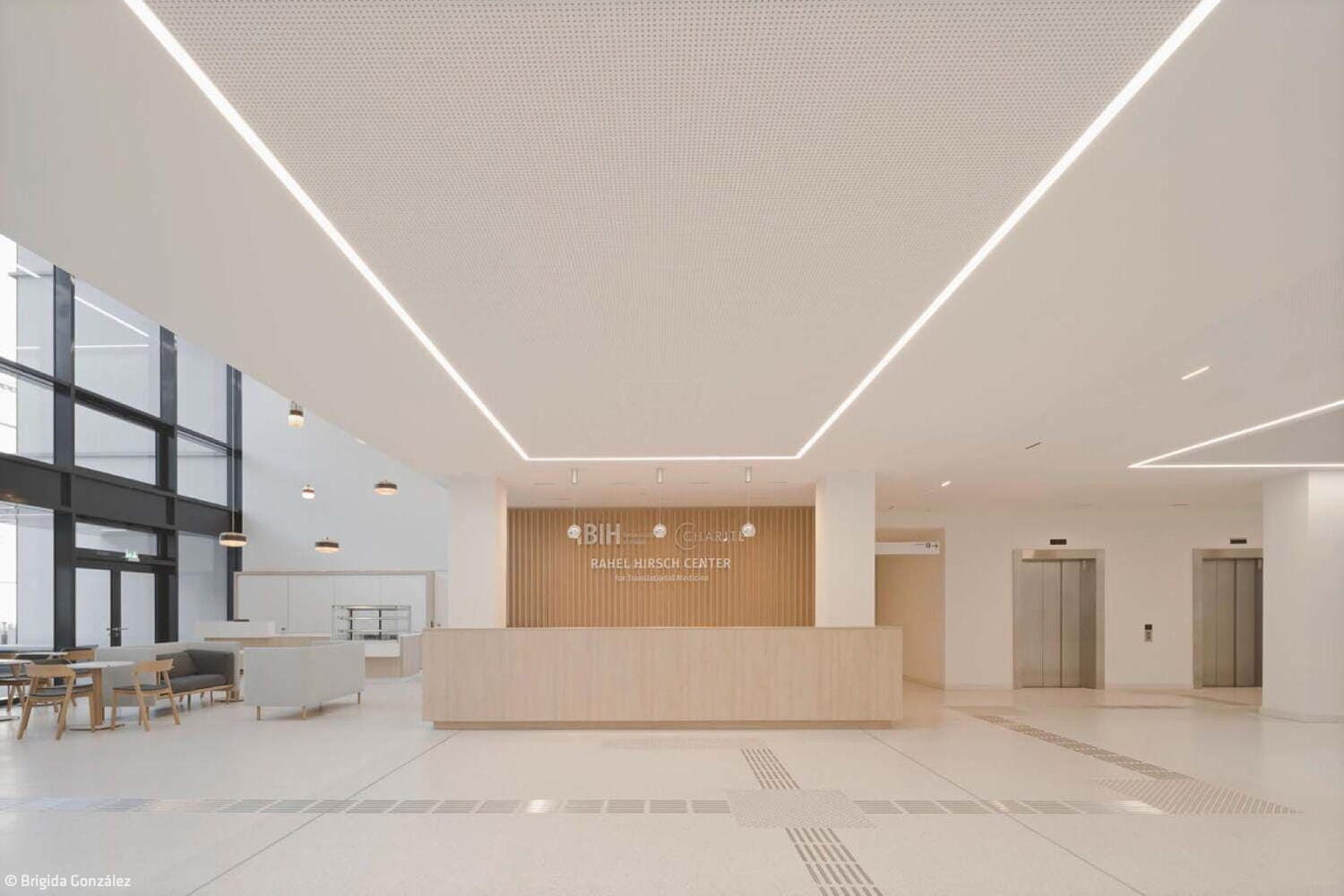
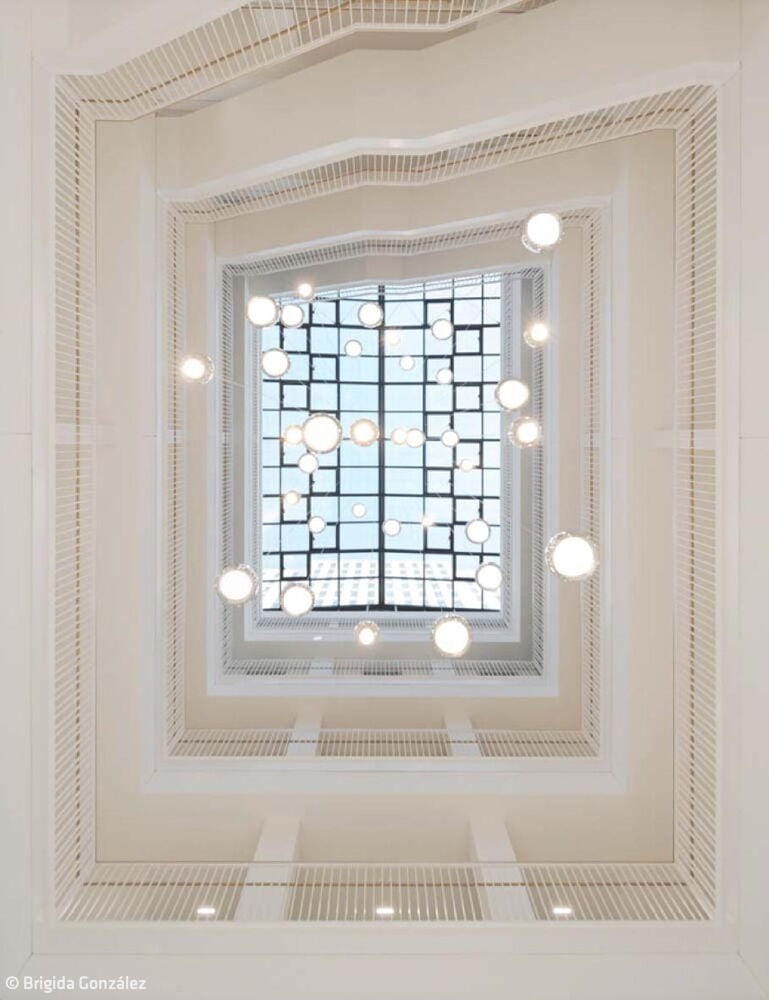
The entrance hall presents itself as a two-story atrium, visually enhanced by a light sculpture by artist Ulrike Brandi. It serves as the true heart of the building, providing access to all floor levels, establishing the connection to the high-rise, and offering views of the bed tower through its glass ceiling. The foyer and interior courtyard function as communication and representation spaces. Landscape architect Rainer Schmidt designed a forecourt featuring an extensive staircase and a ramp running the full width of the entrance area. The actual RHC, which extends northward, comprises six full floors and the aforementioned seventh setback floor. All functional areas are clearly zoned to spatially unite clinical and research functions—while maintaining functional separation. The western wing along Luisenstraße houses ambulances, therapy, and diagnostics. The eastern wing, facing the interior courtyard, contains laboratory areas, operating theaters, and technology platforms. Offices, administration, study coordination, and communication zones are situated in the northern section of the building and the setback floor. With the RHC, Charité now possesses a state-of-the-art research facility that, as an innovative hub, substantially advances medical progress.
Photography:
Brigida González
www.brigidagonzalez.de
(Published in CUBE Berlin 02|26)



Excitingly Different
A new workspace showcasing the future of work
Beyond the Home Office
... step into the new office world
Living on the Peninsula
Sustainable Architecture Reimagines Community
Reimagined in Color
An apartment as an urban stage for everyday city life