


Tower with signalling function
The railway museum in Bochum-Dahlhausen has a new reception building
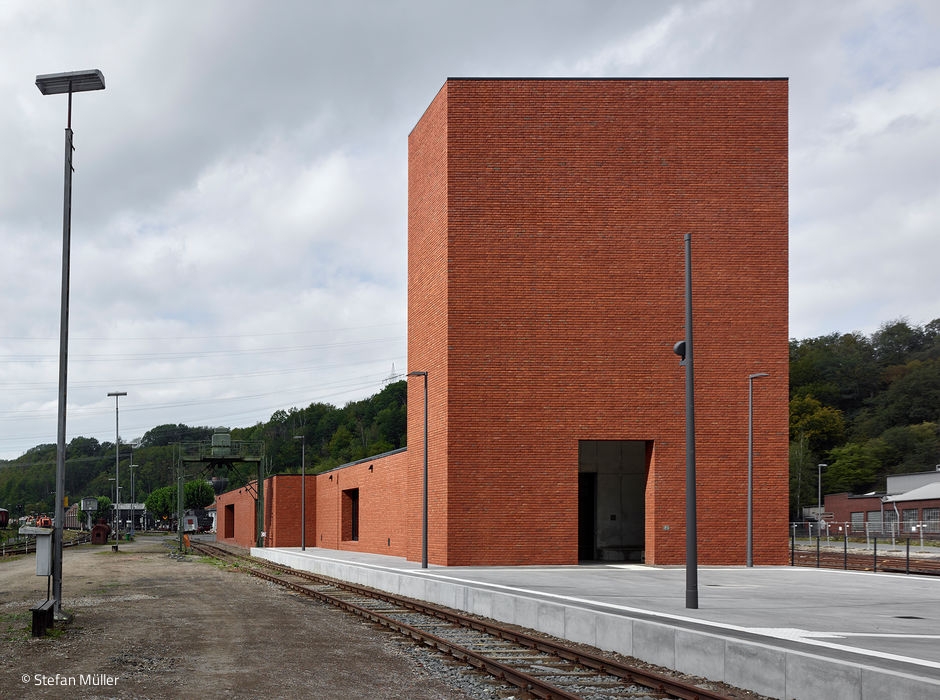
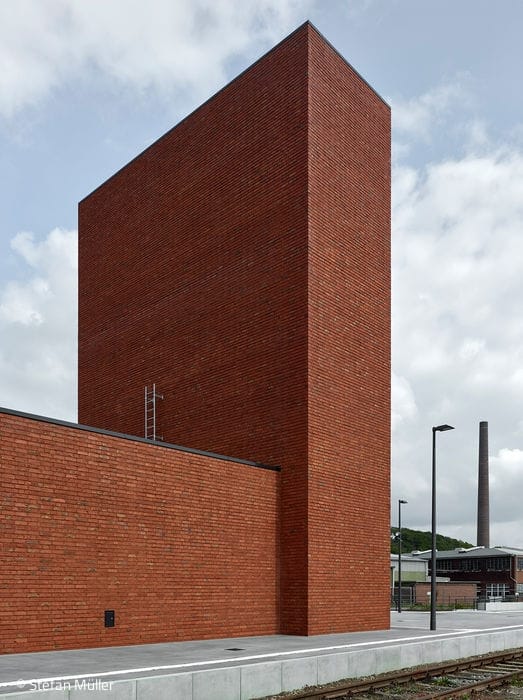




In the Ruhr region, rail transport played an important role in the transport of coal during the heyday of the large coal mines. That era is long gone, but there are still historic railways and buildings in the region that bear witness to this technological progress. One of these is Germany's largest private railway museum, located in Bochum-Dahlhausen, which keeps the history of the former railway depot from 1916 to 1918 alive. After the depot was closed and part of the facilities were dismantled, the German Railway History Society took over the depot site in 1969 and gradually restored it to its original condition. Visitors to the museum enter the grounds through a new reception building, which was designed by the Berlin office of Swiss star architect Max Dudler and celebrated its opening in time for the 2020 spring season after almost three years of construction.
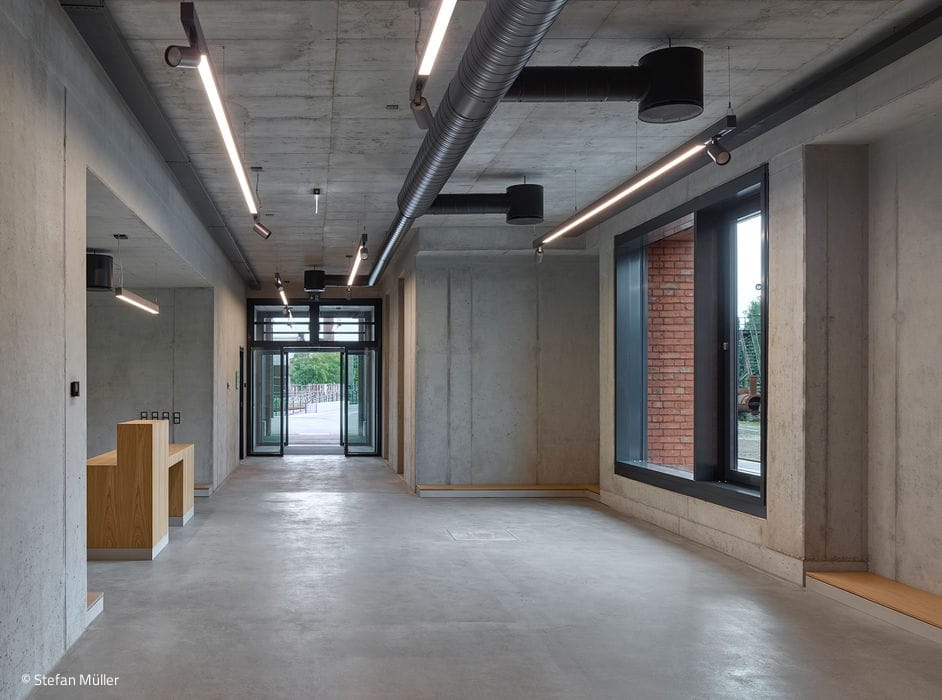
Max Dudler Architects won first prize in the public architectural competition organised by the city of Bochum in 2015. It was important to the designers to do justice to the significance of the location with their design and to capture the flair exuded by the historic rail vehicles and listed buildings in a contemporary design language that respects history. The new building provides the museum with a clear entrance area that guides visitors into the spacious outdoor grounds. The single-storey brick building with its tower-like entrance façade blends into the area as a sculptural structure. Together with the museum platform in front, it forms a figure whose dynamics reflect the momentum of the surrounding track system. Concrete, steel and clinker bricks echo the old railway buildings and the heavy industry of the Ruhr region, continuing this theme in a contemporary architectural form. The monolithic tower serves as both a foyer and a landmark with a signalling function. It opens up a view of the narrow, elongated museum space, which presents the first exhibits and opens onto the tracks through a large window. Raw exposed concrete gives the interior an industrial character, while the visible technical installations emphasise the linear flow of the space. As a reminder of the wood of old railway sleepers, all built-in furniture will be made of oak by autumn 2020.
Photography Credits:
Stefan Müller
www.stefanjosefmueller.de
(Published in CUBE Ruhrgebiet 01/20)

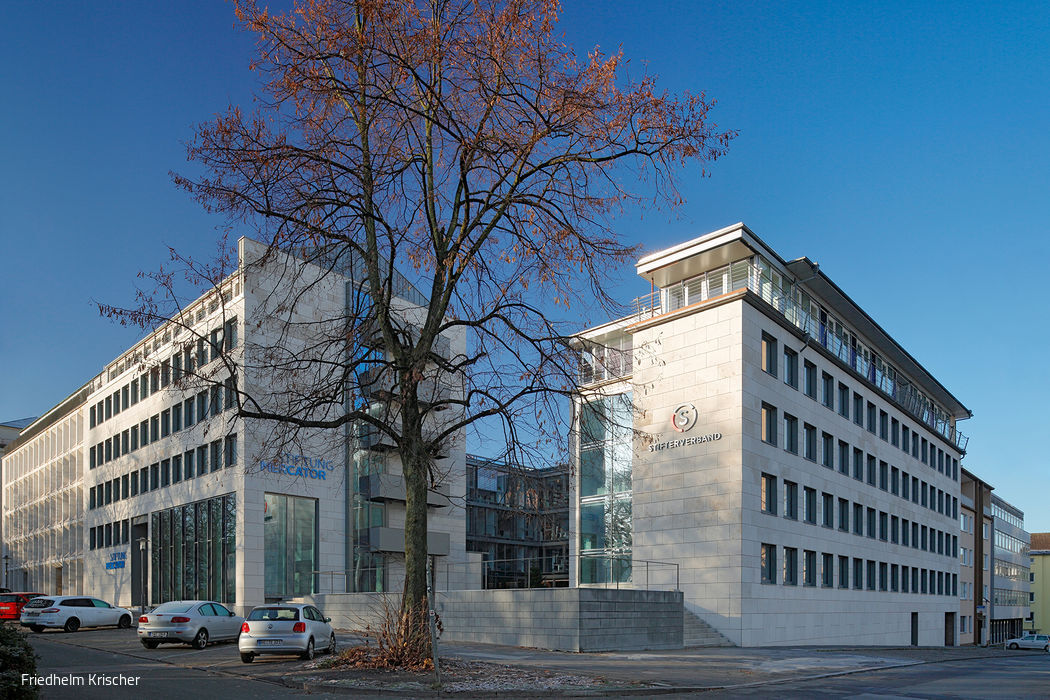
Openness as a matter of course
The Mercator Foundation's Essen headquarters embodies openness, connectivity, and forward-thinking design.
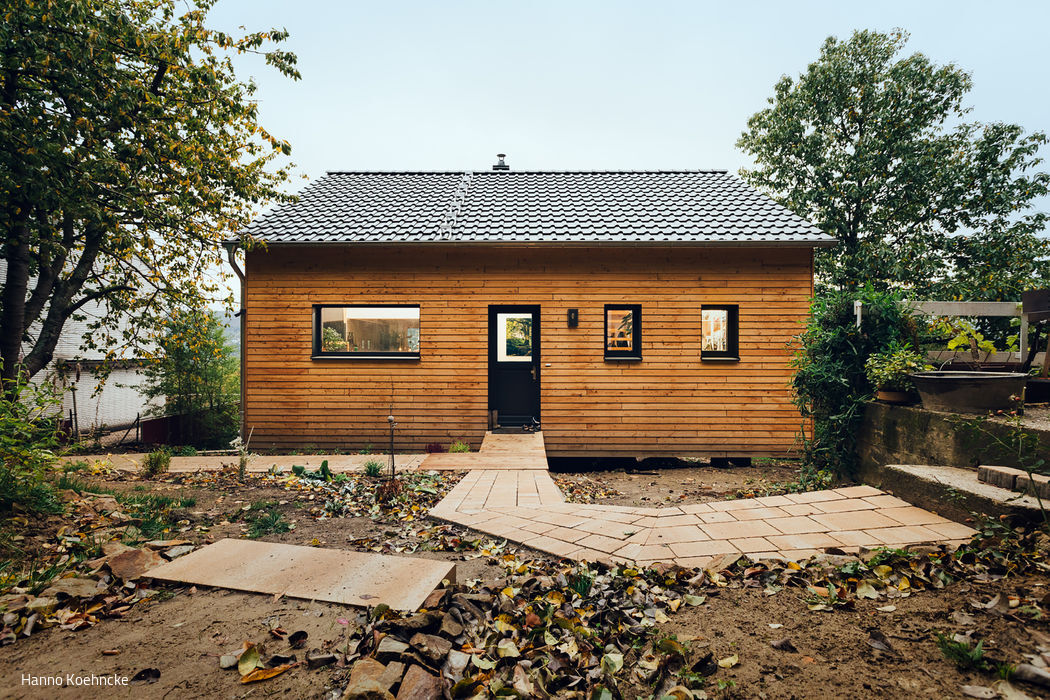
Where nature takes the lead
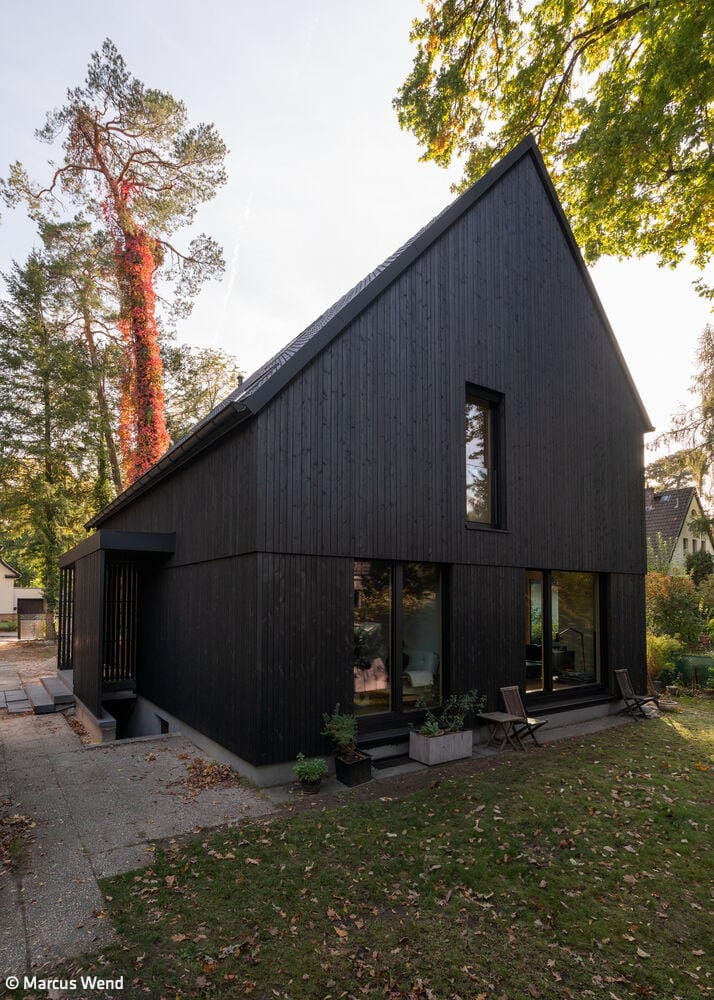
A timber house in Hagen—embodying its residents' commitment to ecological living
Another Architectural Jewel
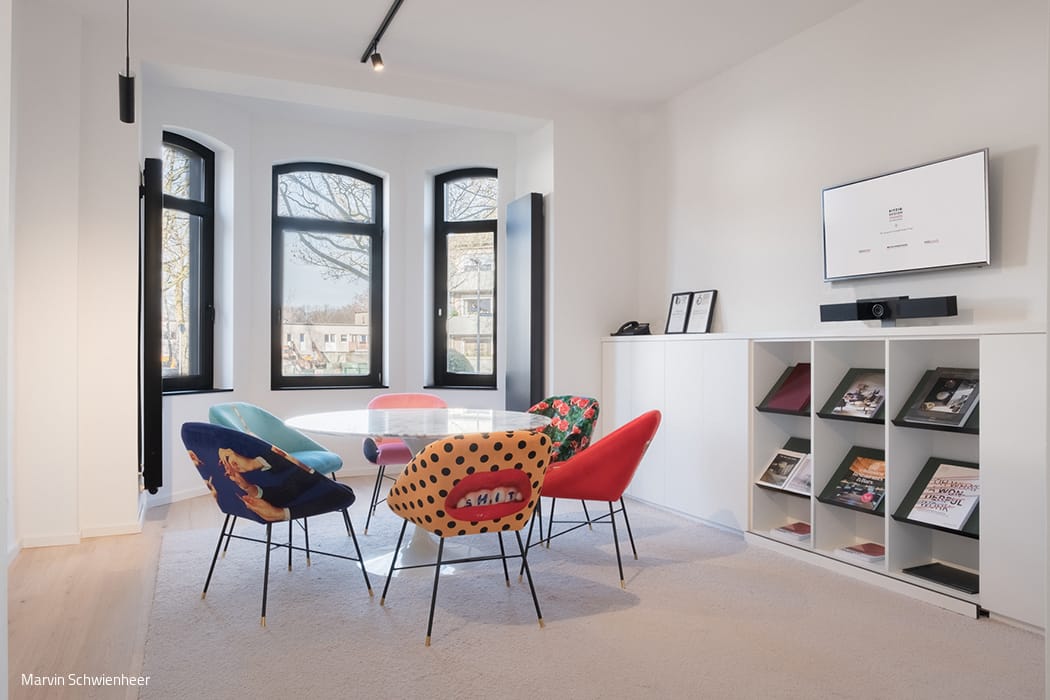
A Sandstone Villa's Elegant Restoration: The Bel Étage in Essen's South End
Making optimal use of space
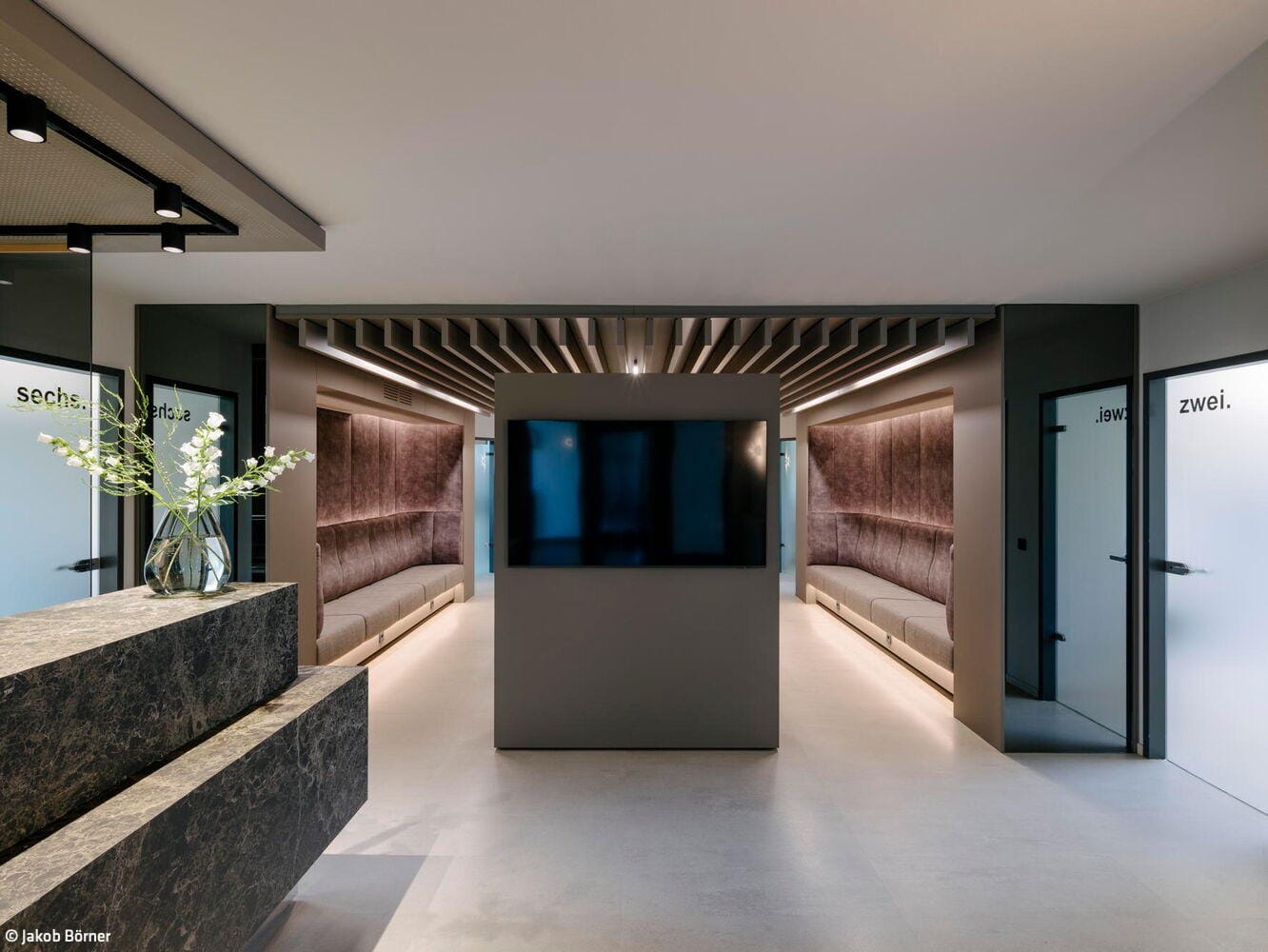
An Essen Orthodontic Practice Reimagines Space: From Individual Rooms to Open Treatment Bays