


Mental Wellbeing Through Design
CUBE speaks with Matteo Thun about Milan's past and present, and design as a form of therapy.
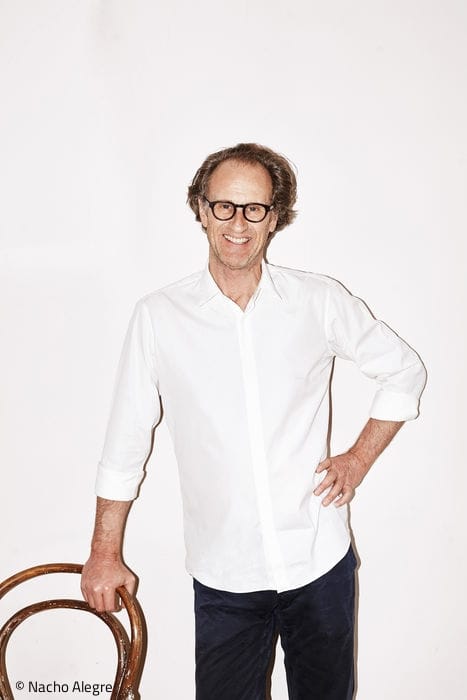
CUBE: Your résumé speaks for itself – you're known for pursuing extreme sports like racing, hang gliding, and skeleton. Do you think courage and boldness are essential qualities when designing products and buildings?
Matteo Thun: Without courage, there is no change.
Your work spans an impressive range – from espresso cups and faucets to furniture, luxury hotels, and refugee housing. What drives you to work across such vastly different scales?
It's a tradition among Italian architects to work at every scale. In 1952, E. Rogers delivered a seminal lecture titled "From the Spoon to the City," which introduced the Milan School of Design's philosophy to the world. The concept was simple: design a spoon in the morning, plan a city in the evening. Ettore Sottsass and Achille Castiglioni – my mentors – embodied this principle, and it's this holistic approach that ultimately made "Made in Italy" what it is today. It's a demanding practice, but one we're committed to continuing.
You co-founded Sottsass Associati and the Memphis Group in Milan during the 1980s. How has the design landscape in Milan evolved since then?
Milan today is far more established than it was in the early '80s. A dense ecosystem of suppliers and manufacturers has grown around the city, making the development of design products remarkably fast and efficient. That same spirit of speed and ingenuity remains as strong as ever.
Memphis design has experienced quite a renaissance lately – the Danish label Hay collaborates with Nathalie du Pasquier, and Ettore Sottsass pieces now command record prices at auction. How do you view this renewed fascination with Memphis?
Trends move in cycles. Nearly everything resurfaces after a few generations, just in a different form – whether it's fashion, design, or graphics. It's not nostalgia; it's simply how time works.
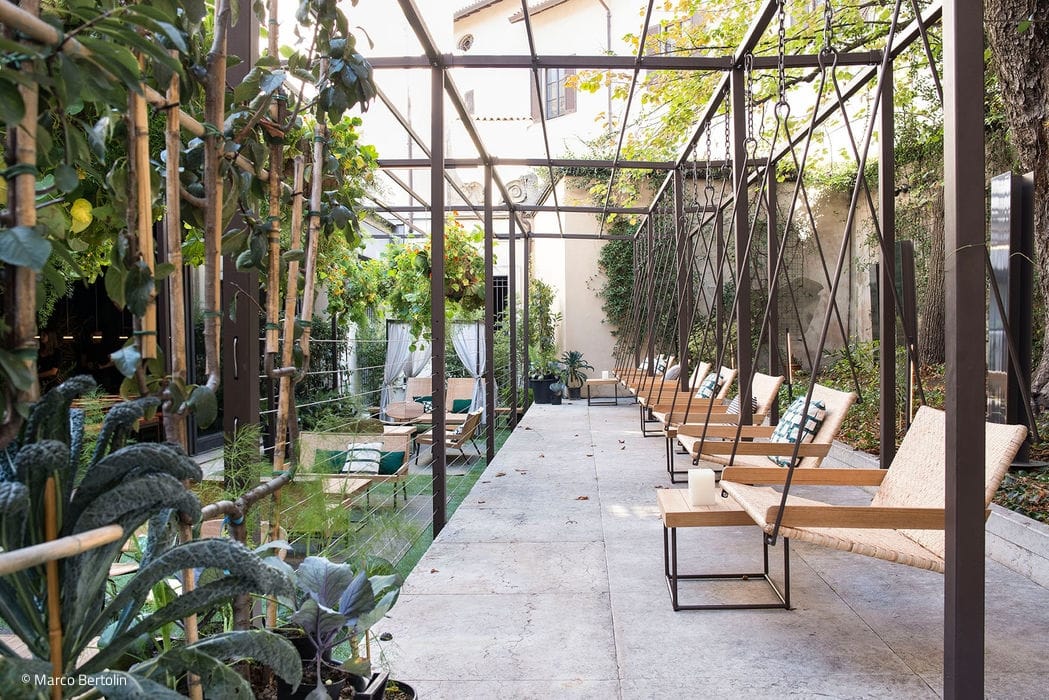
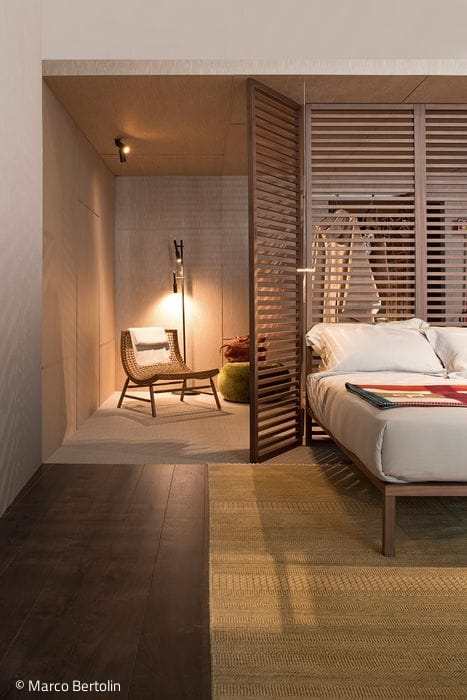
One of your current projects is "Grand Hotel Design Therapy," an installation for Elle Decor in Milan. How does your concept differ from the wellness hotel trend that took off in the 1990s?
"Hospes" (Latin) means "guest." We named this exhibition "Design Therapy" because we wanted to merge the aesthetics of hospitality with those of healing spaces. Rather than presenting a hospital or hotel in isolation, we showcase a symbiosis—where wellness and hospitality become one. Through nature, sensory experience, and the quality of fresh ingredients, we pursue both physical and mental wellbeing. "Design Therapy" demonstrates how refined, purposeful design can create hospitality that is both tangible and preventive, anchored in the restorative power of nature. Traditional wellness hotels operate differently...
Your vision for the fitness area eschews modern equipment – instead, you've opted for wall bars and medicine balls, like a classic gymnasium. What troubles you about contemporary fitness studios?
I'd argue our sports room is the modern one – no gadgets, nothing digital. It's about more than just the body; it's a holistic workout that cultivates discipline, dynamism, vitality, and mental strength.
Another recent project is Bar Campari in Vienna. What made this project so meaningful to you?
Between 1985 and 1995, I had the privilege of collaborating intensively with Campari and its owner, creating shakers and glassware for the brand.
You're clearly a Campari enthusiast yourself. Do you prefer it as a Spritz, Negroni, or Garibaldi – and what is it about the drink that appeals to you?
When I'm in Milan, I enjoy either a Spritz or Campari Soda as an aperitif – straight from the iconic little Depero bottle. Its form, colour, and elegance make it a design masterpiece.
You taught as a design professor in Vienna for 13 years, yet you discourage people from attending design school. What's lacking in contemporary design education?
I believe young designers should apprentice with a master craftsperson to master the fundamentals. Creativity without craftsmanship is incomplete.
You're recognized as a pioneer of ecological building, working primarily with wood and locally sourced materials. How can architects meaningfully engage with today's urgent climate and environmental debates?
We're trying to eliminate two words entirely: sustainability and ecology. Both are redundant – if an architect doesn't work sustainably and ecologically, they simply shouldn't be in the profession. We've replaced them with a single word: durability. Aesthetic and structural durability. And the architect's fingerprints should be invisible.
You created your own certification standard called "Three Zero." Why weren't existing environmental certifications sufficient?
They're simply too complex – for developers, residents, and hotel guests alike. Our approach is straightforward: Zero Kilometers – using local materials and local expertise. Zero CO₂ – optimized energy use and minimal emissions. Zero Waste – lifecycle management in construction and material reuse. It's memorable and it's clear.
Your "No Design" philosophy pushes back against the cult of the starchitect in architecture and design. What role should designers play with clients and in society today?
In architectural projects, we strive to grasp the genius loci as authentically as possible—and we apply the same approach to understanding the DNA of the brands we design for.
Mr. Thun, we appreciate your time today.
Interview by Peter Steinhauer
(Published in CUBE Munich 04|19)
Matteo Thun
Architect and designer Matteo Thun was born in 1952 in South Tyrol, Italy—a region shaped by both German and Italian culture. He studied under Oskar Kokoschka and Emilio Vedova at the Salzburg Academy, then completed his architectural degree cum laude at the University of Florence. In 1981, he co-founded the legendary Memphis design group in Milan alongside Ettore Sottsass.
He established Matteo Thun & Partners in 2001. Today, the architecture and design studio operates from Milan, with a satellite office in Shanghai. The firm specializes in hospitality design, with particular expertise in luxury hotel projects and residential spaces. From 1990 to 1993, Thun served as Creative Director for the watchmaker Swatch. His collaboration with artist Robert Wilson on the Hotel Side in Hamburg earned it the title Hotel of the Year in 2001. Thun also designed Munich's iconic nightspot, P1.
Smart, Secure, Energy-Efficient
Window replacement in existing buildings: a smart investment with lasting benefits
From Boardroom to "Byro"
A Remarkable Transformation in the Glockenbach District
Big, Bigger, Bergson
A likeable, megalomaniacal art and culture centre
A Housing Innovation Takes Shape in the East
Redefining Architectural Form at Baumkirchen Mitte