


A Seamless Blend
Sensitive restoration of a historic half-timbered farmstead combining heritage preservation with ecological principles
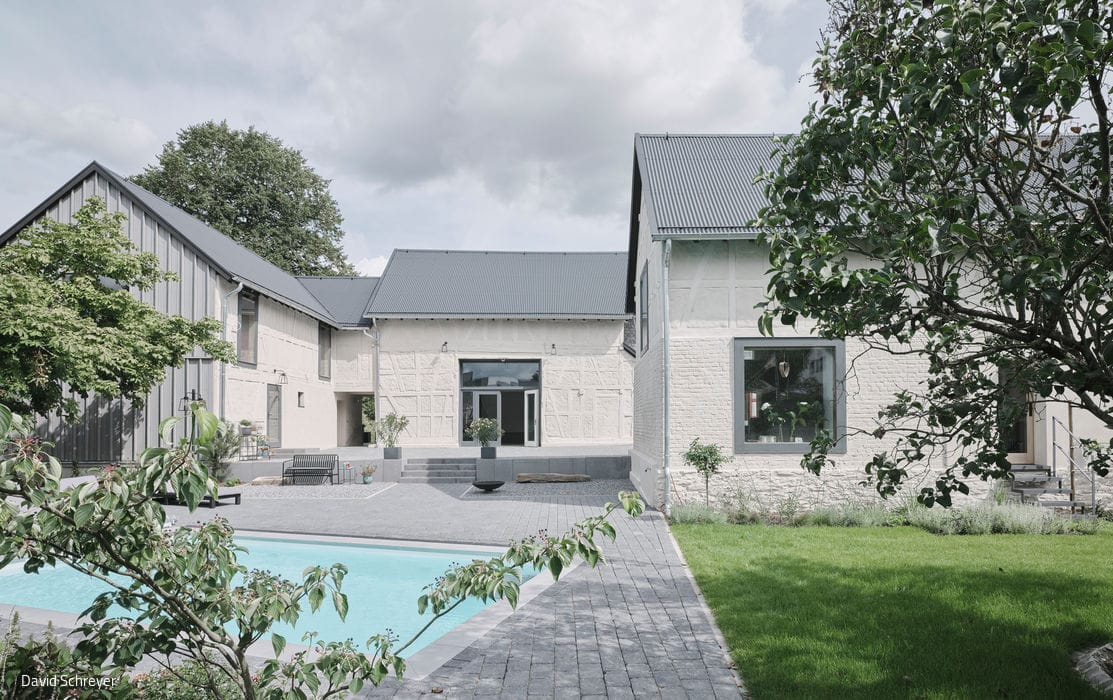
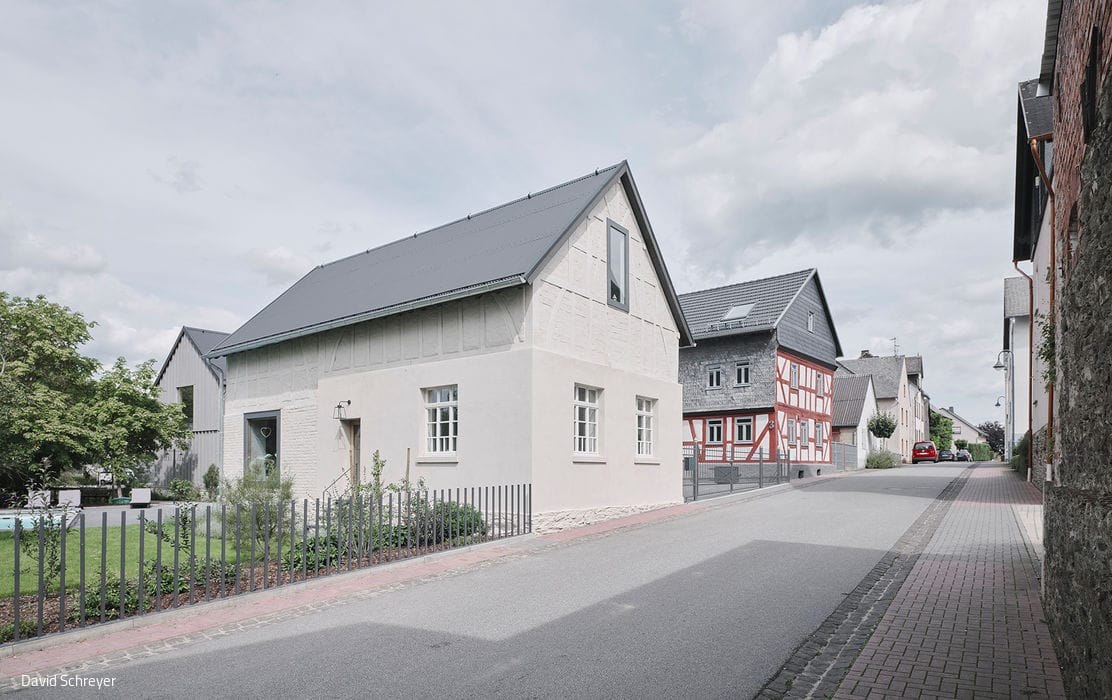
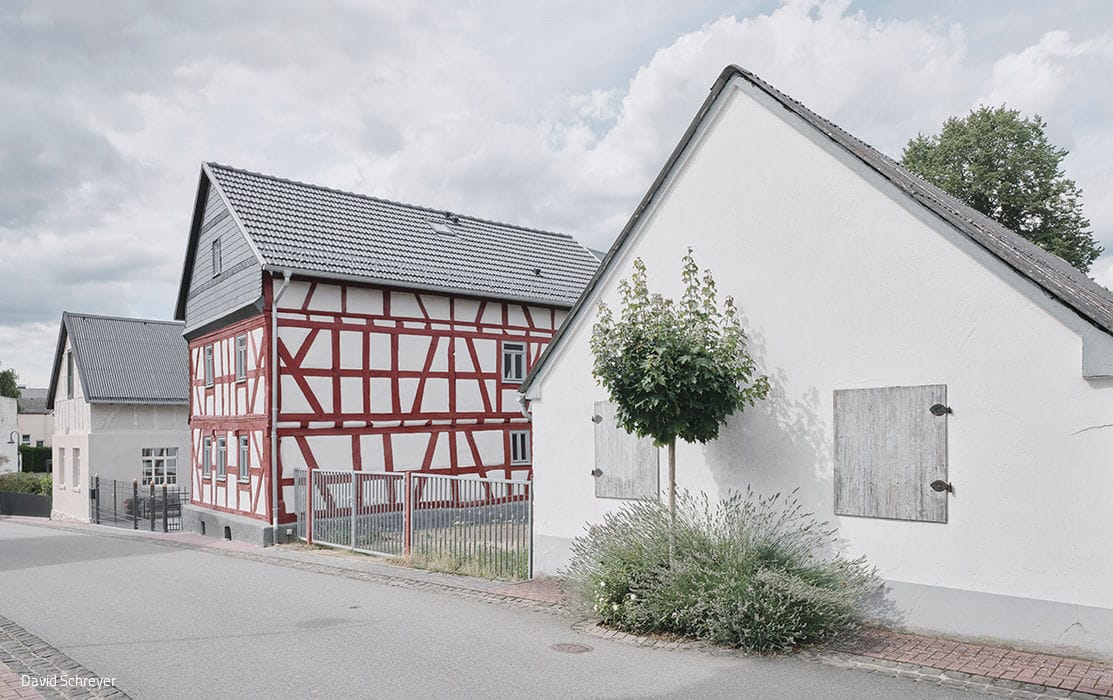
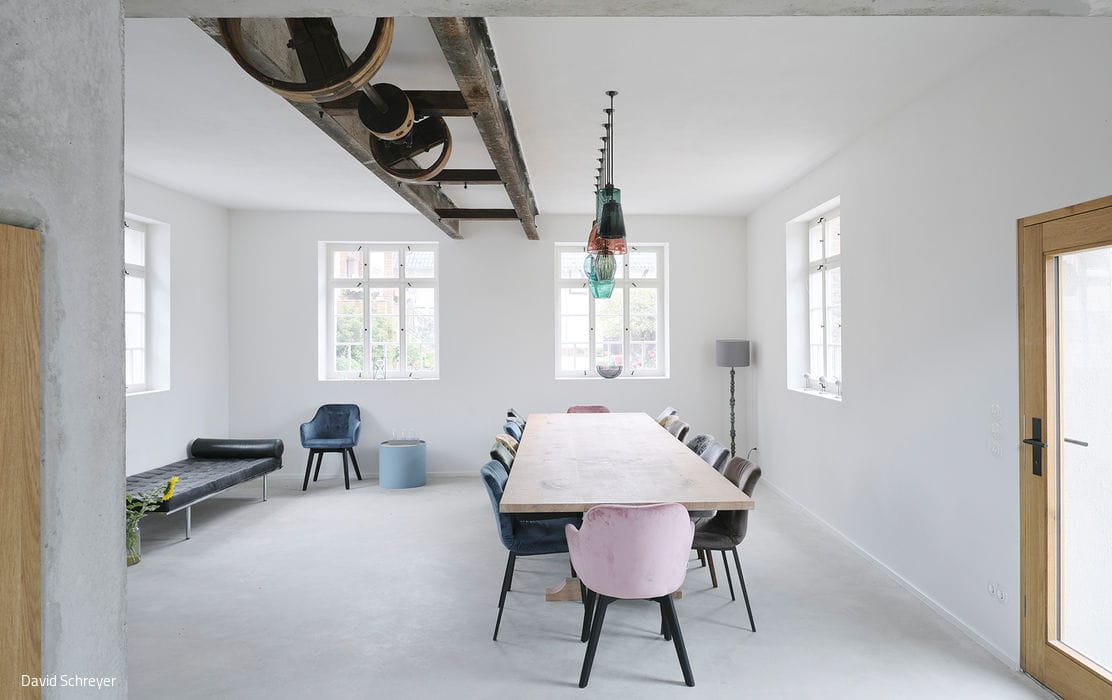
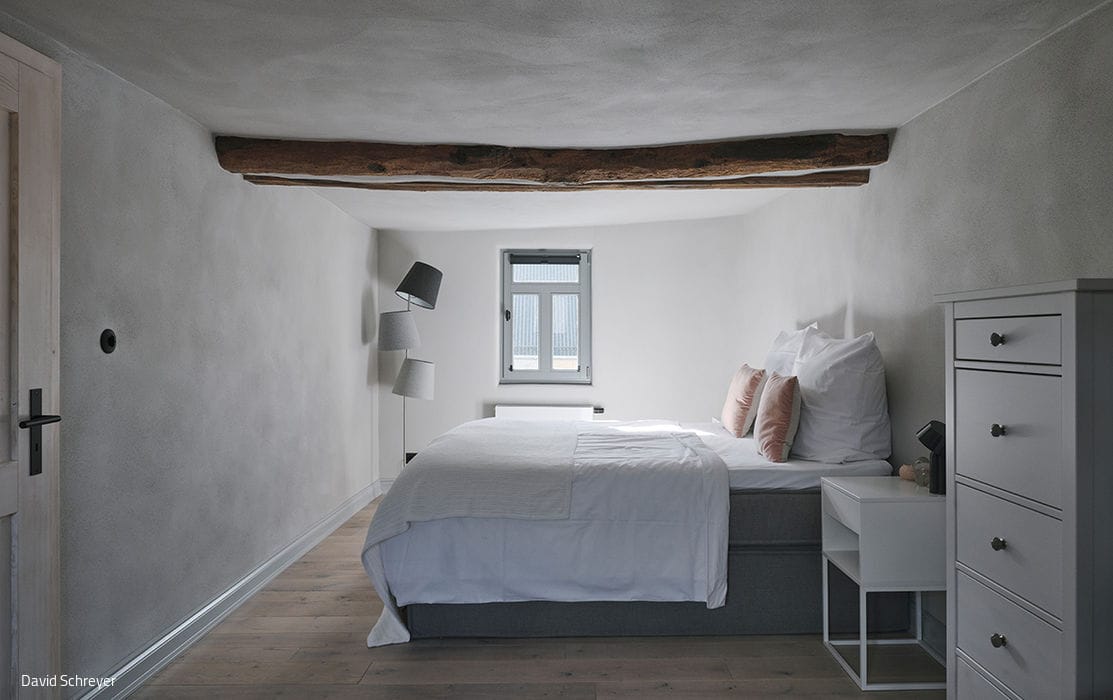
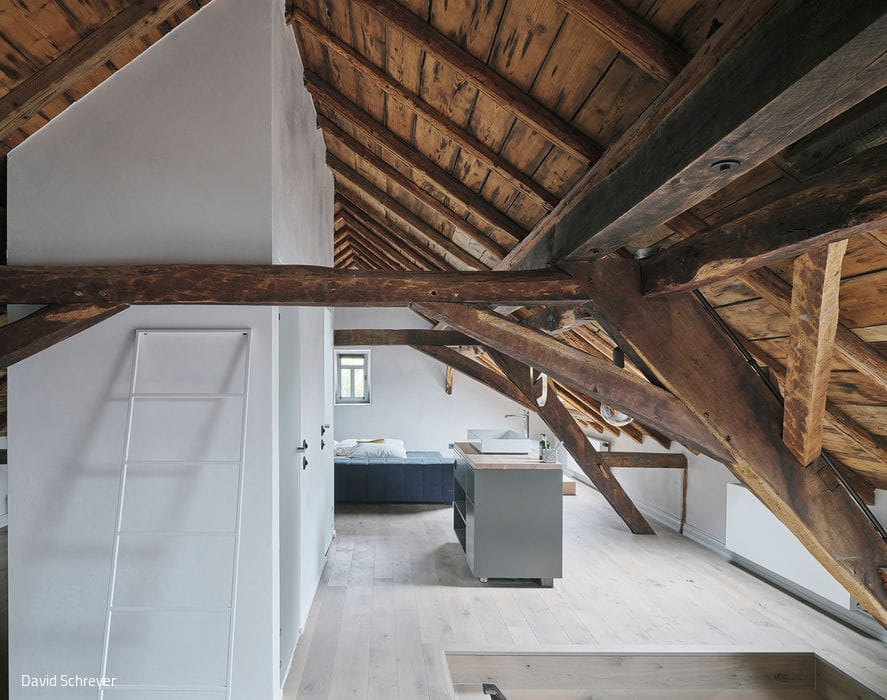
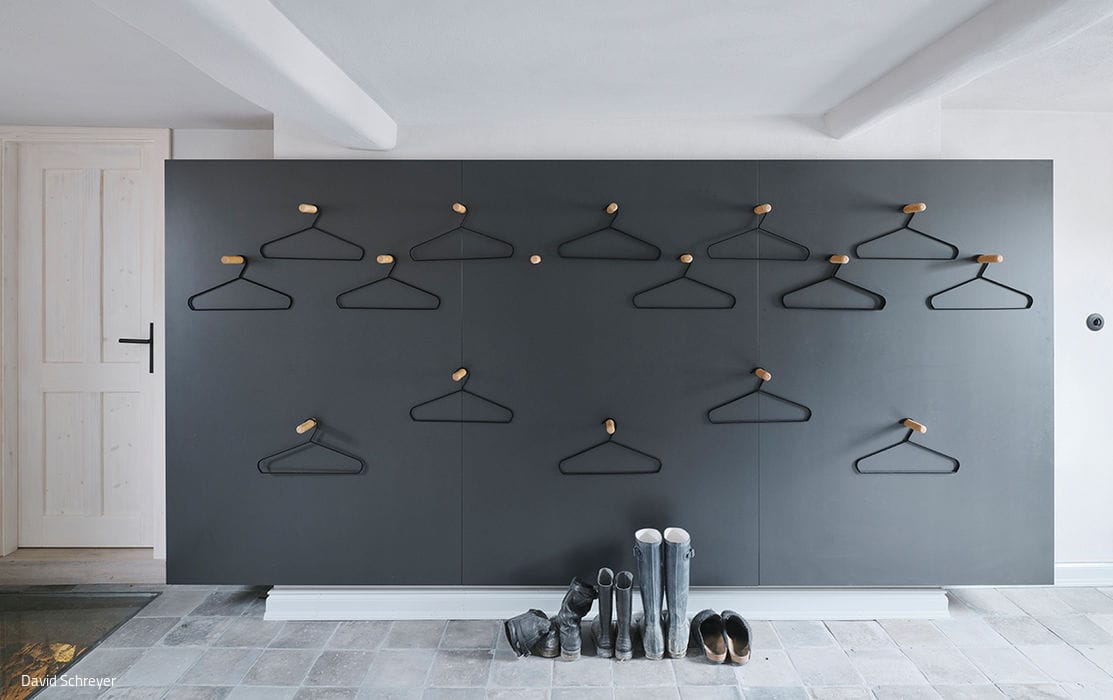
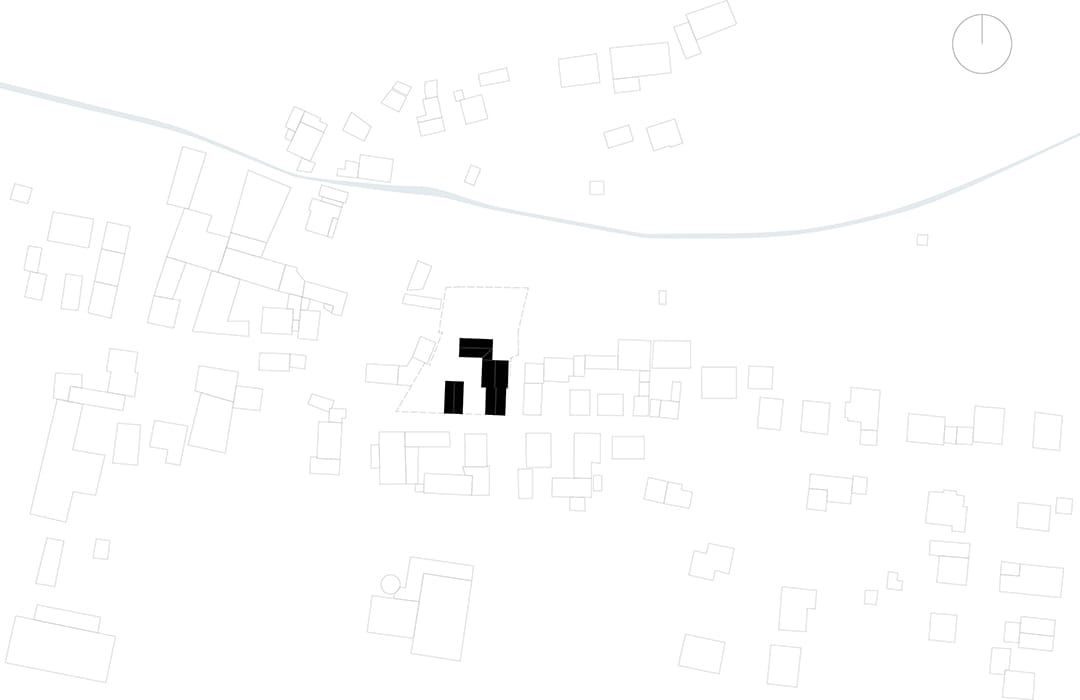
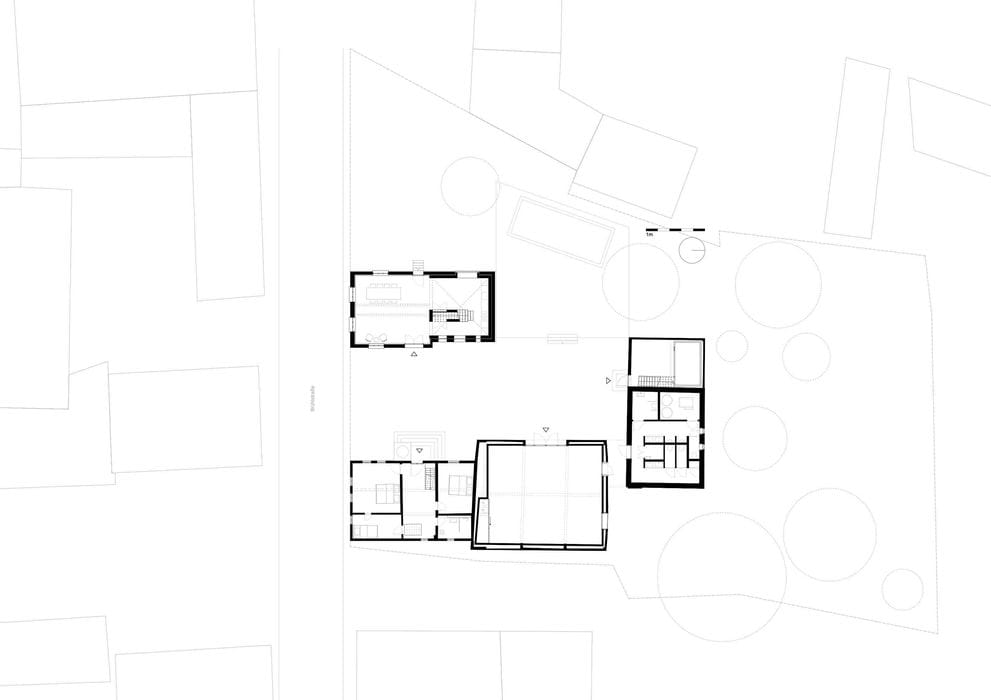
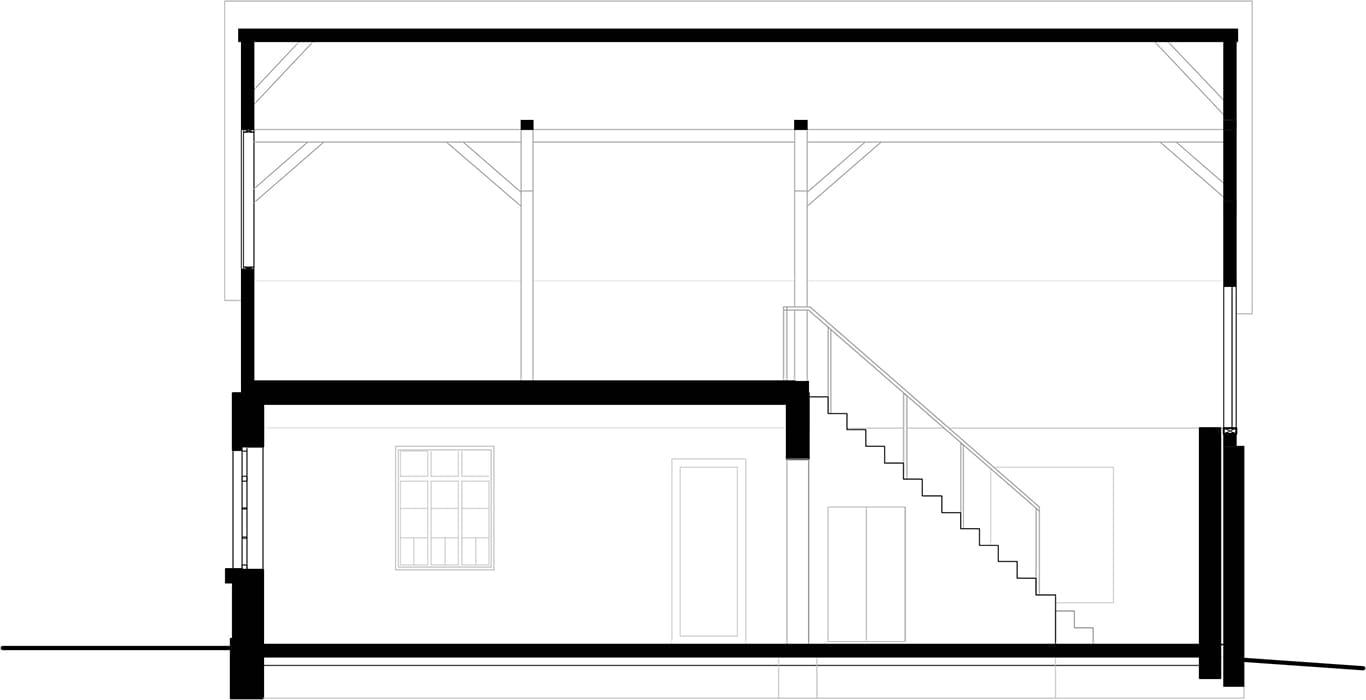
For eight generations, the Wendenius farmstead remained in the hands of just two families. When this dilapidated three-sided farmstead from the late 18th century underwent modernization in compliance with heritage protection standards, its four structures—originally a residential dwelling, workshop with pigsty, barn, and carriage house—were reimagined with new purposes. The owners' initial vision, developed with Mainz-based architect Marc Flick, was to create a gathering place for family and friends. The extensive renovation ultimately transformed the farm into a holiday retreat featuring guest bedrooms and bathrooms, a communal dining and kitchen building, an event barn, and a utility building housing sanitary facilities, heating systems, and a generous play area.
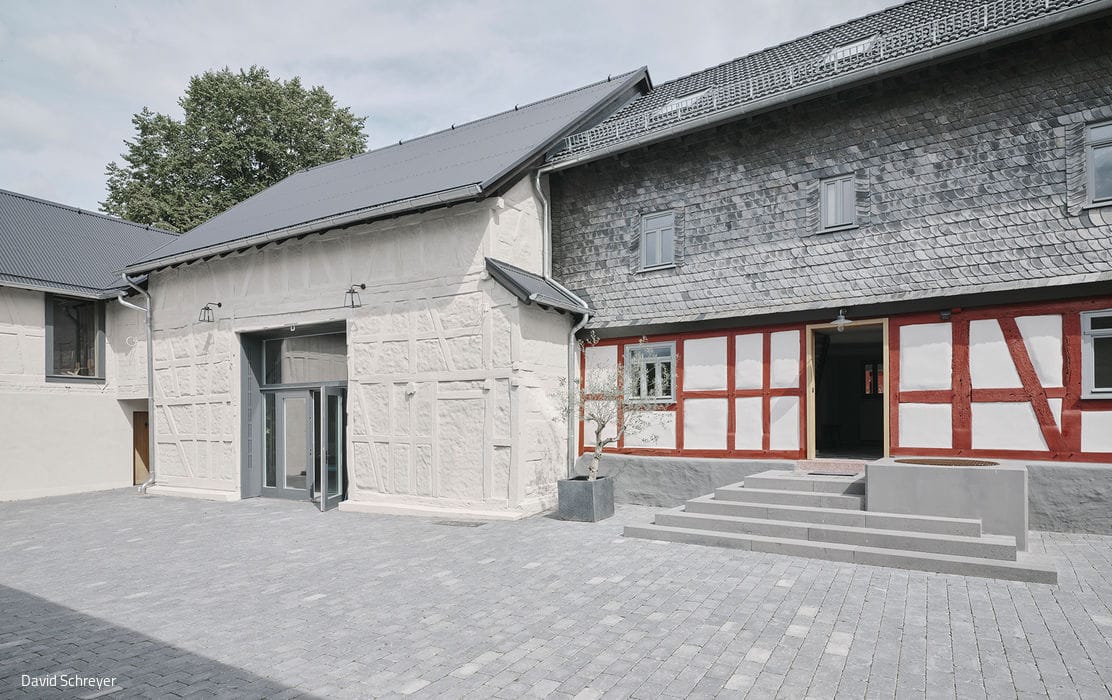
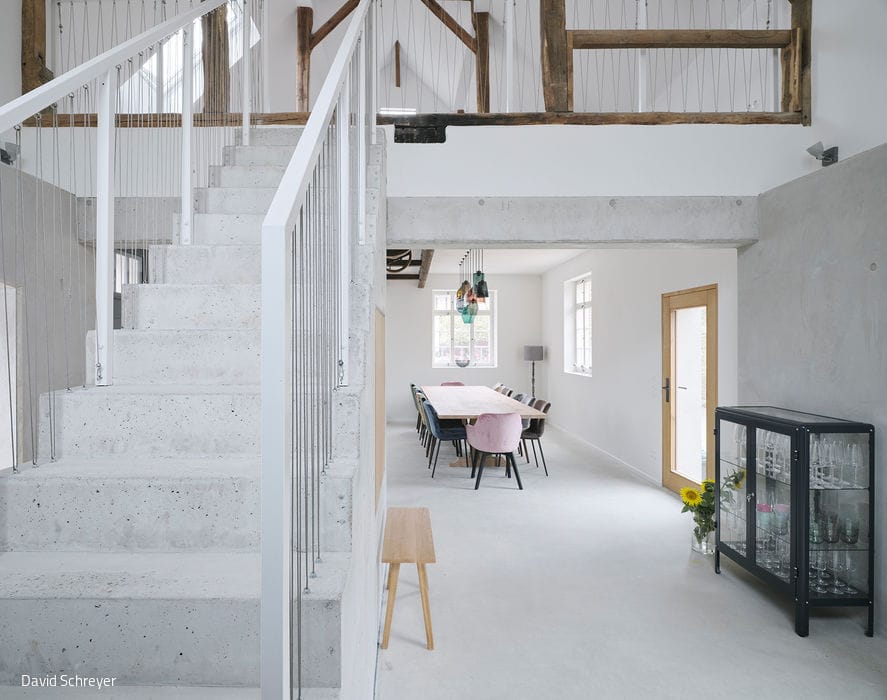
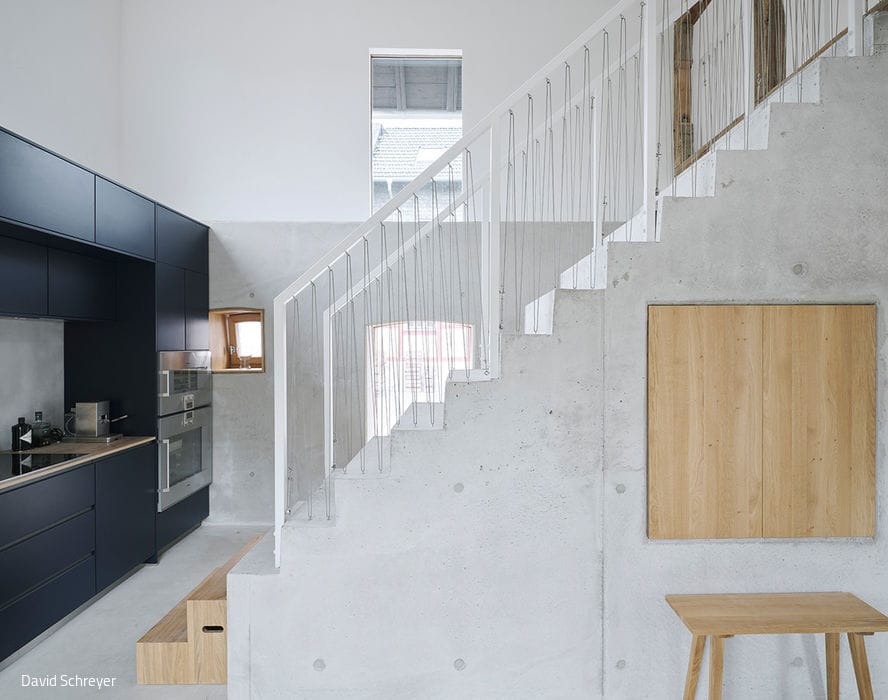
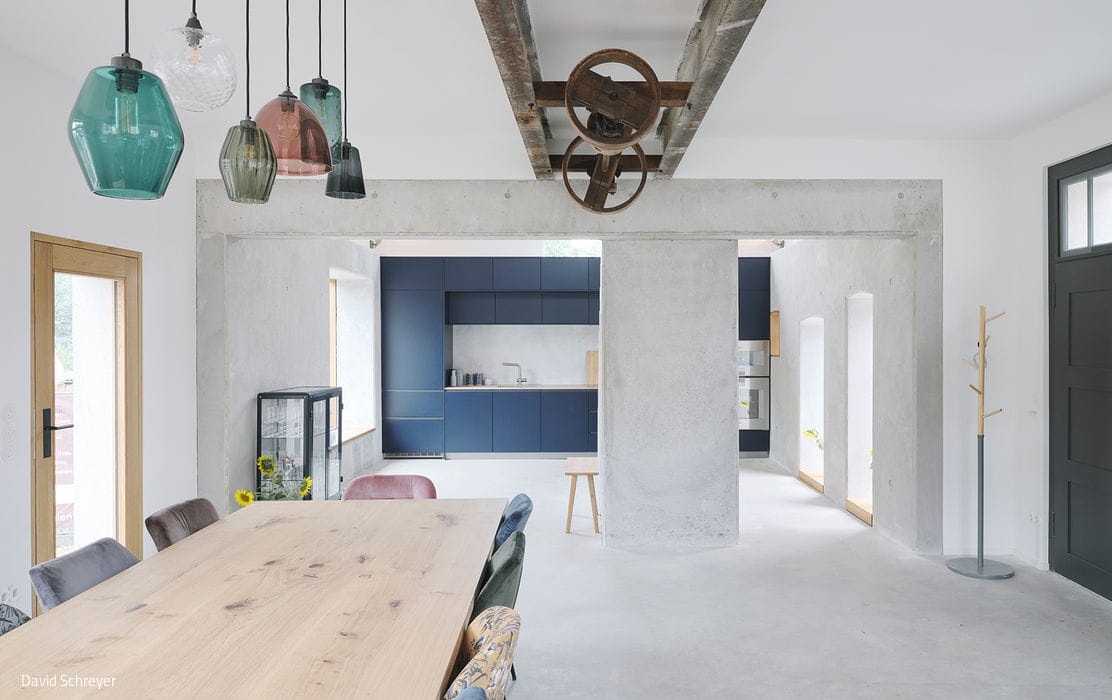
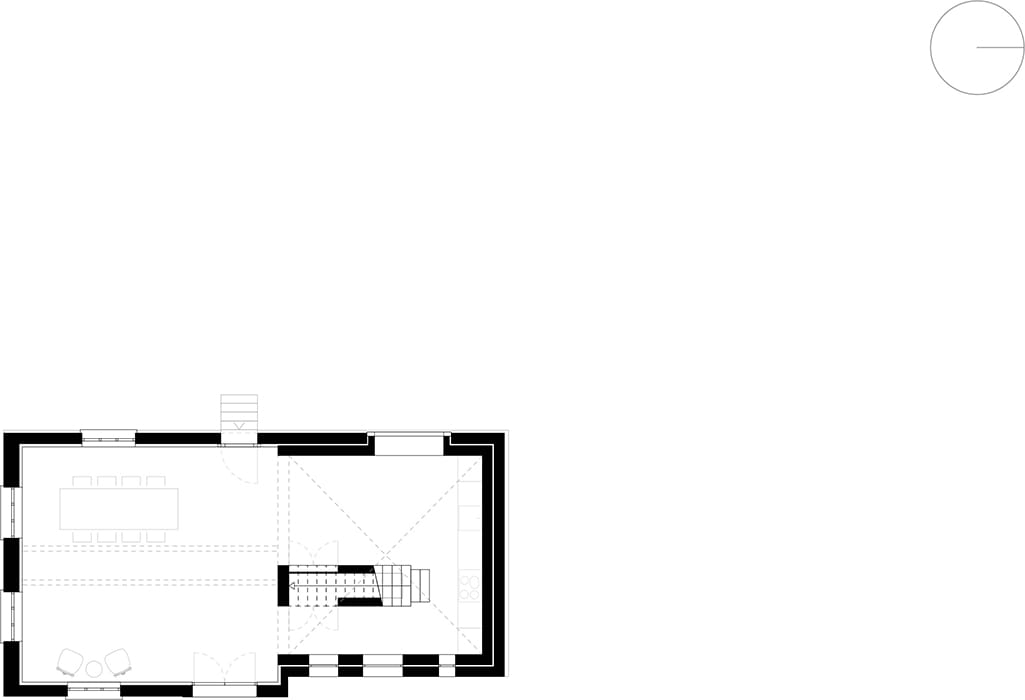
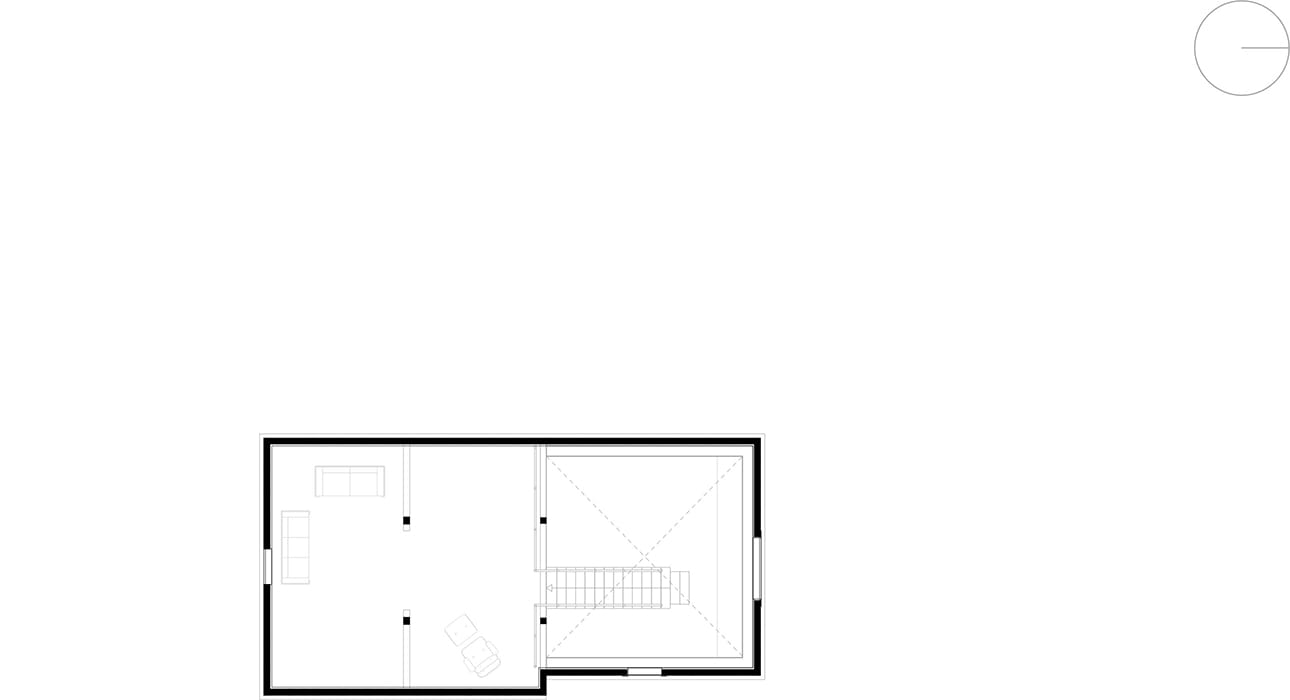
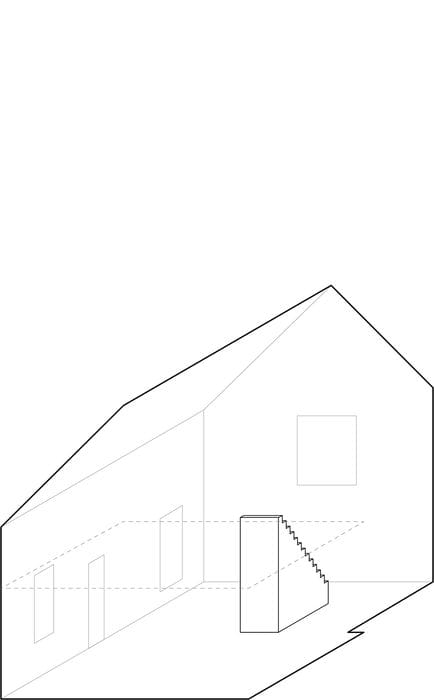
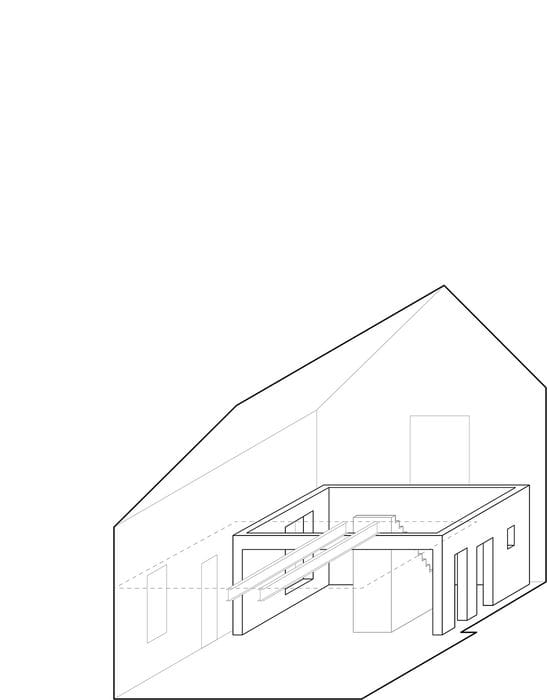
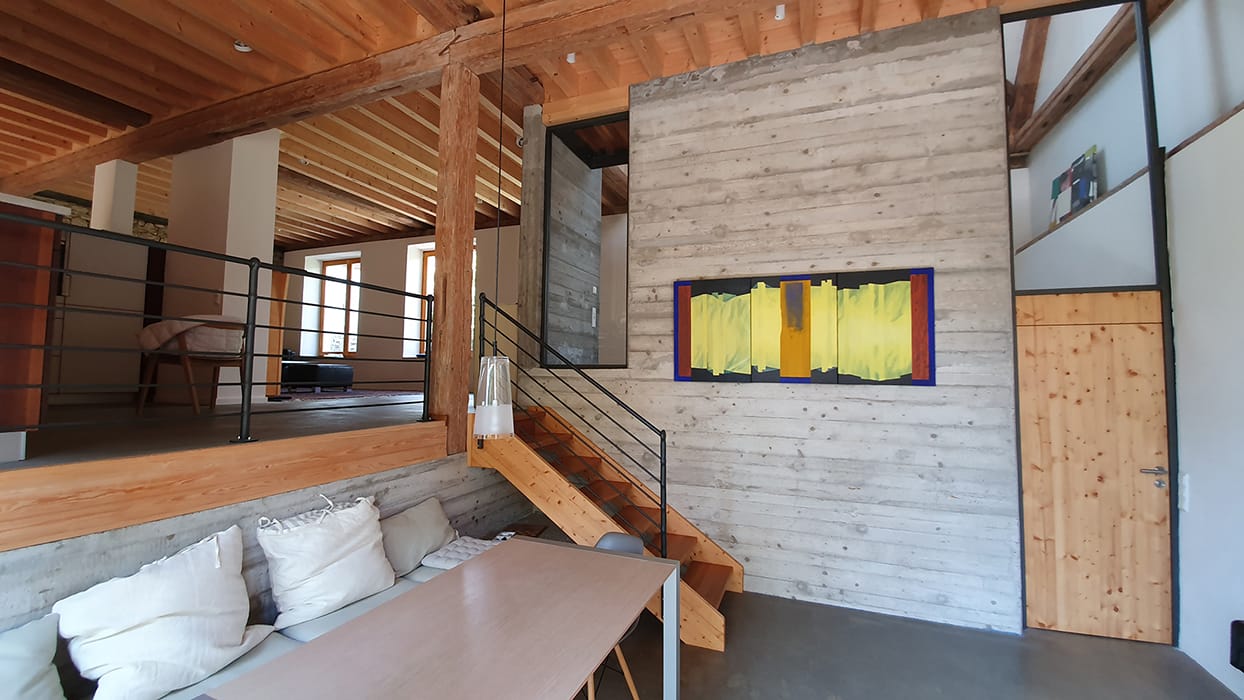
Today's seamless blend of historic half-timbered architecture and contemporary concrete interiors belies the considerable challenges the architects faced. They approached the deteriorated structure with ecological sensitivity, employing sustainable materials including clay, reed, wood fiber, and linseed oil. Renovation of the main residence revealed not only typical traces of mid-to-late 20th-century interventions but also severe structural damage. The half-timbered framework, buried beneath cement plaster, showed extensive rot that temporarily required the house to be shored up while substantial portions of the timber structure were replaced. The team also discovered and carefully restored hidden historical wall paintings. A walled-in historic window became the inspiration for custom wooden windows crafted by the estate carpenter. To transform the former workshop and pigsty into an open, flowing dining space, the architects removed strategic walls and ceiling elements. Today's kitchen occupies the footprint of the old pigsty, defined by a striking U-shaped exposed concrete wall that serves triple duty: it's a sculptural design statement, a structural load-bearing element, and an integrated heating and waterproofing system. Through core activation technology, the entire interior receives consistent radiant warmth. Equally striking is the hollow exposed concrete staircase facing the kitchen counter—its void ingeniously conceals all building systems and utilities.
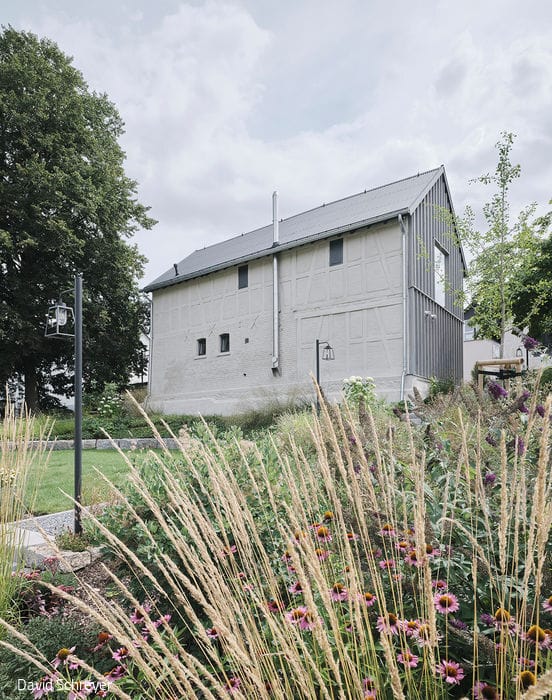
For this building and two others, the architects stripped away old plaster, exposed the underlying structure, and treated it with a traditional natural stone wash. "Restrained interventions respect the building's inherent character without imposing new aesthetic gestures," Marc Flick explains. "The design philosophy centers on a contemporary reading of the original materiality. The colors and textures of our materials are deliberately as straightforward and functional as the existing structure itself. By 'preserving' the original in soft whites and grays, we achieve a genuine dialogue between past and present."
www.hof-wendenius.de
www.marcflick.de
Living space: 266 m²
Site area: 1,673 m²
Construction period: 2017–2019
Building method: Half-timbered, brick masonry
Energy standard: KfW Efficiency House – Monument
Photography Credits:
David Schreyer
www.schreyerdavid.com
(Published in CUBE Frankfurt 01|22)

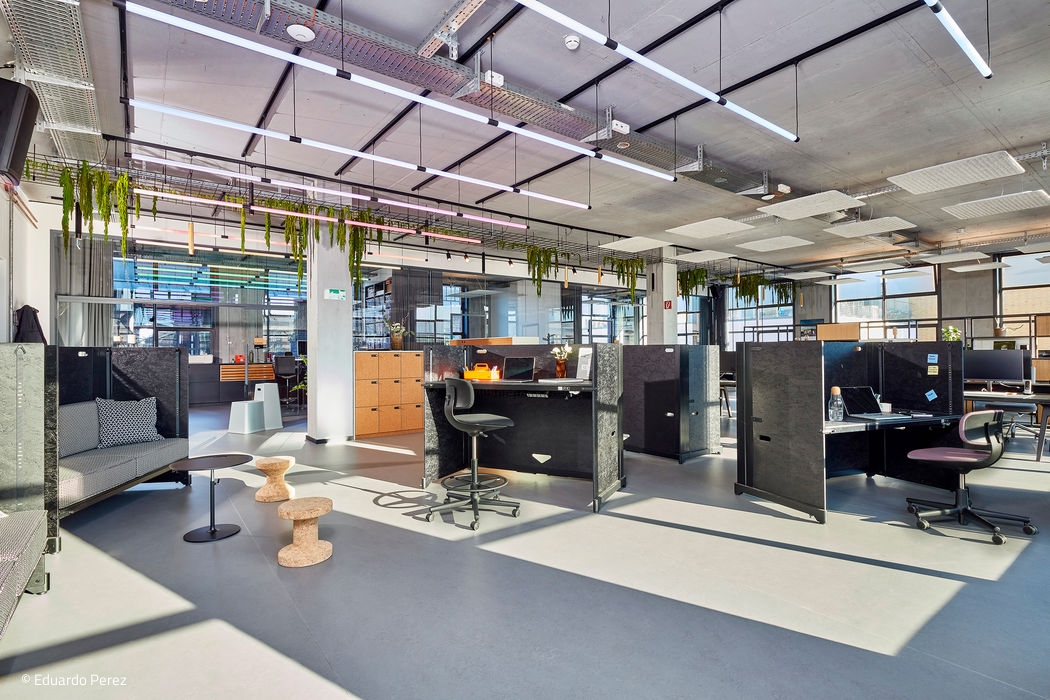
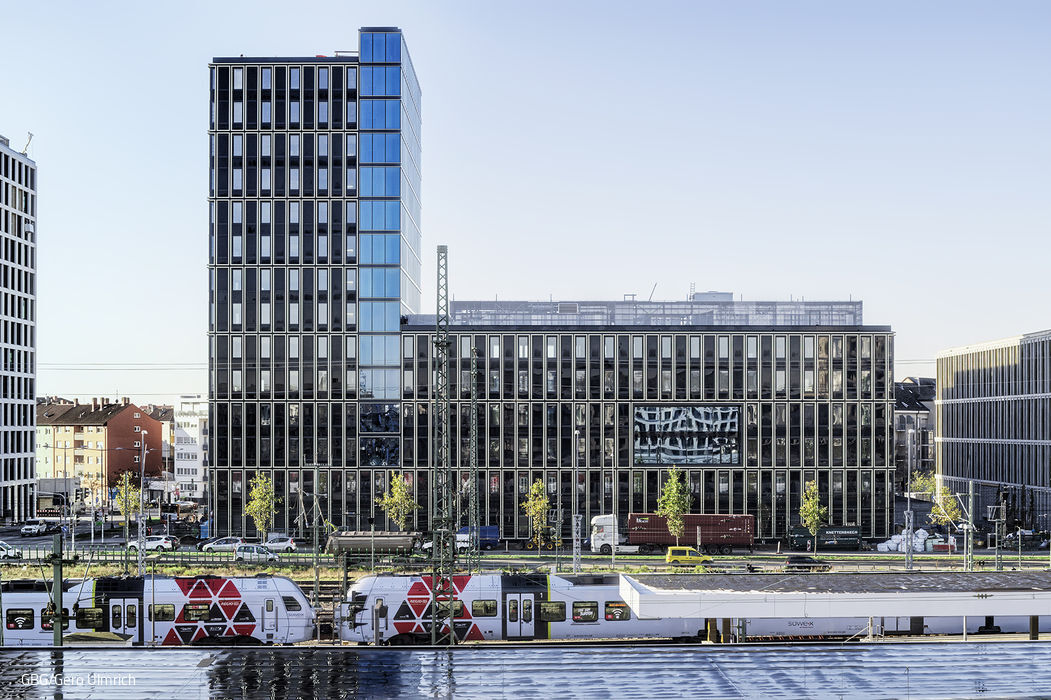
Open and Transparent
Schneider + Schumacher Architects, GBG/Gero Ulmrich
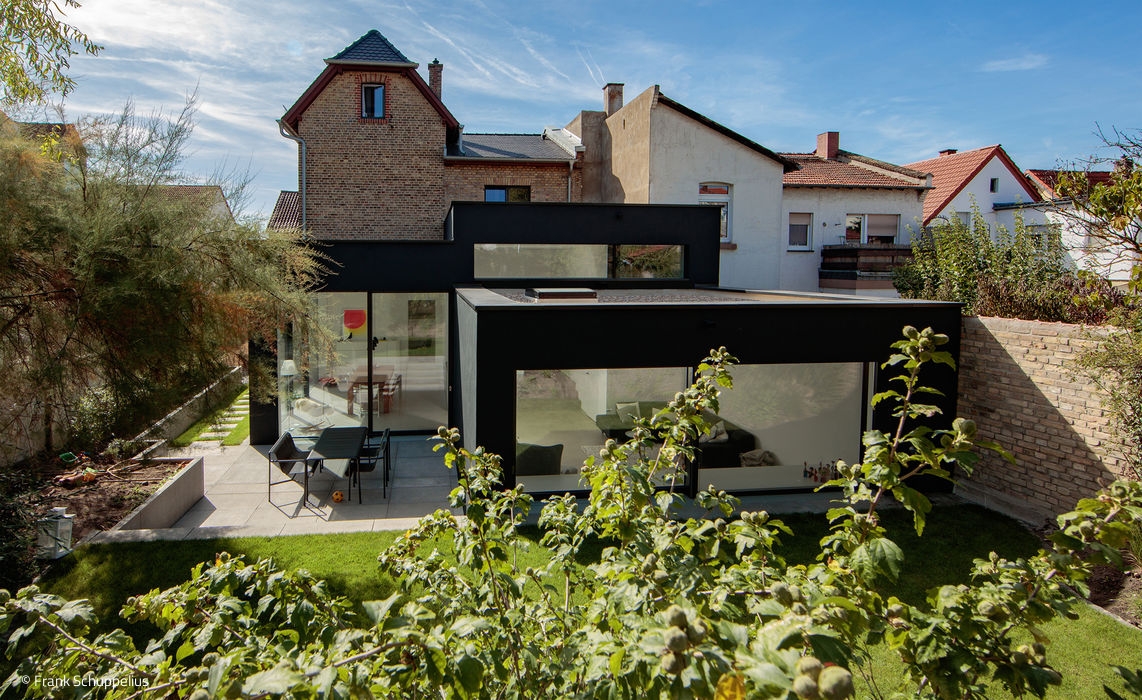
Bold Contrasts
A modern, light-flooded extension housing kitchen, living, and dining spaces
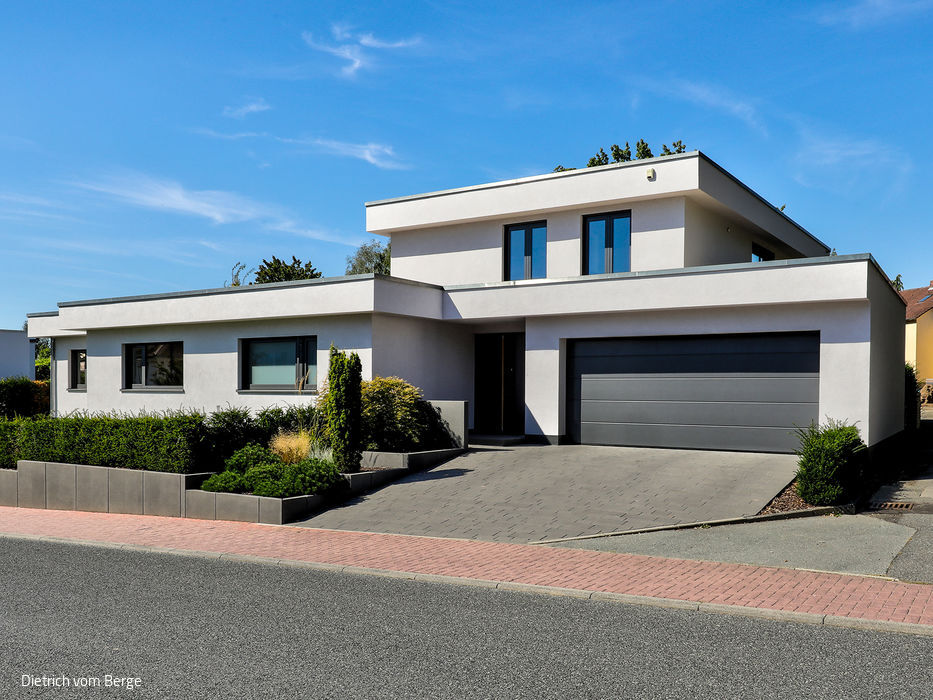
Connection & Retreat
The staircase at the heart of the home and the living-dining area—as the communicative hub—bridge the parents' and children's wings.……
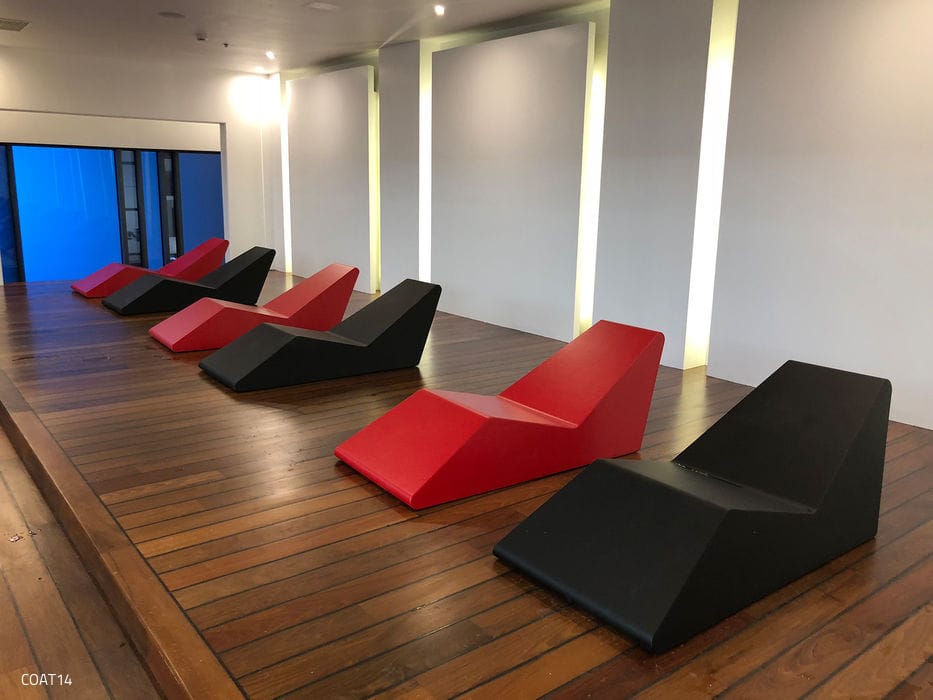
Seamless Design
Swen Urban designs seating solutions for indoor and outdoor environments