


Flexible by Design
A home and studio that impresses with its adaptable spatial design
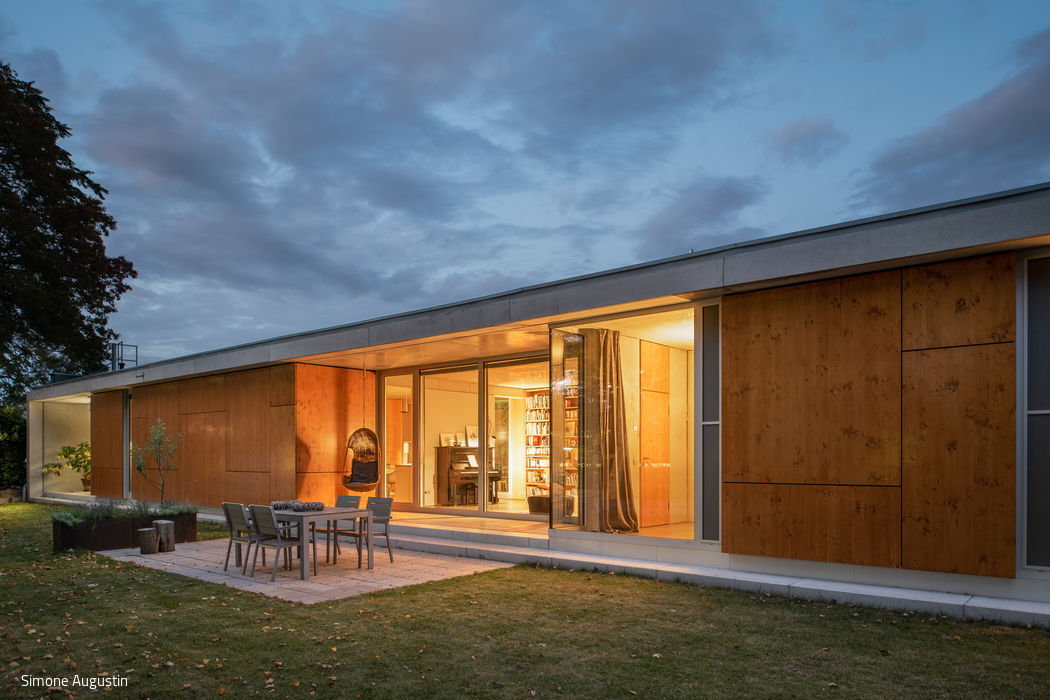
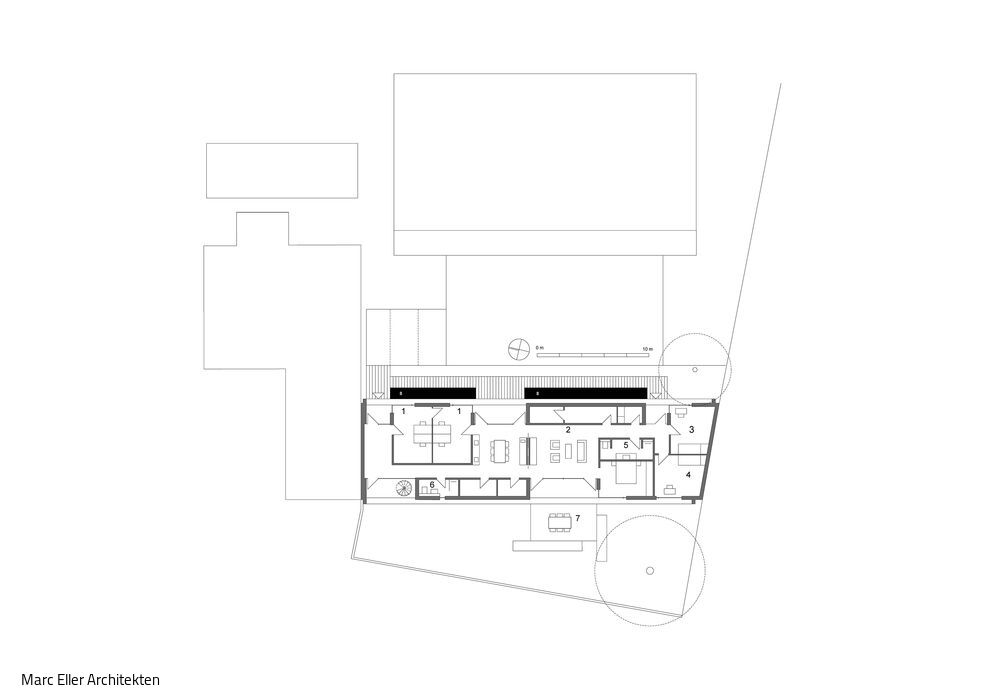
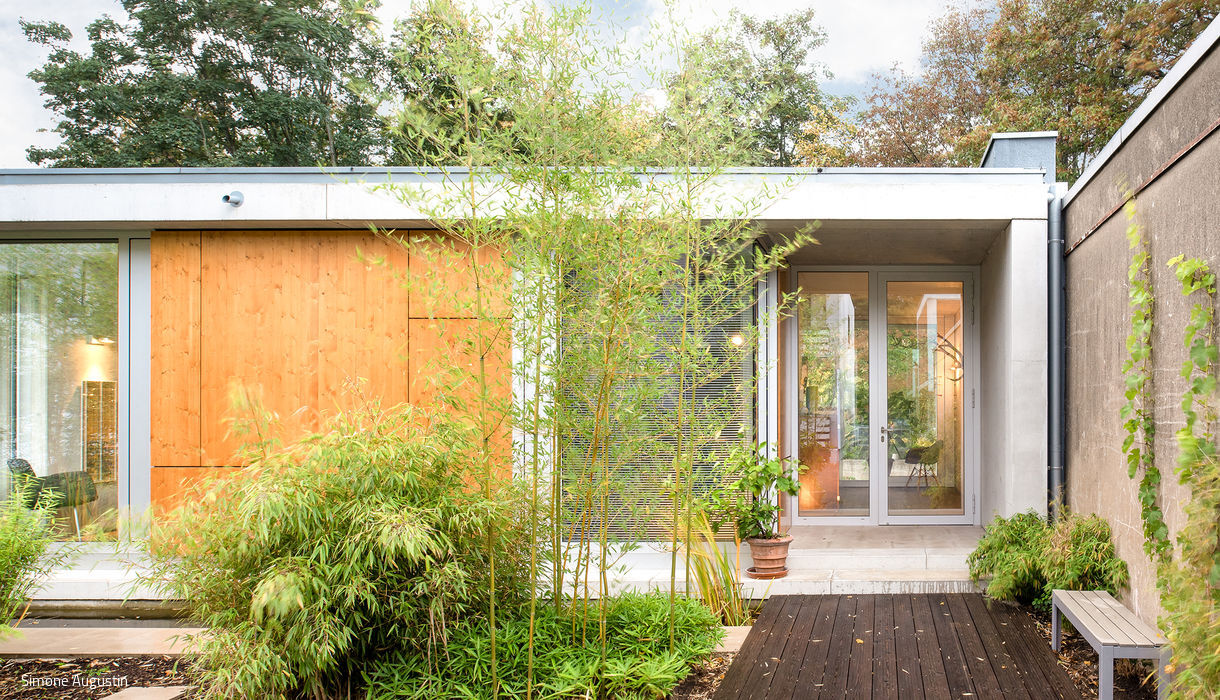
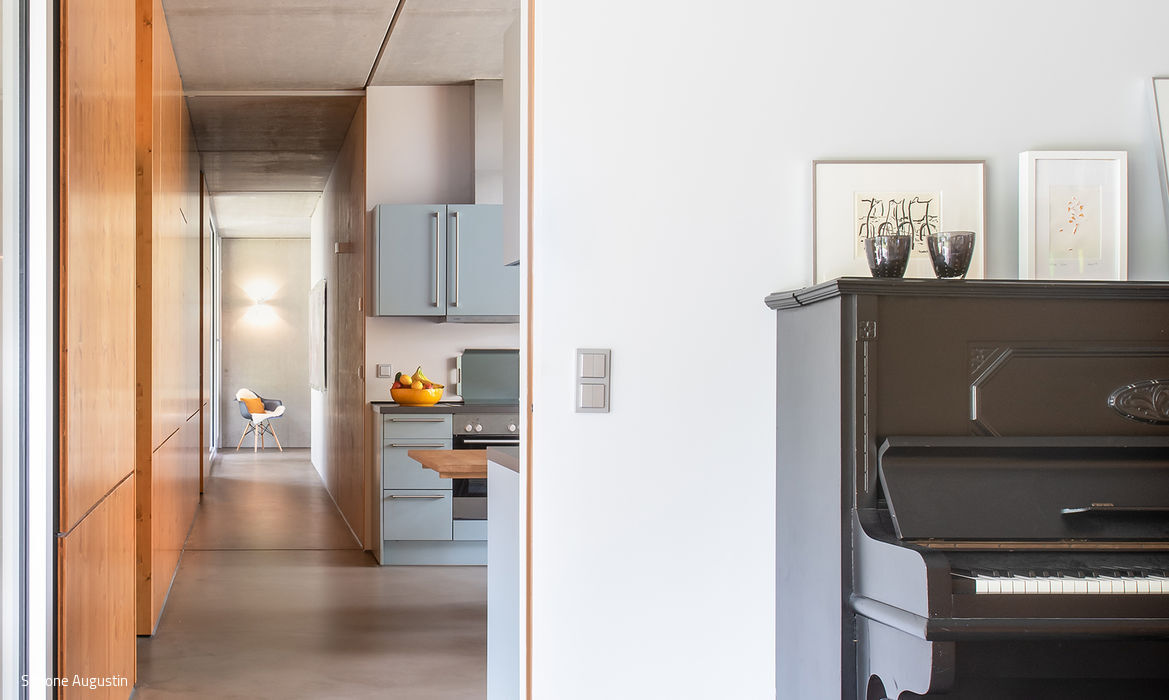
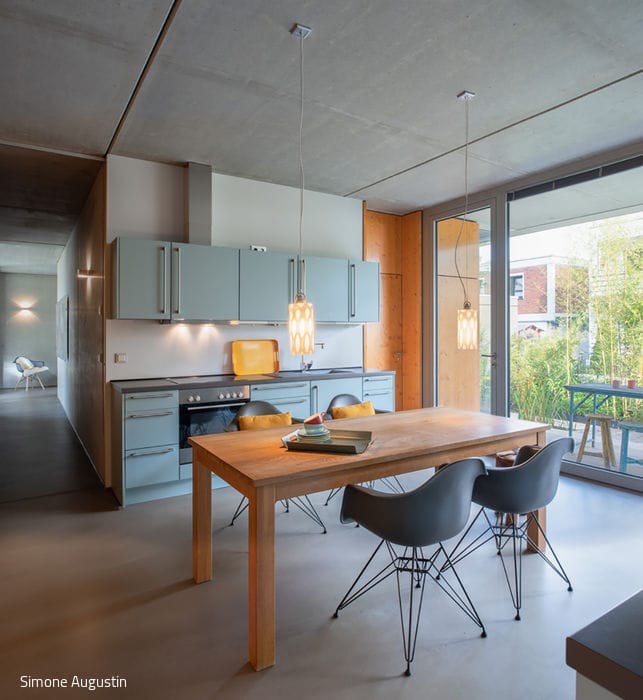
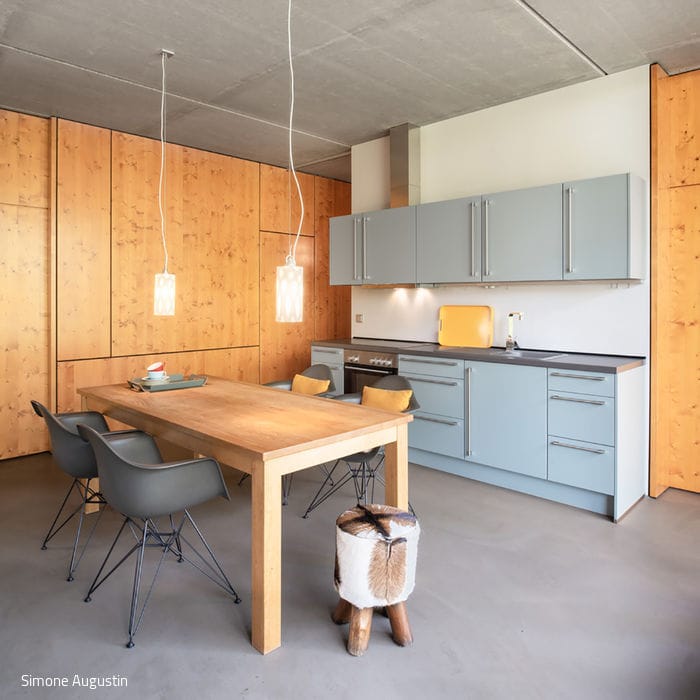
Nestled in a courtyard in south Düsseldorf sits the home and studio of architect Marc Eller. Cleverly positioned between a three-storey street-facing residential block, a boundary wall, and a water protection area on neighbouring school grounds, this elongated bungalow exemplifies how living and working spaces can seamlessly merge through open spatial planning.
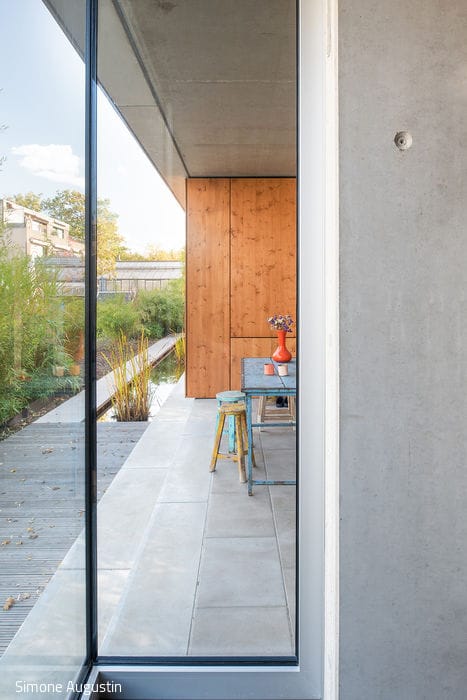
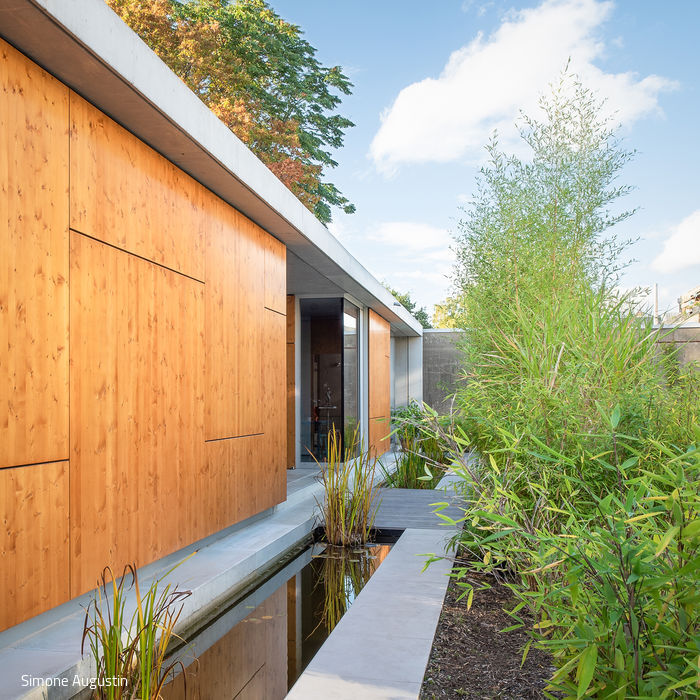
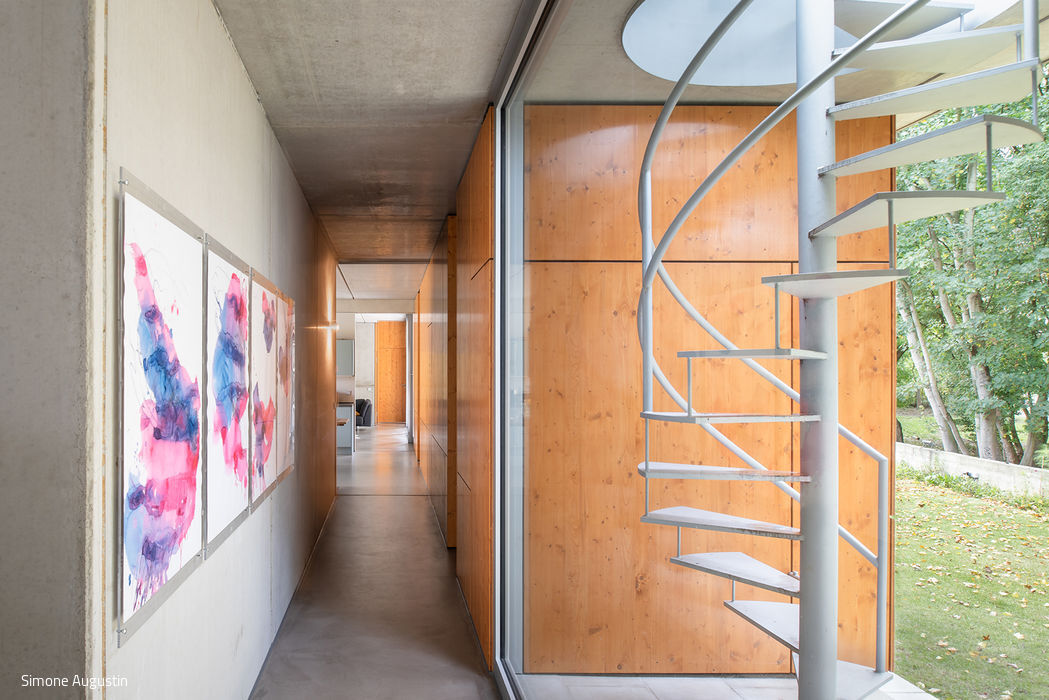
Stretching 30 metres in length, the single-storey, basement-free structure responds sensitively to its surroundings with a carefully calibrated height. The elongated form creates a semi-public courtyard at the front and a private garden sanctuary defined by mature trees and a pond. Interior spaces mirror this logic—rooms oriented towards the front or rear according to their privacy needs. Two independent street-level entrances serve the residential area at one end and the studio at the other. Each zone unfolds as a series of largely open spaces that converge on central terraces. More intimate rooms—bedrooms, bathrooms—and utility spaces cluster within separate volumes, likewise connected by flowing sequences. Sliding doors grant the freedom to open or close different zones as needed, ensuring the entire home adapts fluidly to its inhabitants' evolving needs.
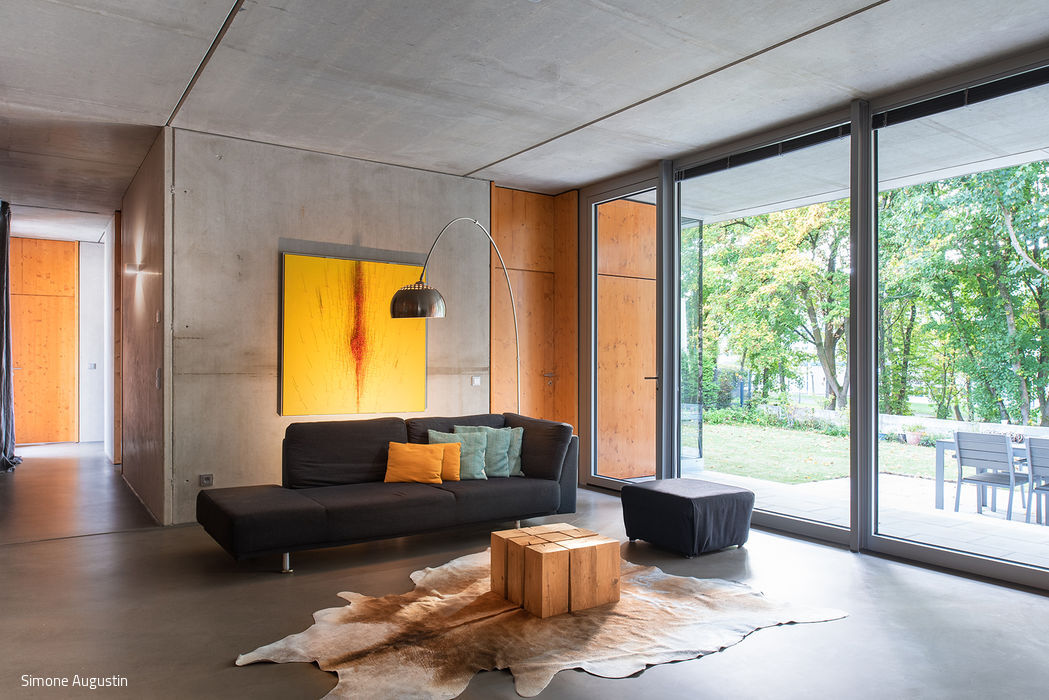
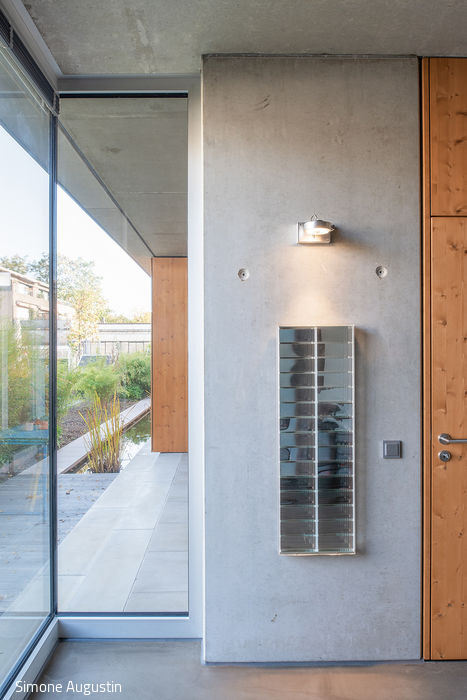
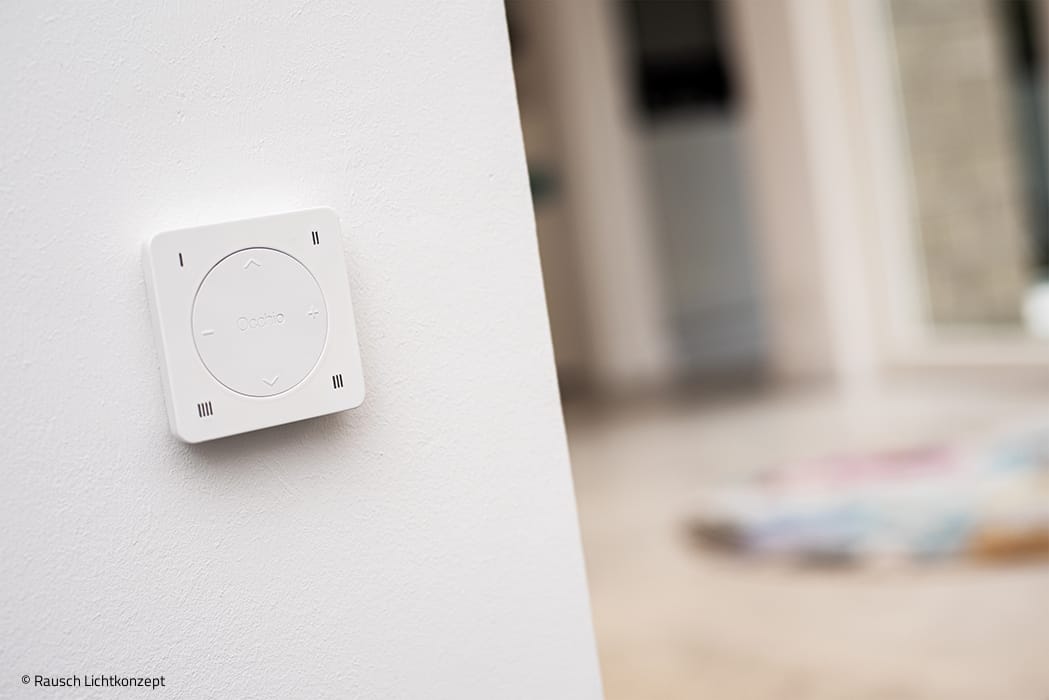
Walls, ceilings, and floors are finished in raw, exposed concrete. Wood panelling that extends from the exterior inward blurs the boundary between inside and outside. Together, these materials—rough cold concrete paired with warm, lightly finished wood—strike a balance that conveys both durability and approachability. Should the building ever require deconstruction, both materials can be cleanly separated and recycled. Flexibility extends beyond the floor plan to embrace building systems as well. Heating and lighting operate via wireless control, allowing seamless adjustment to changing patterns of use. A central control unit monitors energy and water consumption in real time, enabling residents to align their usage with lifestyle habits. Rainwater is captured in two basins and channelled to irrigate the garden, conserving fresh water while simultaneously improving the microclimate and creating habitat for insects, plants, and fish.
Residential and commercial space: 200 m²
Plot size: 650 m²
Construction period: 2017–2018
Construction method: Solid masonry
Energy concept: Air-source heat pump
Photography Credits:
Simone Augustin
www.simone-augustin.de
(Published in CUBE Düsseldorf 02|21)
Modern and Nature-Inspired
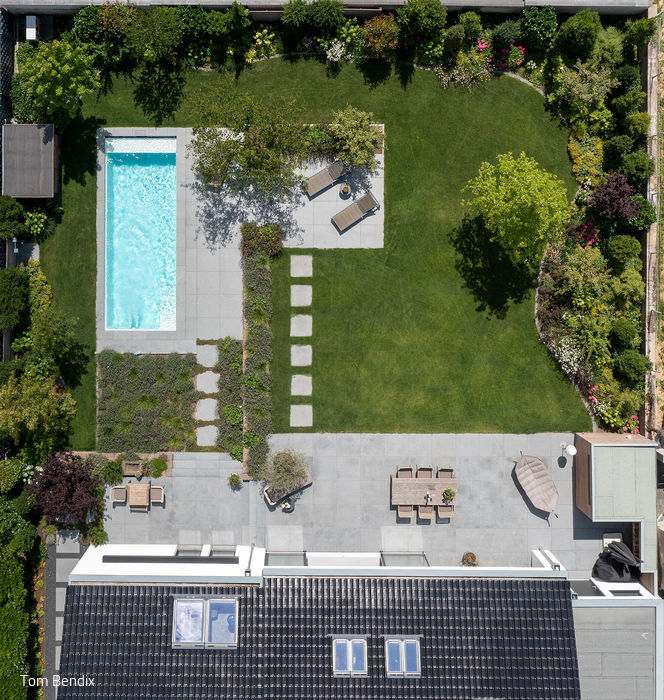
A garden with an integrated pool—your personal escape from the everyday.
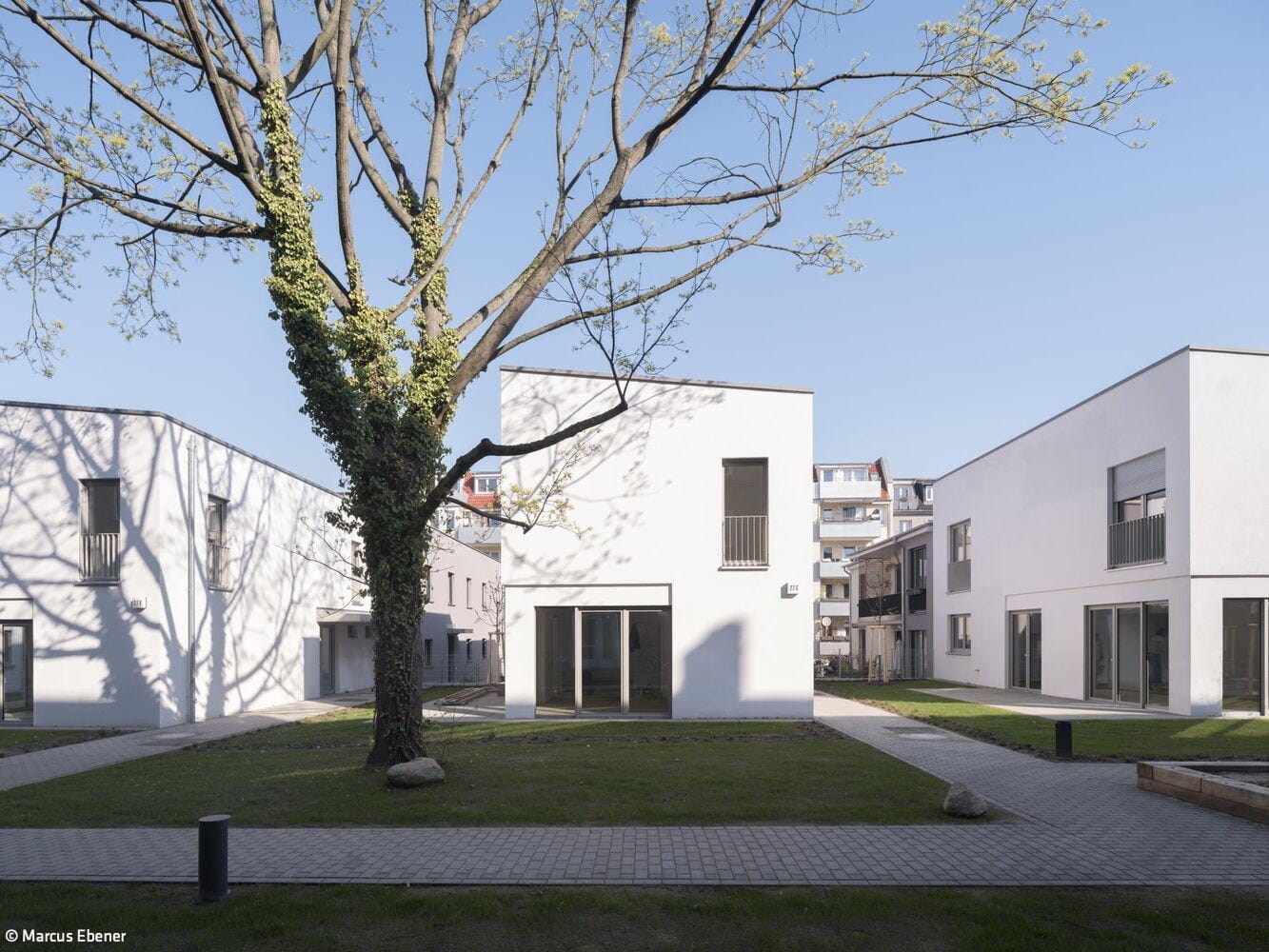
Living as community
Villa Pillebach in Gerresheim reconciles personalized living with architectural clarity.
The Visionaries
Ambitious renovation and modernisation projects are core to who we are at Schwitzke Project.

Hospitality in Mint Green
The "Dauser im Hafen" brings the brand to life through local references and artisanal craftsmanship.