


Light-Flooded Workspace
Highly Efficient Office Building in Maxvorstadt
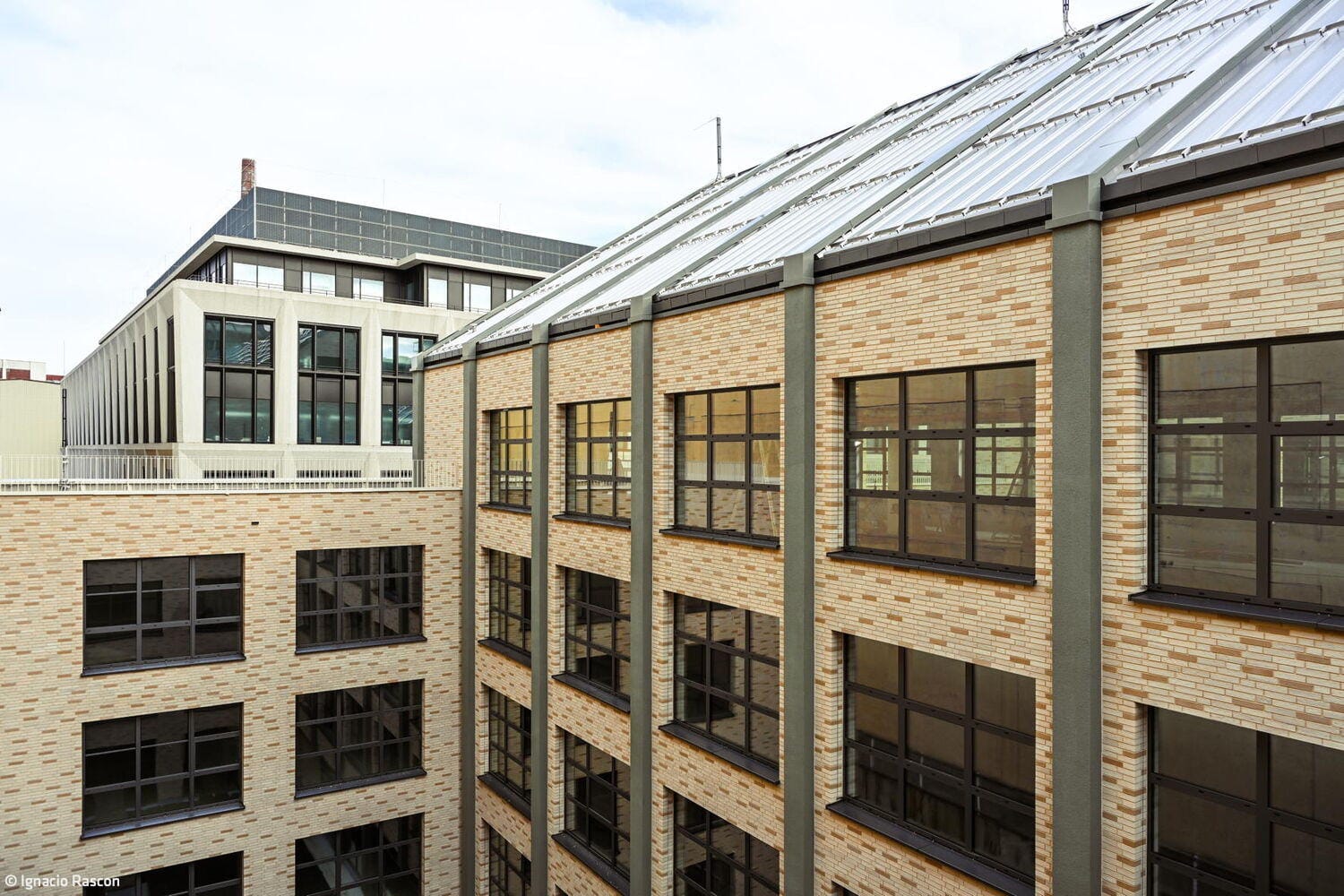
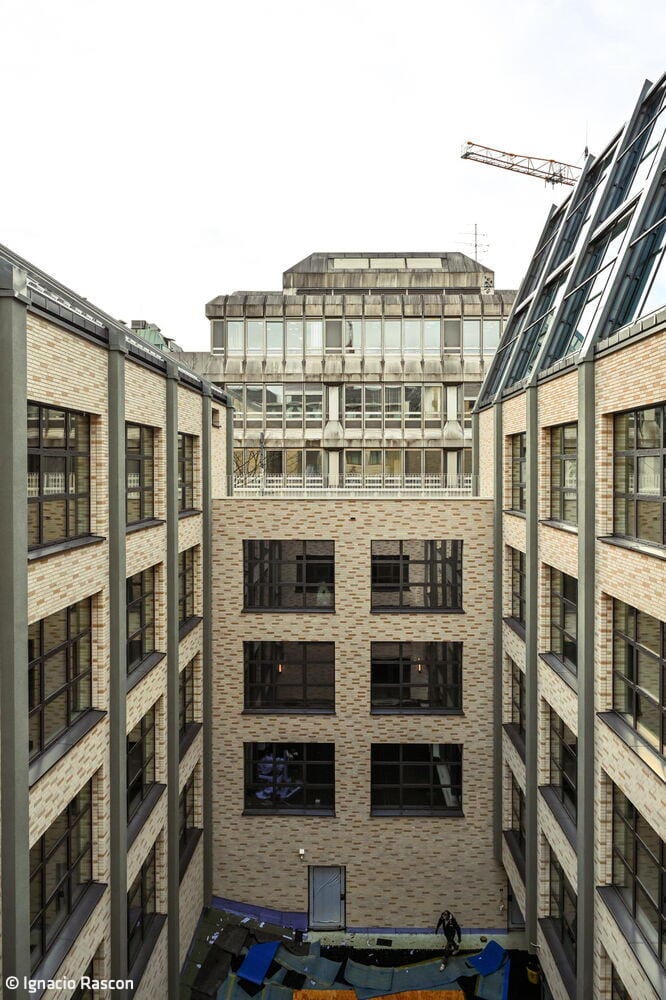
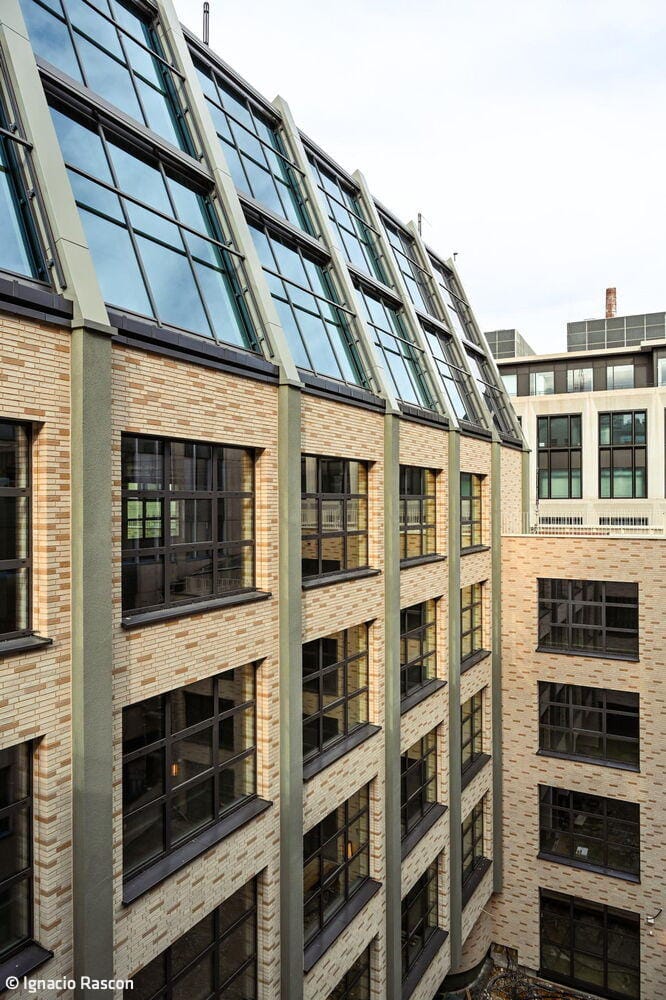
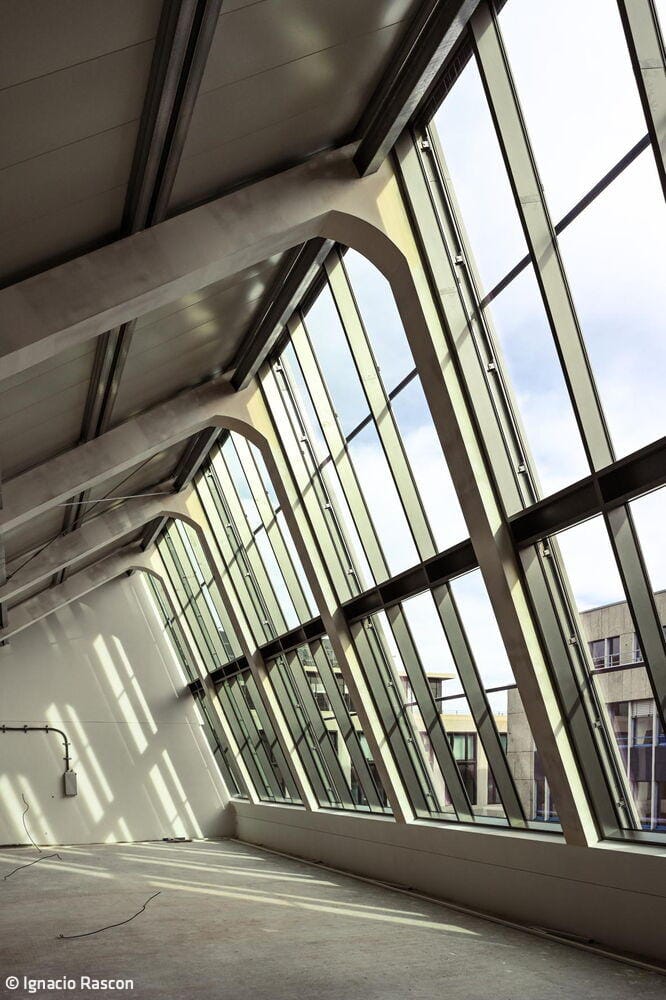
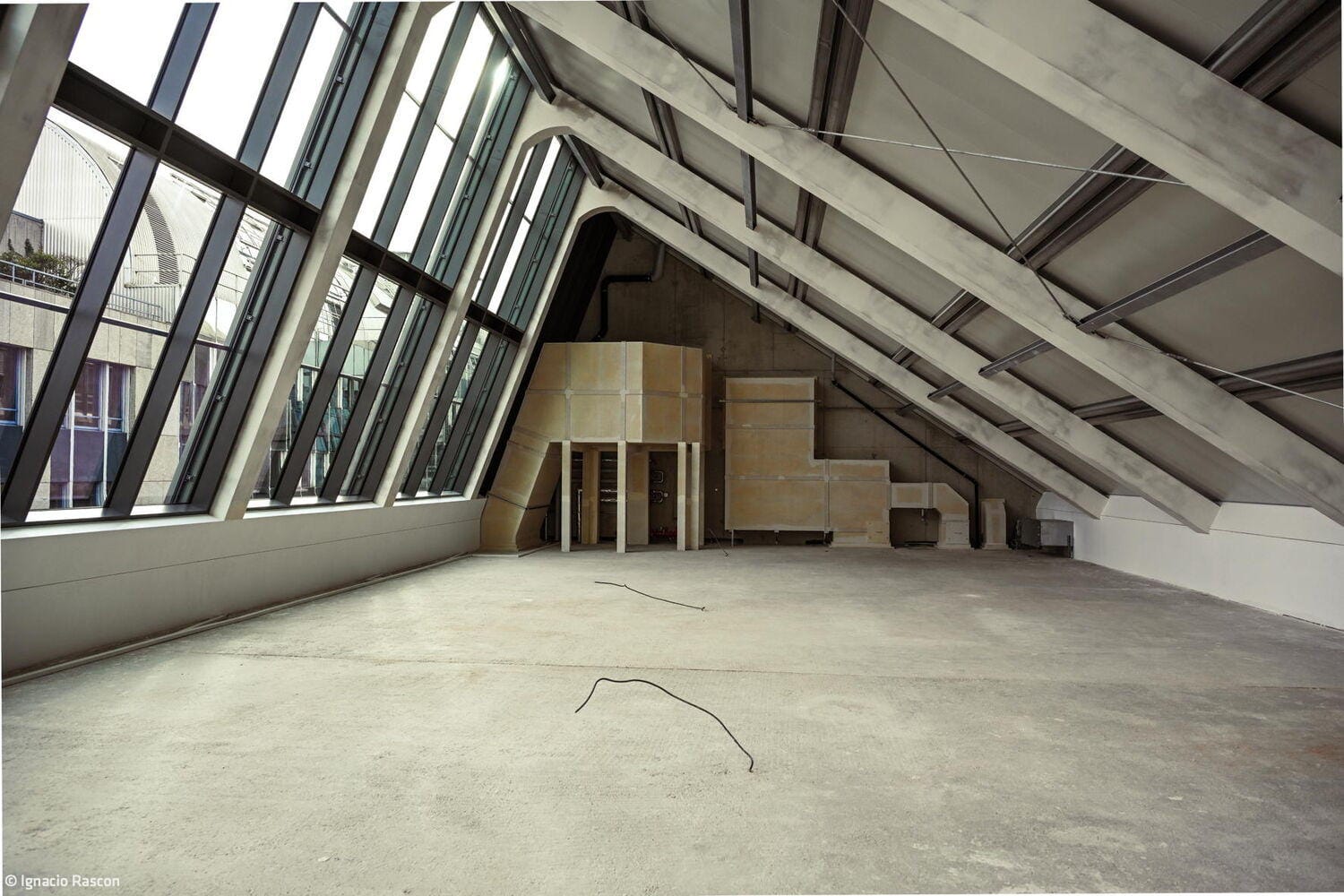
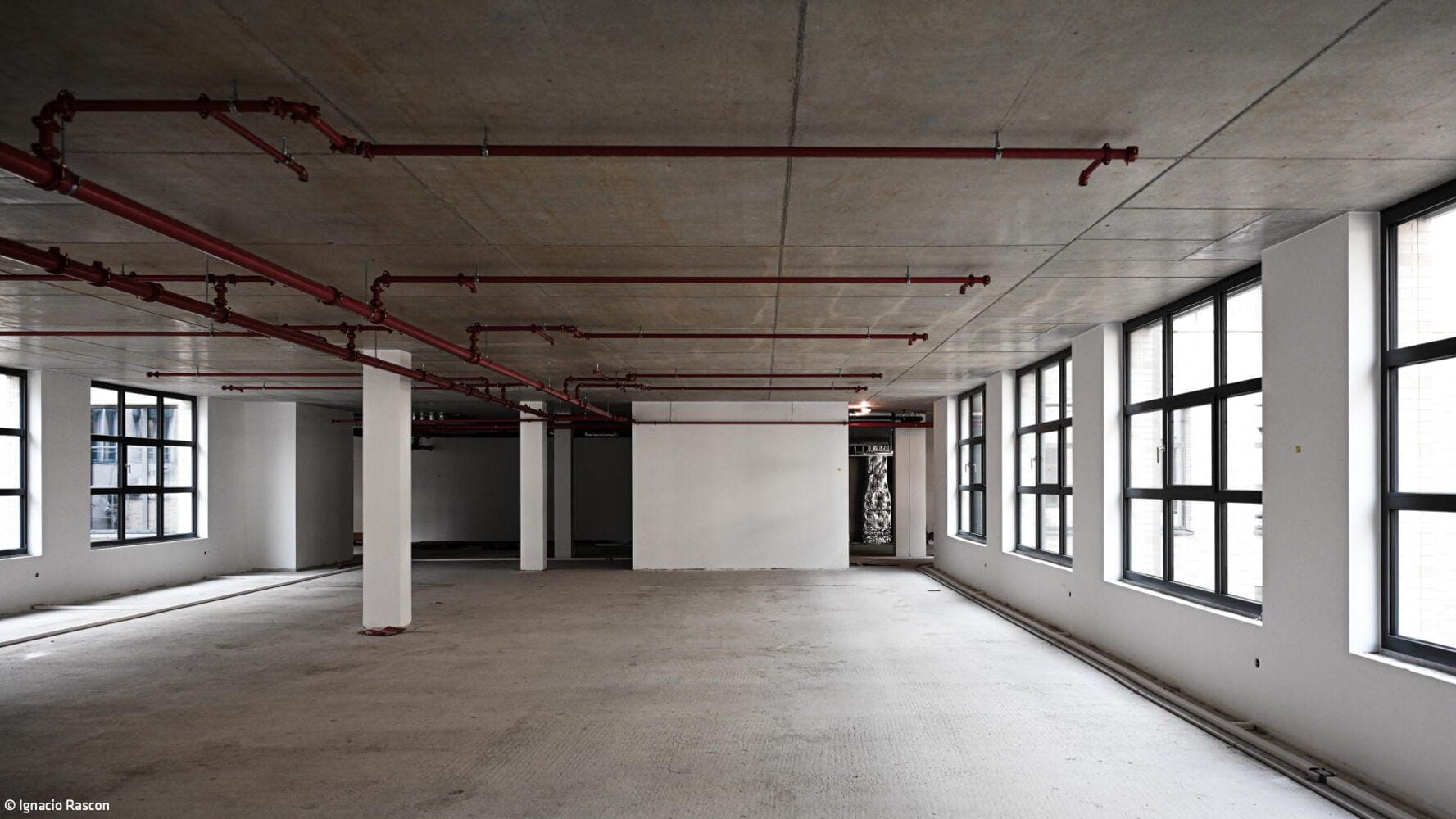
A new office building has emerged in a prime location, adjacent to the main railway station, on a challenging inner courtyard site. In an architectural competition, Munich-based Brückner Architekten secured first place. Their design stands out for its efficient organization of four building volumes and three light courts on just 2,500 m² of land. The project's realization spanned five years, from 2019 to 2024.
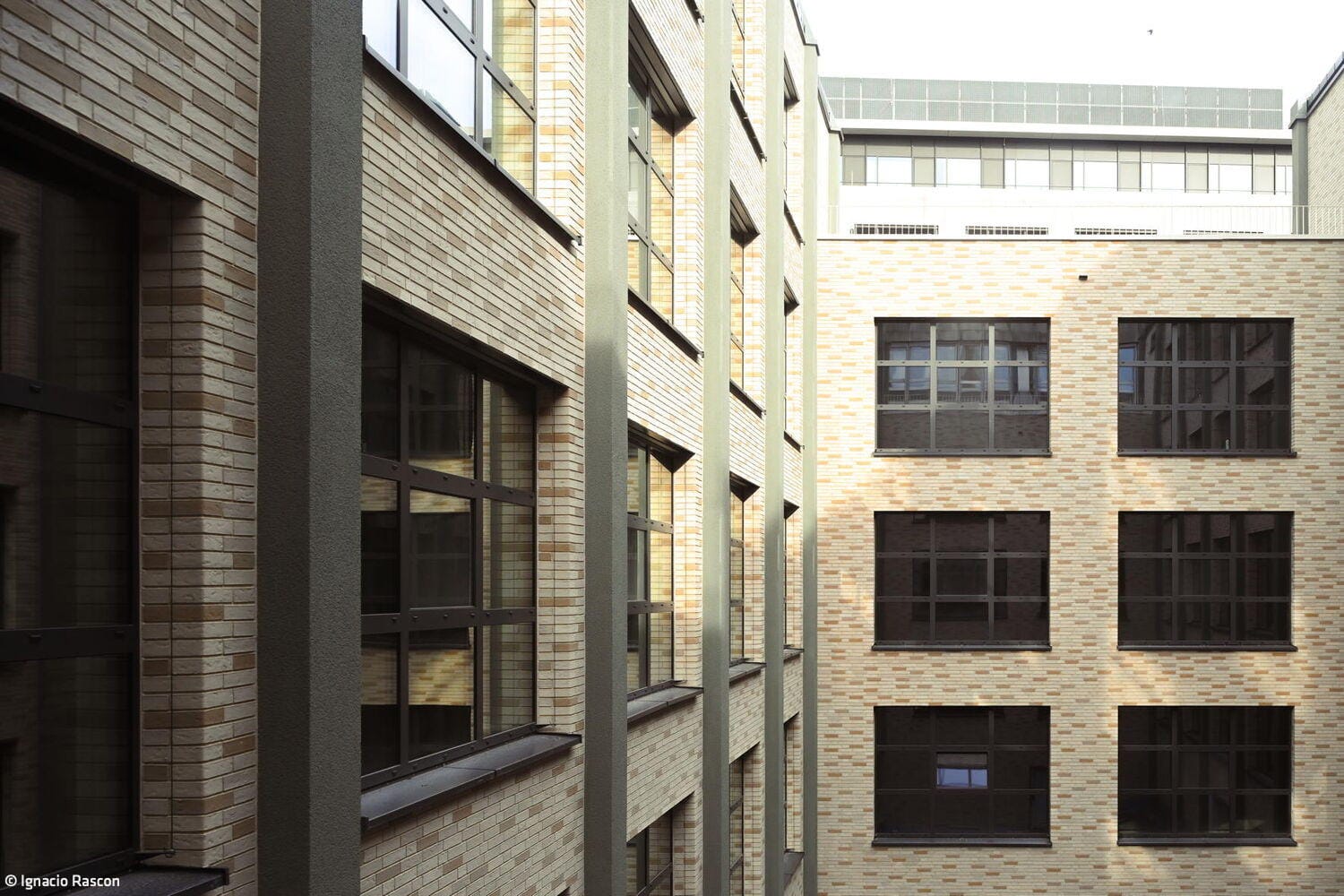
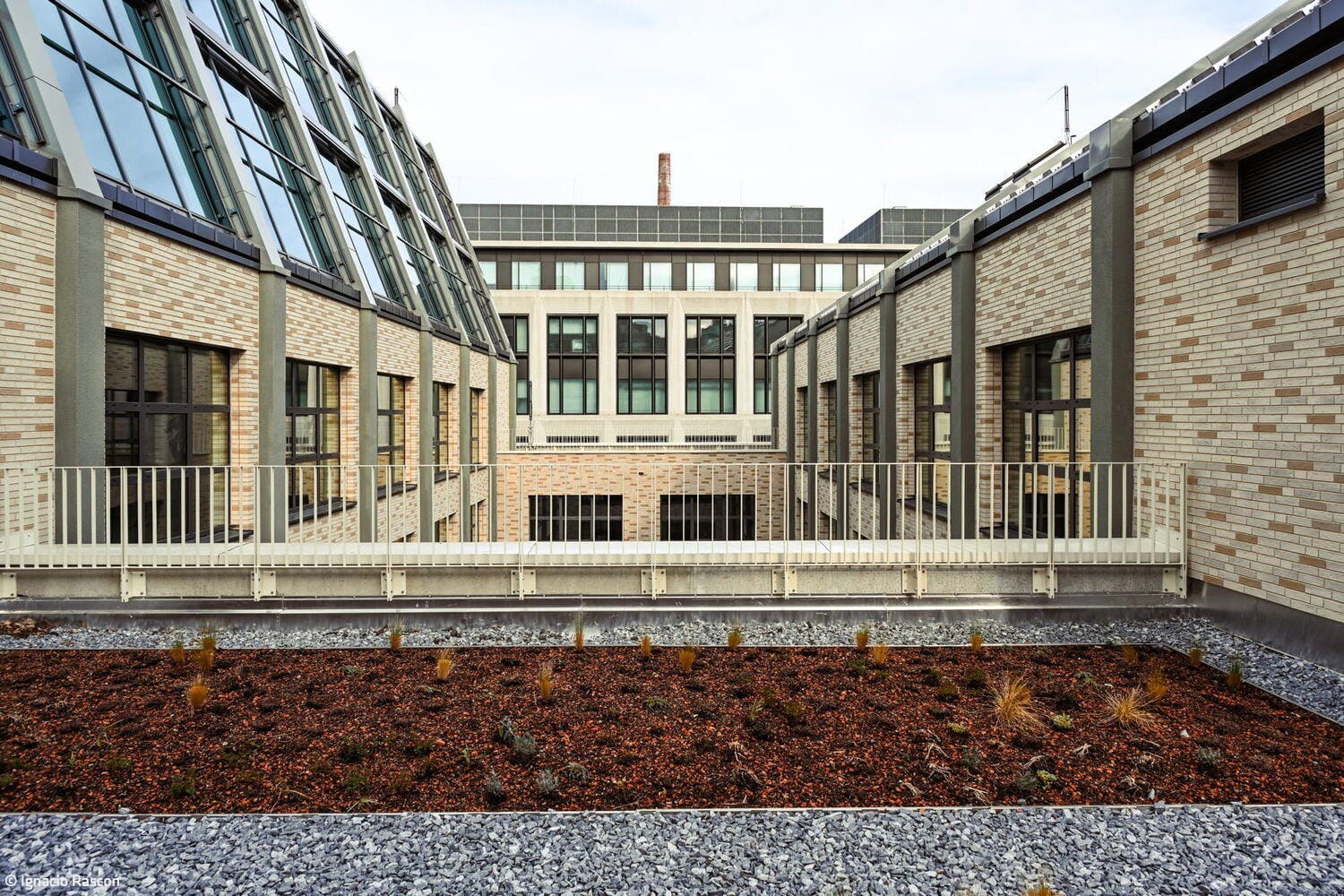
MünchenBau served as the developer, and tenants were secured quickly: one of the world's leading technology corporations moved into the building, expanding its office presence beyond its existing space in the neighboring property. That neighbor is the "Karl," a relatively recent structure designed by David Chipperfield, originally conceived as a hotel before becoming home to Apple. Now, with the addition of Brückner's "Light Courts," the precinct is known as the "Apple-Karree." Through optimal space utilization, the four parallel building volumes generate 9,000 m² of office space. Brückner Architekten pursued an industrial aesthetic reminiscent of historical manufacturing facilities. This is reinforced by the façade treatment: steel and glass combined with brick veneer, articulated by vertically arranged olive-colored pilasters. The three light courts remain unsealed. The defining feature, however, is the sawtooth roofing—also called shed roofs. Their glazed fronts draw inspiration from the historic Fagus Works by Walter Gropius, flooding workspaces with natural daylight. Generous, landscaped roof terraces were added, inviting breaks in the open air. In every respect, the "Light Courts," as the complex is now called, exemplifies forward-thinking design: the spaces accommodate diverse work modes—convertible from lofts into team and individual offices—while providing abundant collaborative areas. The building was developed to rigorous ecological standards, targeting LEED Gold certification. The structure comprises six above-ground levels and three below-ground levels, utilized as parking garages, storage, and mechanical spaces.
The project has since garnered multiple accolades, including the Iconic Award 2025 and the German Design Award 2026.
Photos:
Ignacio Rascon
(Published in CUBE Munich 04|25)
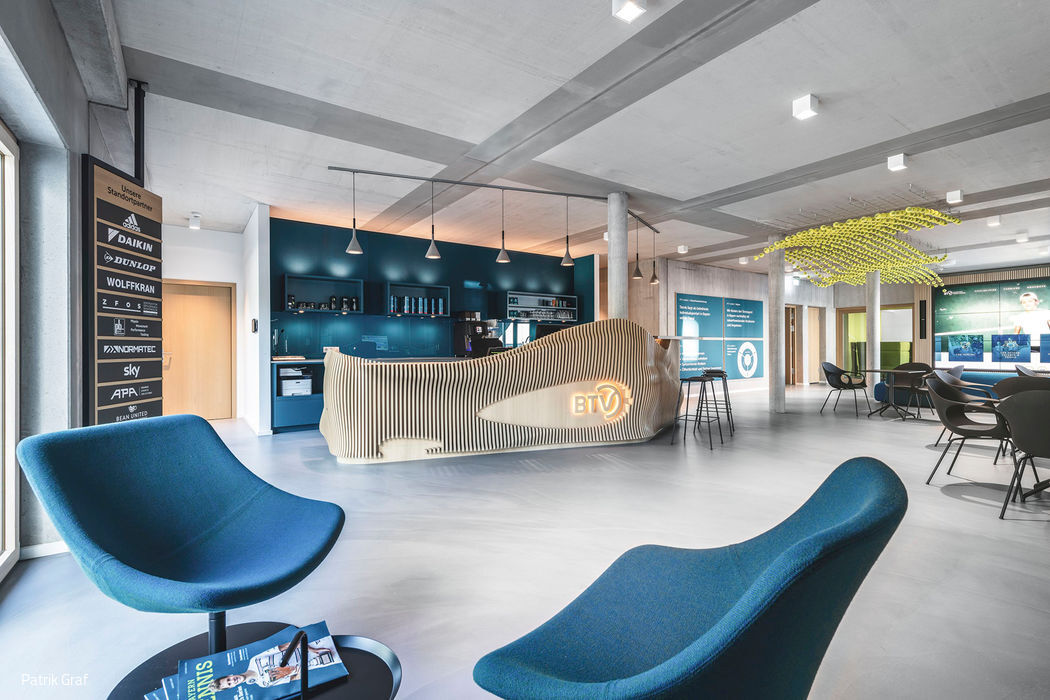
Sports Campus Reimagined
TennisBase's expansion in Oberhaching redefines the sports experience
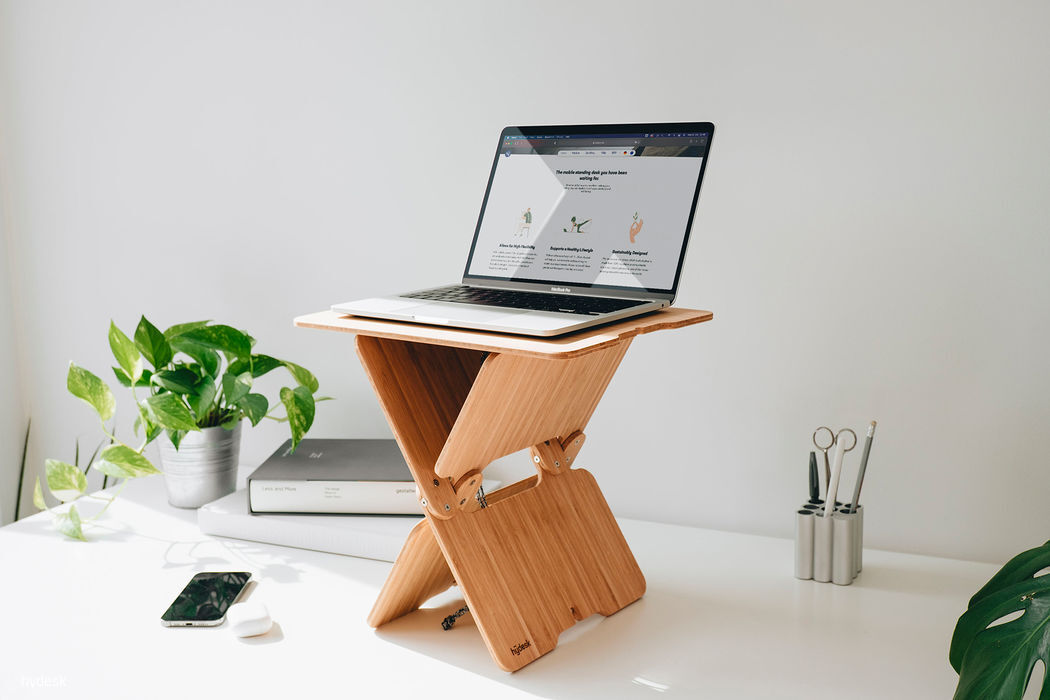
Sustainable and Healthy
Finian Carey and Daniel Brunsteiner design flexible standing desk solutions
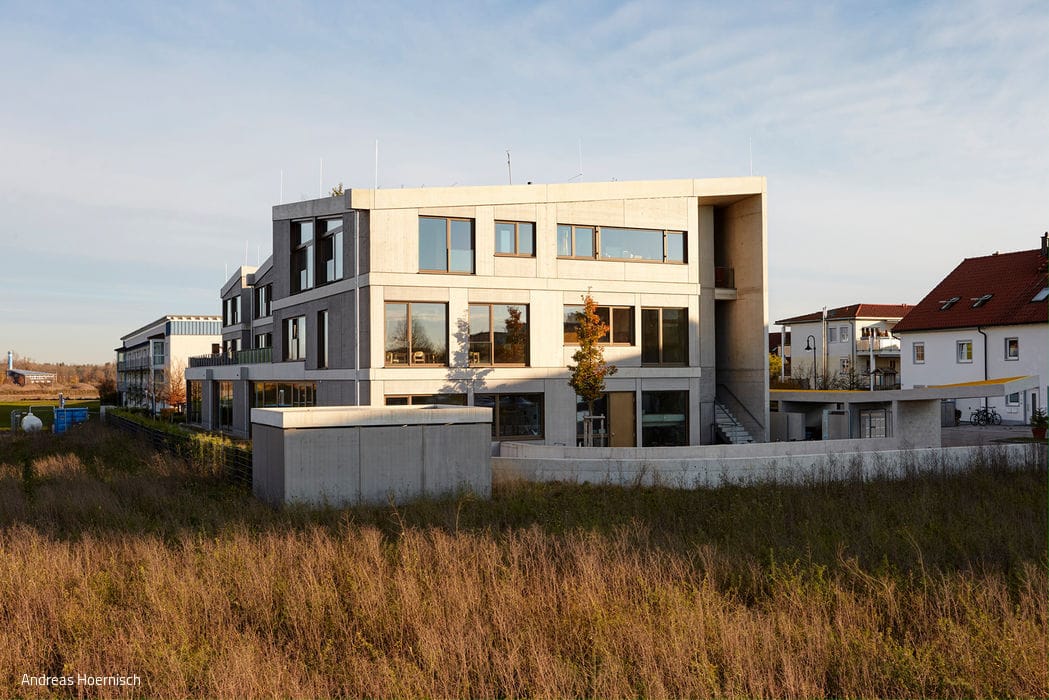
Care and Living
Daycare with Staff Housing
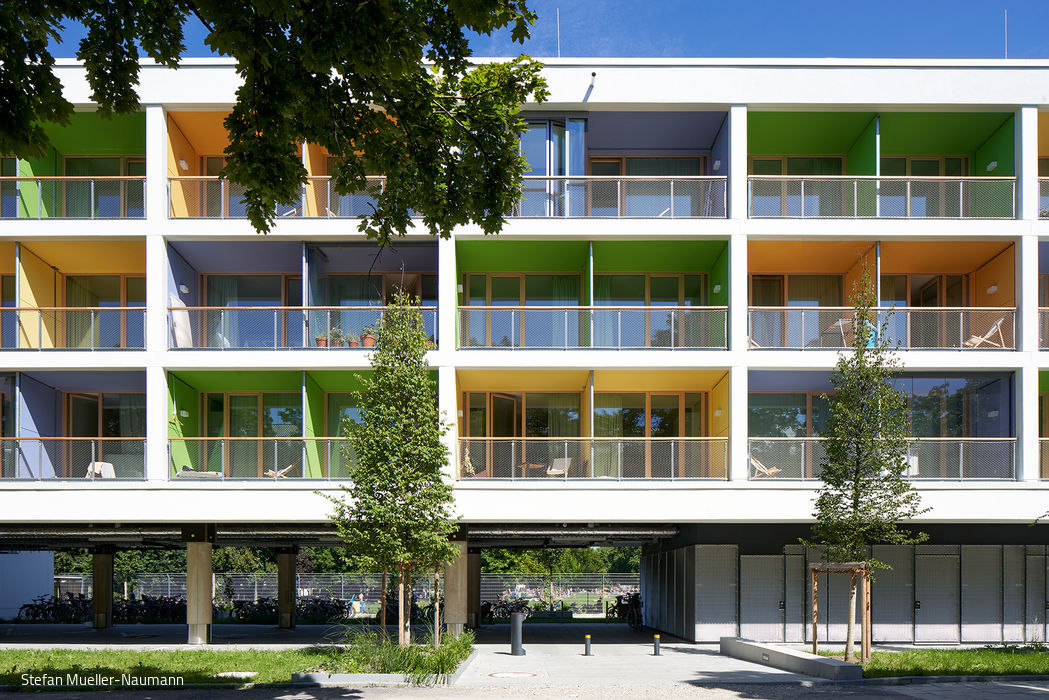
Colorful Living Wall
A Residential Complex at Dantebad for Municipal Utility Employees