


Lighting Design for a Gallery
Contemporary Art Meets Historic Architecture
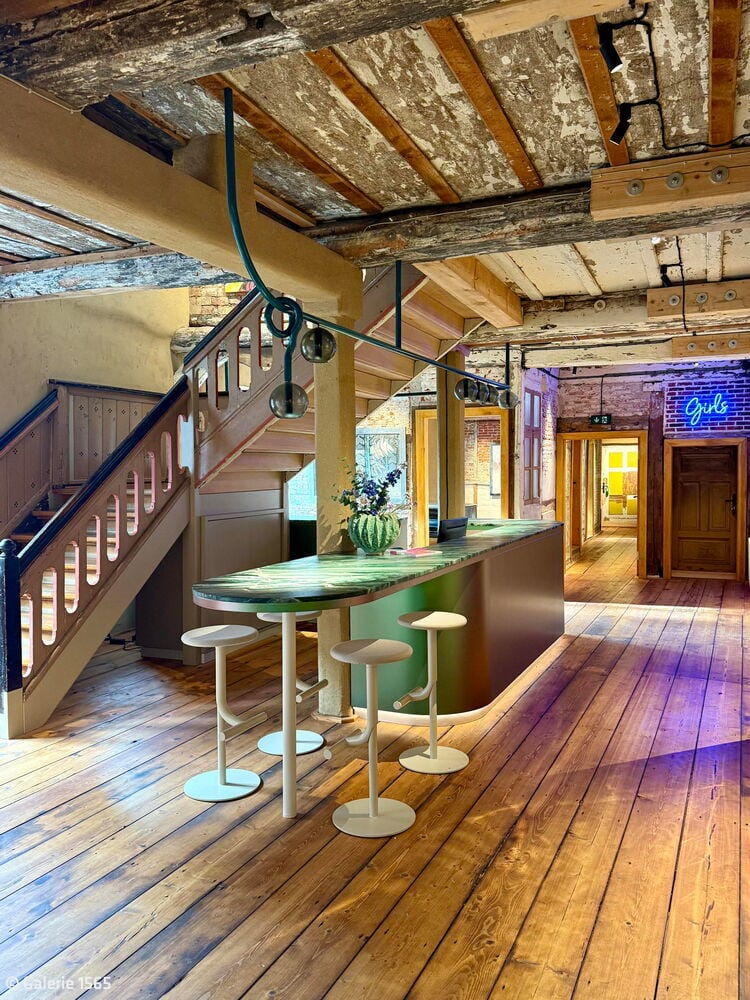
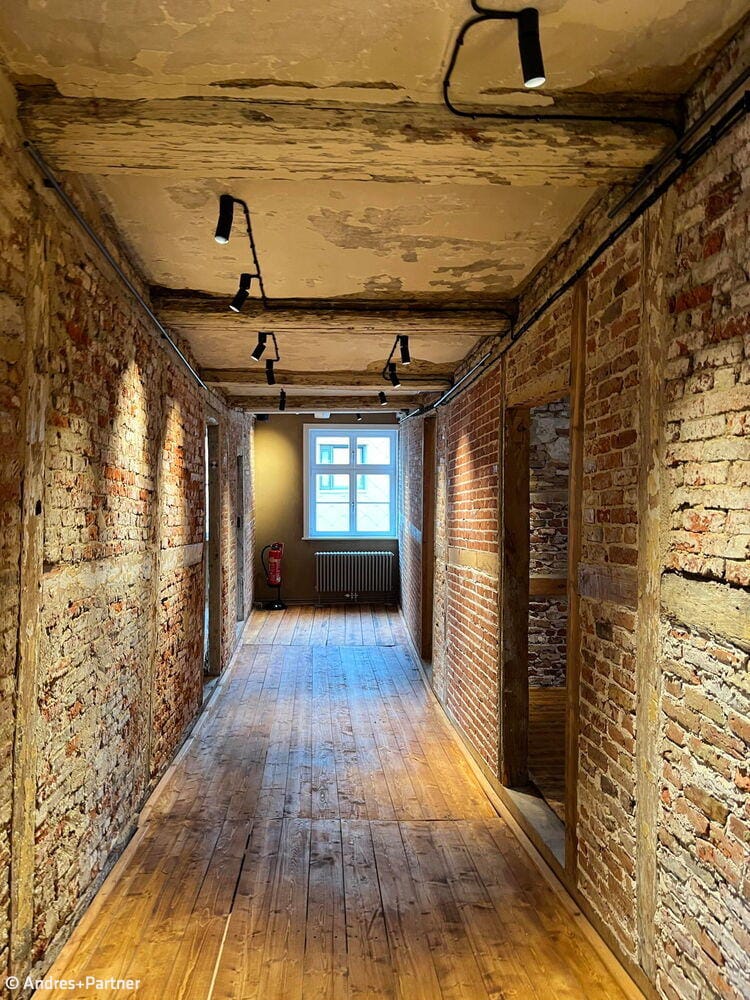
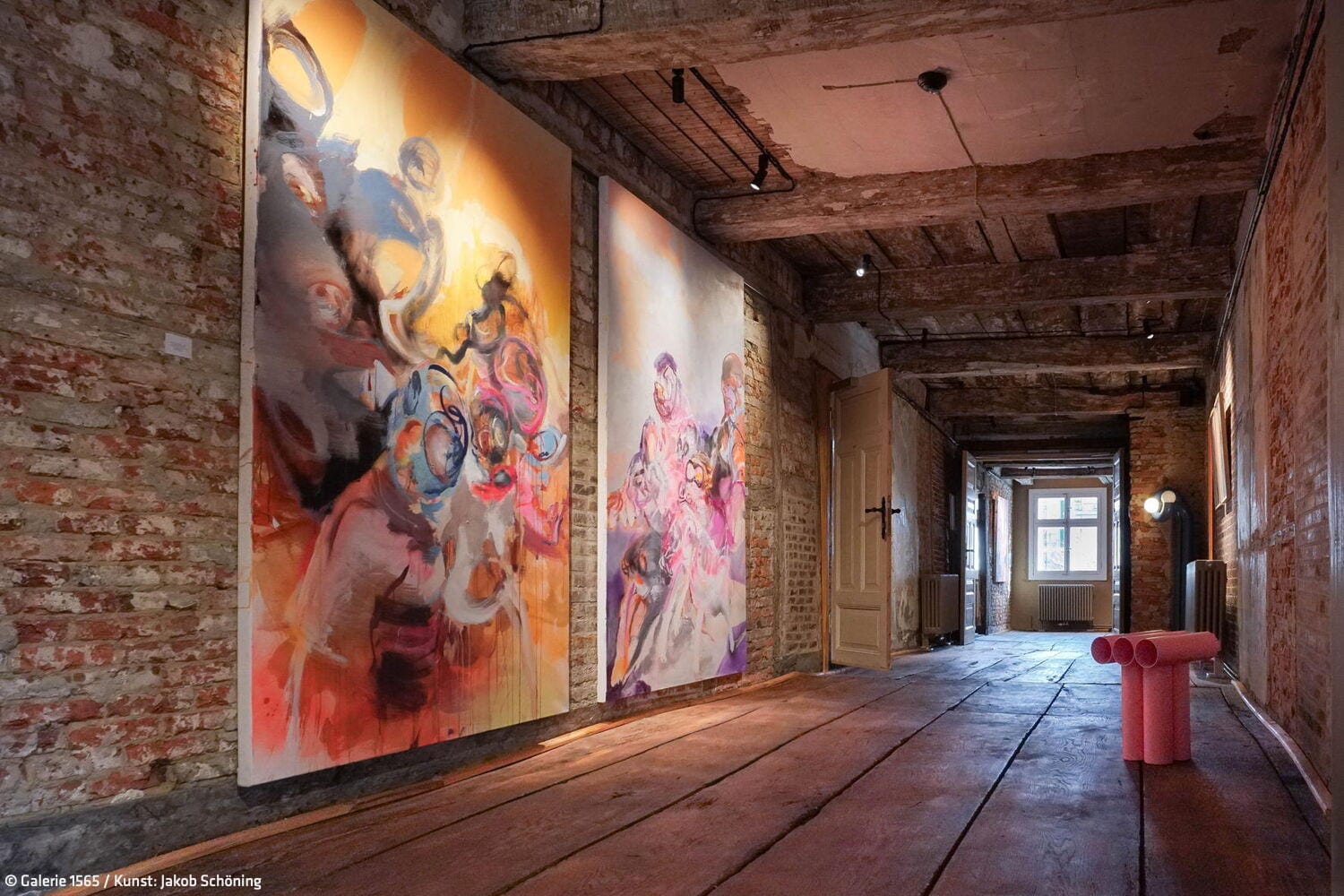
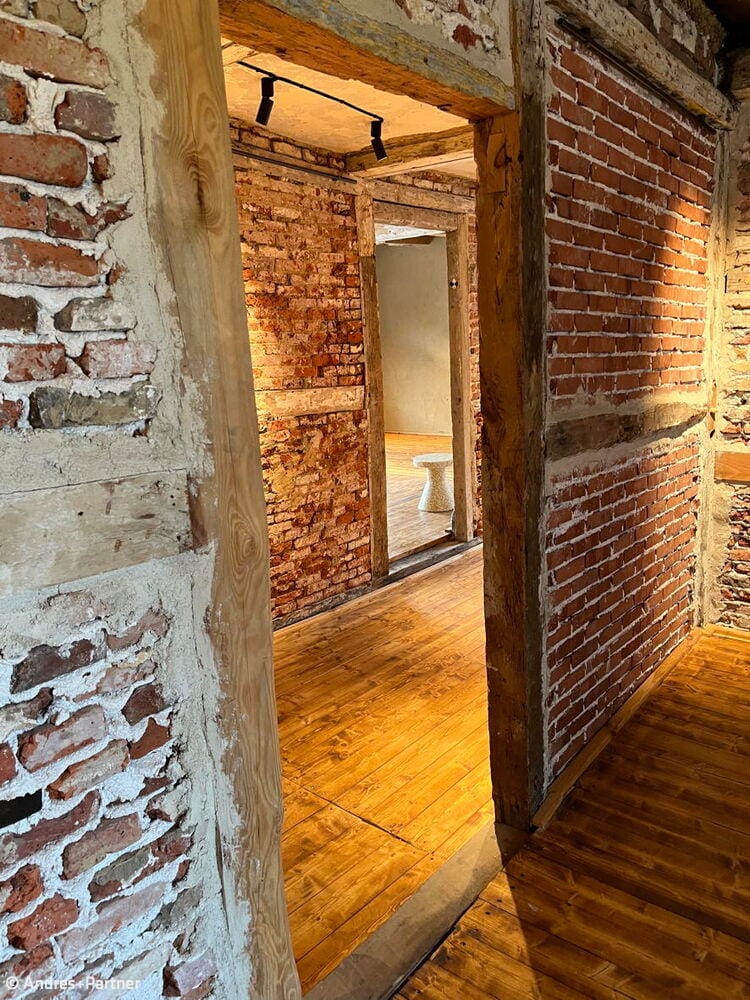
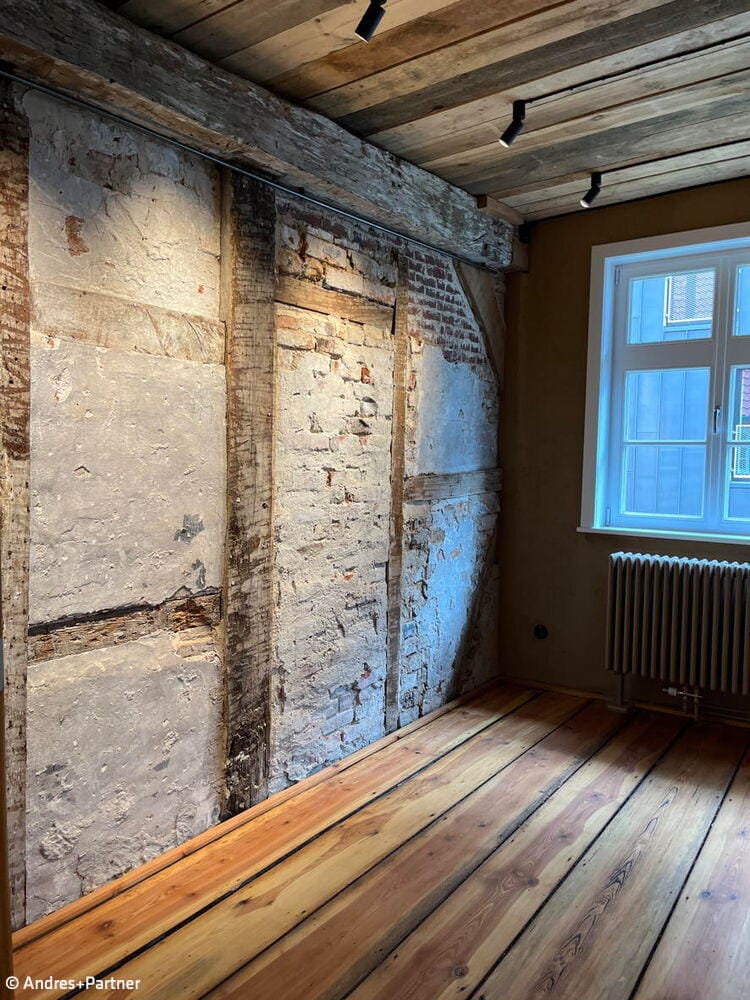
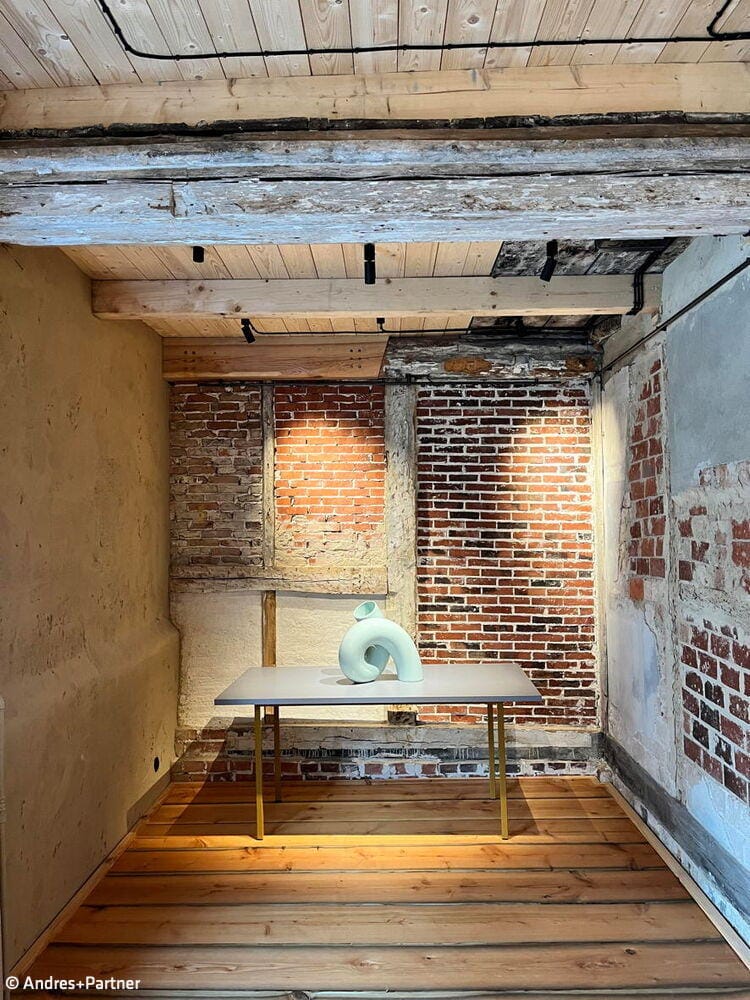
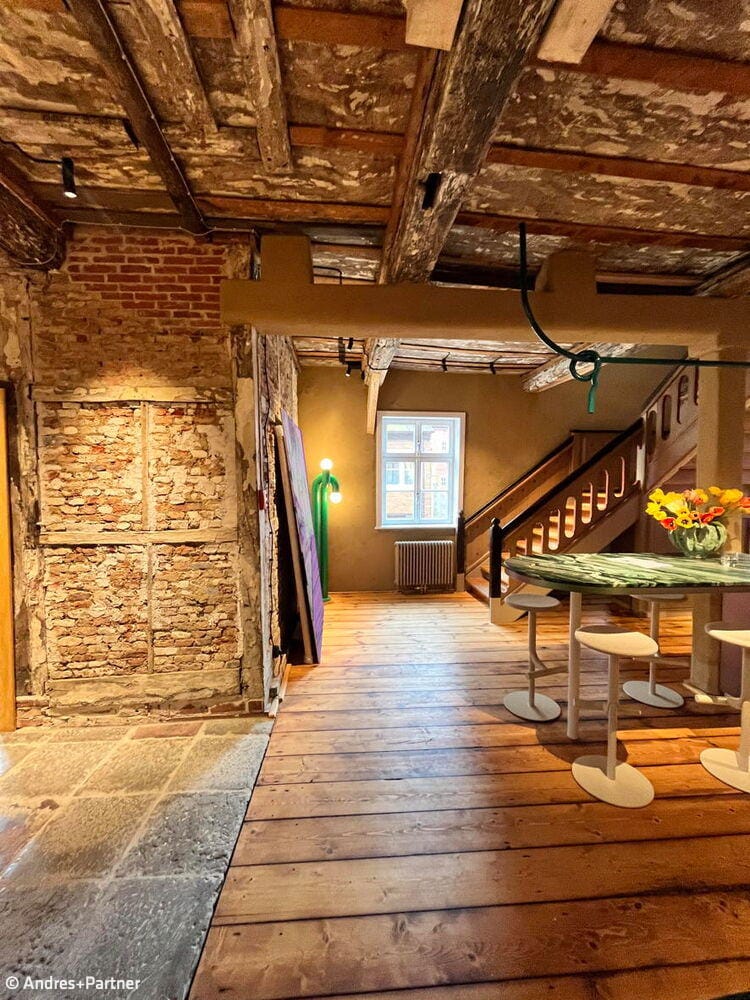
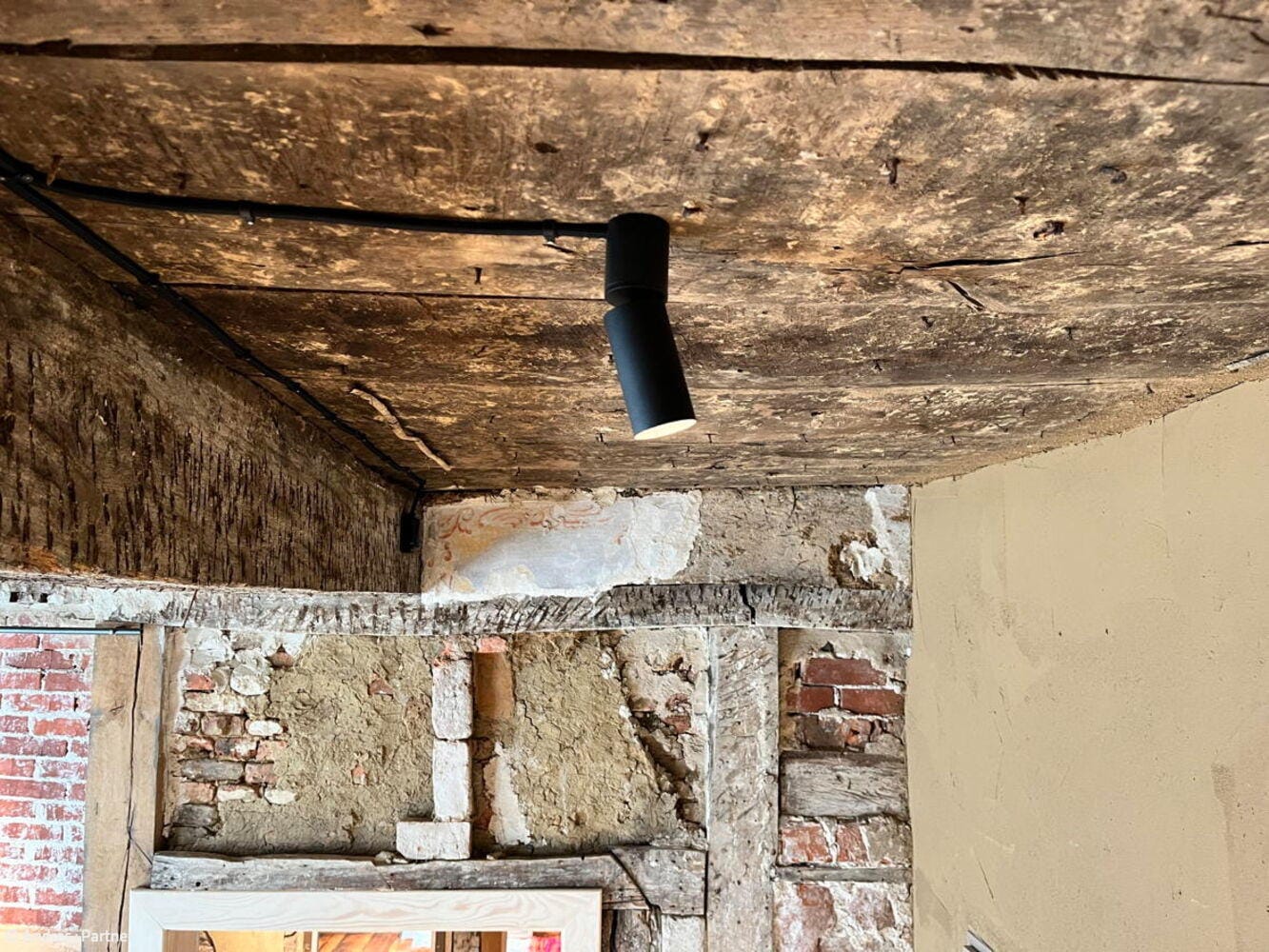
Built in 1565, the Bornemann House on Harburg's Schloßstraße ranks among Hamburg's oldest residential buildings. The half-timbered structure once served as a dye works in the 19th century, followed by several renovations after World War II. When Galerie 1565 took over the space, the building underwent a thoughtful restoration that honored its historic character while embracing modern sustainability standards. Arne Weber of HC Hagemann commissioned Andres + Partner to develop the lighting concept. Under the direction of Jule Leu, the team crafted a contemporary lighting design that integrates seamlessly with the building's centuries-old fabric while meeting the practical demands of a working gallery. Here, contemporary art now shares the stage with centuries-old architecture.
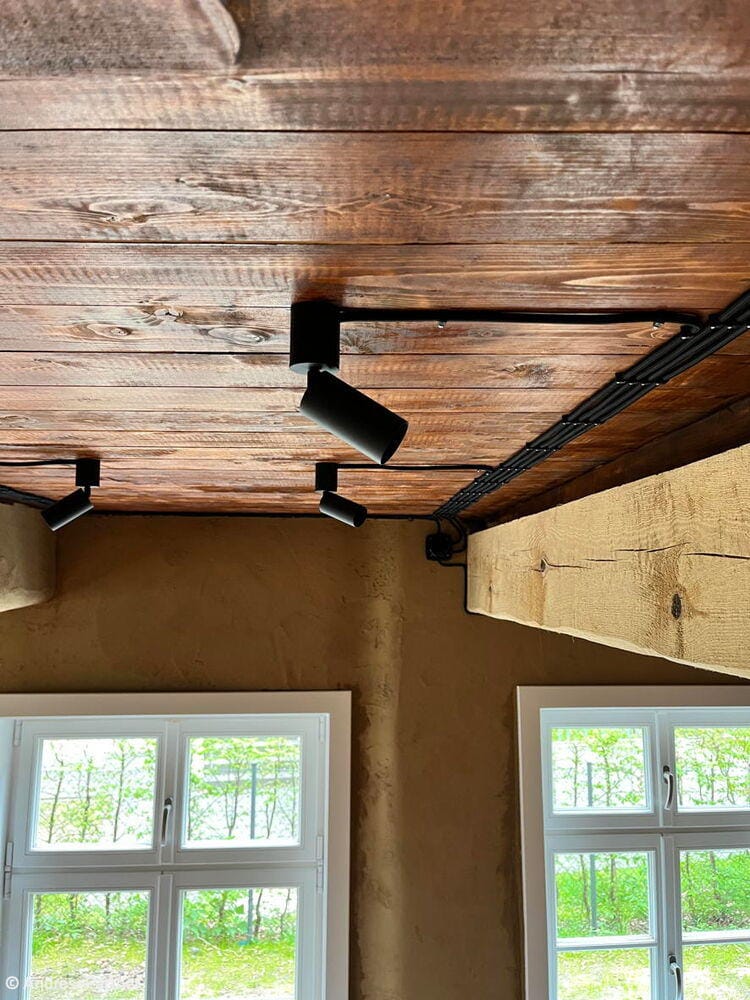
To achieve a warm, inviting atmosphere free of institutional sterility, the team deliberately rejected track lighting. The original ceilings on the ground and first floors made conventional lighting systems impractical. Instead, working with manufacturer Modular and Hamburg's Lichtmanufaktur, they developed custom miniaturized flush-mount spotlights that allow for surgical precision in light placement. Individual power feeds give the compact fixtures remarkable flexibility in positioning. On the second floor, cabling was integrated directly into the new ceiling structure, with drivers discreetly tucked in the space above—reducing outlets to barely visible, coin-sized apertures. For ambient lighting in central areas, multiple luminaires connect to a single driver, with cables running openly along the ceiling's perimeter and gathering at a single junction box.
The visible installation of textile-sheathed cables presented both technical and aesthetic complexity. Routing the cabling pathways and positioning the drivers demanded exacting precision. Phase-cut dimmers keep costs in check, while individual rooms are managed centrally through Casambi modules—eliminating the need for wall switches altogether. The lighting works in quiet support: it frames the architecture and artworks with grace, never demanding attention itself.
Photography:
Andres+Partner
(Published in CUBE Hamburg 04|25)

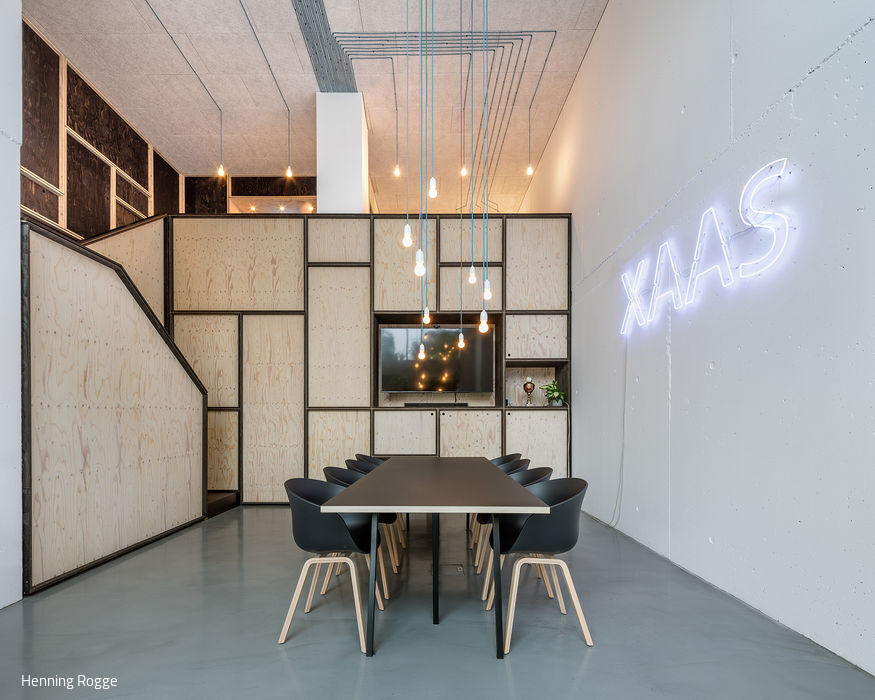
All-in-One
Smart Design for Compact Spaces in HafenCity
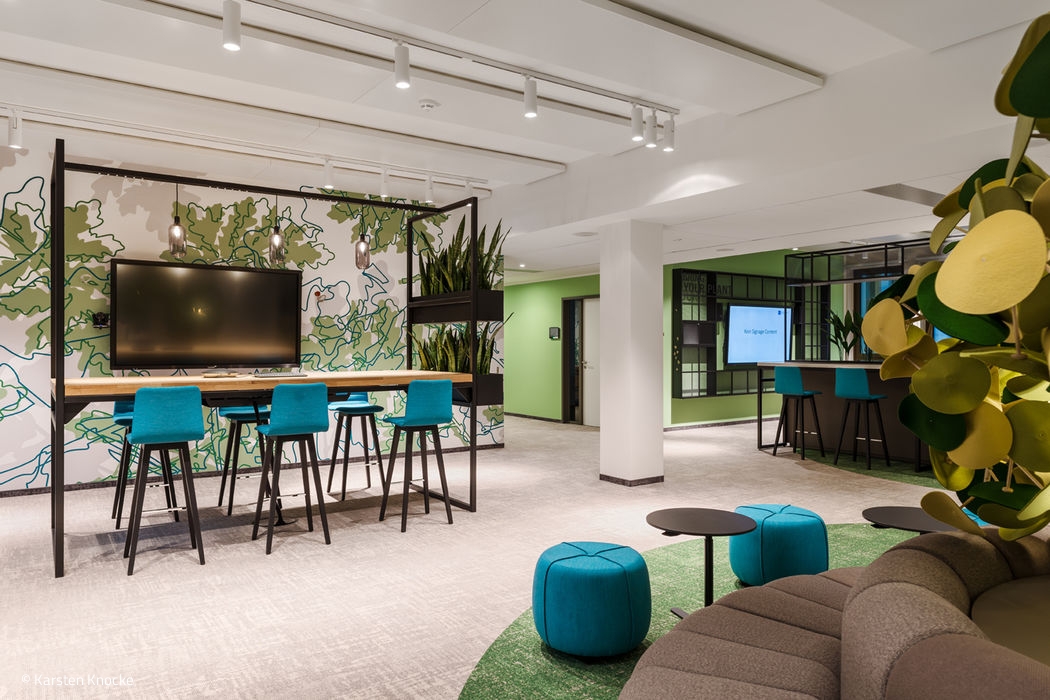
The Power of Green
Sustainability and a reimagined workplace grounded in openness and genuine collaboration
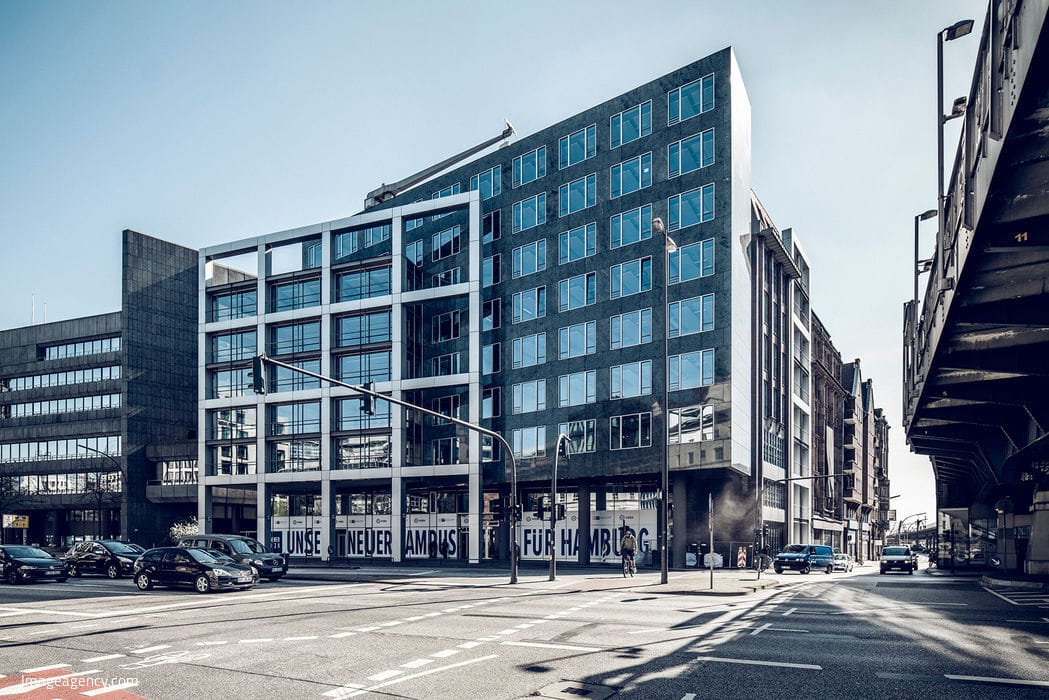
New Life, Historic Ground
Campus 75 Revitalizes the City Centre
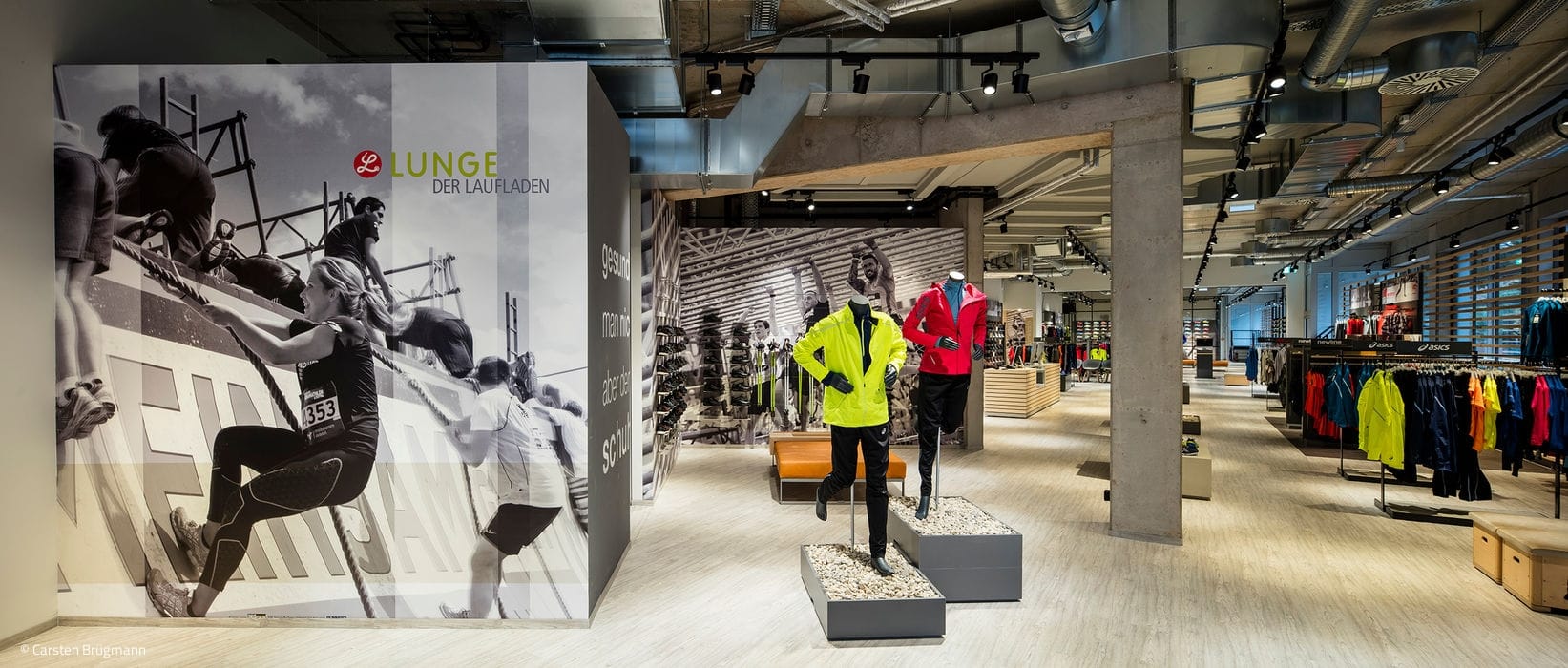
Now things are running smoothly
Sales Soar Following Store Redesign