


A Living Legacy
Hansa Coking Plant's former salt storage transforms into a vibrant event venue in Dortmund


From crumbling ruin to architectural gem – this is the remarkable story of the new event hall at Dortmund's Hansa coking plant, born from the transformation of a former salt warehouse and production facility. Over a decade ago, Böll Architekten from Essen conducted a feasibility study for the structure, which faced serious structural risks at the time. The firm then orchestrated both the adaptive reuse and a complementary new building in close collaboration with Dortmund's heritage authorities and Westphalia-Lippe's conservation office. Functioning as a multifunctional venue accommodating up to 1,200 guests, the hall plays a pivotal role in preparations for the 2027 International Garden Exhibition – the coking plant itself anchors Dortmund's visionary future garden project, "Emscher Nordwärts."
Commissioned in 1928, the Hansa coking plant produced salt as a byproduct of coal processing – a process that gradually corroded the masonry and technical systems of the salt facility. After operations halted in 1992, the building languished vacant for years. Serious redevelopment efforts began a decade ago and culminated in spring 2024. Today, the complex functions as a striking 49-by-23-by-9-meter multifunctional event space, outfitted with cutting-edge technology and punctuated by restored machinery – including original salt thickeners – that serve as tangible reminders of its industrial past. The design strategy preserved the hall's original spatial character through a connecting corridor along the eastern facade, tying the two building sections together while accommodating essential support spaces. Three freestanding pavilions, elevated on steel frames anchored to the site's historic railway foundations, now house restrooms, artist facilities, technical systems, and storage. From the corridor, visitors enter a generous lounge featuring floor-to-ceiling glazing that frames views of the industrial landscape and its storied past. "The renovation constantly threw new obstacles our way," explains Wojciech Trompeta, managing director of Böll Architekten. "Converting a historic industrial complex into a fully compliant event venue – meeting fire, thermal, air quality, and acoustic standards while honoring its spatial presence – proved both exhilarating and demanding."
Photography:
Foundation for the Preservation of Industrial Monuments and Historical Culture
(Published in CUBE Ruhrgebiet 03|24)
Vacation-Inspired Living
An Extraordinary Detached Home in Recklinghausen, Where Nature Unfolds Below

In dialogue with the landscape
Three apartment buildings in Mülheim an der Ruhr, designed in dialogue with their natural setting
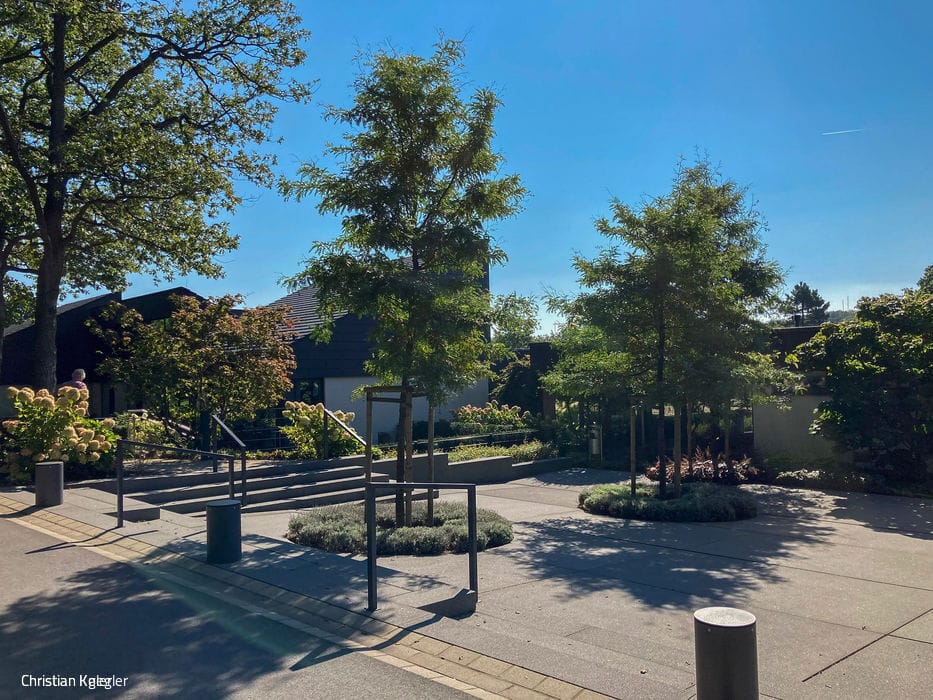
Front Garden With Impact
A striking entrance area that inspires and welcomes, elevating the seminar experience.
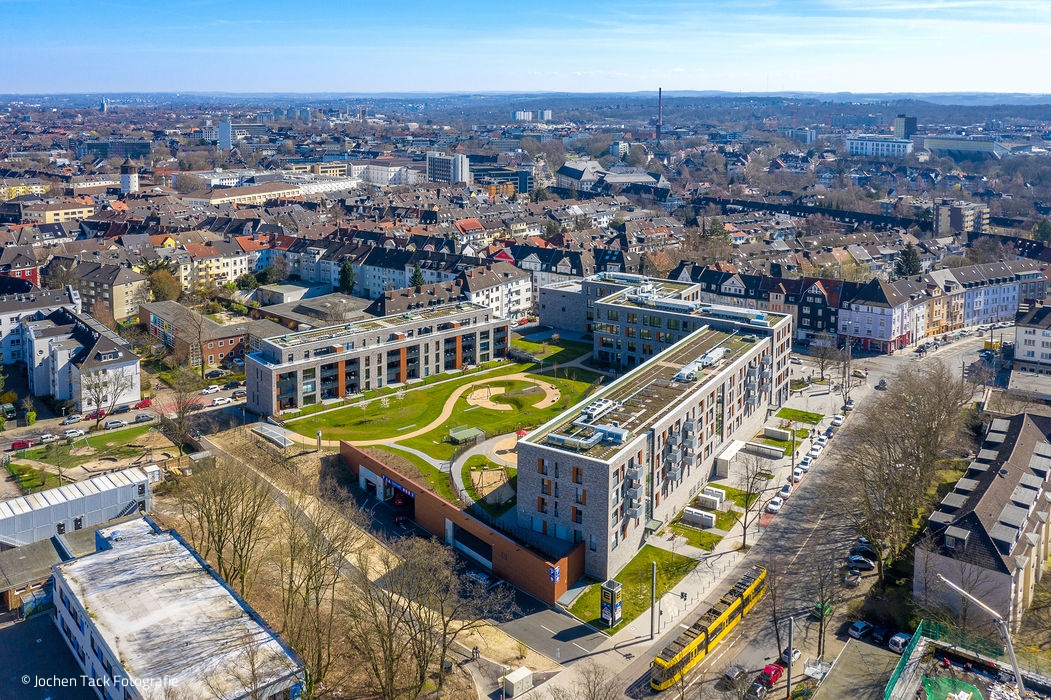
Reimagining the Urban Centre
This Nattler Architects-designed building contains 42 subsidised residential units ranging from one-and-a-half to three-and-a-half rooms, plus 29...