


Transformation Through Time
Transforming two historic buildings presented formidable planning and logistical challenges
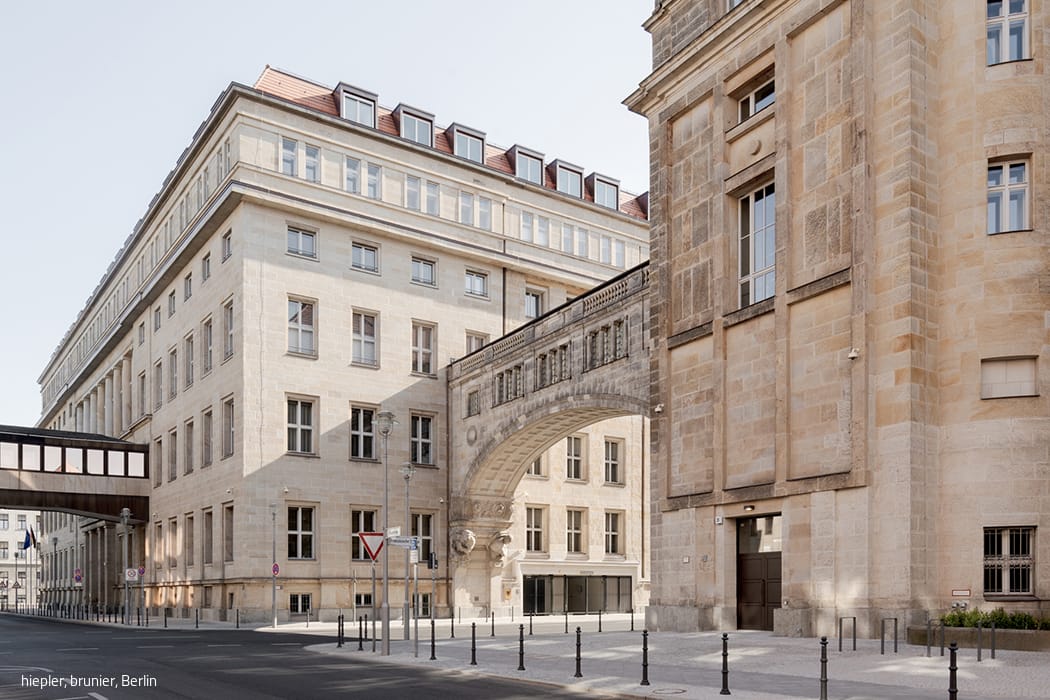
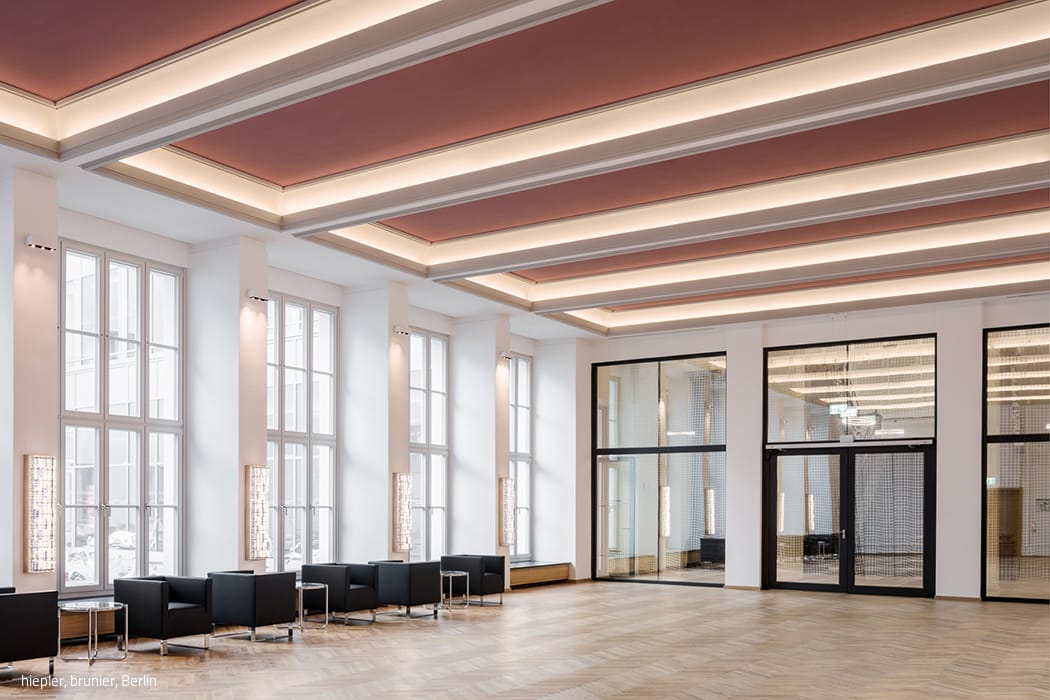
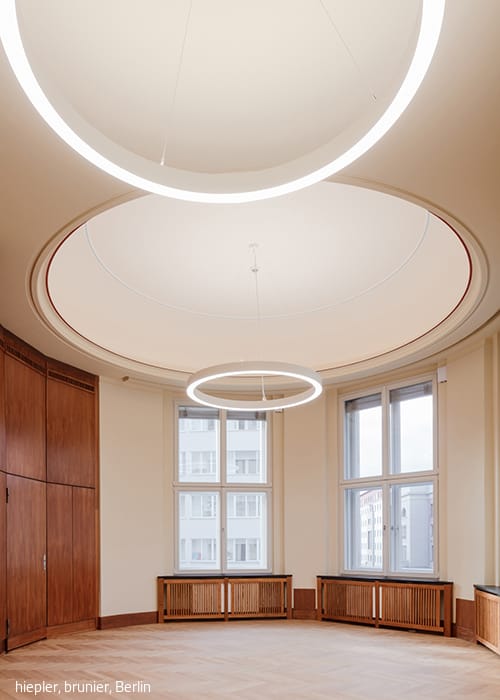
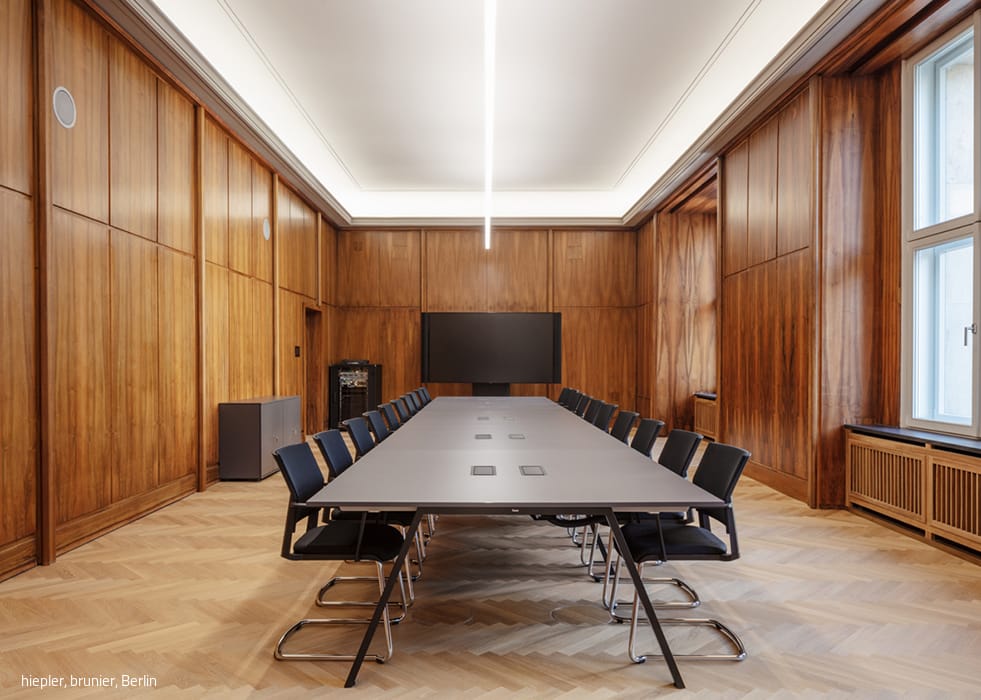
Before two ministries could settle into their new Berlin headquarters, an ambitious architectural and construction program had to be executed—the kind of challenge that reshapes entire city blocks. The original Deutsche Bank headquarters required a complete reimagining for contemporary government use. The two commanding buildings on Mauerstraße and Glinkastraße, designed by Wilhelm Martens (1842–1910) and completed from 1870 onward, underwent extensive renovation, restoration, conversion, and new construction to meet the needs of the Federal Ministry of Health (Building 1) and the Ministry for Family Affairs, Senior Citizens, Women and Youth (Building 2). During the GDR era, Bauhaus-trained architect Franz Ehrlich had already fundamentally reconfigured these historic structures. The ornate, outdated finishes were largely removed or concealed behind modern wall and ceiling systems—a deliberate "purification" that honored the buildings' heritage while preparing them for the future.
In 2017, the competition for the latest phase of reconstruction was won by the consortium of Hochtief and Zech, partnering with KSP Engel. The real work of transformation could now begin. Historic preservation played a crucial role throughout: the surviving roof structure components above the former bank cashier's hall in Building 2 were carefully restored and woven into the contemporary design concept. The central dome, recreated to echo the original, was reconstructed using Rabitz construction techniques, allowing the sequential flow of historic spaces to be rediscovered and appreciated anew.
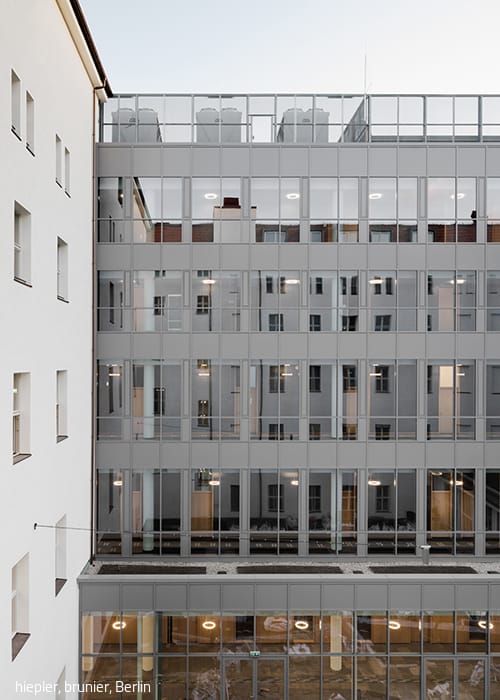
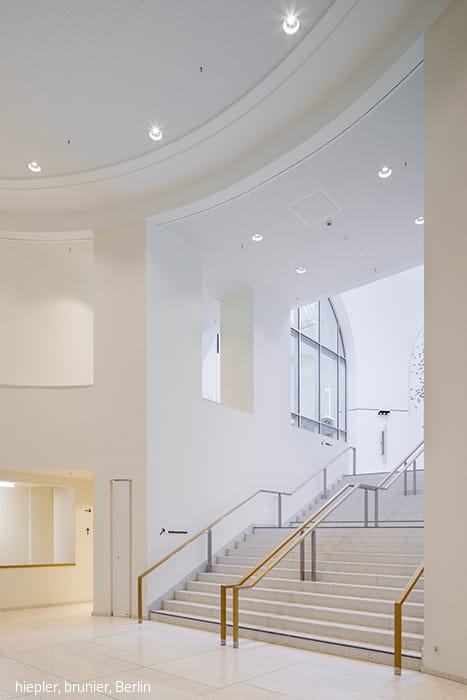
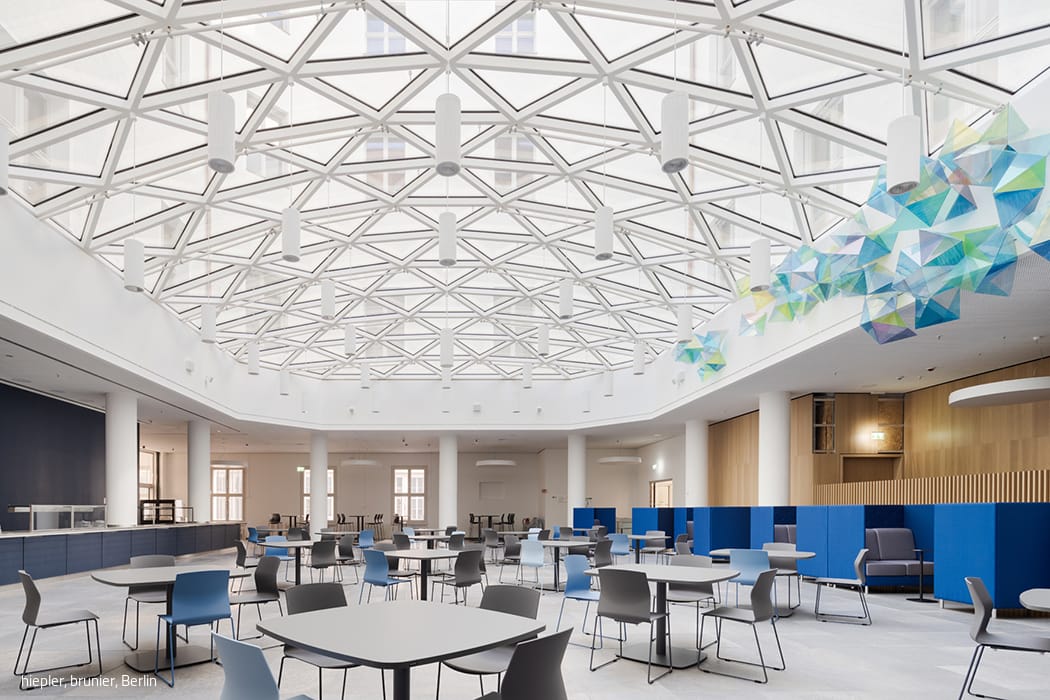
At the Federal Ministry of Health (Building 1), Franz Ehrlich's transformed former cashier's hall—a jewel of early postwar modernism—was sensitively restored and now functions as the main entrance on Mauerstraße. The core of the redesign lay in strengthening the historic fabric while strategically inserting new elements and structures. Building 1 gained an infill addition within the inner courtyard, and the roofscape was redesigned and activated. A new spine connecting the four existing stairwells in a cross-pattern creates efficient circulation and generates four distinct courtyards, each serving different functions: a green courtyard for recreation, a service courtyard, and two covered courtyards housing conference space and cafeteria.
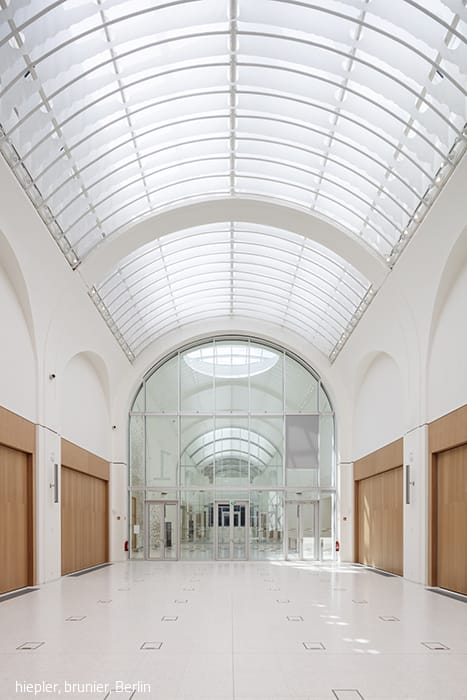
In Building 2's conference area—previously a cinema—the primary entrance and the striking semicircular glass barrel vault above the former cashier's hall were restored to prominence, their character enhanced by the surviving stucco arches. Both buildings received modern mechanical and energy systems, enabling them to function as contemporary workplaces within their historic shells.
Photography Credits:
Hiepler, Brunier, Berlin
(Published in CUBE Berlin 04|23)
Shifting Tides
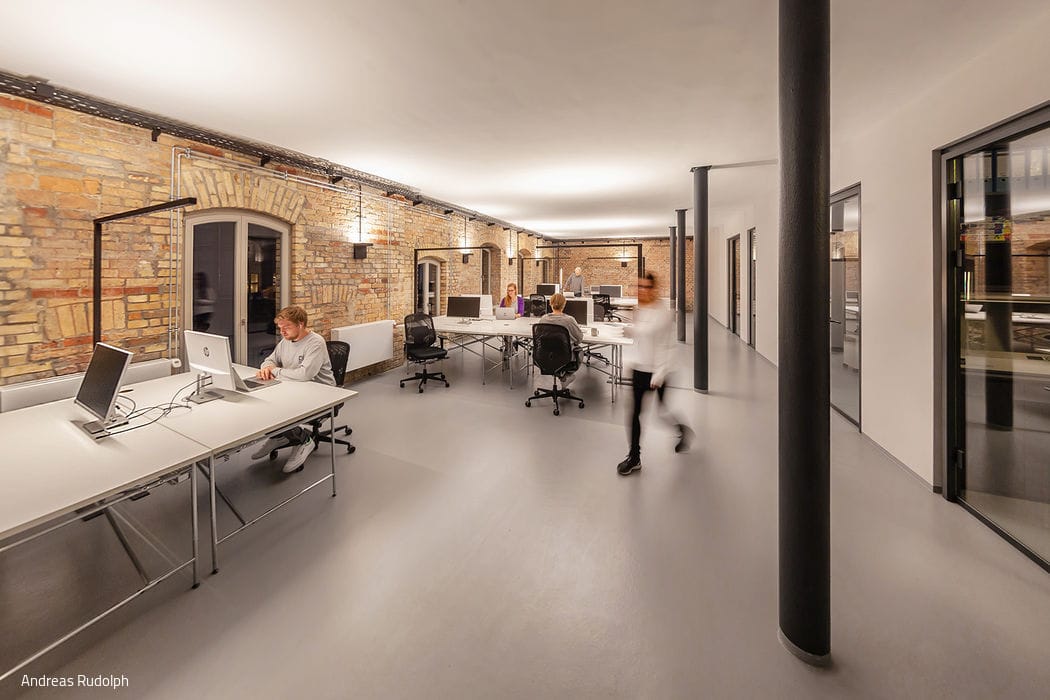
Heritage Meets Innovation: A Historic Brewery Transforms into a Brand and Design Agency
Sculpted from Stone
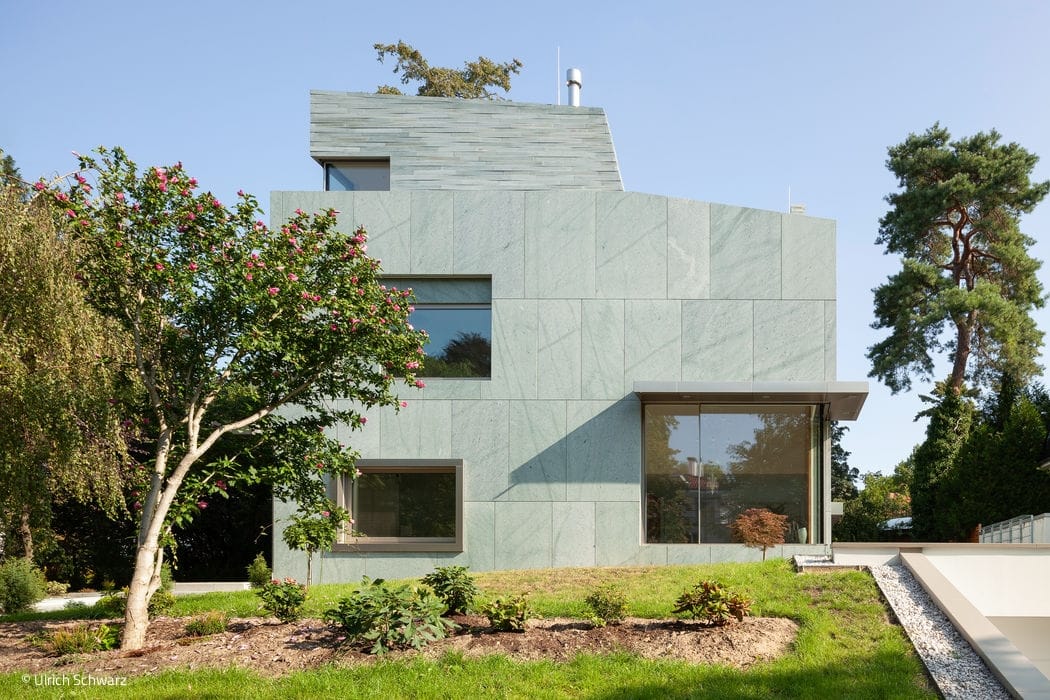
The Grunewald building strikes a distinctly abstract and reduced aesthetic, employing a restrained formal vocabulary that echoes Russian avant-garde architecture...
From Necessity to Virtue
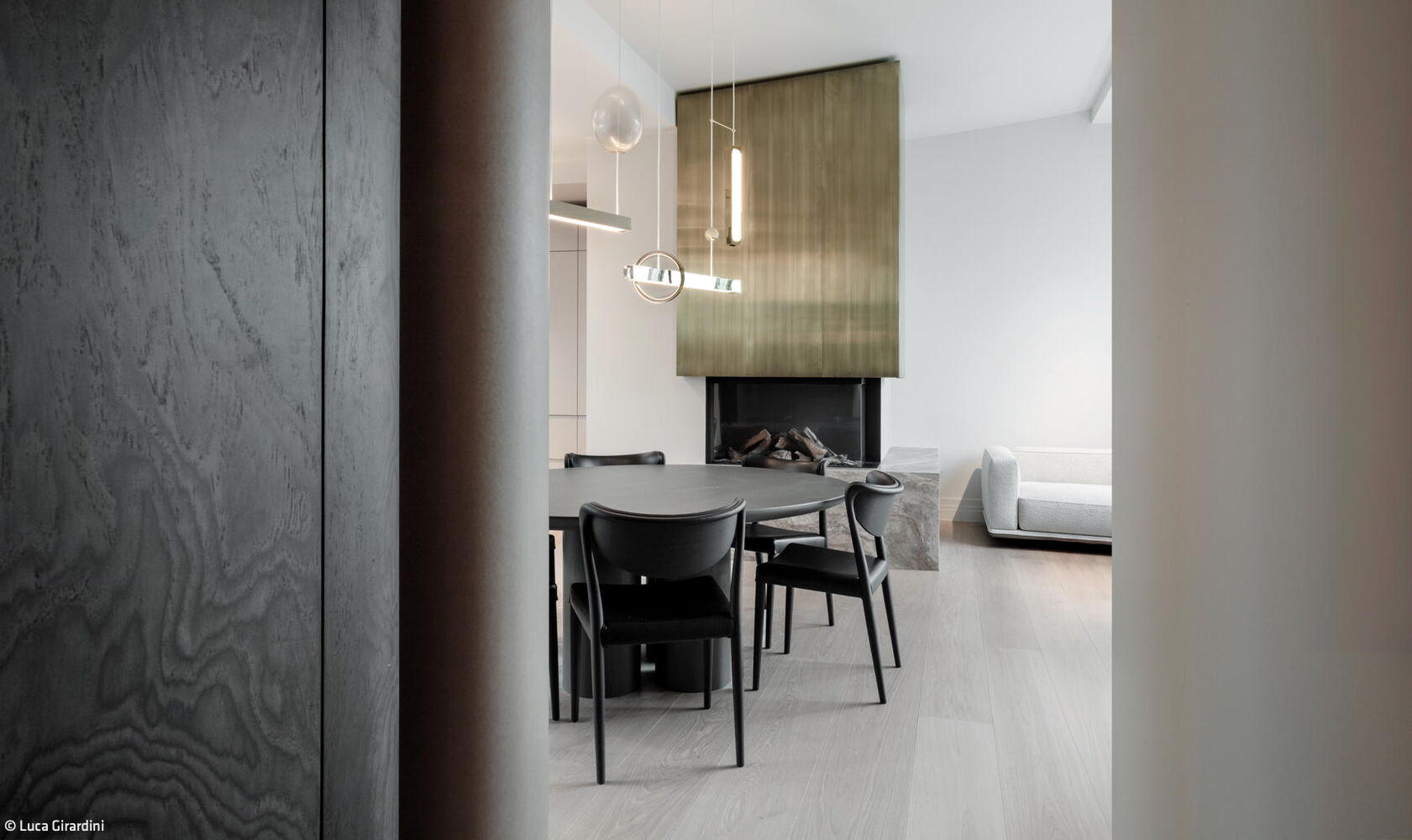
An Overlooked Attic Transformed into a Refined Mansard Apartment
Light, Air, and Sunshine
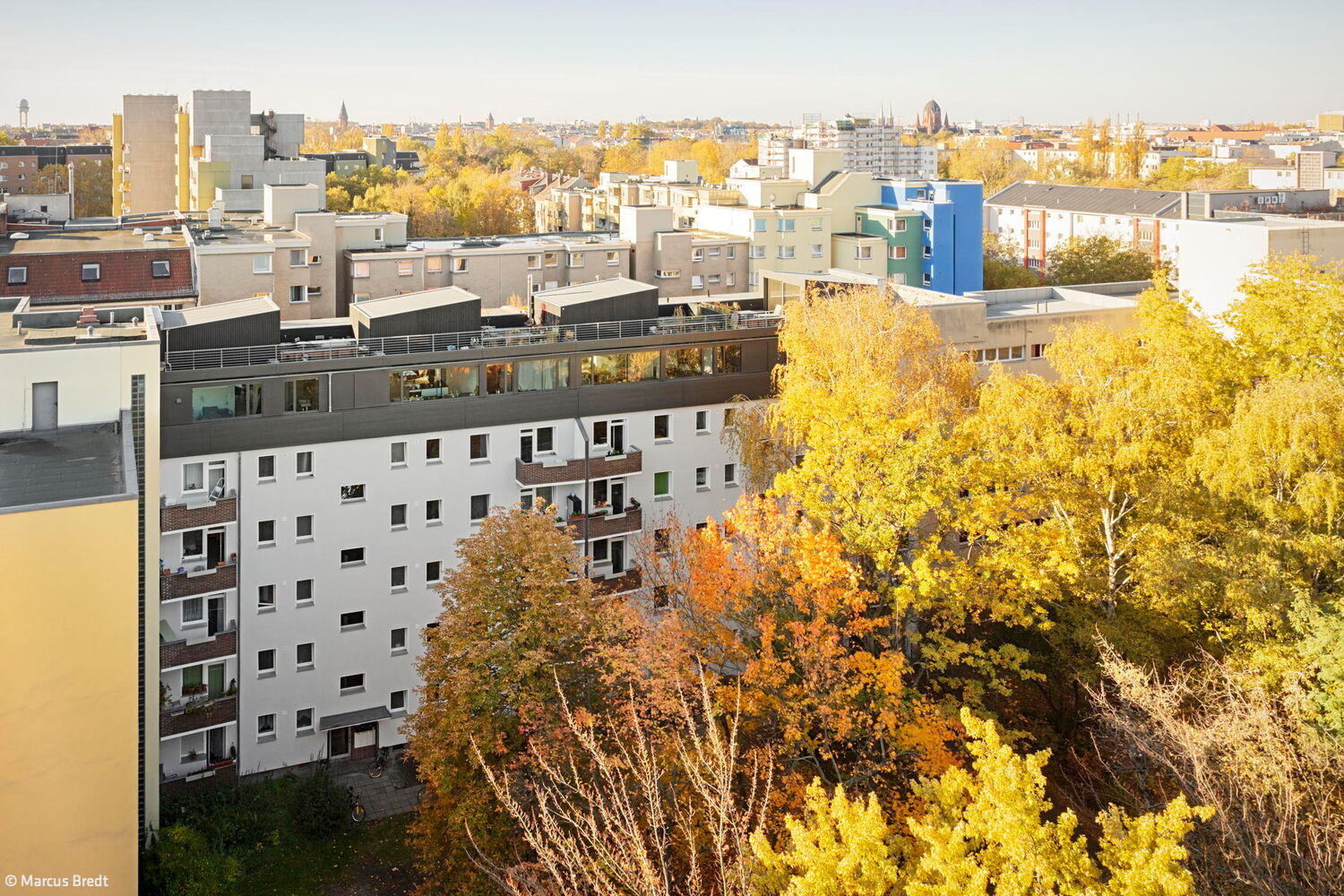
Building Upward—How a Roof Extension Creates New Living Space