


Compact and sculptural
A new primary school designed around clusters that foster intimate communities
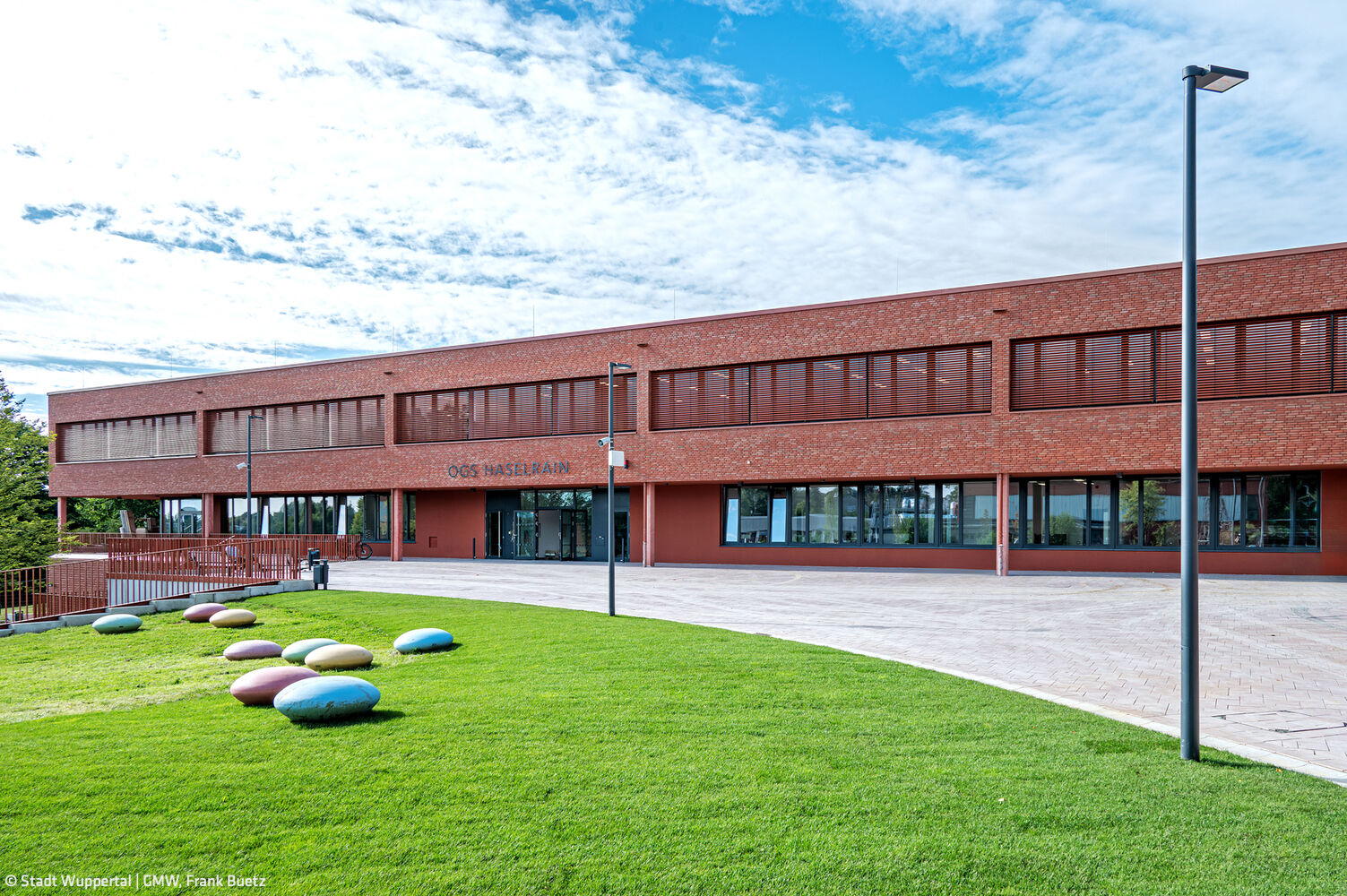
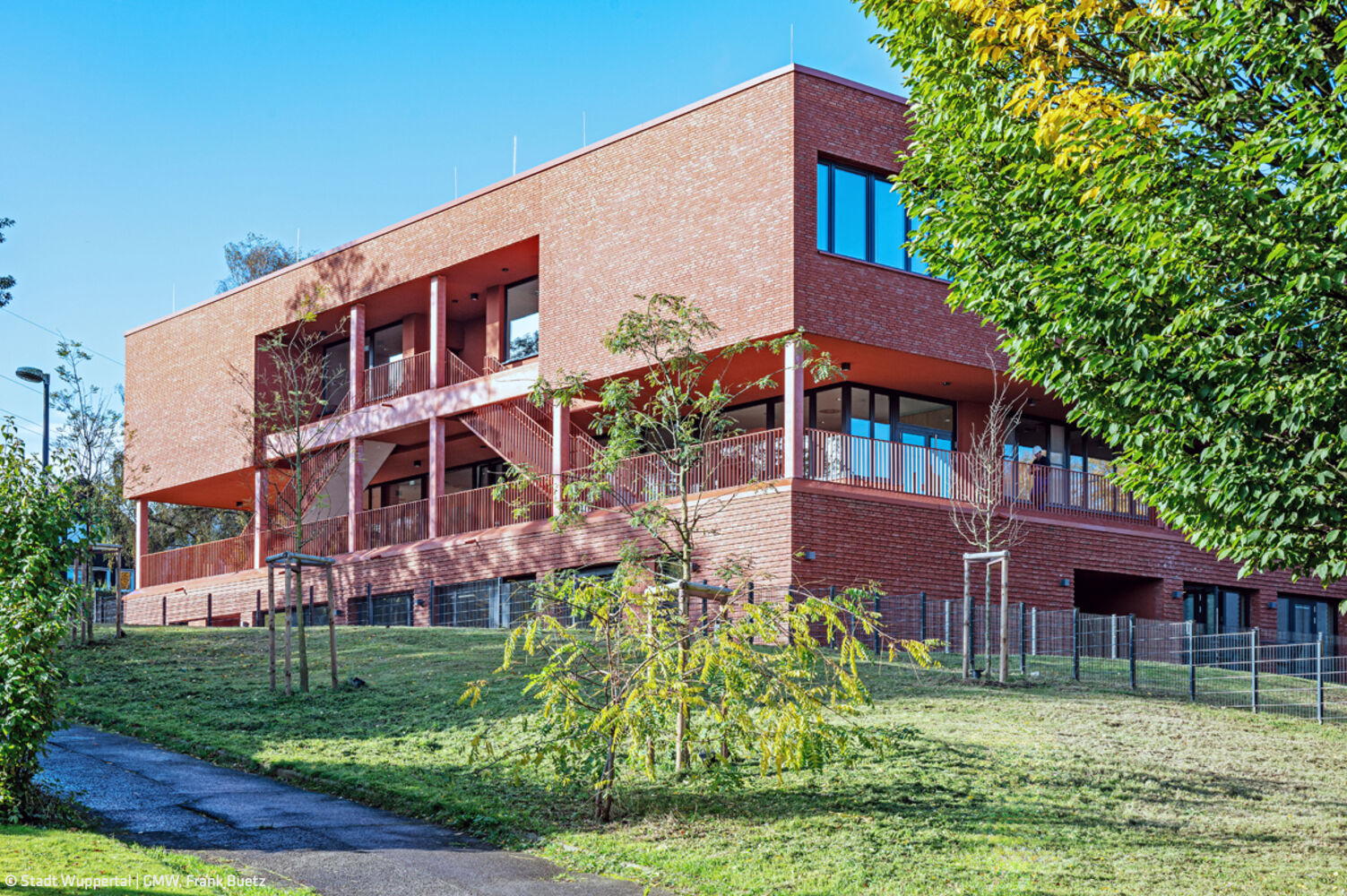
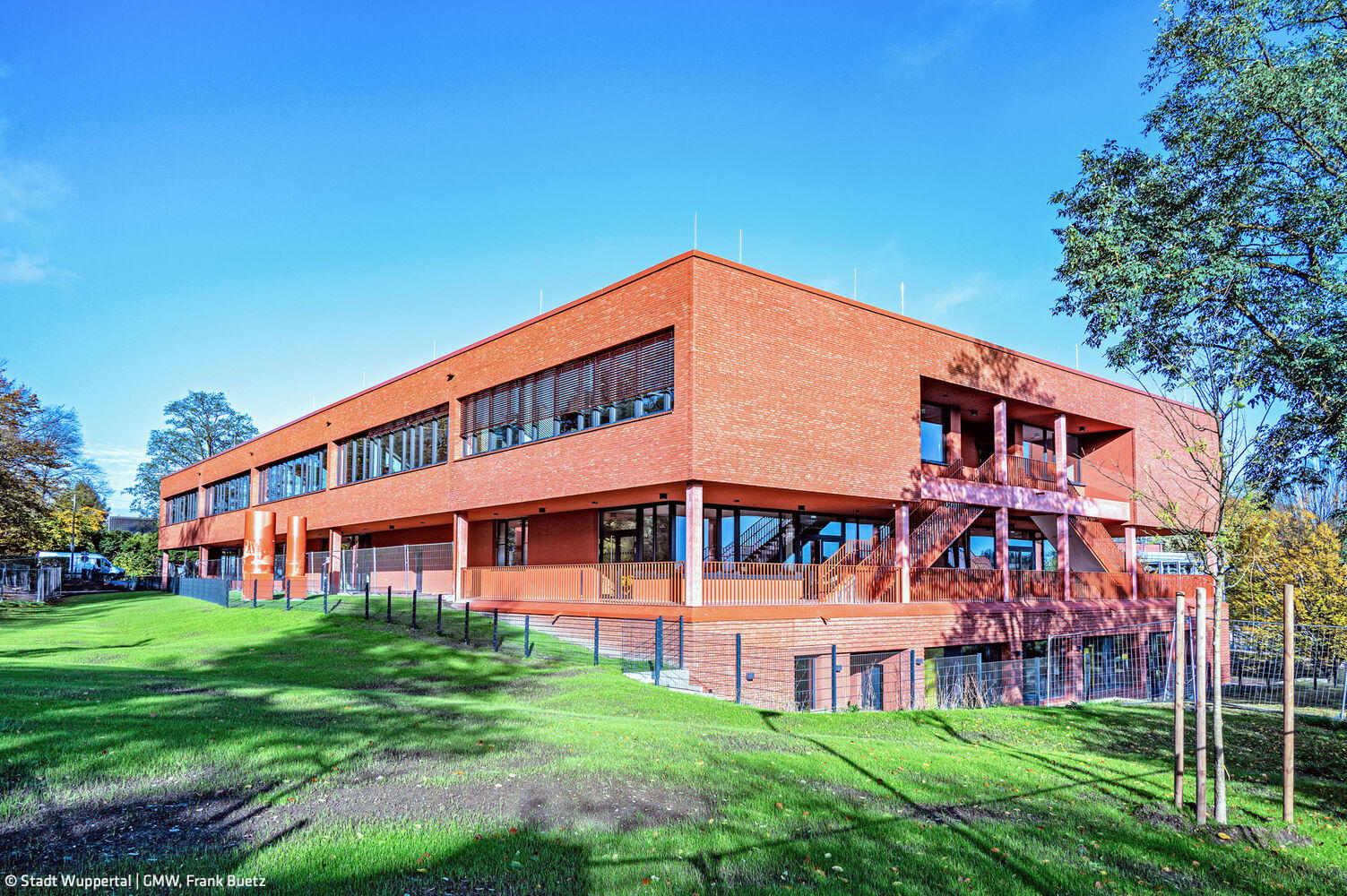
Schools today have evolved far beyond their traditional educational role. They now serve as vital hubs for integration, inclusion, and comprehensive all-day programming. Working on behalf of Wuppertal's municipal building management, prokosch+partner architects (Wuppertal) and kleyer.koblitz.letzel.freivogel.architekten (Berlin) have designed a new facility for Haselrain Primary School in Wuppertal-Oberbarmen—a compact, sculptural structure that seamlessly incorporates all the demands of contemporary education.
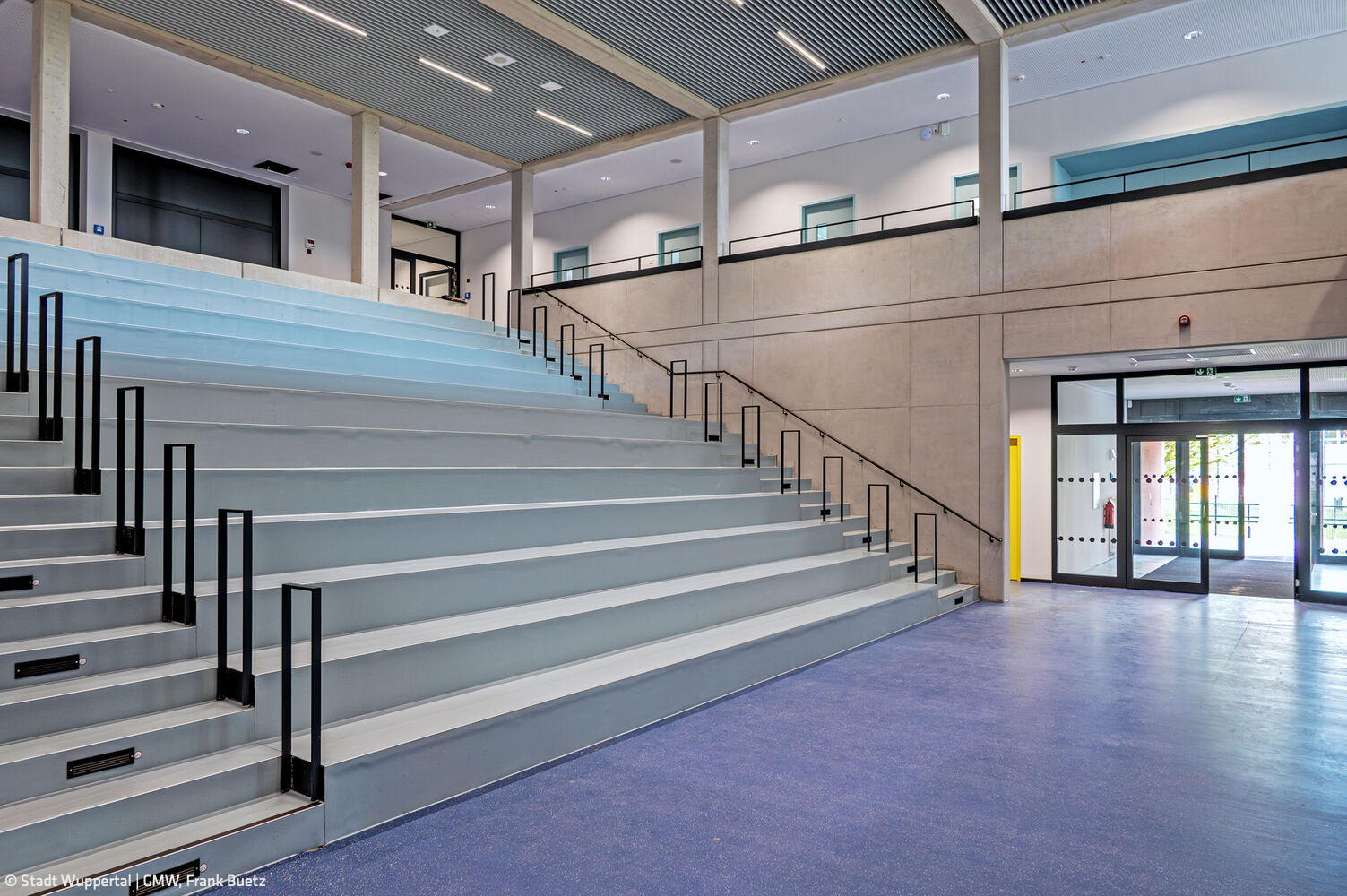
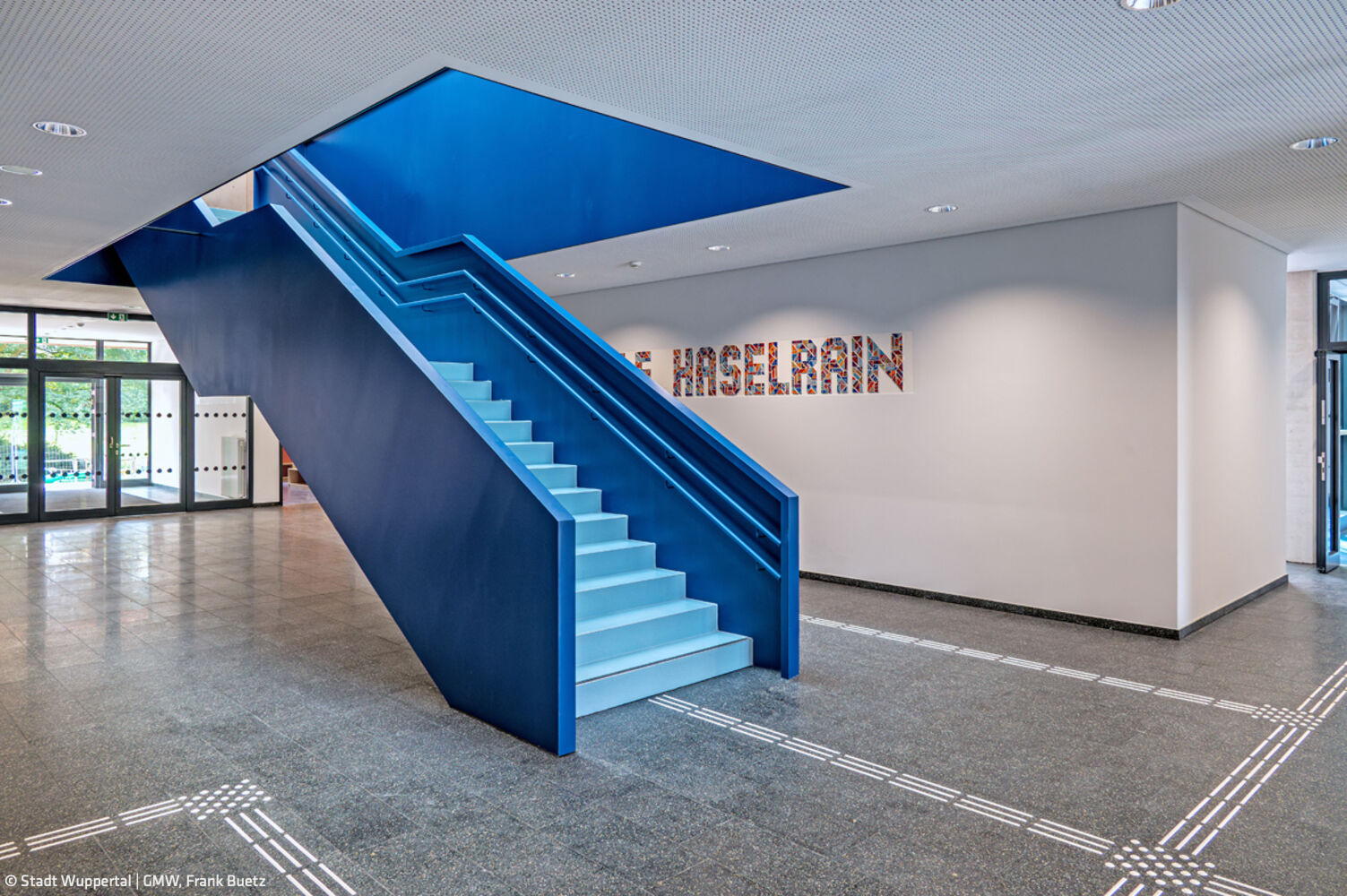
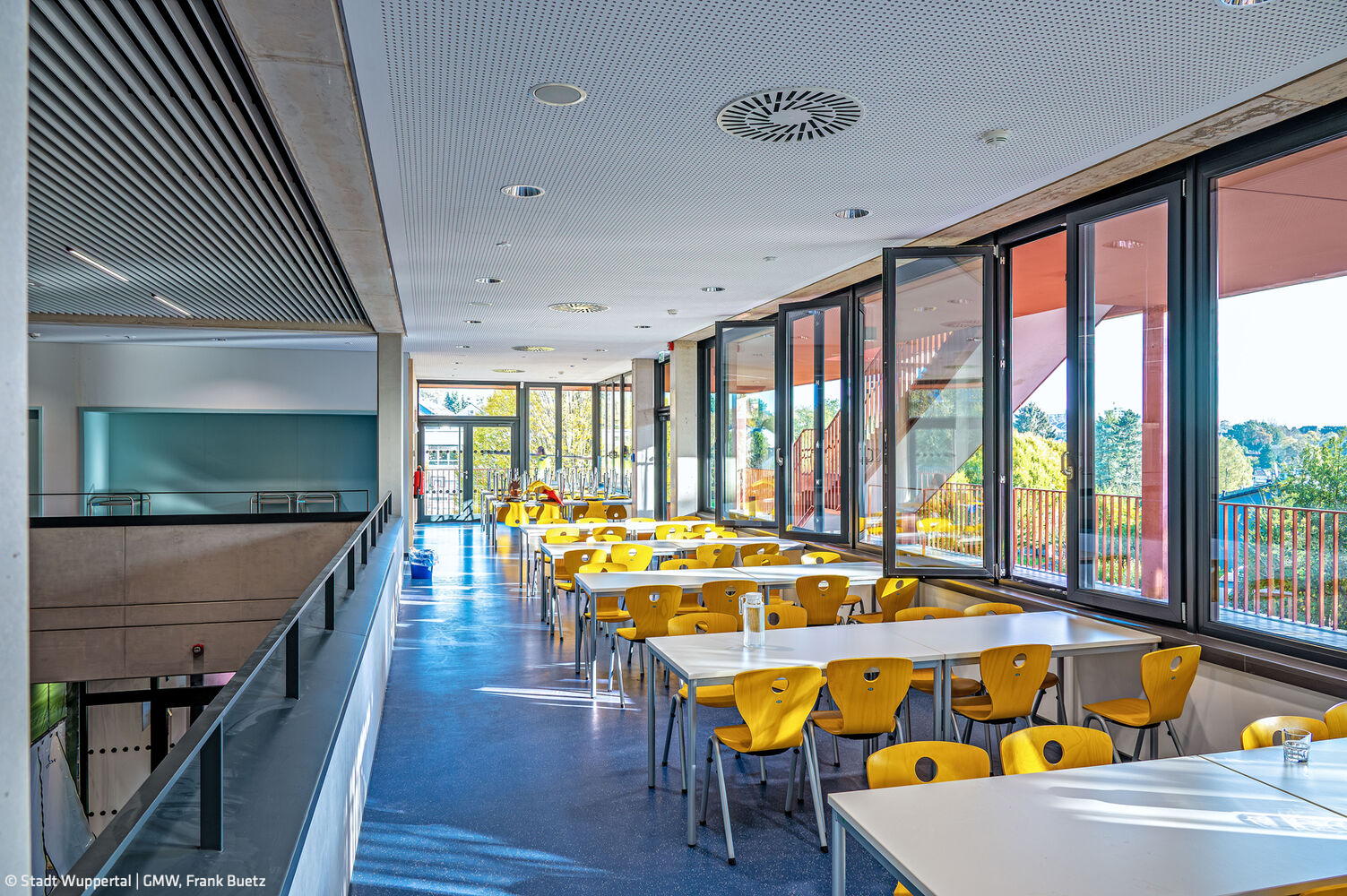
The original school building suffered from critical fire safety and building systems deficiencies. The architects' solution: a rectangular form with two full stories plus a half basement level, intelligently positioned to maximize the sloped terrain. The upper floor accommodates all classrooms and teaching spaces, while the ground floor houses the all-day program facilities, dining hall, staff rooms, and administrative offices. A centrally positioned auditorium leverages the site's natural grade change, creating a tiered seating area that fosters community gathering. A folding wall links the basement music room flexibly to the auditorium, transforming it into an additional performance and event space with panoramic valley views. The music room's independent entrance enables flexible use beyond regular school hours. The exterior speaks a bold architectural language: a monolithic brick structure featuring continuous horizontal window bands along the long facades and precisely cut incisions for emergency stairs at the ends. The overhanging upper story generates a sheltered colonnade, wrapping the building and providing weatherproof outdoor zones alongside expansive grounds.
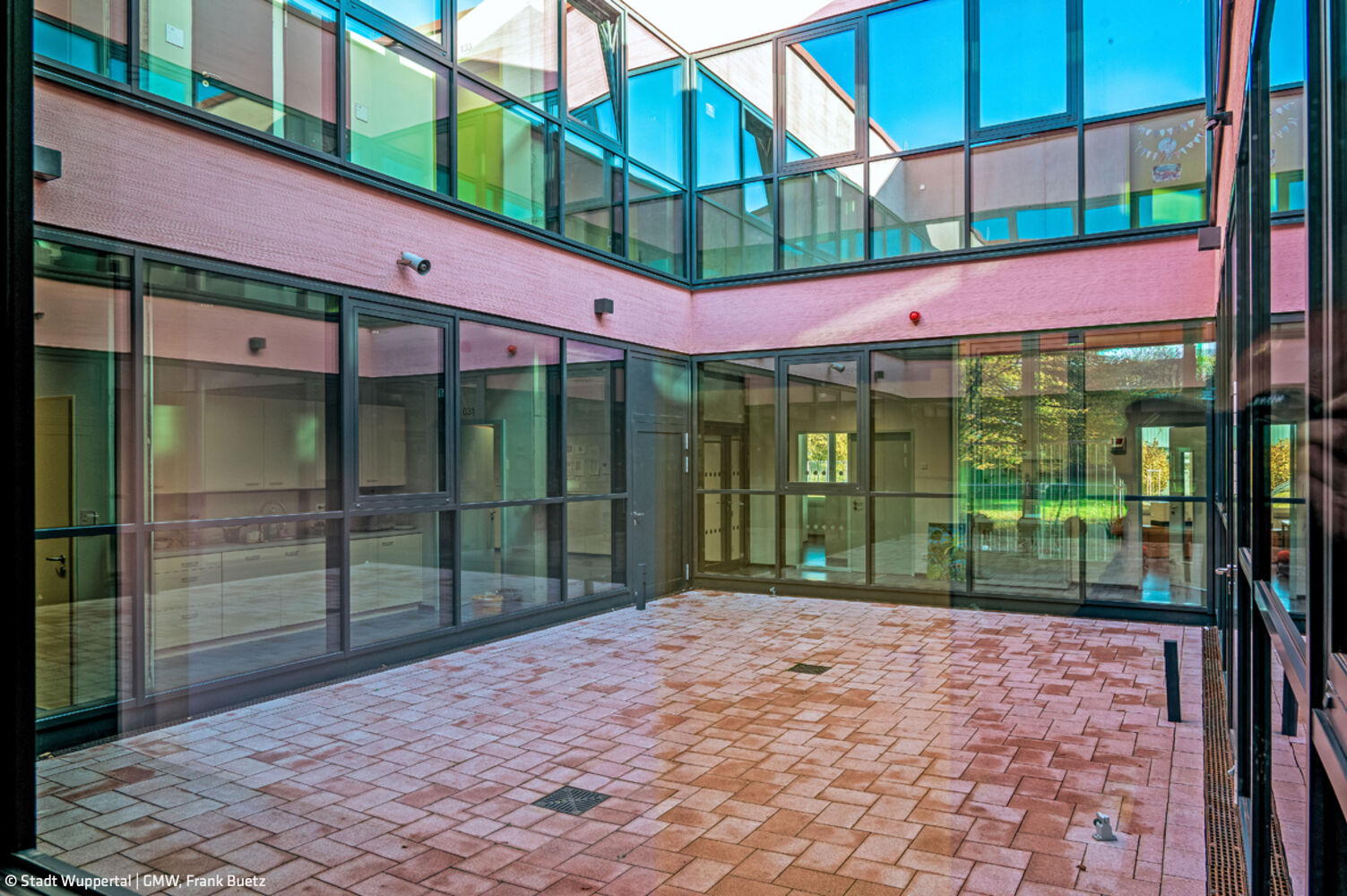
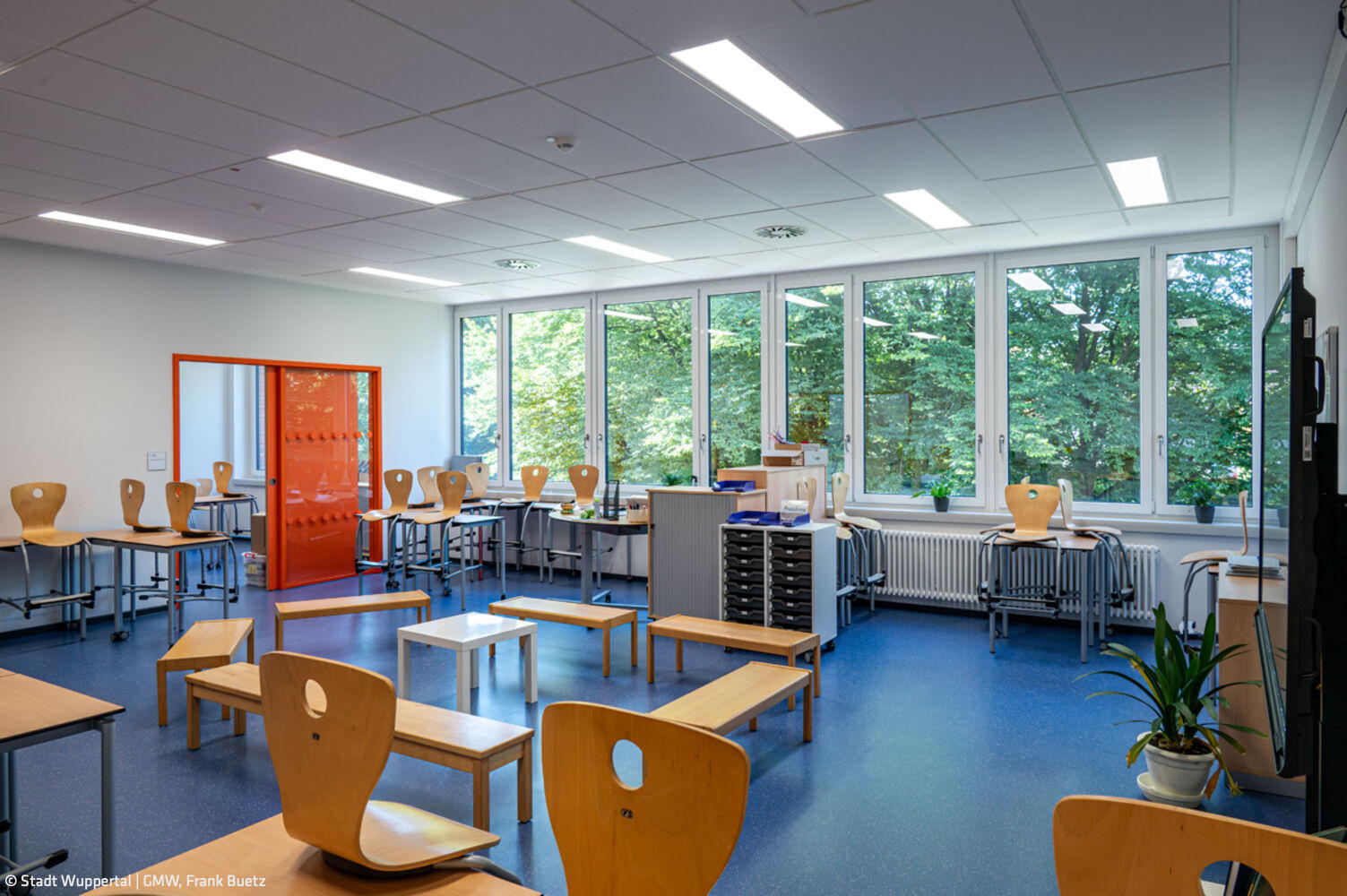
Grounded in a foundational "phase zero" planning process, the school emerged as a three-stream cluster model. Four year-level clusters occupy the upper floor, each self-contained with classrooms, flexible small-group spaces, and a shared gathering zone that doubles as circulation and event space. Two interior courtyards carved through the building foster transparency, visual connectivity, and cross-class learning opportunities. Staff team areas are strategically positioned adjacent to these courtyards. The building itself embodies sustainability: the brick façade delivers durability, minimal maintenance, and full recyclability, while its superior thermal mass maintains stable indoor climates with minimal energy input. The substantial flat roof features robust insulation, green roofing, rainwater management systems, and integrated photovoltaic panels.
Photography:
City of Wuppertal | GMW, Frank Buetz
(Featured in CUBE Düsseldorf 03|25)


Built for Flexibility
An Advertising Agency Embraces Exposed Concrete and Warm Wood
Family Sanctuary with Vision
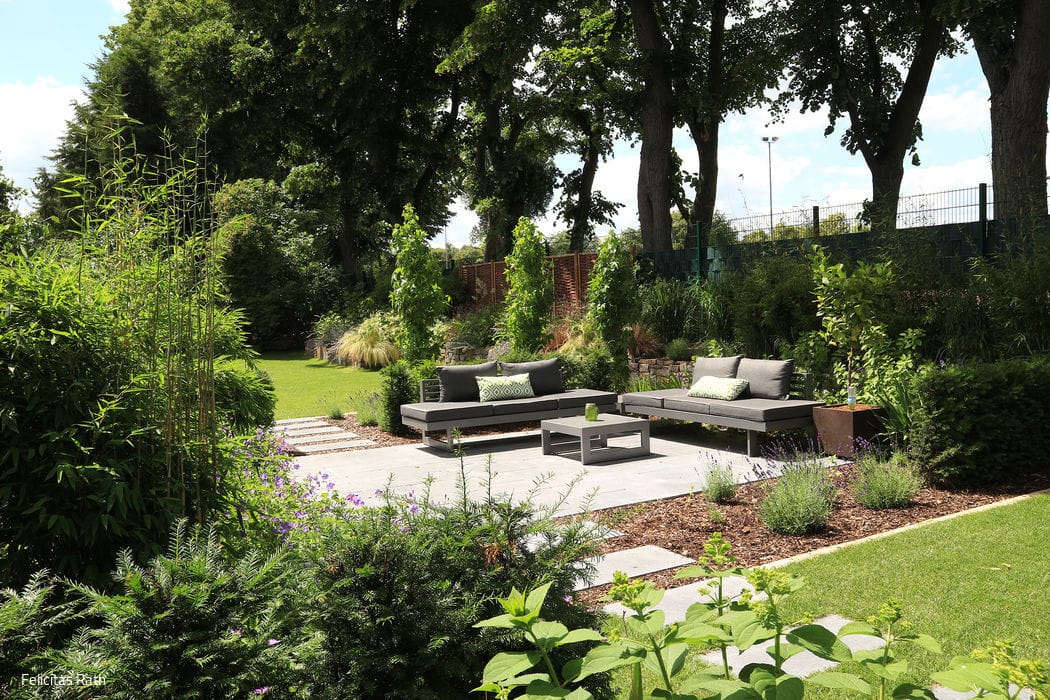
A Newly Designed City Garden: Where Versatility Takes Center Stage
Mood and Character
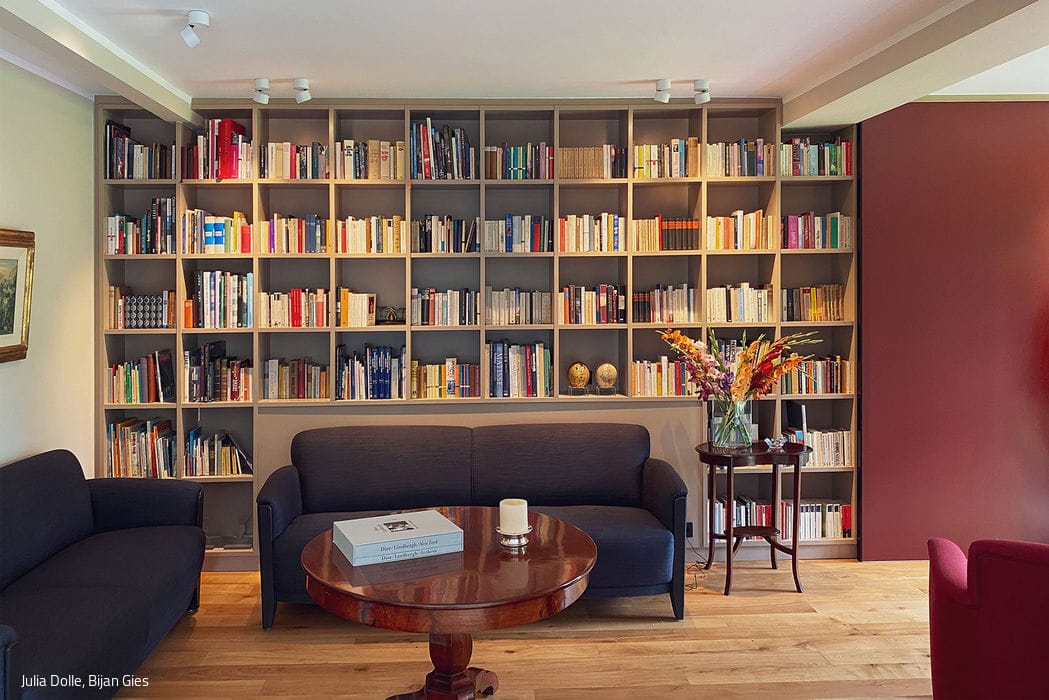
A 1930s residence in Neuss undergoes thoughtful modernization and sensitive redesign