


Hörbar
An inspiring, high-contrast spatial design with acoustic precision for a specialist hearing aid retailer
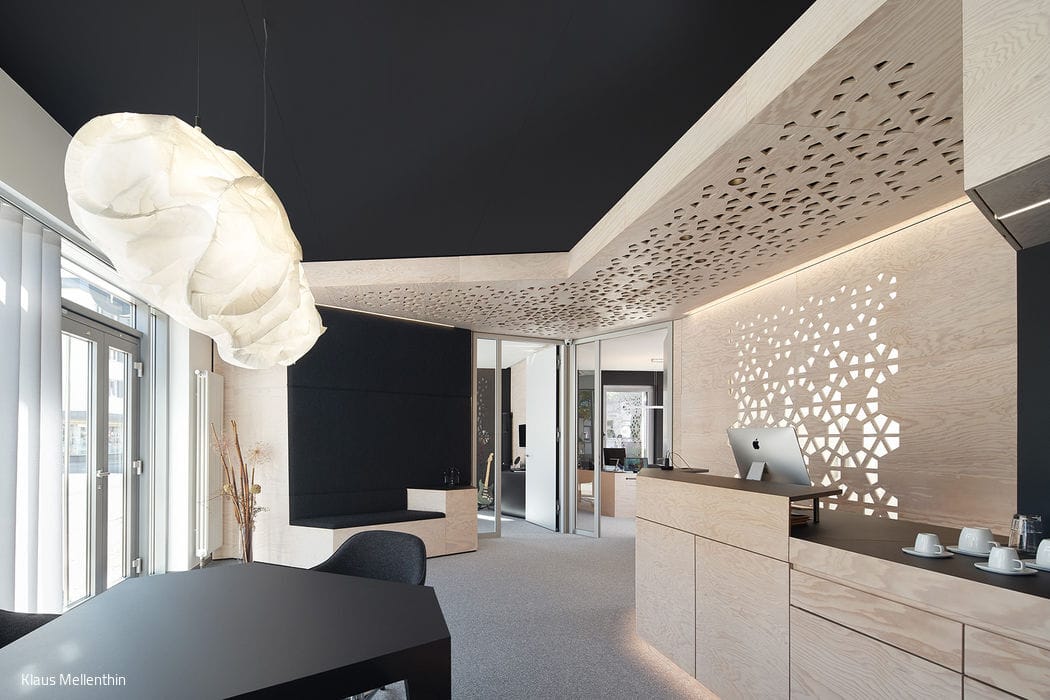
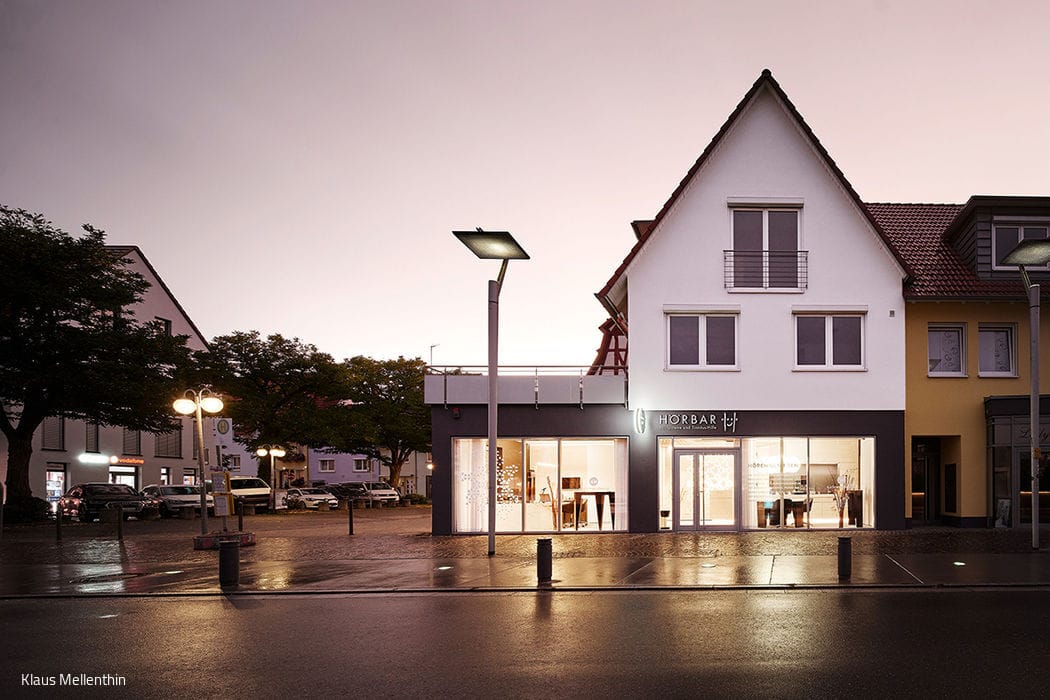
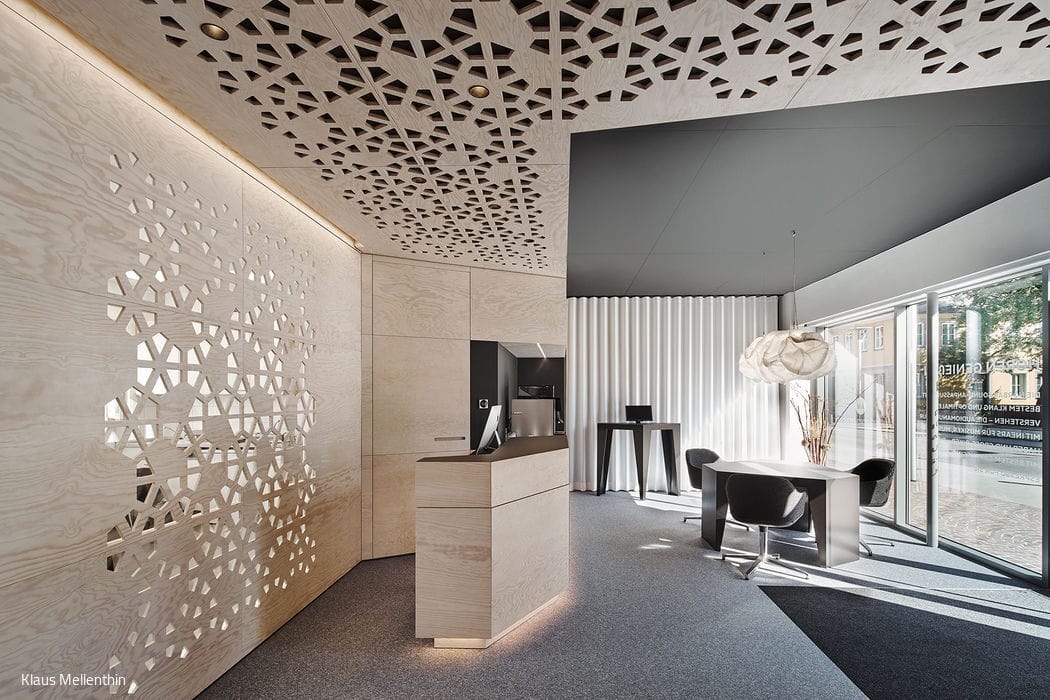
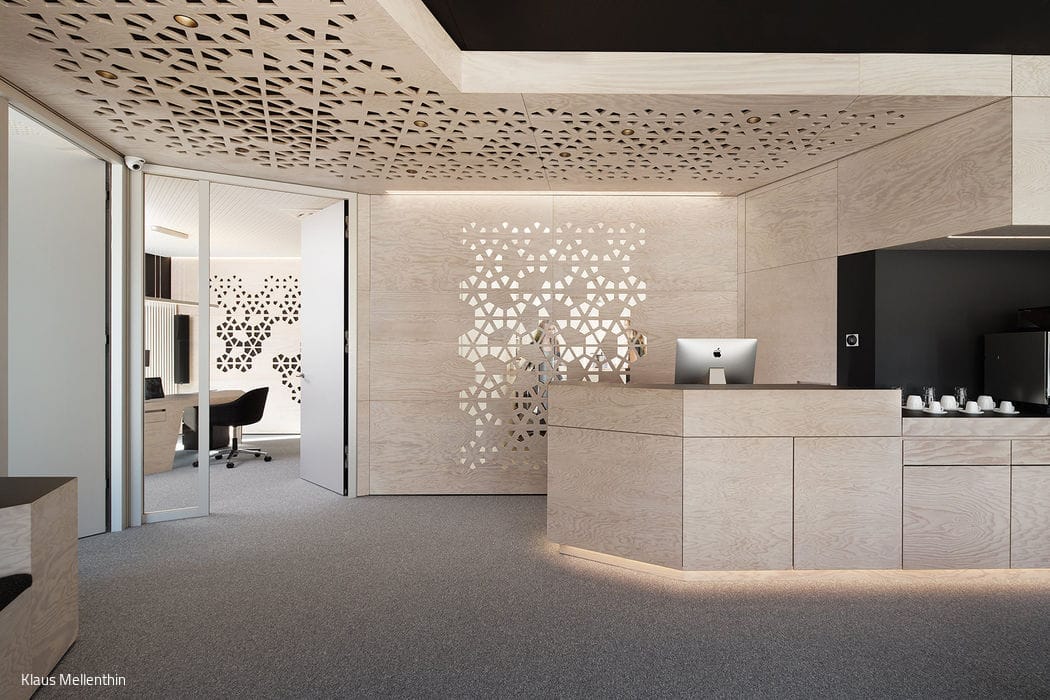
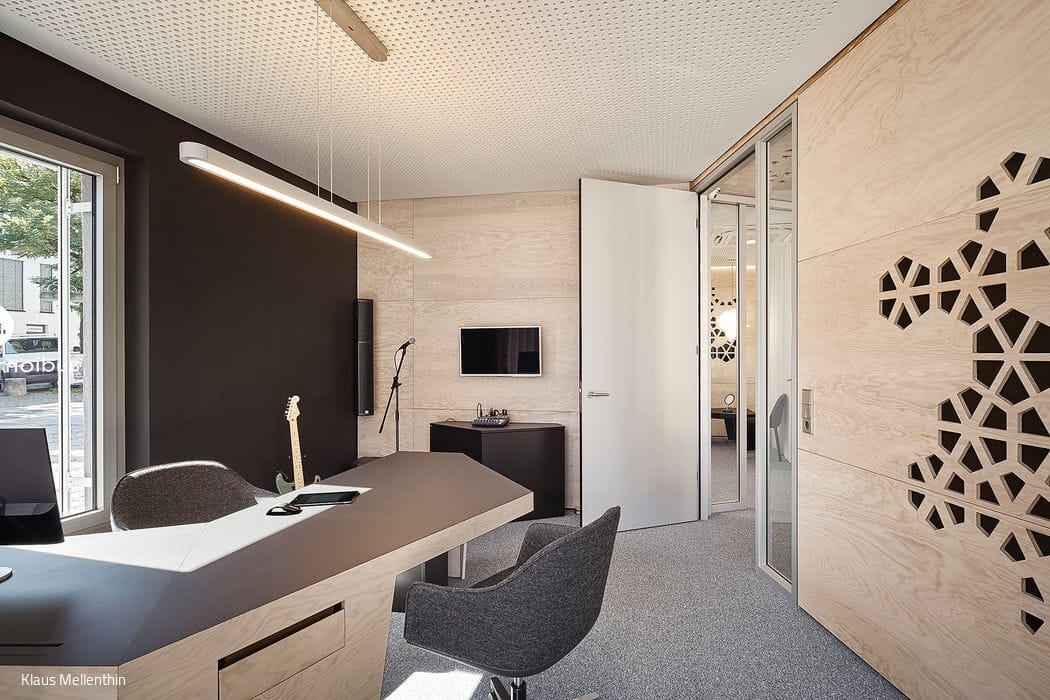
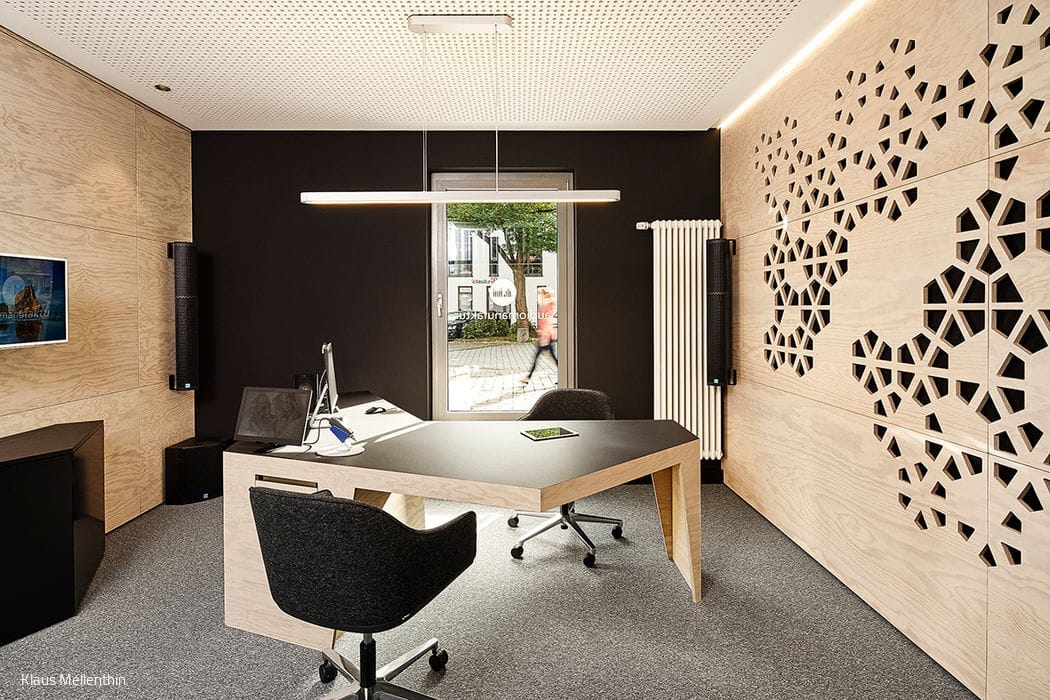
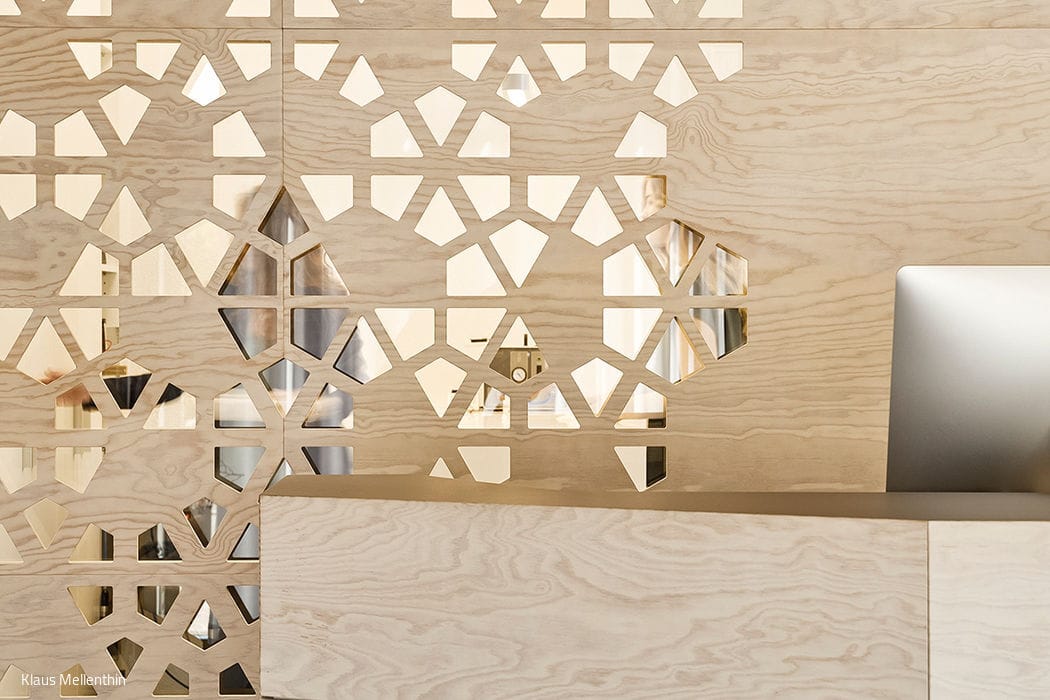
Situated in a prime downtown location, this specialized hearing aid retailer brings together a reception area, lounge, two cutting-edge hearing studios with integrated workshop, and staff facilities—all within a compact footprint. Rather than relying on conventional orthogonal layouts, Kiltz Kazmaier Architects deliberately modulated spatial volumes, creating seamless expansions and contractions that enhance acoustics without consuming additional square footage—much like the carefully calibrated proportions of a concert hall. The actual product—a hearing aid—is diminutive and intentionally recedes from view. Instead, the spatial design places hearing itself at the forefront, making the sensory experience tangible and immersive. This philosophy aligns with the client's vision: to restore an authentic listening experience where the device becomes merely a vehicle for natural sound. Organically generated forms and structures elevate this experience further. An ear's outer contour inspired the fundamental geometric module, which repeats and evolves throughout the space—informing furniture, walls, ceilings, and spatial divisions. Like a musical theme with countless variations, these elements resurface in different configurations across the venue. The ceiling features an acoustically engineered structure that discreetly integrates point-source downlighting. Walls employ the same motif to create a defining spatial character that renders additional decoration unnecessary. Between the reception and back-of-house areas, the structure establishes a subtle visual continuity. At the storefront, the module transforms into window graphics that serve as both privacy screen and solar control. Every iteration of this structural language—whether acoustic, visual, or functional—reinforces the brand's identity. The design ultimately becomes inseparable from the company's corporate character.
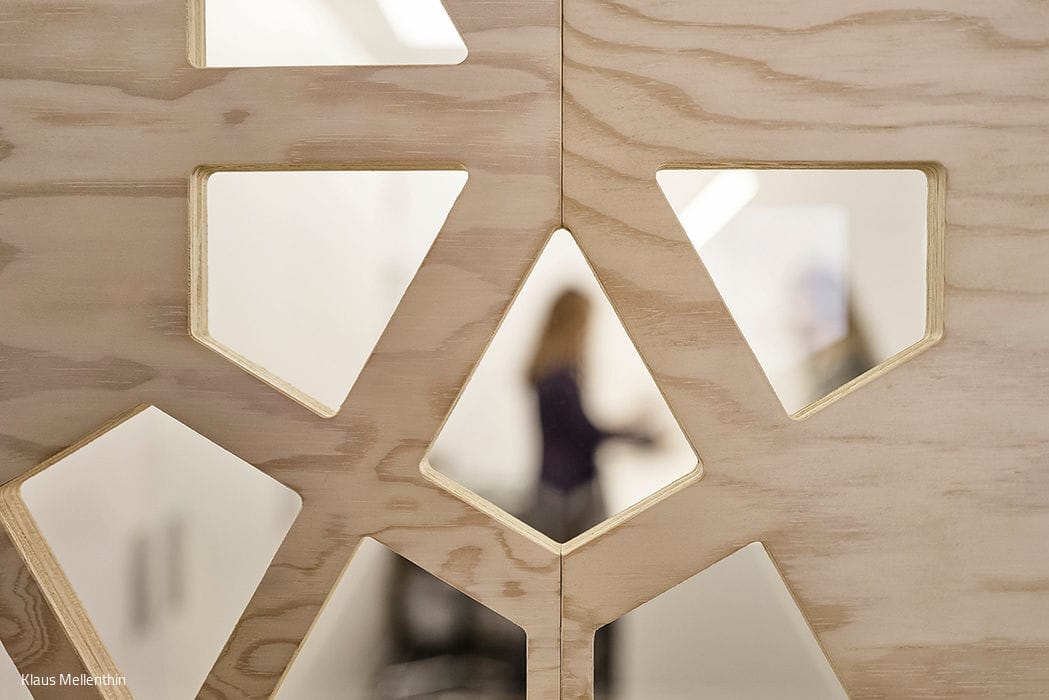
White-glazed maritime pine plywood serves as the defining material, imbuing the space with organic warmth and vitality. Precision-machined bare aluminum interior doors subtly reference the technical sophistication of the product. Furniture surfaces are finished in tactilely pleasing dark linoleum. Black planes—across furniture, ceilings, and upholstered elements—play against crisp white acoustic ceilings and curtains, establishing a bold, high-contrast visual rhythm. The entire design was conceived and refined through advanced 3D modeling. The intricate detailing and flawless execution would have been impossible without state-of-the-art 5-axis CNC milling technology. As a bonus, this digital-to-fabrication workflow allowed the complete interior transformation to be realized in remarkably short timeframe.
Photography:
Klaus Mellenthin
www.klausmellenthin.com
(Published in CUBE Stuttgart 03|23)

A Hidden Gem
Event hall: where dynamic tension shapes the space between inside and out

Reviving urban structures
Four new residential buildings reminiscent of history form a new urban quarter by the river
Out of the box
A Multifaceted Sanctuary for Creative Thinking
Simple – in the best sense of the word
Budget-conscious family home with carport for three children