


Living on the Roof
Roof Conversion and Renewal for a Turn-of-the-Century Townhouse
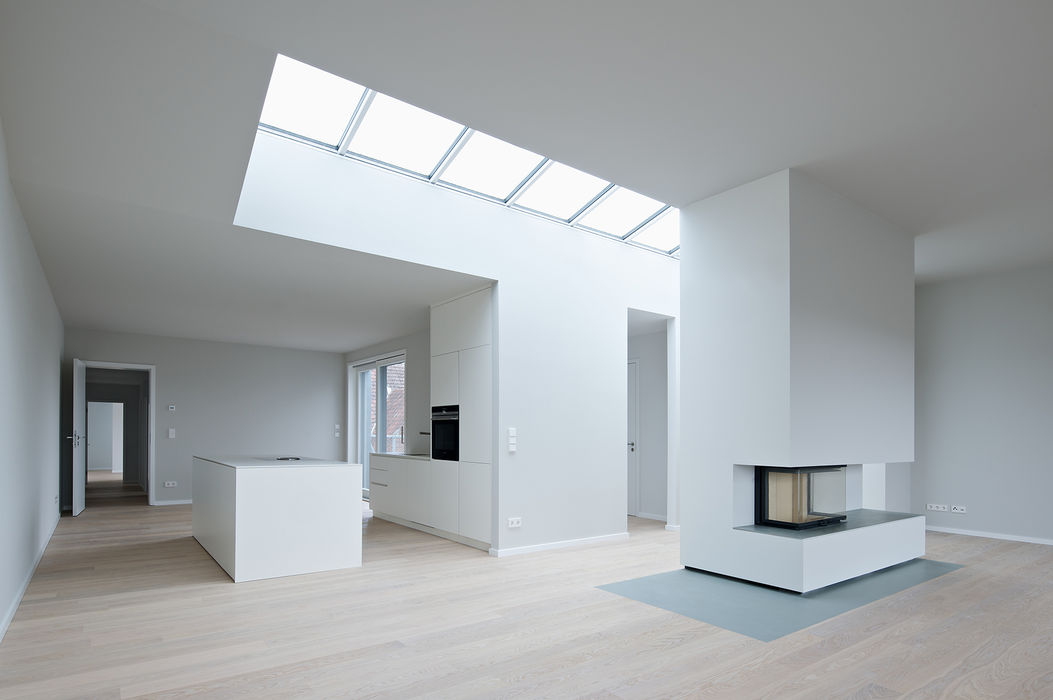
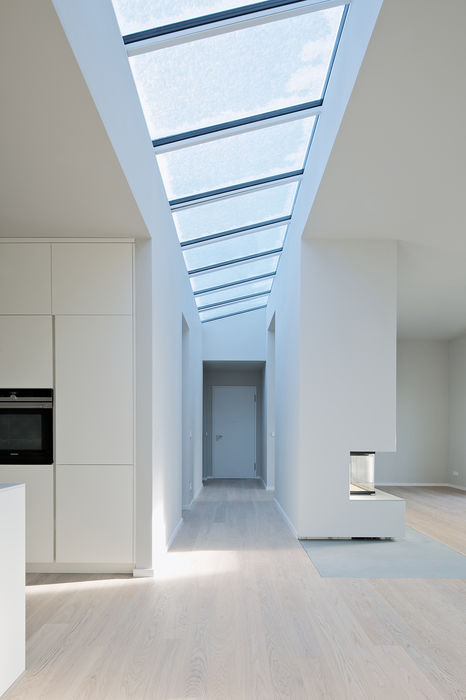
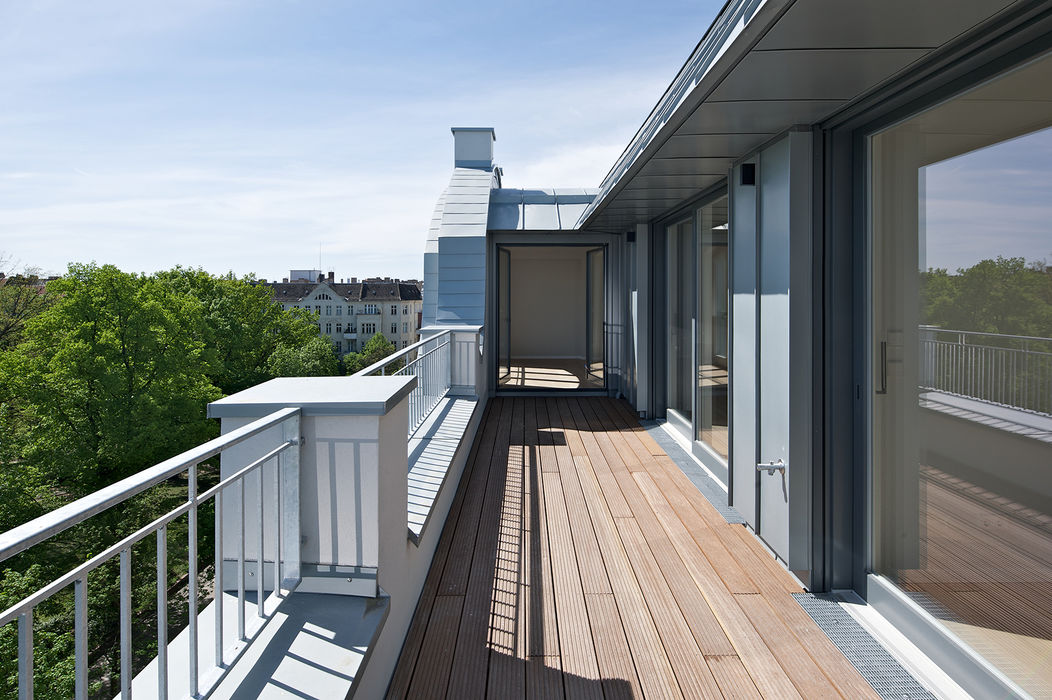
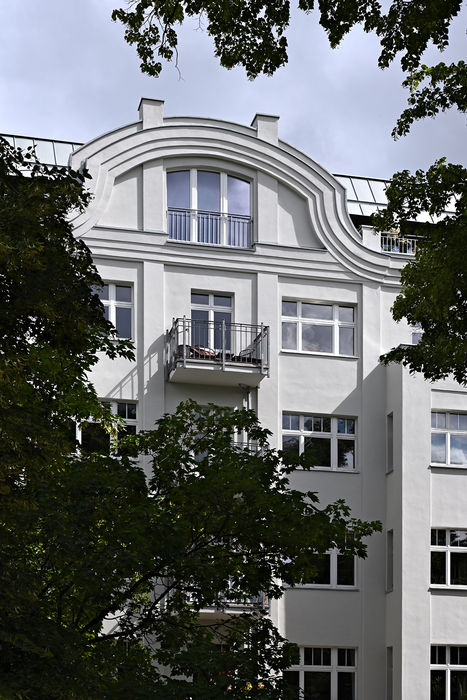
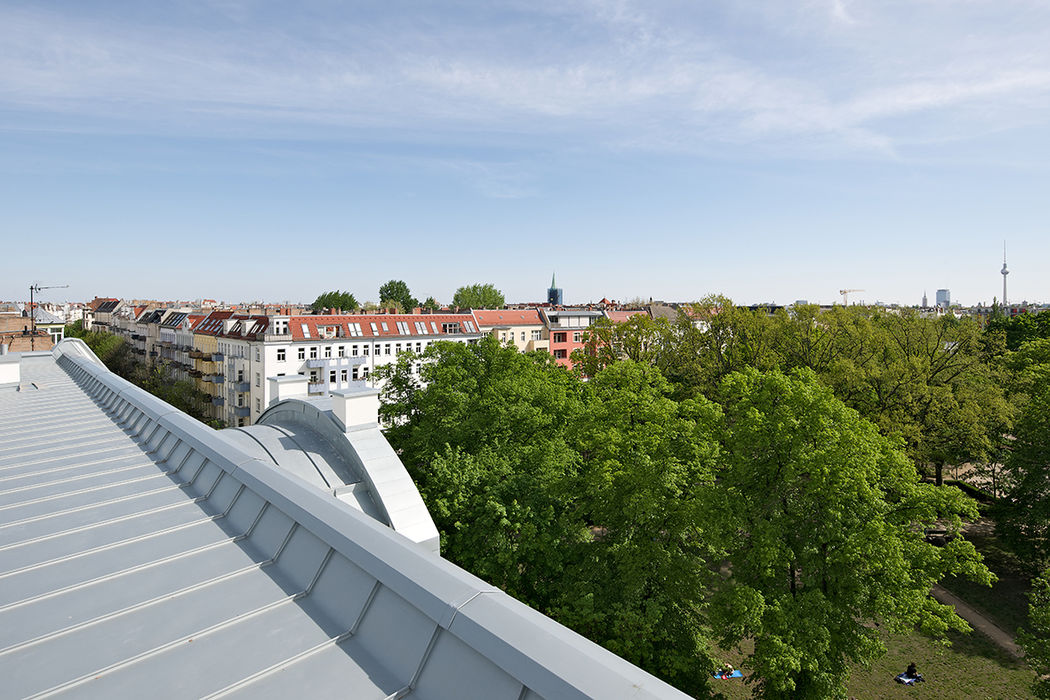
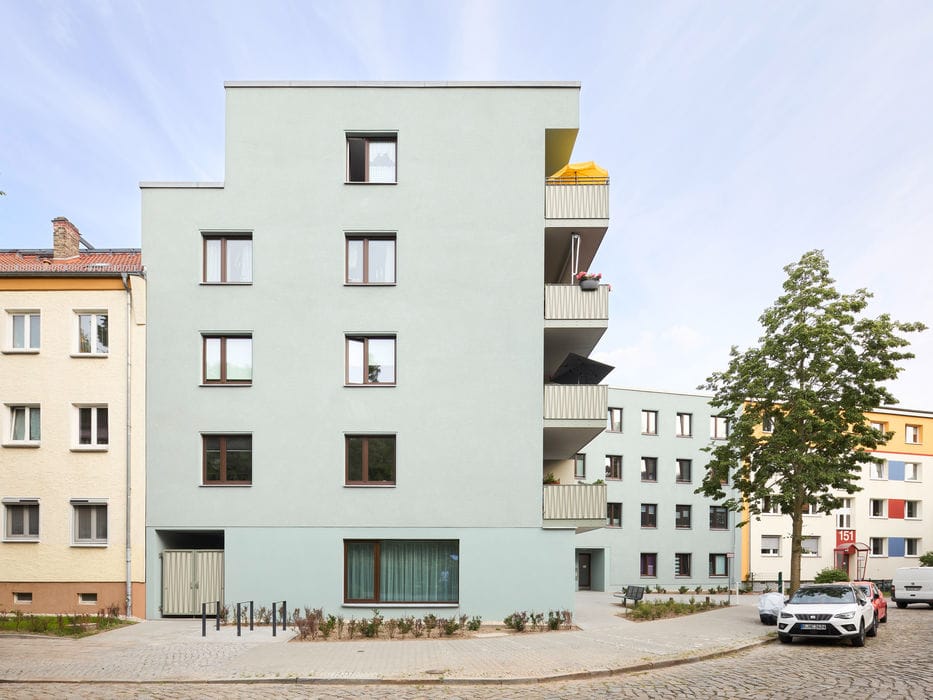
In this late Wilhelminian residential and commercial building on Prenzlauer Berg, the existing roof structure was completely removed to create a new residential attic floor while faithfully reconstructing the building's historic façade. The façade itself was restored to its original articulation, and an external elevator tower was added to the building's rear. Positioned centrally on the northern edge of a leafy public square, the property faces south. Only the front building and left wing have survived from the original U-shaped, four-story structure since World War II—its once-ornate façade embellishments having been lost. Built with solid masonry walls and wooden beam ceilings, the building now contains five stories following the roof conversion. The existing roof structure was removed and reconstructed to accommodate this expansion, carefully designed to remain within the building's original volume. A false attic cornice preserves the façade's historic proportions.
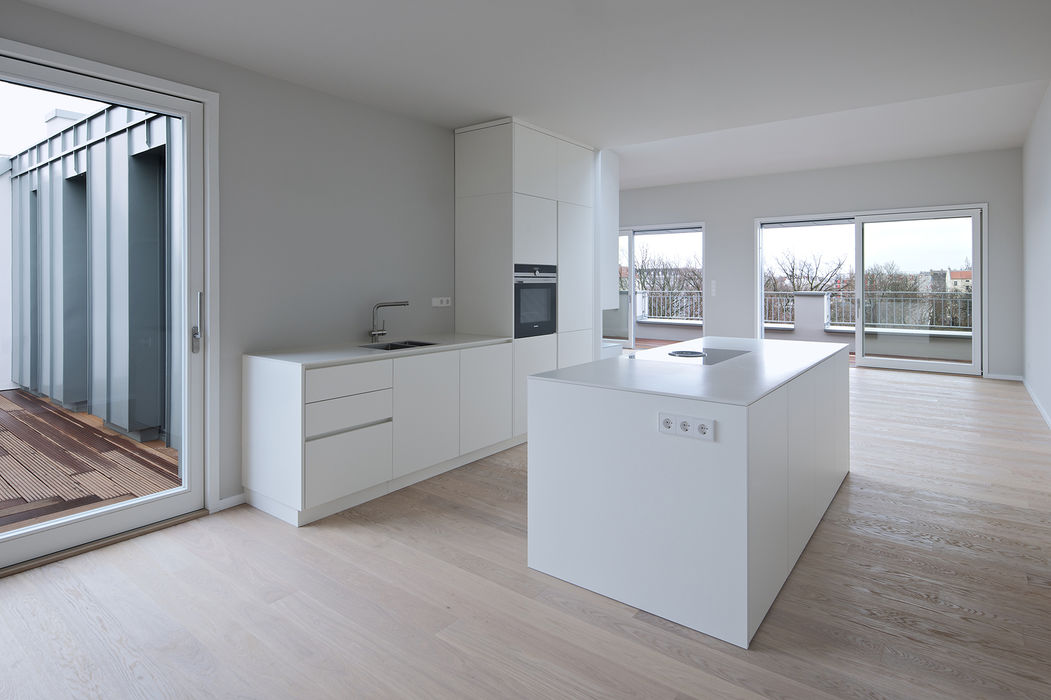
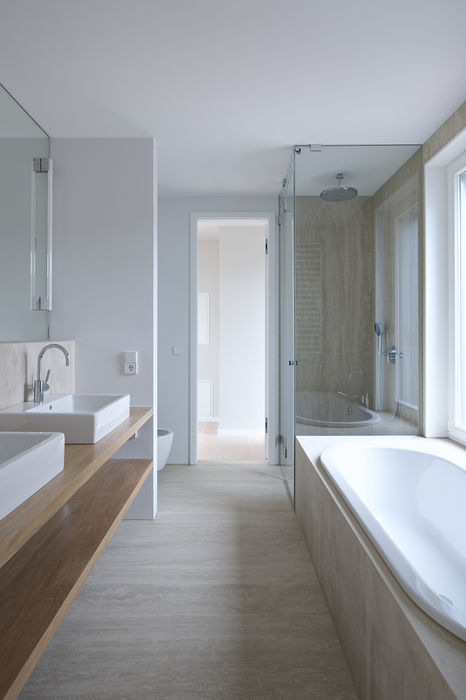
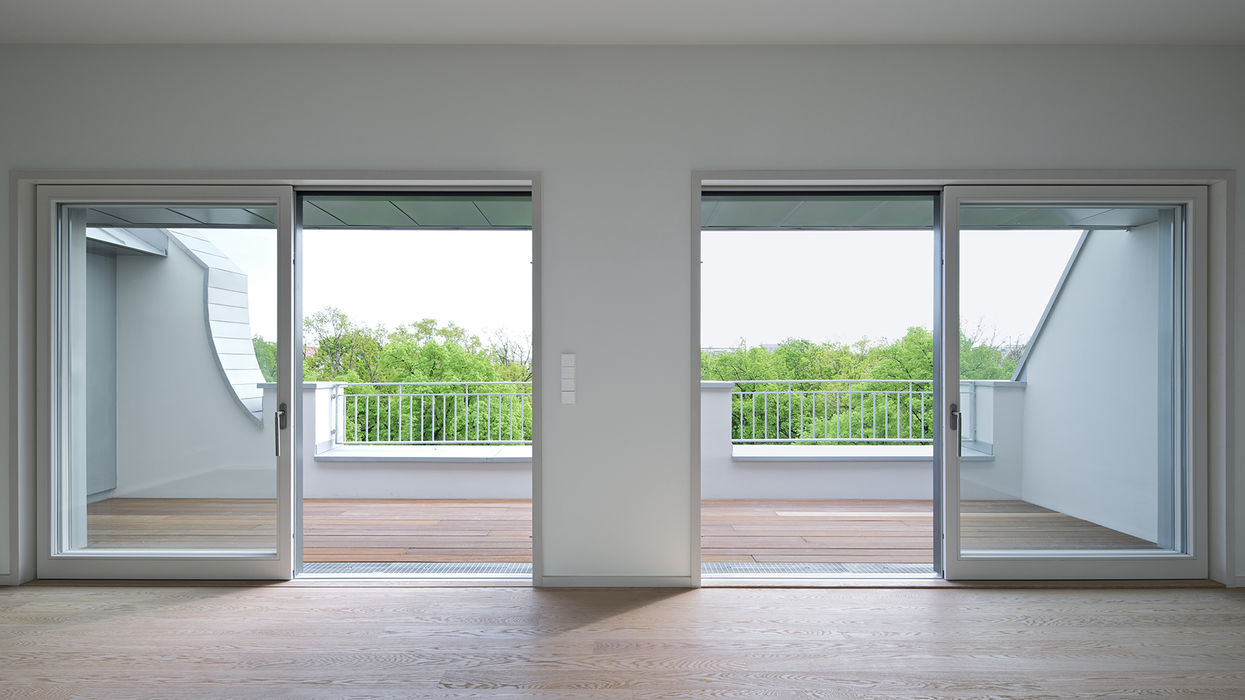
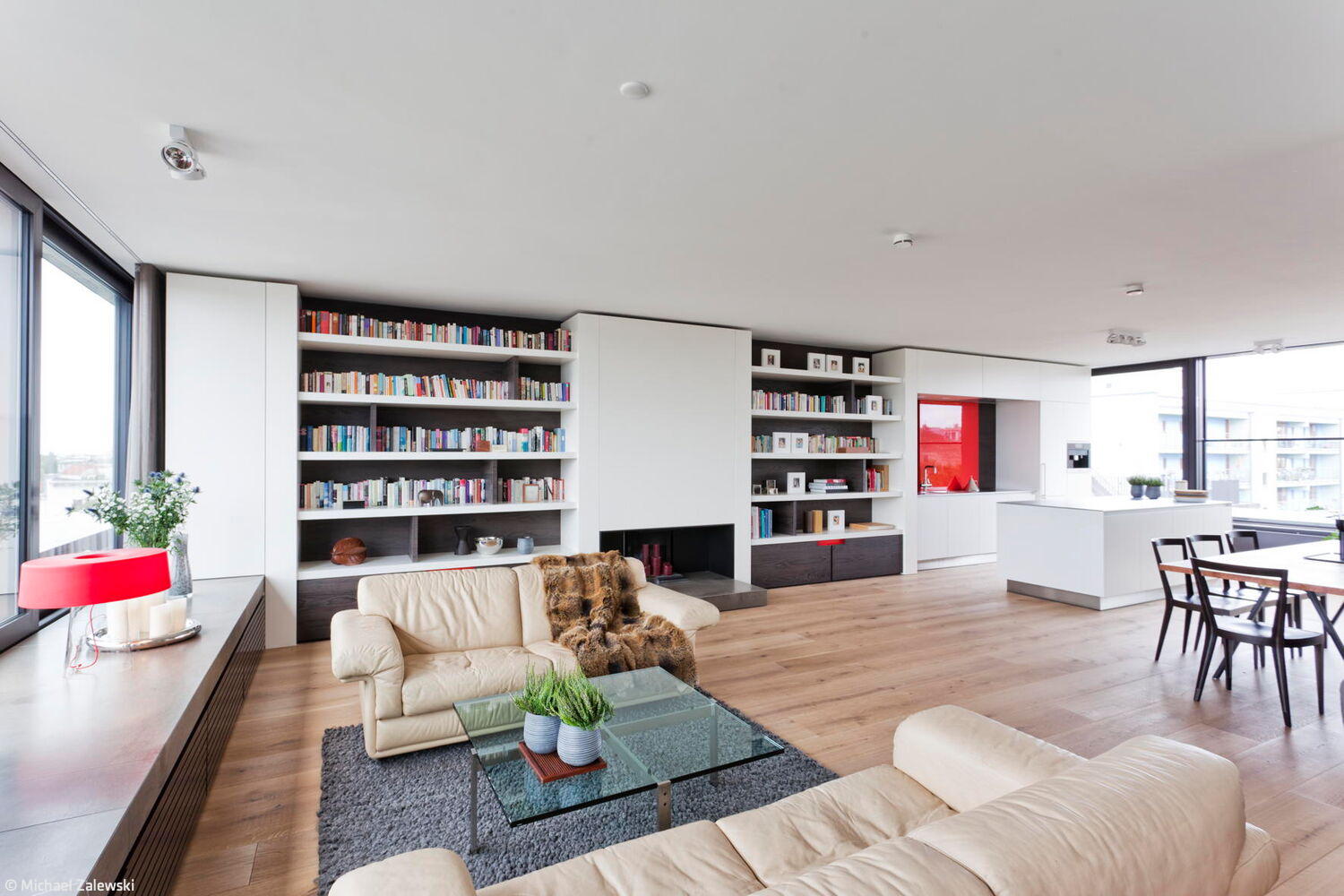
The new attic floor accommodates two residential units—a three-room and a four-room apartment—with living areas oriented south toward the square via roof terraces, while bedrooms face the quieter courtyard or the eastern side wing. The dining room, master bedroom, and kitchen all open directly onto the terraces. Each apartment is clearly organized into living and sleeping zones, with guest bathrooms and storage areas. The three-room unit features a generous central living space behind the front façade, naturally lit by gable windows and floor-to-ceiling terrace doors. This space flows seamlessly through the entrance, cloakroom, and guest bath into a combined kitchen-dining area, creating an expansive room sequence that circles the existing chimney stack—maximizing the roof's inherent spatial qualities while clearly delineating different zones. The master bedroom, connected to an ensuite bath, sits privately and separately with its own courtyard-facing terrace. The four-room unit extends from the front building into the side wing, with equally generous living and dining spaces offering visual connections between the square-facing and courtyard-facing terraces.
Photography Credits:
Andrew Alberts
www.andrewalberts.de
(Featured in CUBE Berlin 04|22)
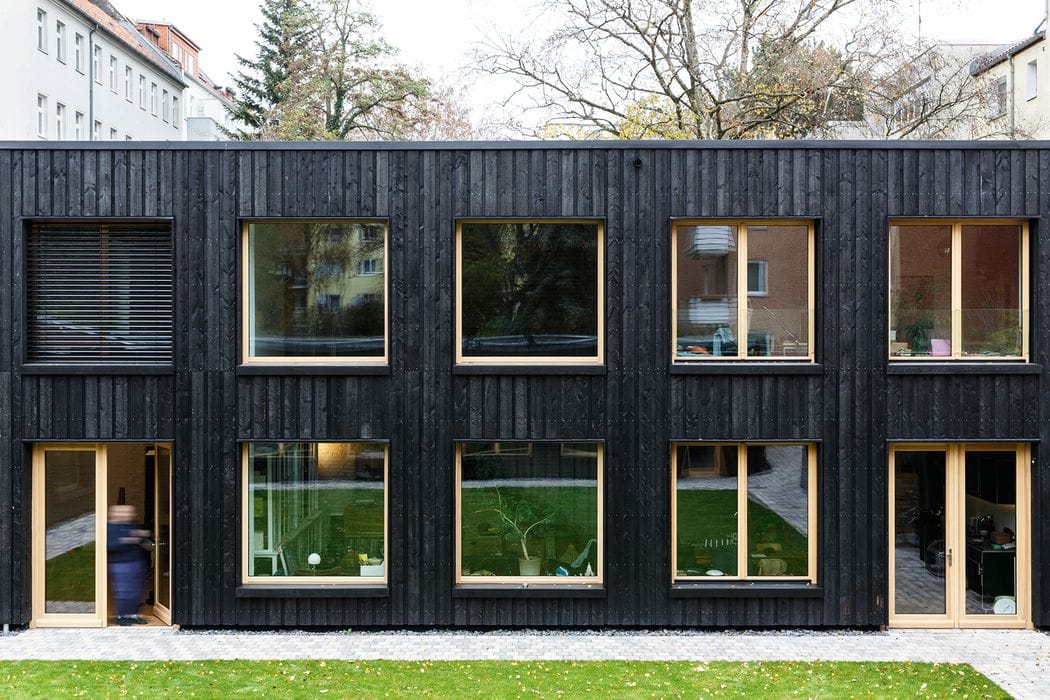
Courtyard Within a Courtyard
Converting Backyard Garages into Creative Studios and Living Spaces
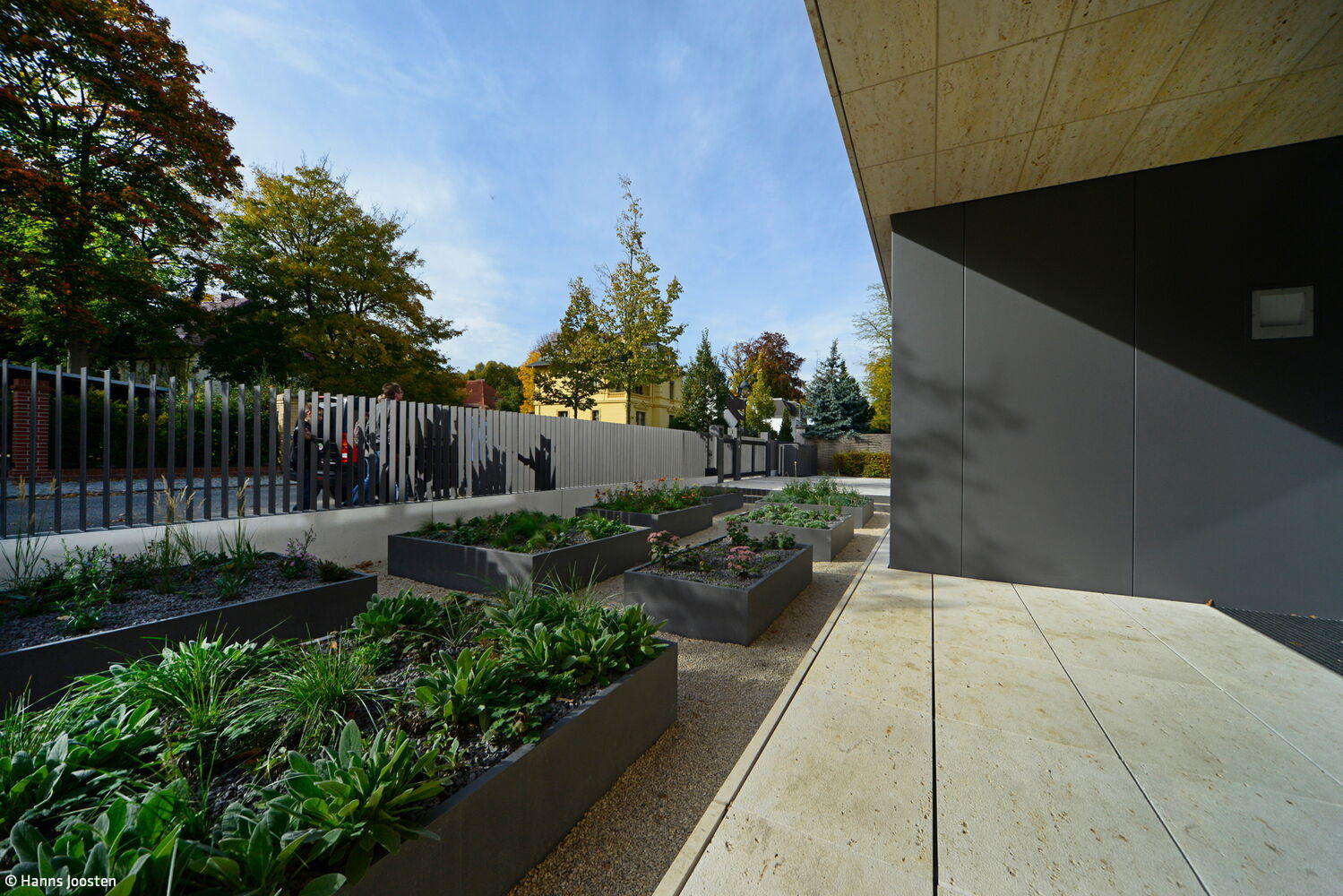
Minimalism in the garden
A Purist Garden on Lake Griebnitz
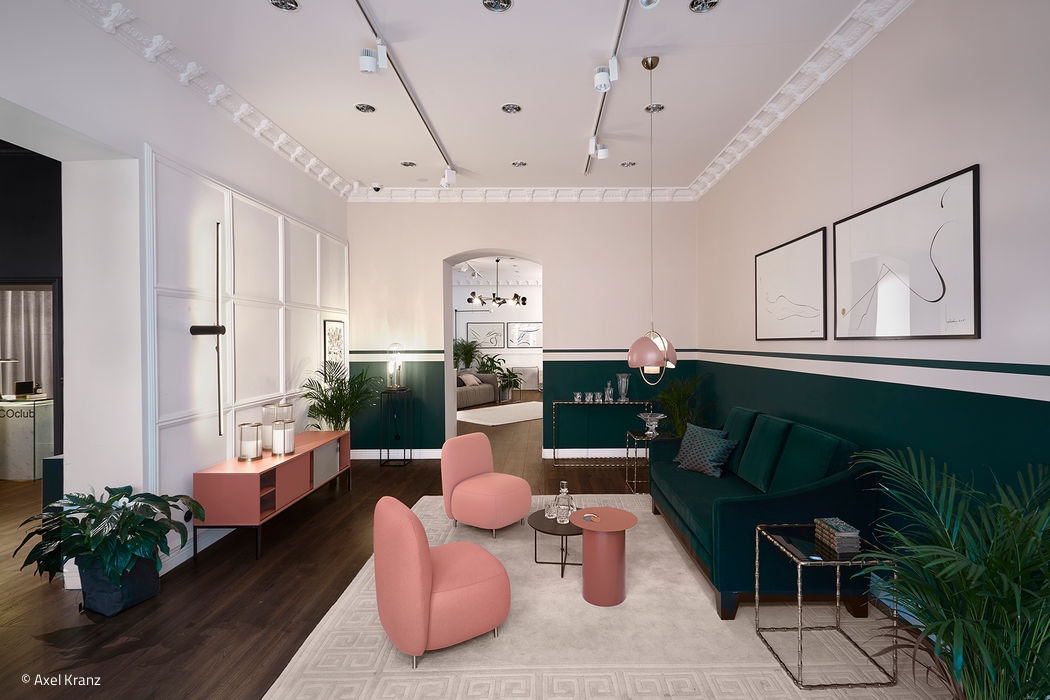
The Complete Decorative Package
Decoculture combines classic interior design elements with a multi-brand strategy
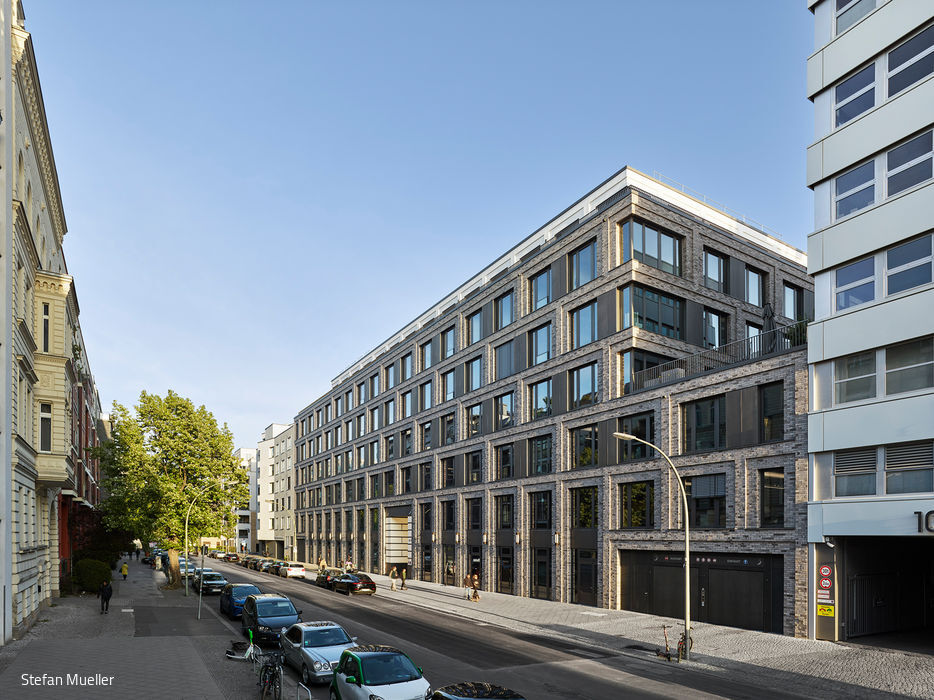
Courtyard Architecture Reimagined
Generous Space and Natural Light for Living and Working