


One plus one equals one plus
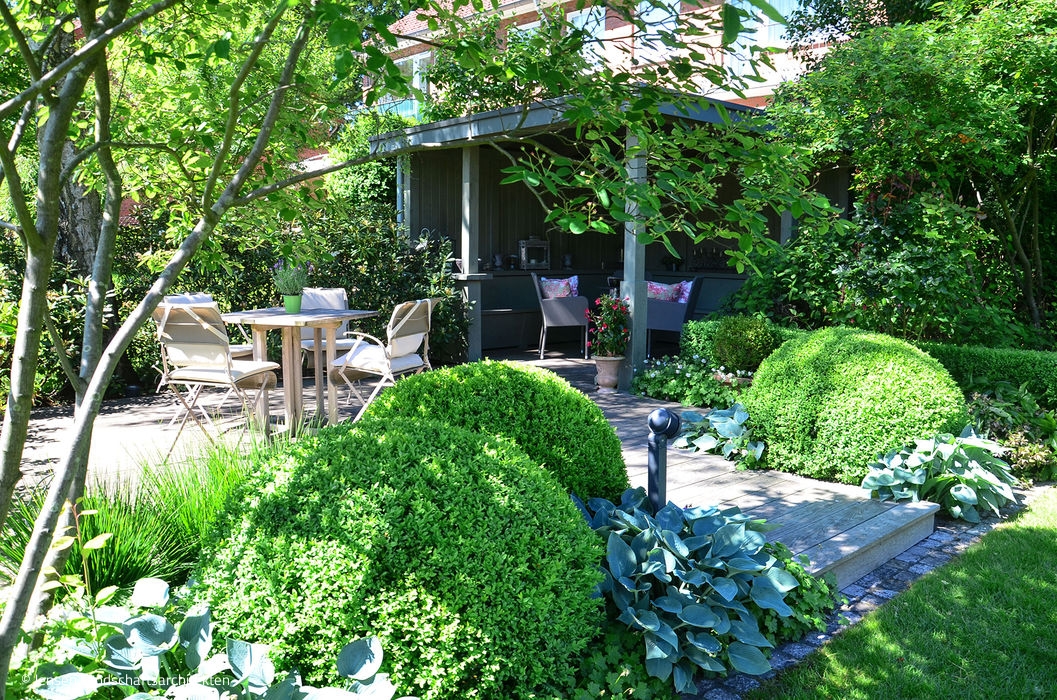
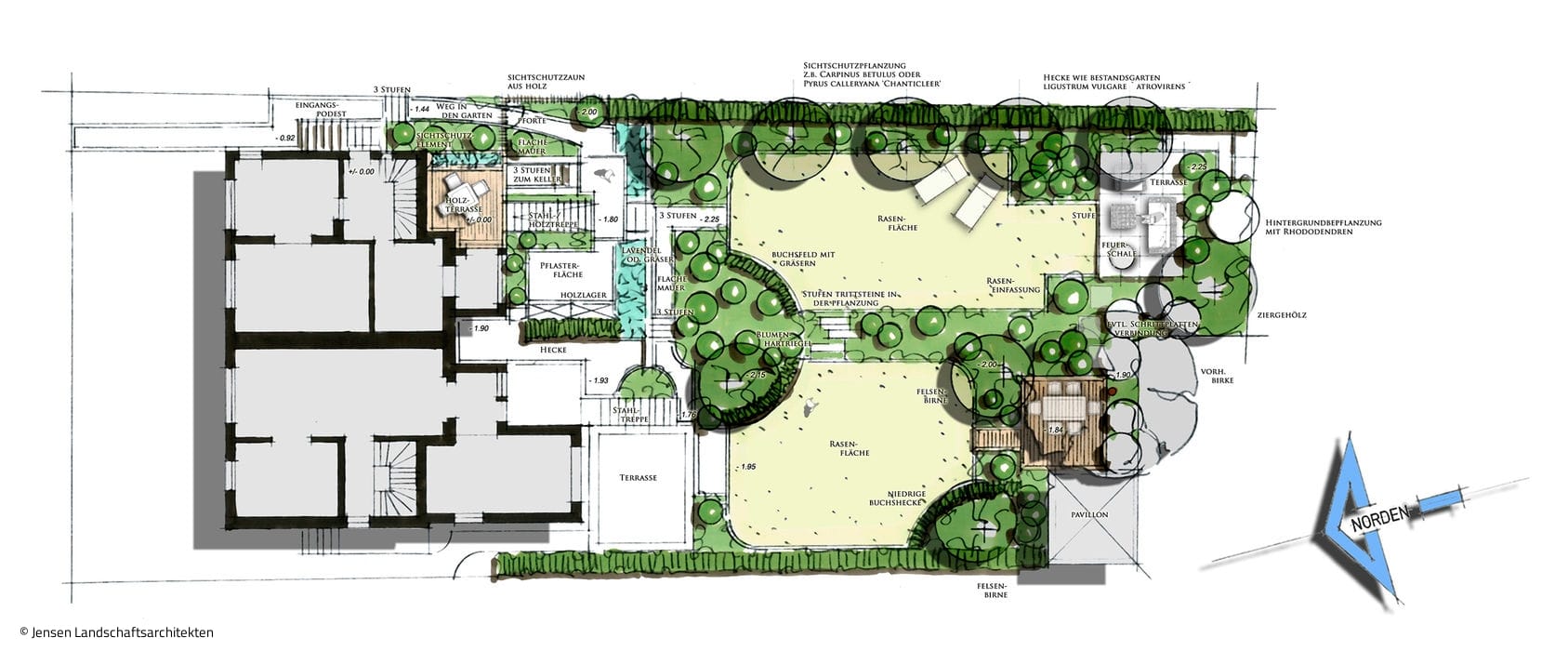
While the older garden retained geometrically defined forms and classic curves—featuring a tea pavilion open on two sides with an extended wooden deck—the newer section embraces more contemporary lines. It showcases angular slab terraces with sharply defined joints, a row of five trees marking the property boundary, and angular light fixtures.
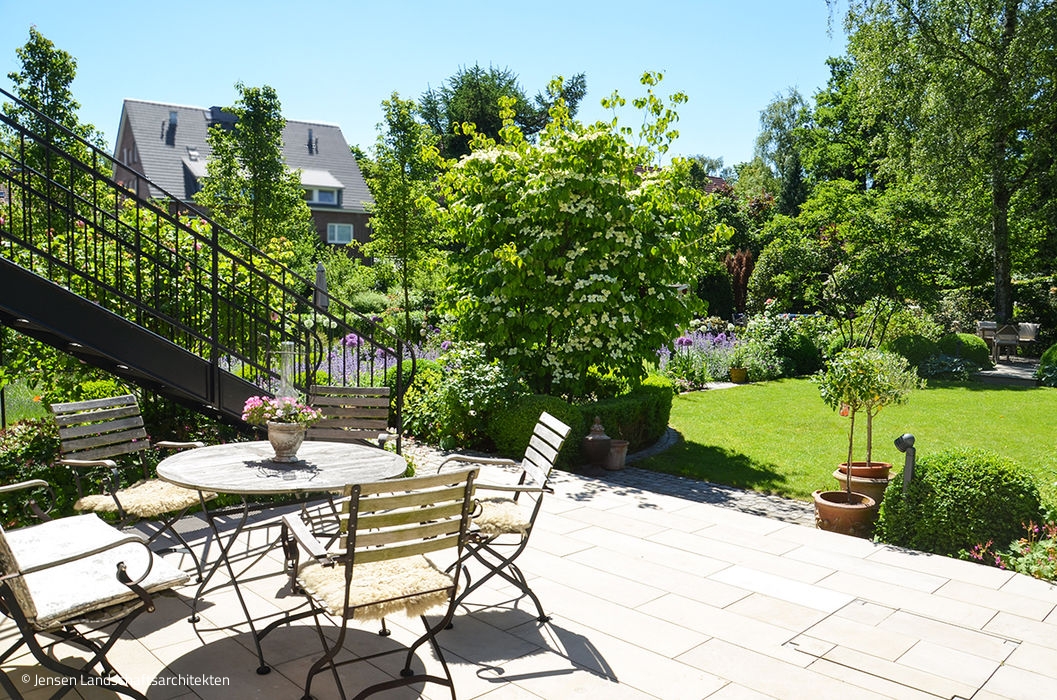
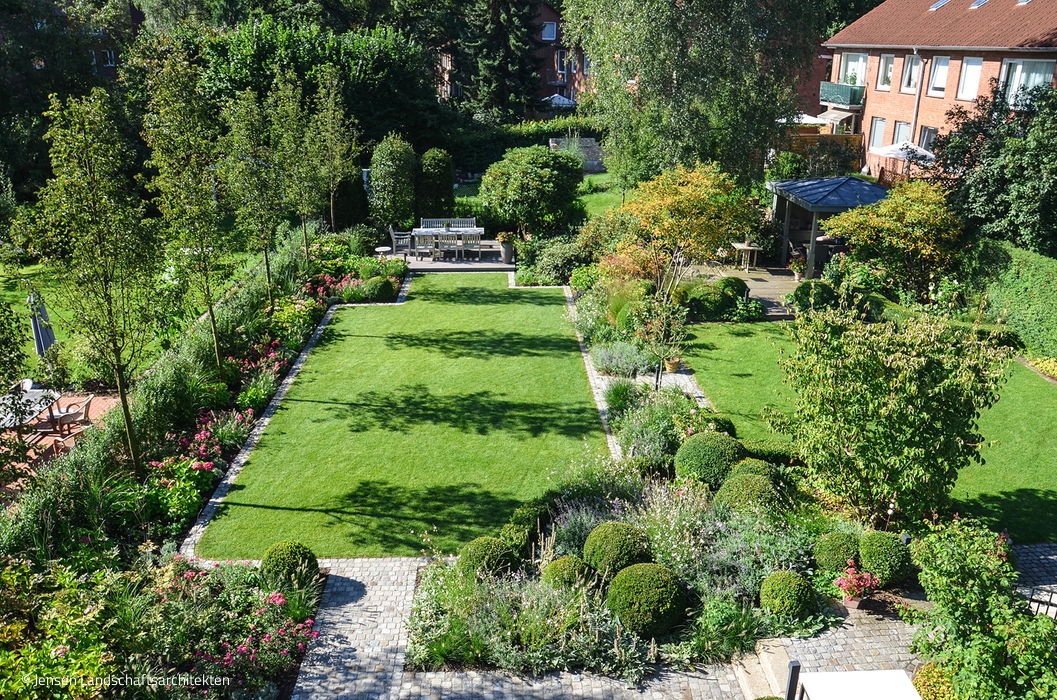
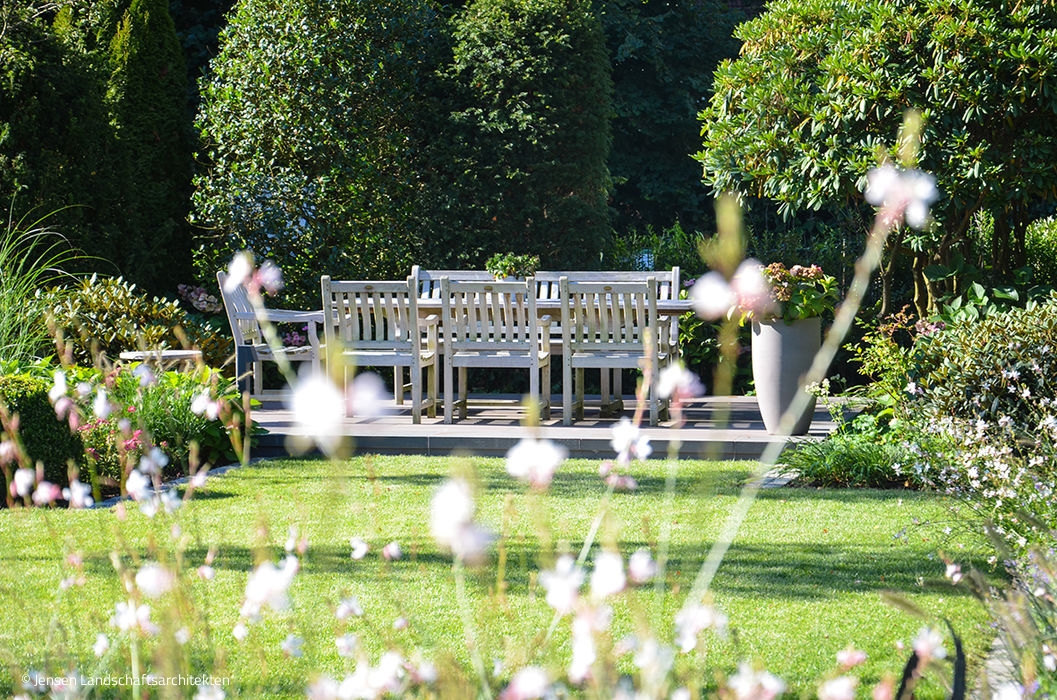
The tree-lined streets of northern Hamburg are defined by classic red brick semi-detached houses from the Fritz Schumacher era. Historically, the spaces "behind the house" served primarily as productive vegetable gardens for household self-sufficiency—purely ornamental gardens were the exception rather than the rule in this context.
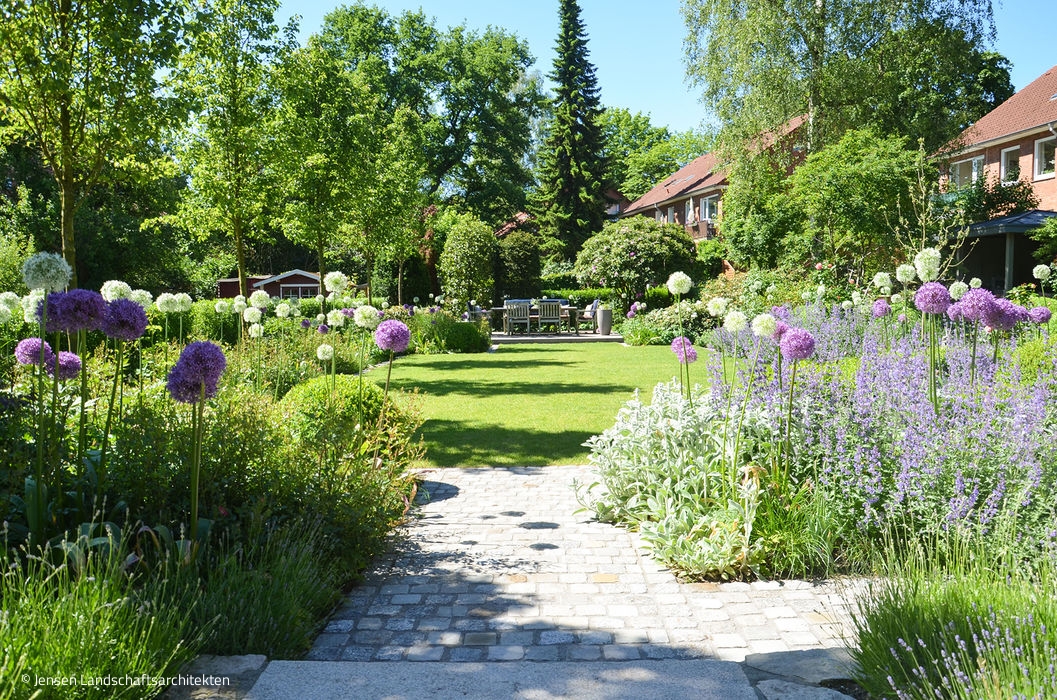
When a long-time resident had the opportunity to acquire the adjacent half of his semi-detached house, he also inherited a second garden. Over roughly four years, Jensen Landscape Architects designed both gardens for him in two phases. By the time work began on the eastern half, the western garden had matured beautifully along the former boundary line. Rather than replanting, the team preserved this established greenery and designed the new garden in a complementary language—modern in its lines yet unified in spirit. The result maintains the character of two distinct gardens with separate lawns. While the original section features geometric forms, classical curves, and a tea pavilion opening onto a wooden terrace, the newer addition introduces crisper lines: angular slab paving with sharp-cut joints, a quintet of trees defining the neighboring boundary, and angular light fixtures.
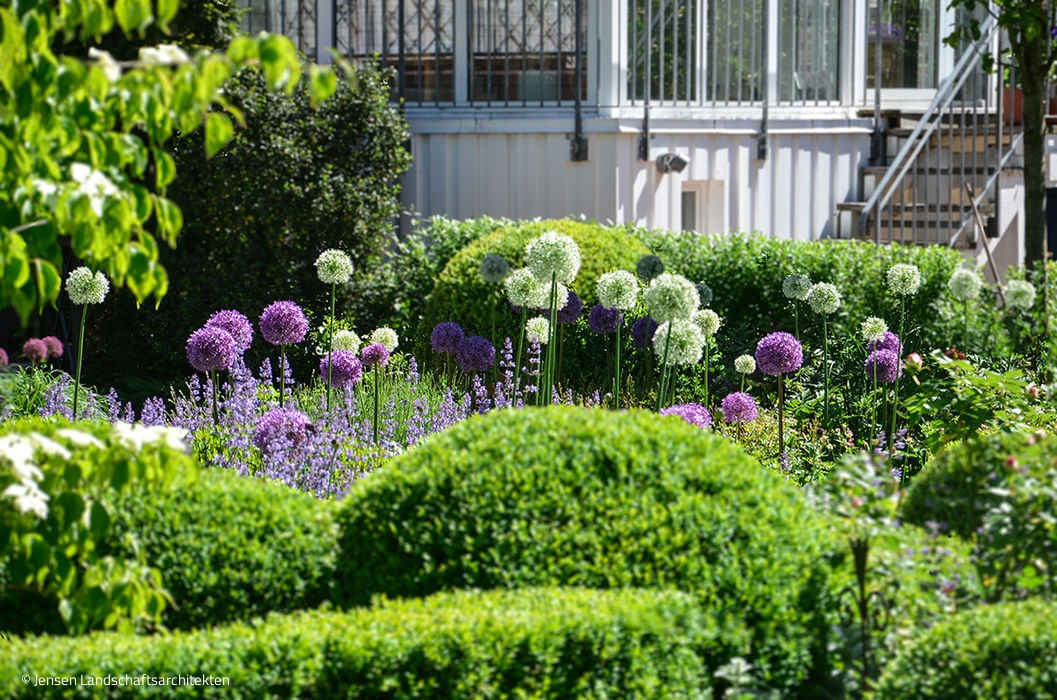
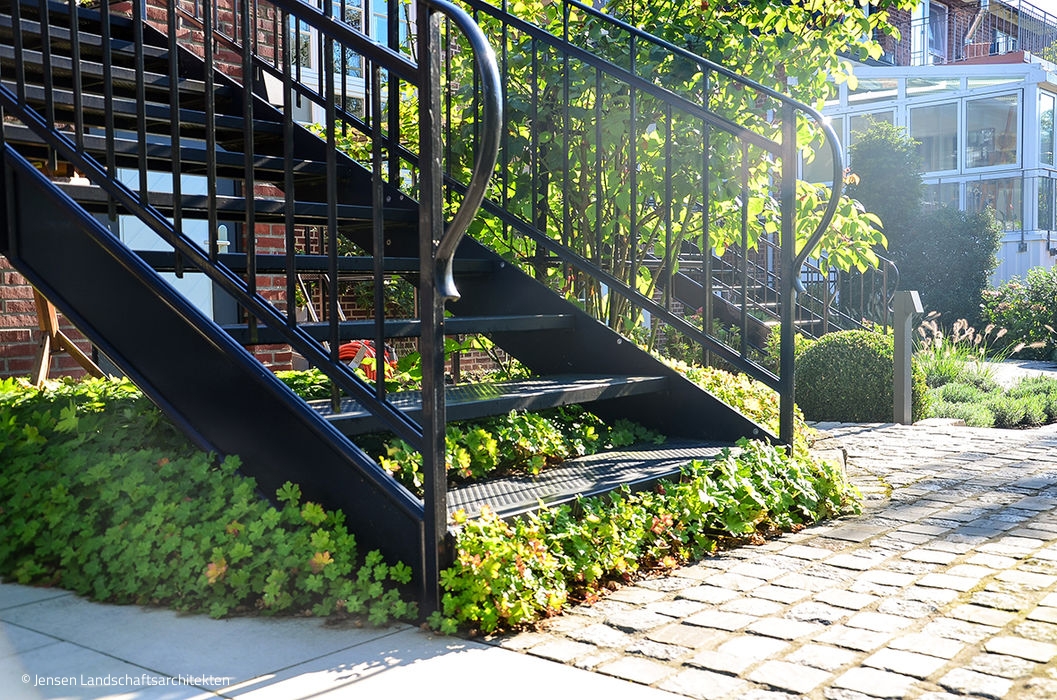
Access to the lower garden flows from the raised ground floor via two historically inspired cast and wrought iron staircases, whose transparency lends an airy quality that stone or timber structures cannot match. These stairs, paired with railings, handrails, and the patina-aged zinc roofing over wooden beams at the loggia, create a refined visual harmony. Multi-stemmed specimen shrubs—serviceberry and flowering dogwood—are essential here. Rhododendron 'Schneekrone' and lacecap hydrangeas provide additional focal points. Japanese holly, deployed as individual spheres and low hedging, ensures year-round structure. The carefully orchestrated planting palette delivers continuously engaging, seasonally dynamic yet remarkably low-maintenance compositions. Delicate rose varieties pair with feathery ornamental grasses, grey-leafed hostas interweave with creeping geranium, while giant allium dances with Japanese woodland grass. Catmint, prairie blazing star, and 'Globemaster' allium offer another compelling combination, as do lavender with atropurpureum allium and checkered fritillary. Come late summer, the interplay of lavender with silver-stemmed actaea, astilboides, and lamb's ear reaches its full splendor.
www.jensen-landschaftsarchitekten.de
(Published in CUBE Hamburg 01|20)
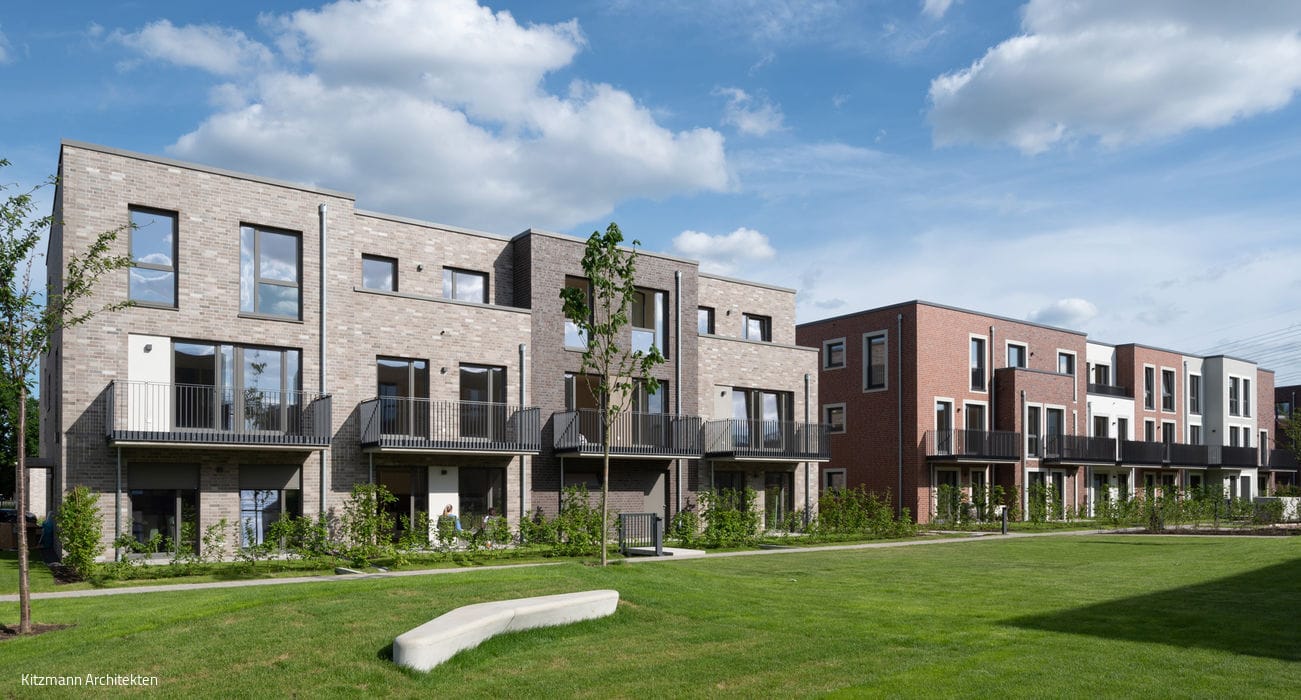
Harmonious Housing Diversity
An Innovative Climate Strategy Defines the Jenfelder Au District
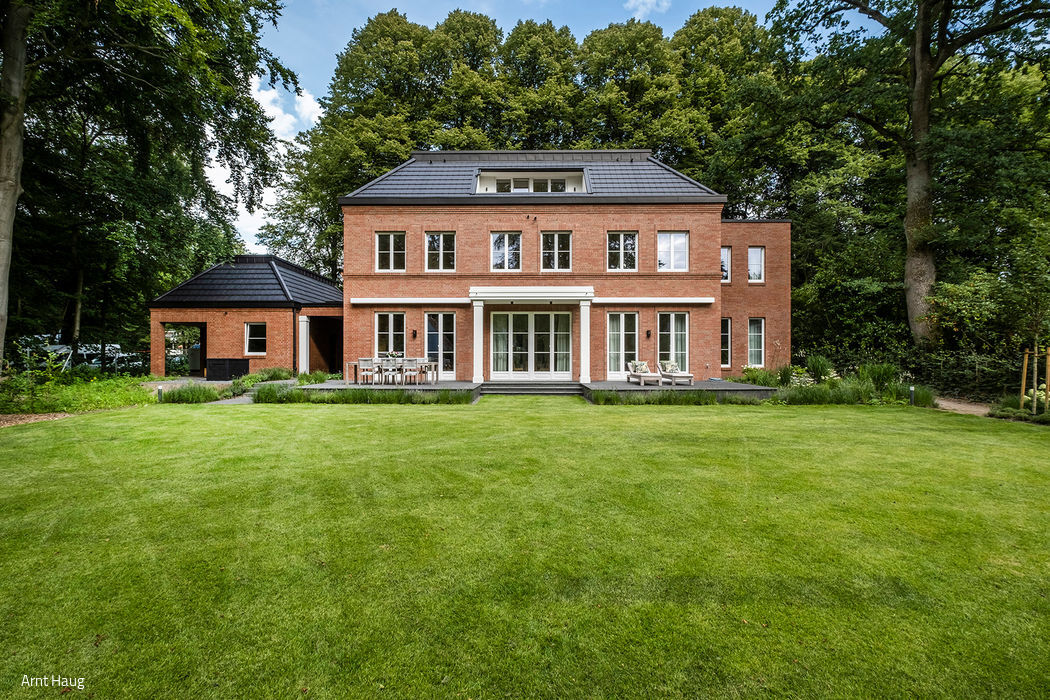
Living and Wellness
This Volksdorf villa provides generous space for family living and gracious entertaining.
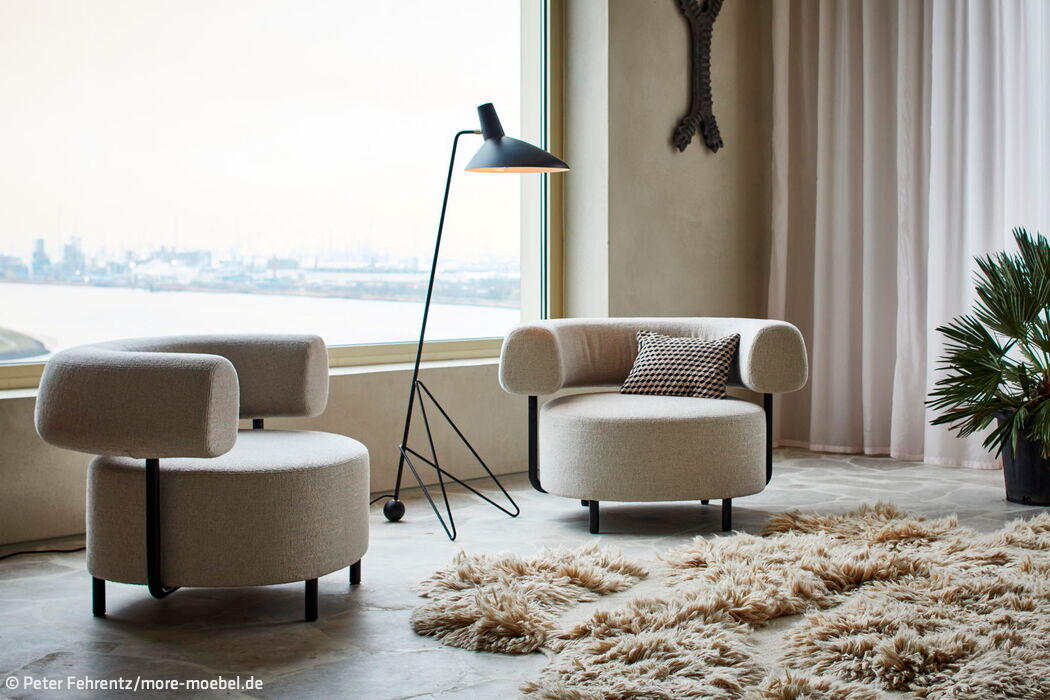
Aesthetic Refinement
On Peter Fehrentz's Design Philosophy
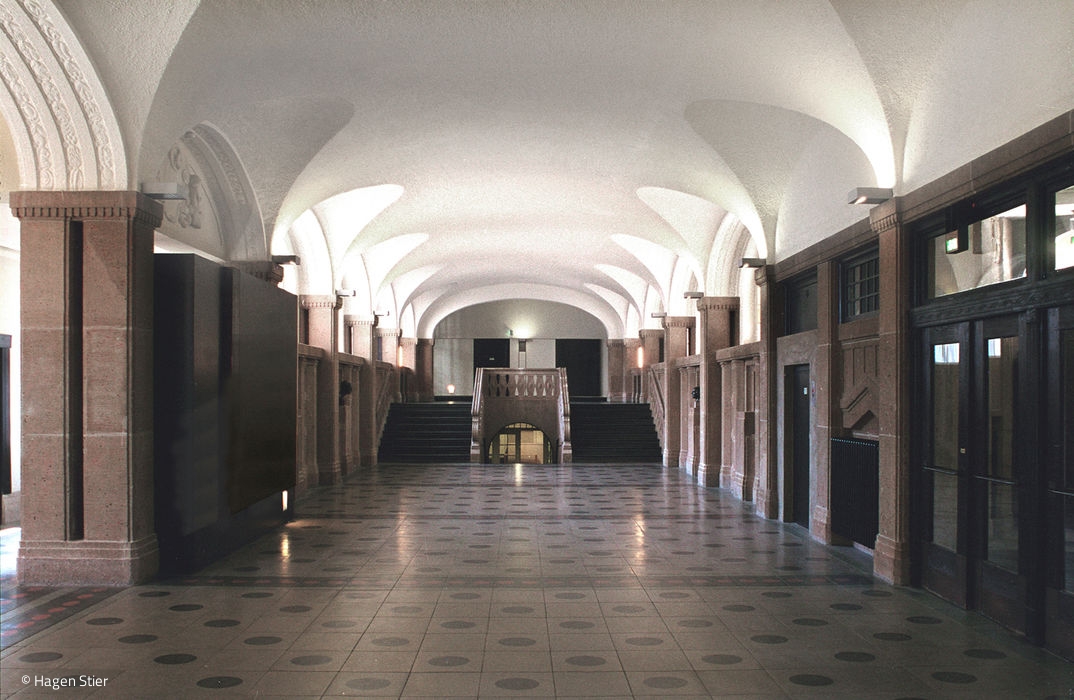
100 Years Young
Heritage-Conscious Renovation and Modernization of the University's Main Building