


Climate Change in the Garden
Garden designer Peter Janke on dry and natural gardens – and why irrigation isn't the answer
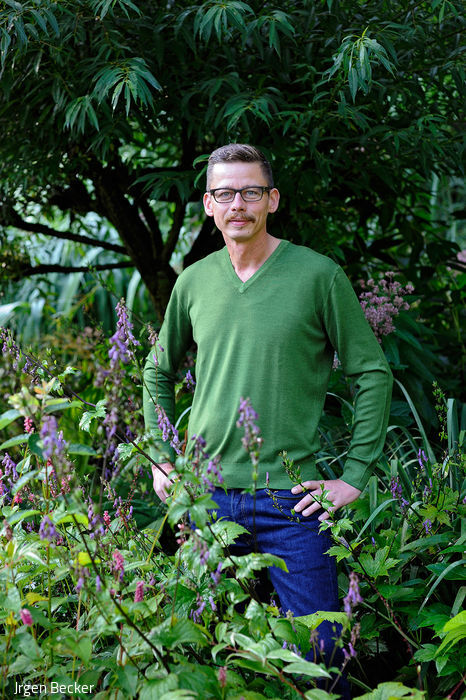


CUBE: Mr Janke, we typically think of gardens as dormant during these winter months. How does that affect you as a gardener?
Peter Janke: Officially, my nursery does go into winter dormancy, but of course we're deep in garden planning mode. So hibernation isn't really part of our rhythm – much like nature's winter sleep is merely a visual pause. Anyone who's worked with flower bulbs in late autumn knows that shoots and buds form long before spring arrives.
Beyond designing and cultivating gardens with plants from your own perennial nursery, about 15 years ago you began realizing your personal vision – a 1.4-hectare garden south of Düsseldorf with sandy soil. What inspired you to undertake this ambitious project, which you named "Hortvs"?
I took over the family nursery early on – the fourth generation to do so. That meant restructuring quite a bit, including launching a design office. But I found myself constantly torn: many client projects conflicted with my own aesthetic principles and philosophy of nature. There was a gap between my architectural concepts and what I'd learned through countless hiking expeditions. So I went to England to study under Beth Chatto, the renowned garden innovator, in 2003 and 2004. That apprenticeship in Essex proved transformative – it showed me how to unite design rigor with ecological intelligence. Armed with that knowledge, I created "Hortvs" here in Hilden.
Beth Chatto (1923–2018) gained international recognition for her biodiverse dry gardens. Did her approach become your blueprint for adapting to the climate challenges you were increasingly witnessing in your own garden?
I began exploring this long before climate change felt urgent – when it was still an abstract scenario. But the last three scorching summers and the catastrophic July 2021 floods made it clear: climate change is here, and our gardens must adapt accordingly. Back in the 1960s, Chatto identified the core challenge: her Essex garden received minimal rainfall, and summer irrigation bans were common. Rather than watch precious plants wither, she reimagined the garden entirely – choosing species that thrive in extreme conditions without constant intervention. Pragmatically, the dry garden concept was born. Over decades, her botanical expeditions with husband Andrew to arid regions worldwide enriched the garden with remarkable biodiversity and beauty.
Your "Hortvs" includes a dry garden section that, as your new book and photographs show, thrives through hot summers. Yet throughout other garden areas, you also forgo artificial irrigation entirely. Why such restraint?
Initially, it was simply pragmatic water conservation – some German municipalities now impose irrigation bans due to depleted groundwater. But it evolved into something deeper: when you select plants according to their natural habitat preferences, as I do at "Hortvs," summer drought becomes irrelevant. The plants simply adapt. Artificially irrigated plants learn the opposite lesson: water comes from above, so roots stay shallow and atrophy. Come the next hot summer, those weak root systems can't handle the rising topsoil temperatures, disrupting vital symbiotic relationships with soil microorganisms and fungi. Even native plants eventually fail. It's a cascade effect that undermines resilience.
Gardens near buildings are often treated as mere architectural extensions – geometric, minimalist, dominated by lawn and hardscape, lacking diversity. Is this model still defensible given climate change and biodiversity collapse?
Many assume geometric gardens represent modernity – but that's a misreading of design history. Look at 1920s and 30s modernist gardens across Europe and America: even cutting-edge architects worked with plants far more naturally and site-specifically than we do today. The real precedent for today's formal gardens is actually the Baroque – ornamental, controlled, performative. Honestly, it has little to do with shaping the future.
Many homeowners favor geometric gardens partly because they're promoted as low-maintenance. How much more demanding is a natural garden that works with, rather than against, nature – like "Hortvs"?
That's another misconception. Maintaining endless formal paving, lawn, decking, outdoor kitchens, pools, and showers – constant scrubbing, pressure-washing – that's exhausting. A natural garden, designed to largely self-regulate, is far simpler. Of course, an ornamental garden stays ornamental; without intervention, Central Europe reverts to forest. But the usable space resembles a forest clearing – nature's most biodiverse habitat. The work shifts from endless maintenance to intelligent stewardship.
Your garden contains over 4,500 species – many non-native. Are such neophytes ecologically justified?
Climate change means species from warmer regions naturally migrate northward – it's a fundamental ecological process. Mediterranean plants will arrive; simultaneously, native species shift poleward. New arrivals are clever gap-fillers and ecological successors. When I select neophytes better suited to shifting conditions, I'm simply accelerating and guiding a natural process – not inventing it. But it requires discipline: every native plant anchors broader ecological webs with bees, birds, and countless microorganisms. Gardens carry responsibility for the bigger picture. Here's a striking fact: private gardens in Germany collectively cover the same area as all German nature reserves combined.
So it's really about finding the right balance – achieving true biodiversity?
Diversity is our only path forward ecologically – we can't reverse our impact on Earth, but we can give back through thoughtful stewardship. Diversity also makes aesthetic sense: with just three plant types and two fail under climate stress, your garden looks barren. With 300 species, such losses barely register. Resilience and beauty converge.
Final question: What guidance would you offer homeowners planning their gardens this spring?
Prepare for climate uncertainty – truly. Read. Try to understand natural processes. Cultivate your own aesthetic eye rather than defaulting to a designer's template. Ask yourself honestly: do you actually want a stark, sunbaked terrace, or would you prefer dappled shade beneath trees – that beer-garden feeling? When you answer that truthfully, everything else falls into place.
Mr Janke, thank you for your time and insights.
Interview by Paul Andreas.
Photography Credits:
Jürgen Becker
www.garden-pictures.com
(Published in CUBE Düsseldorf 01|22)
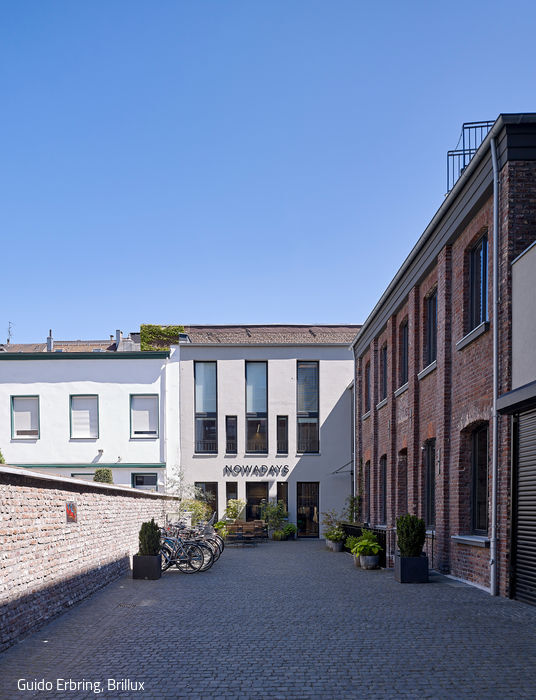
Patchwork Charm
The conversion of a townhouse and commercial courtyard reveals the historical character and enhances it.
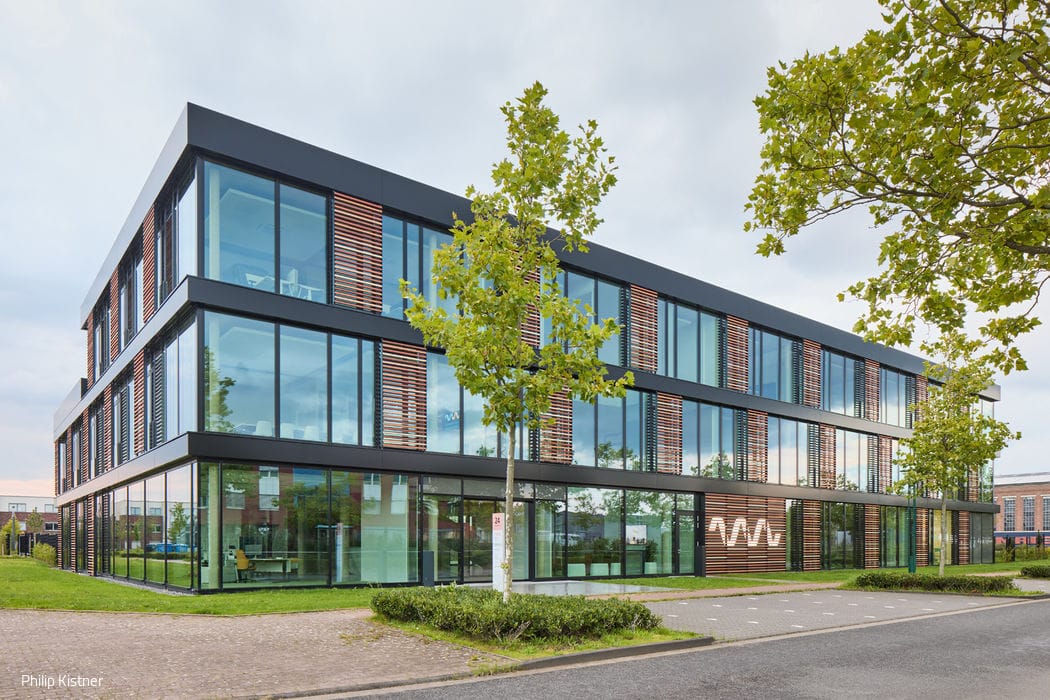
Luminous Transparency
A new energy company headquarters in Willich embodies openness and flexibility.

Innovative Transformation
From Retail Vacancy to Vibrant Homes: Mörsenbroich's Reimagined Future
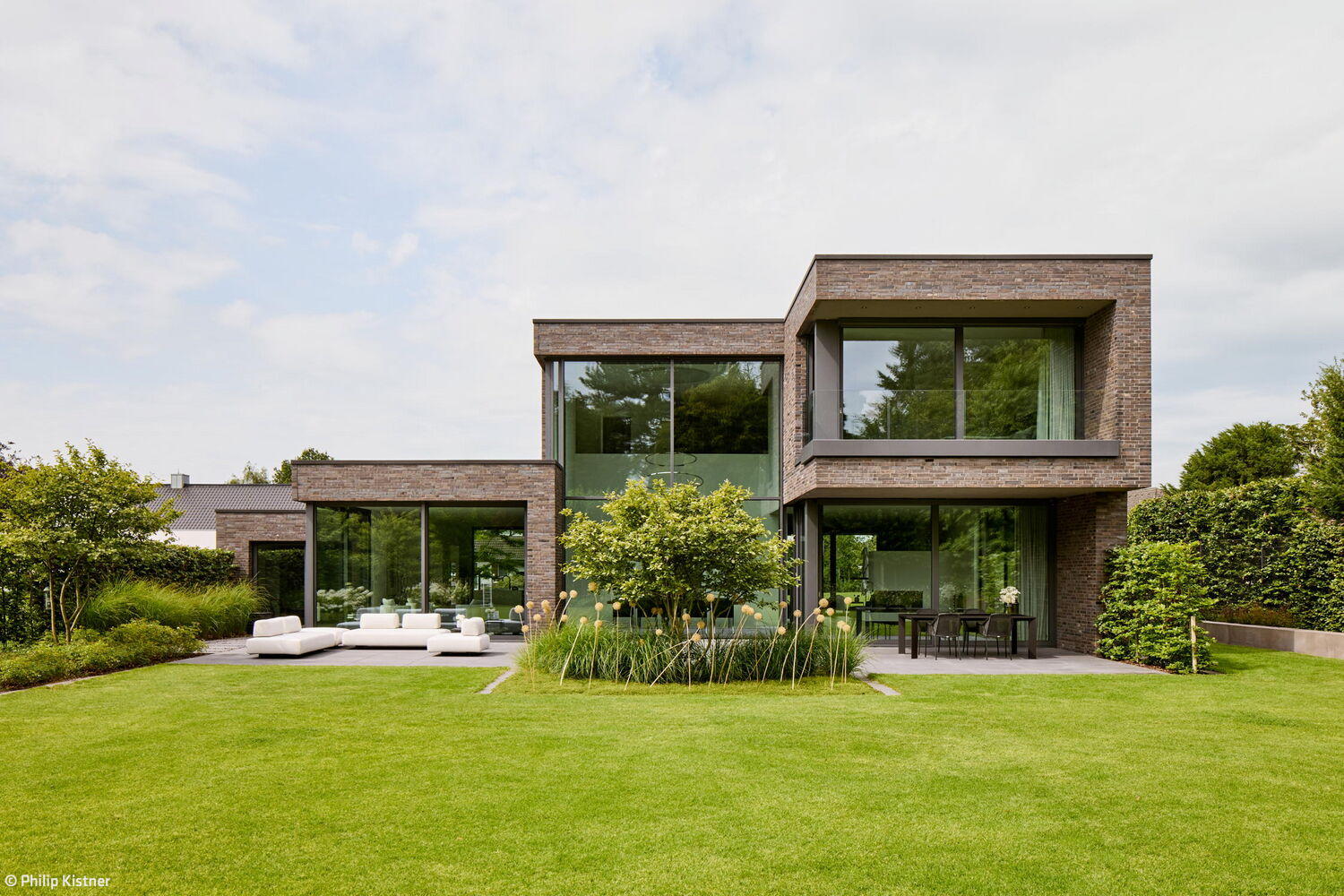
Reduced Monolith
A Mönchengladbach residence that captivates through its uncompromising minimalist design