


In Focus
The sculptural reception pavilion is prominently visible and easily located.
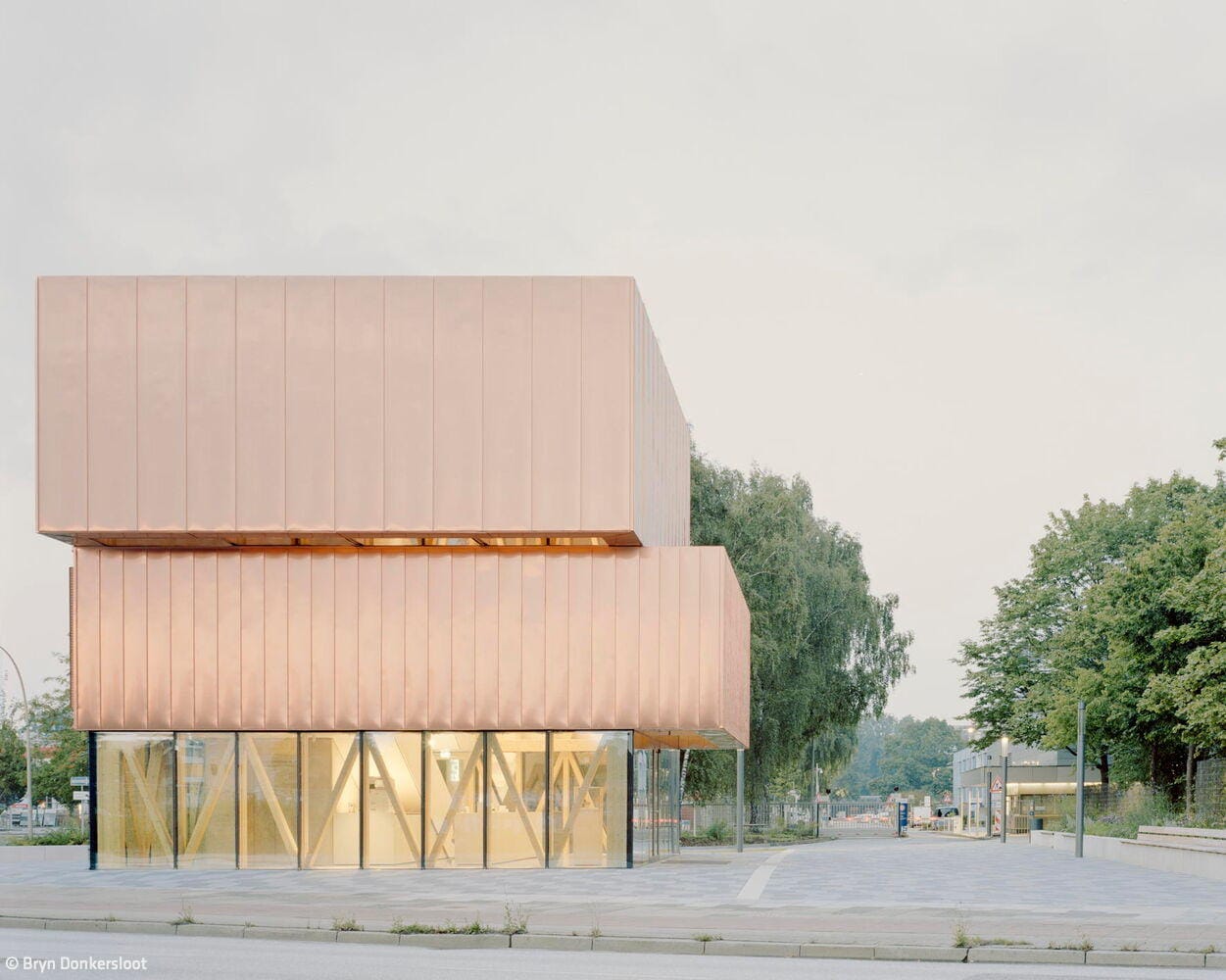
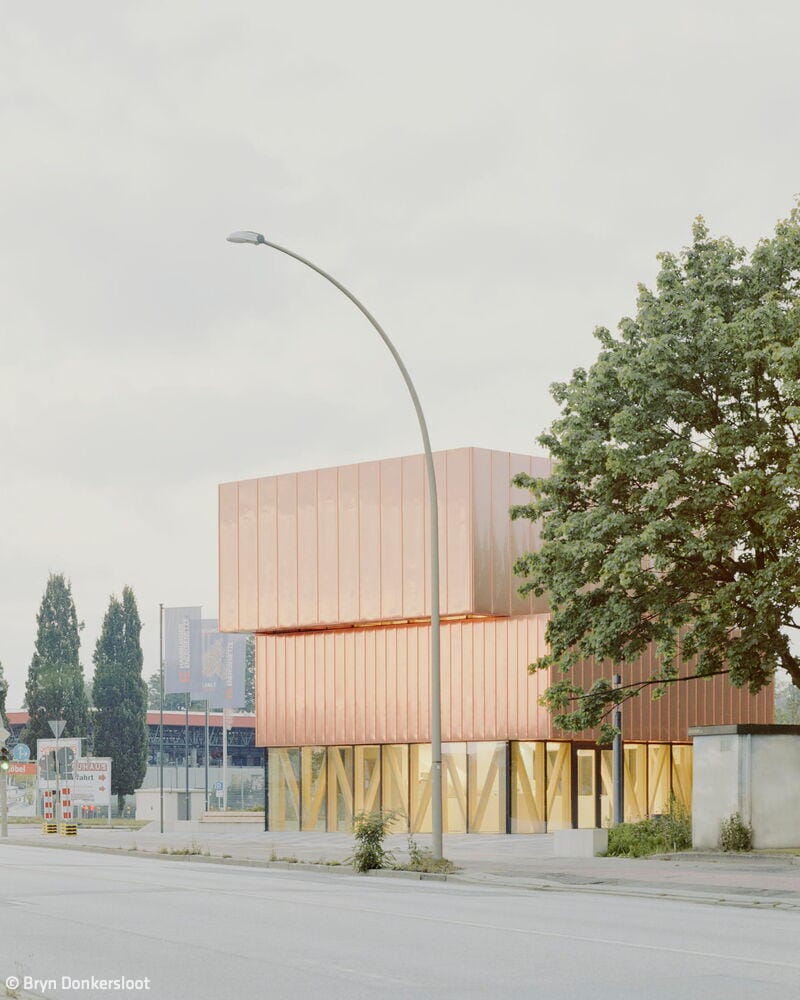
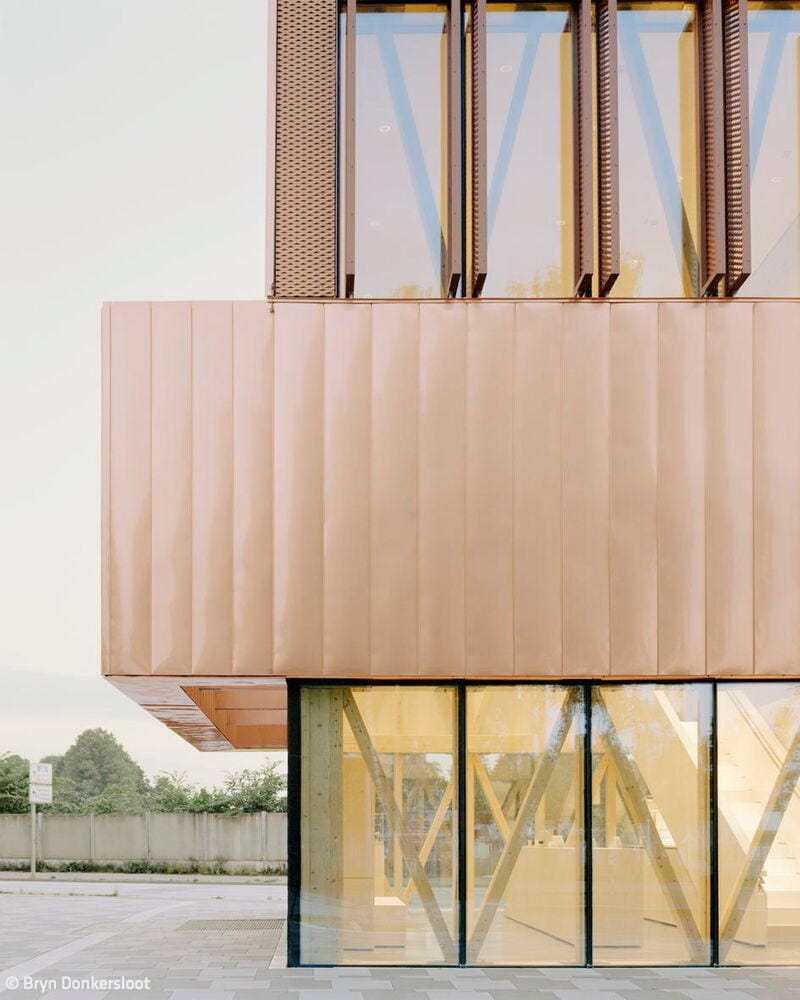
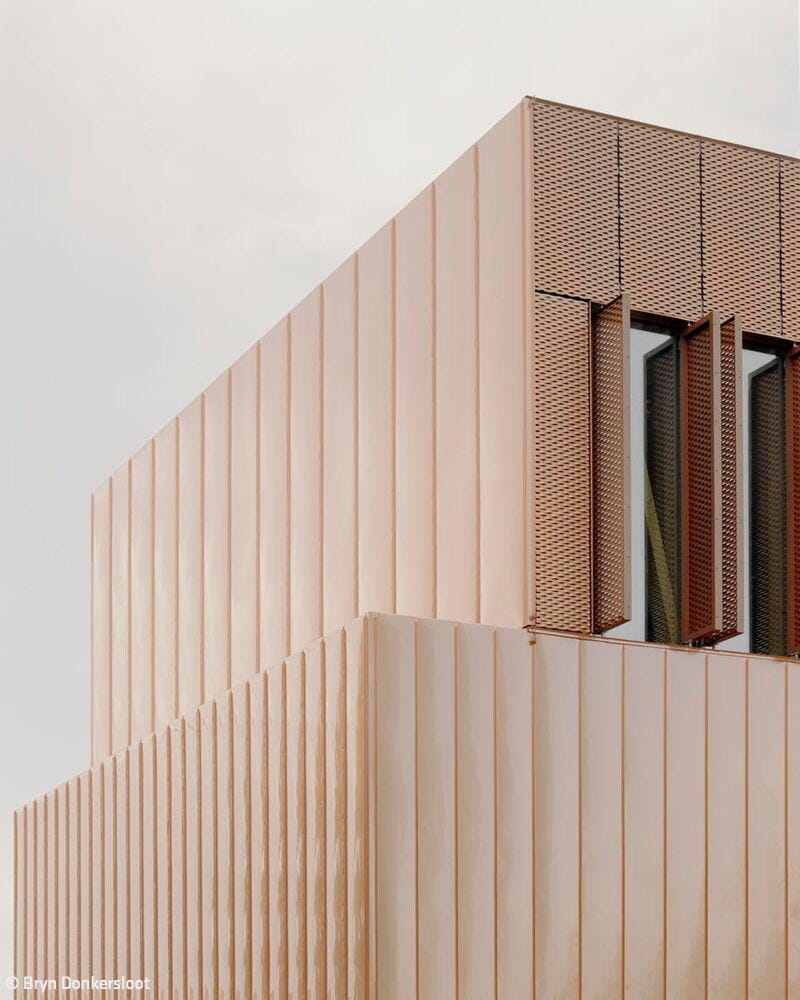
As part of the development and redesign of the Hamburger Energienetze facilities on Bramfelder Chaussee, a sculptural reception pavilion was introduced to strengthen what had been an inadequate entrance. The goal was clear: create a distinctive, high-quality entry point to the main headquarters—one that stands out and is easy to find. Designed by Berlin-based Busch & Takasaki Architekten BDA, the pavilion achieves this with surprising simplicity and restraint. Gerkan Marg and Partners brought the vision to life as lead planners, implementing it alongside several other buildings developed on the restructured company campus.
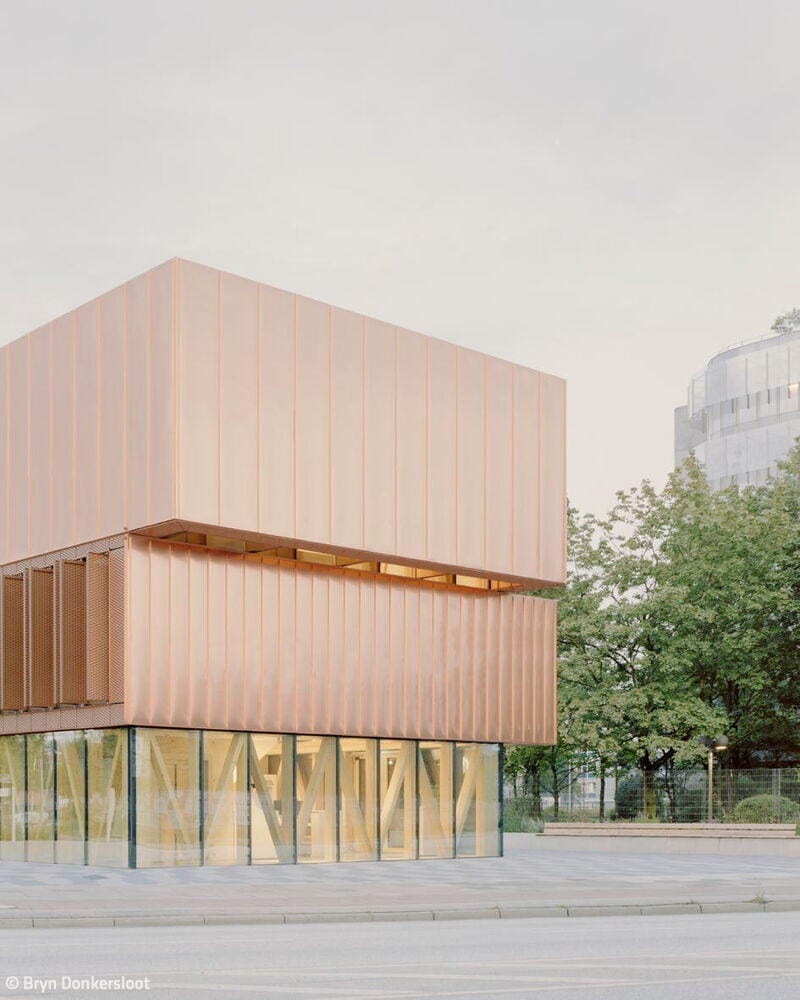
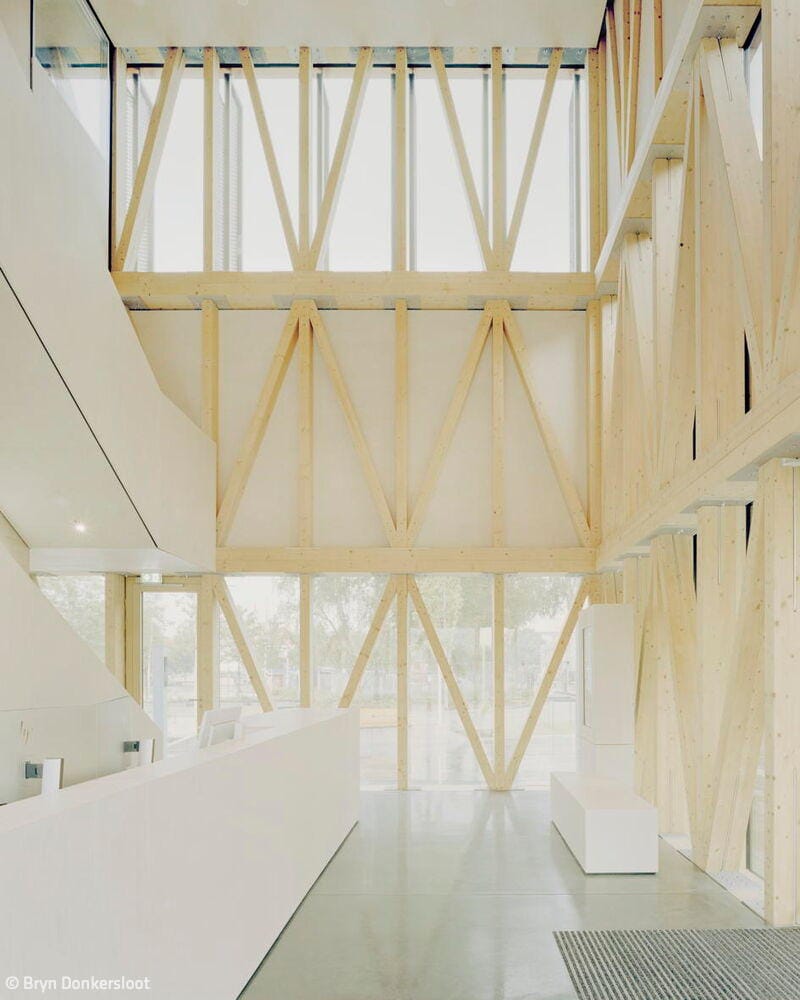
Set thoughtfully back from the street, the reception pavilion anchors a carefully composed plaza that invites lingering. Its program—reception, exhibition, meeting rooms, and break areas—stacks vertically into a striking three-storey form. Subtle cantilevers in the façade draw visitors inside and gesture toward the operations yard, while lending the tower a distinctive yet understated sculptural presence. The form shifts with each viewpoint; stacked cubic volumes create an interplay of lightness and solidity. At its heart lies the reception area, a spatial hub connecting all other functions. Elegantly proportioned linear stairs bind the levels together, emphasizing the soaring exhibition space and the building's vertical drama.
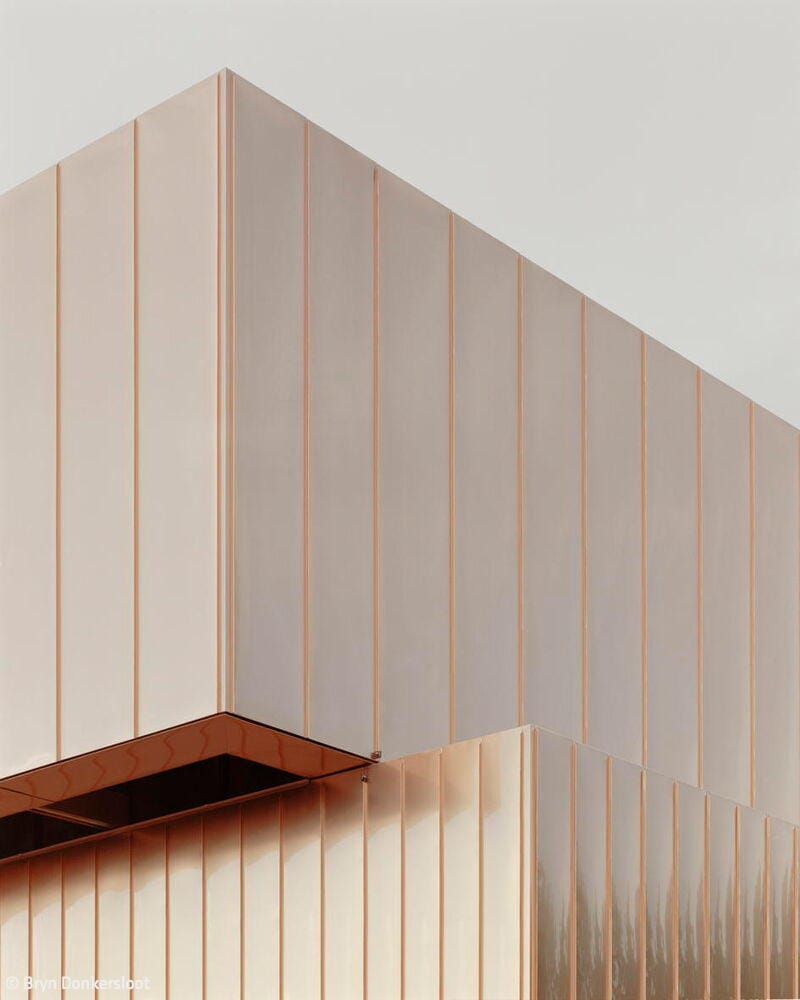
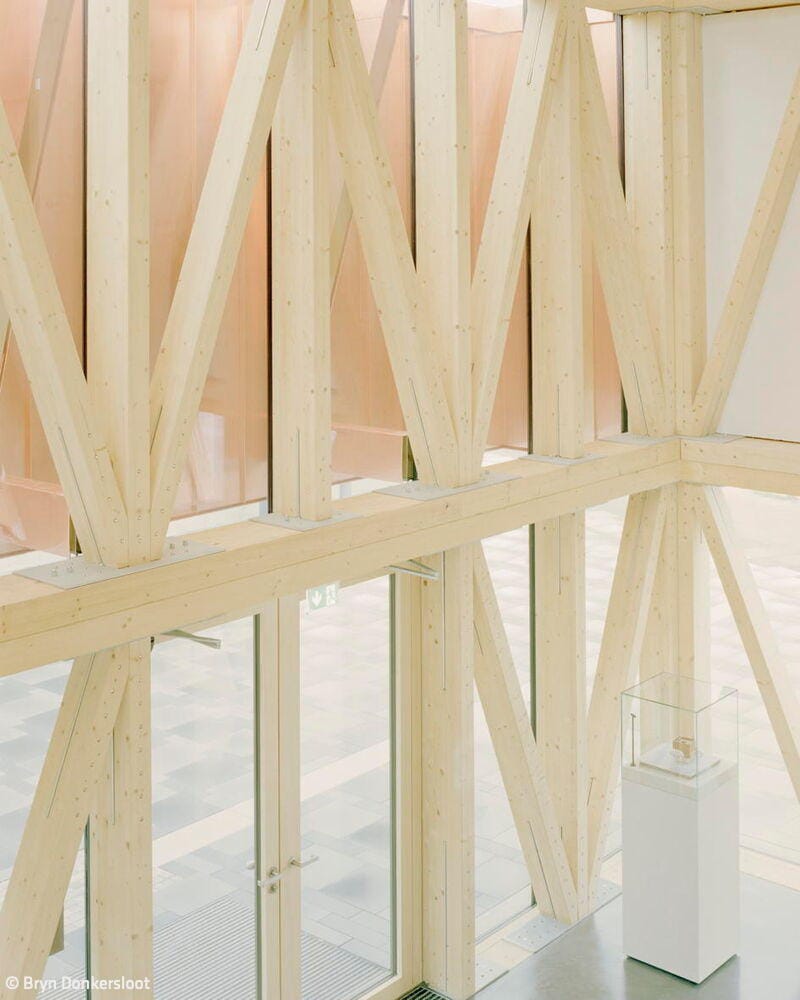
The pavilion's material palette speaks to both innovation and sustainability while embodying the company's identity. Visible timber frame construction forms the exterior walls, extending inward to define spatial zones, adding depth, and establishing rhythm throughout. The ground floor is entirely glazed. A copper envelope wraps the structure—a visually distinctive skin that communicates identity far and wide. By day, its reflective surface shimmers with life; by night, the interior glow radiates outward, creating a luminous presence. Vertical timber and standing seam details articulate the form with precision. A transparent coating protects the copper from oxidation and metal runoff. The entire structural system is timber-based, with load-bearing timber frames forming the exterior walls.
Timber beam ceilings with wooden shear panels crown the ground and upper floors, anchored to a reinforced concrete elevator core, as does the roof structure above. The new plaza makes a bold identity statement, placing both pavilion and innovation campus squarely in public consciousness. This restrained, open plaza accommodates diverse uses and serves as a natural gathering point. The pavilion stands freely, framed by mature trees and soft plantings that create a verdant backdrop. A low seating wall defines the plaza's perimeter, while simple stele lights mark the location vertically—and ensure its presence glows even after dark.
Photography:
Bryn Donkersloot
www.bryndonkersloot.com
(Published in CUBE Hamburg 04|25)

More substance than appearance
Three Apartments, One Building, Three Separate Entrances
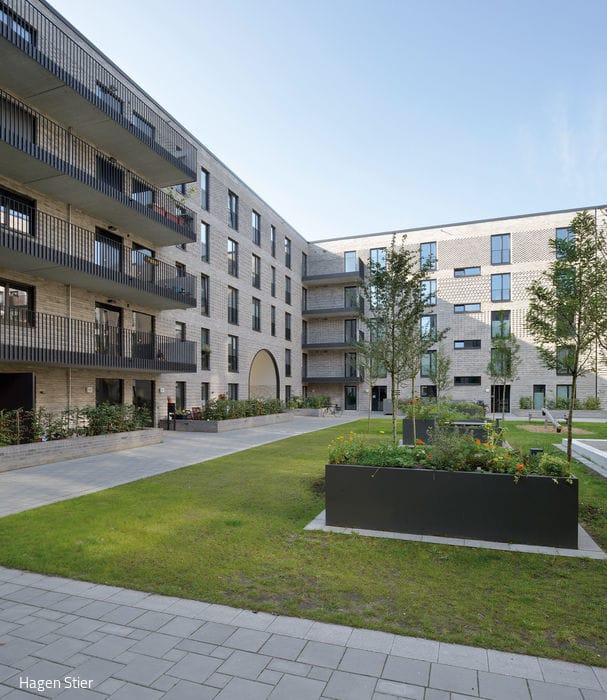
Hamburg's love affair with brick
Pergolenviertel buildings reimagine historic neighbourhoods
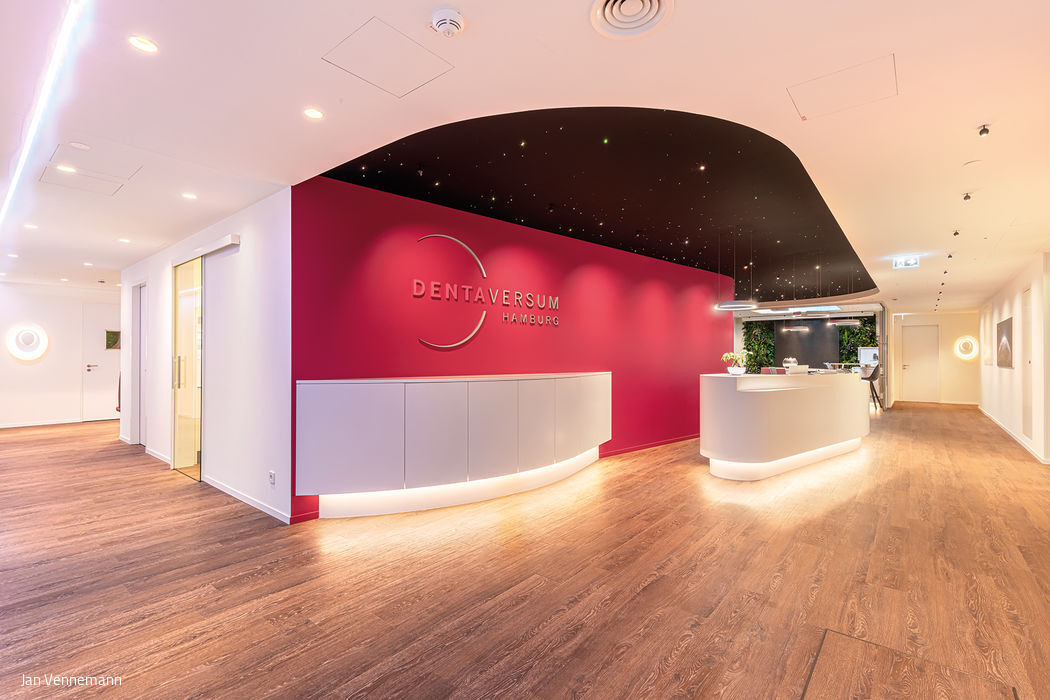
The entire universe
Comprehensive Lighting Design: Supporting Patients and Practice

A Distinctive Luminaire
From Guerrilla Gardening to Guerrilla Lighting