


Hamburg loves brick
Pergola Quarter structures reinterpret historic neighborhoods
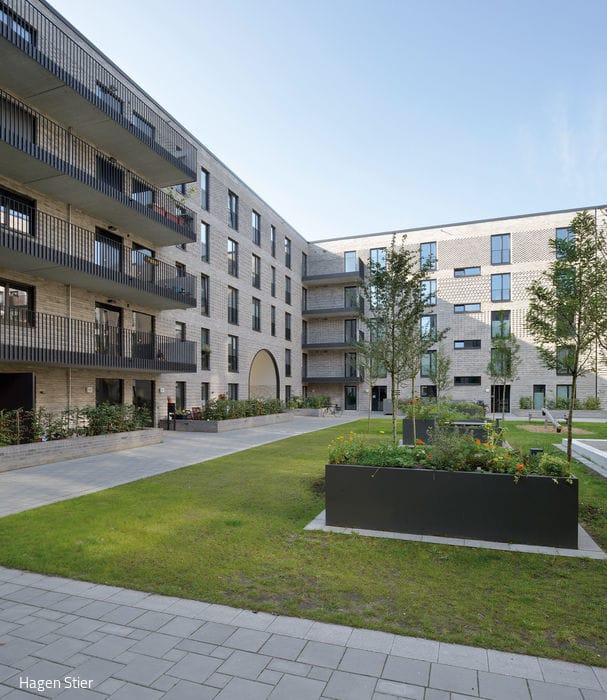
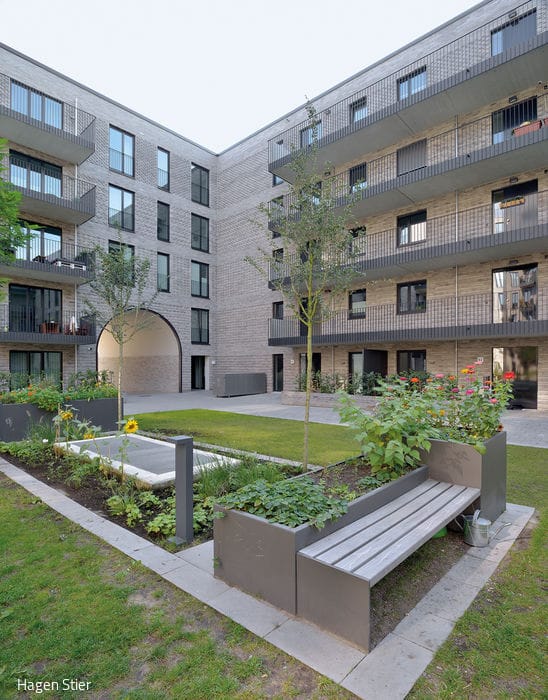
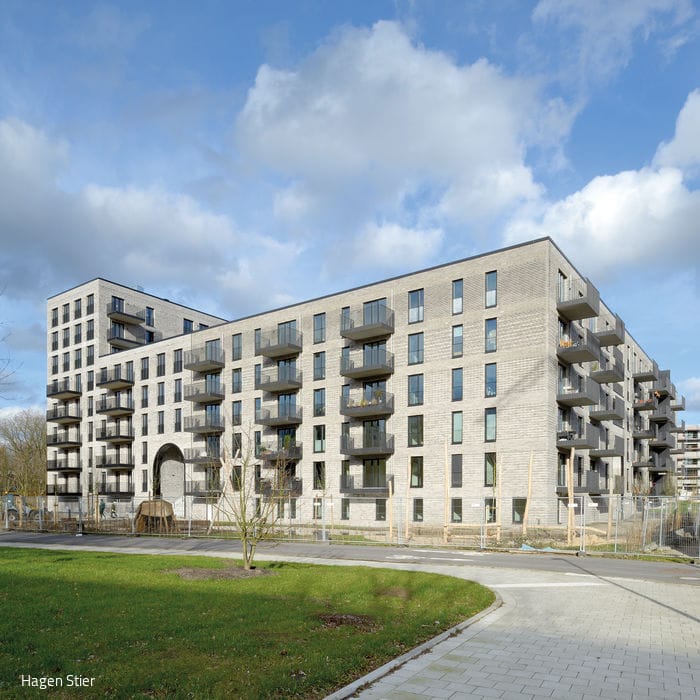

As part of Hamburg's housing construction initiative, the Pergolenviertel in the North district represents one of the city's largest neighborhood developments. Located adjacent to the Stadtpark between City Nord and the historic quarters at Alte Wöhr and Jarrestadt, it draws inspiration from 1920s architecture. In 2012, e2a architects from Zurich won the urban design competition, with construction scheduled for completion in 2023. Across 27 hectares, 1,700 residential units are being developed—60 percent of which are subsidized housing—alongside extensive community and inclusive amenities as well as innovative mobility concepts. Notably, half of the total area is reserved for parks, playgrounds, and modern community gardens. The design framework calls for sculptural brick facades on the large-scale buildings, with a color gradient running north to south, transitioning from gray to red. Residential courtyards, arcades, and pergolas serve as additional design elements that give the Pergolenviertel its distinctive character.
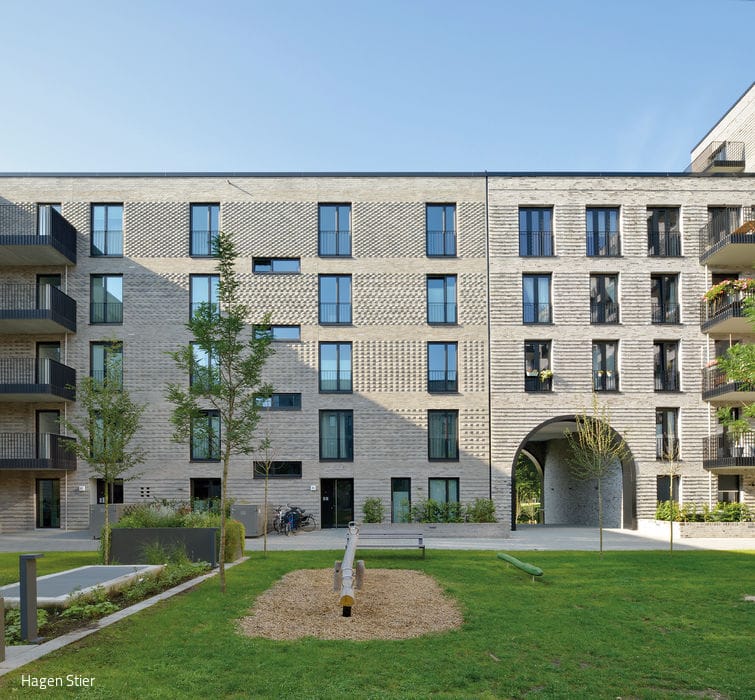
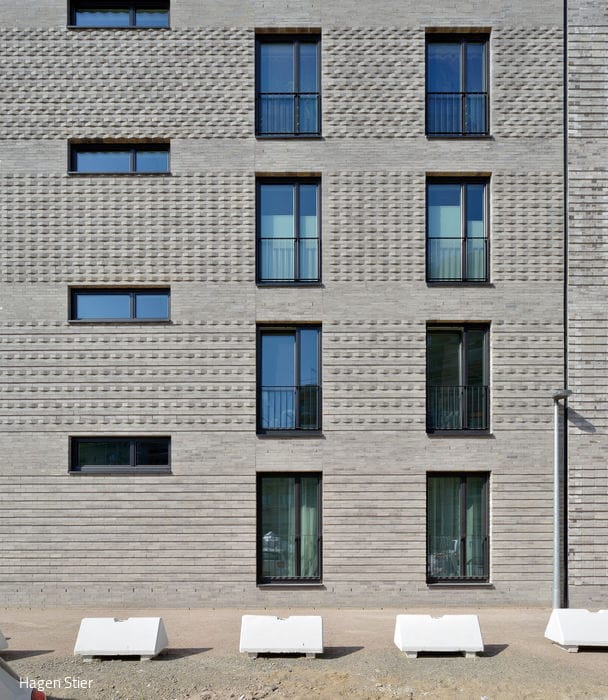
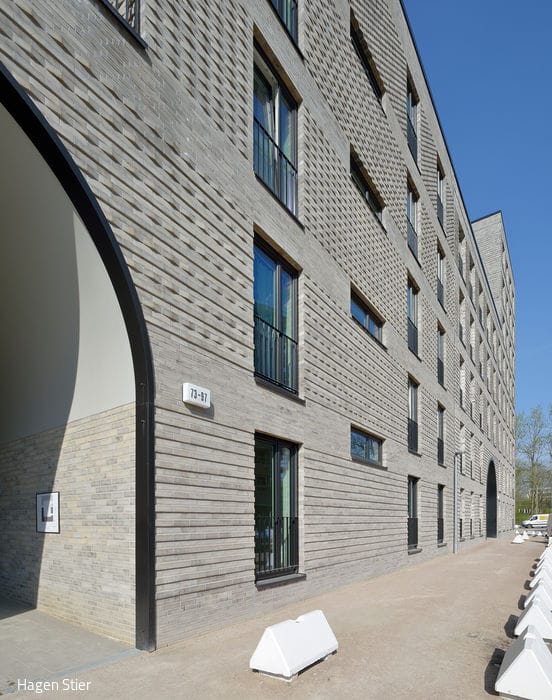
We present various projects in a series. The opening project is a residential building by DFZ architects, located on the northern plot 2b. Its brick facade is characterized by projecting and recessed brick courses. Combined with black metal components and glass surfaces, the light brick takes clear precedence. The facade concept is based on the theme of "progression." The specially formed bricks—arranged as bishop's miters between window openings—create a type of "infill," a vertical progression that becomes progressively tighter toward the higher floors. This vertical movement is reinforced by horizontal "bands" laid in long format without relief ornamentation, creating strong contrast with the infill pattern. Beyond articulating the floor levels, these continuous horizontal bands unite the individual building plots and impart horizontal cohesion to the residential courtyards. The result is a dynamic pattern that maintains the integrity of the overall rigorous design concept.
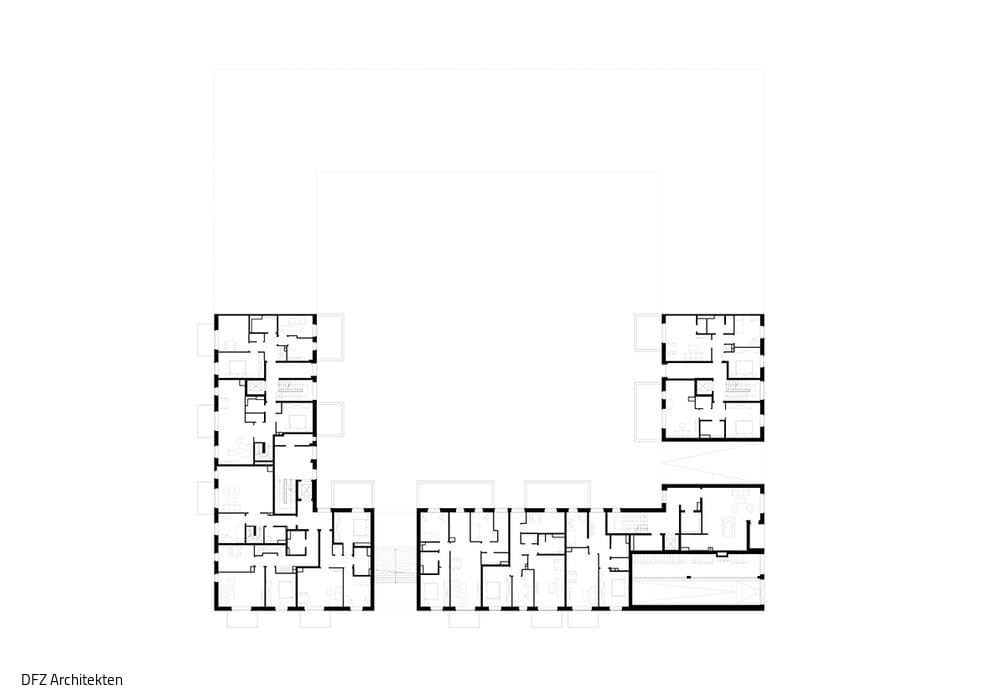
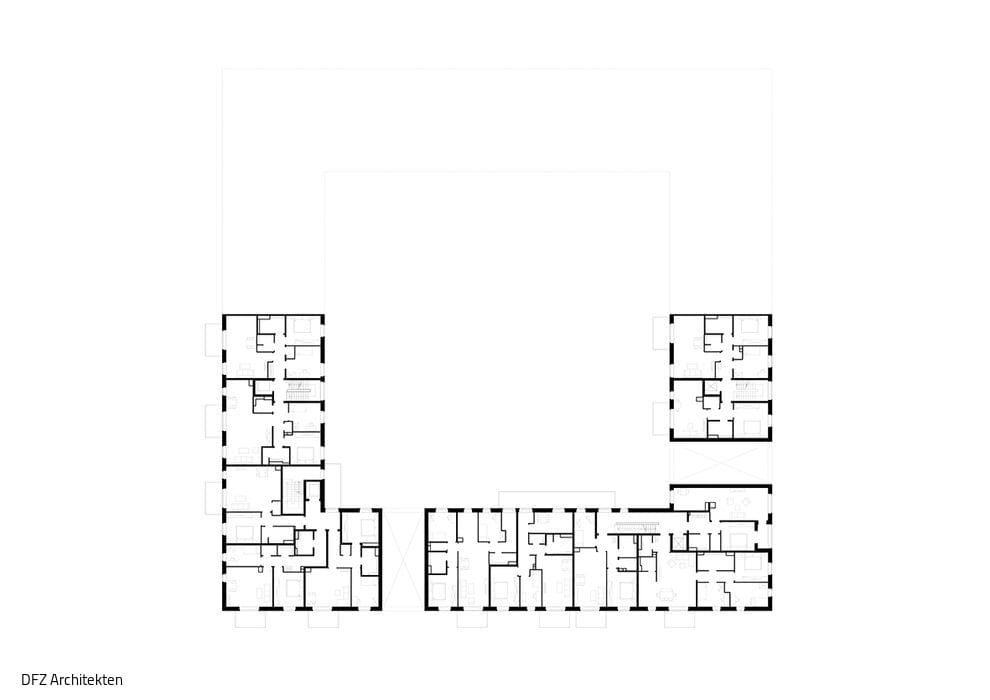
The 64 owner-occupied apartments are distributed across four stairwells, accessed from the courtyard through a generous barrel-vault passage. The variety of apartment sizes and floor plans offer diverse use possibilities, appealing to different demographic groups and fostering a mixed-tenure residential community. The courtyard features children's play areas, gathering spaces, and planters for urban gardening. On the ground floor, there is a spacious communal room with its own loggia. The building is constructed to KfW Efficiency House 55 standards and holds NaWoh certification.
Photography Credits:
Hagen Stier
hagenstier.com
(Published in CUBE Hamburg 02|21)
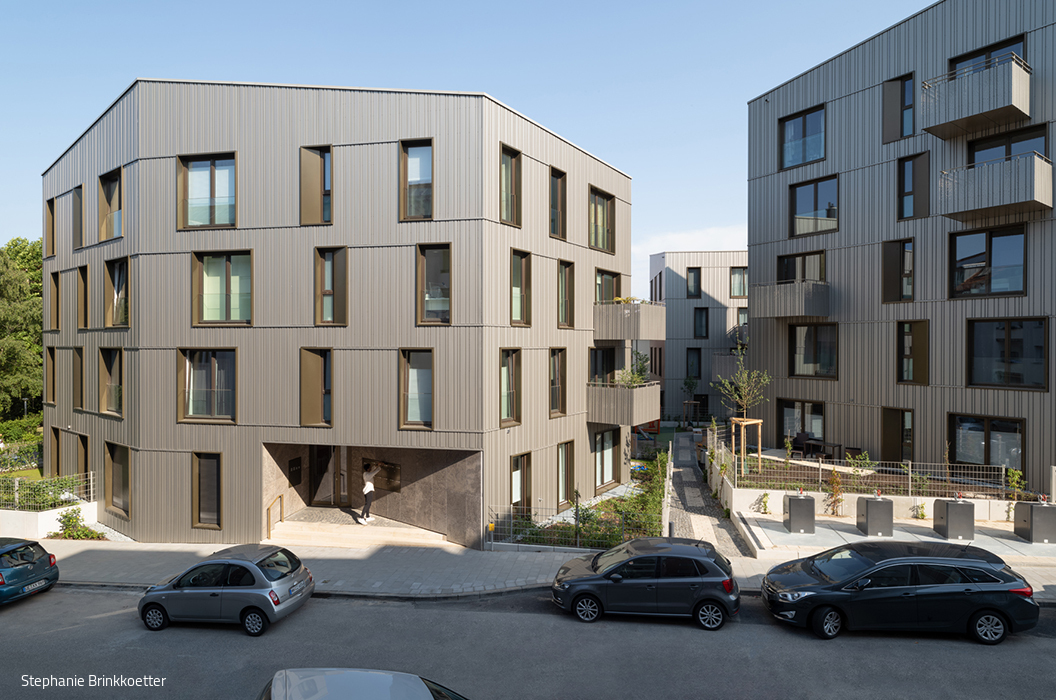
Three Sisters
These cooperative residential buildings echo the refined geometry of champagne-toned pinstripe suits.
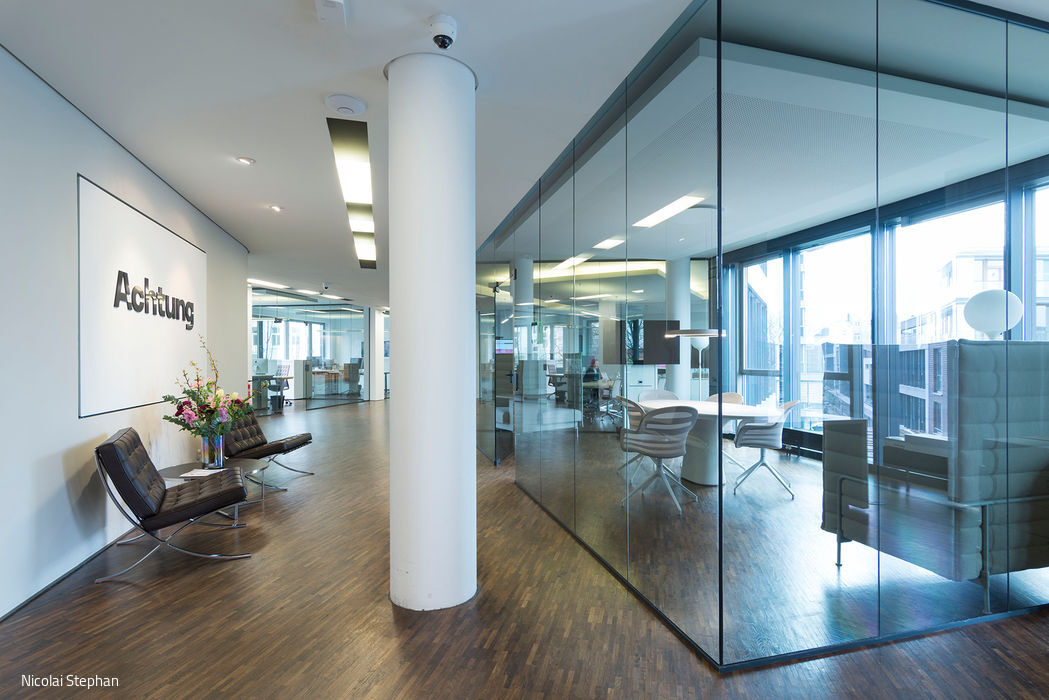
How to make an office sexy?
A communications agency proves it: thoughtful design brings people back.

L'art pour l'art
A staircase transforms an attic into another world
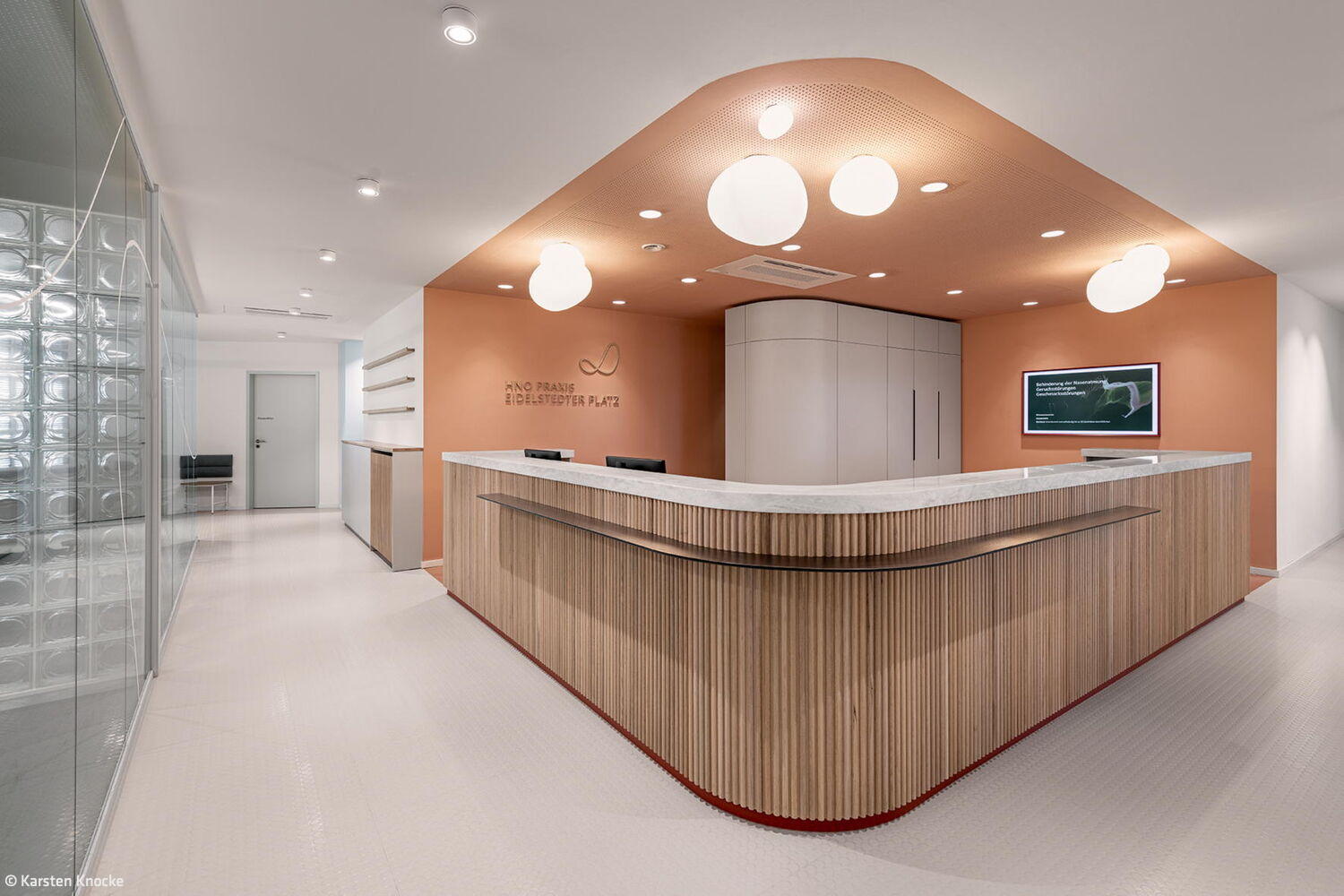
People at the Center
Where Function Meets Design: The ENT Practice Reimagined