


Transformation Through Time
Historic garages reimagined as the "Café Garage"


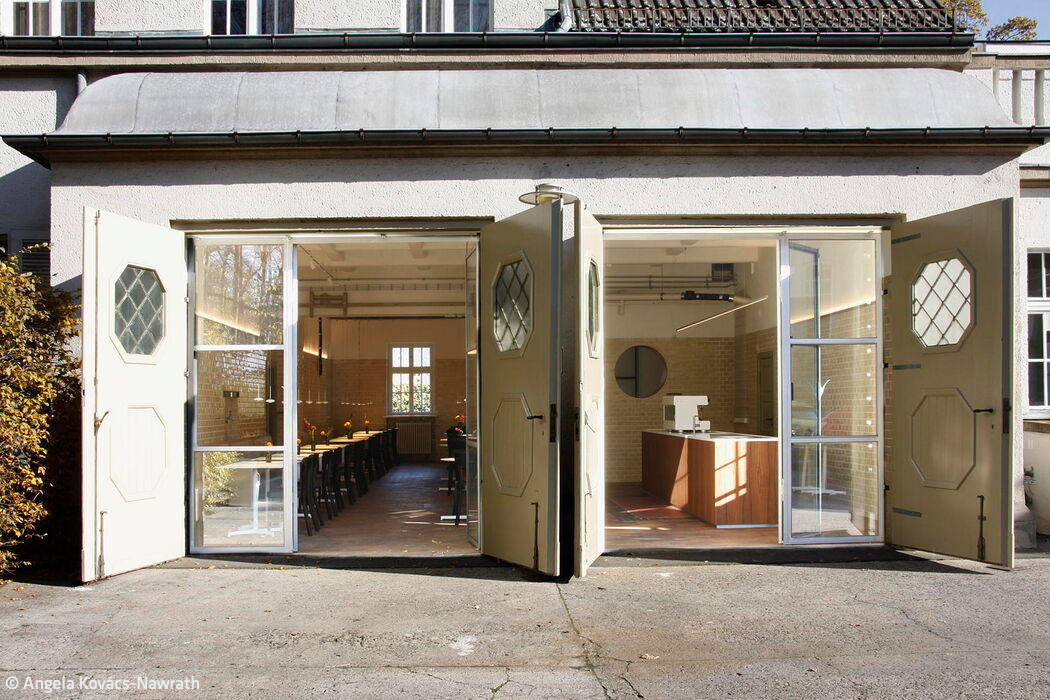


The palatial Correns mansion in Lankwitz, designed by architect Fritz Freymüller and constructed from 1914 onwards—later renowned as the Siemens Villa—once housed a gatehouse complete with workshop spaces and garages. These structures have recently undergone a thoughtful transformation (architect Albert Denzel). Berlin-based architect Ulrike Reccius, working with her firm PEB+ Architekten, converted the garages into the Café Garage, creating a dining facility serving 200 students. The space also welcomes visitors, provided they respect the students' seating priority.
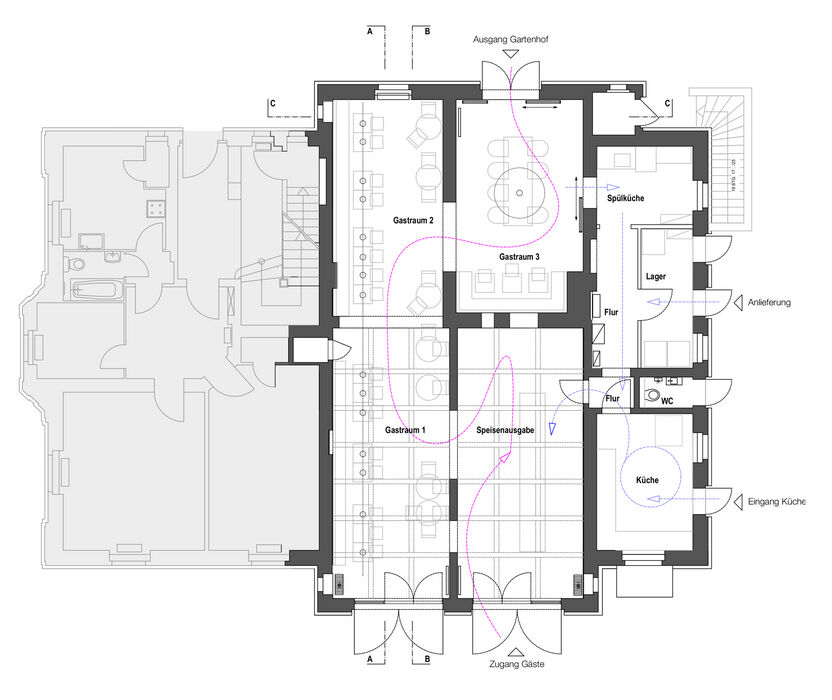
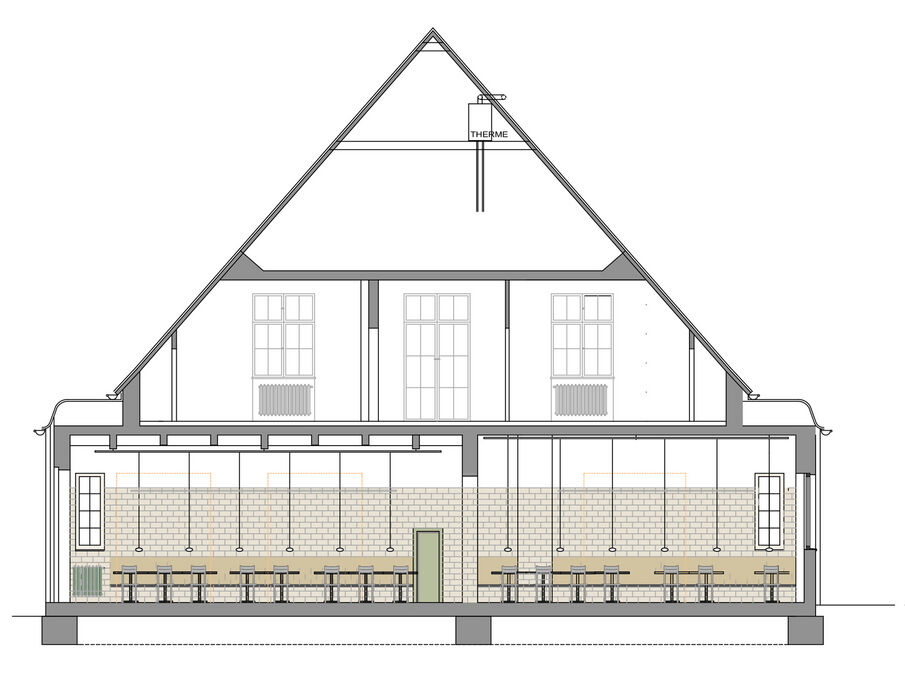
Today privately owned and leased to the Business & Law School and Medical School, the villa is protected as a historic monument—meaning any structural alterations require government approval. These restrictions applied equally to the garages. Since 2011, PEB+ has overseen all structural modifications and renovations of the entire building ensemble. With the site's new academic purpose came the need for student dining facilities, as the surrounding neighborhood lacked such amenities. Café Garage now serves light meals and beverages. The converted garages, together with adjoining spaces, total approximately 200 m², with just over half dedicated to dining areas and the remainder housing the kitchen, storage, and service counter. During warmer months, an additional 75 m² of terrace space opens onto the adjacent orchard. The renovation involved several key measures: upgrading the technical infrastructure and installing independent heating in the converted spaces. Original elements were preserved and restored wherever feasible—including the glazed bricks characteristic of the building's era, which were carefully cleaned and repaired. Circular openings punctuate the walls, visually connecting the individual rooms while facilitating air circulation.
Behind the original metal doors, handcrafted steel and glass door systems create a second layer. When the café is open, the historic gates swing wide, with the façade behind serving as the visual threshold between exterior and interior. The new steel-glass installations are custom-built steel constructions. An existing wooden plank door—reconfigured as a sliding partition—separates the rear dining area from the service kitchen. The original dark grey and black surface-mounted installations were retained and reorganized, contrasting deliberately with all new elements—outlets and switches finished in white surface-mount. Slender light rails wash the upper walls and ceiling, providing ambient illumination. The service counter takes center stage beneath a suspended light rail, while a luminous ring highlighting the rear dining space echoes the circular wall openings. The entire conversion unfolded during the pandemic, with the café ultimately opening in 2022 to immediate appreciation from the student community.
Photography:
Angela Kovács-Nawrath
(Published in CUBE Berlin 03|24)
Beyond disposable architecture
"Element & Lingot" – visionary infill development in Moabit

A Welcoming Sanctuary
Restoration, Redesign, Expansion, and Reopening of the Museum of Medical History
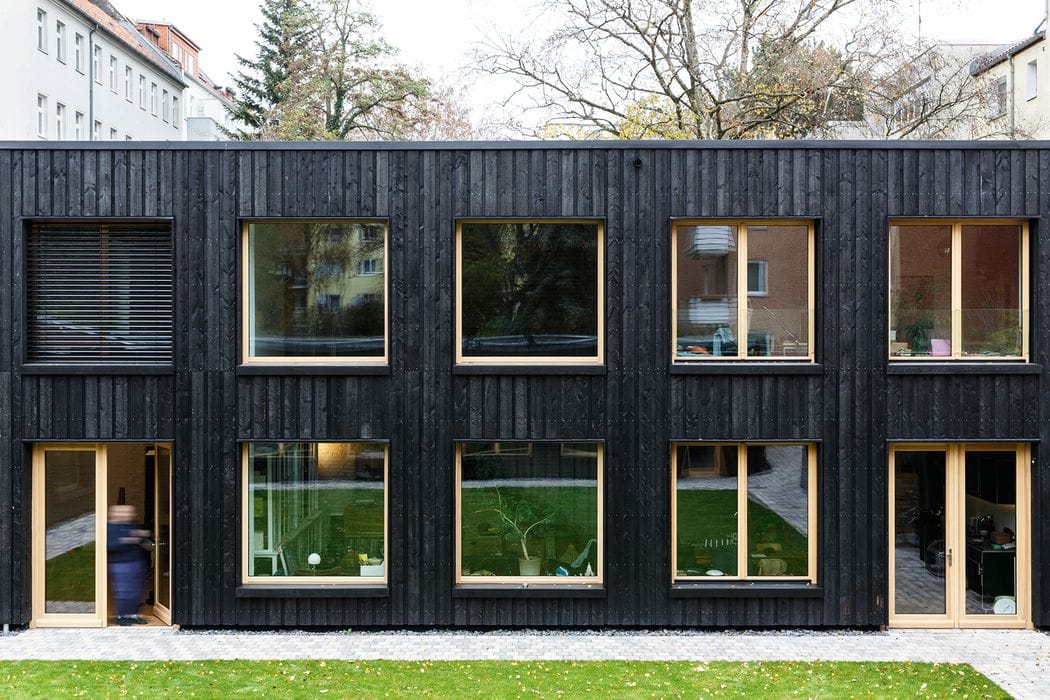
Courtyard Within a Courtyard
Converting Backyard Garages into Creative Studios and Living Spaces
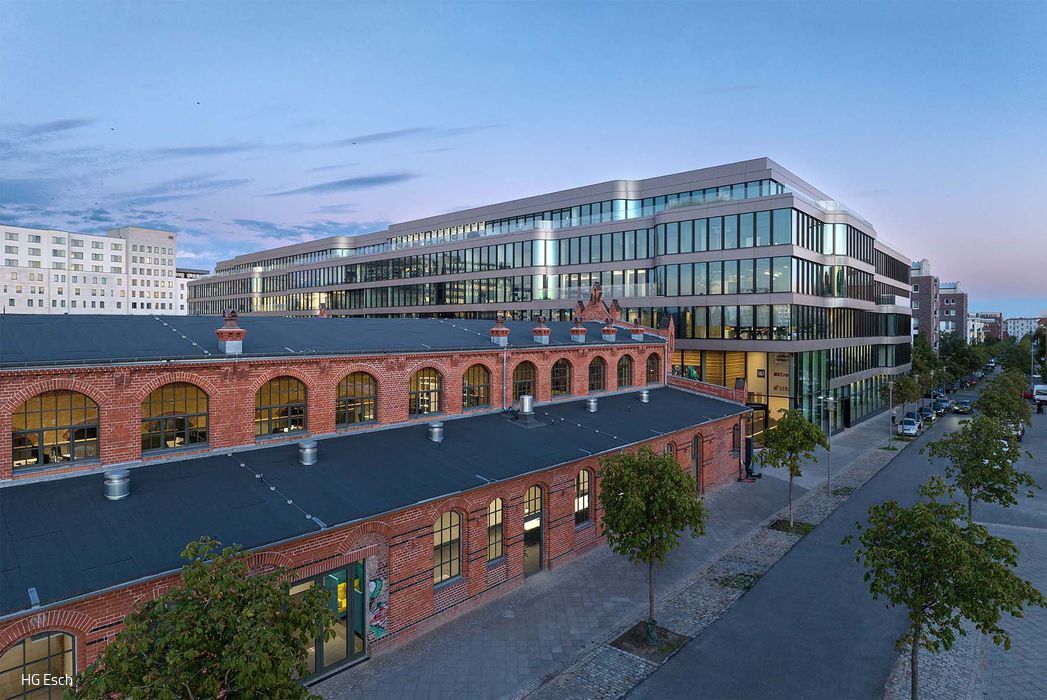
Working in the Creative Quarter
DSTRCT – the newly completed office, retail, sports and event district now shaping the Prenzlauer Berg neighbourhood.