


Identity Meets Innovation
The Lensing Media Port in Dortmund's Harbor District
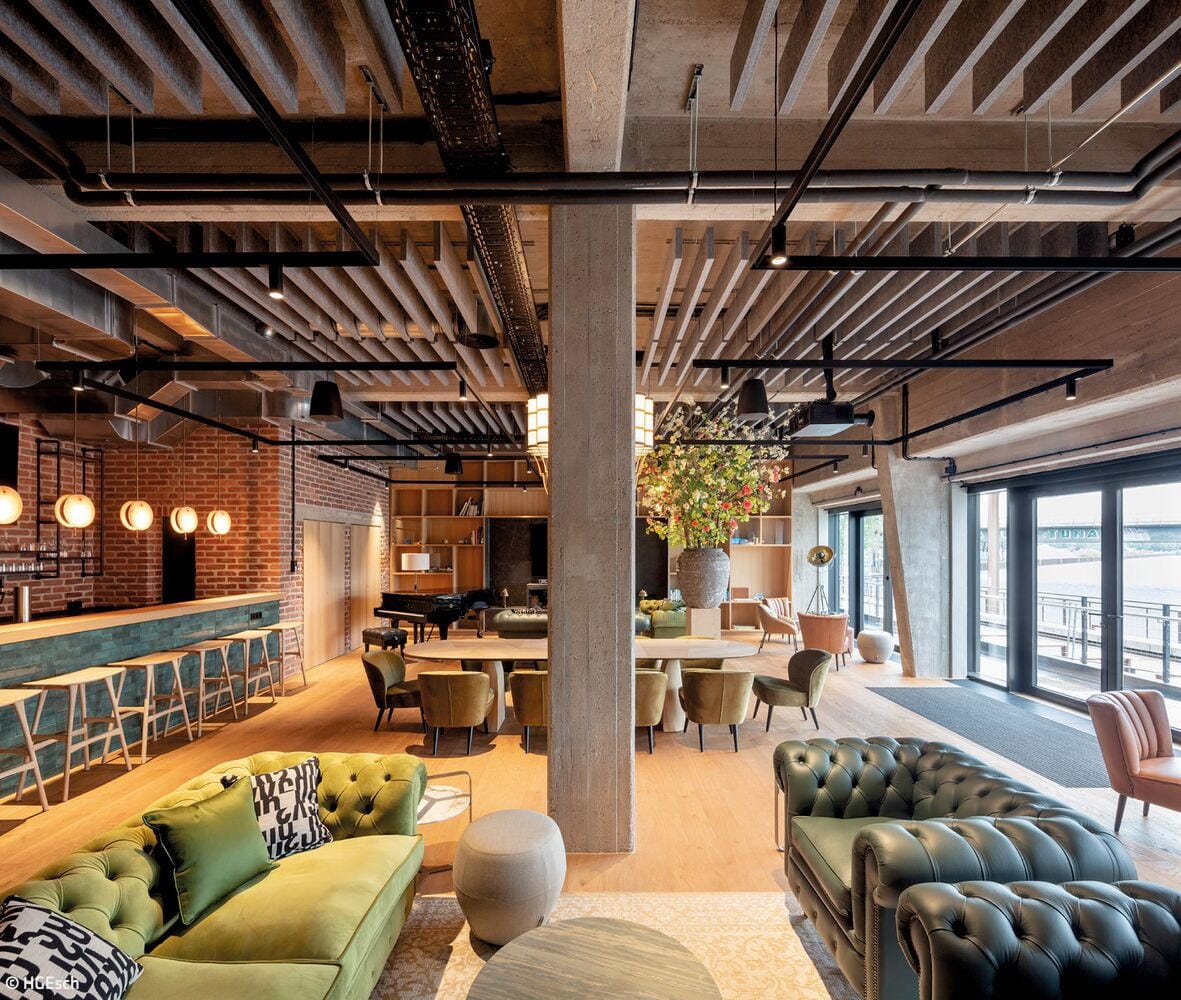

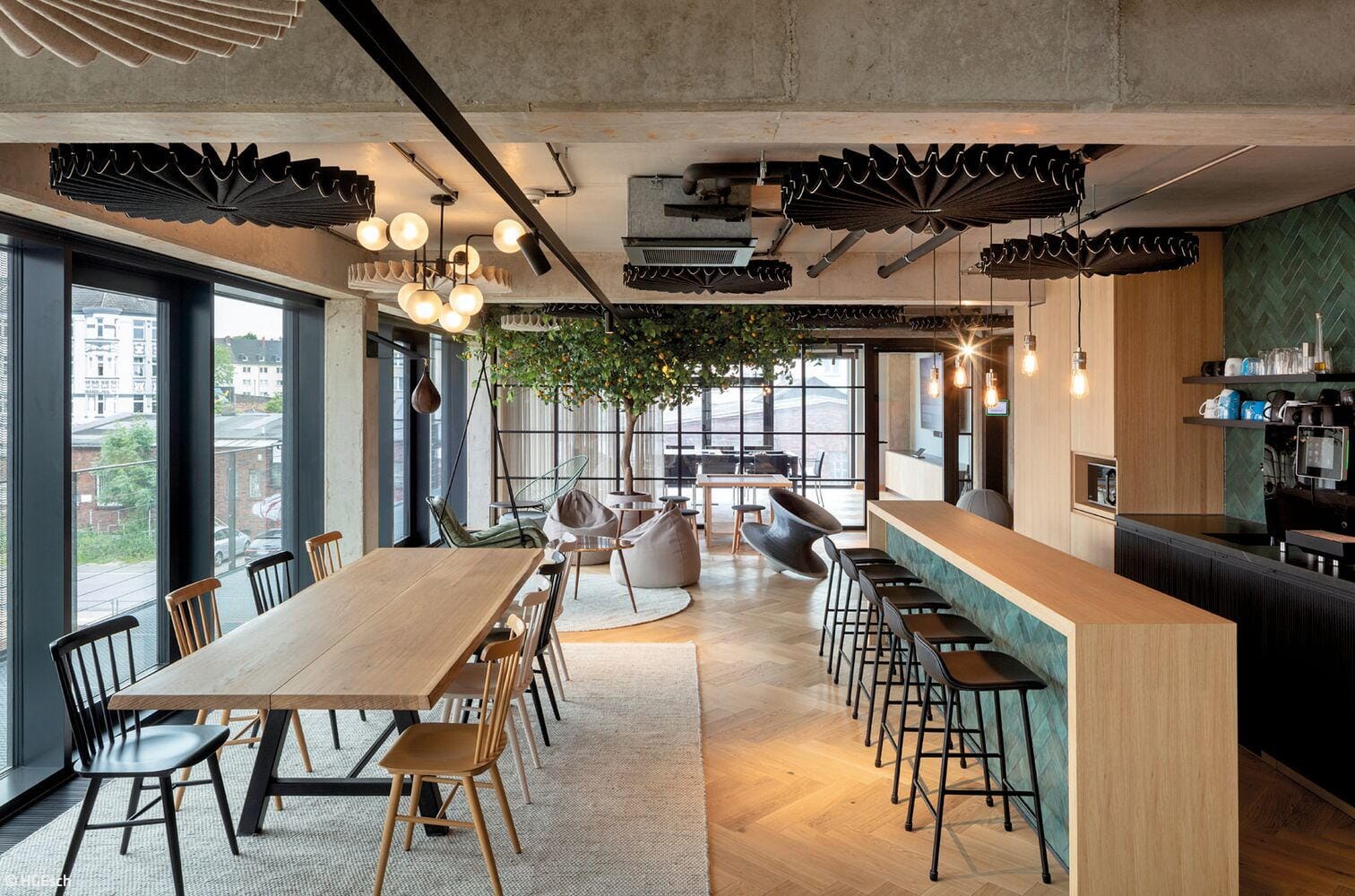

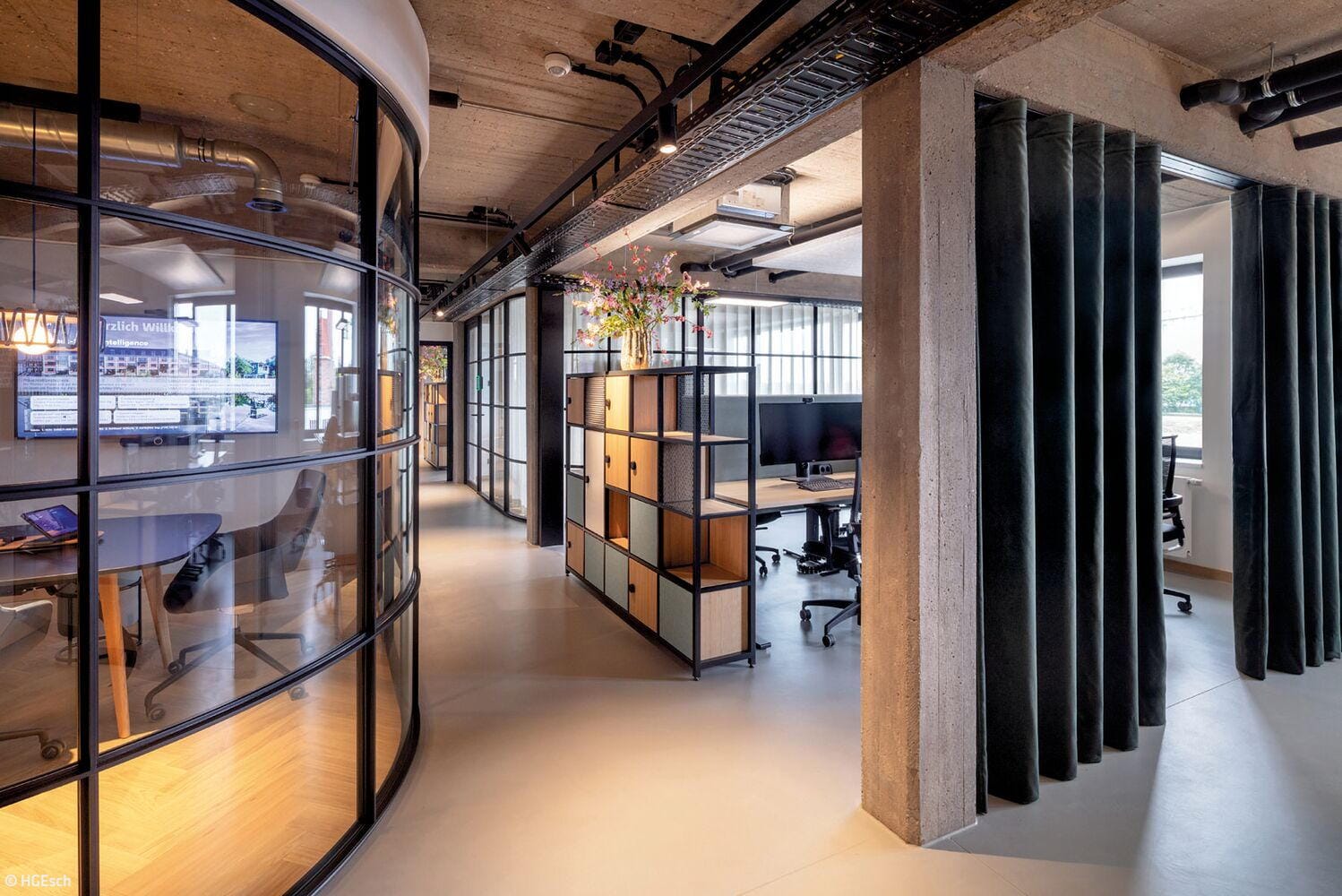
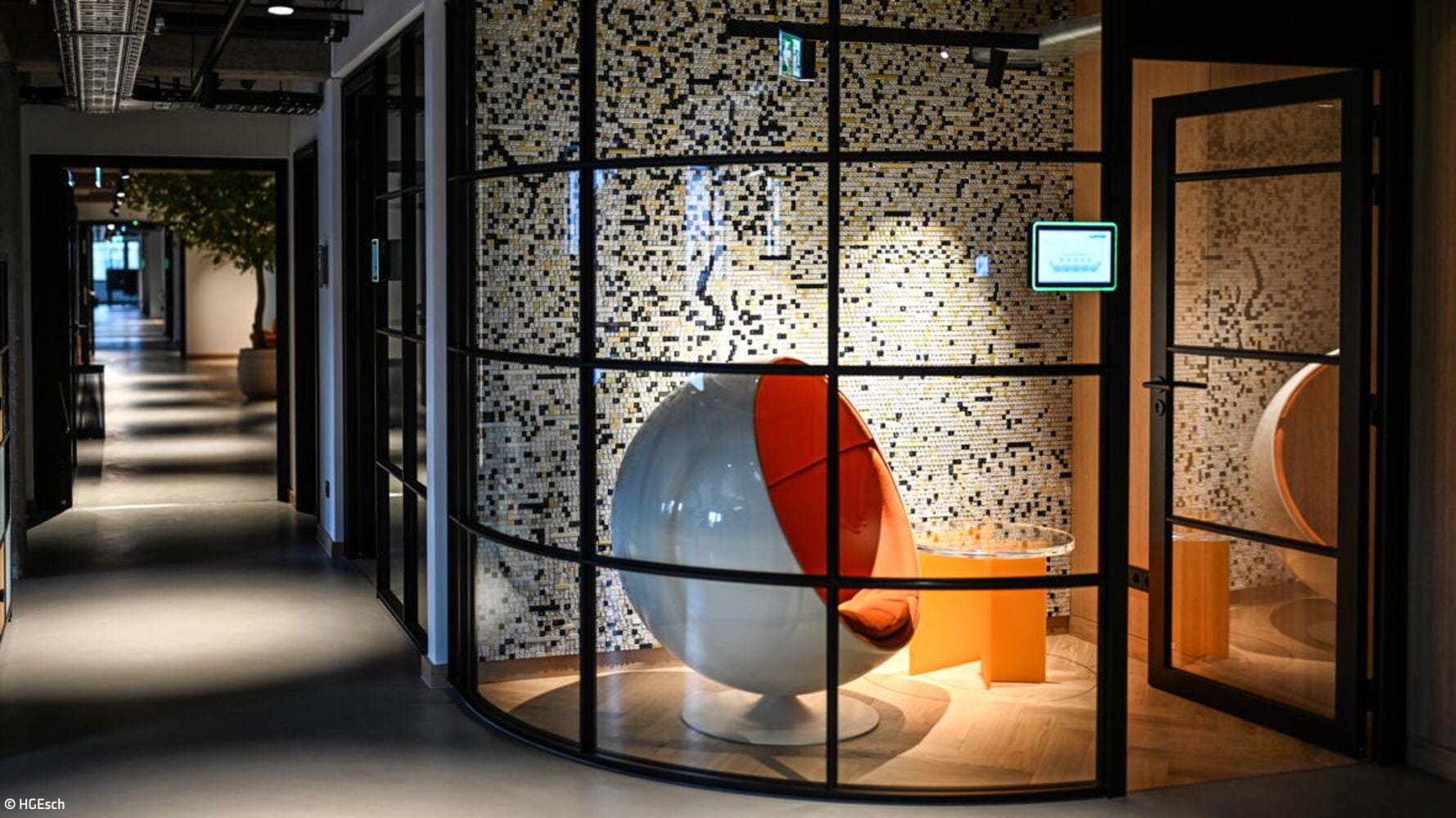
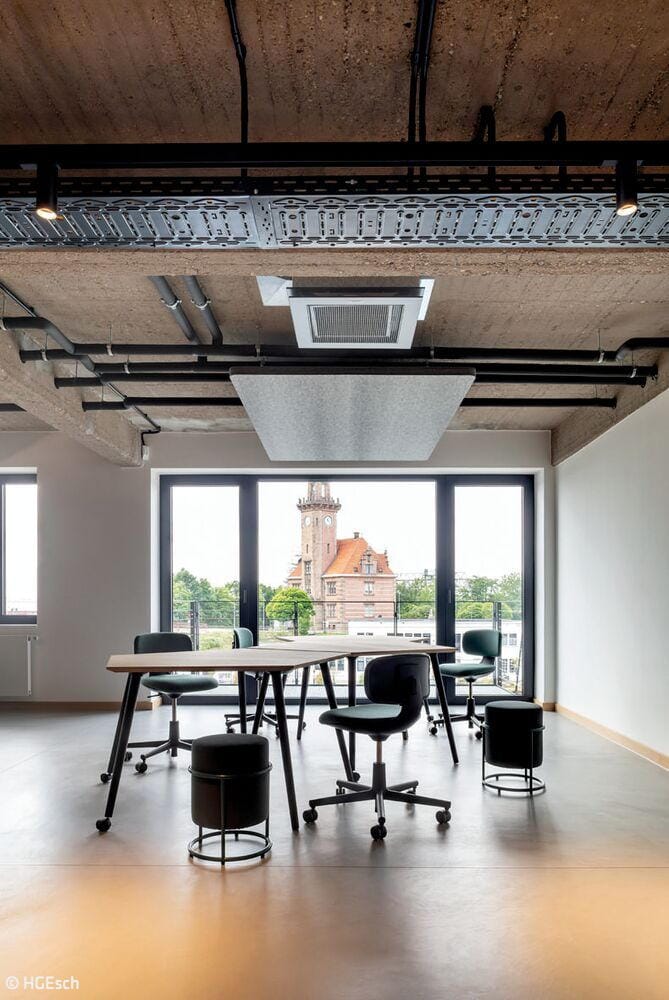
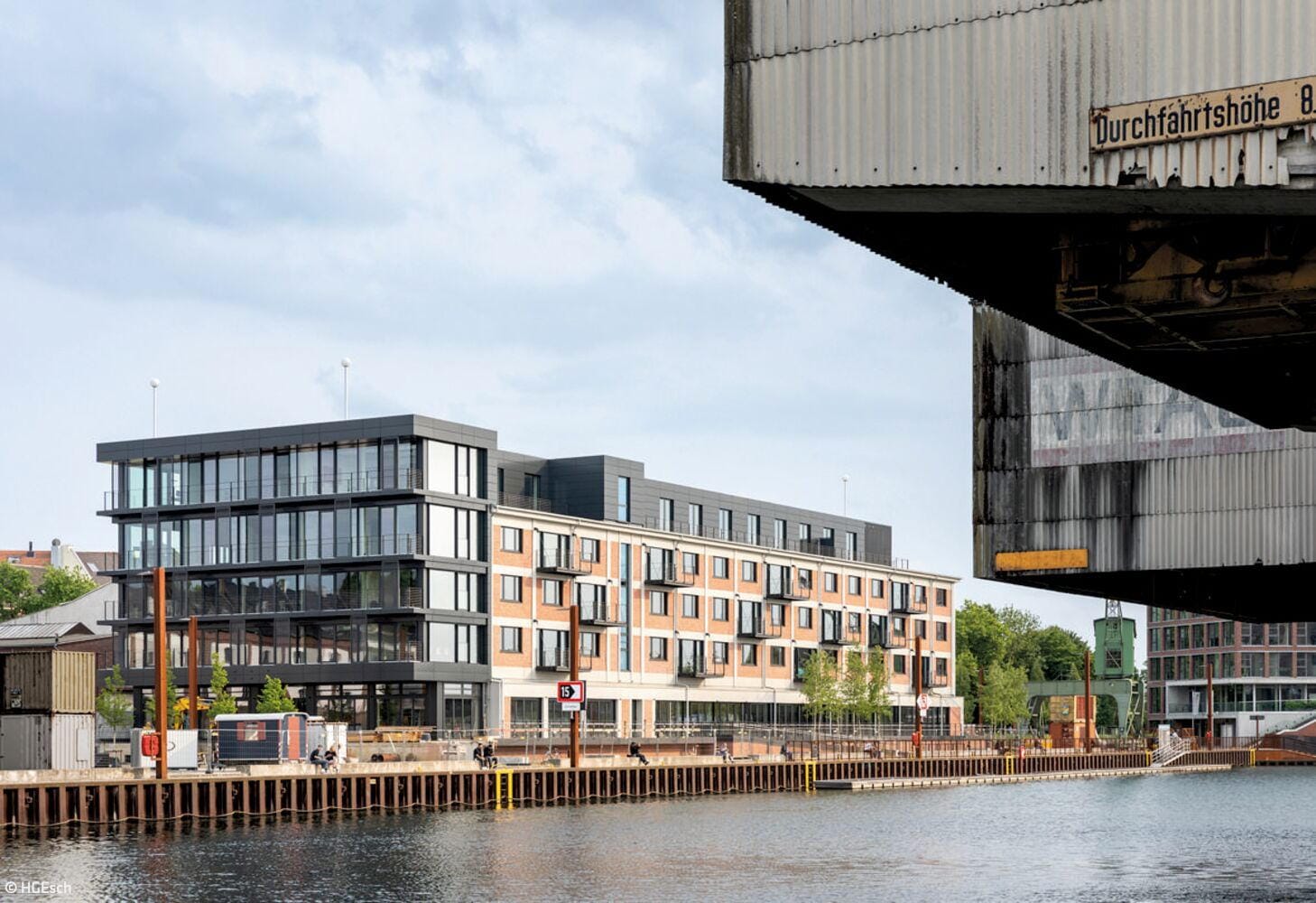
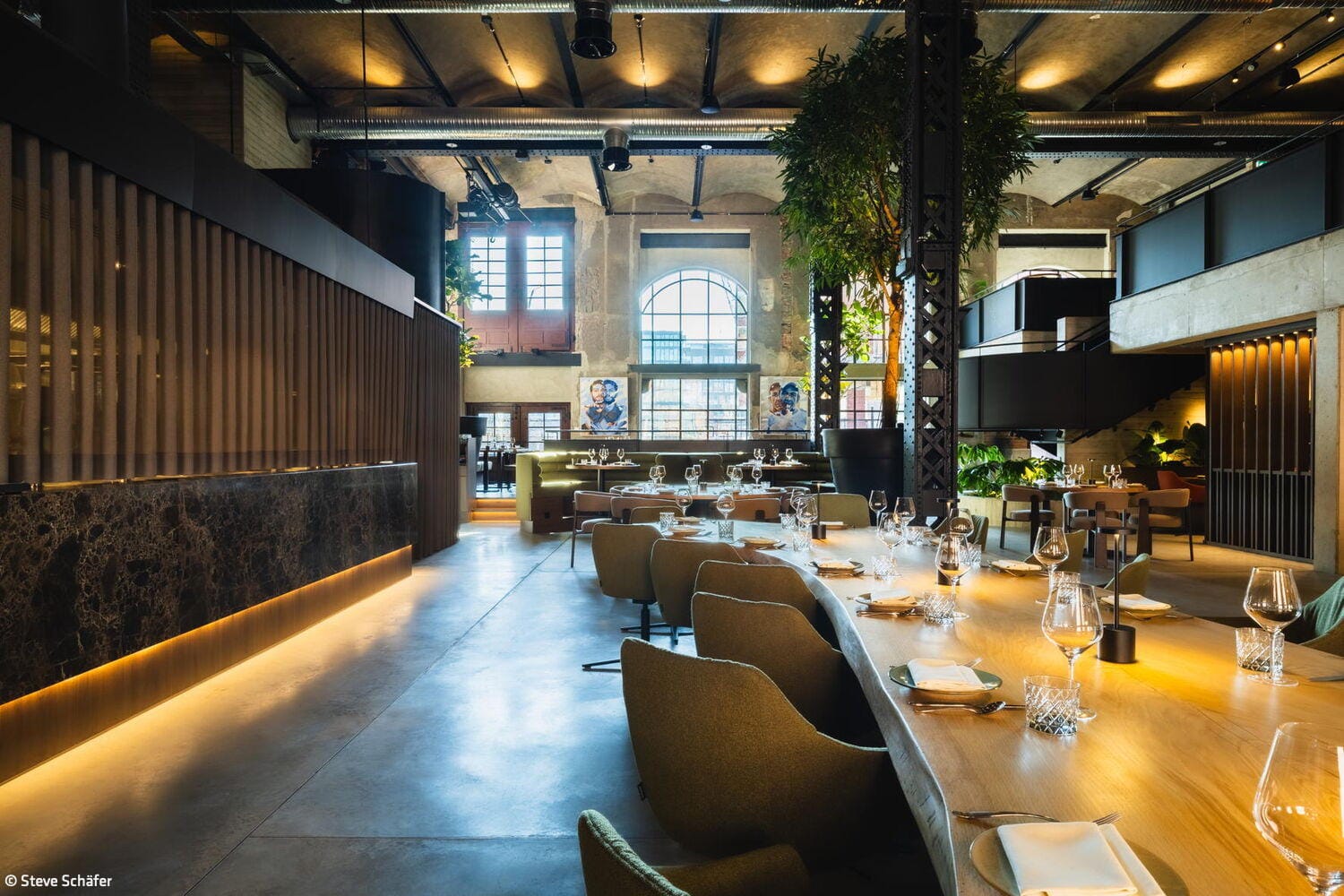
Dortmund's historic harbor district has gained a remarkable addition. SHA Architects and JOI-Design, responsible for interior architecture, have transformed a former warehouse into a vibrant digital hub with the Lensing Media Port (see also page 42). The project makes the DNA of the client—deeply rooted in the region and committed to authentic communication—tangible, perceptible, and experiential. The project exemplifies an inclusive and appreciative workplace culture that balances human, environmental, and economic concerns equally. It has been recognized with both the Iconic Award 2025: Interior-Workplace and the German Design Award.
The former warehouse has been extended with a modern glass addition. With a keen sensitivity to the site's historical heritage, the interior design firm JOI-Design masterfully bridges past, present, and future: contemporary glass structures and steel-framed windows integrate historical elements such as exposed concrete pillars and authentic brick walls into a timeless architectural language. "It was important for us to make the site's culture tangible, to tell the story of transformation and identity. At the same time, we've created a modern, forward-thinking workplace that fosters connection through its openness, builds identity, and enables genuine encounters," explains Sabrina Voecks, Creative Director at JOI-Design.
The exceptionally deep building is fully accessible and organized to ensure natural light reaches every workspace. Central communication zones along the glazed addition create spaces for exchange across all floors. Flexible areas provide retreat spaces while supporting collaborative teamwork. A dynamic structure that evolves with people's needs and continually transforms—New Work in its purest form. A restaurant with harbor terrace, a club lounge for readings, discussions, and networking events, as well as a conference room with local significance turn the space into a vibrant part of the district that includes both employees and neighbors. Recycled furniture, refurbished lighting, and preserved building fabric demonstrate that conscientious design can unite aesthetics with purpose. Printing plates have been repurposed as wall cladding, discarded keyboards transformed into wall art, while historic lockers now serve as cloakrooms—each detail reinforcing a commitment to responsible design.
Photos:
HGEsch
www.hgesch.de
Families at the Center
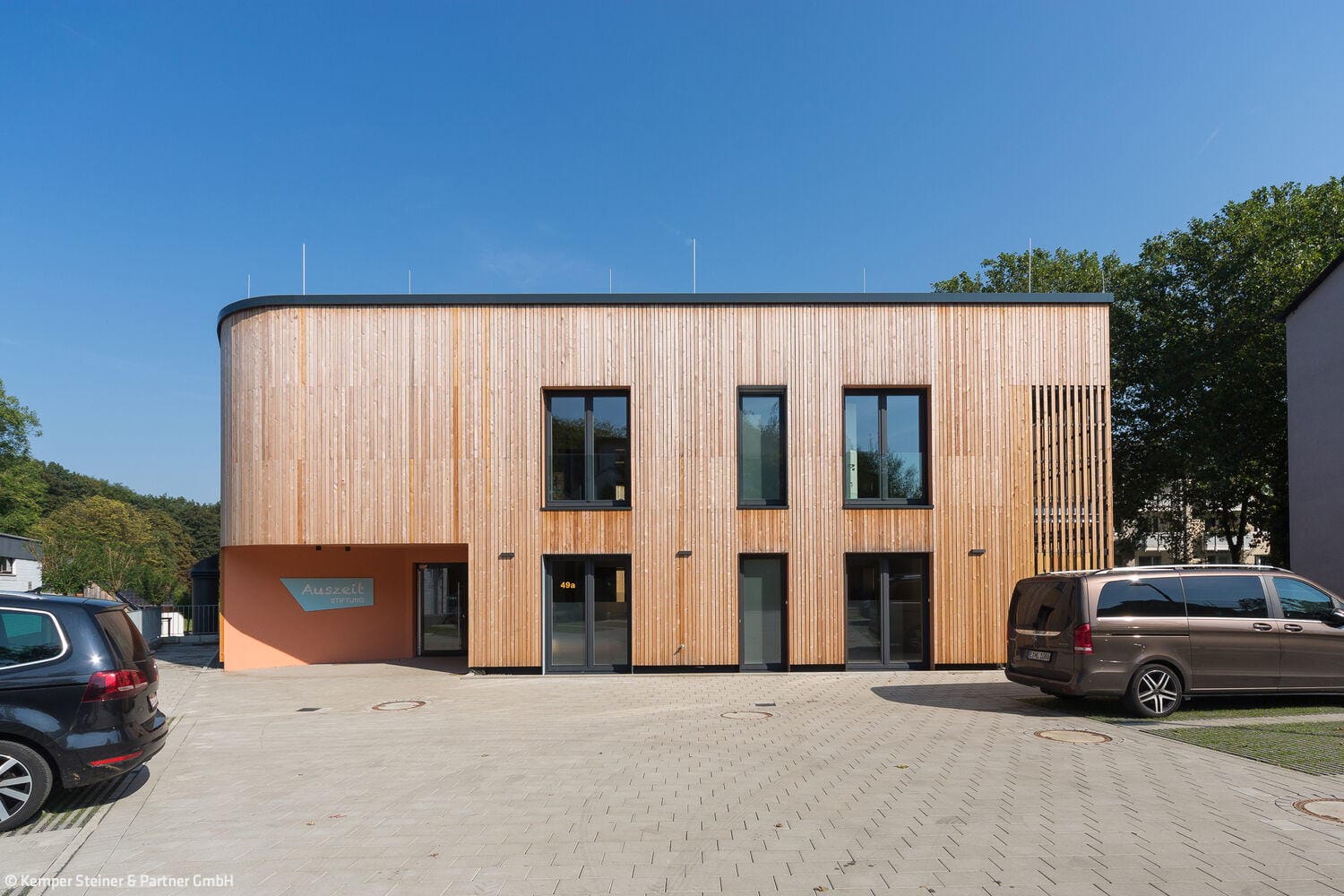
A new building designed to meet the specialized needs of short-term residential care for children requiring support
A Green Oasis as Workplace
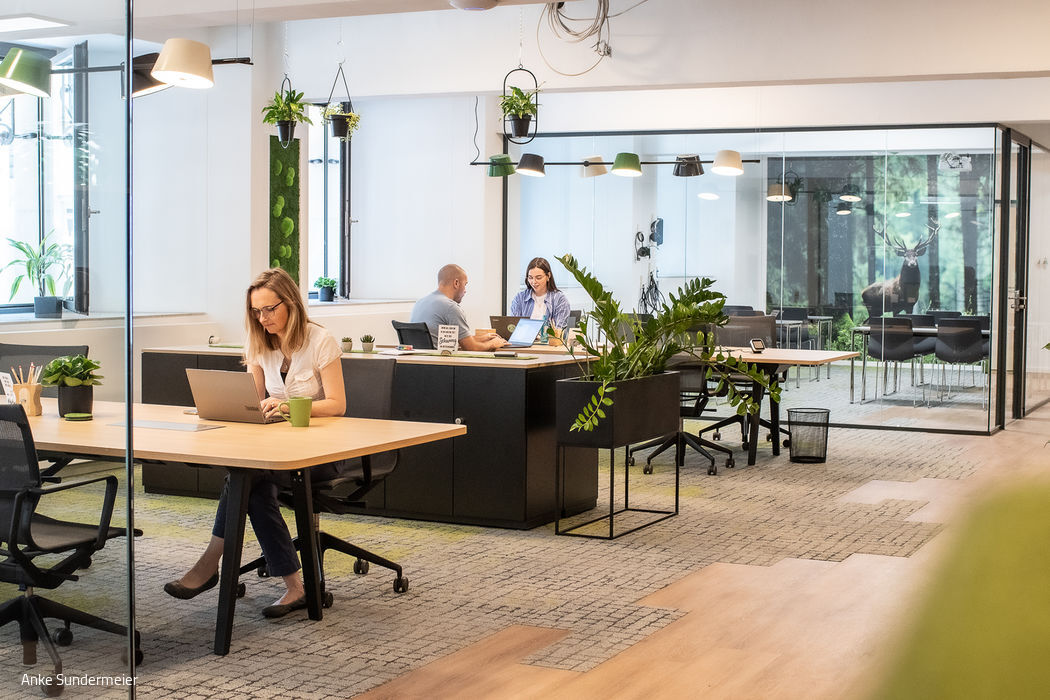
A Coworking Space in Essen's City Centre – Nature at Your Desk
A Successful Balancing Act
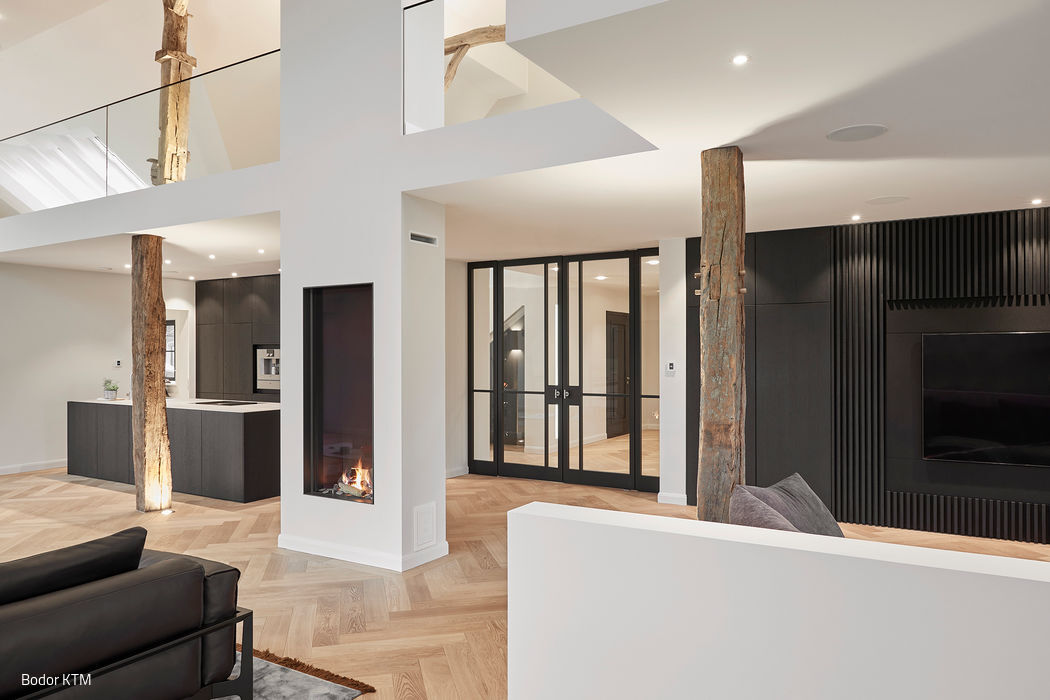
A Historic Farmhouse Where Classical Elegance Meets Contemporary Design
A Pleasant Lunch Break
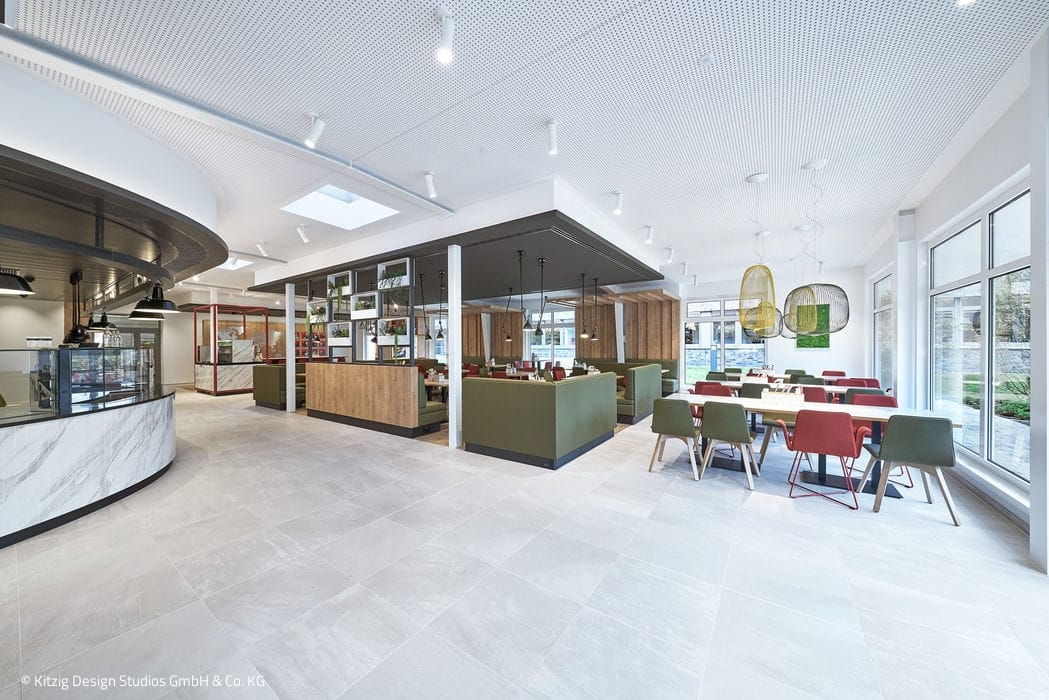
Employees can escape their daily routine and find respite here, naturally gravitating toward their ideal space the moment they enter the dining areas...