


To the Moon and Back
A hotel brings the spirit of the Space Age to one of the city's most distinctive high-rises
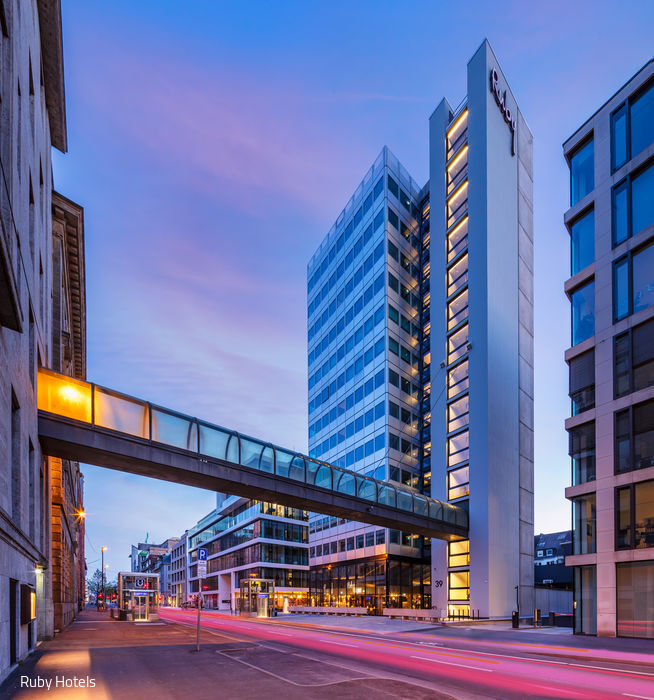


Together with the Dreischeibenhaus and the Mannesmann Tower, it completes a trio of iconic high-rises that defined the visionary spirit of the 1950s and 1960s. Built in 1962 from designs by Paul Schneider-Esleben, this sculptural tower on Kasernenstraße served for decades as the administrative complement to Commerzbank's historic headquarters. The connection between past and present is evident in the glass bridge—a gleaming catwalk—that still links the two buildings today. After years of vacancy, HPP Architects undertook a comprehensive, heritage-sensitive renovation and conversion that breathes new life into the structure. The newly opened Ruby Luna Hotel now features 206 rooms across 13 floors, each immersed in a uniquely futuristic atmosphere.
With its unconventional drive-through banking window on the ground floor and the aluminum-panel façade floating above it—details inspired by the automobile design of its era—the high-rise has always embodied an architectural homage to the future. The Ruby Luna channels this dynamic optimism for progress, which once fueled humanity's drive toward new horizons and worlds, in a richly faceted interior design. The formerly open ground floor has been fully enclosed with glass on all sides. The exposed, massive concrete structure supporting the building creates a unique spatial experience throughout all public areas. The original concrete ramp leading to the basement level has likewise been sealed with glass panels, yet still allows views downward. The historic porter's lodge with its masonry counter has been preserved and integrated into the lobby. Rockets and space capsules—some originals, others whimsically sourced from carnival displays—hover overhead and rest underfoot, welcoming guests. Countless decorative elements bring the Space Age to life, inspiring both wonder and delight. In striking contrast to the raw concrete, an elongated bar clad in golden-tinted glass panels exudes sophistication and glamour.
Five room categories are available to choose from – starting with the charming Nest Room at approximately 15 m², moving up to Cosy Rooms at around 16 m², Lovely Rooms ideal for weekend getaways for two spanning 18 to 26 m², and culminating in Wow and Loft Rooms at roughly 19 m² with sweeping views across Düsseldorf. The room design reflects Ruby Hotels' distinctive signature: abundant crisp white finishes, soaring open ceilings, integrated glass rainfall showers within the rooms, wooden wall paneling, and premium oak flooring that evoke a luxurious ambiance in an extraordinary setting.
(Published in CUBE Düsseldorf 03|21)



Vibrant urban neighbourhood
maxfrei champions diverse community living

Sustainable with consistency
A climate company focuses on flexibility and reusable materials
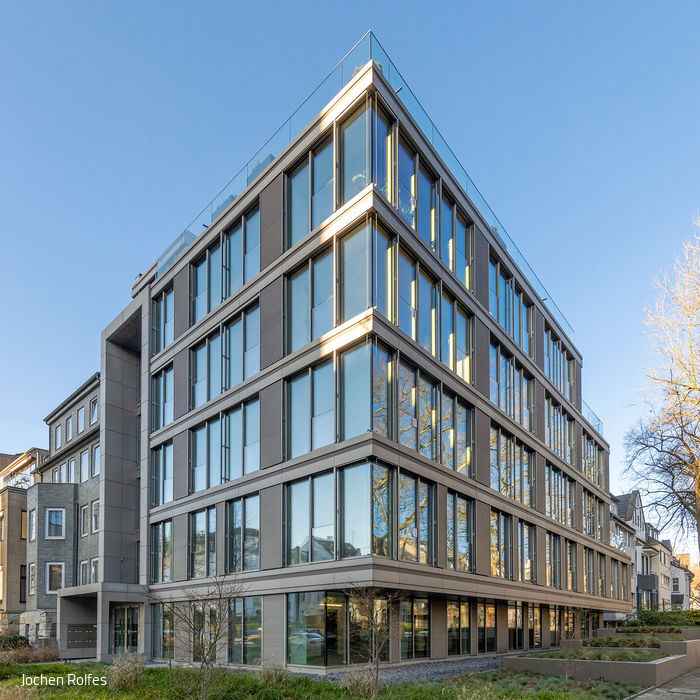
Future-Ready
Comprehensive Modernization of a 1980s Office Building

Culinary Arts Meets Design
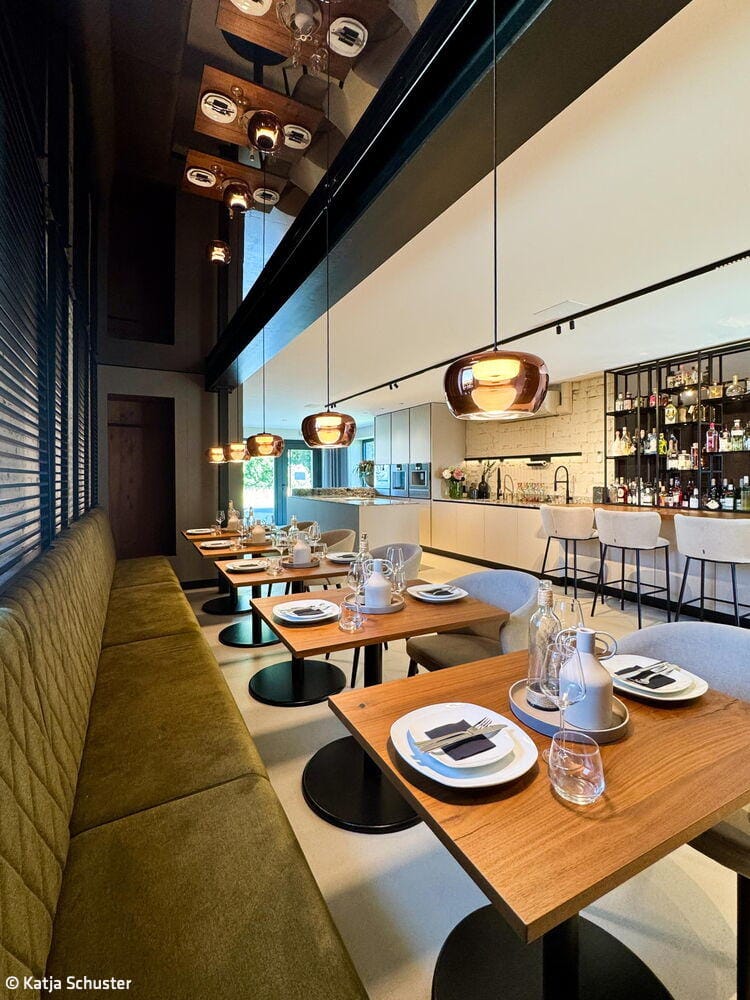
La Vie by Thomas Bühner in Flingern-Nord—where creative elegance becomes an experience.