


Creative industrial charm
Studio-like commercial spaces designed to adapt to tenants' evolving needs
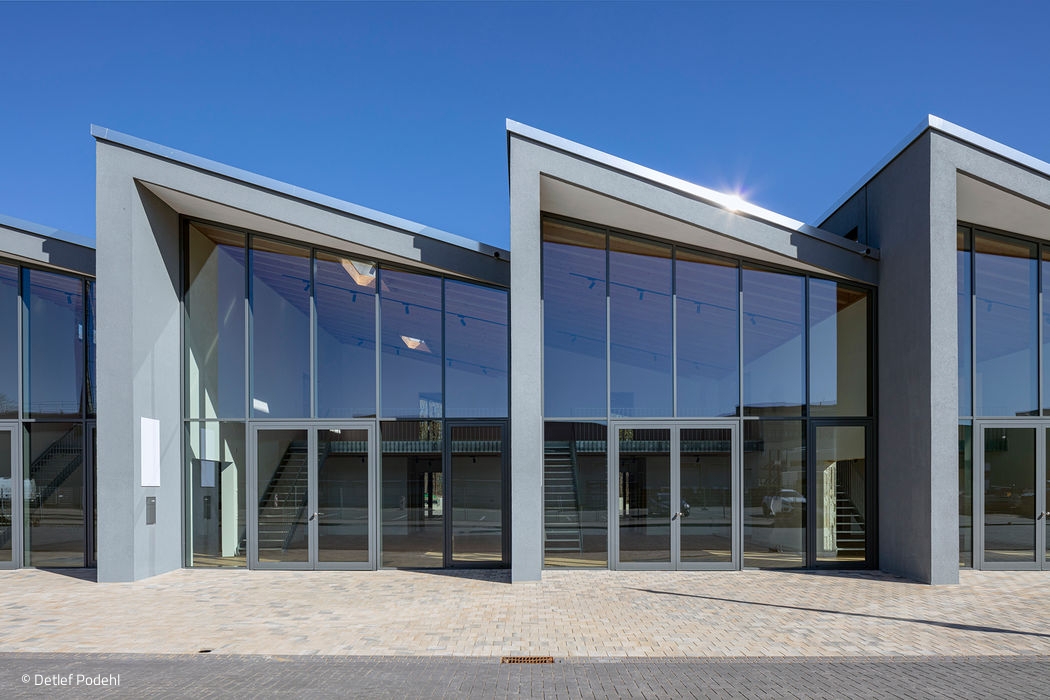


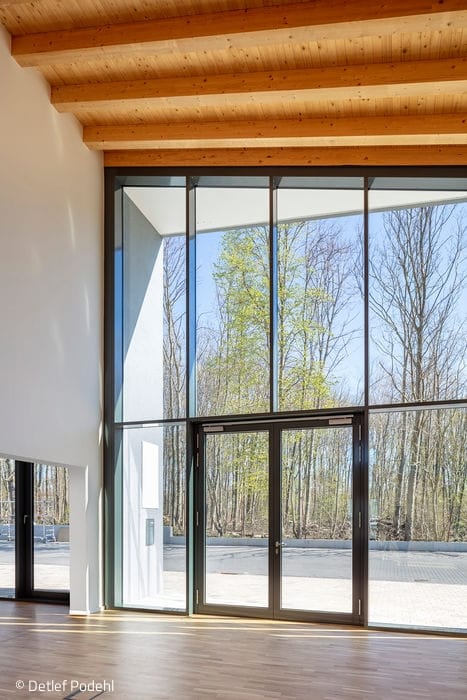


Creativity demands space—not metaphorically, but literally. Artists need studios the way bakers need kitchens and mechanics need workshops: generous floor plans flooded with light, soaring ceilings, room to think and create. In Cologne-Ossendorf, HPA+ Architektur has realized this vision, designing twenty commercial units—including a live-work residence—that give form to the creative dreams of countless makers and thinkers.
Two buildings rise almost untouched from the landscape, framed on three sides by the urban green that surrounds them. Their grey facades and sawtooth roofs—that distinctive serrated silhouette—belong naturally to this industrial terrain. Expansive, fully glazed fenestration runs the length of the east and west elevations, its steel-frame mullions sheltered beneath protective overhangs. Each unit claims its own entrance, its own threshold. Here, the world isn't excluded—it's invited in. Framed by expansive windows, the landscape becomes part of the creative process itself, a view that witnesses the work and lets the finished product go forth into the world. Though the buildings align in orderly rows—eight units here, two there—conformity isn't the point. Constructed using a hybrid system of steel concrete frame with masonry infill and timber-panel exterior walls, these structures celebrate the honest beauty of industrial architecture. Inside, the character softens: industrial flooring and exposed timber roof structure create an almost domestic warmth. Yet the restrained, unfinished quality of the spaces speaks to the provisional nature of creative work—where ideas constantly take shape. Each module contains two studio units, each outfitted with kitchenette, WC, and technical room. A modest staircase ascends to a gallery that floats above, creating room above and within. But the real intelligence lies in flexibility. Operable openings between units—between the two studios within a module, between modules themselves—create a chain of connected spaces, each flowing into the next like rooms in a palace. This arrangement makes a statement: here, one can dream at scale. Walls dissolve on demand. Several studios combine into one when tenants need more room. Growing space needs aren't obstacles—they're the design's raison d'être.
Photography Credits:
Detlef Podehl
www.podehl.com
(Published in CUBE Cologne Bonn 02|20)
Intricately Woven All Around
Inspired by the serpent, in form and façade.
Spectacular Design Presence
A gathering place for motorsport enthusiasts and seekers of tranquility alike
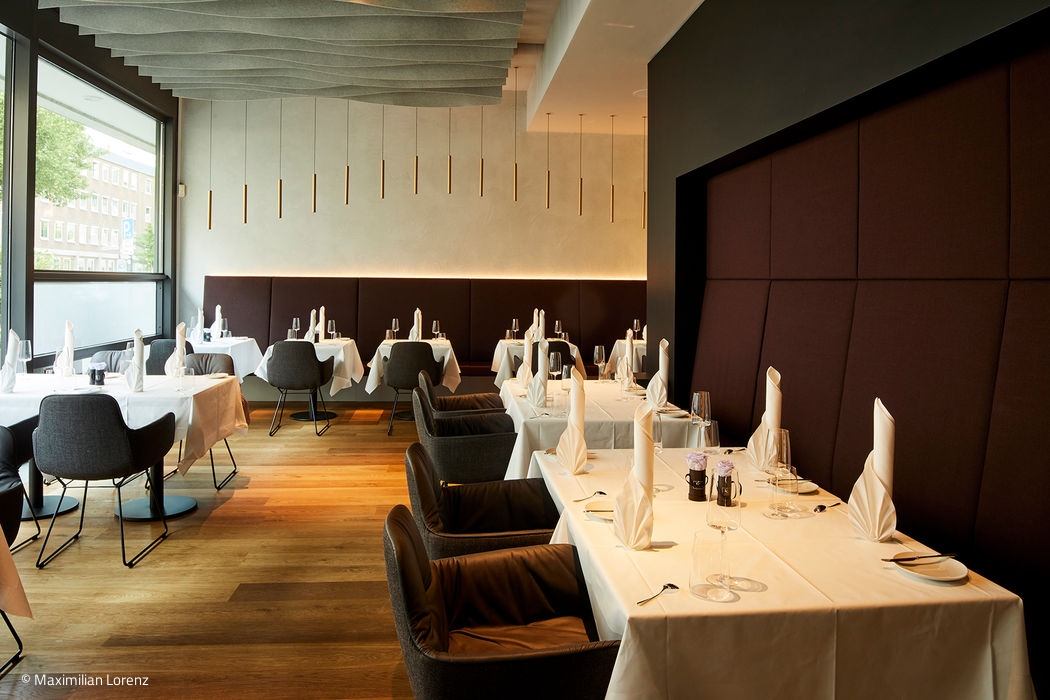
Refined Culinary Experiences
At Cologne's elegant Maximilian Lorenz restaurant, dining transcends the ordinary and becomes an experience
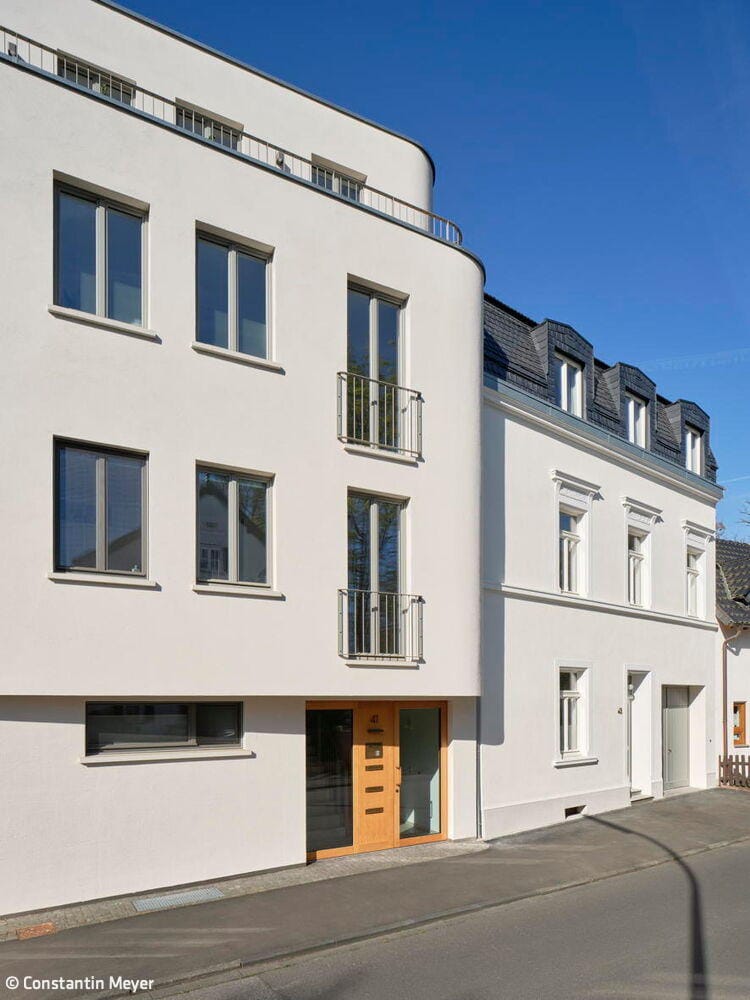
Replaced with Restraint
Three neighboring buildings form a charming residential oasis in the heart of Bonn-Bad Godesberg