


Highly Flexible and Forward-Thinking
A Centre for Digitalisation Brings AI and Future Technologies to Derendorf Campus

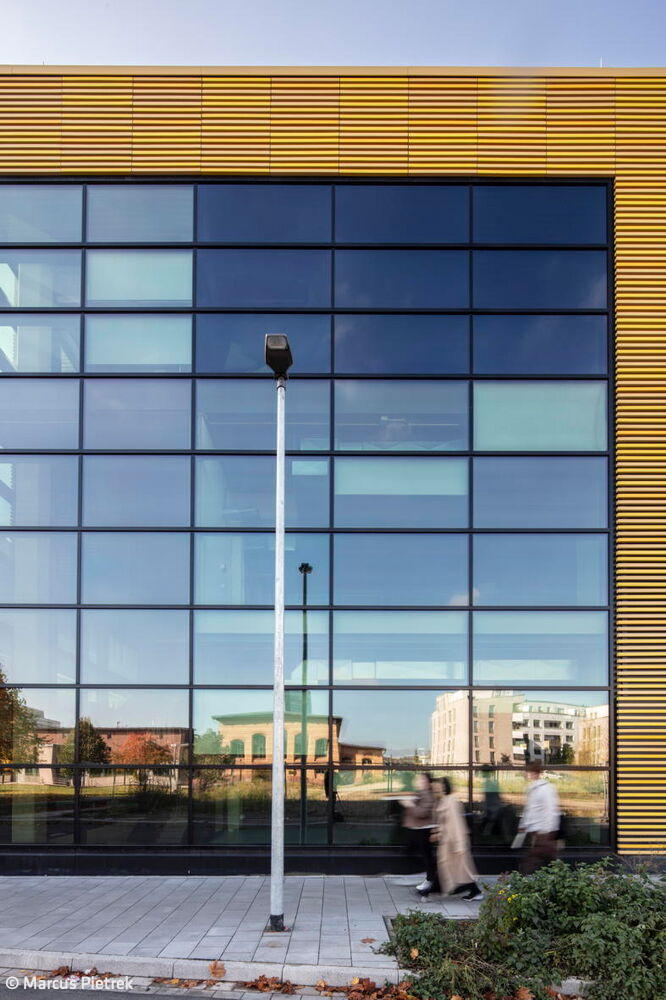


Since 2018, the former slaughterhouse and Schlösser altbier brewery have anchored a new chapter for Düsseldorf University of Applied Sciences, now home to its various faculties and over 11,000 students. The site's industrial heritage remains visible in carefully preserved brick structures scattered across the Derendorf campus. Against this backdrop of research and learning, the Düsseldorf-based firm RKW Architektur + has created a striking new landmark: the Centre for Digitalisation and Digitality (ZDD). This architectural statement on Ulrike-Scheffler-Rother-Straße houses cutting-edge, interdisciplinary programs—from data science and artificial intelligence to digital health—positioning the campus at the forefront of tomorrow's digital landscape.
The ZDD's distinctive architecture is defined by two interlocking cube forms. With its recessed top floor, the four-storey building integrates seamlessly with the surrounding university structures. Most striking is its façade of warm, yellow-toned ceramic rods—a compelling fusion of tradition and contemporary design. These iridescent elements serve a dual purpose: they establish a powerful visual identity while creating visual continuity with both the neighbouring new buildings and the retained historic fabric of the campus. The electrochromic glazing system in the mullion-and-transom facade represents a significant leap forward. This intelligent technology automatically adjusts heat transmission based on real-time weather and location data, eliminating the need for conventional solar shading systems. The result is reduced maintenance costs and unobstructed views to the outside. Spanning approximately 3,000 m² of usable space, the ZDD houses laboratories, workshops, and multifunctional areas purpose-designed for digital applications. The centrepiece is the "Smart Factory"—an Industry 4.0 demonstrator complete with control centre, processing stations, and autonomous transport robots. Another major feature focuses on "Tracking & Immersive Technologies," where a motion-responsive floor works in concert with freely positioned cameras to capture and digitise movement with precision. The building eschews fixed configurations entirely. Open floor plans, movable partitions, and overhead-mounted systems create exceptional flexibility. Integrated truss systems enable rapid reconfiguration for conferences, exhibitions, or experimental initiatives. Even the building's technical infrastructure remains visible, facilitating quick modifications as needs evolve. With its advanced technical systems and adaptable design, the ZDD establishes an ideal environment for interdisciplinary collaboration and innovative pedagogy—making it a defining landmark for Hochschule Düsseldorf and a vision of what future educational spaces can be.
Photography:
Marcus Pietrek
www.marcuspietrek.de
(Published in CUBE Düsseldorf 01|25)


Circular Material Revolution
"The Cradle" in the Media Harbour represents a landmark project in circular construction.
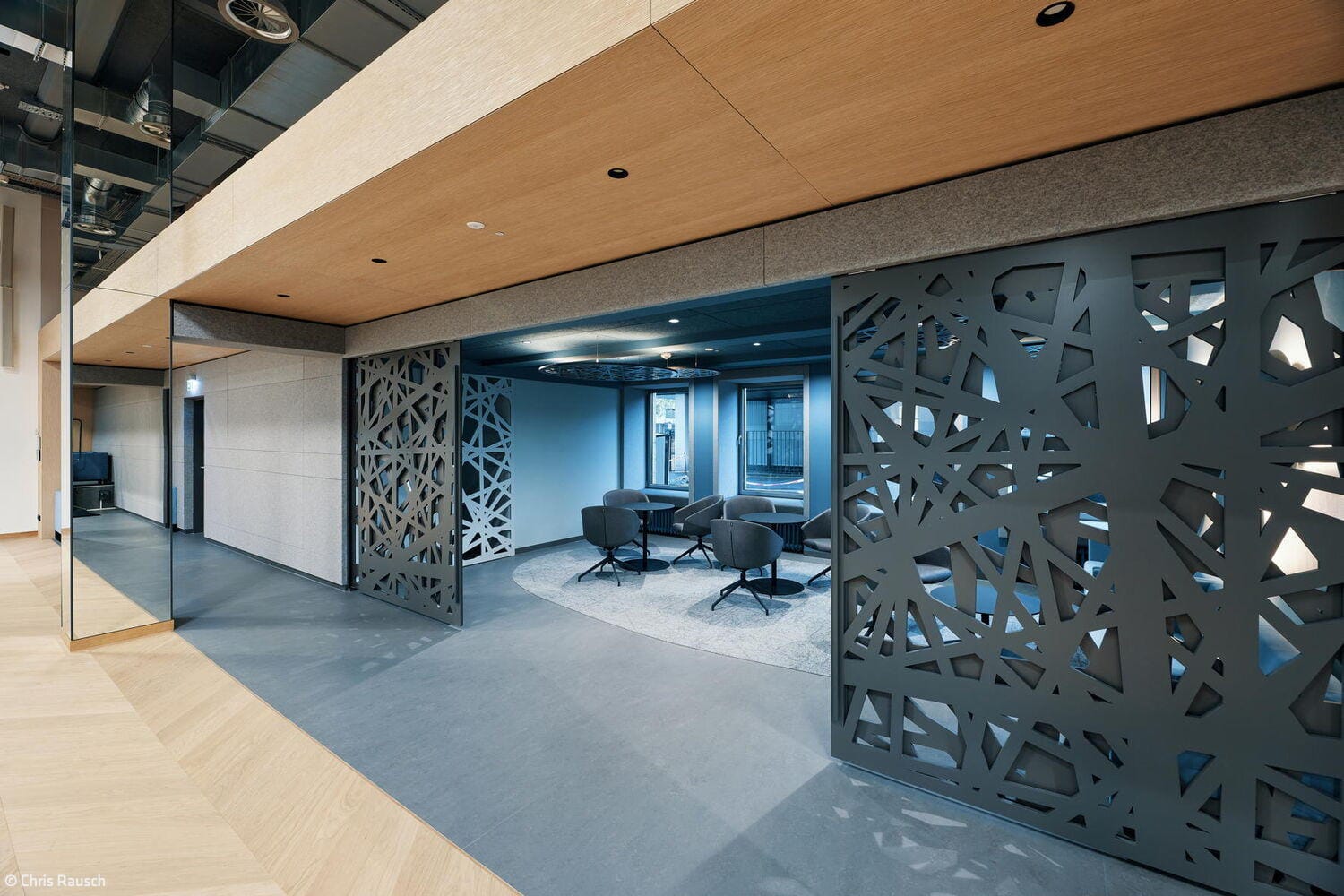
Honest and transparent
The Düsseldorf Chamber of Industry and Commerce has renovated its conference floors and made them more flexible.
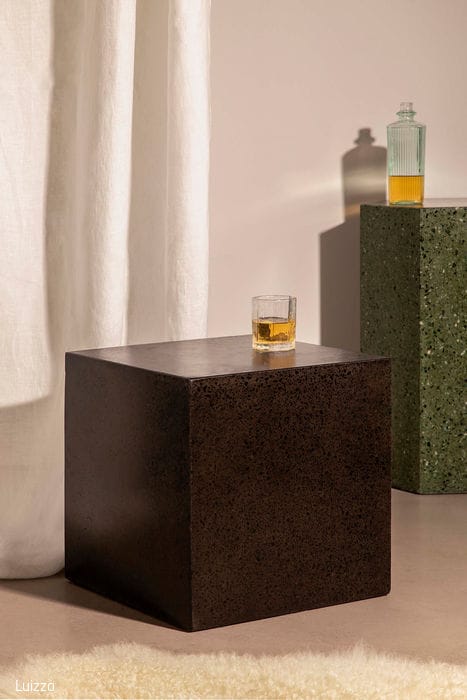
Handcrafted unique pieces
Luisa Scheu designs timeless terrazzo furniture and accessories.
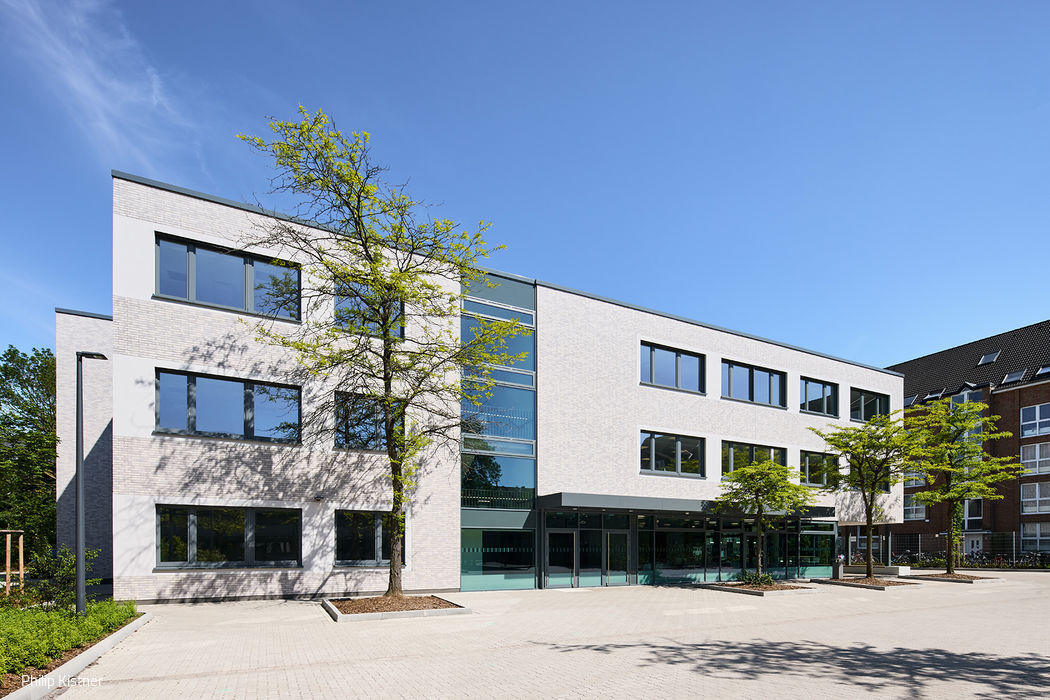
Respecting What Came Before
A Vocational Training Centre in Bilk: Tailored Expansion