


Seamless Integration
A tool manufacturer unites production, administration, and training under one roof
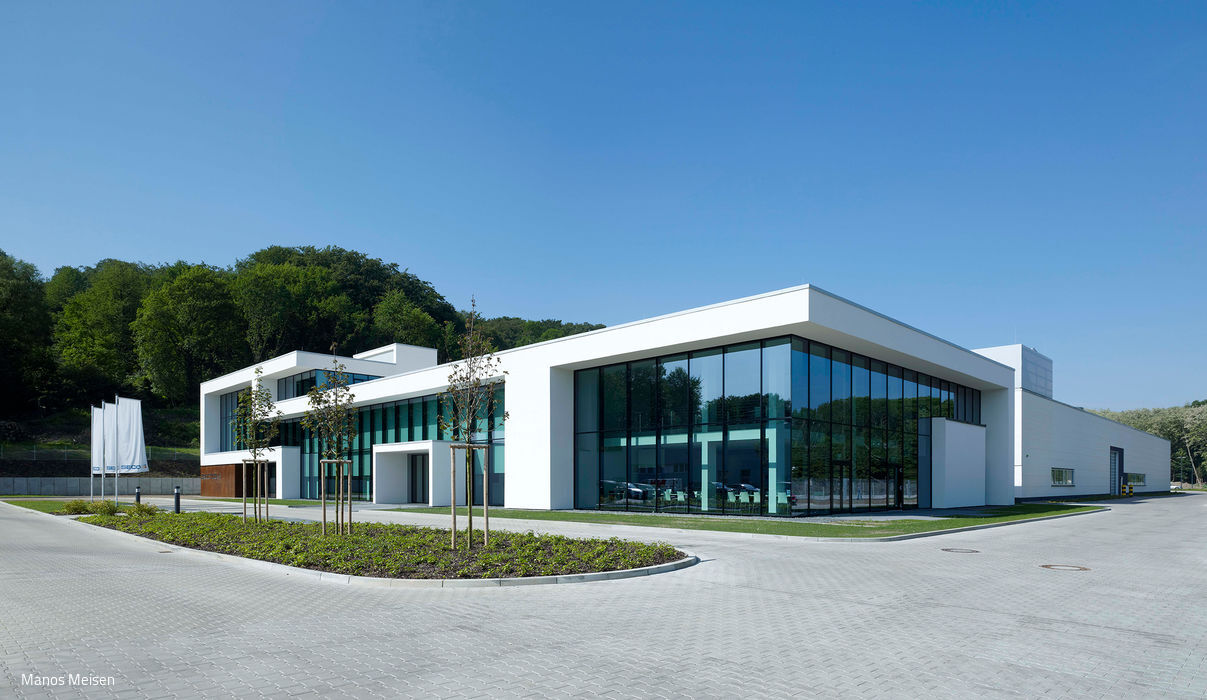
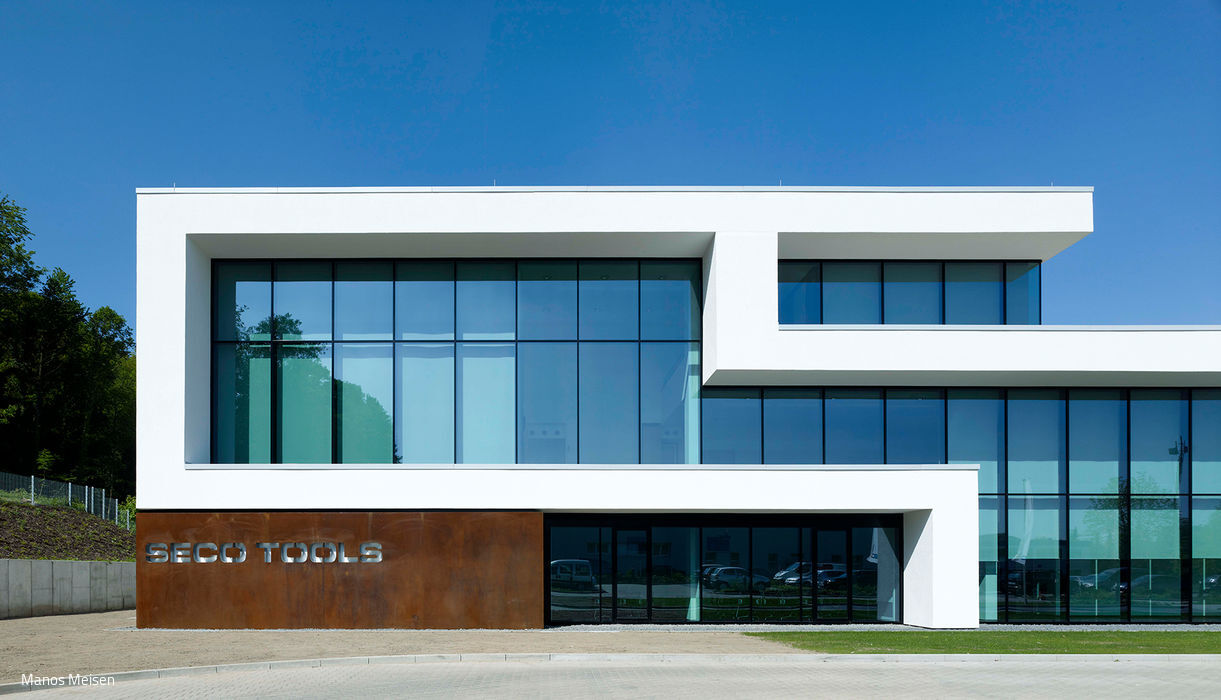



Where the Rhineland transitions into the Bergisches Land and the Düsseldorf-Wuppertal railway approaches Erkrath, Seco Tools GmbH established its new German headquarters. The Swedish manufacturer of cutting and milling tools for global machinery and automotive production sought to consolidate its two existing city locations into a single, unified headquarters—with room to grow into a future European hub. Hellmeister Architekten from Düsseldorf, long trusted by the corporation, designed a transparent, elegantly articulated building ensemble that seamlessly integrates four distinct operational functions: design, production, training, and administration.
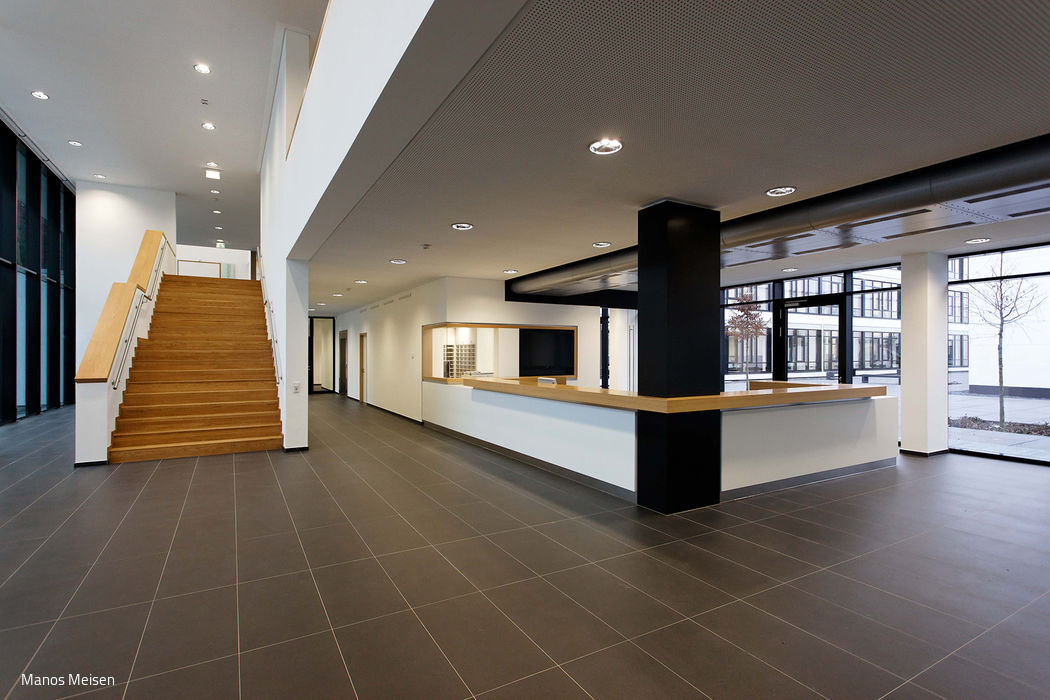
The site, once occupied by the company's production hall and training facility, sits within an industrial zone bordered by railway on one side and woodland on the other. The striking two-storey entrance structure turns away from the tracks toward Mühlenstraße's extension, revealing a transparent main façade framed by a bold white plaster band. Behind it, a double-height public foyer welcomes visitors. A large window beside the reception invites views into the production operations beyond, while a sweeping staircase leads to the upper-floor conference suite. The canteen, also integrated into the main structure, spans two levels and connects to the conference area via a gallery corridor lined with training and seminar rooms. This gallery opens onto a central, L-shaped atrium—the heart of the complex. Surrounding this courtyard, the remaining functional areas fan out in a logical arrangement that establishes clear sightlines between departments and intuitive navigation for staff and visitors alike.
The three-storey administration wing—housing roughly 120 workstations—and the 2,500 m² production hall both embrace this central courtyard, their façades almost entirely glazed. Each area connects seamlessly, both structurally and functionally. The administration is largely organized as open-plan offices with views spanning the atrium on one side and the forest beyond on the other. Twin skylight bands flood the production hall with abundant natural light, while expansive glazing maintains visual connection to the atrium and adjacent work zones. This design strategy directly embodies the company's vision: dissolving the traditional boundary between production and administration into a unified, interconnected workspace.
www.hellmeister-architekten.de
Photography Credits:
Manos Meisen
www.manosmeisen.de
(Published in CUBE Düsseldorf 01|22)

Residential Variety Reimagined
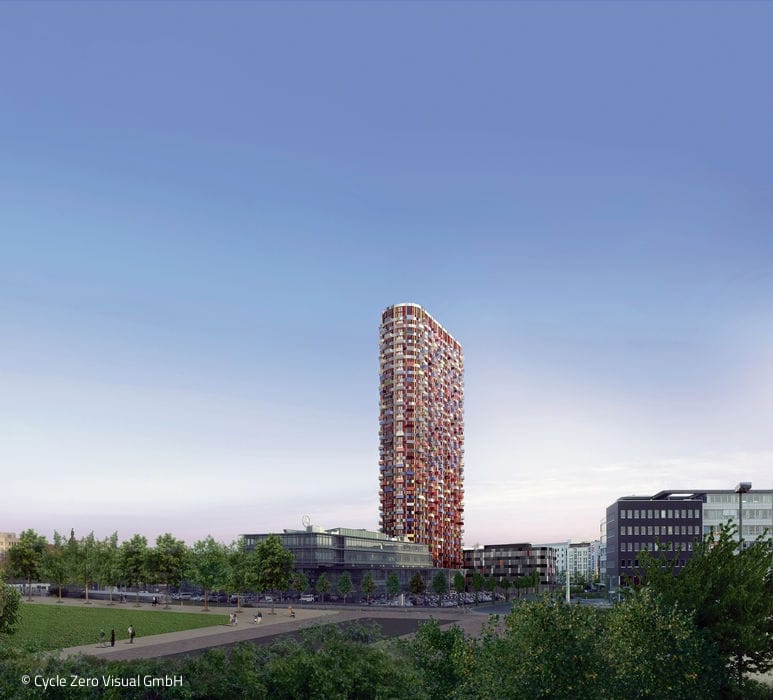
UpperNord Tower: Düsseldorf's Tallest Residential High-Rise Set for Completion in Mid-2022

An Airy Spatial Marvel
A classic semi-detached home on the Rhine's left bank unfolds generously inward

Built Identity
A Derendorf media agency's cultural hub demonstrates the enduring power of blending heritage and innovation.
Growth Through Design
A Single-Family Home in Ratingen Transforms into a Two-Family Residence