


Concrete you can touch
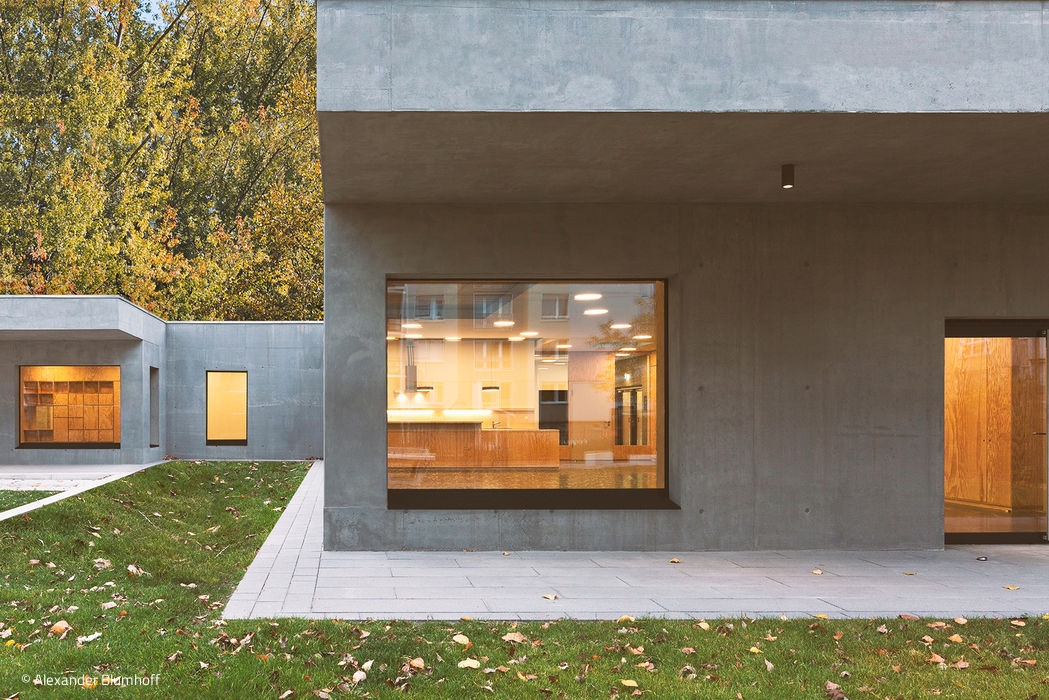
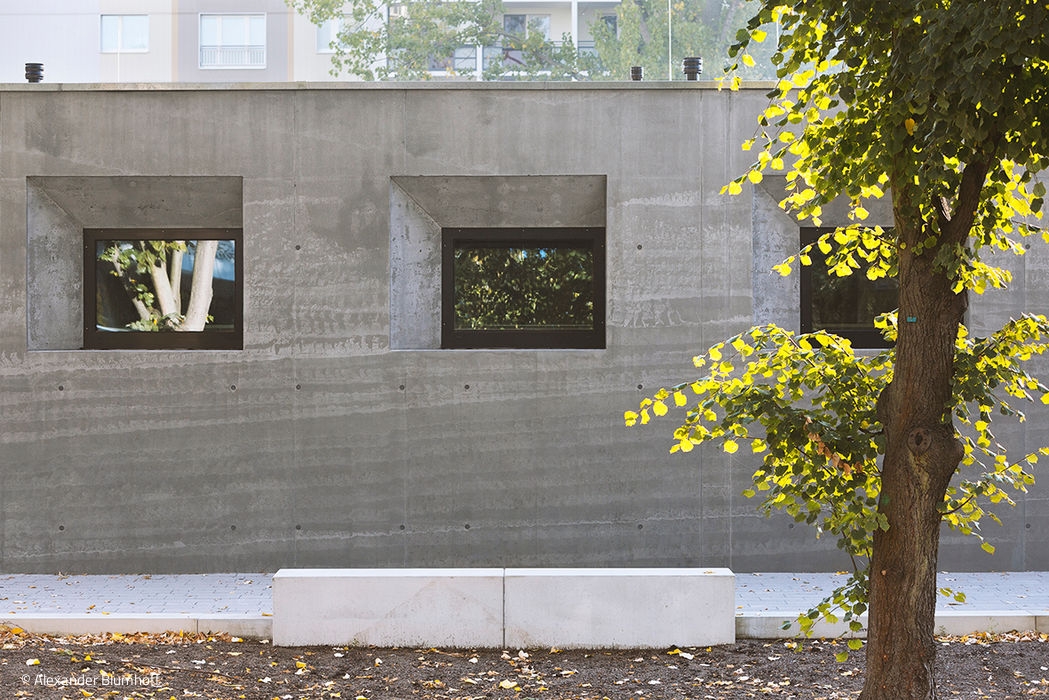
Expansive panoramic windows and dramatically cantilevered roof planes create an open, transparent aesthetic while imbuing the long, low concrete structure with an unexpected sense of lightness.
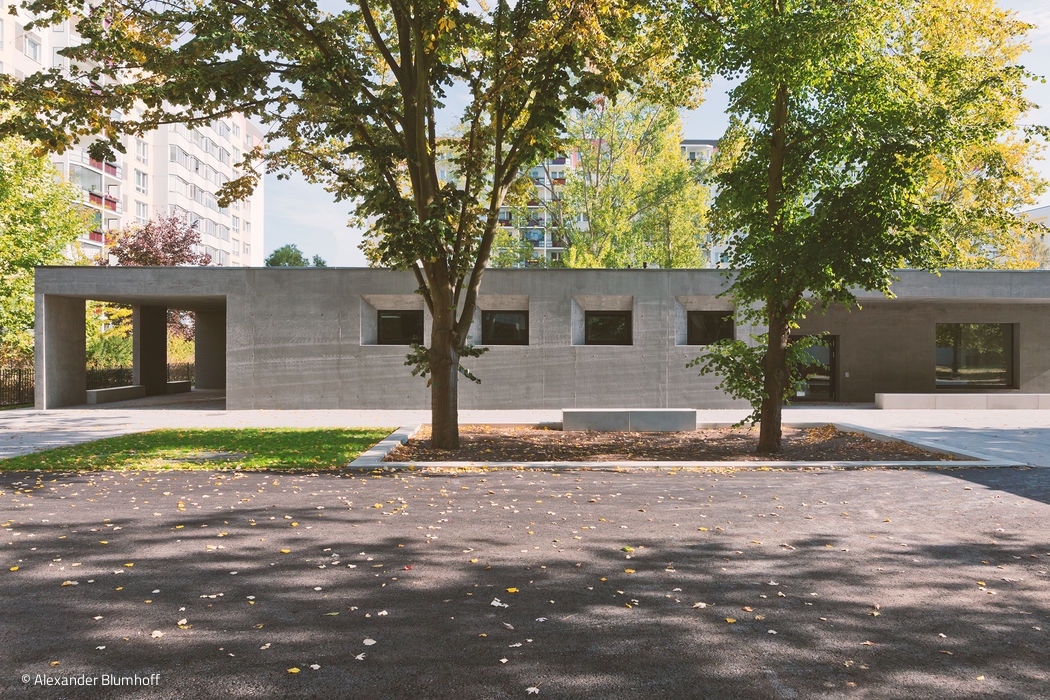
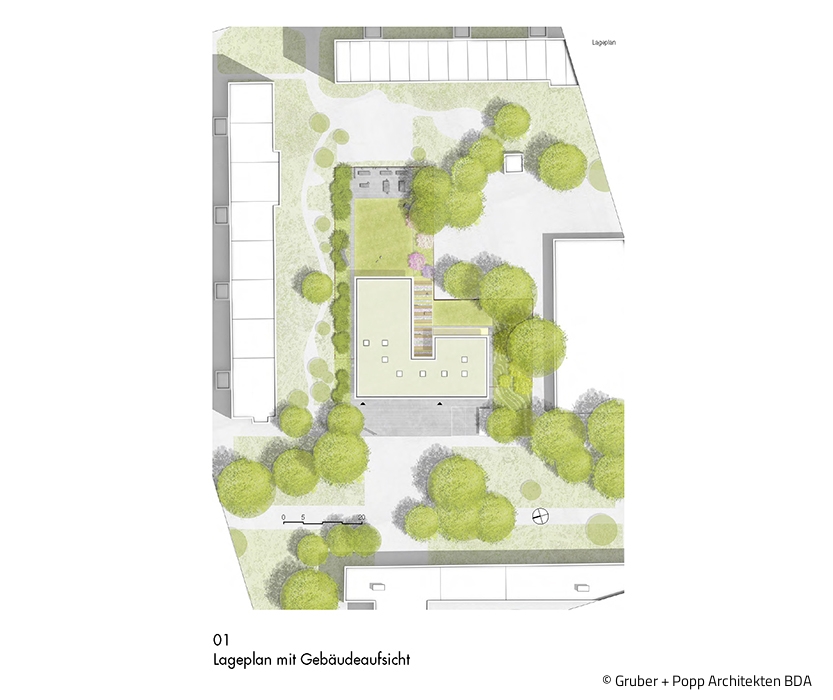
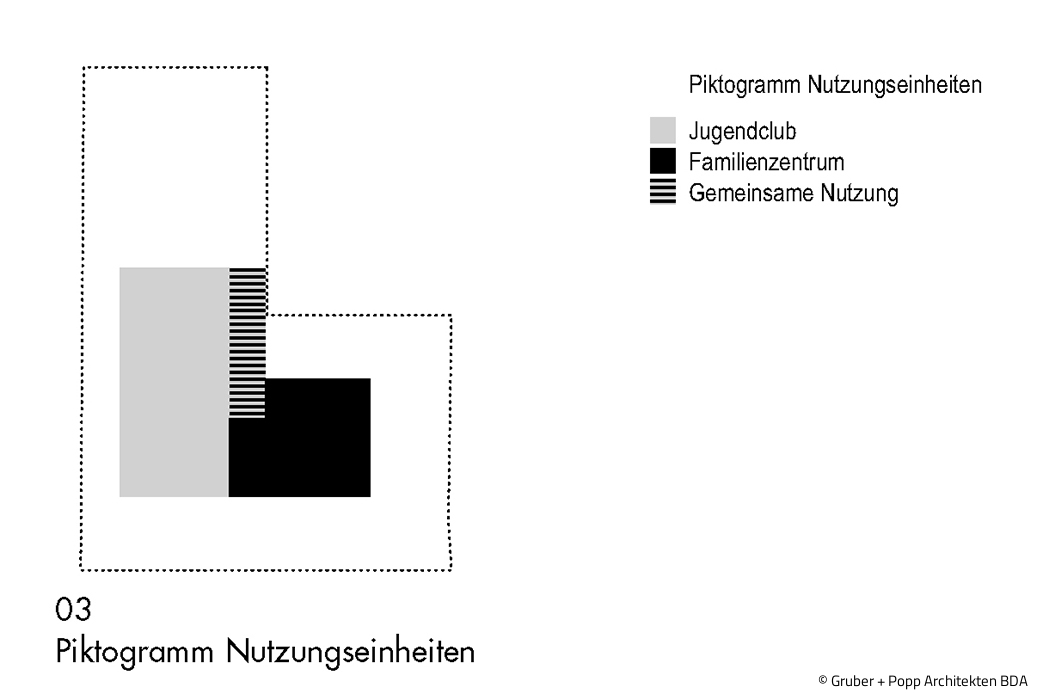
The "Betonoase" is a youth and family center located in Berlin's Lichtenberg district, surrounded by residential towers ranging from six to twenty stories. Nearby sits the Hans-Loch-Viertel, East Berlin's first large-scale housing development built after World War II. Architects Doris Gruber and Bernhard Popp won the competition to design a new building just a few hundred meters from the original Betonoase location.
Rather than attempt to create an exotic escape, the architects embraced the environment itself. The building is constructed entirely of concrete, allowing it to merge seamlessly with its urban context. Yet this is no ordinary concrete. The single-story structure, completed in 2019, employs innovative infra-lightweight concrete—a material developed by engineering firm Schlaich Bergermann that incorporates expanded clay granulate to achieve such a high air content it can actually float. Beyond its impressive strength-to-weight ratio, the material delivers exceptional thermal properties. At 50 cm thick, the walls require no additional insulation. The lightweight concrete also enabled a monolithic construction approach, with both interior and exterior finished in exposed concrete—avoiding any hint of brutalist coldness. Instead, clean lines and measured proportions sidestep monumentality entirely. Large panoramic windows and strategically cantilevered roof planes reinforce the building's sense of openness and weightlessness. The material itself possesses an understated tactile quality—soft and warm to the touch, it naturally invites you to run your hand along its surface.
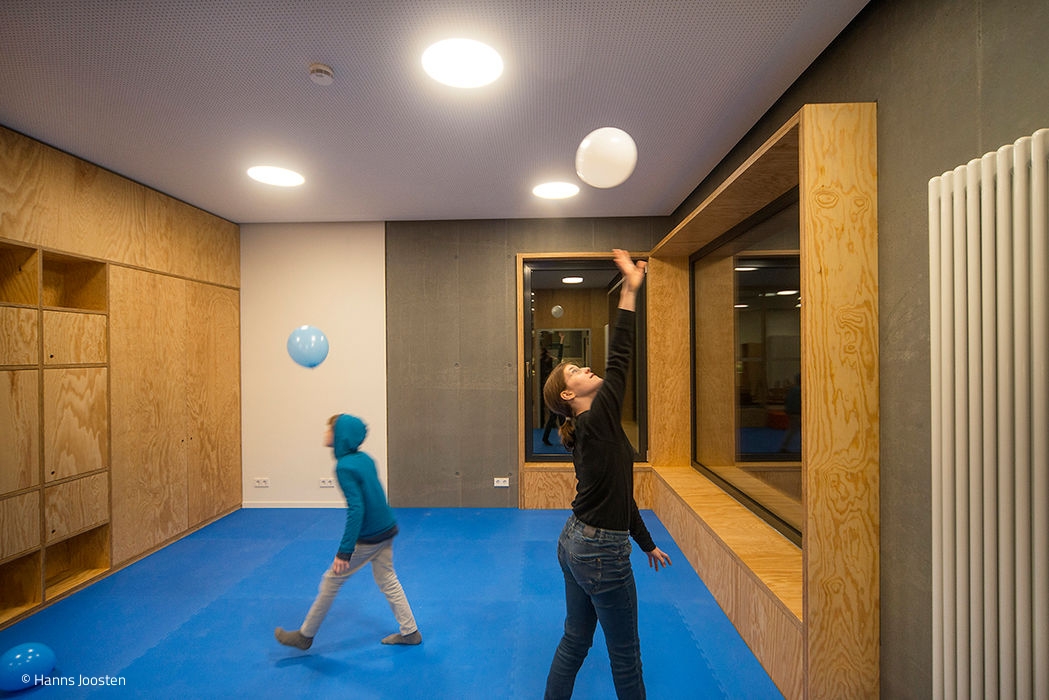
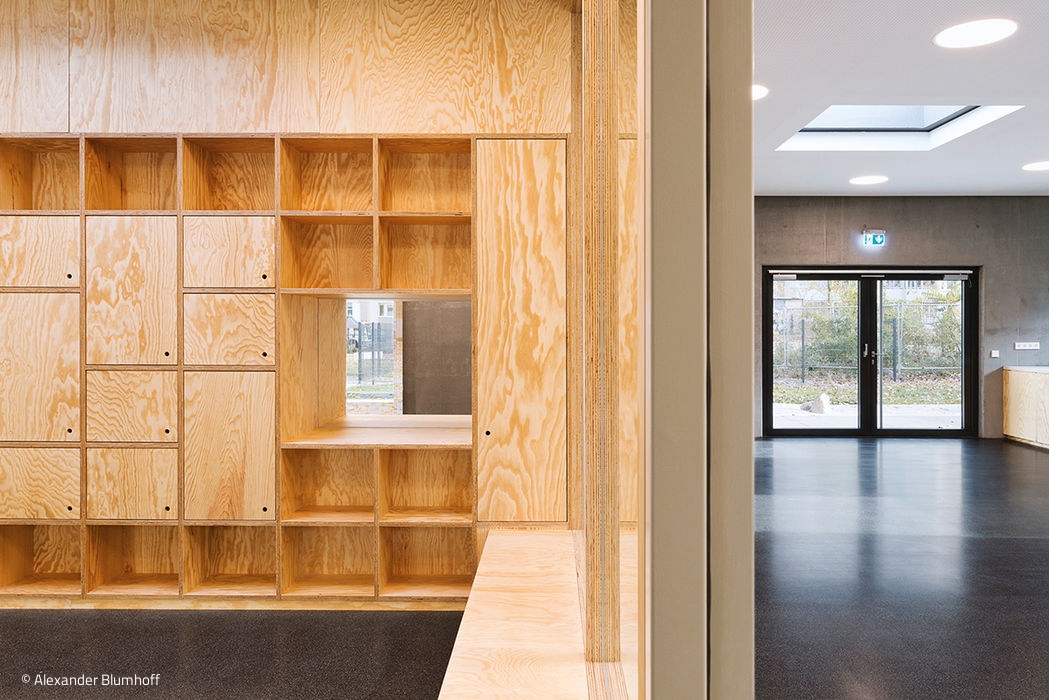
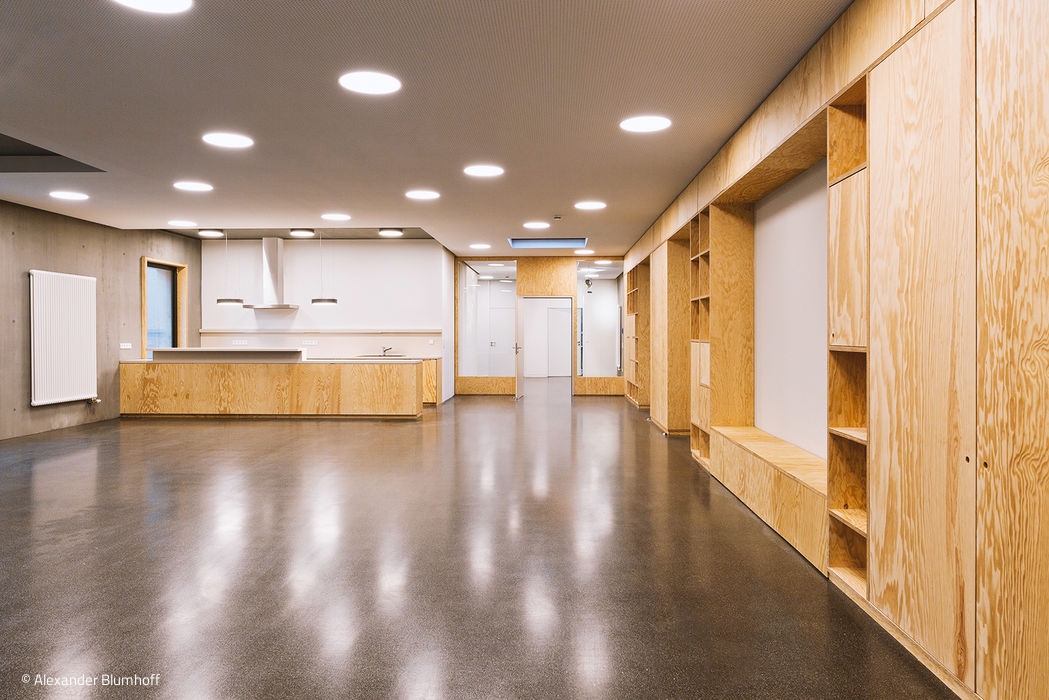
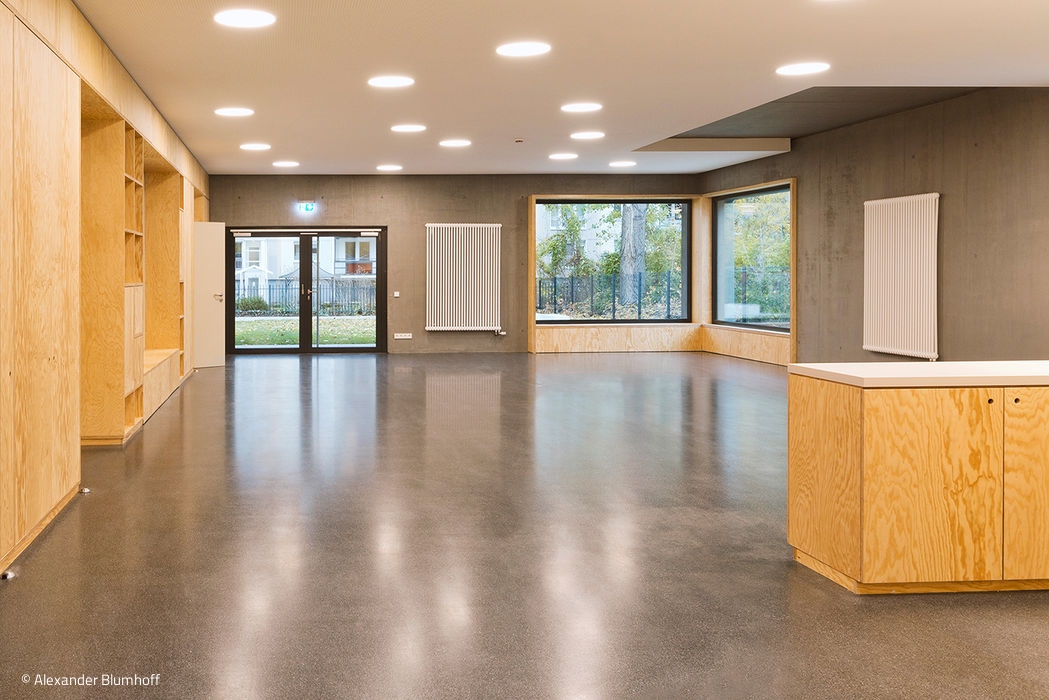
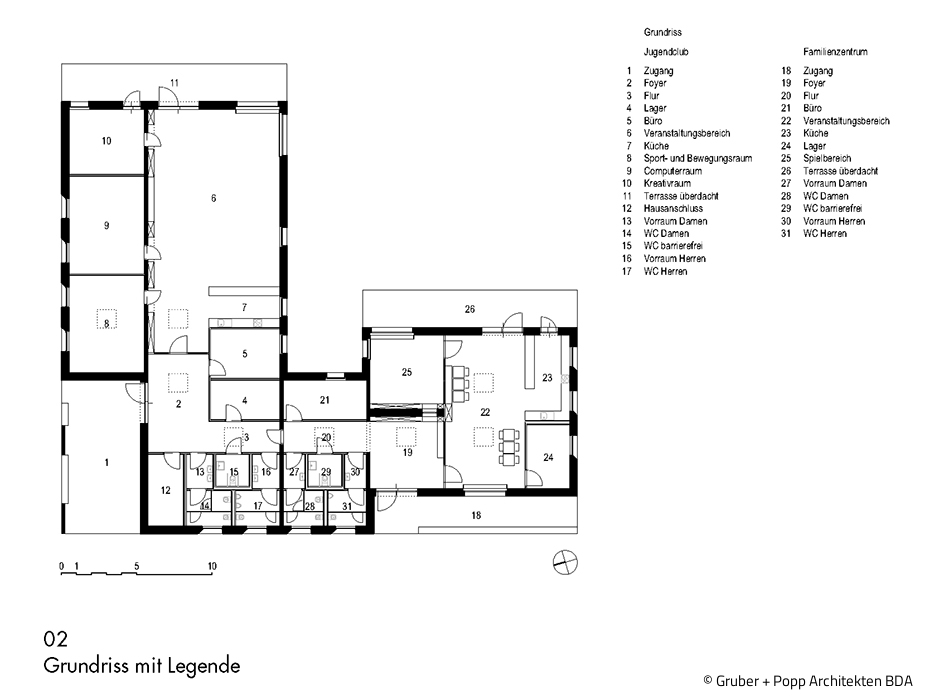
Inside, the material palette remains equally restrained and honest. Alongside exposed concrete walls are partitions, storage, seating, and alcoves crafted from plywood sheets, while kitchen counters—also plywood—anchor the central gathering space. Recessed skylights work in concert with strategically placed windows of varying sizes to flood the interior with natural light. The polished mastic asphalt floor, with its subtle sheen, has become a canvas for the young visitors themselves—its smooth surface is perfect for practicing breakdancing. Dedicated spaces house a ceramic studio with kiln, computer lab, and fitness area. The new Betonoase has quickly become a defining landmark for the entire neighborhood. Rather than commanding attention through spectacle, the building emanates quiet confidence and calm. While you won't find palm trees in this concrete oasis, you will discover a green roof and newly planted gardens that bring unexpected life to the urban landscape.
Photography Credits:
Alexander Blumhoff
www.alexander-blumhoff.com
Hanns Joosten
www.hannsjoosten.de
(Originally published in CUBE Berlin 01|20)

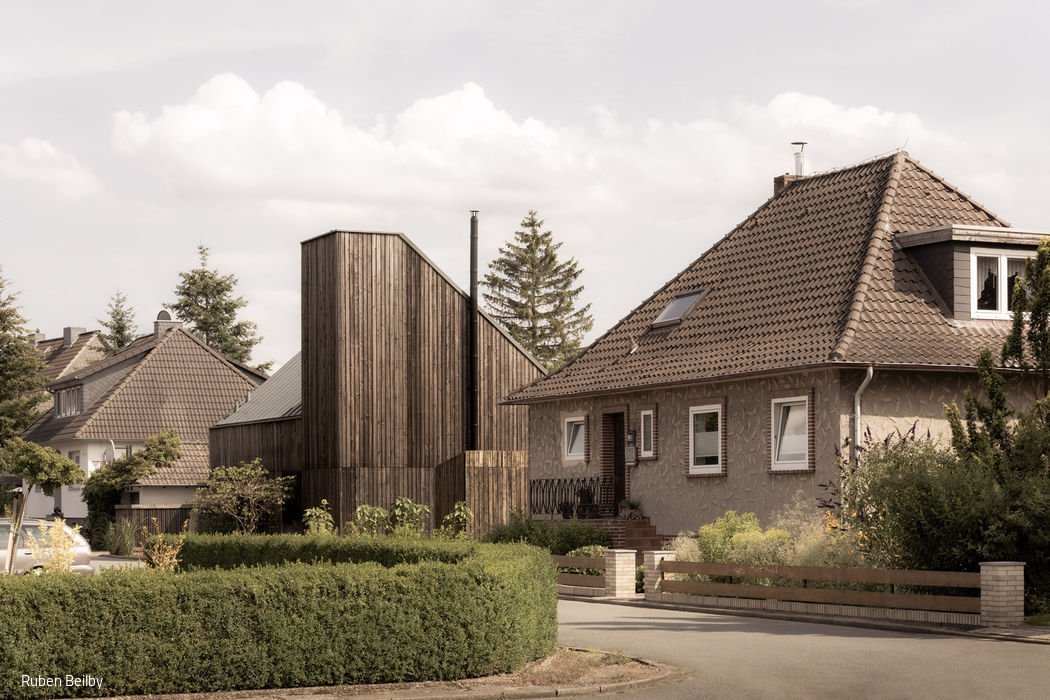
Like a Sanctuary of Calm
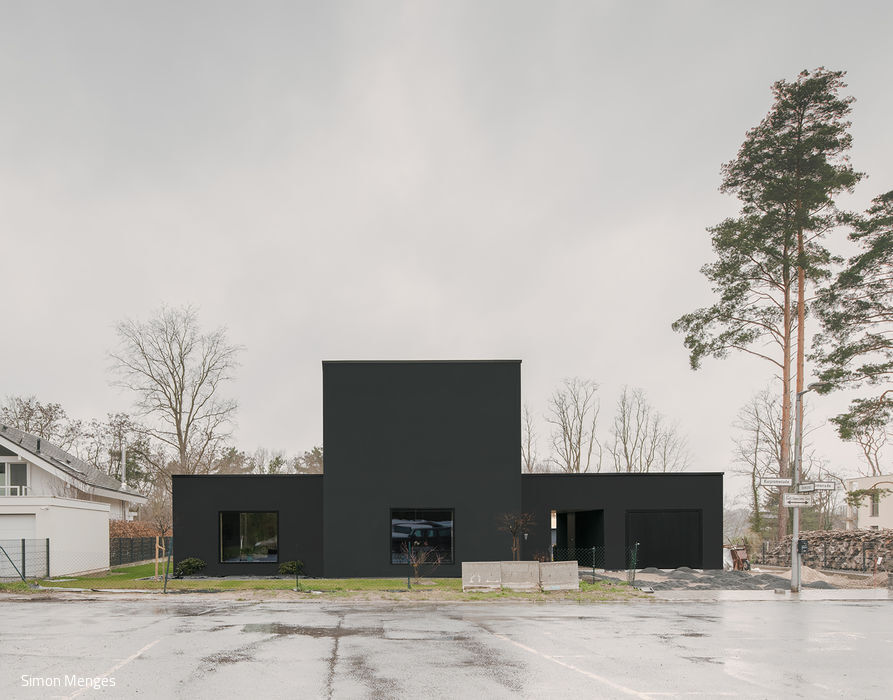
Single-family home with restrained form and thoughtful material palette
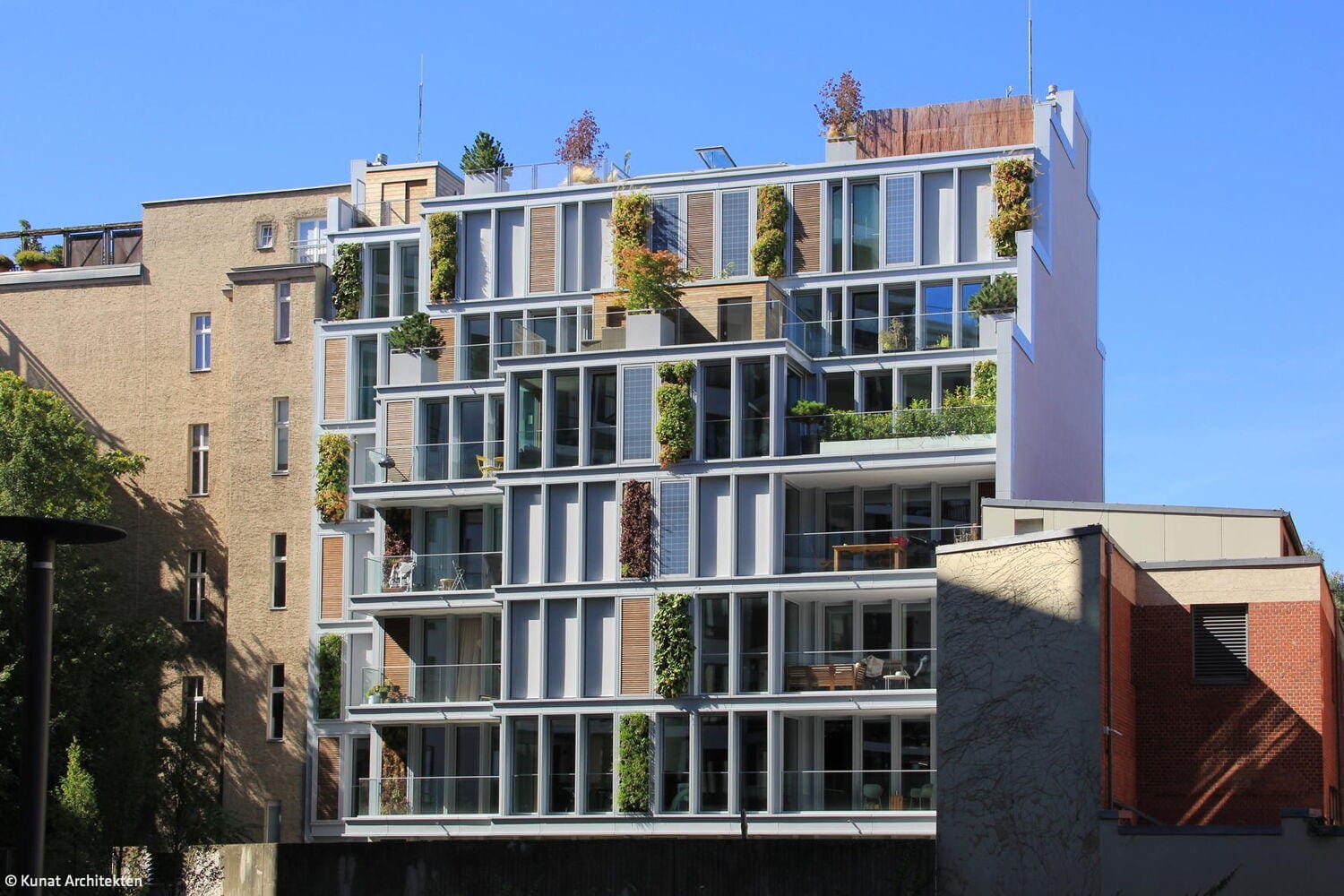
Facade as the Star
A Residential and Commercial Building with an Exceptional Façade

The Blue House
Nursery and Comprehensive School: Expanding the Jewish Campus

Thinking Ahead
Potsdam's Think Campus I–III: A Growing Hub for Research and Innovation