


Connected & Flexible
New residential quarter combines diverse living concept with unique location
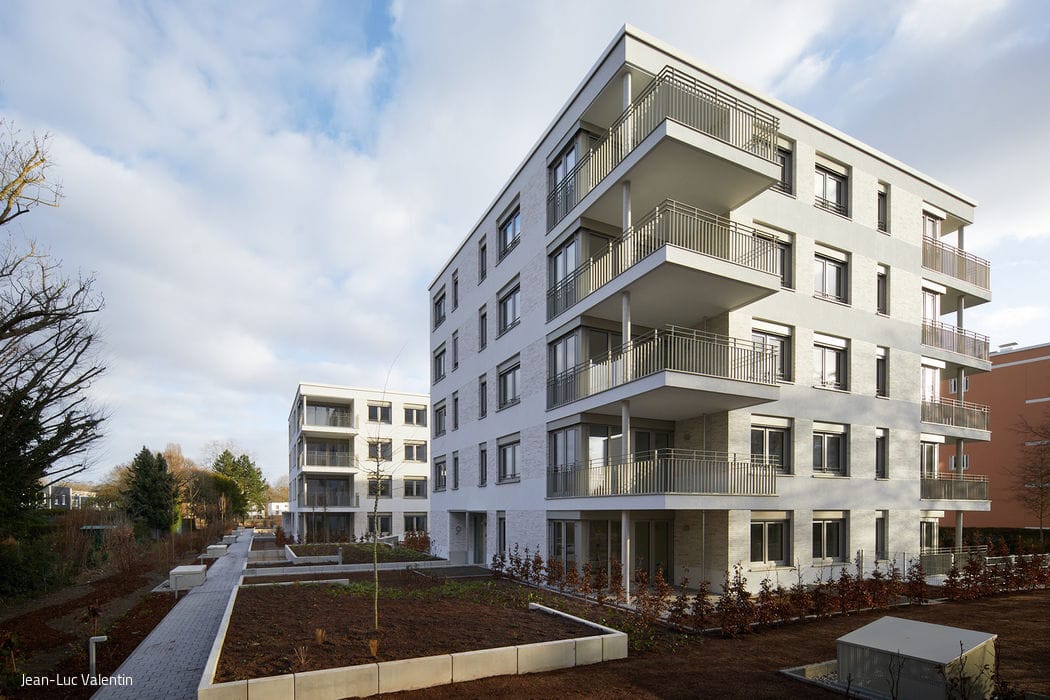
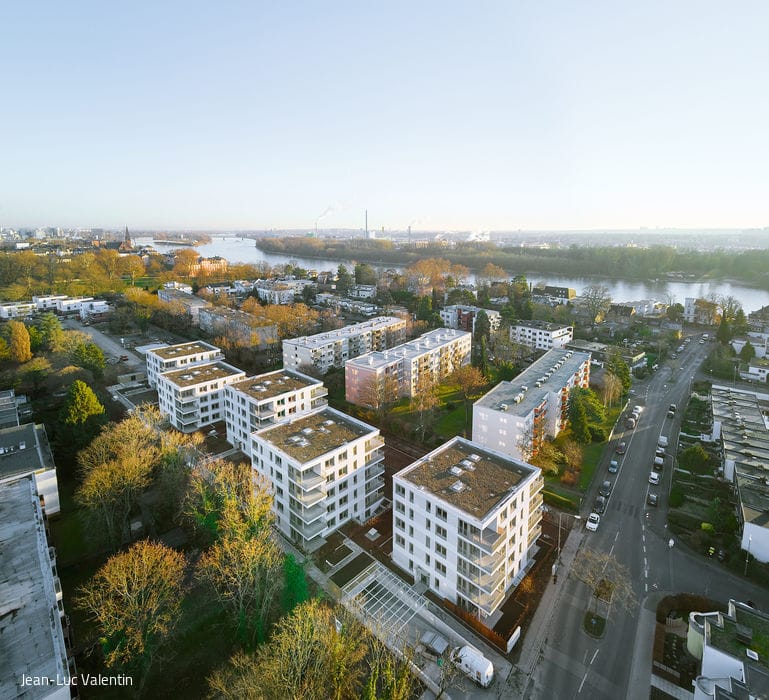
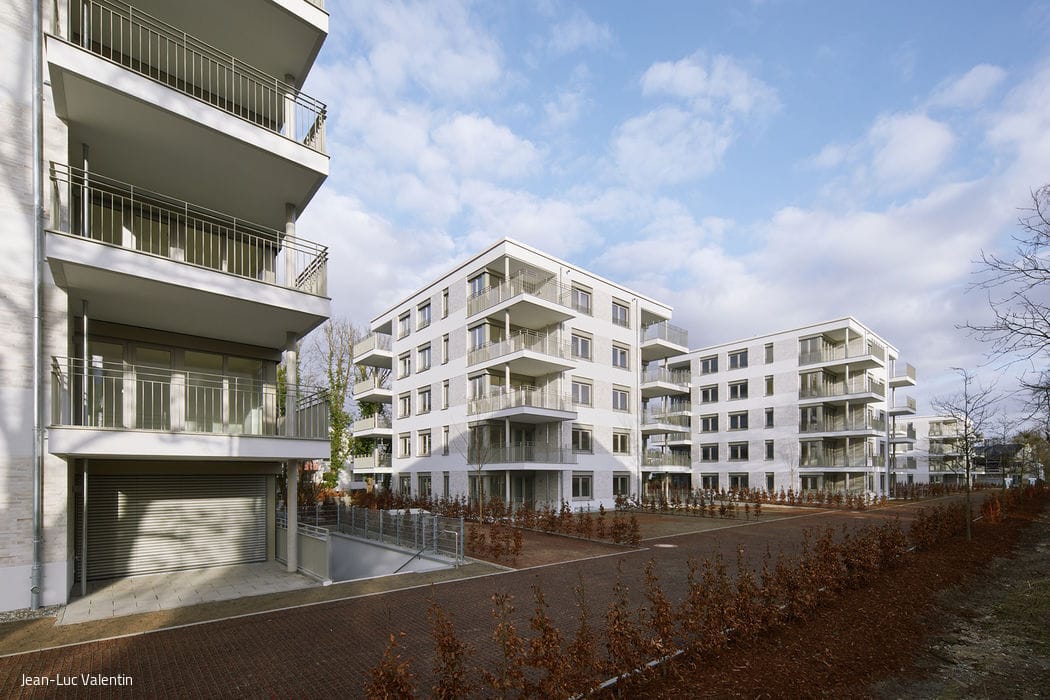
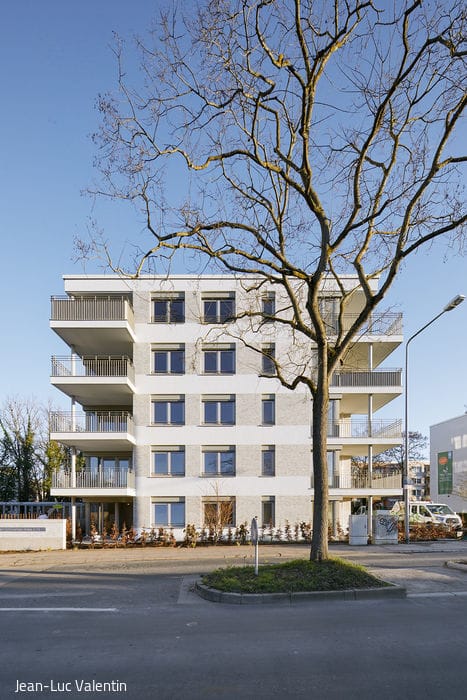
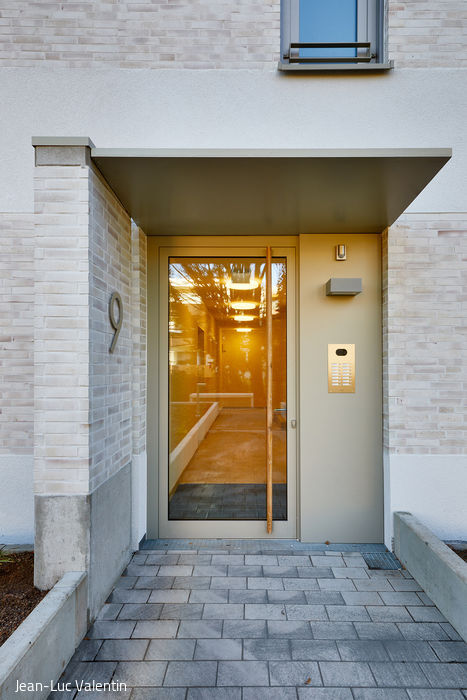
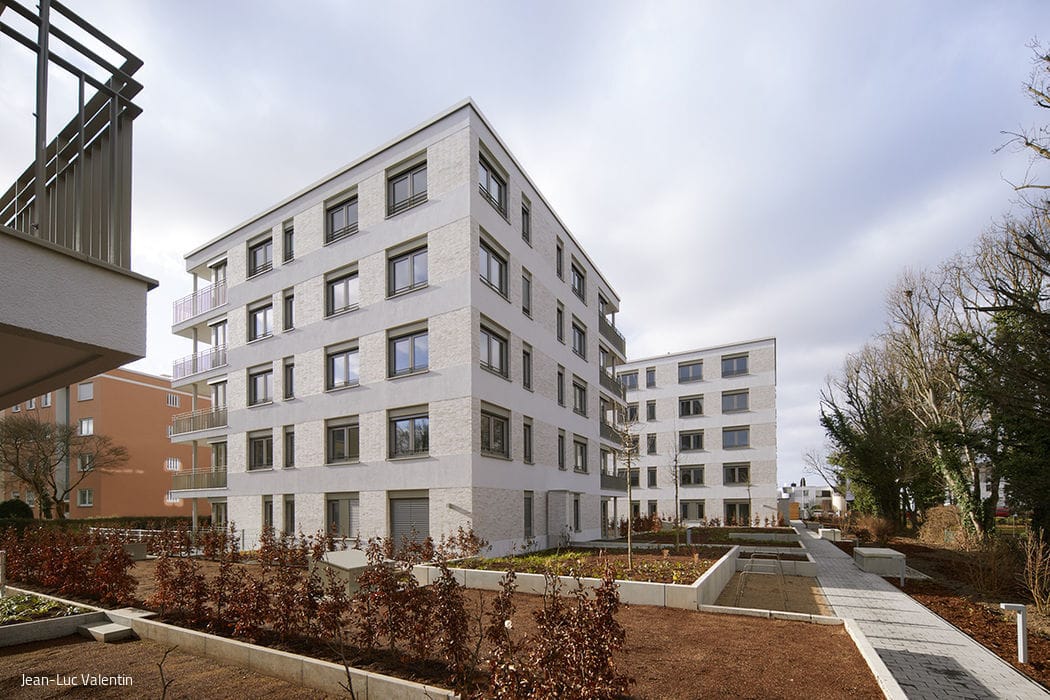
The Rhine, including the Rhine promenade and harbour, the castle with its extensive park, and restaurants and cafés create a liveable atmosphere in the Biebrich district of Wiesbaden. The "Albert Villen" residential complex, designed by Wiesbaden architects grabowski.spork, is also located in this beautiful setting: Five houses of similar typology with different numbers of storeys are arranged in a staggered row on the elongated plot. The Frankfurt-based non-profit housing association Gemeinnütziges Siedlungswerk Frankfurt commissioned the Wiesbaden architects to design the site in order to acquire the plot as part of a concept award with a planning concept.
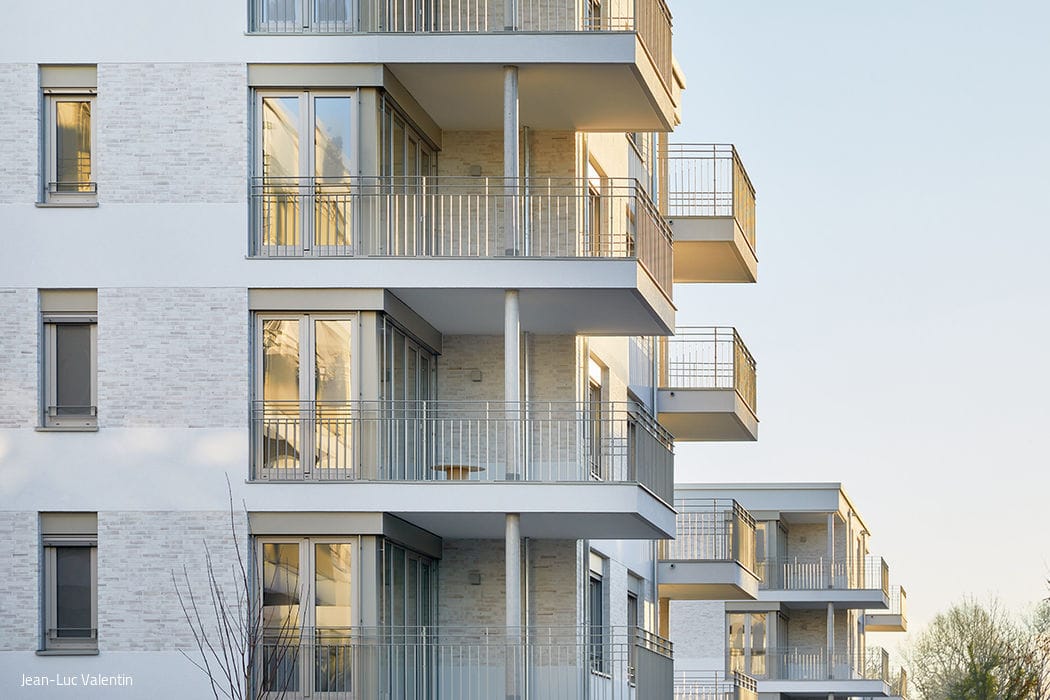
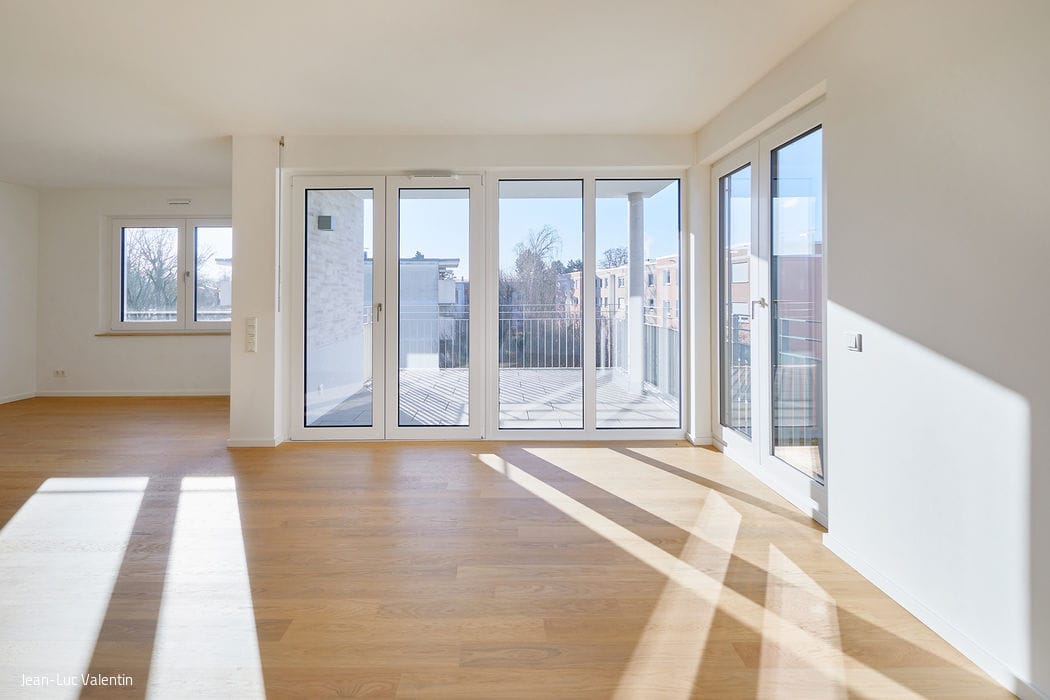
"The client and we attached great importance to a good mix," explains architect Jan Spork. "In order to appeal equally to singles, couples, seniors and families, contemporary and flexibly designed one- to five-room flats ranging from 30 to over 140 m² were created in the four- and five-storey city villas." All flats are barrier-free and each flat has one or two spacious, sheltered balconies. On the ground floor, garden areas extend the outdoor space. A consistent colour and material concept connects all the buildings: light-coloured plaster surfaces and colour-coordinated clinker surfaces structure the façades of the new buildings. The recessed terraces and balconies face south and west. Depending on the floor plan, two or three flats connect to the stairwell via the hallway; in some cases, living space extensions are arranged in the basements as souterrains with patios. Oak parquet flooring lends the flats both elegance and warmth, while steps made of shell limestone natural stone stylishly connect the floors in the stairwells. The continuous underground car park connects all the buildings and offers bicycle parking spaces as well as charging stations for electric cars.
The neighbourhood is supplied with cold local heating by the local energy provider. The buildings obtain part of their heat supply from the constant temperature of a nearby sewage collector. This avoids up to 200 tonnes of CO₂ emissions annually. The project was funded by the European Regional Development Fund and the ESWE Innovation and Climate Protection Fund, which support the implementation of energy-saving projects, innovative technologies and the use of renewable energies.
Photography Credits:
Jean-Luc Valentin
www.foto-valentin.de
(Featured in CUBE Frankfurt 02|22)

Ethereal Transparency
Contemporary Work Environments at a Historic Crossroads of Frankfurt
Setting the Right Tone
Acoustic comfort and thoughtful layouts create a welcoming home
Three in One
A showroom where brand, people, and materials converge
A Harmonious Union
A Contemporary Addition Transforms a Compact Historic Apartment into a Modern Family Home