


Recycled glass as a façade
New institute building combines offices, laboratories and technical centre in a compact, dynamic form
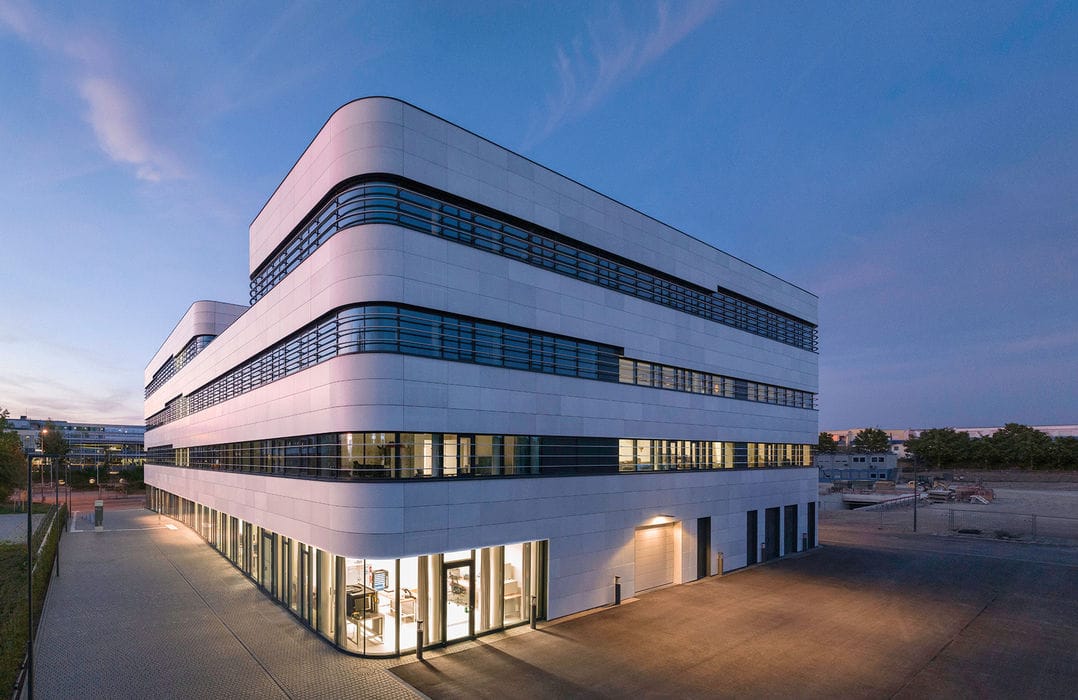
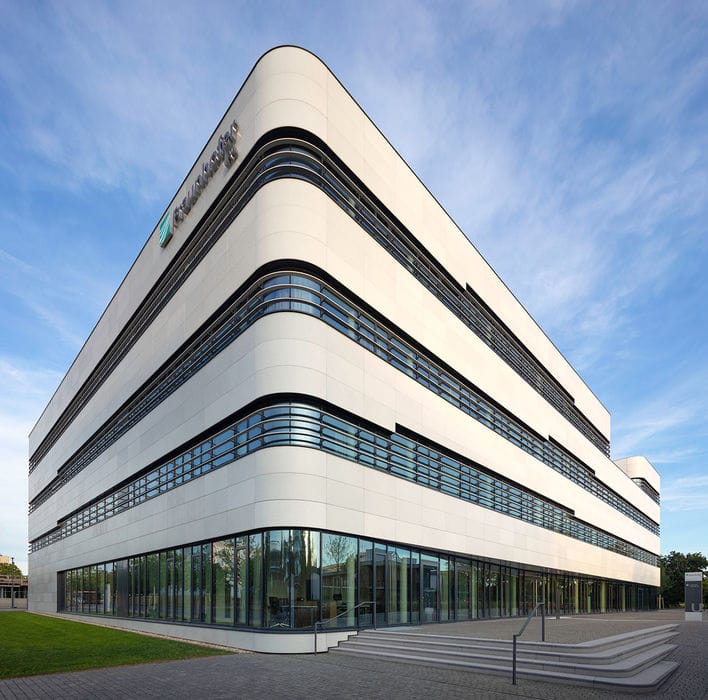
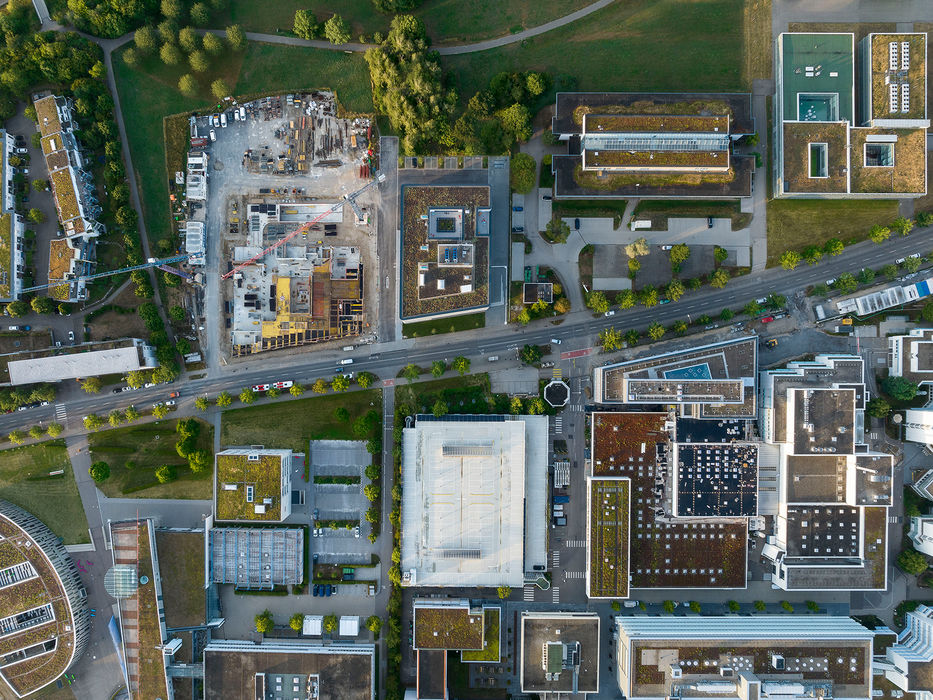
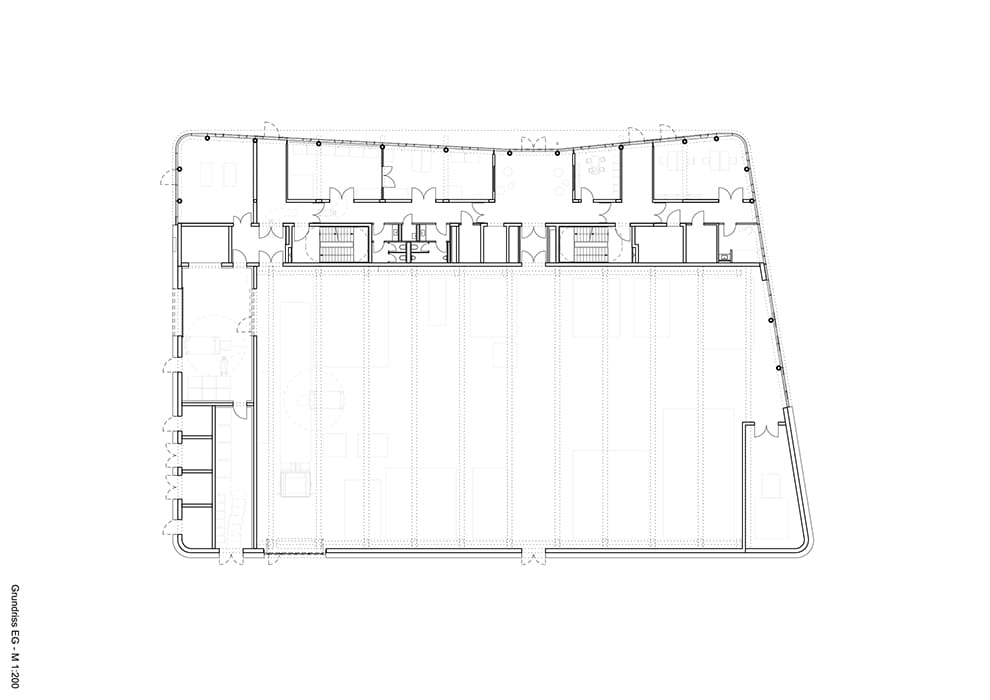
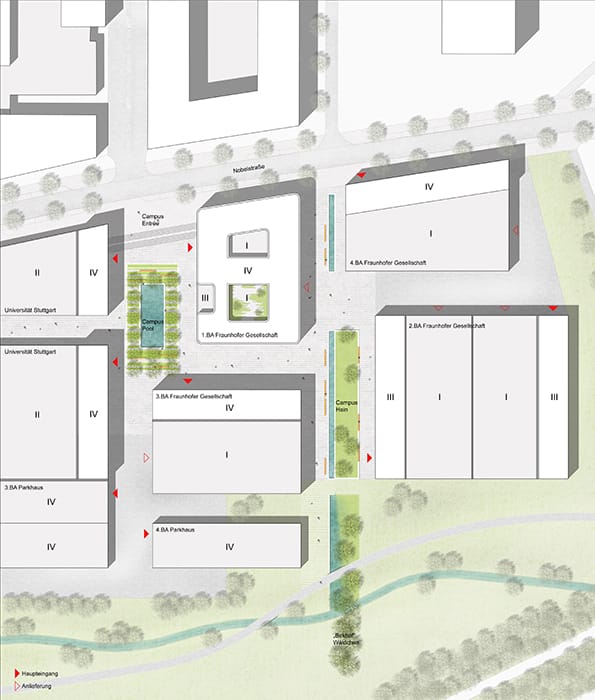
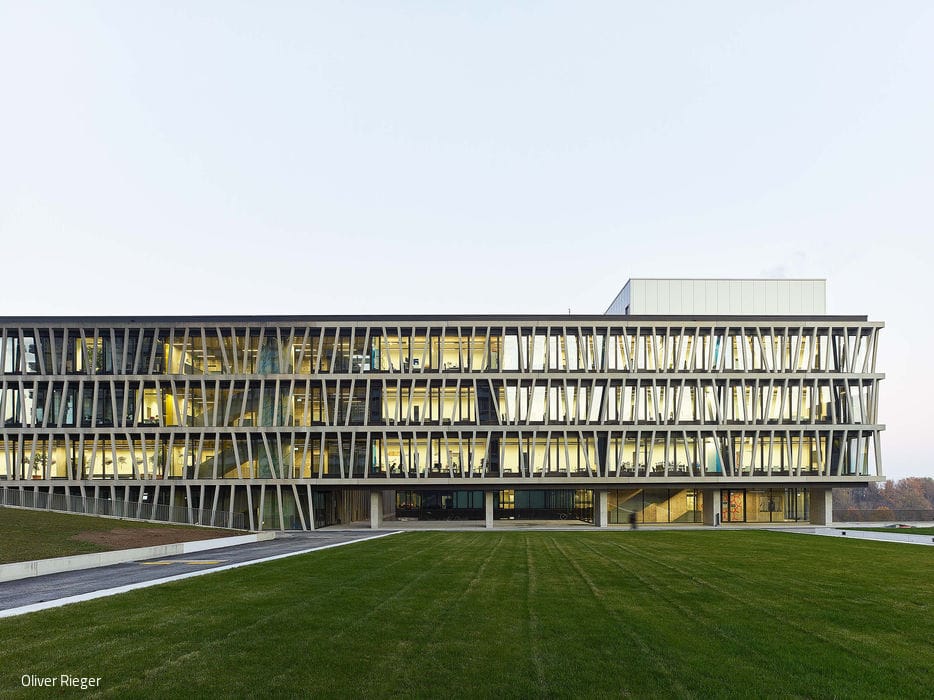
The four-storey new building of the Fraunhofer Institute for Manufacturing Engineering and Automation IPA of the Fraunhofer Society is part of the Stuttgart-Vaihingen university campus. To the west of the approximately 4,000 m² site is the University of Stuttgart's Technology Centre, and to the east are the car parks of the University of Media. As the first new building on the S-TEC technology and innovation campus in the central area of the new Birkhof site, its design follows the shape of the street and the geometry of the square. Its staircases extend into the impressive foyer. This opens up the building and allows the interior to blend seamlessly with the urban outdoor space in an inviting gesture.
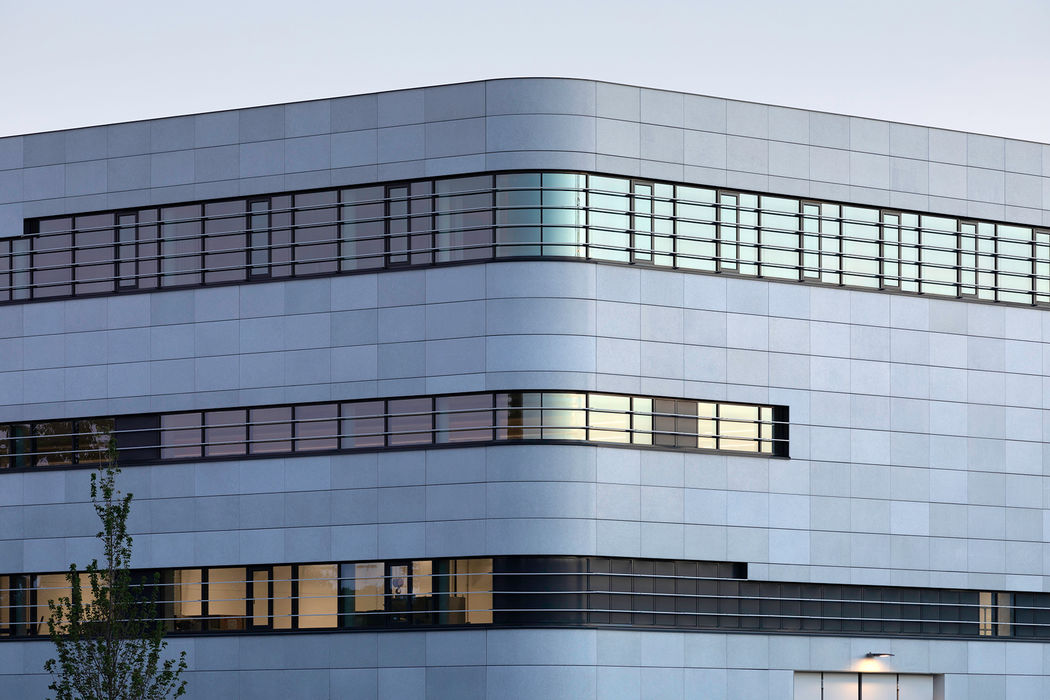
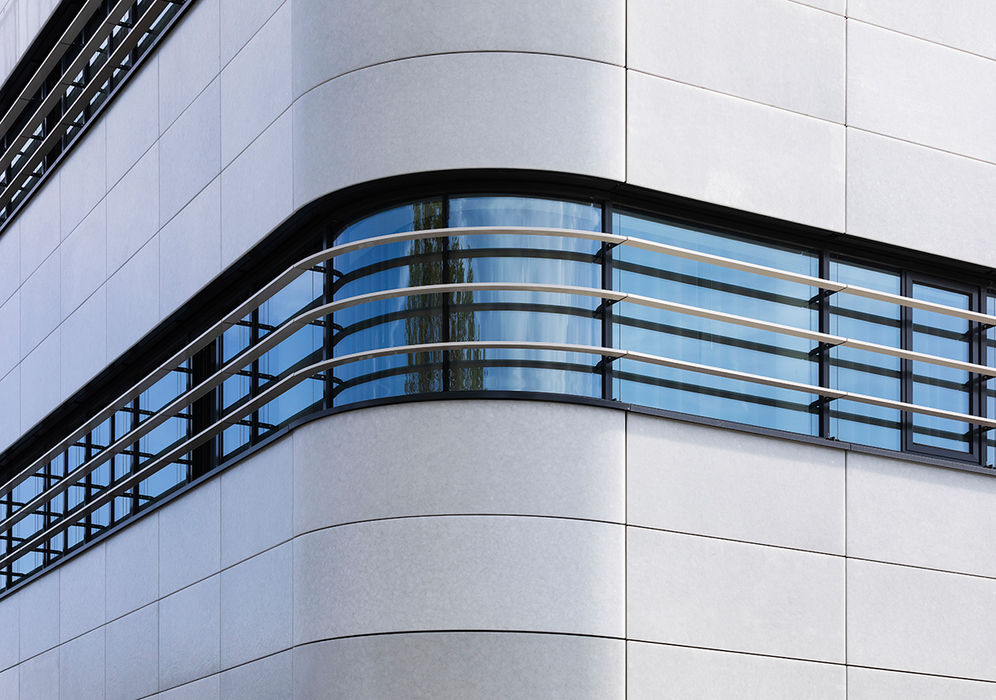
The flowing, horizontal lines of the façade convey dynamism and lightness. Not only sustainable, but also in keeping with the institute's research activities, the façade is made of recycled glass from solar cell production waste. Window bands of varying heights and widths run around the building. Each element consists of opening sashes and fixed glazing with external sun protection and internal glare protection. The ground floor is floor-to-ceiling glazed. The compact structure of the building means that the distances between the different areas are short, promoting communication.
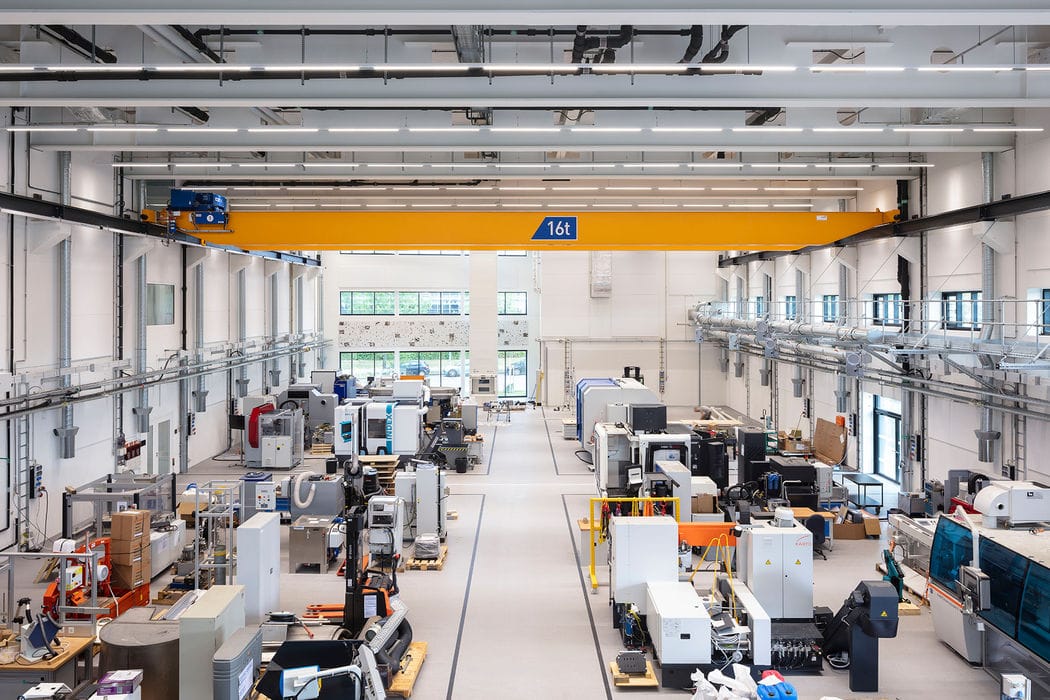
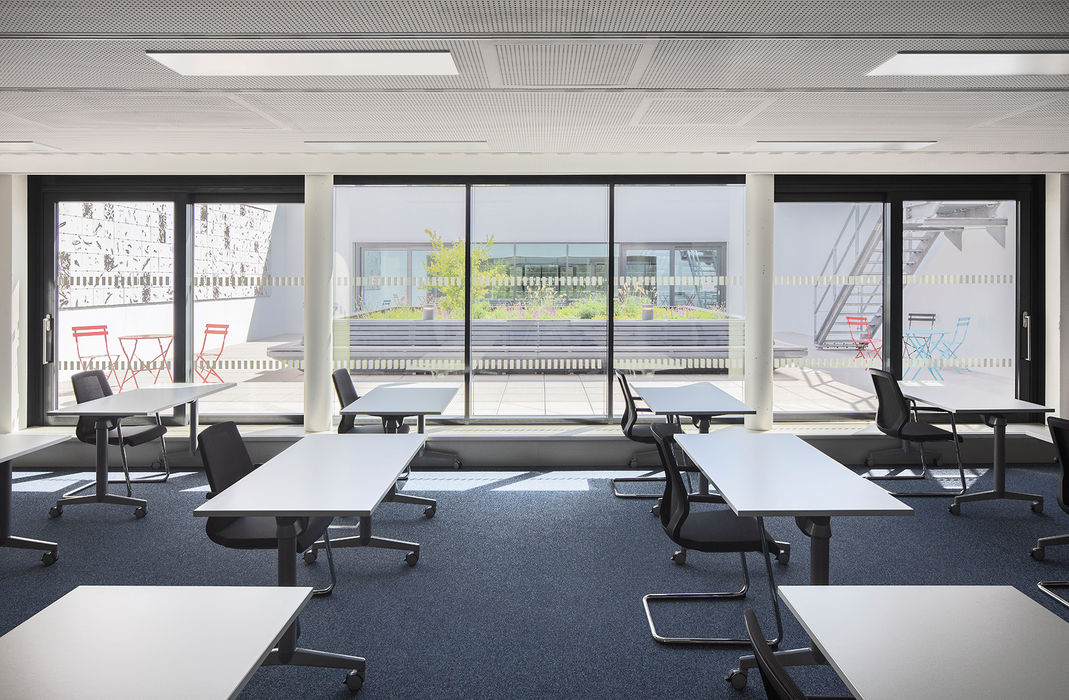
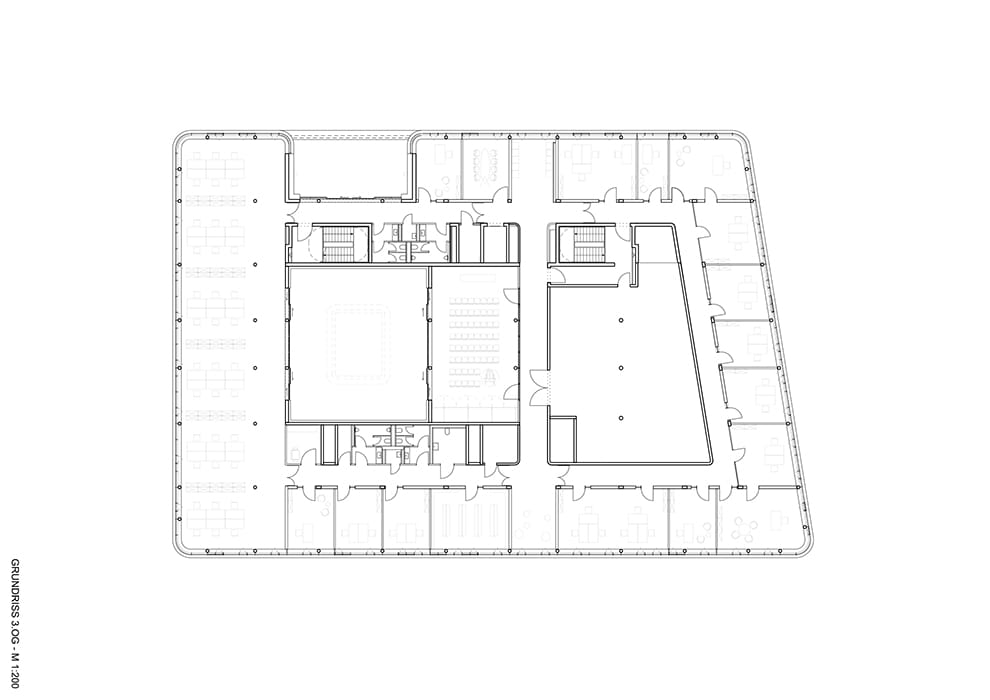
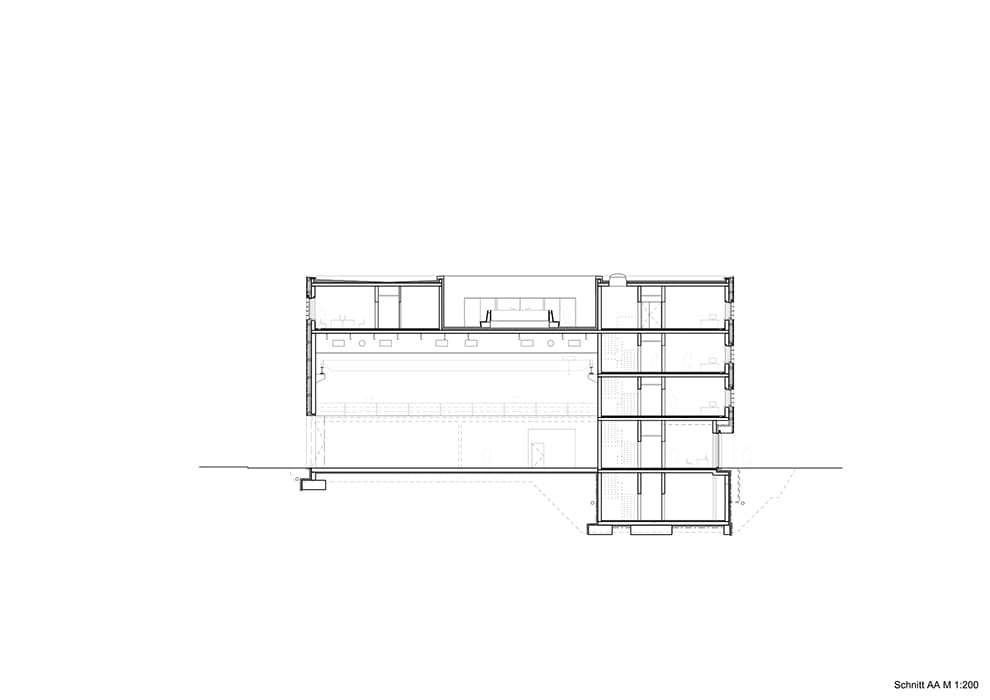
Functionally, the new building is divided into two areas: the complex with offices, meeting rooms and laboratories, and the technical centre with space for technology, infrastructure and laboratories, as well as storage and ancillary uses. The office complex faces the campus square and is located in front of the technical centre on three floors. On the third floor, it extends over the technical centre and, with its internal roof garden and roof terrace facing the square, forms attractive office and seminar areas. The technical centre houses a workshop hall with a height of almost 11.5 metres, with a single-storey cold hall and delivery area in front. The three-storey workshop hall is divided into different technology areas in which different materials are processed – supplemented by a workshop and assembly area in the transition to the cold hall.
The building is heated using a switchable air-water heat pump system, supplemented by a gas condensing boiler. Cooling is limited to temperature regulation of office spaces through thermally active building components.
www.gewers-pudewill.com
Photography Credits:
HG Esch
www.hgesch.de
(Published in CUBE Stuttgart 04|22)
Inspiring Work Environment
Innovative Co-Working at the AI Campus
Campus of the Future
Replacement Facility for the Interfaculty Institute of Biochemistry (IFIB), University of Tübingen
Classically Modern
A Sculptural Home with Distinct Realms for Parents and Children
Studio creative underdogs
Design studio specializing in products, furniture, and spatial concepts