


A Crow's Nest, Not a Move
Unlocking Hidden Space
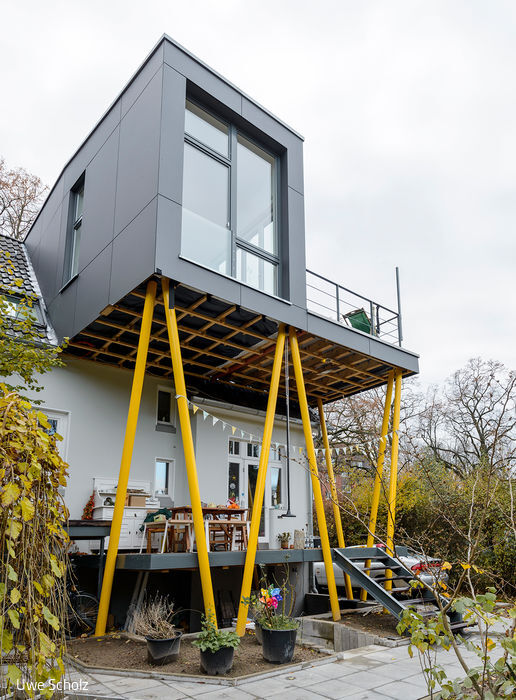
Architect Gerd Streng has explored how to maximize usable space within existing homes, particularly for families. His approach is deceptively simple: strategically reorganize the existing floor plan to allocate the right amount of space exactly where it's needed. Through his "Stair Case Study Houses (SCSH)" series, he demonstrates this philosophy in action—revealing how to unlock dormant space for stairs, storage, gathering areas, and circulation. This charming Art Nouveau villa in Niendorf is a compelling case study.
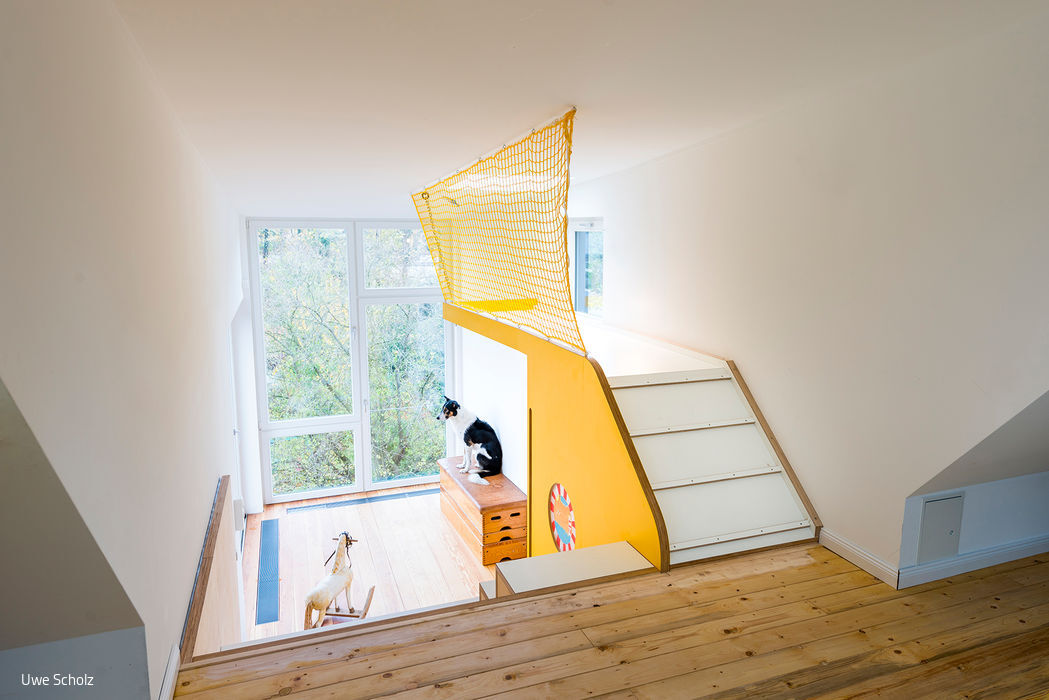
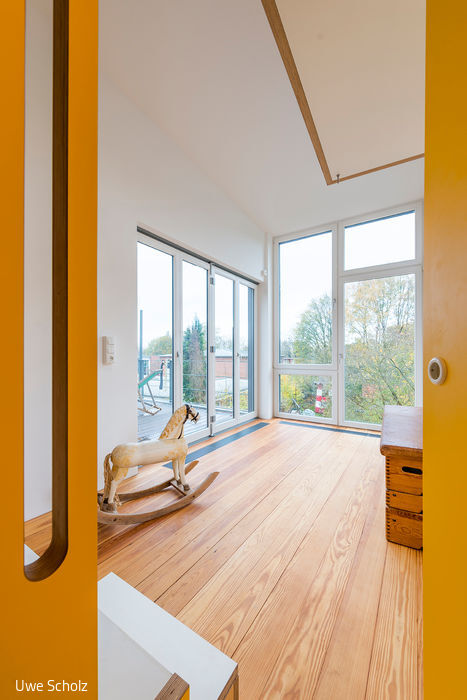
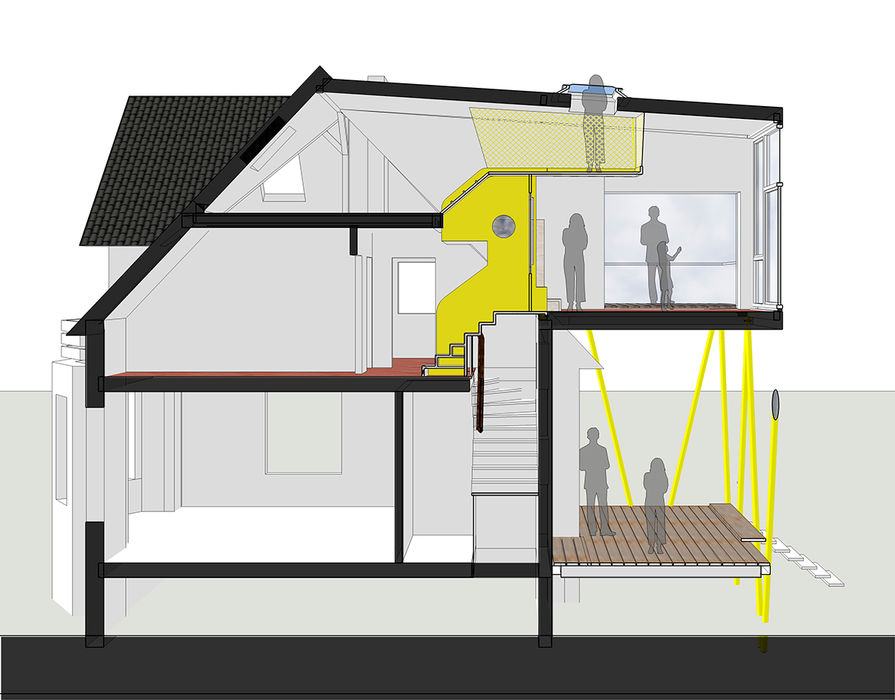
The attic demanded conversion and full integration into the living space. A conventional space-saving staircase was out of the question—the homeowner, standing well over two metres tall, needed proper headroom. Equally unsuccessful were multiple iterations of roof dormers. The breakthrough came with a bold expansion of the roof volume, achieved through structural collaboration with publicplan Architektur + Gestaltung. The new volume gracefully extends the roofline of the street-facing gable, seamlessly inserted as a split-level into the historic fabric. The result: generous new connections to the garden and a prized west-facing balcony. The attic now features a windmill-like expansion with greatly improved ceiling height. A subtle kink along the east façade amplifies the visual slenderness of the addition. Between kitchen and garden, a striking covered terrace—anchored by bright yellow supports rising over four metres high—frames views into the lush landscape. A bicycle storage area nestles beneath the seating platform. Below the terrace, a basement chamber houses garden tools.
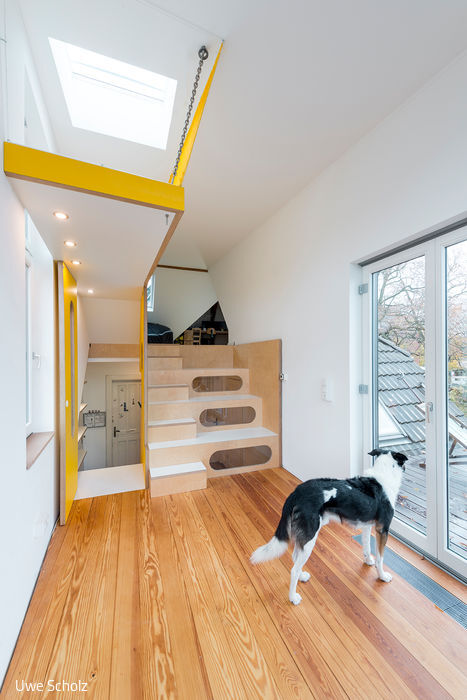
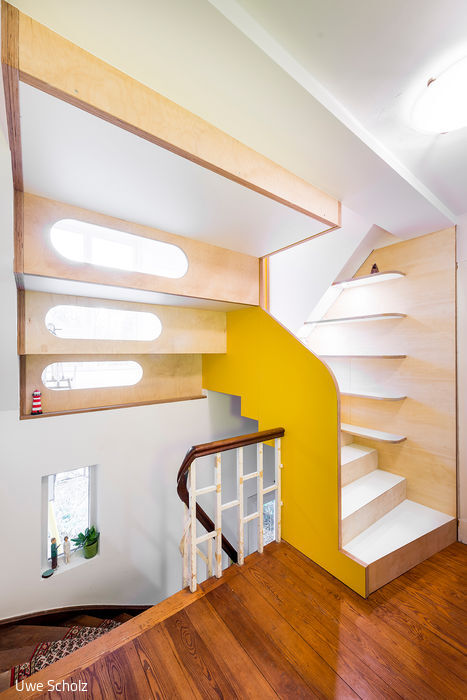
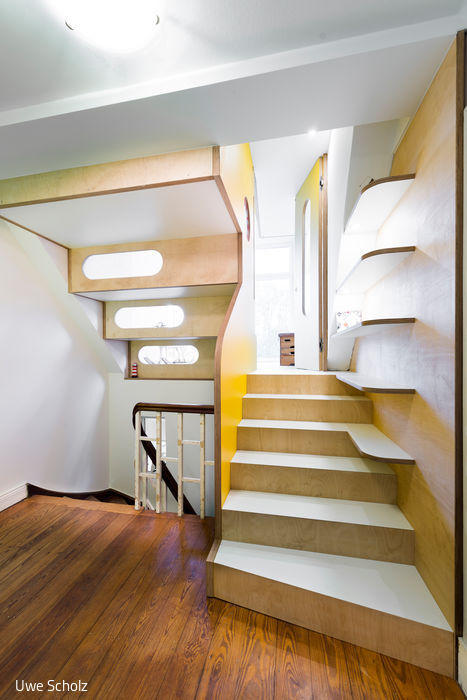
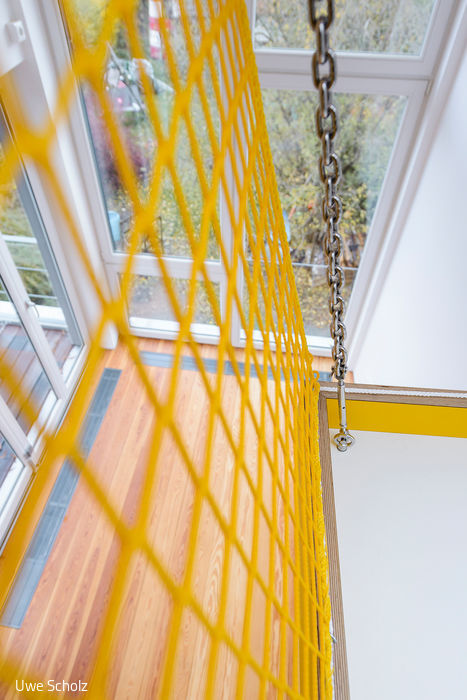
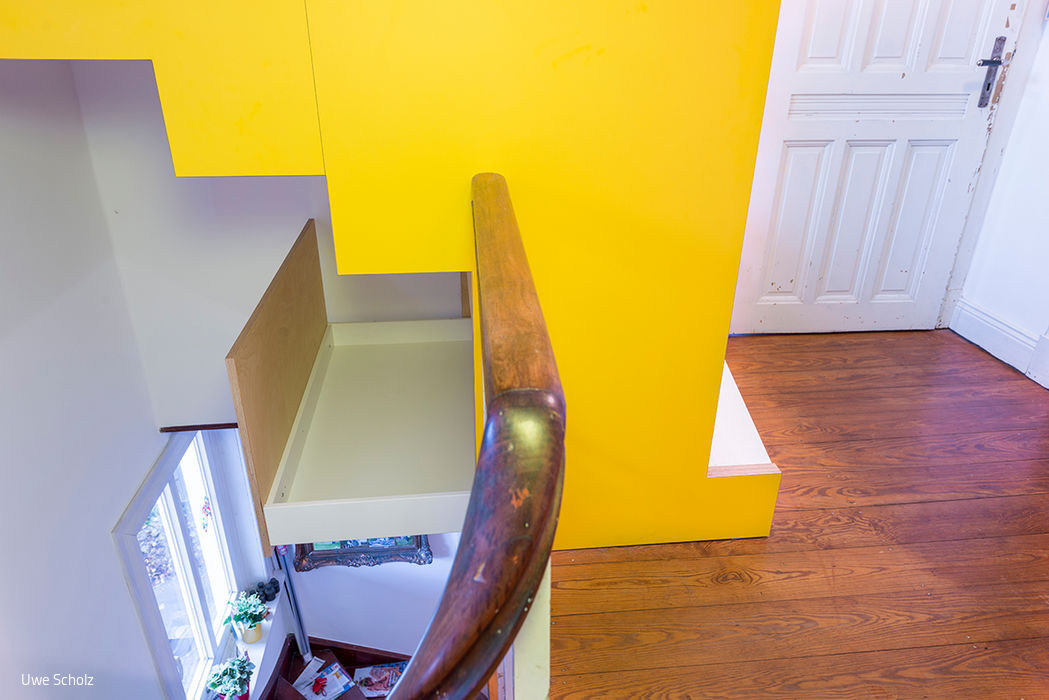
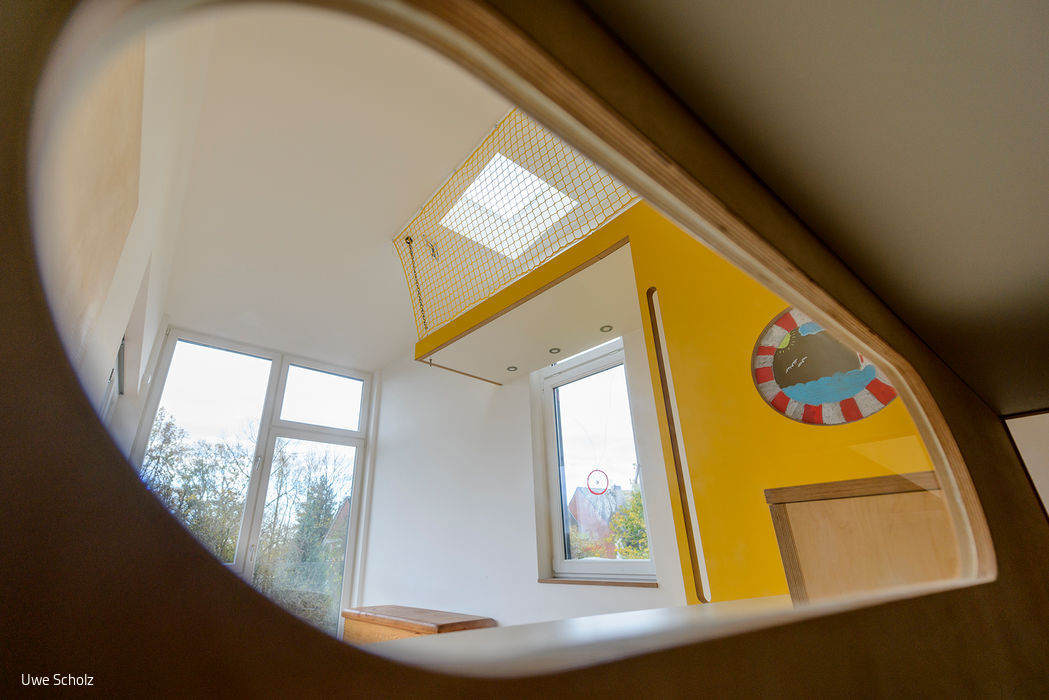
A double staircase of coated multiplex panels ascends through the new volume, anchoring a suspended platform—the "crow's nest." From this intimate perch, inhabitants enjoy sweeping 360-degree views while claiming a private retreat, much like the lookout atop a ship's mast. The design embraces the family's passion for sailing through thoughtful details: portholes, rigging nets, and support masts punctuate the space. The second flight doubles as sculptural seating, while each tread unfolds as a storage box. Glazed cutouts in the risers channel natural light deep into the interior corridor. The soaring multifunctional room—reaching up to 3.40 metres—flexibly accommodates work, play, and living, adapting to the family's evolving needs.
Photography Credits:
Uwe Scholz
(Published in CUBE Hamburg 01|23)
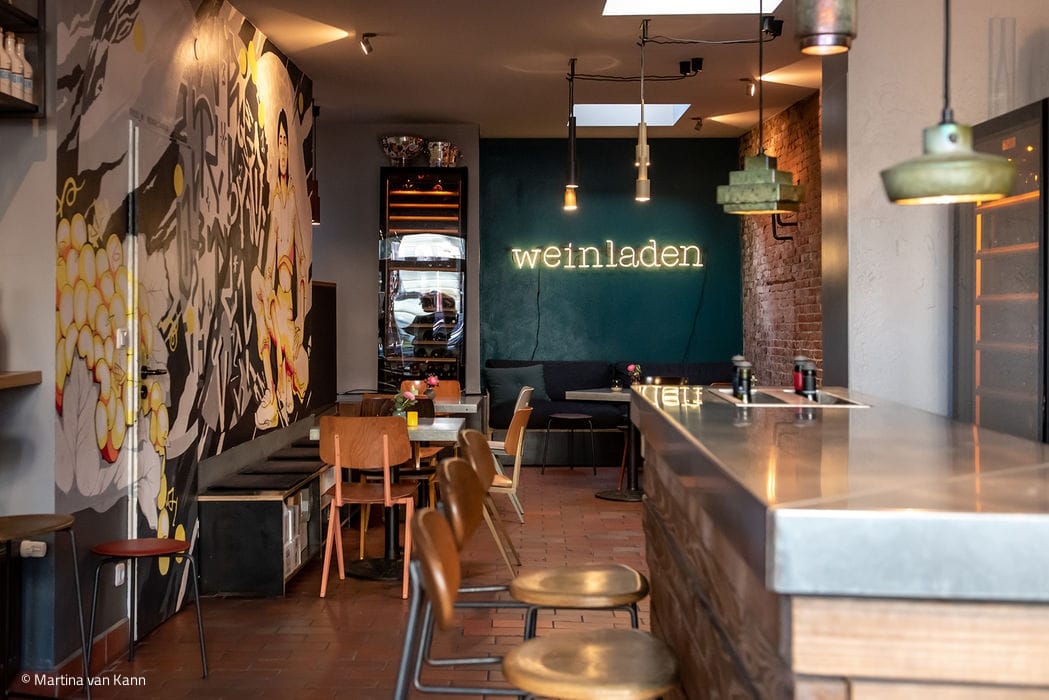
The Wine Shop—Told for Today
A casual evening spent in a living room complete with an impressively expansive wine collection
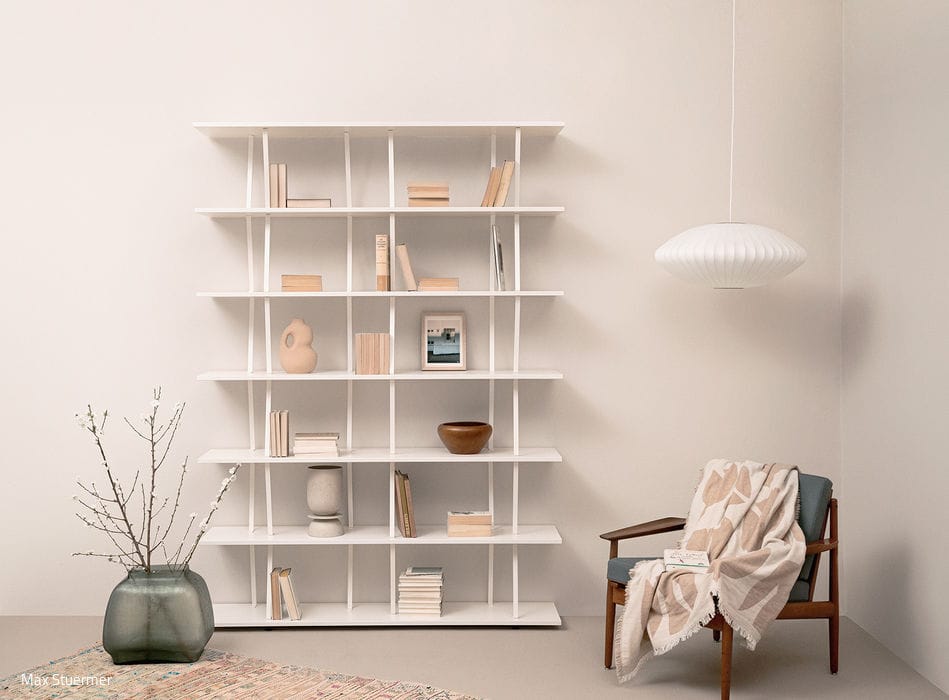
Subtly Different
Vin: the shelving series that endures, designed with sustainability in mind.
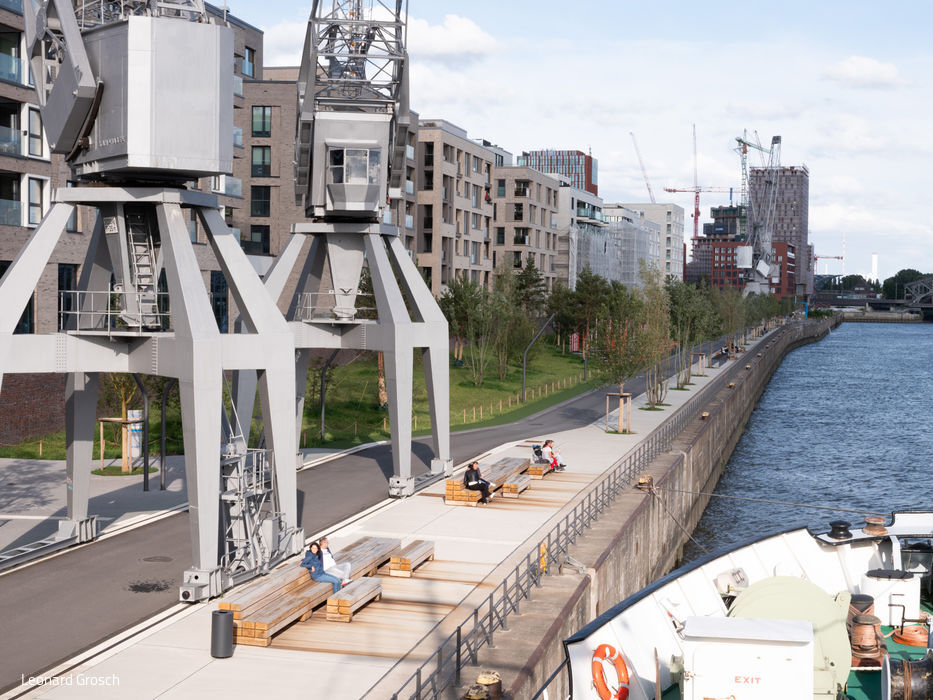
Atelier Loidl
Kirchenpauerkai on the Elbe: A waterfront destination for play, sport, community, and renewal.

A Distinctive Vision
A refined patisserie with industrial-chic aesthetics takes residence in a historic cocoa warehouse in the Speicherstadt