


Built Vision
Architect-designed house unites sustainability, energy efficiency, and innovative construction methods
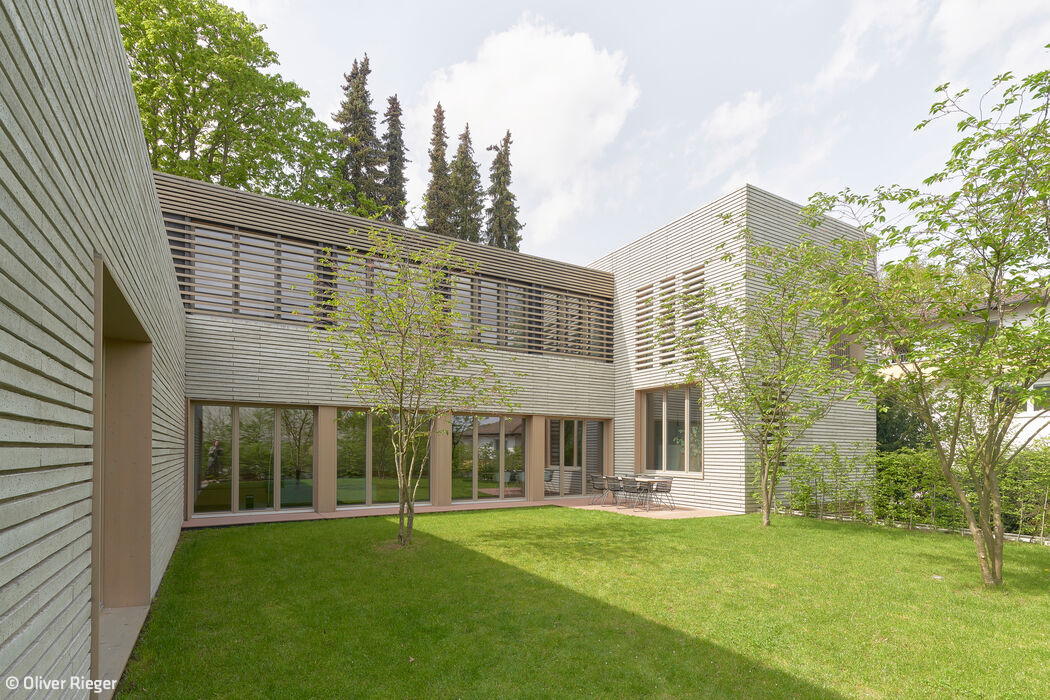


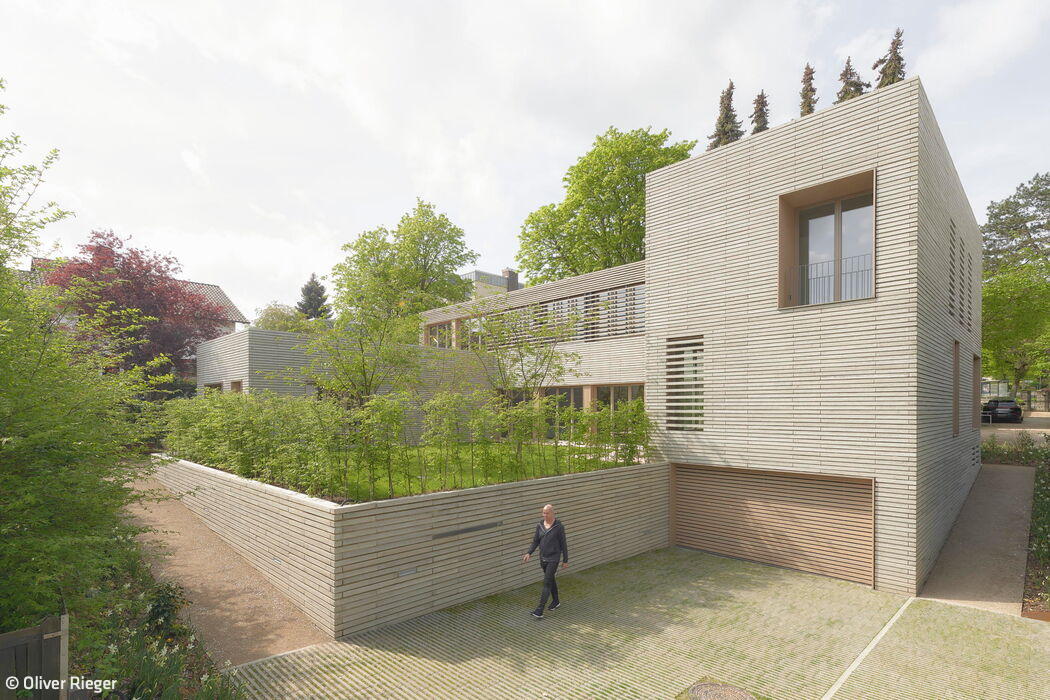



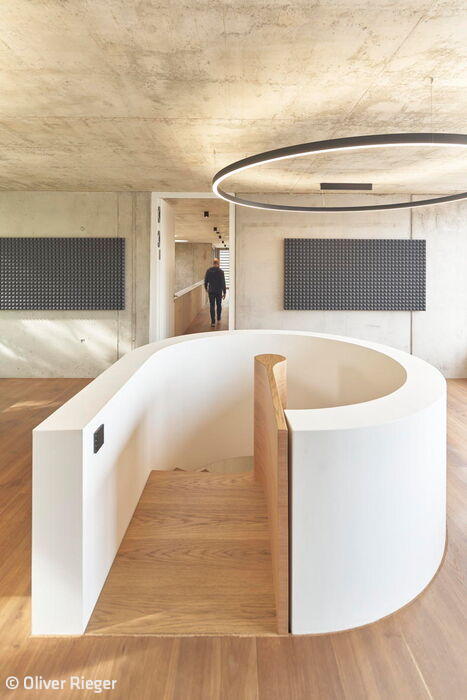



When architects design their own homes, the assumption often follows that aesthetic impact is the primary goal. Yet the Pape + Pape residence proves otherwise—demonstrating how sustainability, energy efficiency, and experimentation with cutting-edge building methods can coexist with domestic comfort and a productive working environment. The home's most striking feature is its distinctly horizontal-layered façade, which echoes the rocky terrain surrounding it while concealing an unconventional secret: much of it is crafted from readily available, off-the-shelf materials.
To achieve a continuous yet dramatic banding effect, the architects cleverly repurposed reinforced concrete lintels. Their rough texture and oversized dimensions emphasize the layered composition perfectly. The recessed joints of the brick façade create visual depth, while integrated nesting niches support local bird and insect populations. Above, a horizontal wooden slat screen conceals the upper-floor bedrooms, maintaining the façade's consistent linear expression. In keeping with their philosophy of clarity and restraint, the architects eliminated conventional roof edge details, letting the simple geometric forms speak for themselves.
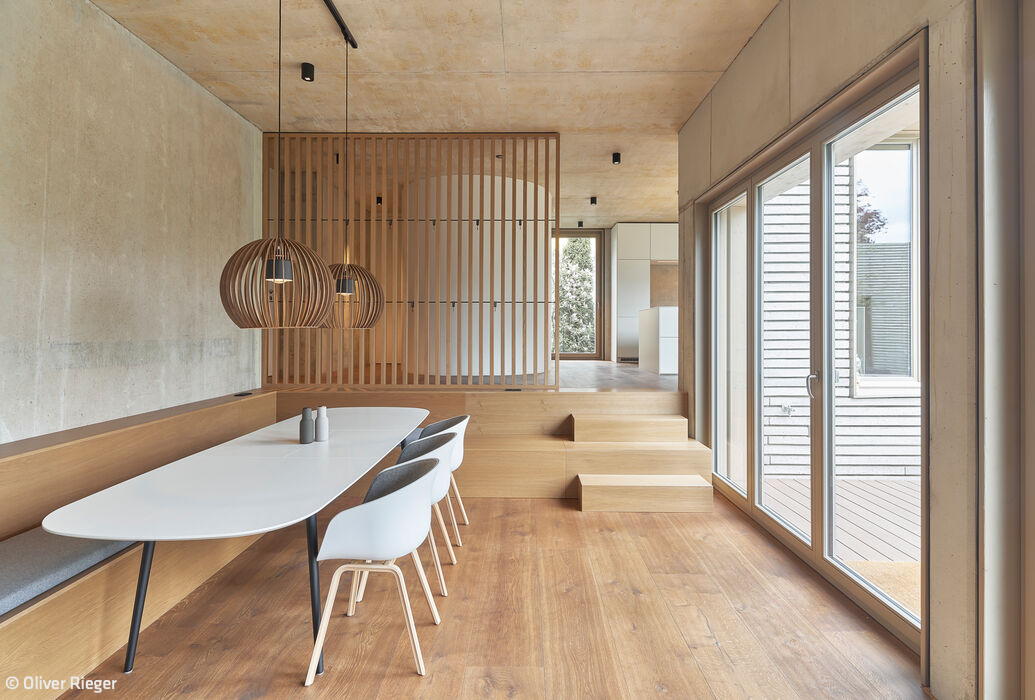
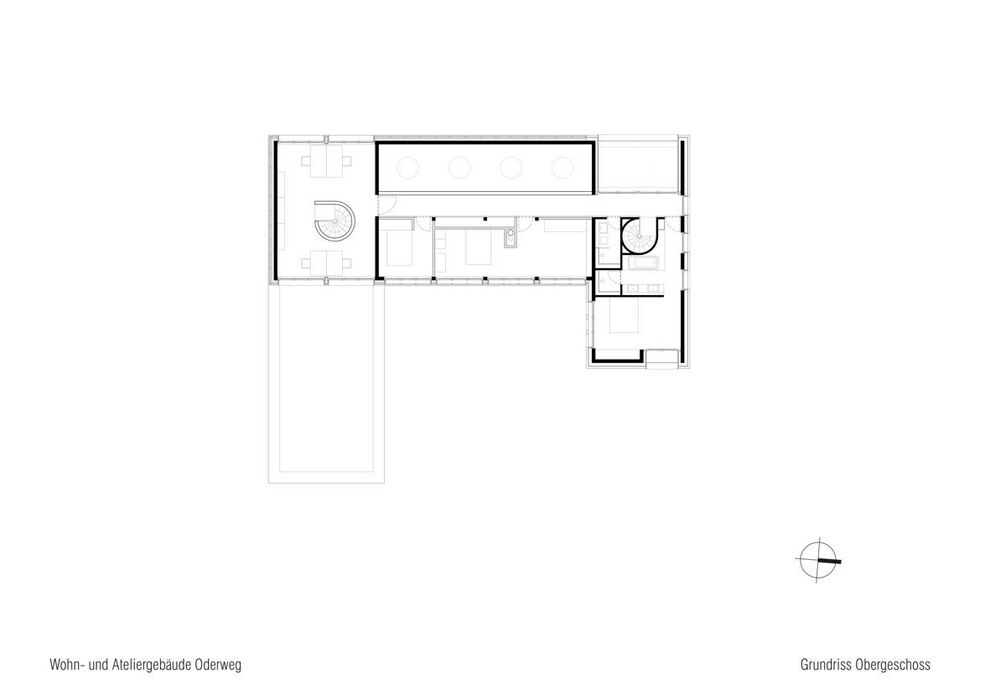
The building—appearing one or two stories depending on where you stand—settles naturally into the sloping terrain. A two-story mass anchors the entry side, from which a U-shaped base extends, cradling an elevated garden plateau and creating an inviting outdoor refuge. Concrete and wood are the home's defining materials, chosen for their durability, resilience, and warmth. Inside, exposed concrete and timber surfaces create a serene interplay of open and introspective spaces, each thoughtfully calibrated to its specific purpose.
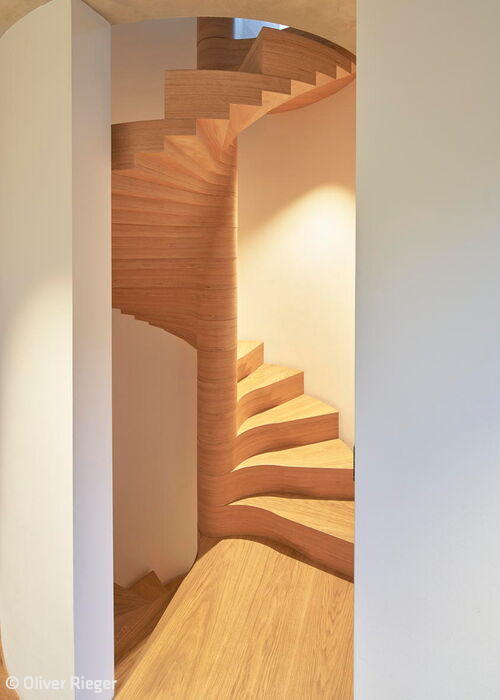
A two-level library running the full length of the home serves as its heart, positioned at the junction between living and studio spaces. Floor-to-ceiling doors allow it to integrate with either area or stand apart. An upper-floor gallery bridges both zones. The sloping site creates natural level changes on the ground floor; strategically lowered areas in the living room and studio entrance gain generous ceiling heights that reinforce their function. Two sculptural spiral stairs with laminated timber cores elegantly link the levels.
Living space/studio: approx. 260 m²/approx. 250 m²
Plot size: approx. 910 m²
Construction period: 09/2020–04/2022, 03/2024 (site development)
Construction method: Solid masonry
Energy concept: KfW 55, district heating, 14 kW PV system
Photography:
Oliver Rieger
www.oliverrieger.com
(Published in CUBE Frankfurt 03|24)

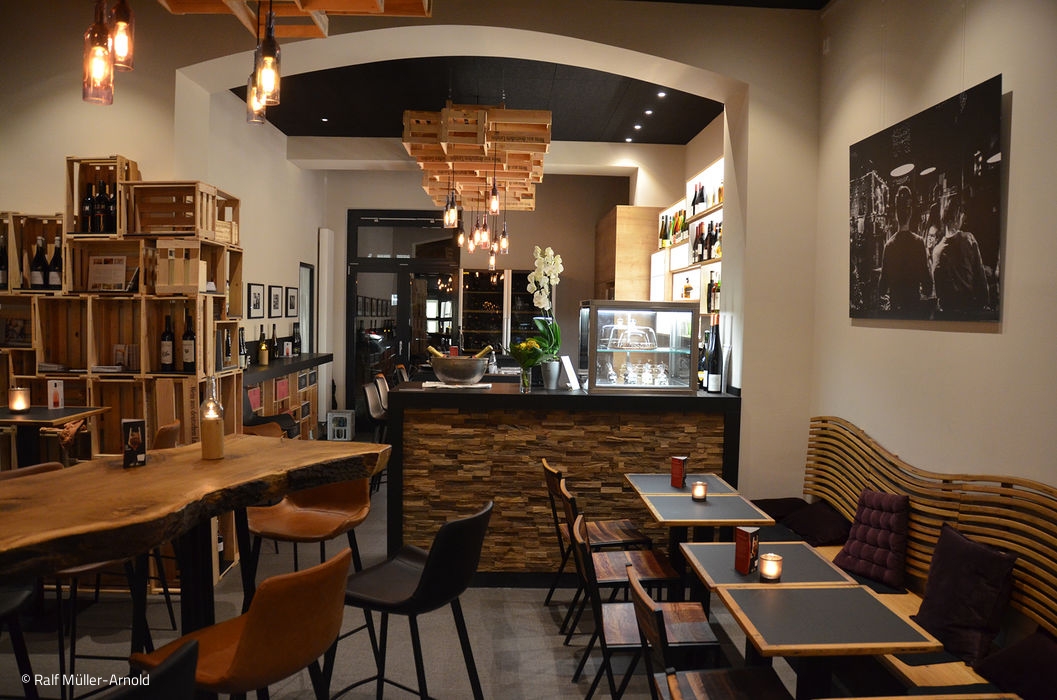
Wine is love. Love is life.
East Grape – Wine Bar in Ostend
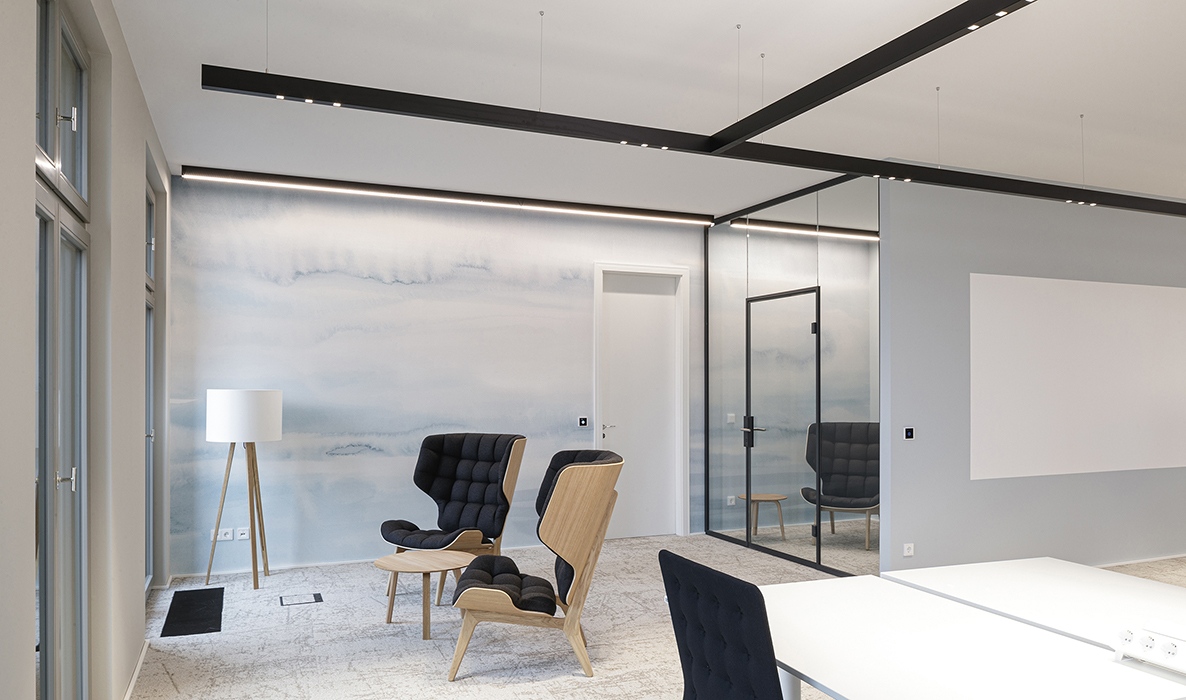
Focus-Friendly Design
Creating inspiring workspaces: how colour and light shape atmosphere and well-being
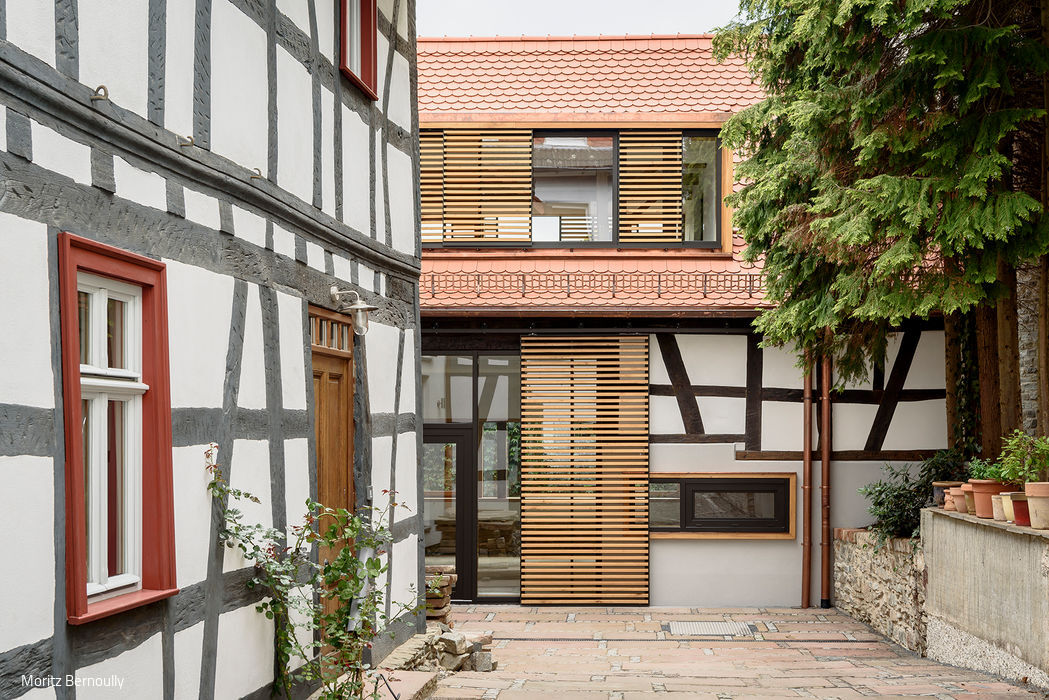
Clean Design Concept
Respecting Heritage, Shaping the Future: A Conservation Project in Königstein
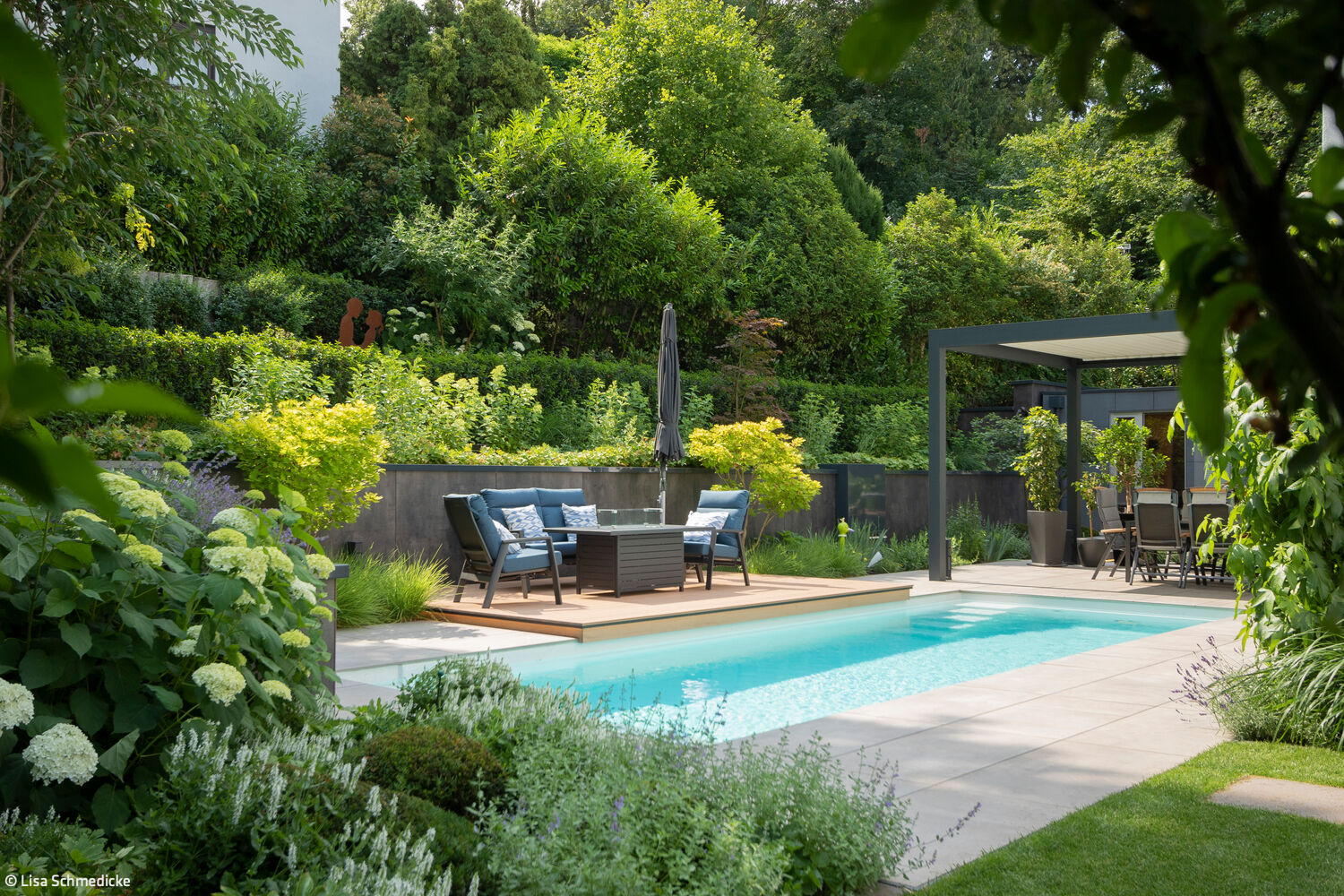
Balanced and harmonious
Terracing a Steep Slope: Creating Expansive Outdoor Living