


Built Topography
A community centre in the Bergisches Land that weaves existing structures into a cohesive gathering place
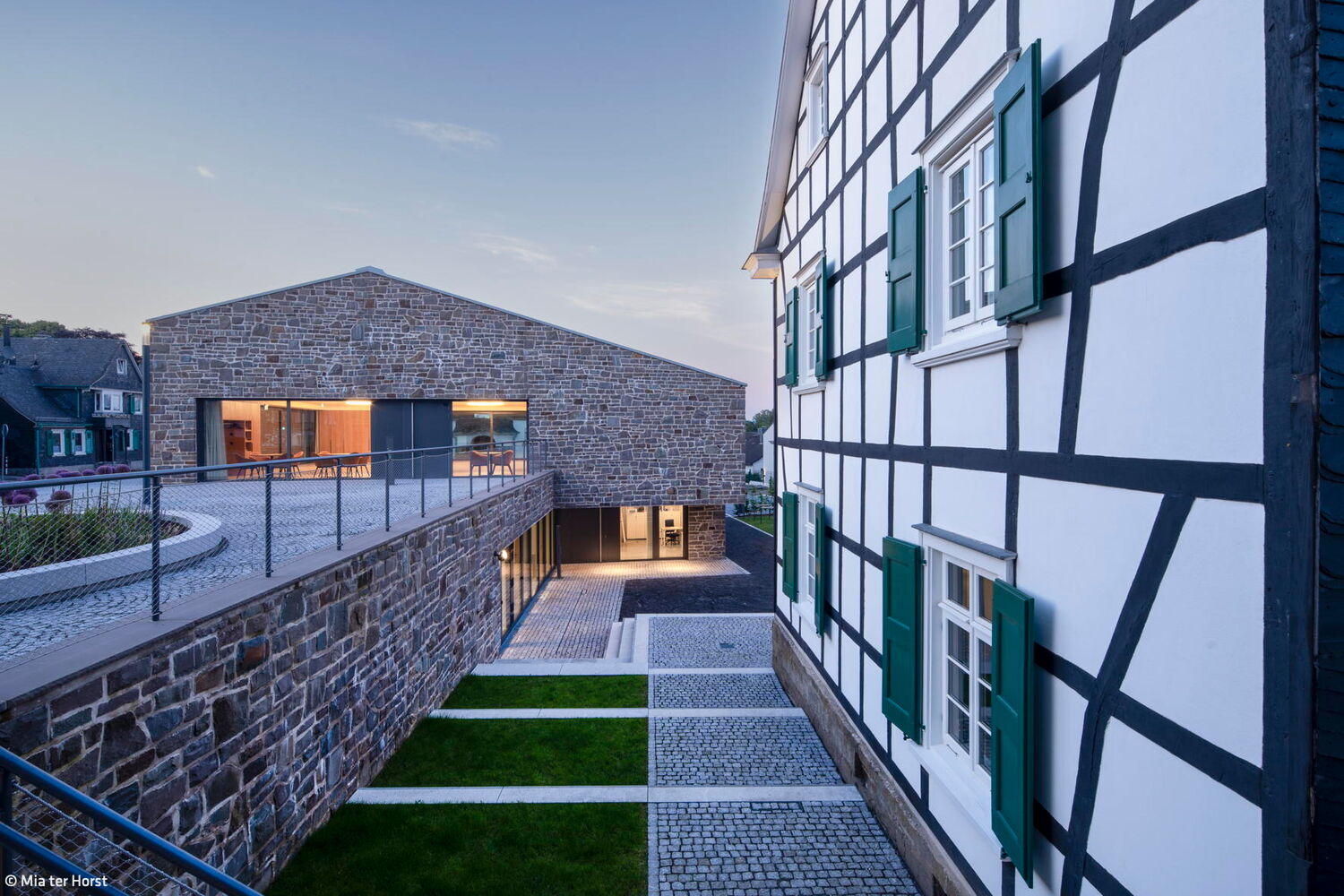
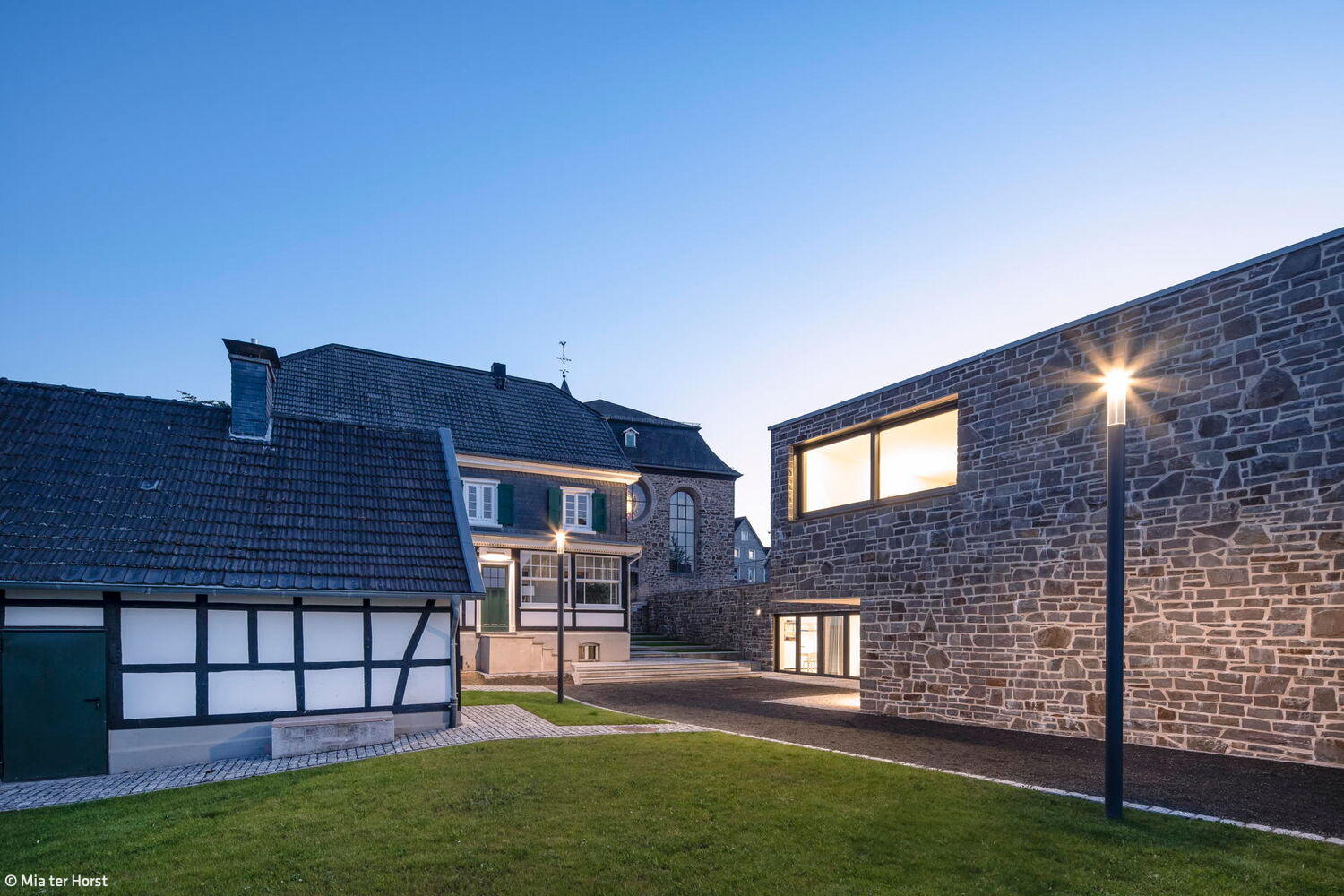
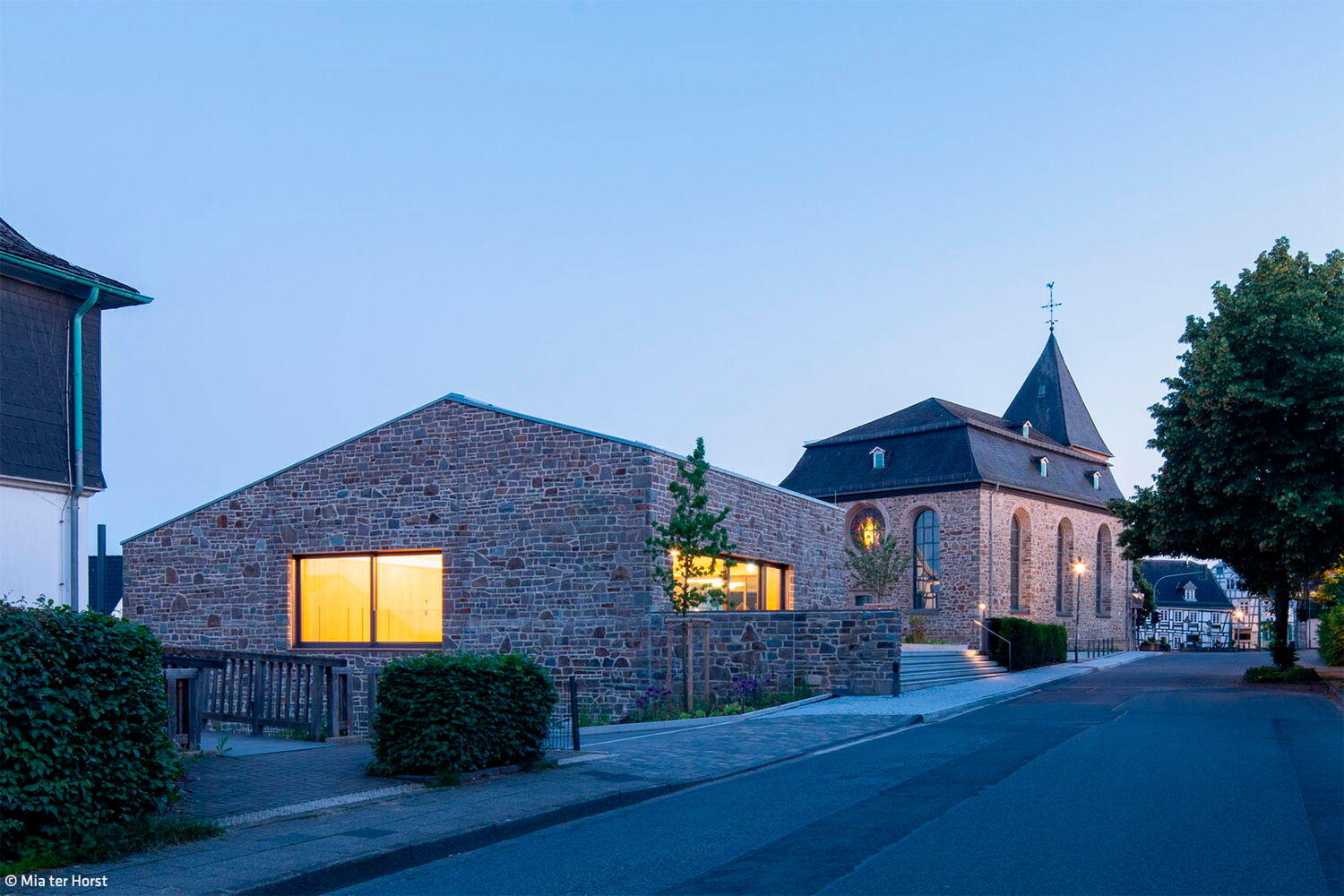
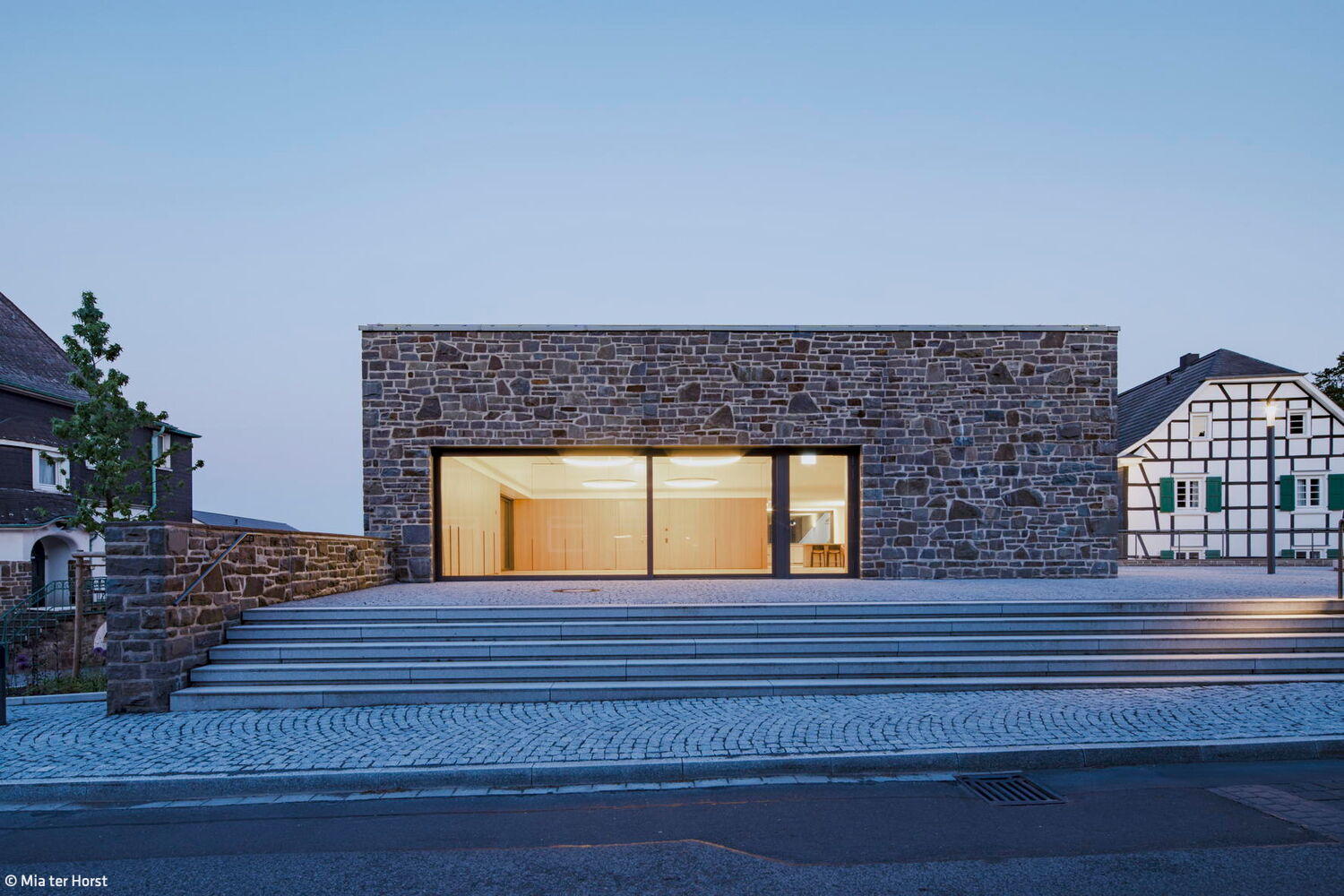
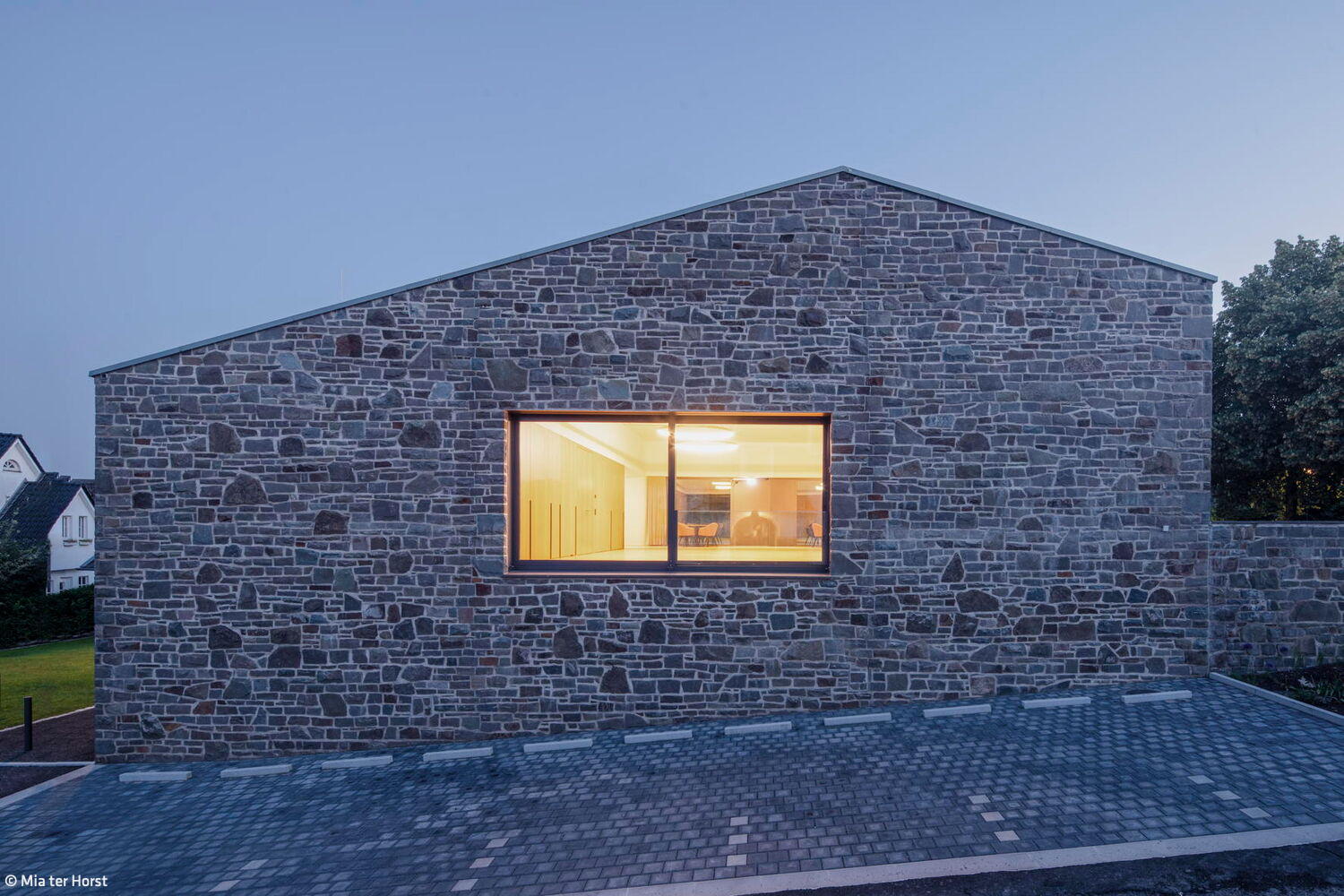
The Protestant village church, documented since the 12th century, forms the heart and landmark of Witzhelden, a district of Leichlingen. The historic market square unfolds around it, lined with characteristic Bergisch half-timbered houses. Cologne-based architects Kastner Pichler Schorn have thoughtfully extended this protected ensemble with a new community centre. By working with the site's topography and drawing on local building traditions, the new structure settles naturally into its context while functioning as a gathering place that forges fresh architectural and social connections.
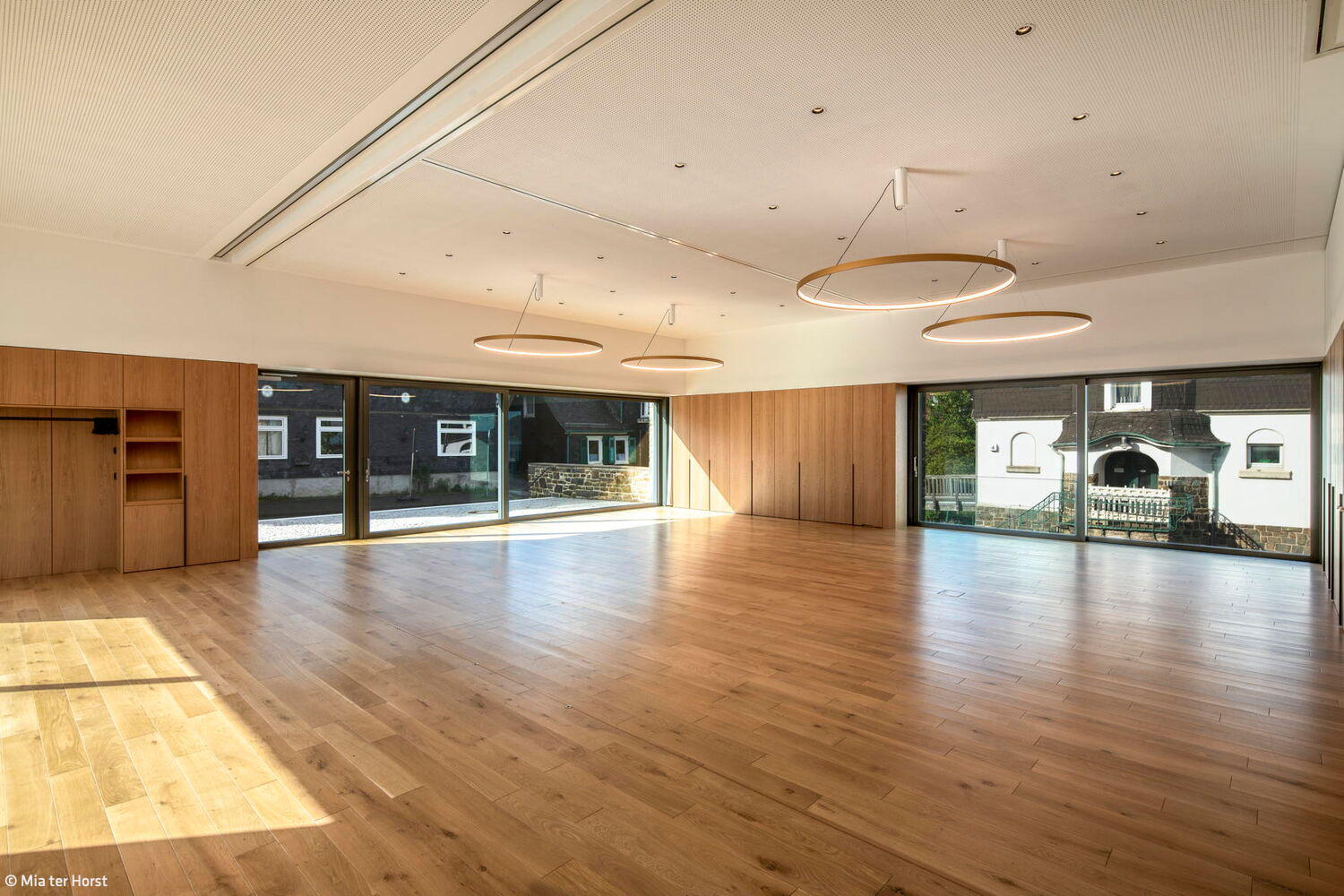
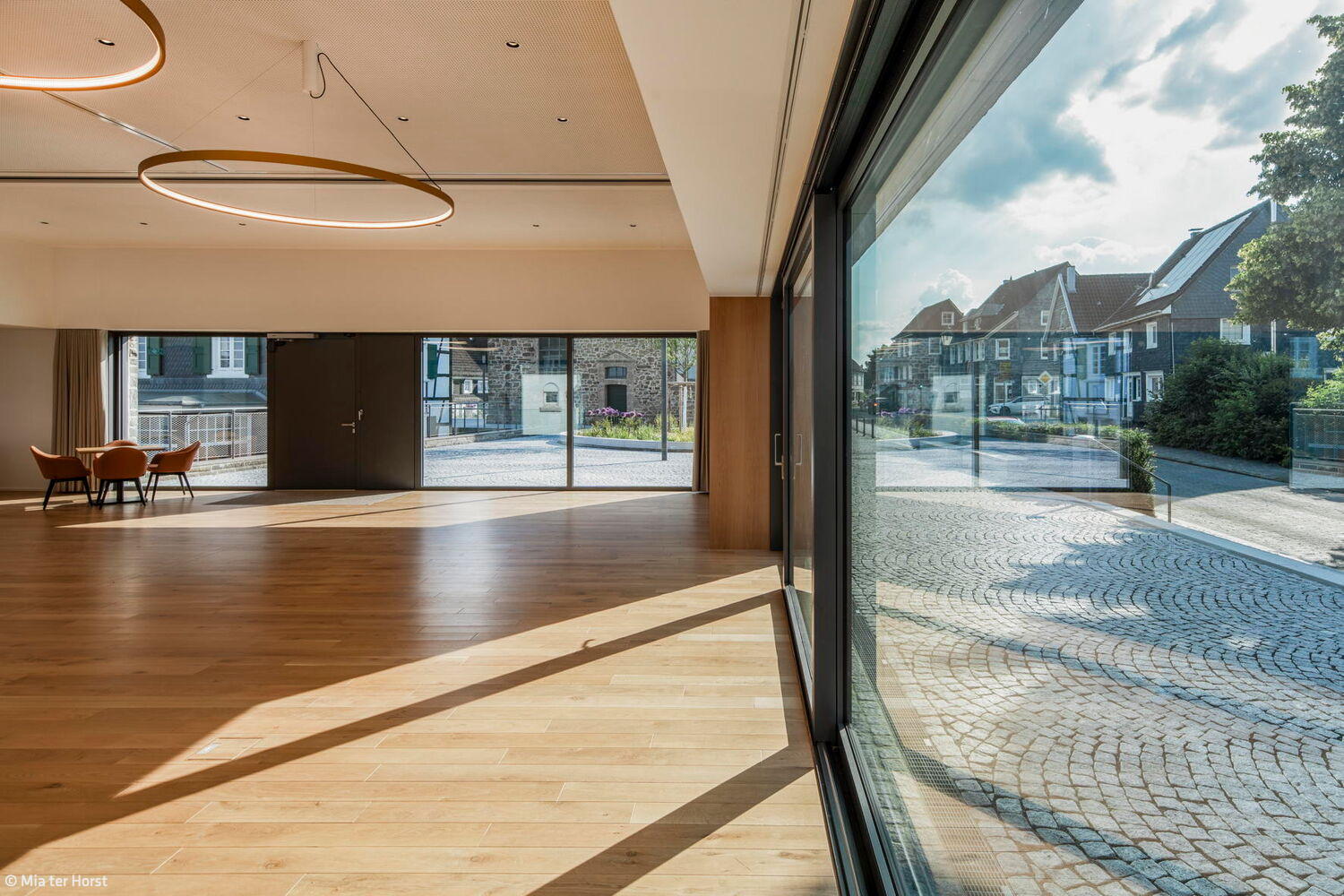
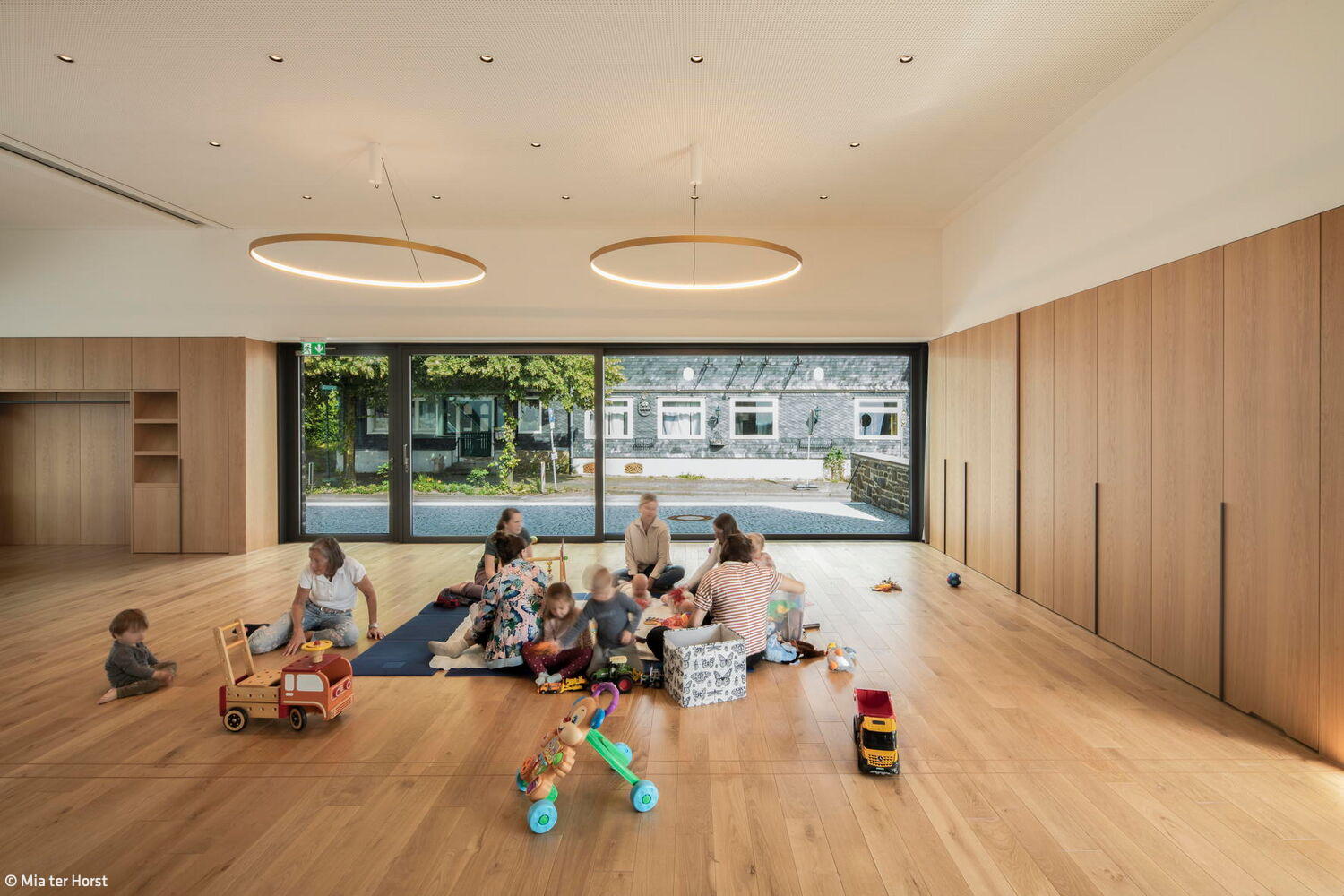
The two-storey community centre brings together multipurpose halls and flexible group rooms designed to adapt to evolving community needs. Crowned by a gabled roof clad in zinc sheet, the building sits modestly along the streetfront, its form responding to the sloping terrain. Through sophisticated spatial planning, a street-level plaza and lower garden level interweave with shared outdoor spaces, creating a seamless public realm that connects the church, market square, and neighbouring vicarage via stairs. Local greywacke flooring binds these zones together—uniting the church space, community programming, youth services, and administrative functions into an integrated whole. The result: a striking new civic centre with verdant touches and sweeping views across the Eifgenbach valley landscape. The garden level opens generously to a lawn where children can play safely, away from traffic. The façade, also clad in greywacke, echoes the church's material character. Machine-split ashlar blocks form horizontal courses, their polygonal texture creating visual rhythm. Inside, this textured exterior contrasts with refined, minimalist surfaces: windows sit flush within whitewashed concrete walls, with recessed spotlights and suspended light rings overhead. All cabinetry and doors feature solid oak veneer. Deep window recesses reference the church's own distinctive fenestration, reinforcing the architectural kinship between the two buildings.
Photography:
Mia ter Horst
(Published in CUBE Cologne Bonn 01|25)
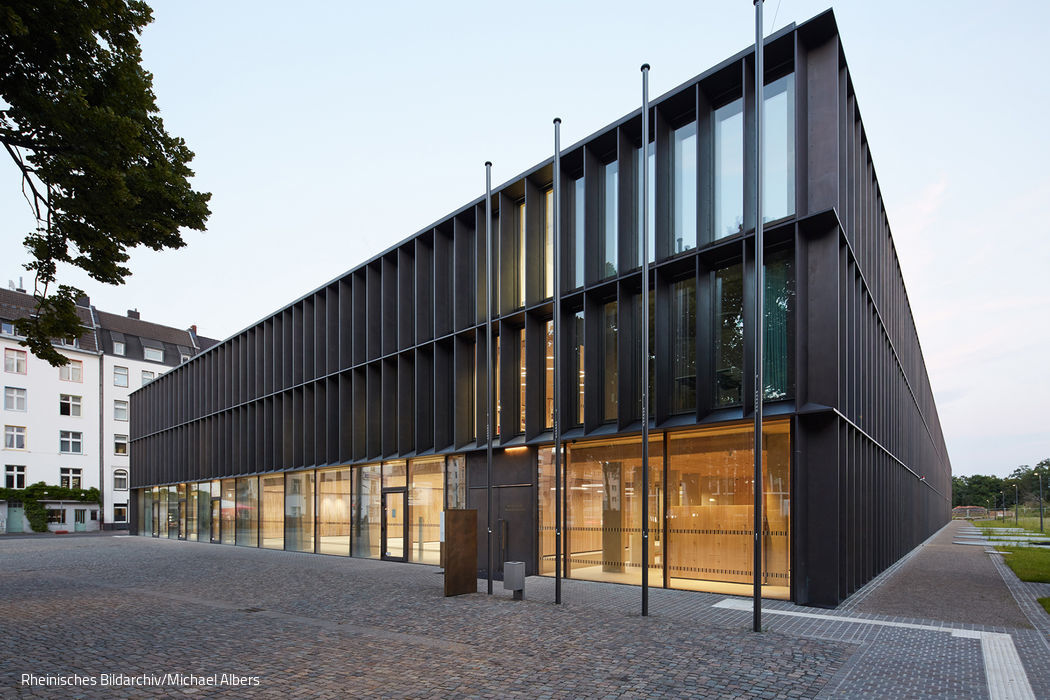
Sheltered Sanctuary
The new archive building safeguards the city's memory—while inviting the public to discover it.

From Play Field to Experience Park
A sports and community park that weaves together established and innovative facilities into something greater
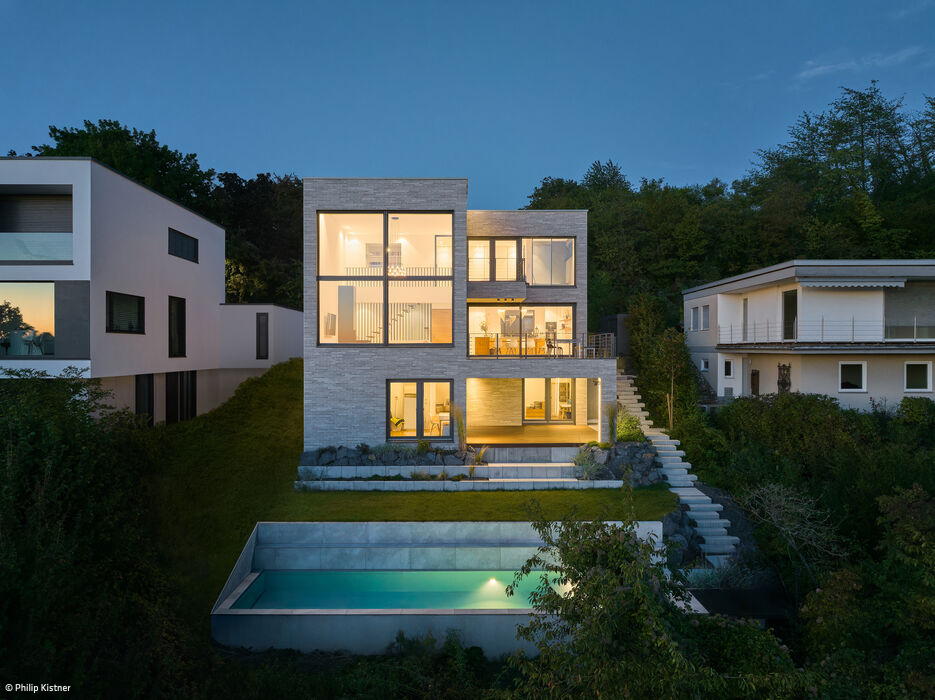
Suspended Monolith
A hillside cube that frames a spectacular valley outlook
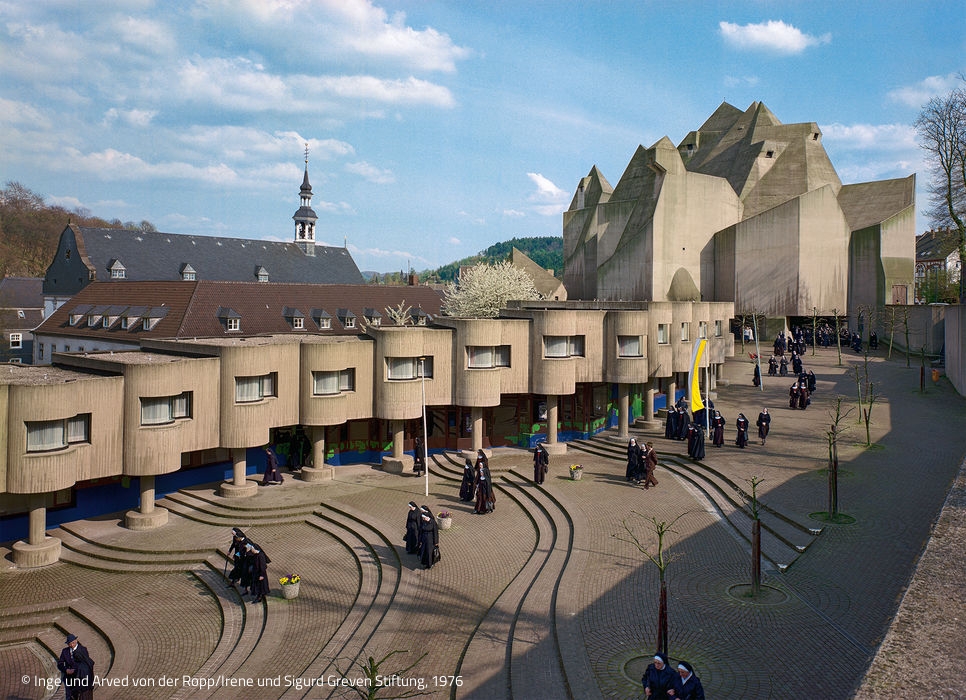
A Master of Architectural Form
Architect Gottfried Böhm Turns 100