


A Welcoming Institution
Renovation, conversion, extension, and reopening of the Museum of Medical History


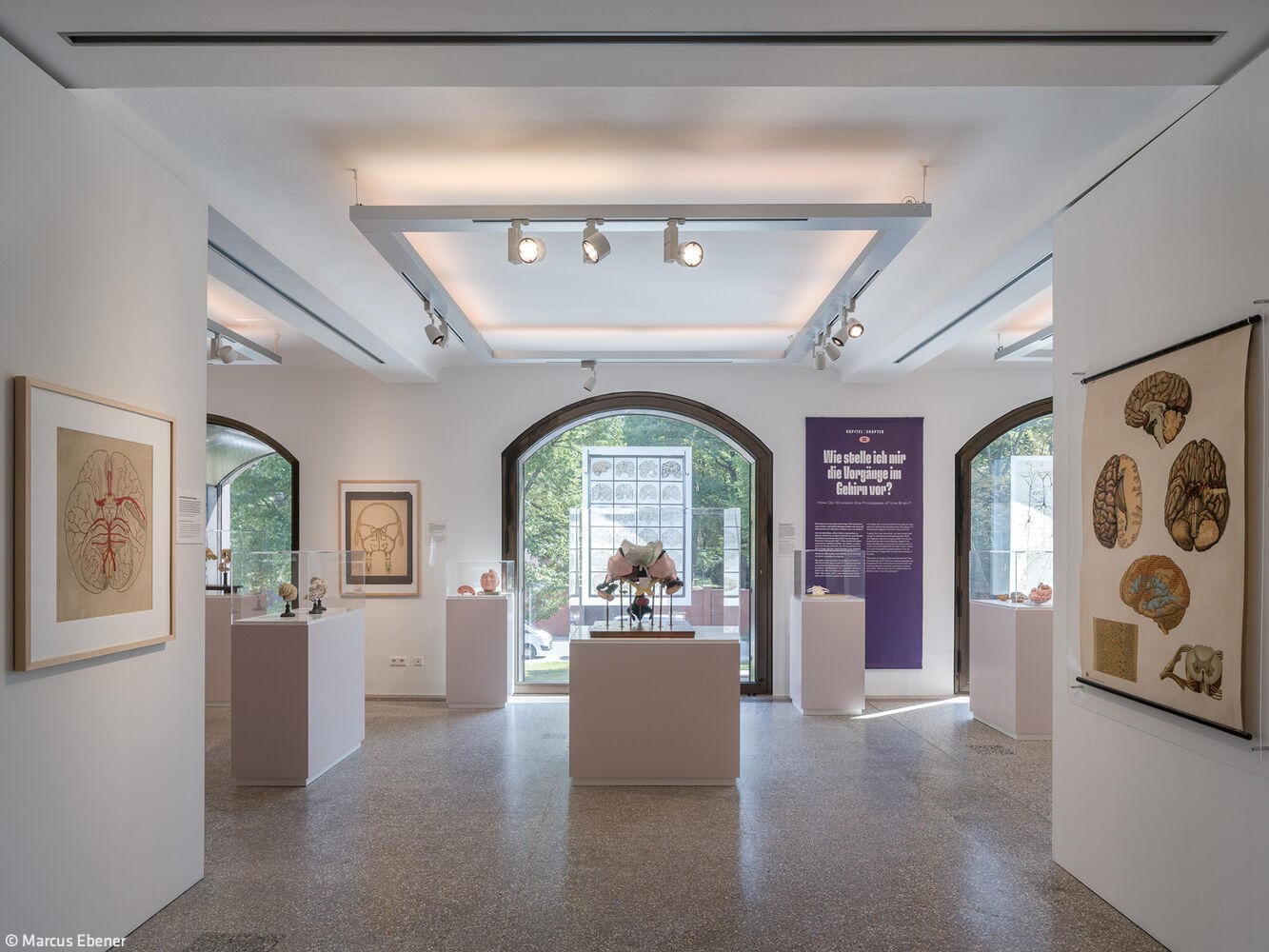
Where past and present medicine converge – at the "old lady" standing on the corner of Luisenstraße and Schumannstraße. Just steps from Germany's most prestigious hospital, the Charité, this landmark building houses the Museum of Medical History. Its origins trace back to 1899, when architect Ludwig Hoffmann's designs first came to life. Now, after more than a century, the historic structure was ready for a thoughtful renewal and comprehensive transformation.
Berlin's Rustler Schriever architecture firm crafted a visionary blueprint—what they call "creative evolution"—to bring this landmark into the 21st century. Their approach masterfully balances preservation with progress, making carefully considered interventions within the constraints of heritage protection. The entrance has been reimagined: a new forecourt welcomes visitors, and a striking portal in architectural bronze—an alloy of copper, zinc, manganese, and lead or iron—marks the threshold. The façade itself has been transformed through expansive windows that function as living display cases, framed in burnished architectural bronze. What once lay hidden on shelves in dimly lit galleries now engages the street, creating a transparent dialogue between the museum and the city. The building's true purpose becomes clear: a vast repository of 23,000 medical specimens collected since Rudolf Virchow's era—a window into the history of anatomical research. Fair warning: these displays aren't for the squeamish, and visitors under 16 must be accompanied by an adult. Inside, a generous foyer with shop and seating areas provides respite and invitation. By converting the fourth floor and attic into archival space, the architects freed valuable gallery space on the first floor for rotating exhibitions. This comprehensive restoration, the building's first since opening in 1905, was overdue. The architects seized the moment to reimagine the entire experience. The transformation hinges on two key moves: the creation of the forecourt and a fundamentally more open, approachable character. Where once there was an austere, almost forbidding presence, there is now a contemporary, welcoming façade.
Photography:
Marcus Ebener
www.marcus-ebener.de
(Featured in CUBE Berlin 04|24)
A peaceful sanctuary
Single-family home with restrained form and thoughtful material palette
Commerce Meets Craft
Cuvry Campus: A Contemporary Multifunctional Office Complex
A façade for urban wanderers
A contemporary "rural city villa" in Wilmersdorf
Escape Without Leaving Home
Havel-Therme in Werder: Where Wellness, Adventure, and Recreation Meet