


Push Your Limits and Unwind
A dynamic sports and leisure destination has emerged in Mülheim-Styrum, welcoming everyone
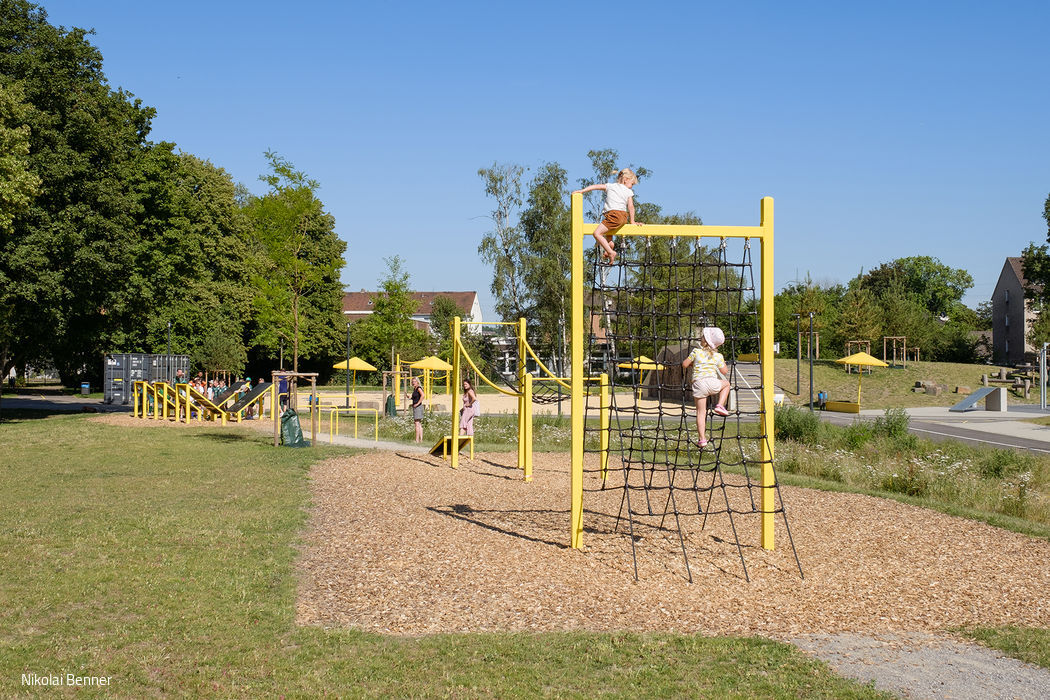


Completed in 2022, Styrum Sports Park stands as a landmark achievement in Mülheim an der Ruhr's commitment to grassroots athletics. This expansive construction initiative, backed jointly by federal and North Rhine-Westphalian funding through the "Social Integration in the Neighbourhood" investment program, transformed a two-hectare site into a vibrant, family-centered sports destination. At a net investment of €2.75 million, DTP Landschaftsarchitekten from Essen brought the city's vision to life.
Built on the footprint of a former cinder track, the park breathes new purpose into what had previously felt disconnected from the neighborhood. The design weaves an adaptive sports ribbon that flows alongside expansive meadowland to the north—a lush, planted buffer that creates serene contrast to the active recreation zones. These meadows serve dual purposes: they invite visitors to pause, picnic, and balance on integrated landscape elements, while simultaneously managing stormwater and providing habitat for insects. Recognizing the value of active breaks, the team upgraded the adjacent school's small-sided field and designed an engaging playground for younger children. Athletes of all ages and abilities can explore, discover, and refine their skills across a compelling array of facilities: beach volleyball courts, an open-air hall with synthetic turf, parkour and calisthenics zones, the Ninja Run course, outdoor fitness stations, an interactive goal-scoring wall, and dedicated school sports areas.
The sports hall, municipal nursery, and foundation park are now seamlessly connected through the park's integrated sports landscape—unlocking collaborative potential and revitalizing previously isolated spaces. The architects credit the park's exceptional community embrace to its collaborative origins: intensive input from local clubs, residents, athletes, school and kindergarten communities shaped every aspect of the design. "We view the park's accessible, free, and inspiring sports offerings as a gateway," the landscape architects explain. "It introduces users to the broader cultural, educational, and community programming of local organizations. Combined with consistent on-site management, this creates a truly inclusive environment."
Photography Credits:
Nikolai Benner
www.nikolaibenner.de
(Published in CUBE Ruhrgebiet 01|23)

Diverse Mix
How Architecture Sparks a Love of Learning: Inside Dortmund's Comprehensive School
Split Loft
A single-family home that captivates through openness and a dynamic interplay of multiple levels
Don't Steal the Show
Clean industrial design lets the products shine
"The Black Sheep"
Contemporary Living in a Characterful Home with Commanding Views