


Sports for Tens of Thousands
The new TUM Campus – Europe's largest university sports complex built entirely in timber
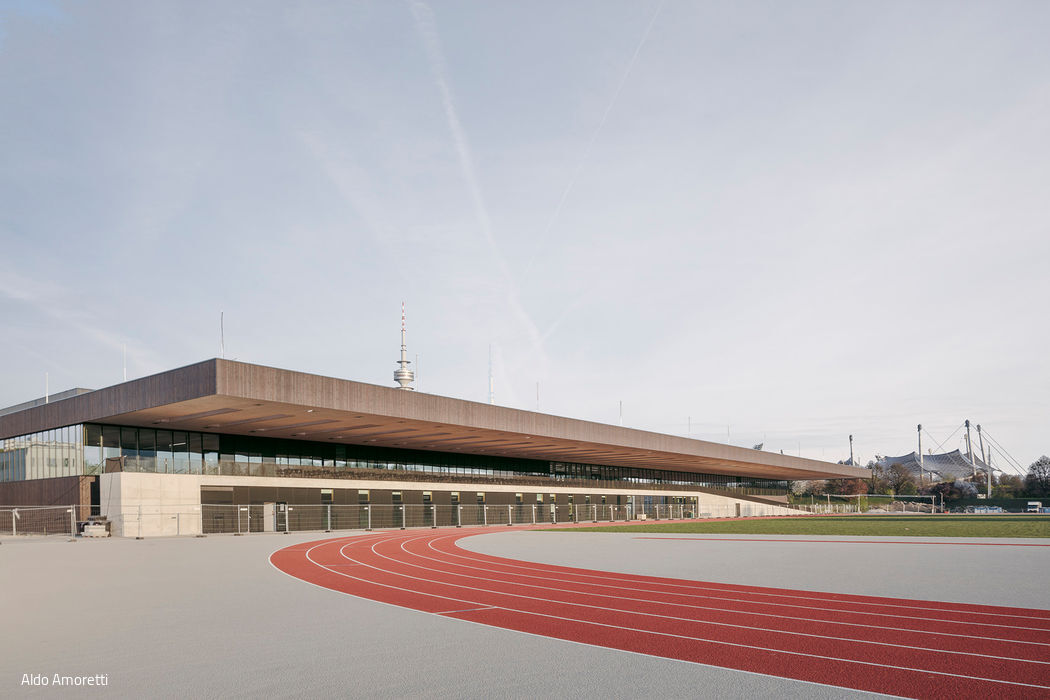
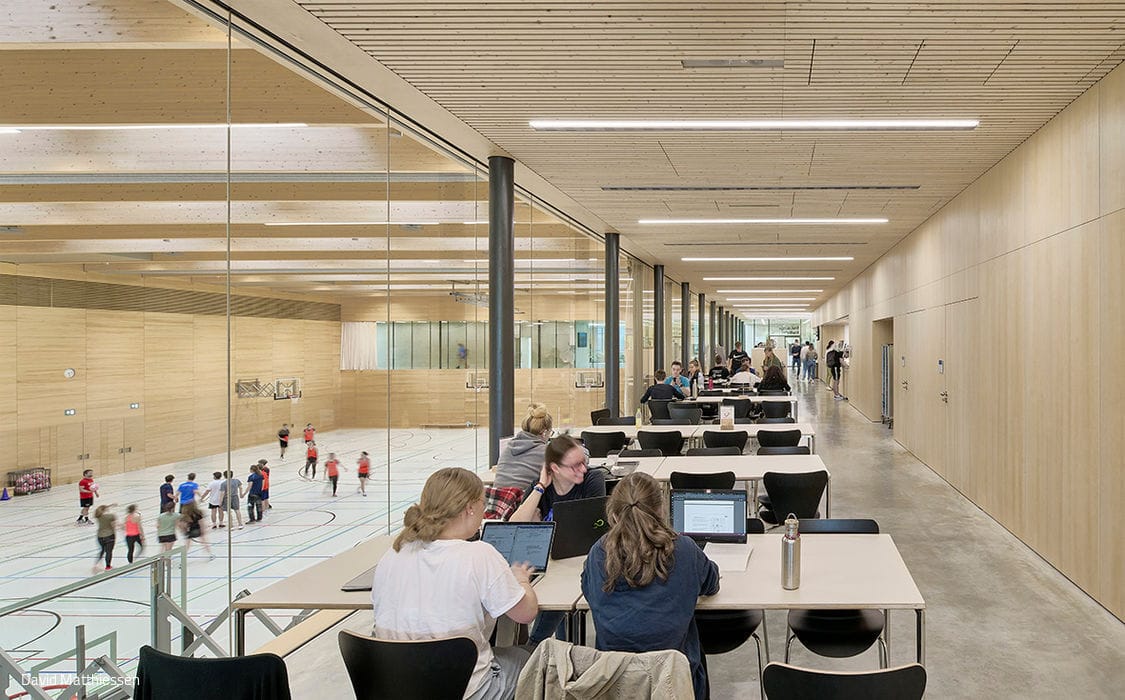
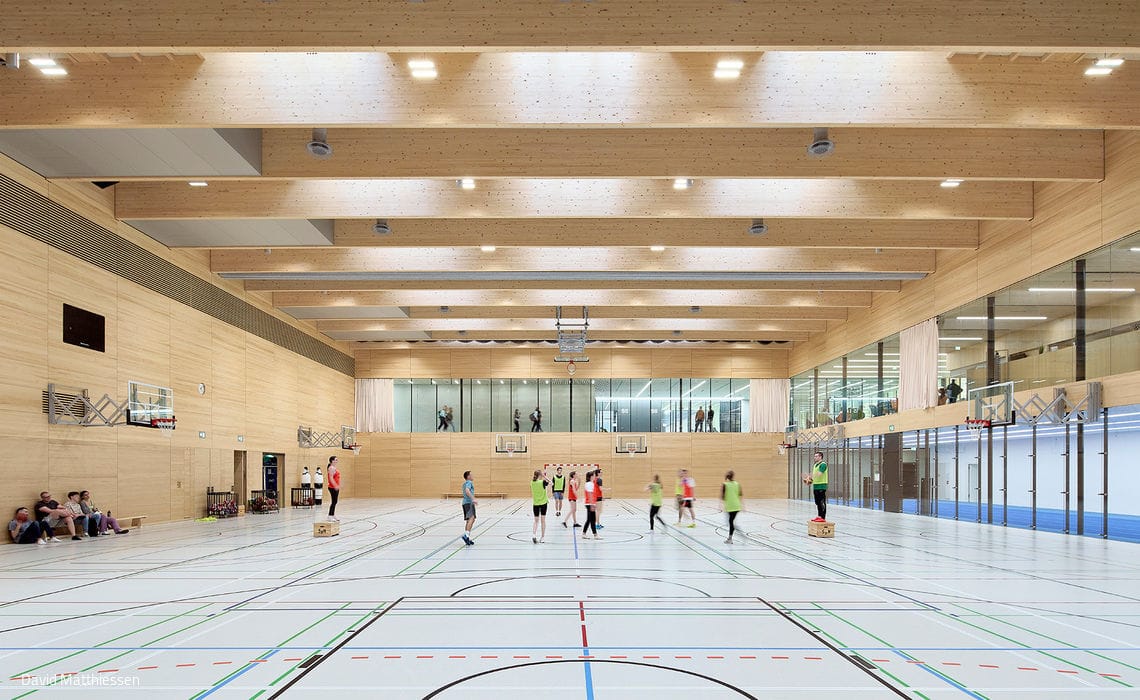
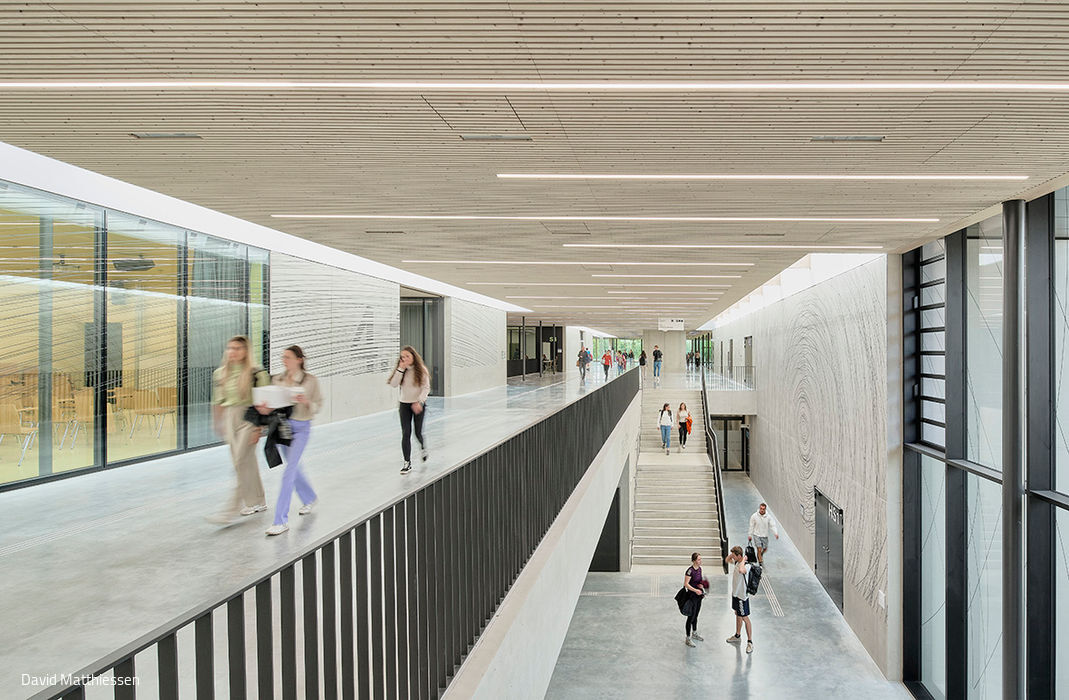
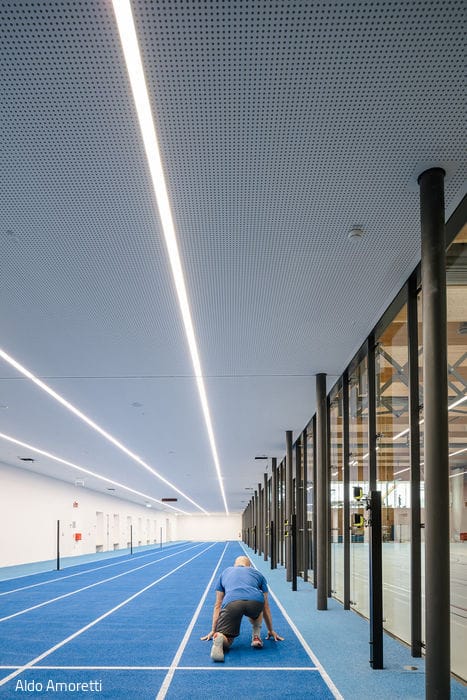
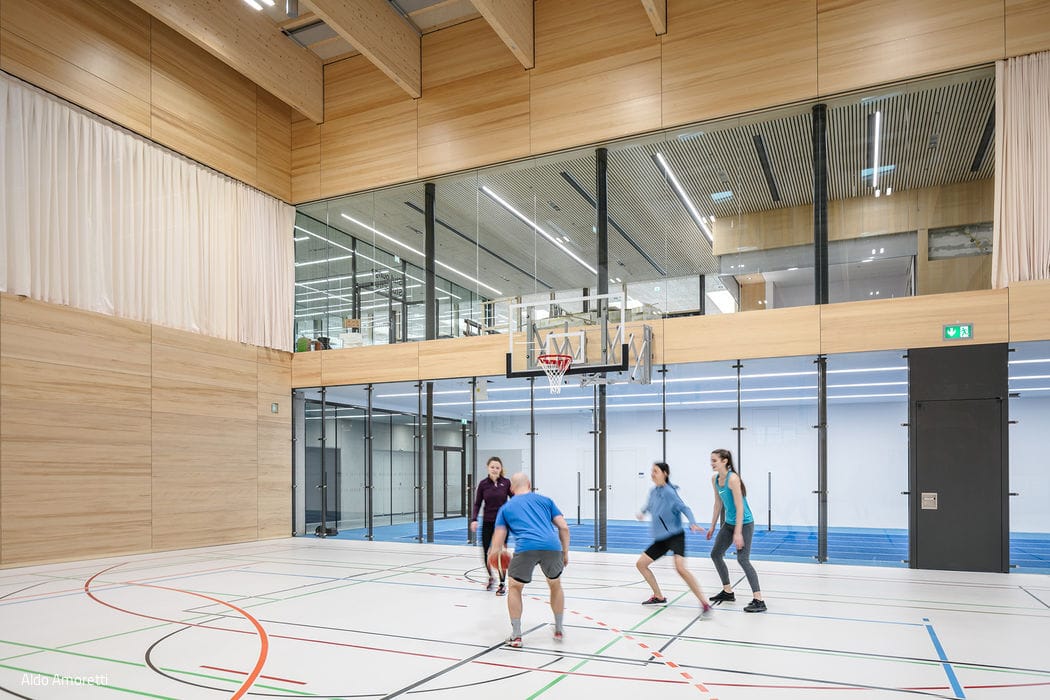
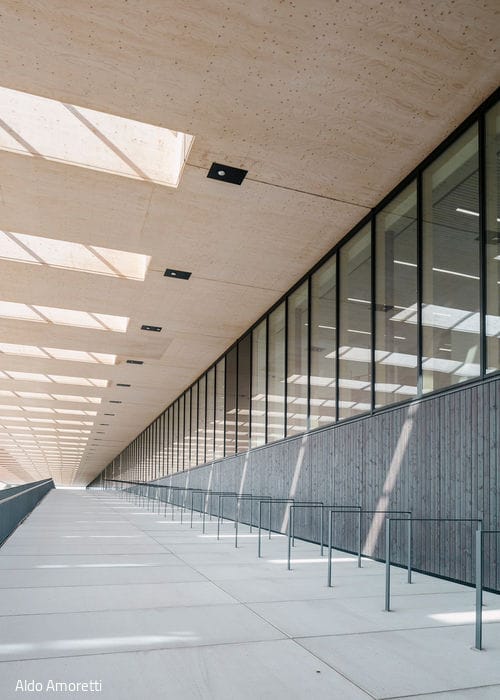
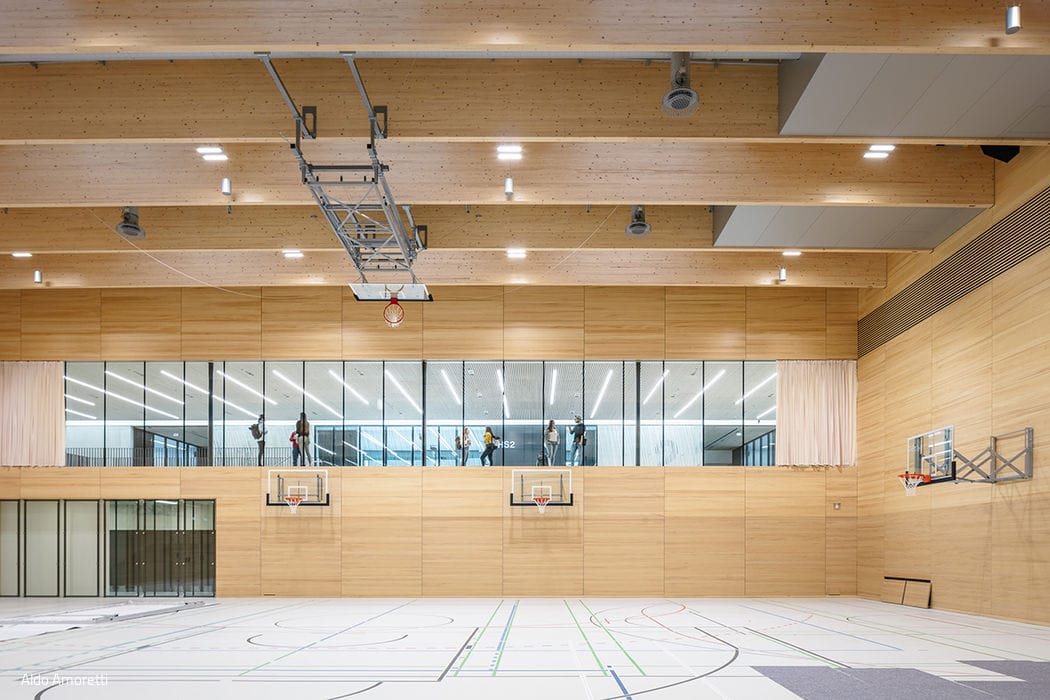
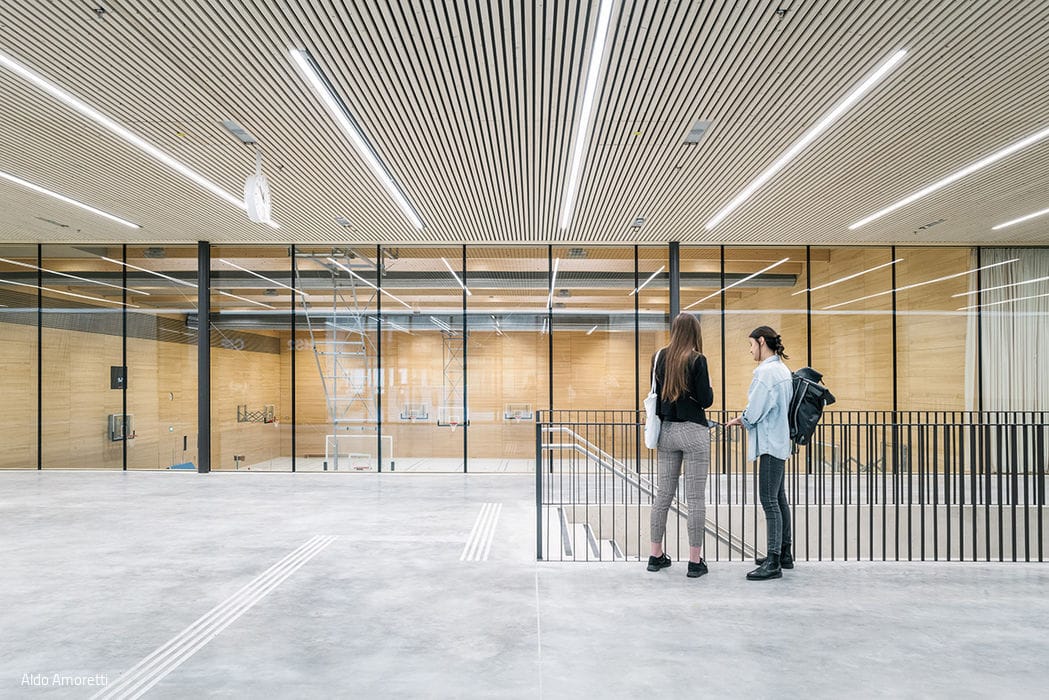
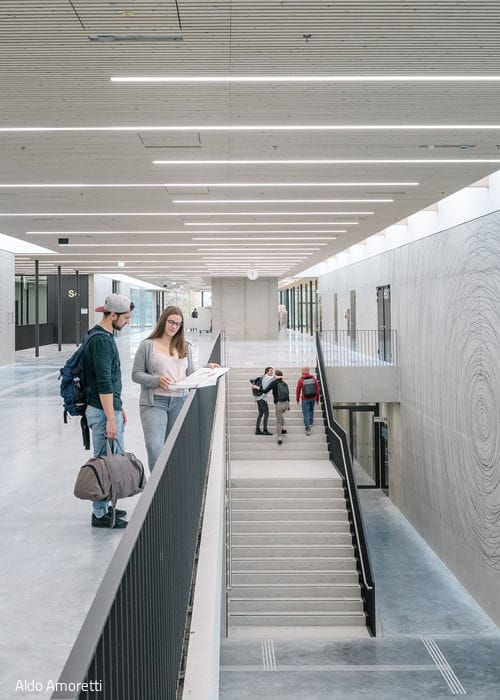
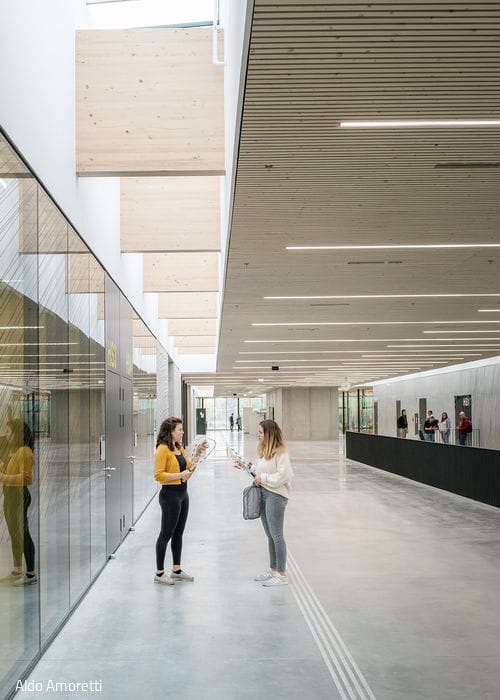
As Munich marks the 50th anniversary of the 1972 Olympics, the first phase of the TUM Campus – a comprehensive sports and academic complex – has been completed and officially opened. Here, 3,000 Technical University students and an estimated 17,000 students from Munich's other universities and colleges will train together. Phase two is slated for completion in 2024. According to Much Untertrifaller, a managing director at architectural firm Dietrich | Untertrifaller in Bregenz, the central challenge lay in managing this extraordinary building volume – 185 meters long and 153 meters deep – while keeping existing sports operations running at the same location. This demanded exceptionally intricate logistics: demolishing the old infrastructure while simultaneously constructing the new, with zero downtime. Dietrich | Untertrifaller prevailed over 50 competitors in the 2015 design competition precisely because they brought specialized expertise in large-scale timber construction and a proven ability to execute demolition and construction phases in parallel. Beyond their thoughtful dialogue with the Olympic structures and landscape park, their solution for managing this complex, staged development proved decisive. The result is not merely Europe's largest university sports complex, but also a sustainable timber structure – among the world's largest. The sports and health faculties will house 14 sports halls, a climbing wall, eleven lecture rooms plus a 500-seat auditorium, diagnostic facilities, 300 offices, a library, and a cafeteria. The program is organized into clearly defined clusters, all connected to a central circulation spine. Changing facilities are centrally positioned in the basement.
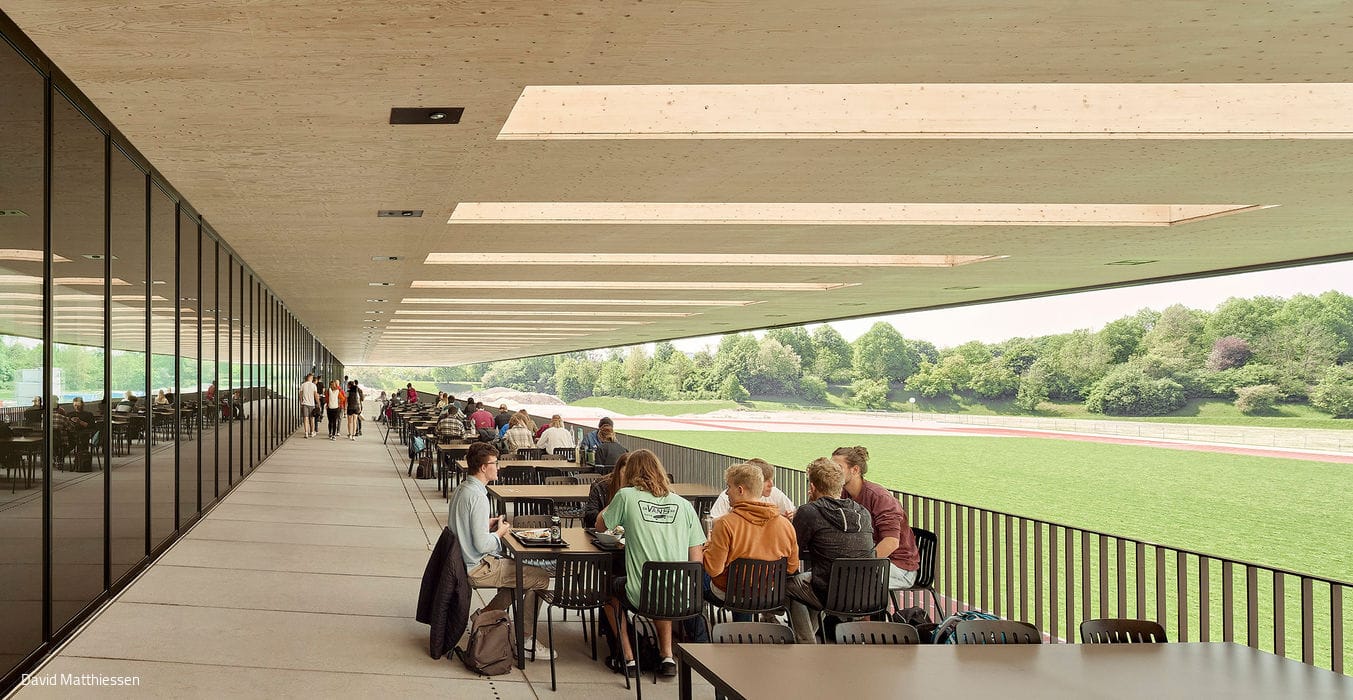
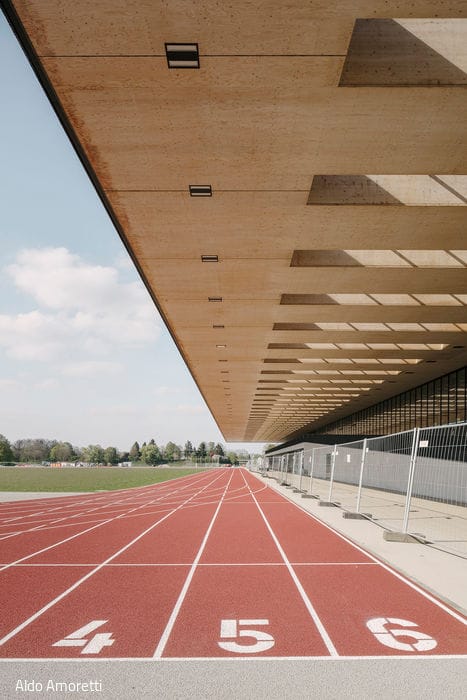
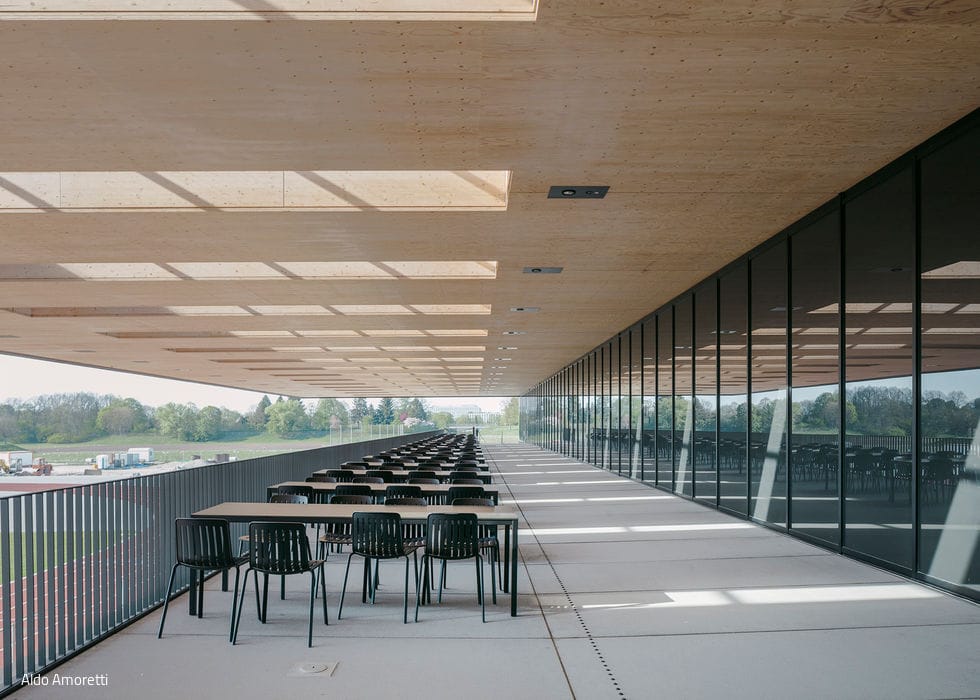
Approaching from the east, visitors cross a bridge to the upper level of this two-story structure and enter the main circulation axis – which also functions as a reinforced concrete bracing core. All walls and ceilings are prefabricated timber components, enabling rapid assembly. The corridor culminates at the library and cafeteria. The showstopper, however, is the adjacent terrace, sheltered beneath a dramatic 19-meter timber cantilevered overhang with panoramic views toward the outdoor track. Visitors instinctively question the structural logic yet remain awestruck by the sheer scale and ambition of this opening phase.
The outdoor grounds, with their diverse playing fields, are conceived as a verdant park landscape. A central pathway orchestrates the exterior spaces – a defining gesture for the campus identity. This outer spine extends westward from the main building, linking it to all sports fields while evolving as a branching tree-like figure with multiple arms and offshoots. It generates inviting gathering spaces: a campus plaza with fountains and undulating lawns, terraced seating for beach sports, and varied seating nooks. Sports fields nestle between the path and the Olympic Park's earthen berms. The complex's athletic centerpiece – a modern track-and-field facility – sits directly before the main building's outdoor terrace.
With the new buildings now occupied, phase two demolition of the existing halls can commence. The vacated land will then host the institute clusters and complete the outdoor facilities, with finish targeted for 2024.
www.dietrich.untertrifaller.com
Photography Credits:
Aldo Amoretti
www.aldoamoretti.com
David Matthiessen
www.davidmatthiessen.com
(Published in CUBE Munich 03|22)
Building for the Future
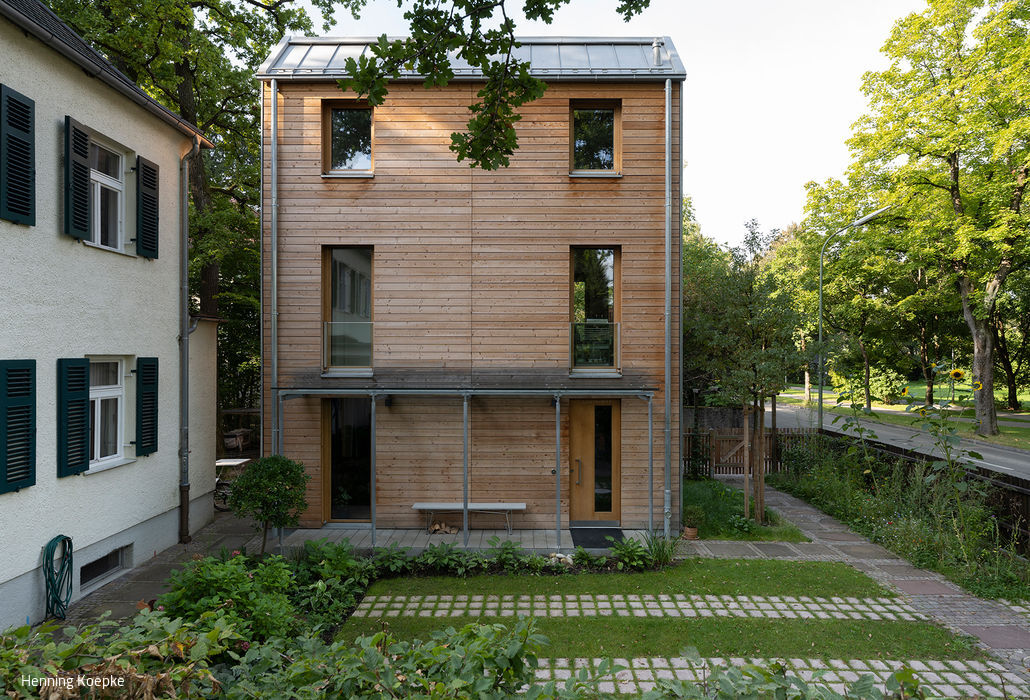
A single-family home prototype that tackles the climate crisis
A Building with Intelligence
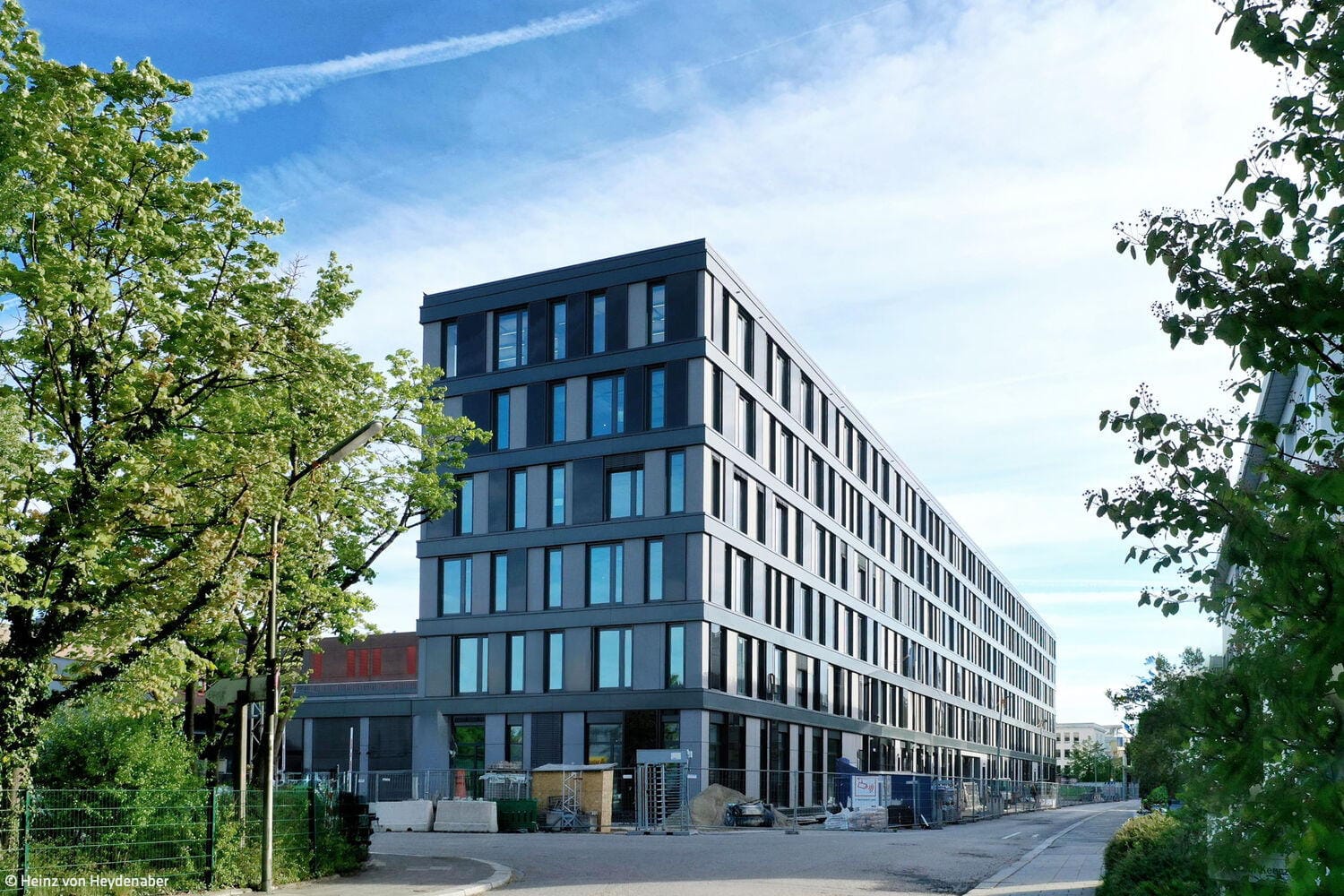
New administrative headquarters: "architecture powered by data"
A quarter for makers
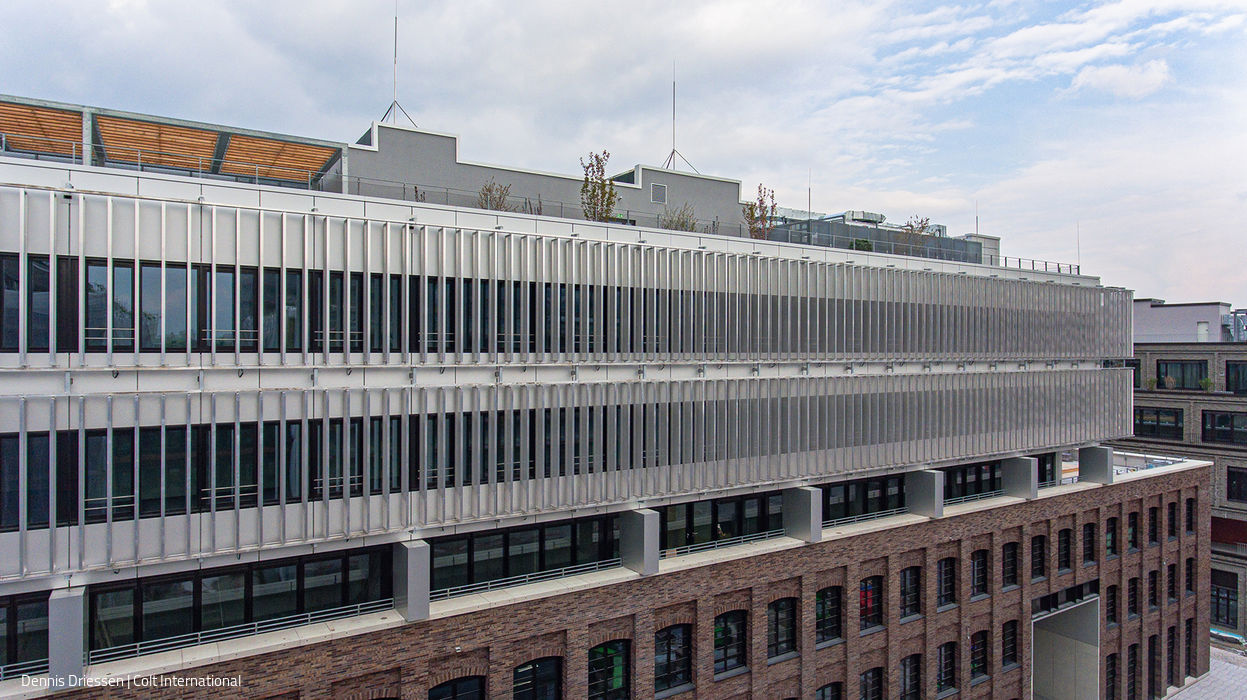
M6 marks the completion of the Macherei's flagship building
A Striking Presence
A Visual Jewel in Großhadern's Garden District