


When Logo Becomes Sculpture
The new DLR office building in Wahn brings the night sky itself into the heart of its communicative atrium
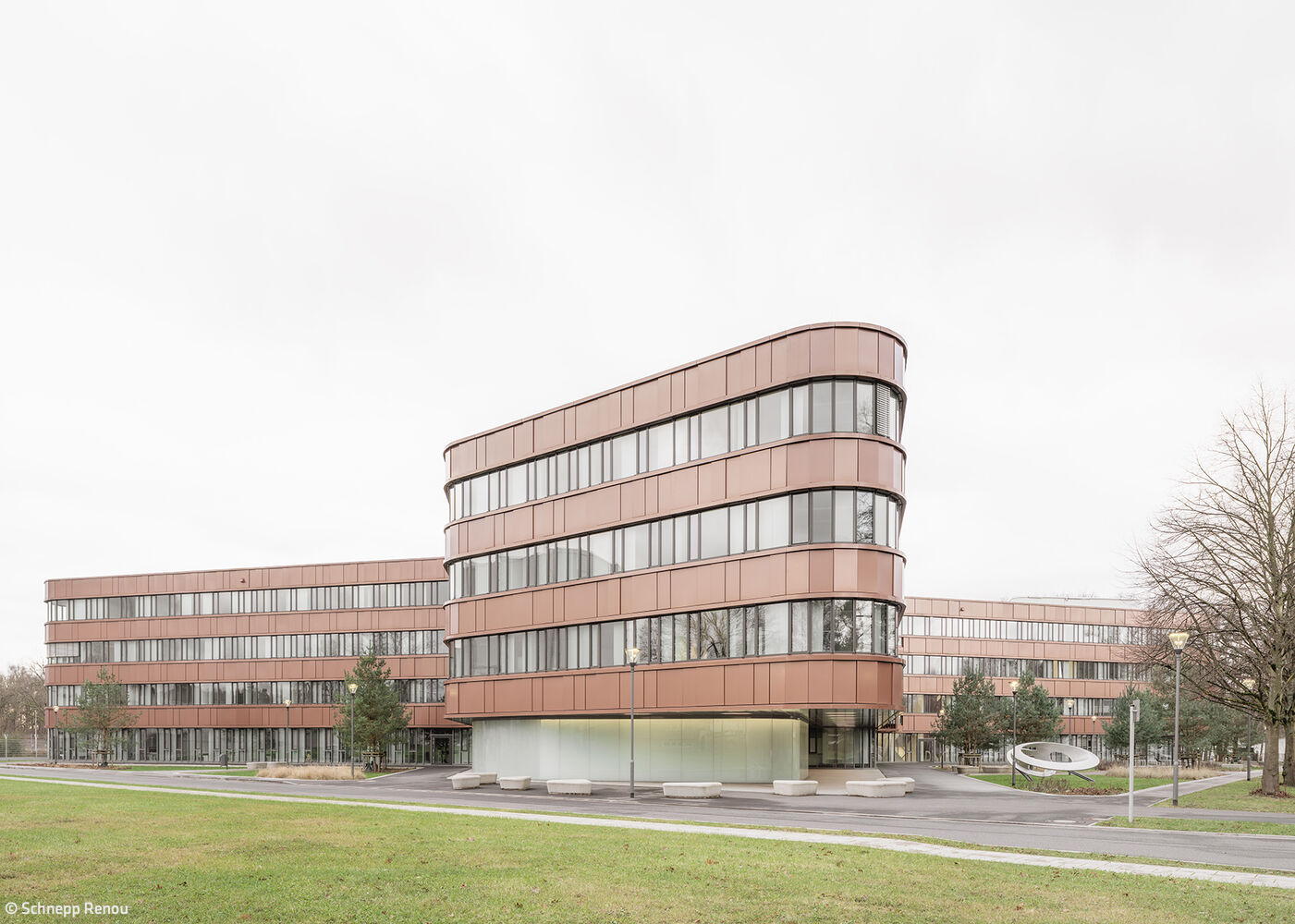
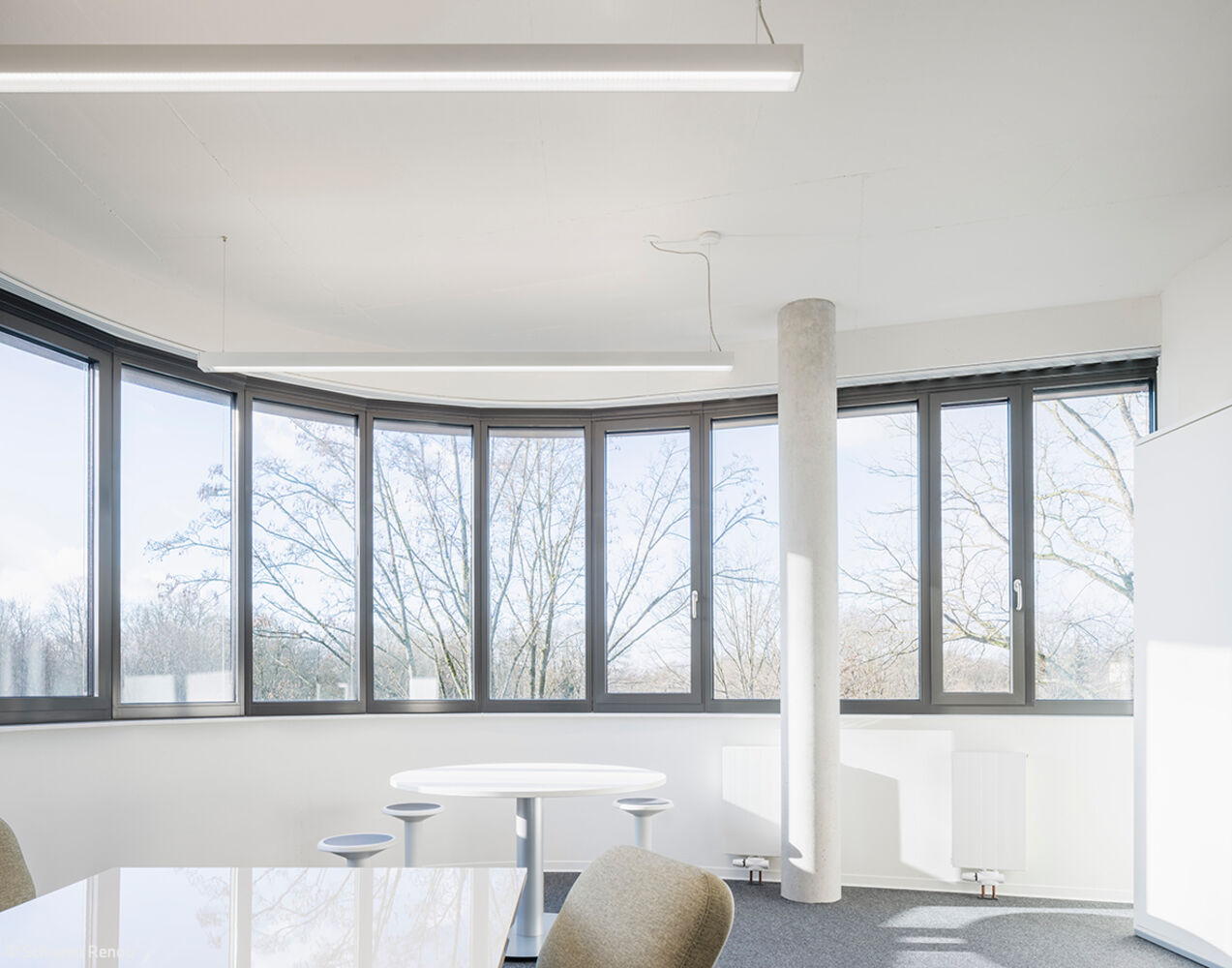
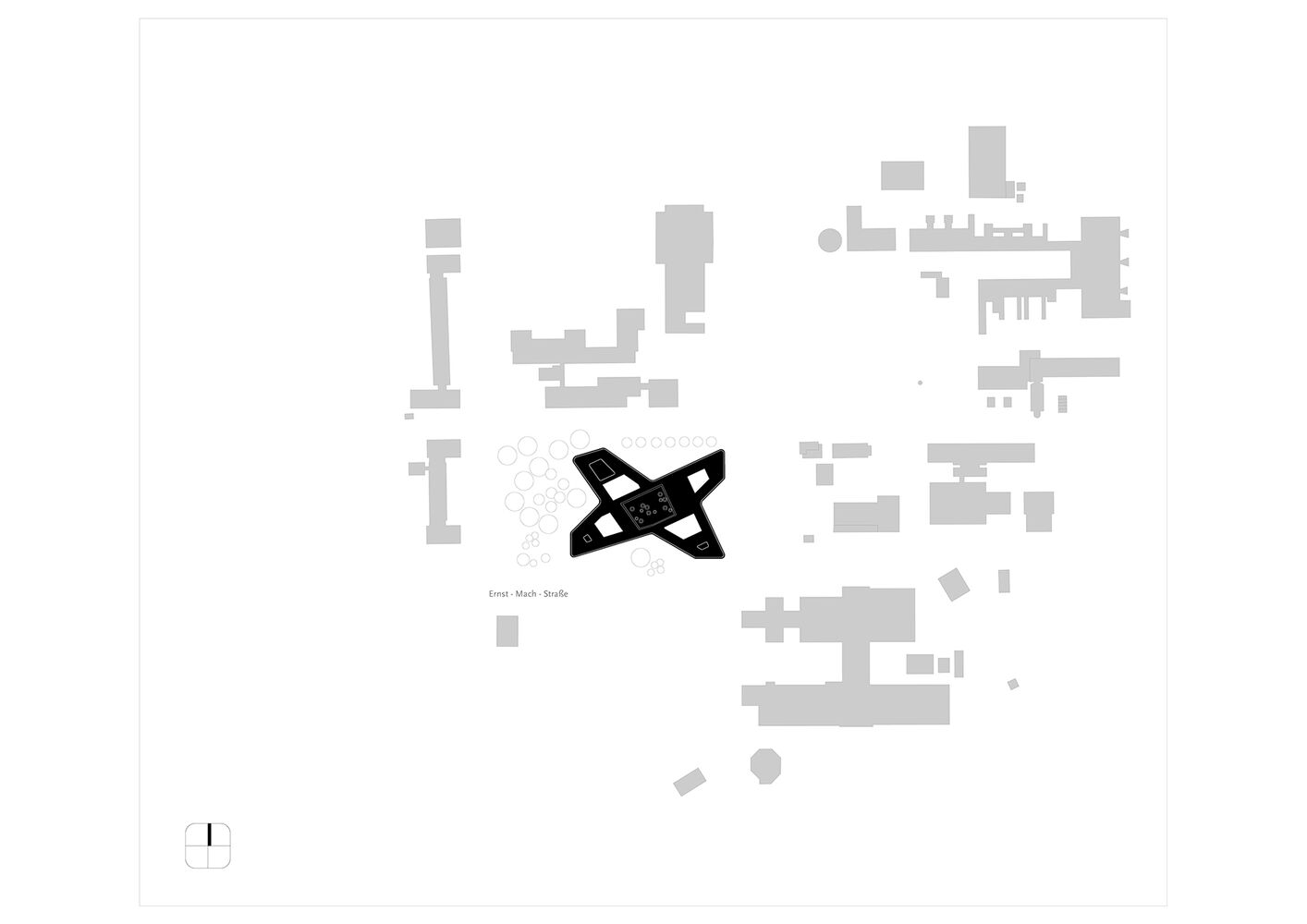
Striking both symbolic and sculptural, the new office building on the German Aerospace Centre's (DLR) campus in Cologne-Wahn presents a bold architectural statement. The Cologne-based firm ksg conceived the structure as a composition of dynamic circulation patterns and collaborative zones that interlock with compelling spatial tension.
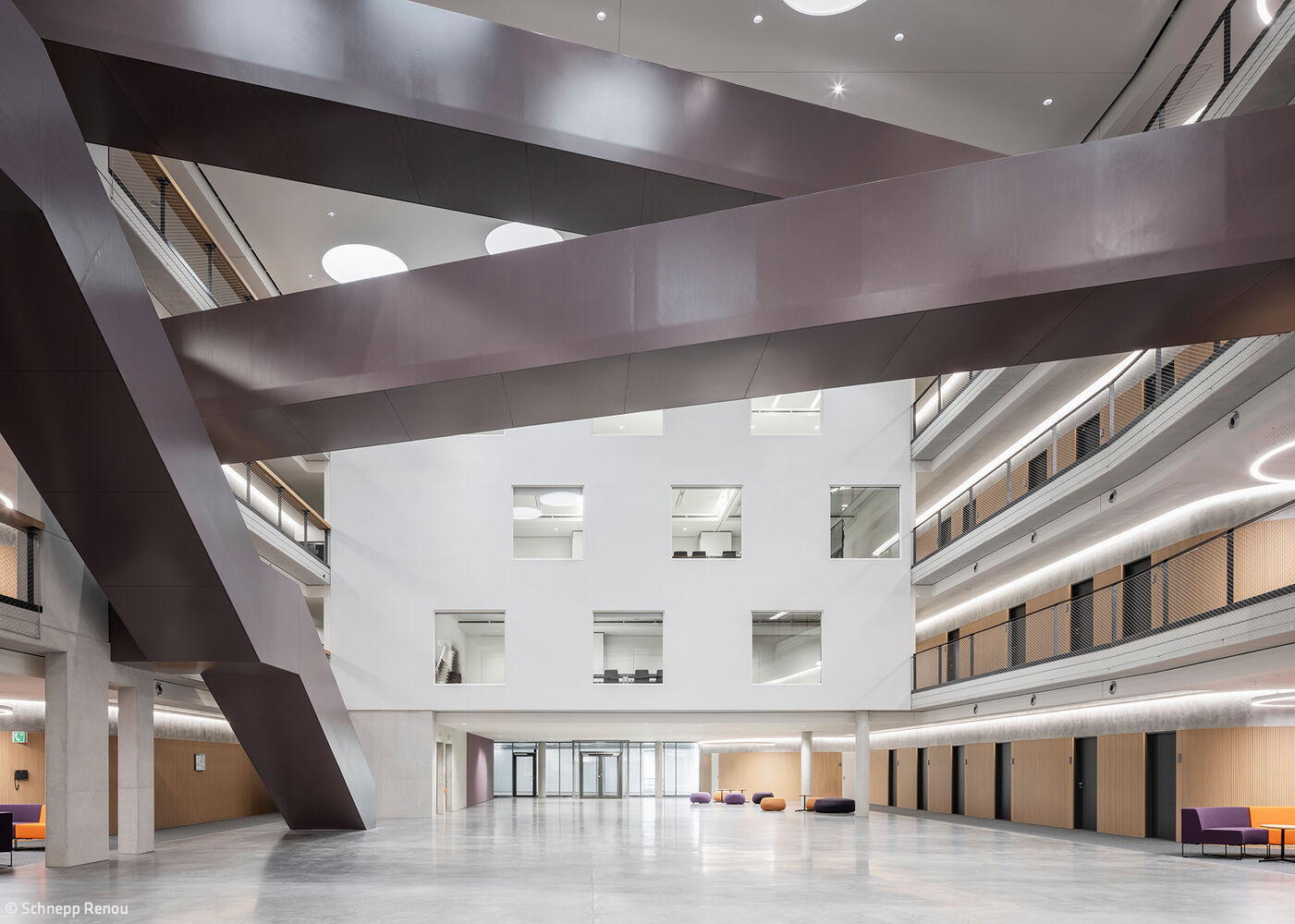
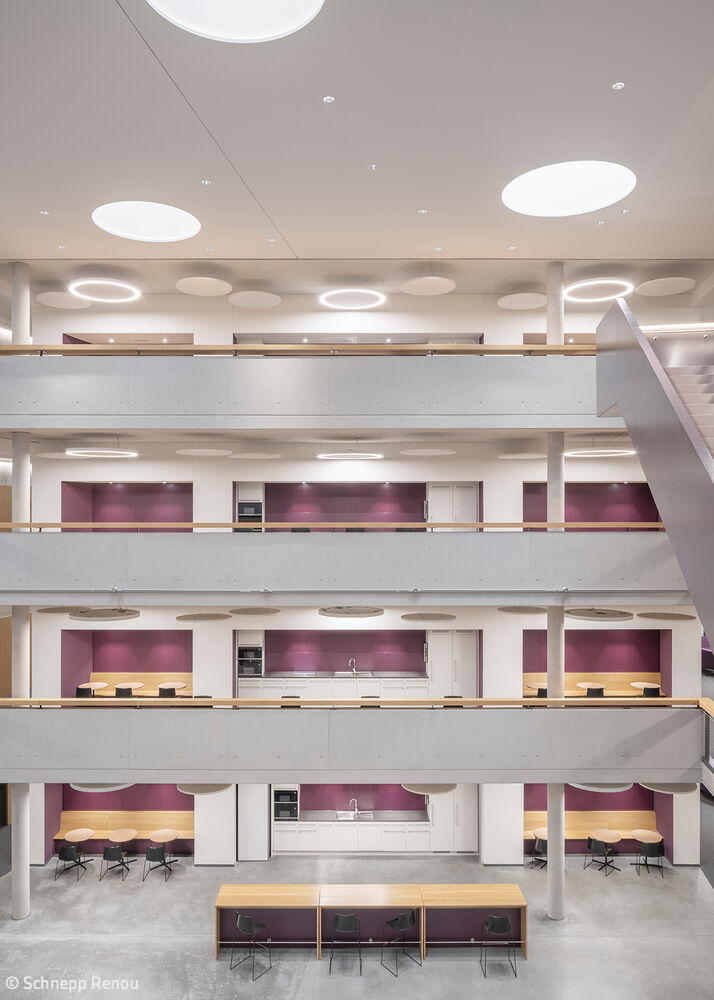
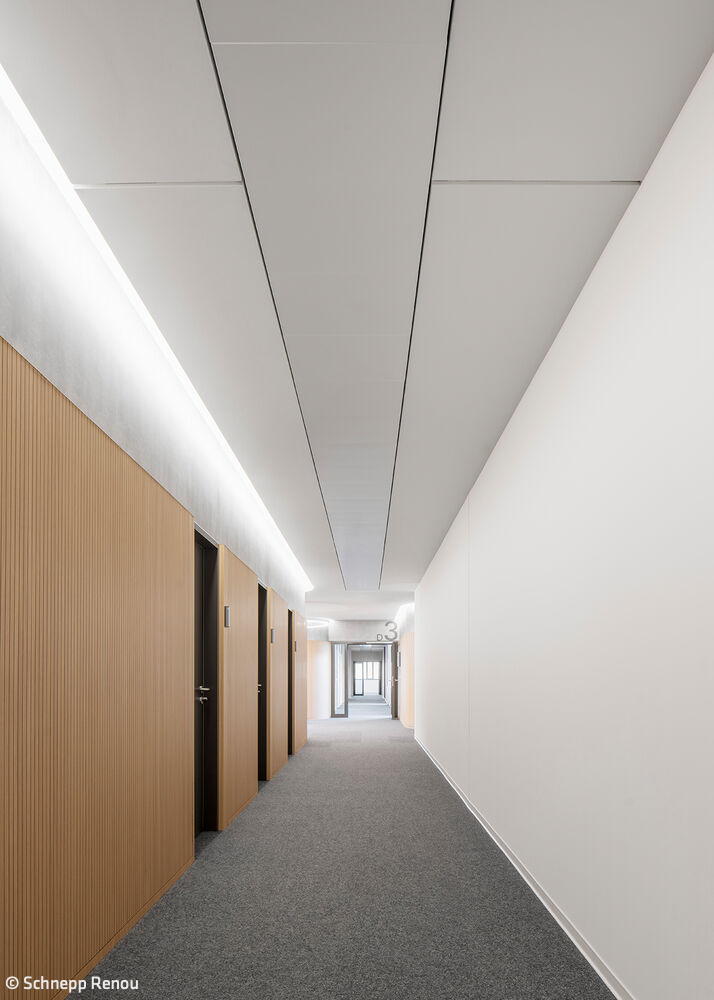
Nestled within a protective forest, the campus opens onto a vast clearing near Cologne-Bonn Airport. Rising at the southwest edge, the new office building traces the DLR's iconic logo—two intersecting diamonds—with its form, softening the four star points through gentle curves. "We've created a commanding architectural sculpture," explains architect Johannes Kister, "one that captures the essence of the headquarters with striking symbolic power. The logo transcends its two-dimensional form to become three-dimensional sculpture." The ribbon-like facades, curved inward and outward according to the star geometry, feature subtly offset reddish-brown aluminium elements that shimmer and shift with changing light. The campus-facing side reveals a dramatically recessed ground floor, establishing a welcoming main entrance that opens directly from the center while accommodating a bicycle garage clad in white opal glass. At the building's heart lies a generous four-story atrium—a soaring void from which office corridors radiate outward in star formation.
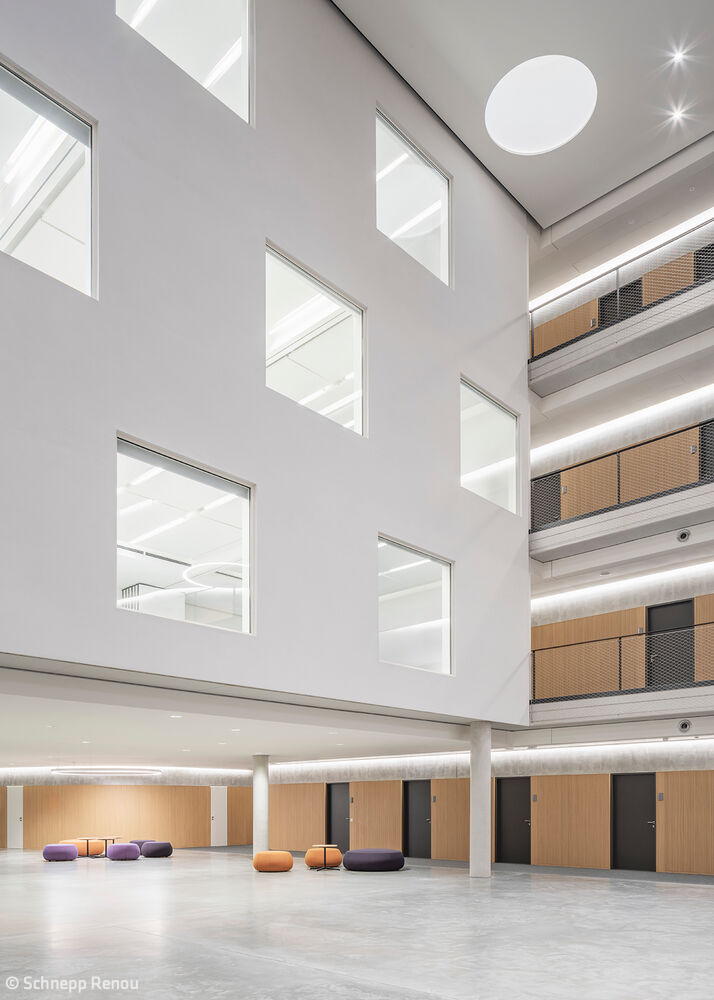
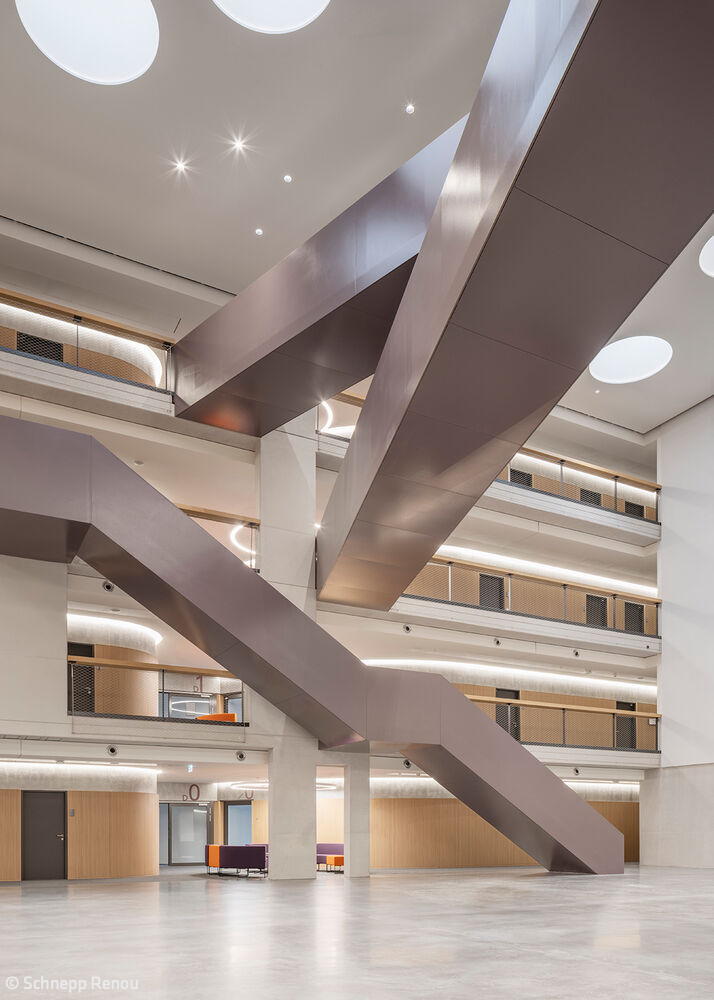
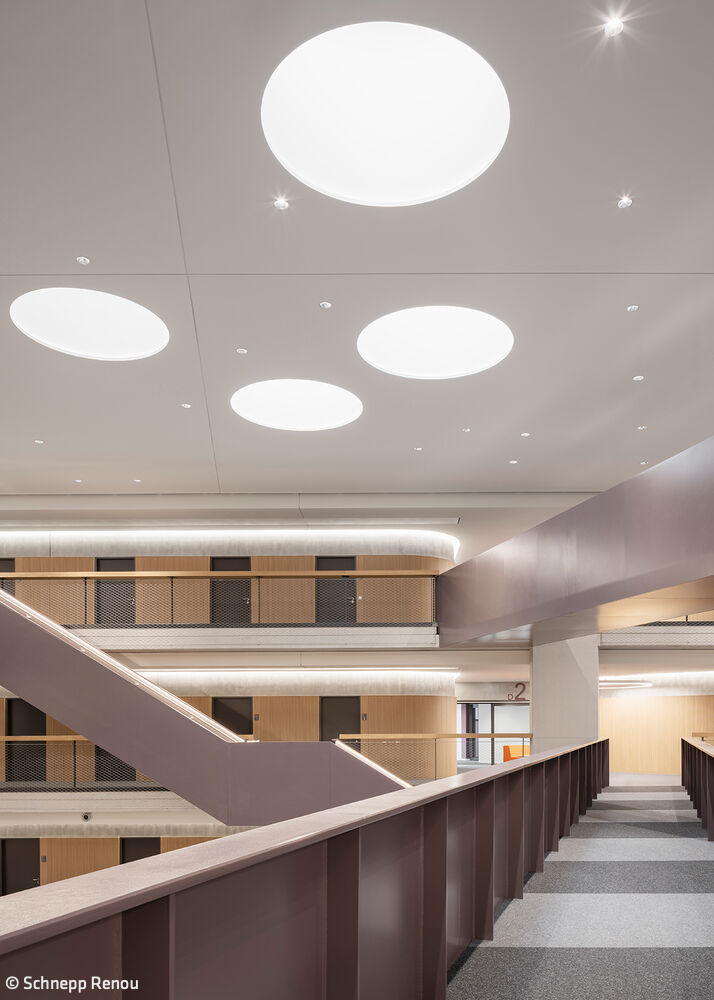
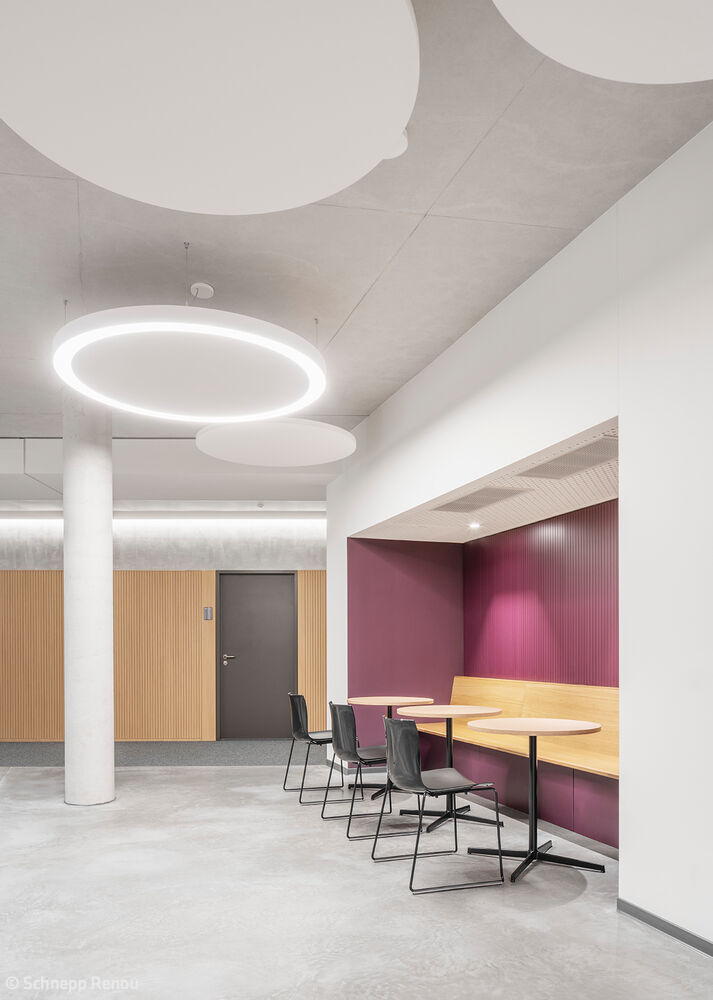
The crisp white fronts of the meeting rooms command attention, their glazing oriented toward the atrium from the first floor up. Across the way, tea kitchens punctuate each level as vibrant social hubs, their warm palette providing visual counterpoint. Circular skylights and suspended ceiling elements choreograph constellations overhead. Dark violet steel bridges—seemingly weightless—traverse the atrium at the second and third levels, while a sculptural open staircase spirals along the perimeter across all floors. Together, they evoke Piranesi's Carceri etchings, with their intricate spatial complexity, yet here they guide movement with clarity and openness rather than entrapment. The circulation flows in star formation, mirroring the building's geometric DNA.
Four inner courtyards sit at the building's star points, flooding adjacent training rooms and corridors with natural light. Smaller offices align the entire outer perimeter, arranged in a flexible grid that allows layouts and dimensions to adapt to future needs. Some offices nestle within the curved sections, offering expansive views across the campus.
Photography:
Schnepp Renou
www.schnepp-renou.com
(Published in CUBE Cologne Bonn 02|25)

Rising with Rhythm
An uncompromising office building nestled between nature and an iconic bridge
Historic boiler house reimagined
Abandoned Industrial Sites Find New Purpose
Asymmetry in the Plane
Elegant simplicity conceals thoughtful detail
Restraint and Openness
A landmark villa stripped to its essence and redesigned with uncompromising clarity.