


Upcycling
Central location living and working in a reimagined 1960s administrative building
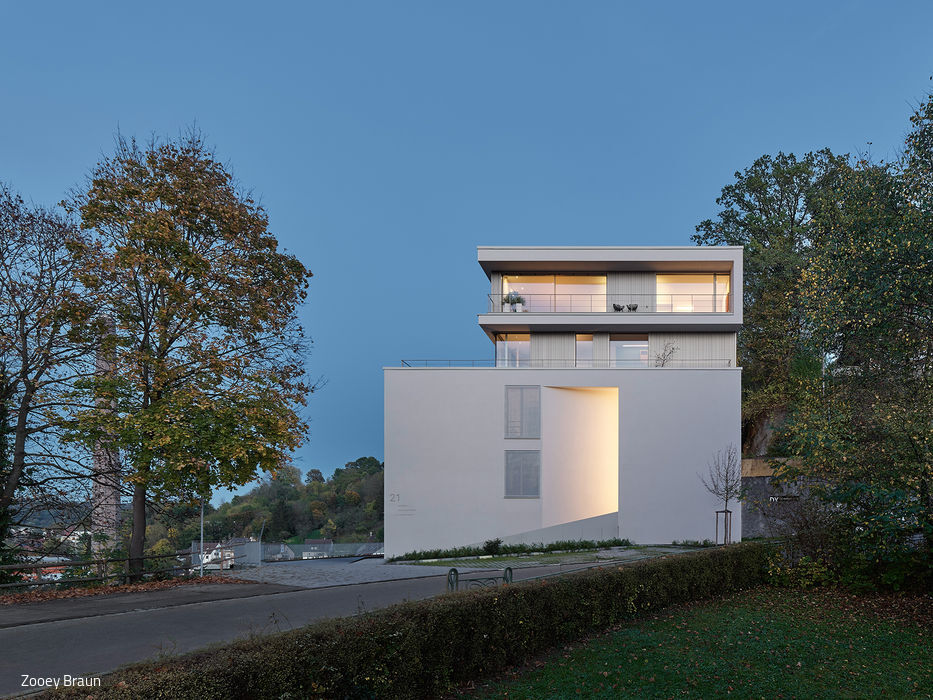
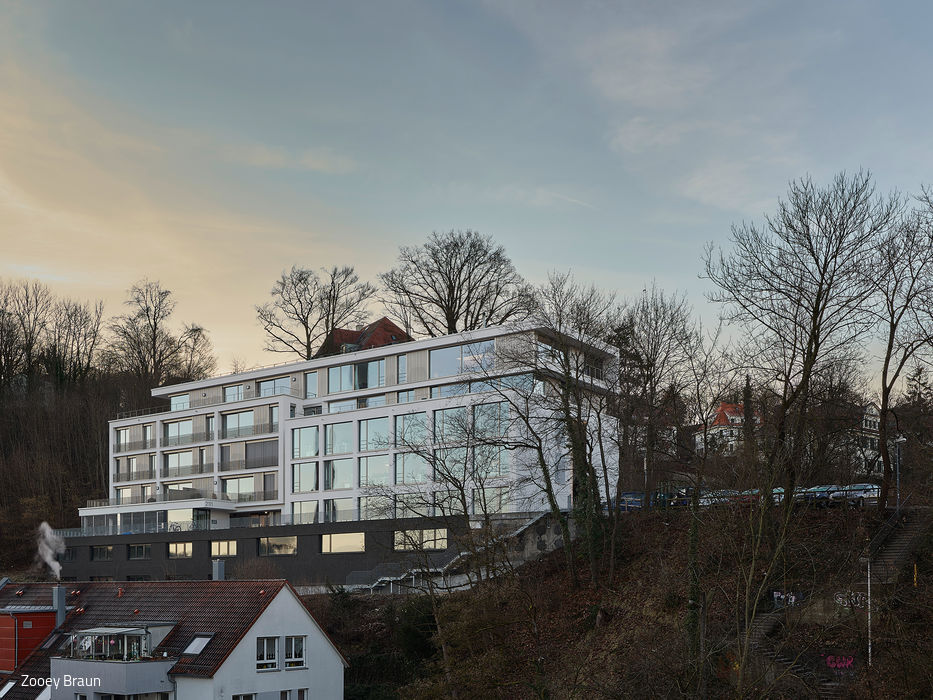
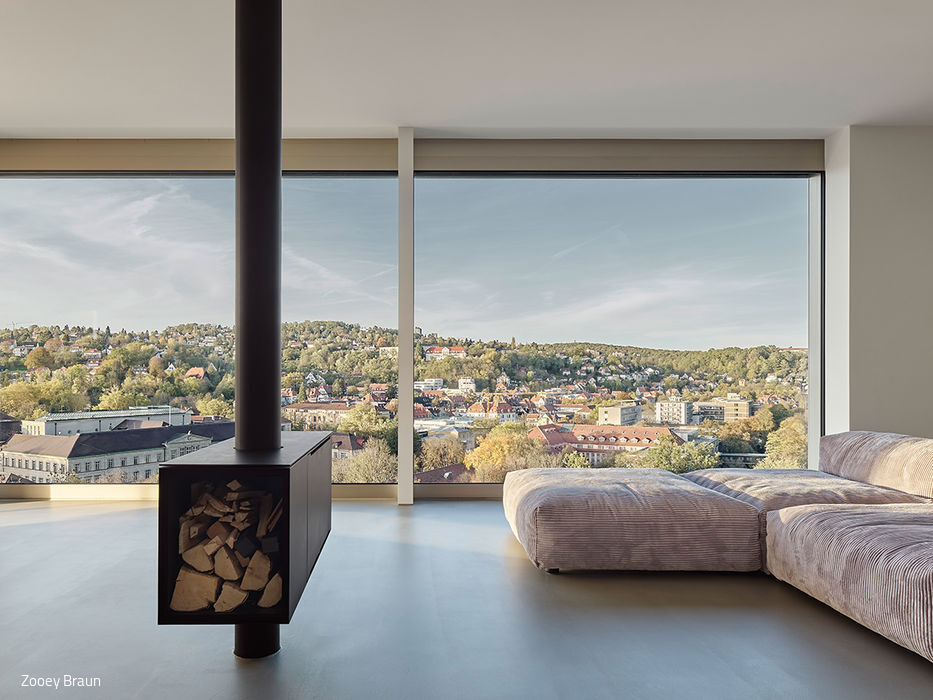
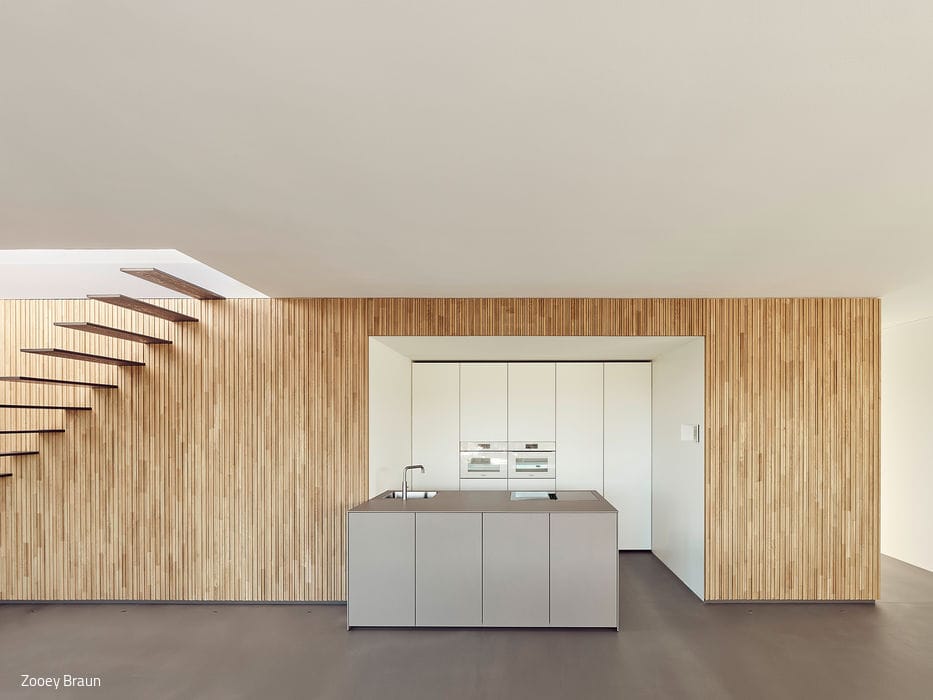
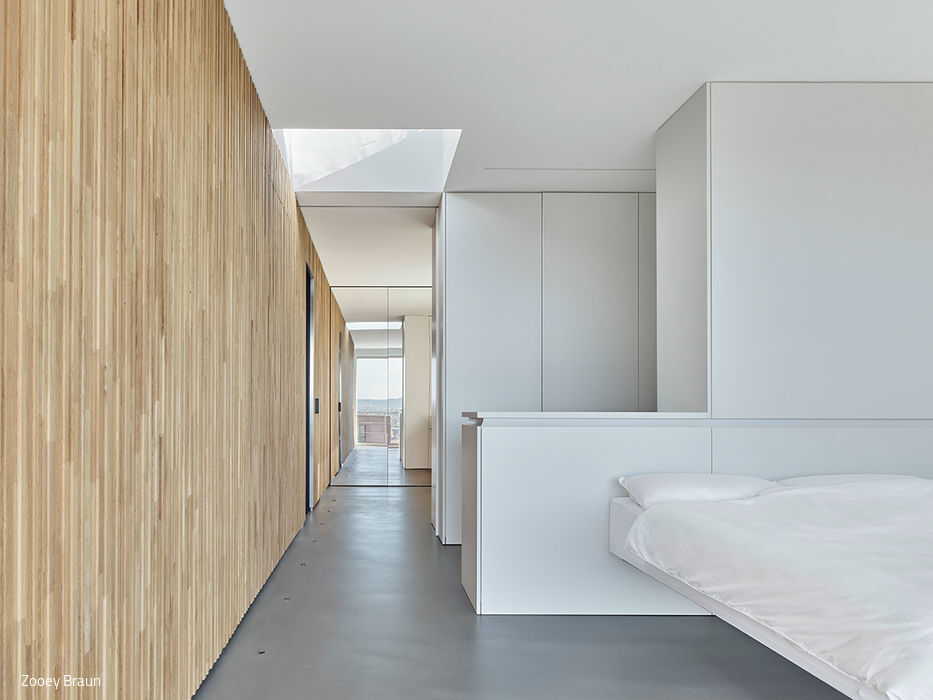
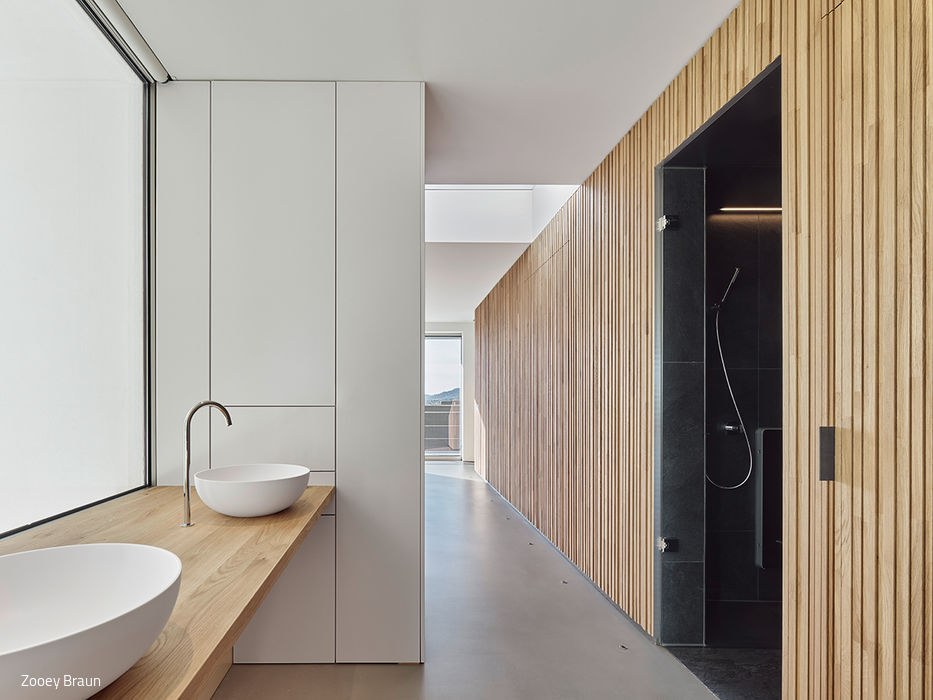
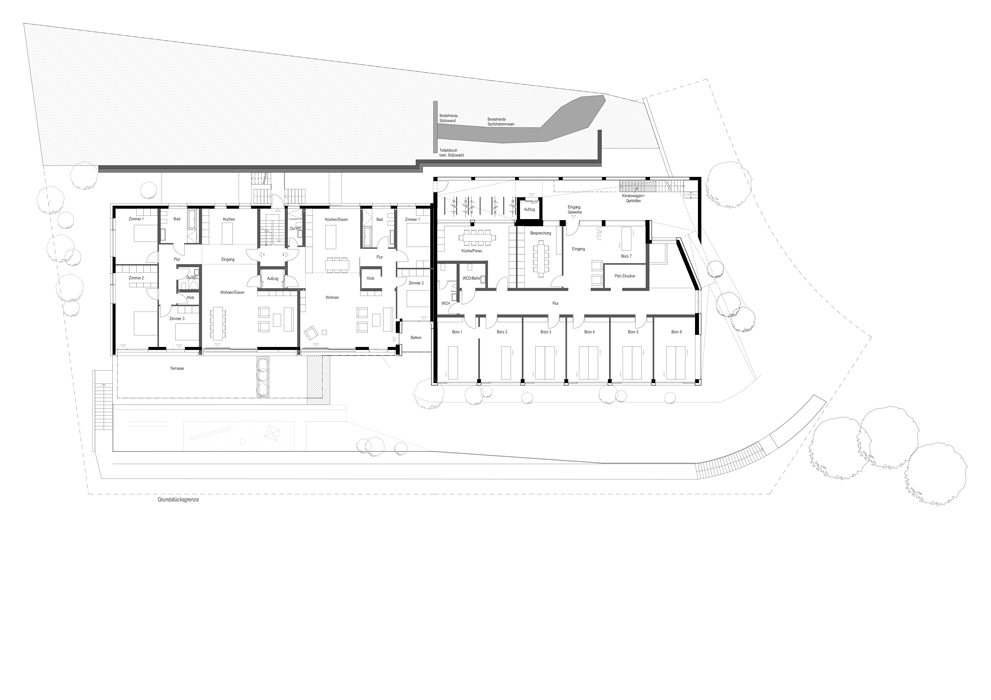
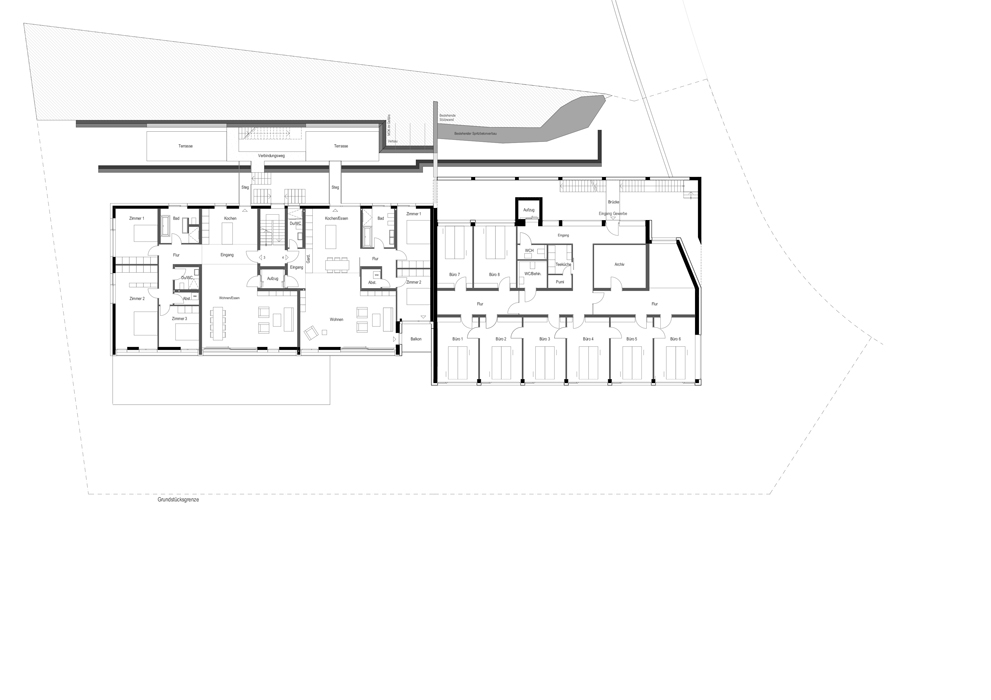
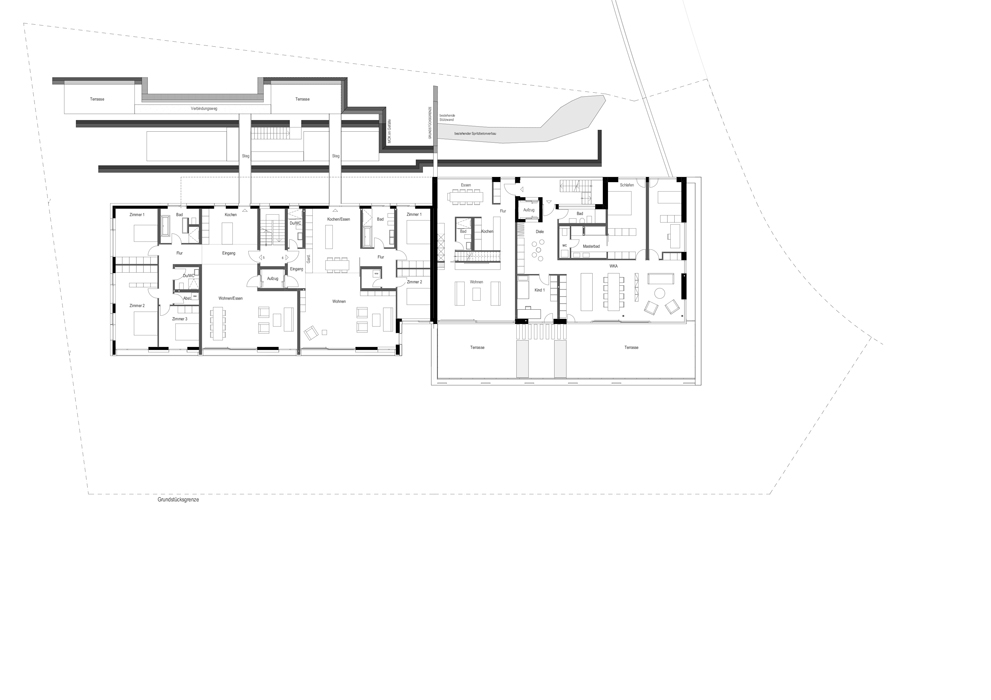
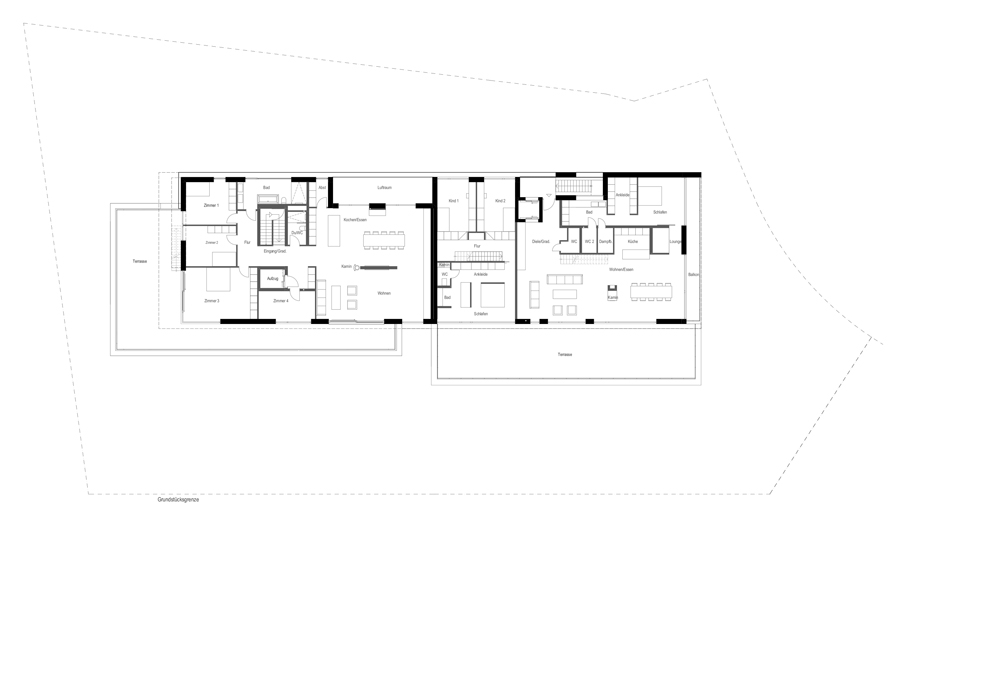
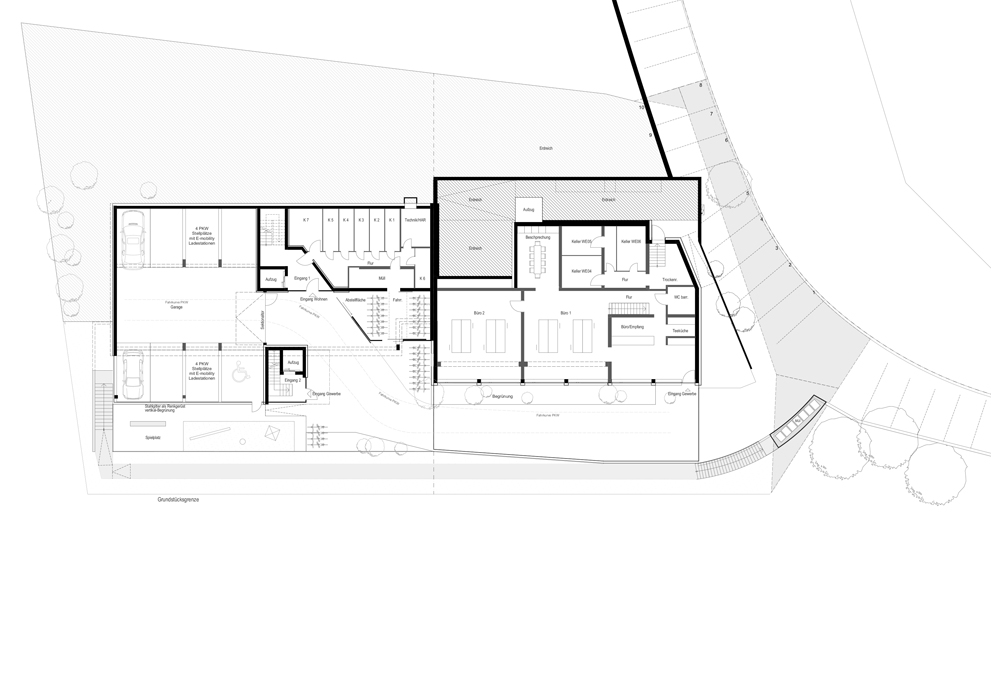
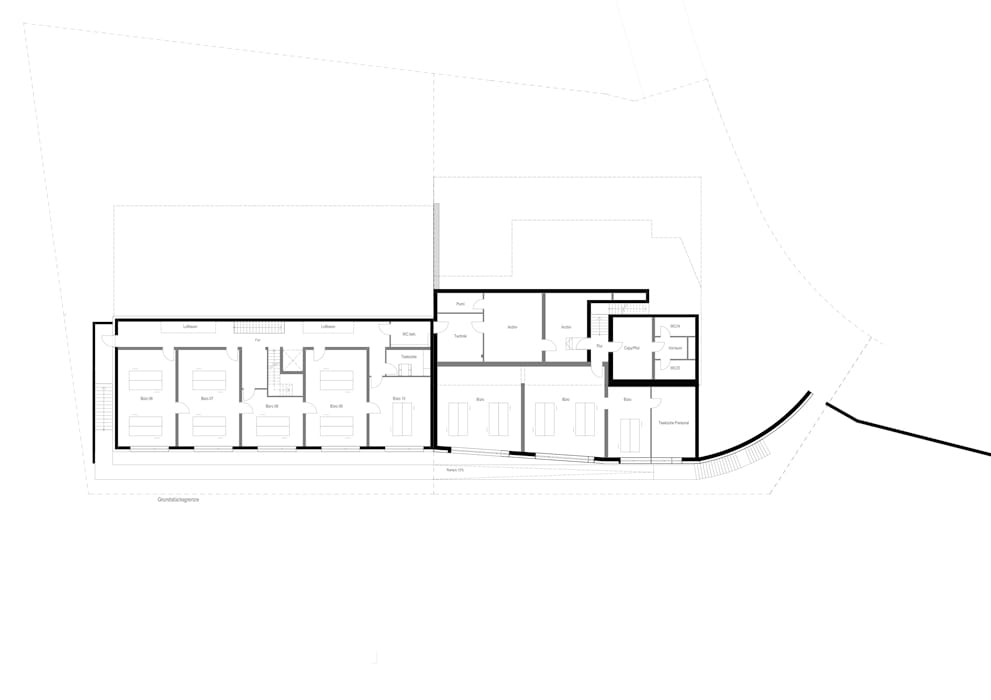
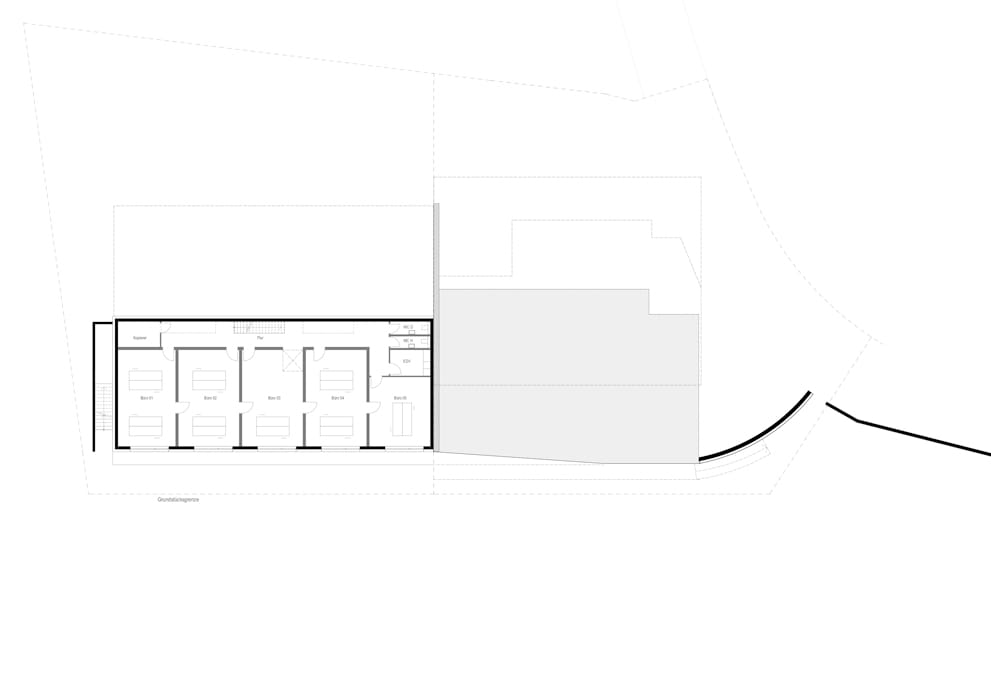
When the administration relocated, the district office—perched above the university campus—fell into prolonged vacancy. Slated for demolition and replacement, the deteriorating structure found new purpose through the vision of architects Florian Danner and Abdul Yildiz and lighting designer Jens Maier. They acquired the building and swiftly transformed it into refugee housing in 2014, working within tight budgetary constraints. The interim period that followed proved invaluable, allowing the team to secure the necessary planning permissions and building rights through a comprehensive development plan. With approval for vertical expansion and lateral extension secured, the building revealed its true potential—its robust construction and disciplined structural clarity proved remarkably adaptable to diverse uses.
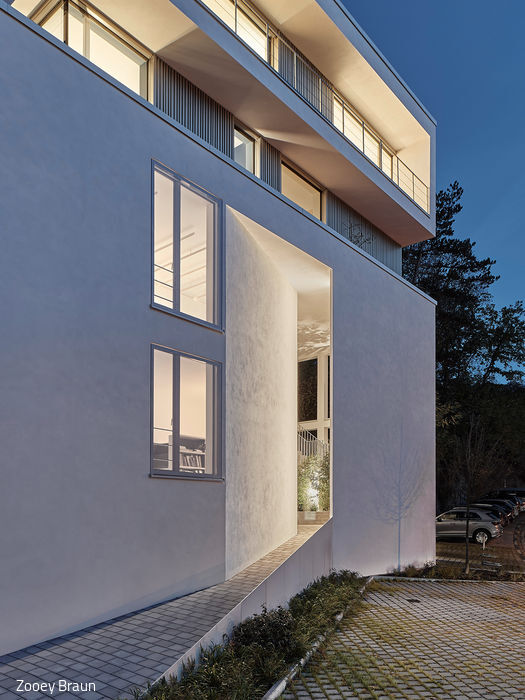
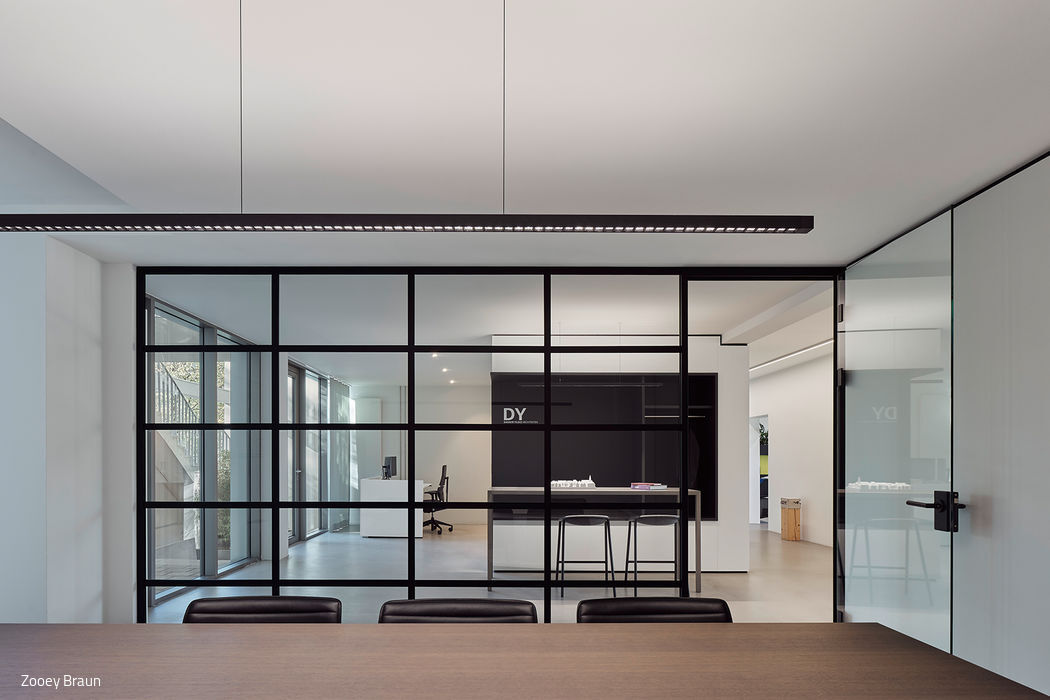
Für den Umbau zum Wohn- und Geschäftshaus wurde der Stahlbeton-Skelettbau auf Rohbauniveau zurückgeführt. Um helle, weitläufige Arbeitsräume für die Planungsbüros der Bauherren (Danner Yildiz Architekten und Maierlighting) zu schaffen, entfernte man Zwischenwände und die Fertigteil-Brüstungen. Raumhohe Verglasungen sorgen nun für gleichmäßiges Nordlicht und eine freie Aussicht auf die Innenstadt. Durch die Nordausrichtung des Gebäudes erübrigten sich Verschattungen und Kühltechnik. Es gelang problemlos, die Konstruktion aus den 1960er-Jahren um zwei Wohngeschosse in Leichtbauweise aufzustocken. Dank der Präfabrikation war innerhalb von nur zehn Tagen der Rohbau aus einem Stahlskelett mit eingelegten Massivholzdecken fertiggestellt. Die beiden Geschosse sind von der bestehenden Fassadenebene deutlich nach hinten abgesetzt, um Raum für Dachterrassen zu bilden und das Gebäude aus der Fernsicht weniger massiv erscheinen zu lassen. Bergseitig ragen die Wohnebenen über den Bestand hinaus. Sie werden von einem Stahlbetonraster gestützt, das einen eigenen Raum für die offengeführte Erschließungszone bildet. Beim Begehen der frei eingehängten Treppenläufe, Brücken und Podeste entsteht sowohl eine intensive Nähe zum umgebenden Grün und dem anstehenden Fels als auch die Möglichkeit, alle drei Raumdimensionen zu erleben. Zur Straße hin inszeniert eine schräg angeschnittene Gebäudefuge den Zugang und leitet über eine Rampe barrierefrei in den überdachten Innenhof.
Obwohl der Bestandsrohbau fast vollständig erhalten blieb, ist das Gebäude kaum wieder zu erkennen. Baustruktur und Grundstück erfuhren durch die gestalterische Aufwertung sowie die Weiter- und Mehrfachnutzung ein echtes Upcycling. Zehn Wohnungen und 1.490 m² Bürofläche finden im Inneren Raum. Mit dem Vollwärmeschutz erreichen die Wohnungsgeschosse den Standard KfW 40. Das Haus wird mit Fernwärme über Kraft-Wärme-Kopplung und regenerative Energien versorgt.
Photography Credits:
Zooey Braun
www.zooeybraun.de
(Published in CUBE Stuttgart 03|23)

Black Shell, White Core
A sloping site demands creative problem-solving from client and architect alike
Architecture as Active Framework
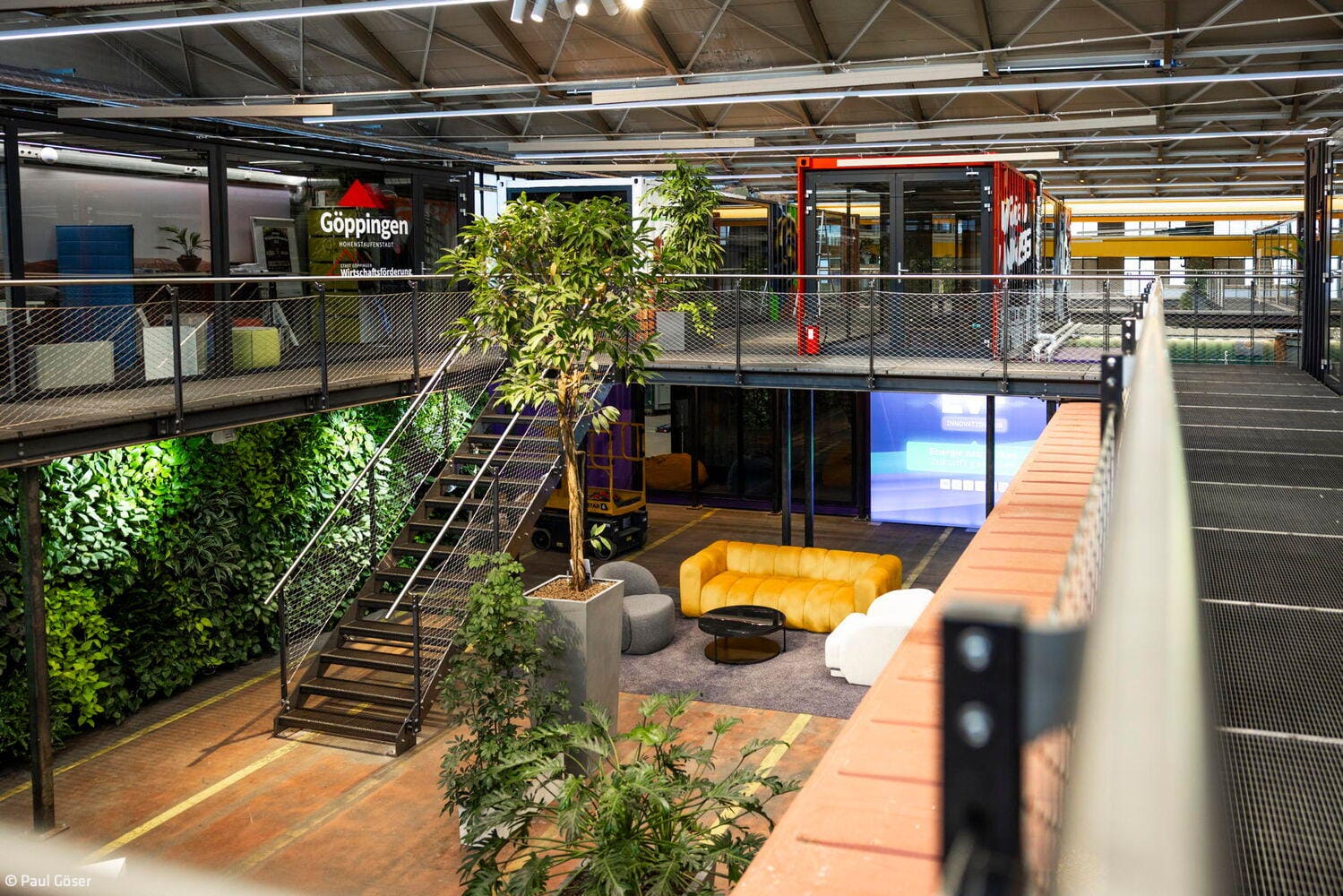
Industrial Building Transformed Modularly and Sustainably with Flexible Mixed-Use Program
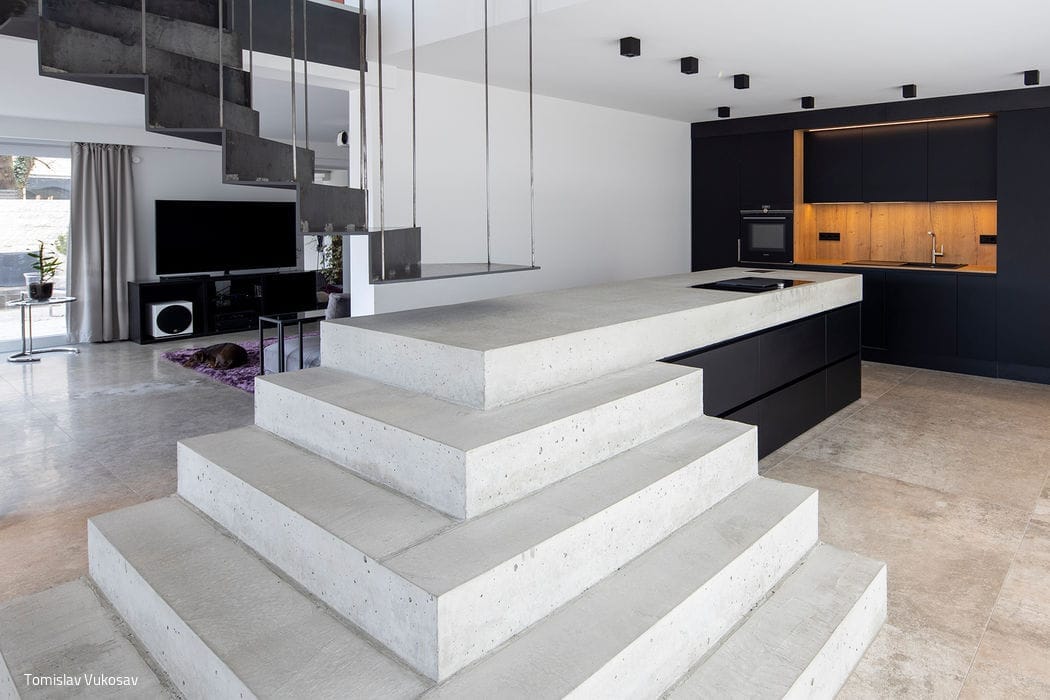
An Unusual Connection
Kitchen Island, Staircase, Masterpiece
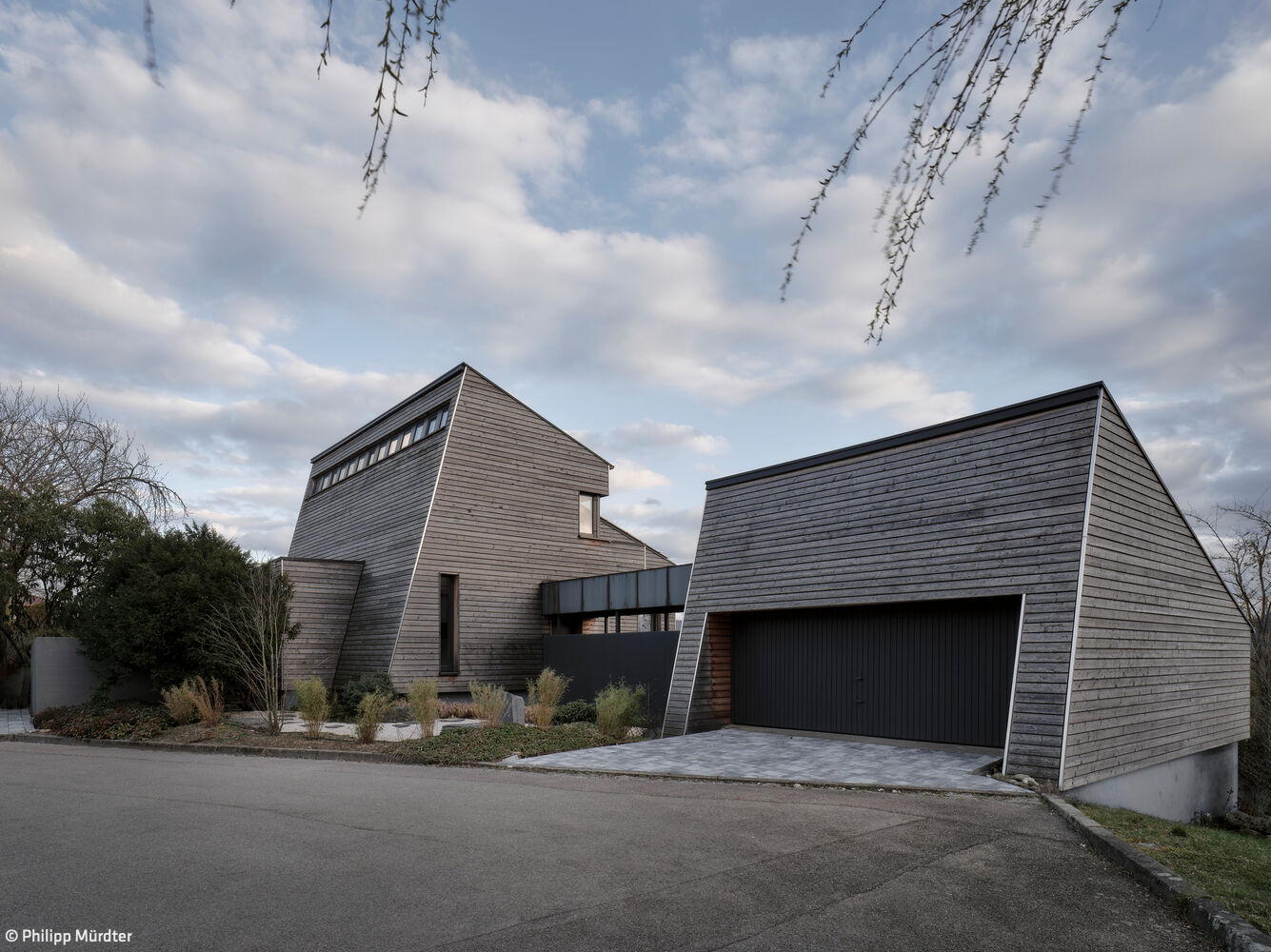
Anything But Sloped
A striking 1960s residence reimagined for today—elegant restraint meets contemporary performance