


Clusters Connected to Nature
A primary school with integrated sports facility that unites interactive learning spaces with the outdoors
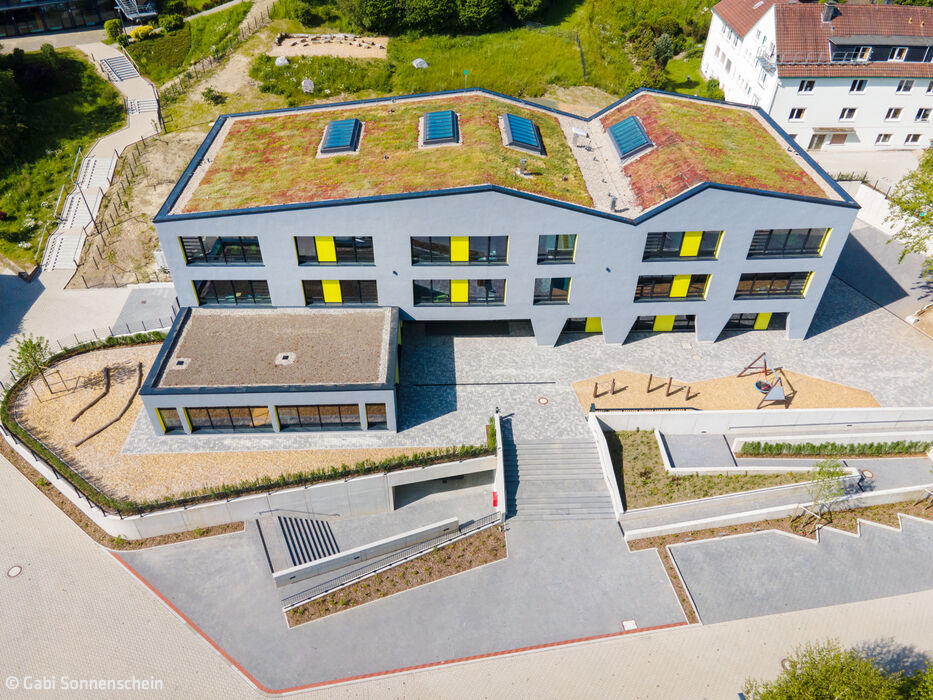


Nestled among rolling hills and open fields, Diakonie Bleibergquelle in Velbert is a place dedicated to education and community—where multiple buildings are thoughtfully arranged across challenging topography. Fette Architekten from Düsseldorf designed and realized a two-stream primary school with gymnasium that expands the existing campus, adding further inclusive educational offerings.
The striking "Mutterhaus" (mother house)—the Diakonie's iconic main building—commands the center of the campus overlooking an expansive lake. Set within this distinctive architectural and landscape setting, a four-story school building was developed in close collaboration with the client and teaching staff. Built into the slope with in-situ concrete elements and capped by a planted rafter roof, the design thoughtfully responds to the school's educational philosophy: one day each week, students spend their entire day learning outdoors. The building's layout accommodates both integrated school operations and independent use of its various spaces. The gymnasium, positioned prominently at the entrance with its own external access, nestles naturally into the hillside while marking the building's arrival point. The main entrance—reached via a generous, fully accessible ramp—frames a secure schoolyard for younger students and flows into a welcoming foyer, administrative areas, and staff meeting spaces. Visual connections from the entry hall through to the gymnasium create a spatial dialogue between distinct zones. The main staircase, distinguished by its striking yellow spiral, reveals the building's two upper levels, where cluster-based learning areas take shape. Each cluster unites two classrooms with a dedicated support and enrichment space plus an all-day room, while corridors thoughtfully double as break and play zones, maximizing generous spatial experiences. Adjacent staff areas enable seamless communication with classroom zones. Every cluster opens directly to the outdoors—younger students access a sheltered adjacent courtyard, while older students reach the landscape via slender bridges that elegantly bridge the grade change. The expansive outdoor areas incorporate dedicated "outdoor classroom" zones and varied play spaces. The lower courtyard supports active games; the sloped courtyard along the vegetated hillside fosters direct nature engagement. School animals are accommodated here as well, with additional housing nestled at the ramp's terminus.
Photography:
Gabi Sonnenschein
www.imgst.de
Marcus Schwier
www.marcus-schwier.de
(Featured in CUBE Düsseldorf 03|24)


A sense of place
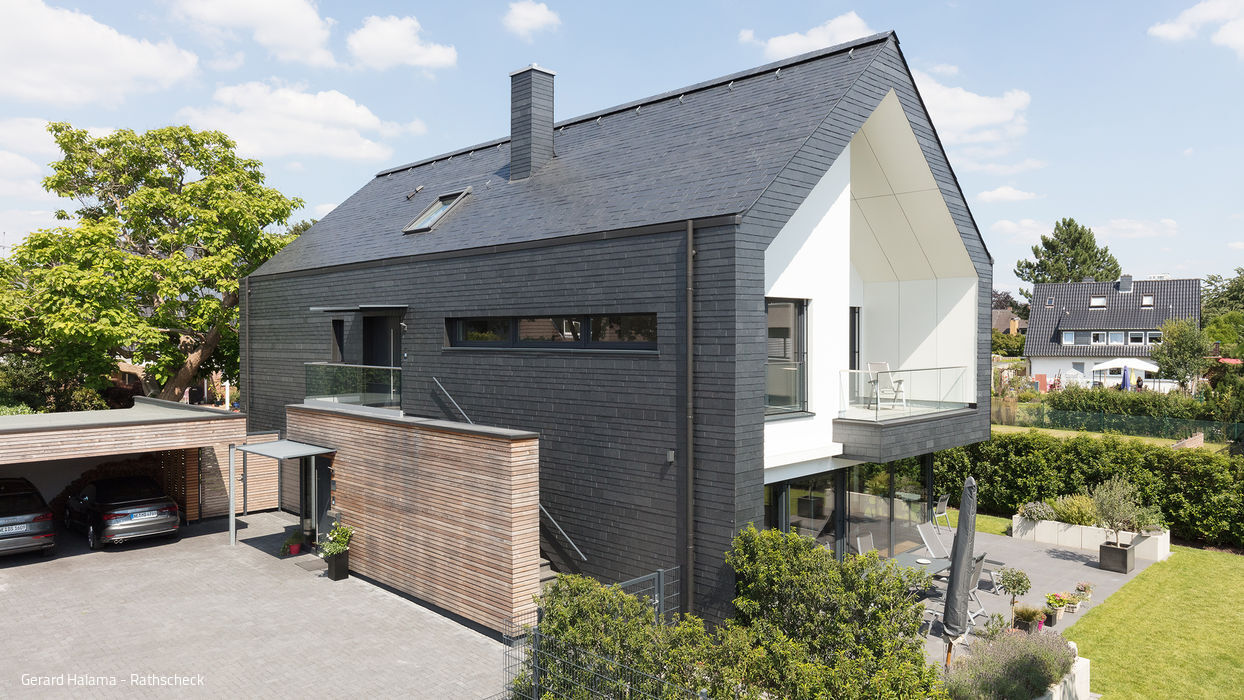
Unified Materials, Distinctive Character: How Slate Transforms a Two-Family Home
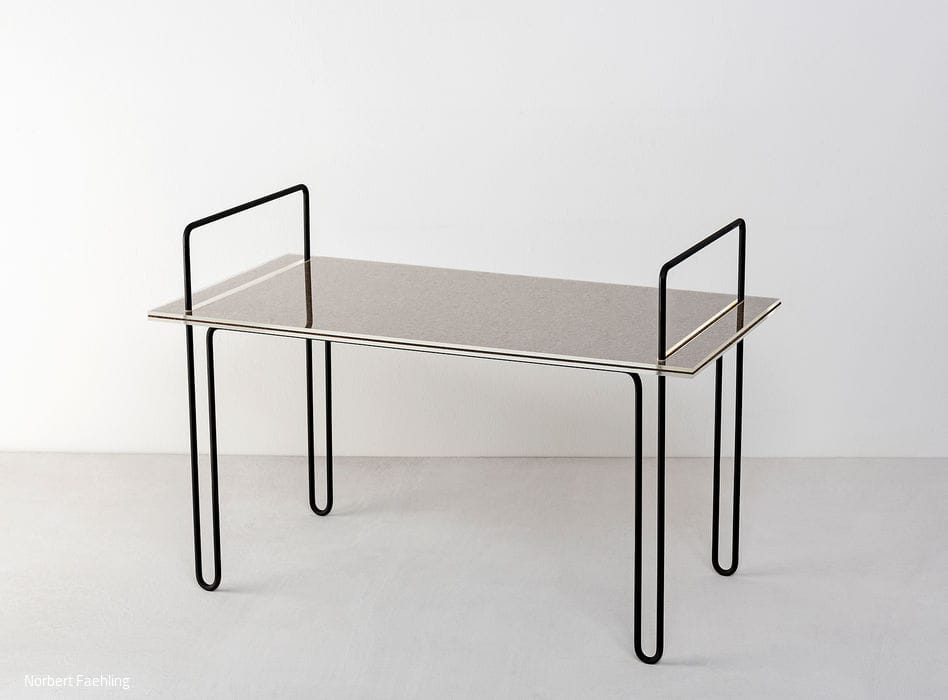
Dynamic lines
Paula Ellert designs custom furniture—from one-of-a-kind pieces to limited series
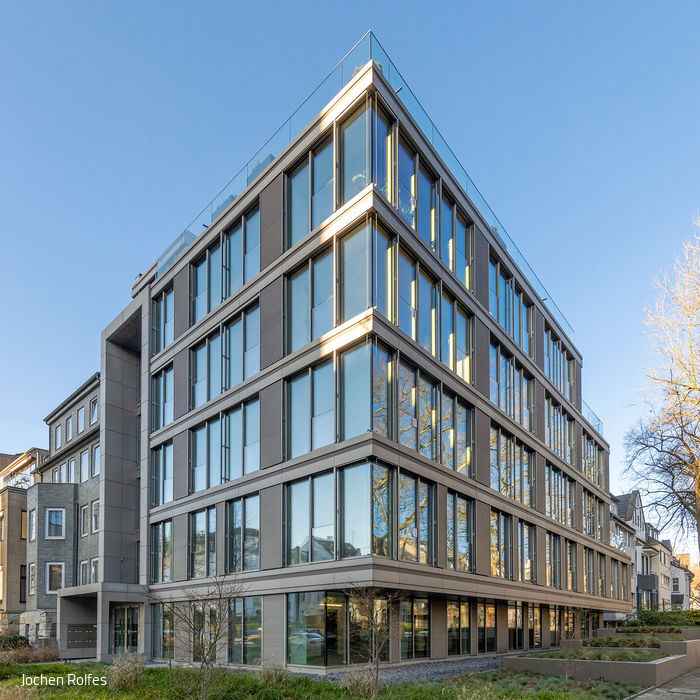
Future-Ready
Comprehensive Modernization of a 1980s Office Building
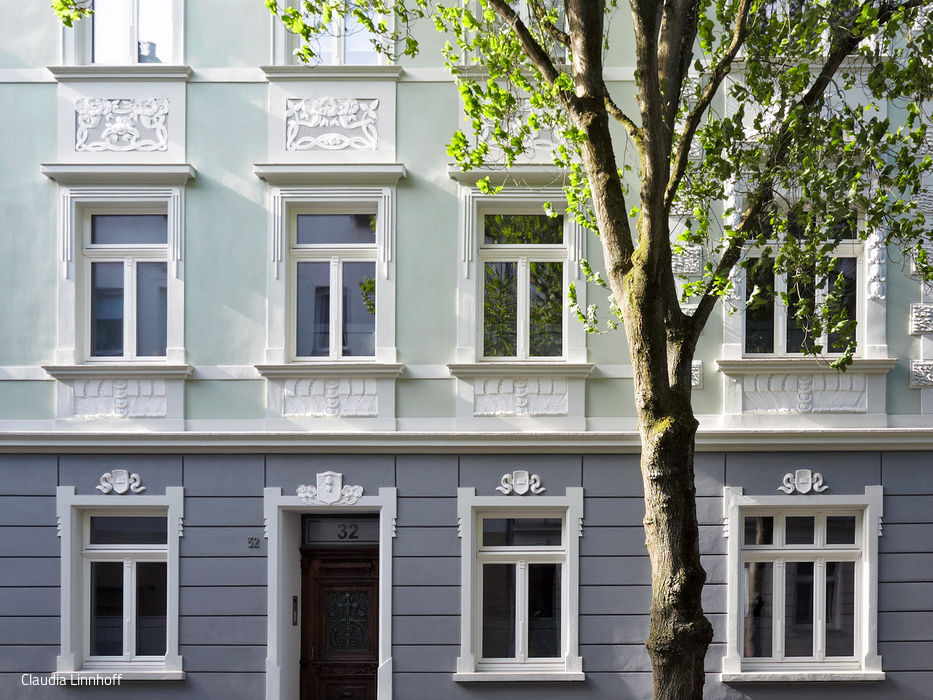
A Labour of Love
How precision, care, and creative vision transform a Wilhelminian mansion into vibrant new life